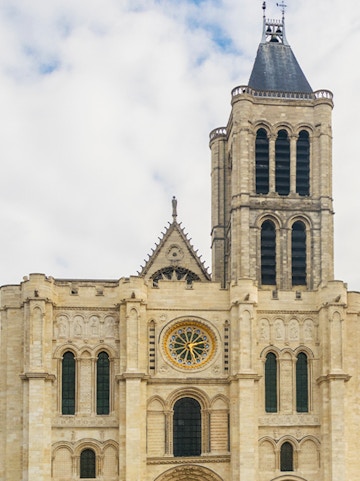
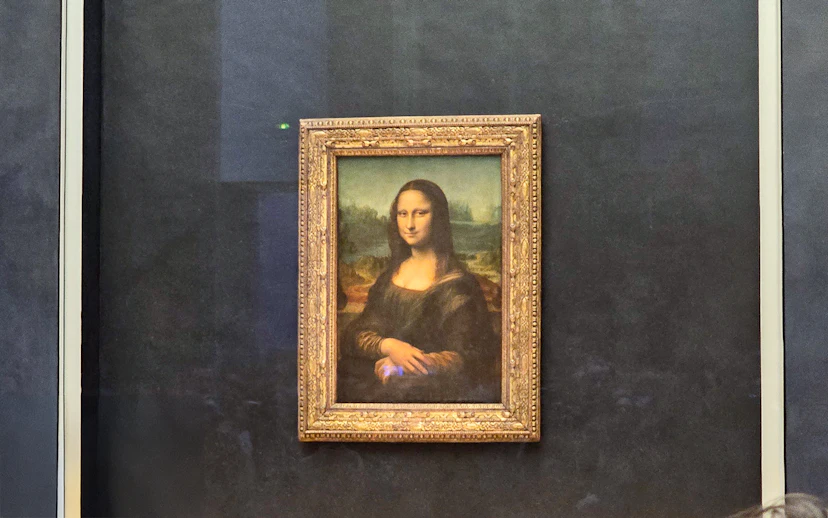
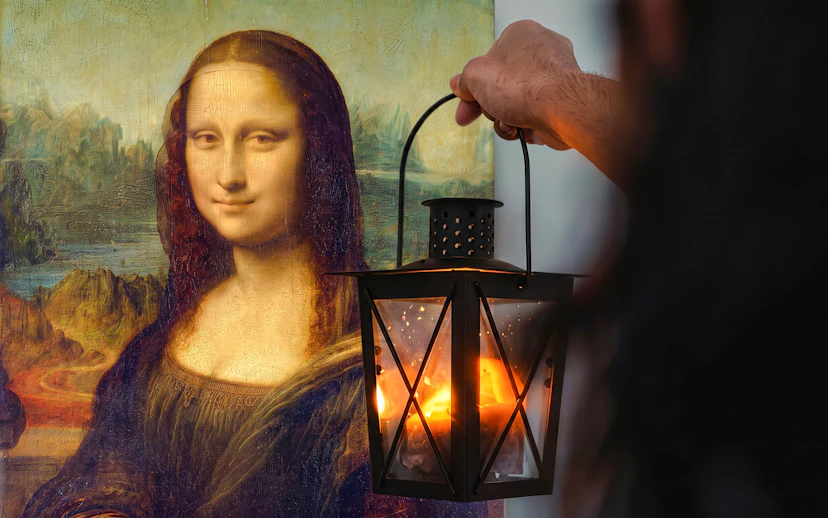
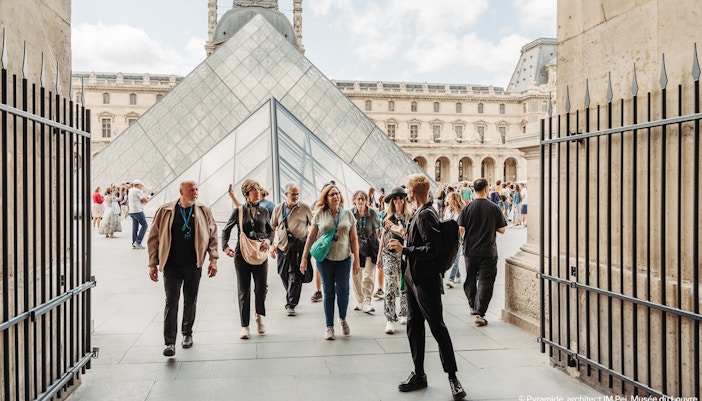
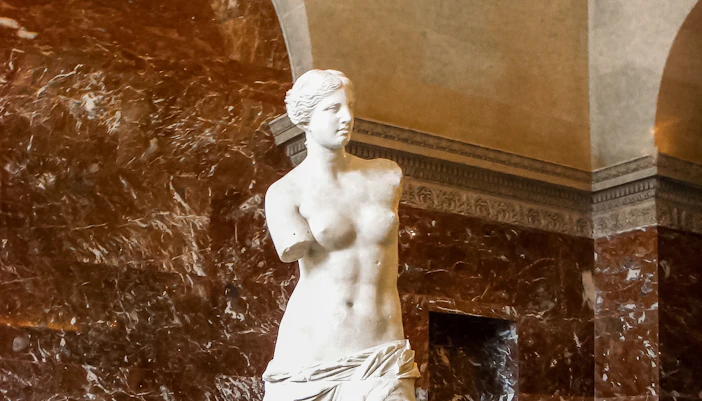
The first timed entry on a weekday works best. Sully is usually calmer than Denon, but 'Venus de Milo' and the rooms linking the wings tighten up from late morning onward. Start here before 11am or save it for late afternoon.
The Louvre Museum
4.4(139,284)
Sully Wing Tickets
Included with The Louvre Museum tickets
Timings
RECOMMENDED DURATION
5 hours

Quick overview
Access: Included in all standard Louvre admission tickets
When you'll see it: Start of the route (ideal for the historical medieval foundations)
Visit duration: 60–90 mins self-guided
Best time: Early morning (prior to 11am)
Restrictions: No flash photography. Normal museum dress code applies.
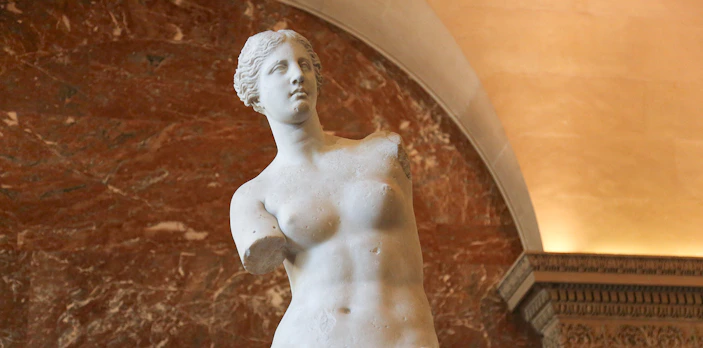
Sully Wing is included with all Louvre Museum tickets. No separate ticket is needed. It sits in the museum’s central wing across multiple levels, and you can reach it early in your visit from the Pyramid or Carrousel entrance rather than waiting for a final stop. Book reserved access with an audio guide or a guided tour if you want a quick orientation and enough time for Sully’s medieval remains, Egyptian rooms, and Venus de Milo.
How to best experience Sully Wing
Best time to visit
How long to spend
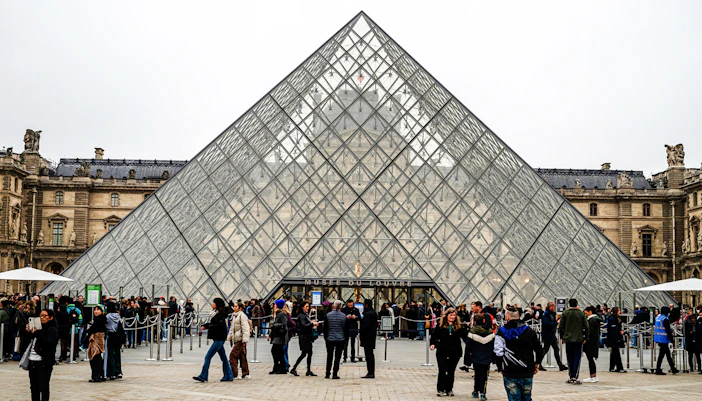
Allow 60–90 minutes if you want 'Venus de Milo', the medieval Louvre remains, and a focused Egyptian route. Give it 90–120 minutes with an audio guide or guide. Anything shorter turns Sully into a corridor, not a wing.
Where it fits in your itinerary
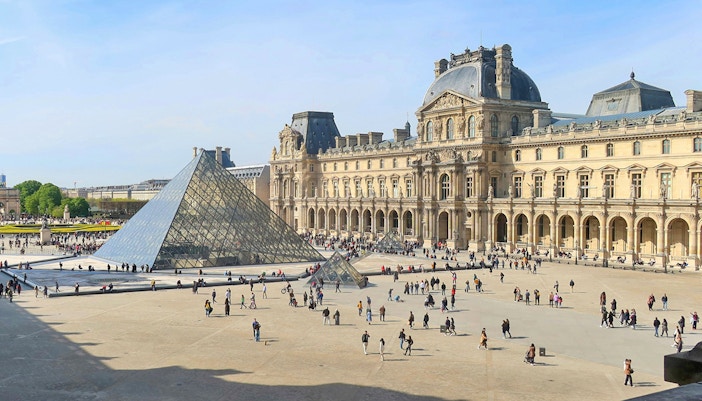
Sully sits near the museum’s centre, so it works best as your opening wing or as a reset after Denon. You can usually reach the first rooms within 10–15 minutes of entry. See it before museum fatigue sets in.

Crowd patterns
Crowds peak around 11am–2pm, especially near Venus de Milo and the rooms that funnel traffic between wings. The Egyptian galleries absorb people better and often feel steadier. If you dislike bottlenecks, avoid using Sully as a midday shortcut.
What to prioritize if time is short
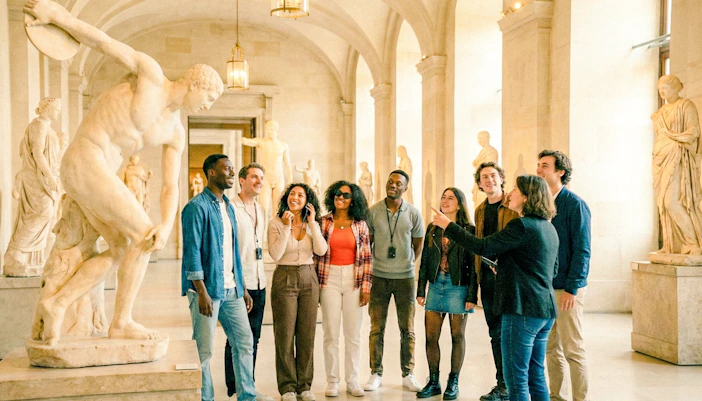
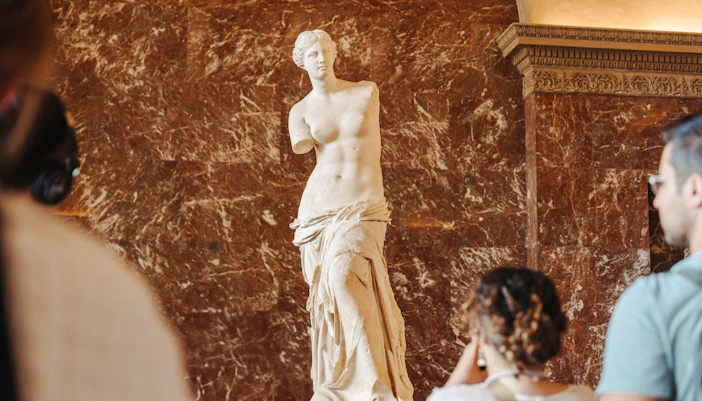
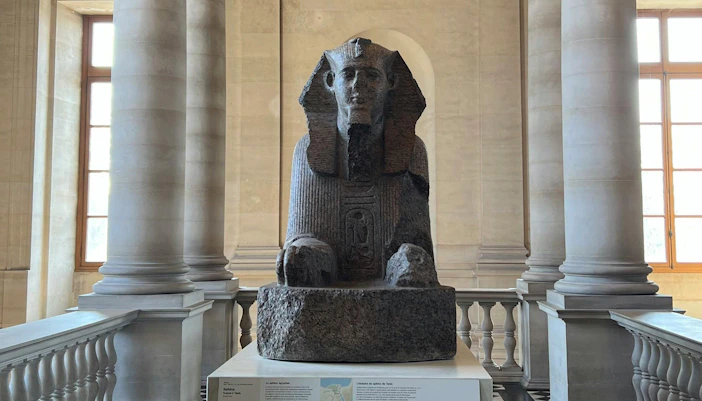
If time is tight, focus on the medieval Louvre foundations, Venus de Milo, the Great Sphinx of Tanis, and the Salle des Caryatides. Those stops show Sully’s full range quickly. Skip smaller side rooms first, not these anchors.

Common mistakes to avoid
Most visitors drift into Sully only after chasing the 'Mona Lisa' and arrive tired. Another common mistake is staying on one level and missing the basement fortress remains. Pick one vertical route and follow it deliberately.
Best tickets to experience the Sully Wing
| Ticket type | Why choose it |
|---|---|
Reserved access | Enter at a fixed time and reach Sully before cross-wing traffic builds. Best if you want to set your own pace. |
Guided tour | Best for turning Sully’s mixed collections into a clear story, especially if the medieval remains and antiquities matter to you. |
Assisted entry with orientation | Useful if Louvre navigation stresses you out. A host gets you in smoothly and points you toward the right wing fast. |
Why it’s worth seeing
Sully is the Louvre’s most layered wing because it lets you read the building and the collection at the same time. Most visitors know it for the 'Venus de Milo', but fewer realise this is also where you can stand inside the remains of the original medieval Louvre. If you move through Sully in a deliberate sequence, the museum stops feeling like separate departments and starts making historical sense.

Lower ground floor: Medieval Louvre
Start below the palace in the remains of Philip Augustus’s 12th-century fortress. You’ll see the base of the original keep, defensive walls, and the moat that explain why the Louvre began as a stronghold rather than a museum. Seeing this first changes everything above you, because the later palace was built over a military structure.
Ground floor: Egyptian antiquities
Move up into the Egyptian collections, where the scale shifts from architecture to objects, funerary sculpture, and royal imagery. The Great Sphinx of Tanis is the clearest anchor, but the surrounding galleries reward slower looking with reliefs, statues, and writing from different dynasties. This part of Sully usually feels more absorbable than Denon’s headline rooms.
Upper levels: Greek sculpture and royal rooms
Finish with Sully’s best-known sculpture rooms, especially 'Venus de Milo' and the Salle des Caryatides. The contrast matters: after the fortress and Egyptian galleries, Sully ends on idealised bodies, ceremonial space, and the Louvre’s royal afterlife. This is the point where the wing stops feeling like a detour and starts feeling essential.
Historical and cultural significance
What many visitors miss is that Sully lets you stand inside the medieval Louvre itself. Beneath and around this wing are remains of the 12th-century fortress begun under Philip Augustus, while the upper levels reflect the site’s later transformation into a royal palace and, eventually, a public museum. Today, Sully remains one of the clearest places to understand the Louvre as a building, not just a collection.
👉 Explore the full history of the Louvre Museum
Notable figures
Philip II Augustus | King
Ordered the 12th-century fortress whose moat and foundations survive beneath Sully.
Pierre Lescot | Architect
Helped replace the medieval stronghold with a Renaissance palace that shaped the later Louvre.
Jean Goujon | Sculptor
Created reliefs and caryatids tied to the early royal interiors associated with Sully.
Maximilien de Béthune, Duke of Sully | Statesman
The central pavilion and wing take his name, linking the space to the Bourbon-era state building.
Know before you go
- Open: Monday, Thursday, Saturday, and Sunday, 9am–6pm
- Late hours: Wednesday and Friday, 9am–9pm
- Last entry: 1 hour before closing
- Rooms close: 30 minutes before the museum's closing time
Address: Musée du Louvre, Rue de Rivoli/Cour Napoléon, 75001 Paris
- Nearest metro: Palais Royal–Musée du Louvre (Lines 1 and 7) connects well to the Carrousel entrance; Louvre-Rivoli (Line 1) is useful from Rue de Rivoli
- Entry point: Enter through the Pyramid or Carrousel du Louvre entrance, then follow signs for Sully
- Time from entrance: Allow about 10–15 minutes from security to reach Sully’s first rooms
- Direct access: There is no street-level entrance straight into Sully; you must enter the Louvre first and navigate internally
- Wheelchair access: The Louvre is wheelchair- and stroller-accessible, and Sully can be reached by elevator
- Vertical circulation: Elevators connect the lower ground, ground, and upper levels used by Sully displays
- Audio support: Reserved access tickets can include an audio guide in multiple languages
- Guided support: Small-group guided tours use headsets when appropriate, which helps in louder rooms
- Pacing: Sully is large, so reduced walking time usually means choosing a short route rather than trying to cover every room
- Photography: Non-flash photography is generally allowed; flash, extra lighting, and selfie sticks are prohibited
- Bags: Large bags and suitcases are not permitted; free lockers are available for smaller items
- Re-entry: Re-entry is not permitted once you leave the museum
- Food and drink: Not permitted inside gallery spaces
- Security: Timed entry skips the ticket counter, but security checks still apply and can take 15–30 minutes
- Walking: Sully is spread across multiple floors and long corridors
- Standing: Expect 60–120 minutes on your feet for a focused Sully visit
- Stairs: Some internal routes include stairs, though elevators are available
- Difficulty: Easy to moderate for most visitors if you pace the visit well
- Alternative: Use elevators and break the wing into one floor at a time if you don’t want a continuous walk
Frequently asked questions about the Sully Wing
Yes. Entry to Sully Wing is included with every valid Louvre Museum ticket. No separate ticket exists.
No. Any Louvre ticket includes Sully. Reserved access helps you reach it sooner, while guided tours or audio guides add context.
No. Sully Wing has no independent entrance. You must enter the Louvre first, then follow internal signs to the Sully areas.
You can reach Sully early because it sits near the museum’s center. Allow about 10–15 minutes from entry once security is cleared.
Allow 60–90 minutes self-guided, or 90–120 minutes with a guide or audio guide. The wing rewards a slower, multi-level route.
Yes. Sully Wing appears on many Louvre guided routes. Guides help connect the medieval remains, antiquities, and sculpture into a clear sequence.
Sully feels more layered and less linear, mixing medieval remains, Egyptian antiquities, and classical sculpture. Denon draws the biggest crowds, while Richelieu feels roomier and more decorative.
Yes. Sully gives you medieval remains, Egyptian highlights, and Venus de Milo in one wing. It’s one of the smartest short-route choices inside the Louvre.
Yes, but only without flash or extra lighting. Selfie sticks are prohibited, and crowd-control staff may intervene in tighter rooms.
Sometimes. Temporary exhibitions change across the museum, so check the Louvre calendar before planning Sully around a fixed seasonal display.