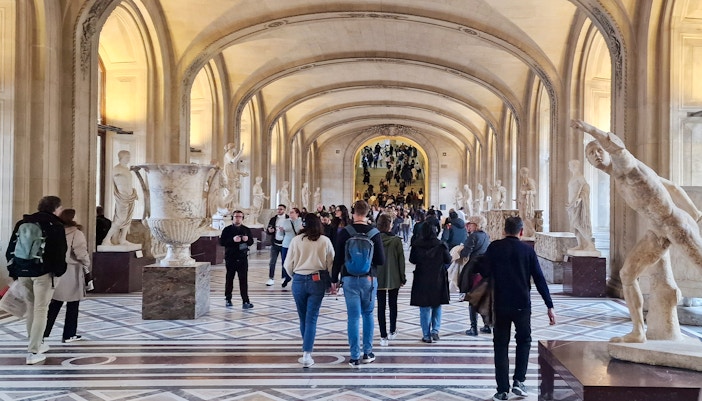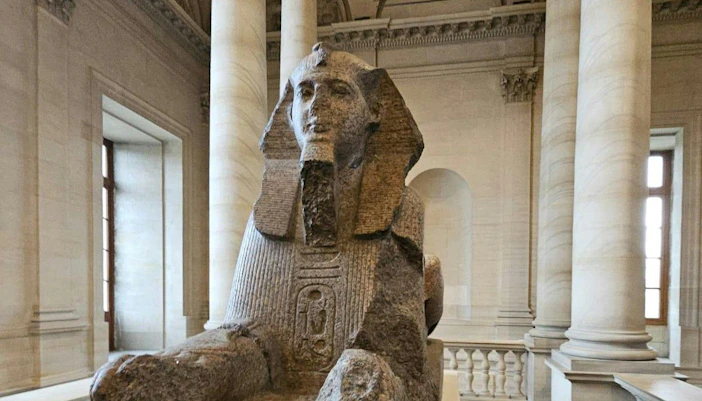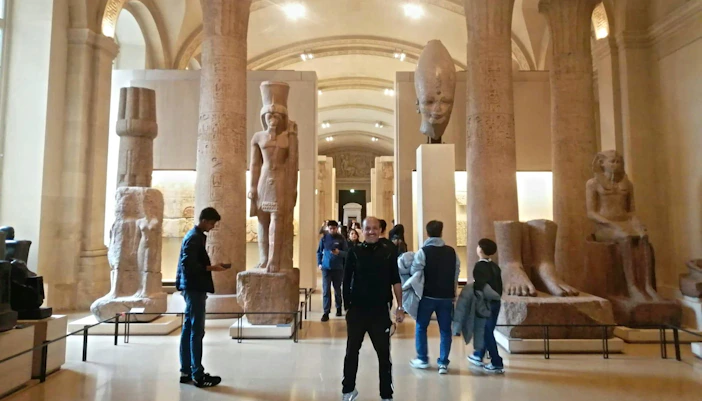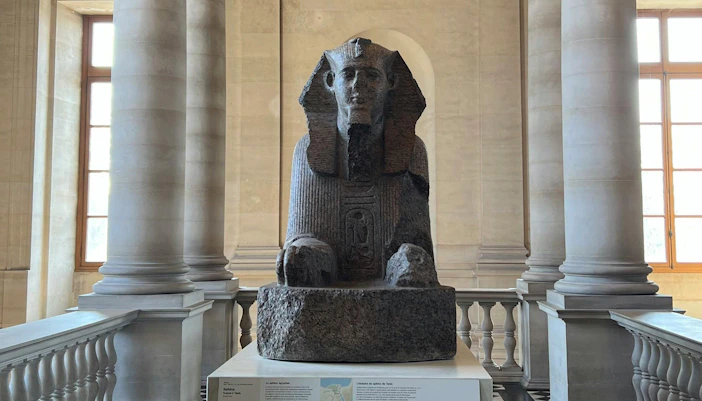














Go early if this is your priority. The first 60–90 minutes after opening usually feel calmer here than late morning, when Louvre traffic spreads into Sully. If you want more space around the cases, don’t leave this department for after lunch.
Included with The Louvre Museum tickets
Timings
RECOMMENDED DURATION
5 hours

Emilienne C
Nasser A
Jakub D
+5 more
Makiel D
+1 more
Julie P
+1 more
Isabel C
Michaela S
Leutellier K
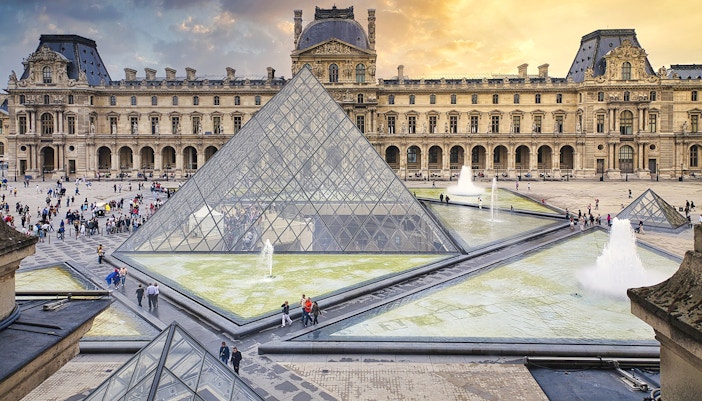
Egyptian Antiquities is included with all Louvre Museum tickets. No separate ticket is needed. The department sits mainly in the Sully Wing across the lower ground and ground floors, and you can make it one of your first stops after entering through the Pyramid or Carrousel. Book reserved access or assisted entry if you want to reach Sully quickly and start here before museum-wide traffic builds.
Go early if this is your priority. The first 60–90 minutes after opening usually feel calmer here than late morning, when Louvre traffic spreads into Sully. If you want more space around the cases, don’t leave this department for after lunch.
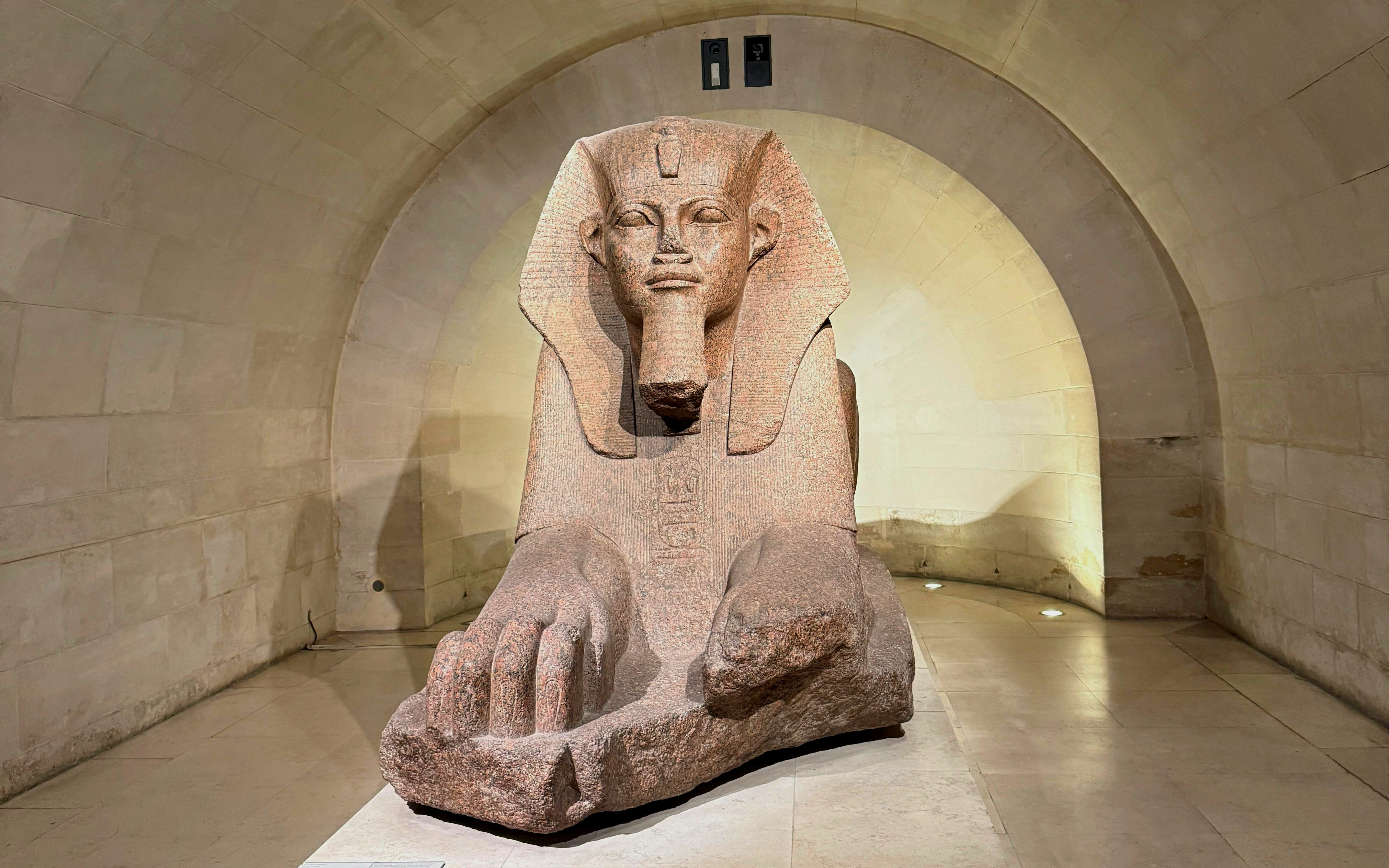
Allow 30–45 minutes for a highlights pass, or 60–90 minutes for a focused visit. The Great Sphinx of Tanis, the Seated Scribe, coffins, and relief rooms need time to register. Don’t squeeze it into a 15-minute detour.
Make this your first major stop if Ancient Egypt is the reason you came. Most visitors drift toward Denon first, so Sully often rewards deliberate planning. If you save it for the end, long museum walking usually shortens your attention span.
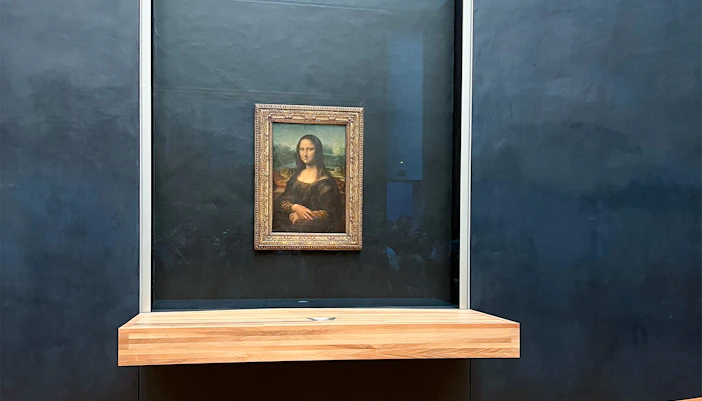
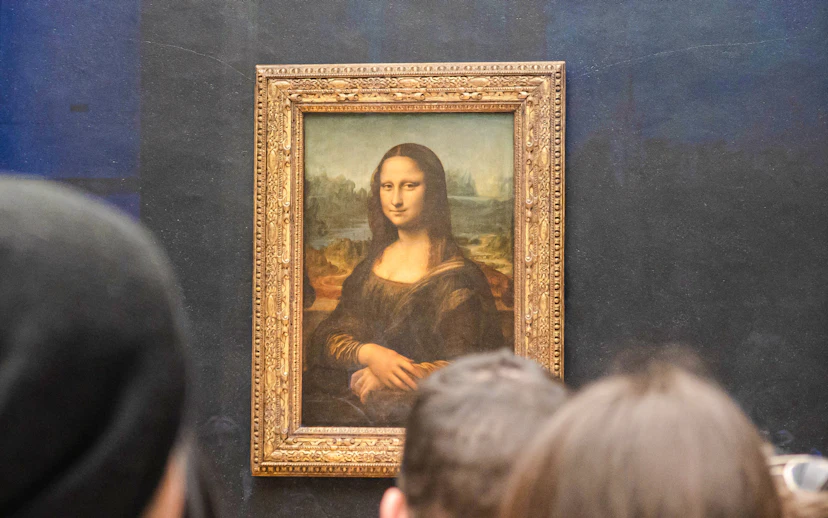
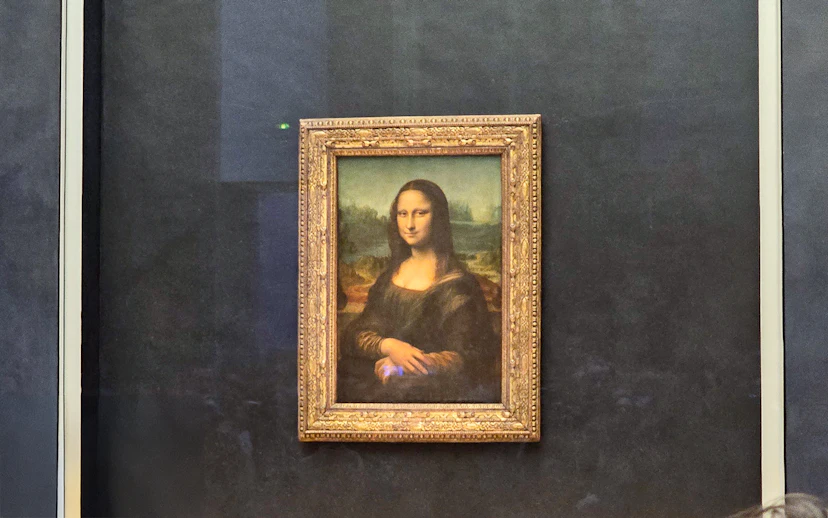
These rooms are calmer than the Mona Lisa circuit, but they’re not empty. Foot traffic usually rises from about 11am–3pm as school groups and late starters fan out. If you want easier sightlines around the Sphinx, avoid that window.
Start with the Great Sphinx of Tanis, then the Seated Scribe, then one funerary section with painted coffins or carved reliefs. Move from monumental stone works to smaller cases. Otherwise, the department can blur into a long sequence of objects.
Most visitors walk too quickly and read too little here. Alternate your pace between statue, case, and wall relief so the collection doesn’t flatten out. Another common mistake is entering without a wing plan — go to Sully first, not Denon.
| Ticket type | Why choose it |
|---|---|
Reserved access | Best if you want to go straight to Sully and explore independently without losing time at the ticket counter. |
Assisted entry | Useful if Louvre arrival logistics feel confusing; the hosted intro helps you get oriented before heading to Egyptian Antiquities. |
Small-group guided tour | Choose this for expert context and easier navigation, but confirm the route includes Egyptian Antiquities before booking. |
What makes the Louvre Egyptian collection worth slowing down for is range: you’re not looking at a single tomb, but at writing, sculpture, burial objects, temple fragments, and royal imagery across millennia. Most visitors expect mummies and leave remembering stone faces, painted coffins, and the department’s quieter rhythm. Follow the zones below in order, because this part of the museum reads best as a sequence rather than a checklist.
Start on the lower ground floor with the Great Sphinx of Tanis. It anchors the department physically and mentally: one massive granite form, worn but still authoritative, set among other large-scale works. This is the right place to reset your museum pace. Stand slightly off-center first, then circle slowly so the size and surface damage read clearly.
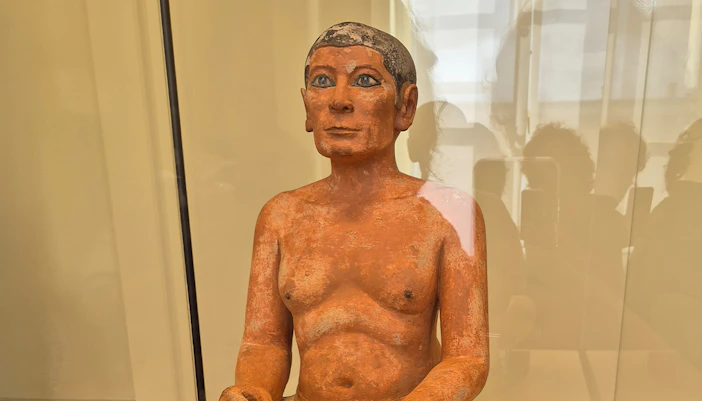
Move next into the galleries where smaller objects begin to matter. This is where the Seated Scribe changes the tone of the visit: after the monumental stone works, you suddenly meet a face that feels alert and individual. Stay long enough to compare statues, tools, and inscriptions. The department becomes easier once you see it as a civilization of people, not only rulers.
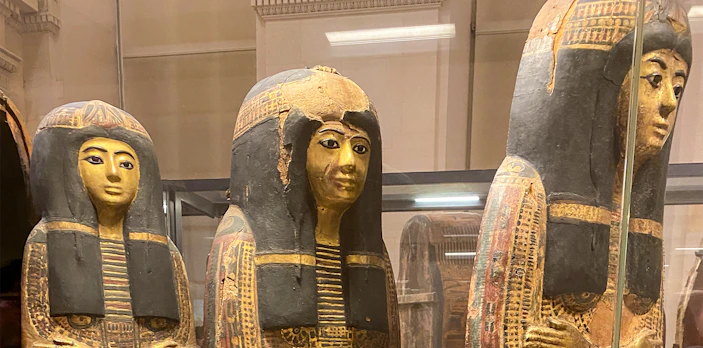
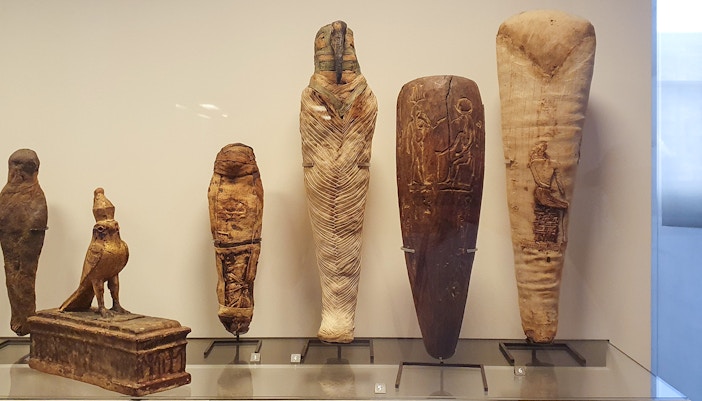
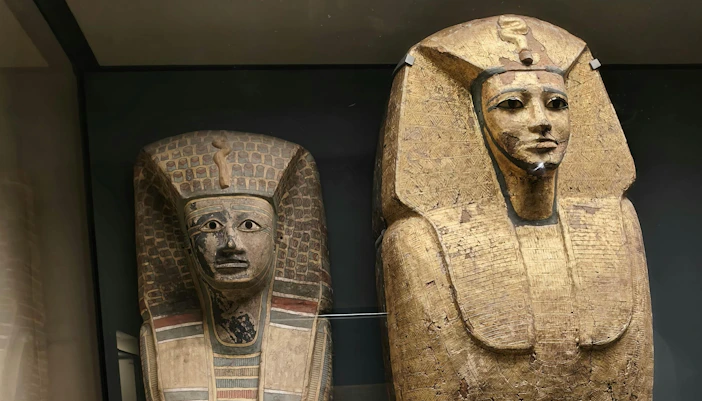
Finish in the funerary and chapel-focused rooms, where painted coffins, carved reliefs, and architectural fragments show how Egyptians planned for the afterlife. These galleries reward slower looking because surface detail does much of the work. Look first at the wall carving, then at the object beside it. That sequence helps the symbols, ritual scenes, and scale make sense.
The Egyptian Antiquities department took shape in the 19th century, when France turned Egyptology into a serious scholarly field after hieroglyphs were deciphered. Formally established at the Louvre in 1827, it expanded the museum beyond royal collections and European painting into the study of ancient civilizations. Today, it still functions as a teaching collection as much as a display, used by researchers, school groups, and first-time visitors to read Egypt through objects, script, and ritual.
👉 Explore the full history of the Louvre Museum
Created the Louvre’s Egyptian Museum in 1827, giving the collection formal institutional status.
Deciphered hieroglyphs and became the first curator of the Louvre’s Egyptian collection.
Helped shape French Egyptology and expanded Egyptian holdings through excavation and scholarship.
Strengthened cataloging, research, and conservation around Egyptian antiquities in France.
Yes. Entry to Egyptian Antiquities is included with every valid Louvre Museum ticket. No separate ticket exists.
No. Any Louvre Museum ticket gets you in. Reserved access saves time, while guided tours add context once you reach the Sully Wing.
No. The department has no separate entrance. Enter through the Louvre and head to the Sully Wing inside the museum.
Whenever you choose. Most visitors can reach the first Egyptian rooms within 10–15 minutes of entering if they head straight to Sully.
30–45 minutes for highlights; 60–90 minutes for a focused visit. The collection is spread across multiple rooms, so rushing flattens the experience.
Not always. Many general Louvre tours focus on headline masterpieces, so check the route before booking if Egyptian Antiquities is your priority.
Yes. They’re generally calmer than Denon’s marquee galleries, though late morning and early afternoon still bring heavier museum-wide foot traffic.
Yes. Monumental statues, mummies, writing, and animals make it easier to follow than some painting-heavy wings.
Usually yes. Photography without flash is generally allowed, but flash, extra lighting, and selfie sticks are prohibited throughout the museum.
Yes. The Louvre is wheelchair accessible, and elevators can help you reach the Sully Wing’s Egyptian rooms without using stairs.
[Link to main Louvre Museum page]
[Link to Mona Lisa shoulder page]
[Link to Louvre highlights or masterpieces shoulder page]
Book a time that fits your schedule and explore at your own pace.
Inclusions #
Timed access to the Louvre
Access to the permanent and temporary collections
Audio guide available in English, Spanish, French, German, Italian, Portuguese, Chinese, Deutsch, Polish & Japanese (as per option selected)
1 – 1.5-hour Seine River cruise (as per option selected)
Inclusions #
Expert English, French, Spanish or German-speaking guide (as per option selected)
2 to 3-hour private guided tour of the Louvre
Timed access to the Louvre
Small group of up to 20 guests (as per option selected)
Semi-private group of 6 to 10 guests (as per option selected)
Private tour for your group of up to 6 guests (as per option selected)
Headsets when appropriate
Gain timed access to the Louvre and enjoy a scenic Seine River cruise in a convenient combo.
Inclusions #
Timed access to the Louvre
Audio guide available in English, Spanish, French, German, Italian, Portuguese, Chinese, Deutsch, Polish & Japanese
1-hour Seine River cruise
Get escorted past Louvre ticket lines with a hosted intro, then explore on your own with smart tips to find the masterpieces faster.
Inclusions #
Reserved access to the Louvre Museum
Hosted introduction to the museum and its highlights
Accompaniment to the museum’s main highlights for orientation (as per option selected)
Exclusions #
Guided tour inside the museum (visit is self-guided after the introduction)
Audio guide (available to rent at the museum)
See Paris in two complementary ways: understand its artistic legacy inside the Louvre with a licensed guide, then step back and take in the city’s grand scale from the Seine.
Inclusions #
1.5 to 3-hour English guided tour of the Louvre
Timed access to the Louvre
Small group tour up to 20 people
Headsets when appropriate
1 – 1.5-hour Seine River cruise with onboard audio guide available in 10+ languages