- Official name: Musée du Louvre, housed in the Louvre Palace
- Location: Cour Napoléon and Rue de Rivoli, 75001 Paris, France
- Category: Former royal palace and national art museum
- Origins: Began as a fortress in the late 12th century under Philip II
- Museum opening: 1793
- Main styles: Medieval, French Renaissance, Classical, Baroque-inflected palace design, and Modernist intervention
- Key architects: Pierre Lescot, Jacques Lemercier, Louis Le Vau, Claude Perrault, and I. M. Pei
- Scale: About 72,735 sq m (782,900 sq ft) of exhibition space across Denon, Sully, and Richelieu
- Headline fact: The medieval moat still survives beneath the later palace complex
Louvre Museum Architecture: fortress walls, royal façades, and Pei’s glass pyramid
Beneath the Louvre’s famous collections stands one of Paris’s most layered buildings: a medieval stronghold, a Renaissance palace, a Classical state monument, and a modern museum entrance gathered into one vast ensemble. The site first took shape under Philip II, then evolved through architects including Pierre Lescot, Jacques Lemercier, Louis Le Vau, and Claude Perrault, before I. M. Pei recast its arrival sequence with the glass pyramid in 1989. As you cross its courtyards and wings, the Louvre building reveals not 1 style, but 8 centuries of French power, taste, and reinvention. That architectural story is worth noticing before you even look at the art.
Quick overview of the architecture of Louvre Museum
Quick overview
Architectural style(s) & influences
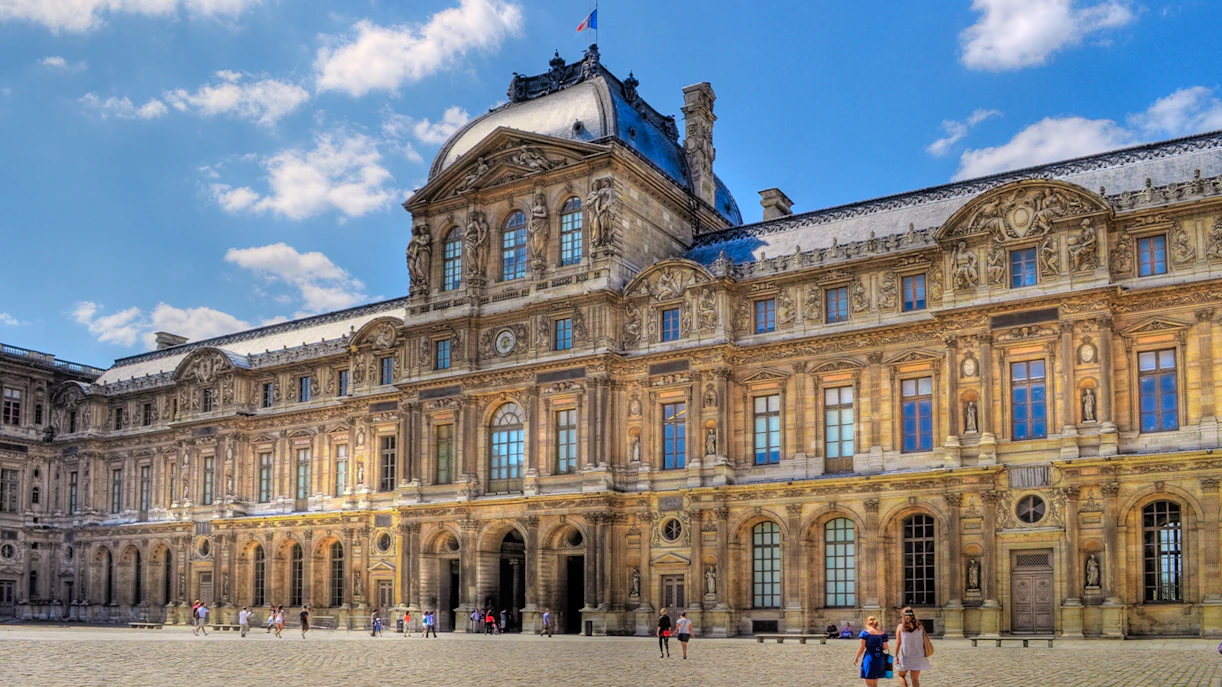
The Louvre is best understood as a stone timeline rather than a single-style monument. Its oldest layer is Medieval — defensive architecture built for protection, with thick walls, towers, and a moat. The French Renaissance sections, especially around the Lescot Wing, bring symmetry, sculpted reliefs, and ornament inspired by ancient Rome. Classical architecture appears in more formal façades and courtyards, where repeated windows, pilasters, and long horizontal lines create order and ceremony. Later palace additions add richer rooflines, domed pavilions, and more theatrical scale. Then I. M. Pei’s Modernist pyramid introduces glass, steel, and pure geometry. You can read these shifts clearly on-site by comparing the carved limestone of Cour Carrée with the crisp transparency of the Pyramid.
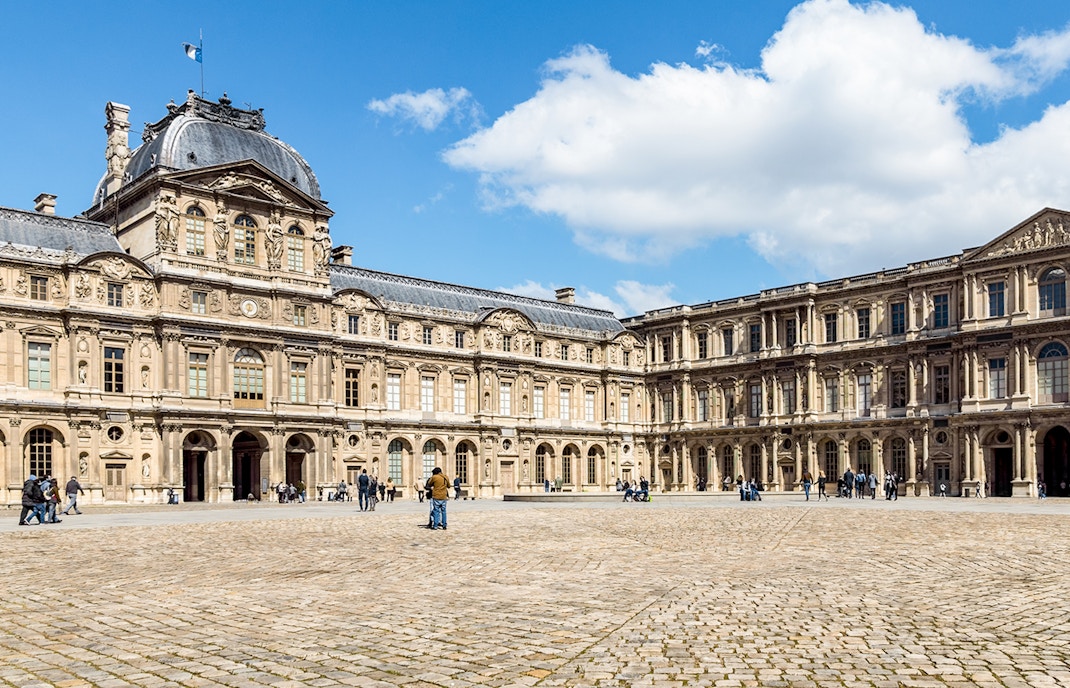
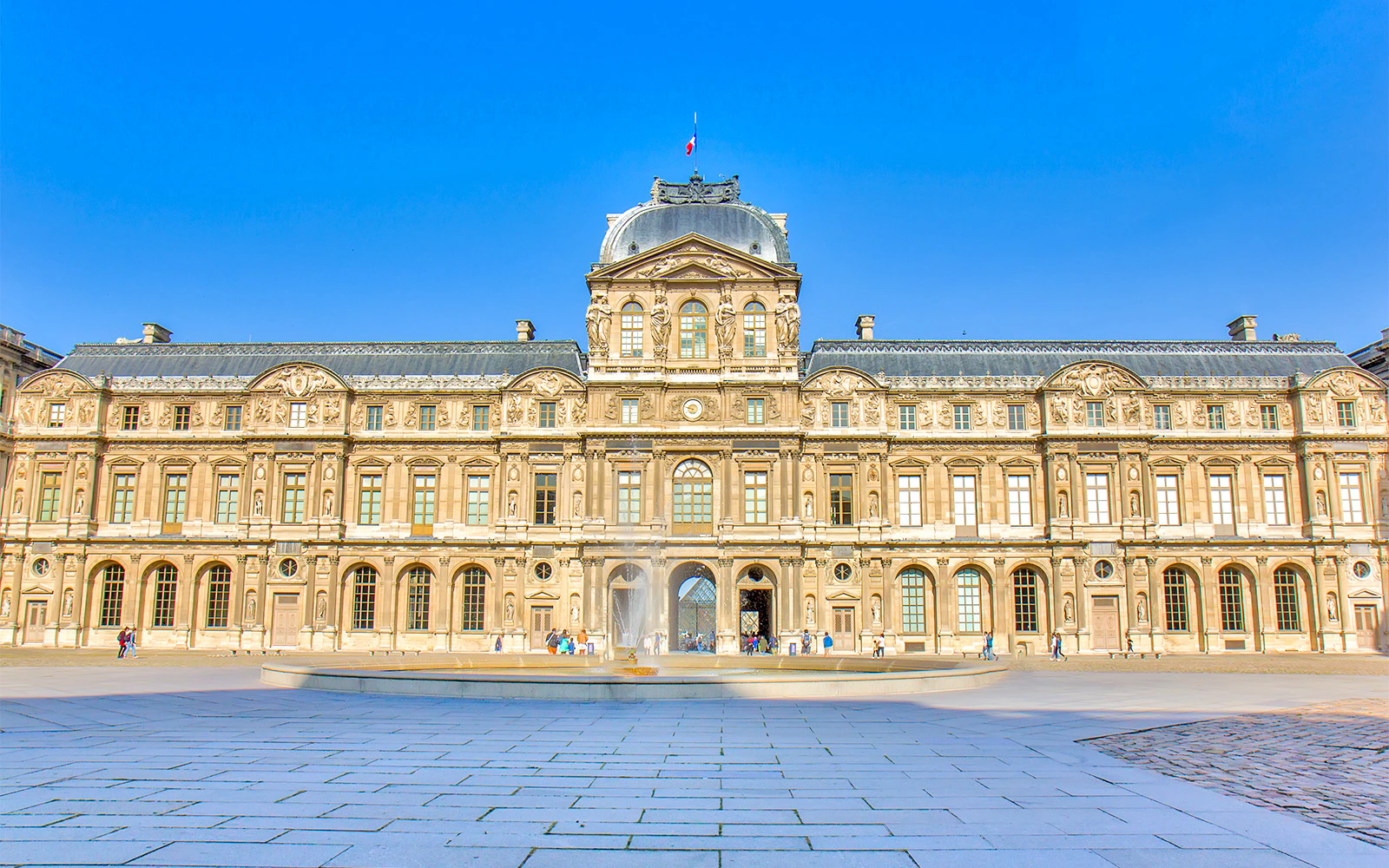
Lescot Wing, Cour Carrée
Renaissance proportions, sculpted panels, and tall dormer windows show the Louvre moving away from fortress mass toward courtly elegance.
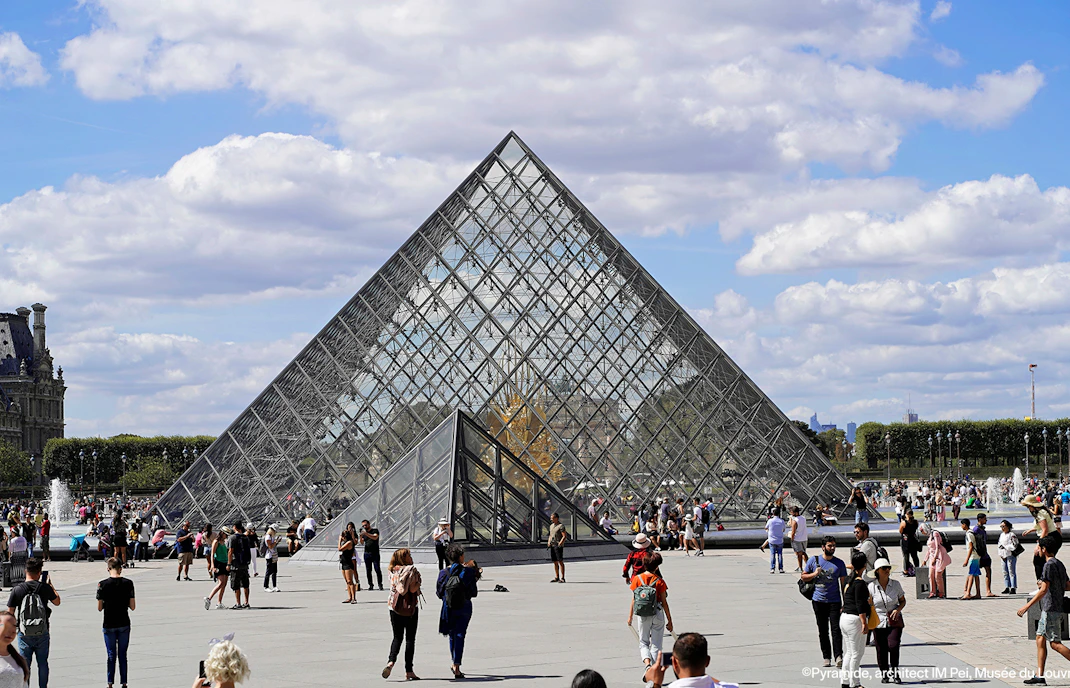
Pyramid in Cour Napoléon
Pei’s glass geometry creates a sharp, modern counterpoint to the long palace façades and mansard roofs around it.
Architectural highlights of Louvre Museum / Design highlights & iconic features
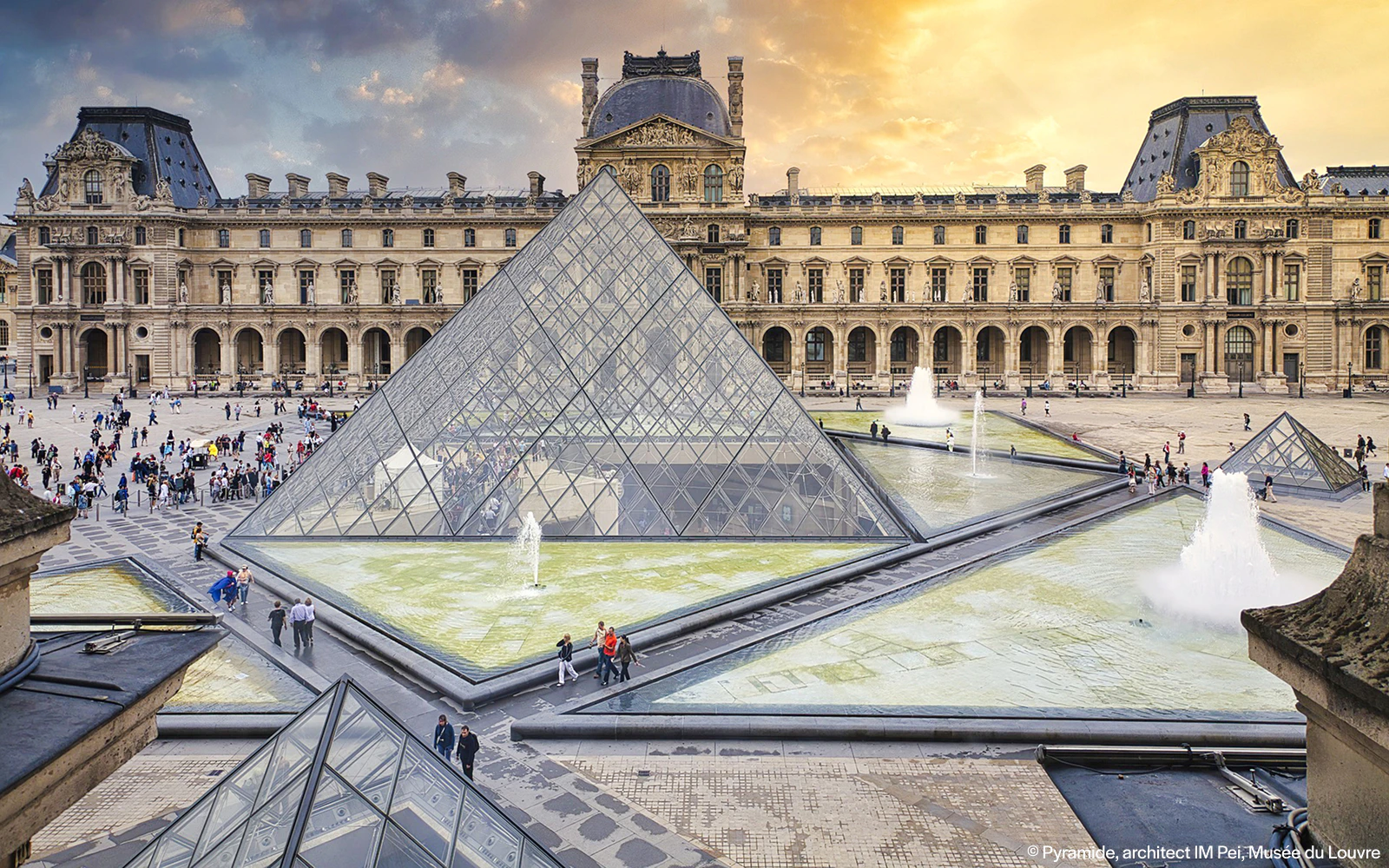
The glass Pyramid
Set at the heart of Cour Napoléon, the Pyramid turns a ceremonial courtyard into a clear modern entrance, reflecting sky, stone, and shifting Paris light throughout the day.
History of Louvre Museum’s architecture / Stages of construction
Fortress foundations
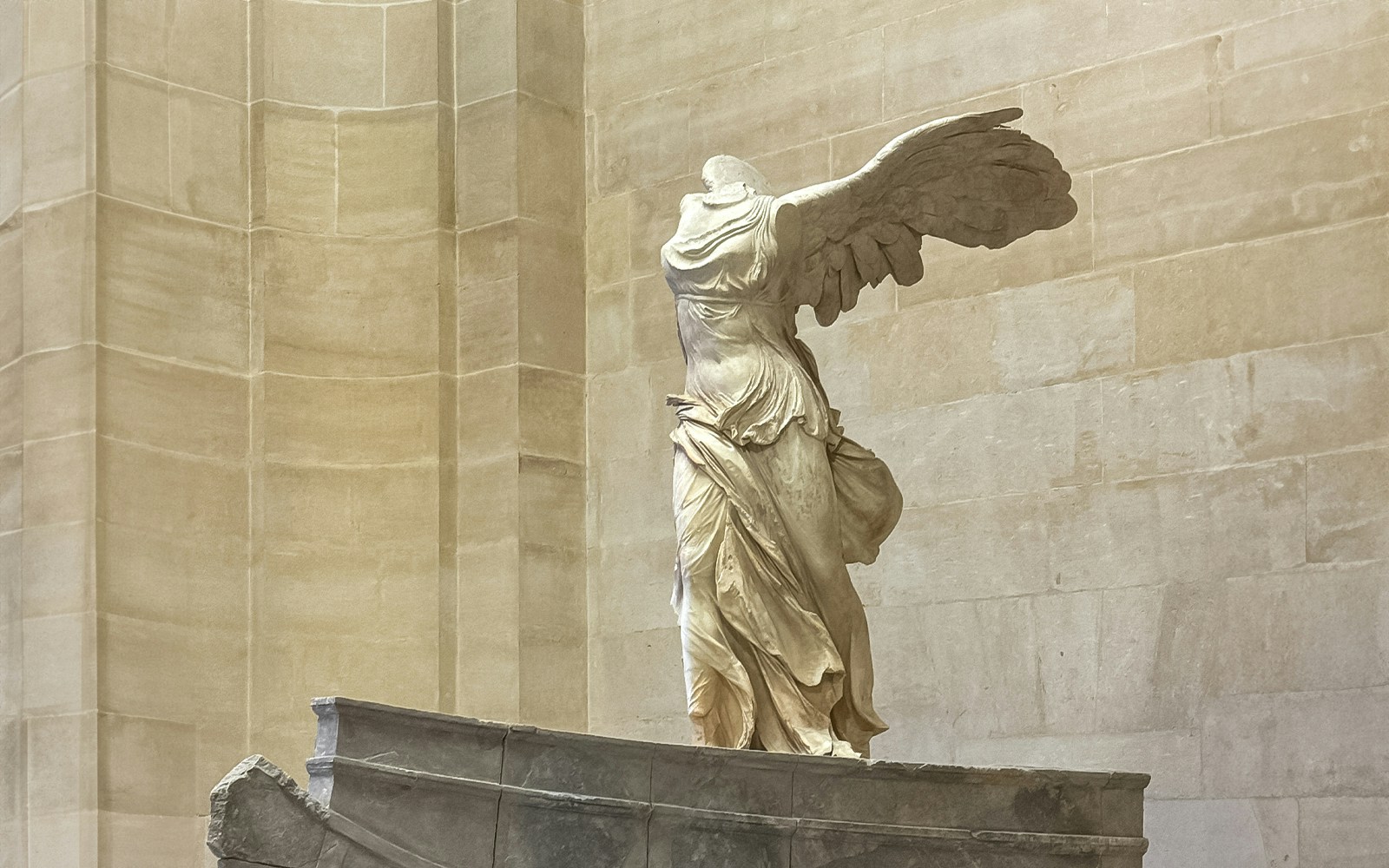
The original Louvre was built in the late 12th century under Philip II as a fortified structure defending Paris. Its thick walls, towers, and moat belonged to a military landscape, not a museum. Parts of that medieval base still survive below ground and remain the clearest physical trace of the first Louvre.
Renaissance rebuilding
In the 16th century, Francis I began transforming the site into a royal residence. Pierre Lescot’s new wing and Jean Goujon’s sculpture introduced the language of the French Renaissance: symmetry, classical ornament, and a more elegant relationship between façade and courtyard.
Royal expansion
From the 17th century onward, successive rulers enlarged the palace with new courts, wings, and façades. Architects including Jacques Lemercier, Louis Le Vau, and Claude Perrault pushed the Louvre toward monumental palace architecture, linking it more closely with royal ceremony and state power.
Museum and modern intervention
After the French Revolution, the palace became a public museum in 1793. The biggest recent shift came with the Grand Louvre project in the 1980s, when I. M. Pei introduced the Pyramid and underground circulation hall. Current preservation and expansion efforts continue to adapt the building to modern visitor numbers.
👉 Discover how a medieval fortress became the Louvre in our Louvre Museum history guide.
Who designed/built Louvre Museum?
Pierre Lescot
Lescot shaped the early Renaissance Louvre in the 1540s, replacing fortress fabric with a refined court façade that set the tone for later palace design.
Claude Perrault
Perrault helped define the 17th-century east colonnade, giving the Louvre a more formal Classical identity rooted in proportion and restraint.
I. M. Pei
Pei designed the 1989 Pyramid and underground lobby, solving modern circulation problems while making the museum’s entrance legible to millions of visitors.
The exterior of Louvre Museum
A palace on a grand scale
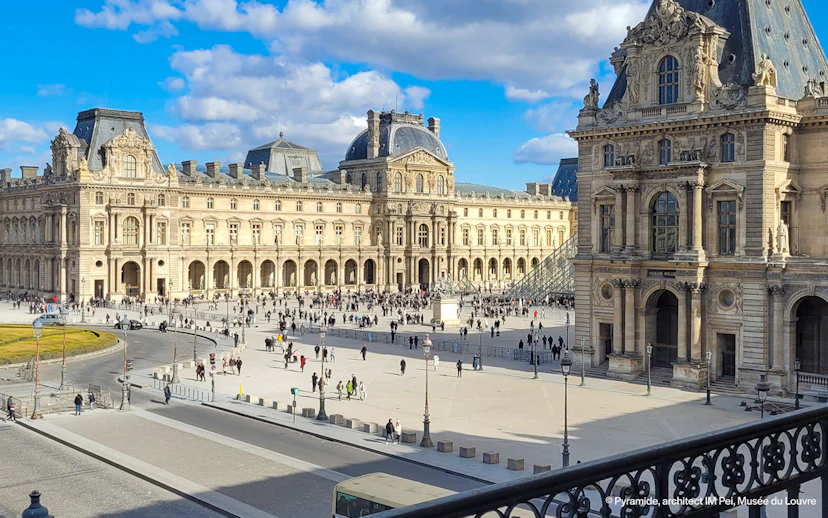
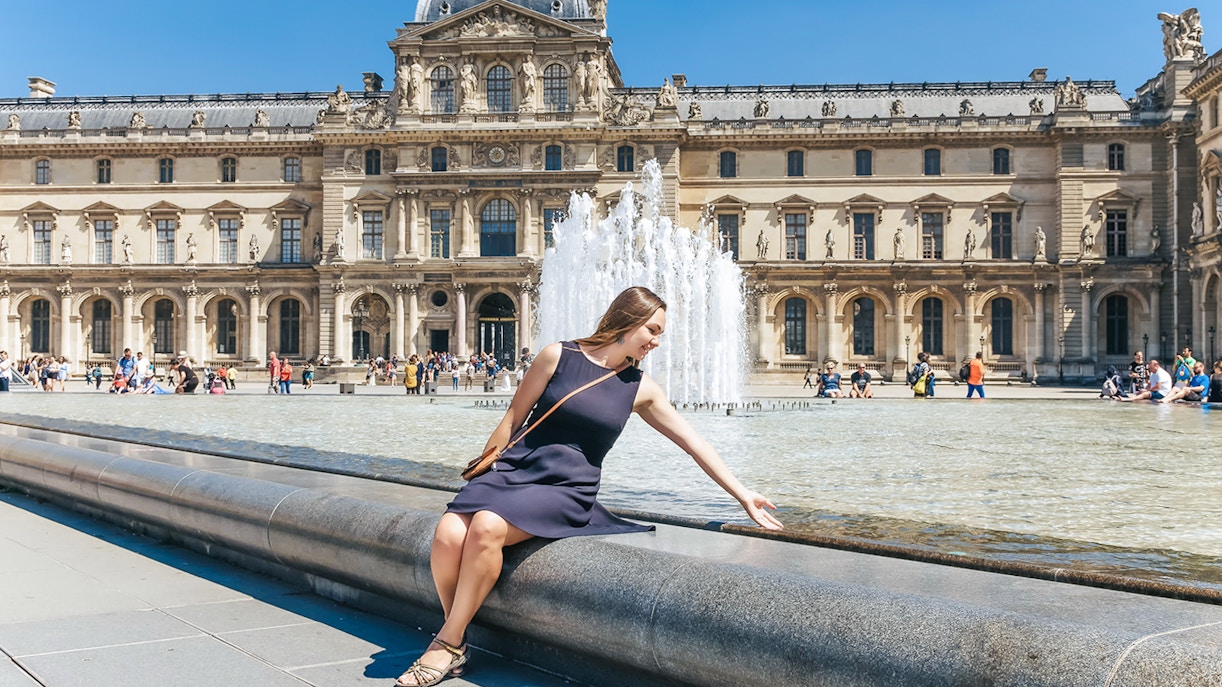
From a distance, the Louvre feels more like a city of stone than a single building. Long limestone wings frame vast courtyards, while pavilions, domes, and slate roofs shape the skyline. From the Tuileries or Cour Napoléon, its symmetry and scale make the approach feel almost ceremonial.
Details across the façades
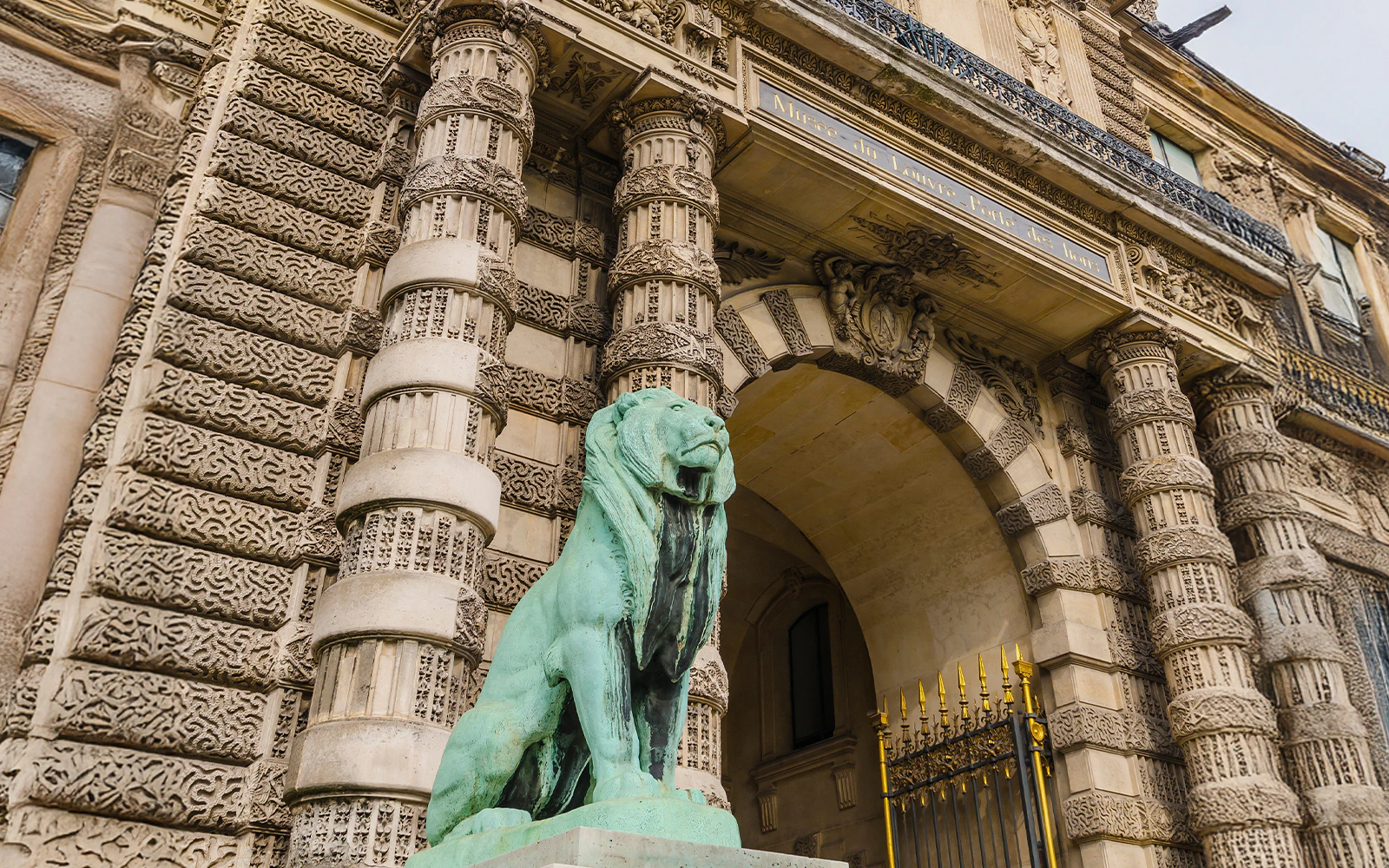
Up close, sculpted pediments, carved reliefs, ornate window surrounds, and roof dormers stand out against the pale façades. Signs of weathering and restoration also reveal how the palace has been maintained and adapted over centuries.
The old meets the new
I. M. Pei’s Glass Pyramid creates a striking contrast with the historic palace, pairing transparent geometry with centuries-old stonework. Together, the different architectural layers make the Louvre feel like an archive of its own history.
The interior of Louvre Museum
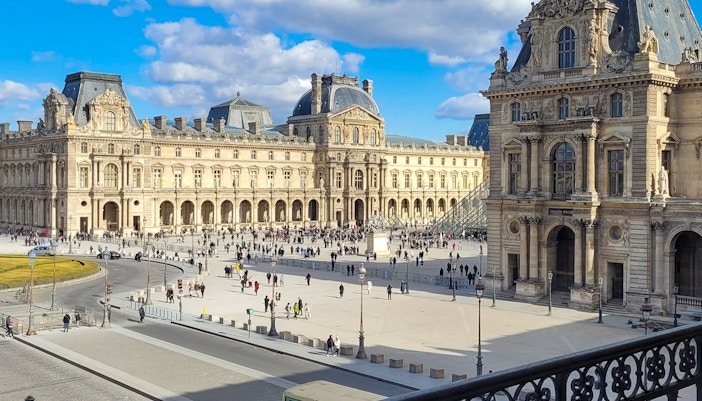
Basement and medieval remains
One of the most revealing interior zones lies below the main palace floors. Here, the surviving moat and fortress walls ground the Louvre in its earliest identity, with rough masonry and defensive geometry that feel completely different from the polished museum above.
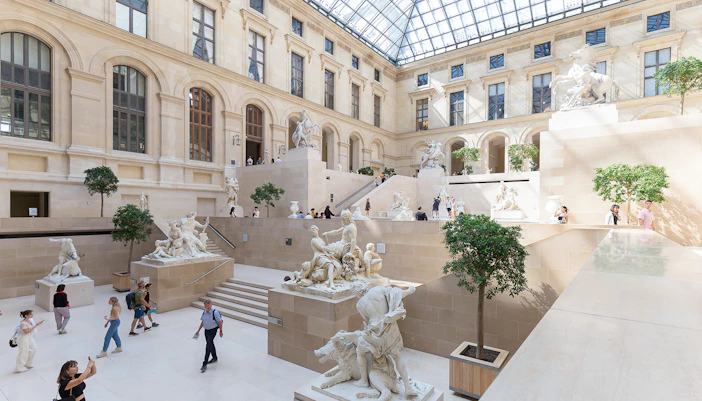
Ceremonial circulation spaces
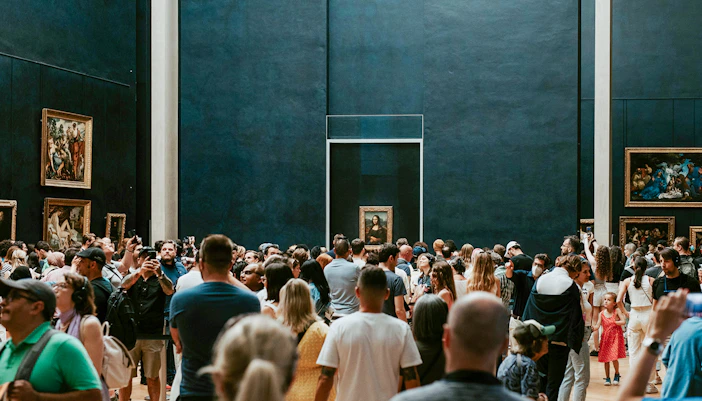
The palace interiors become more theatrical as you move upward. Staircases such as the Daru staircase, vaulted passageways, and long gallery axes were designed to impress through movement, not just decoration. Even when crowded, these spaces still guide your eye with strong symmetry and controlled perspective.
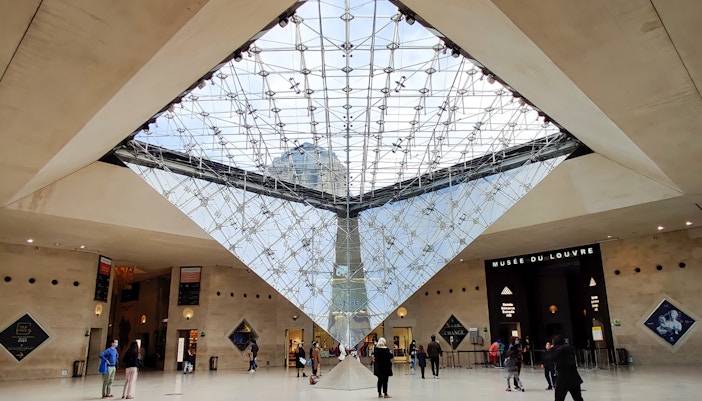
Royal galleries and palace rooms
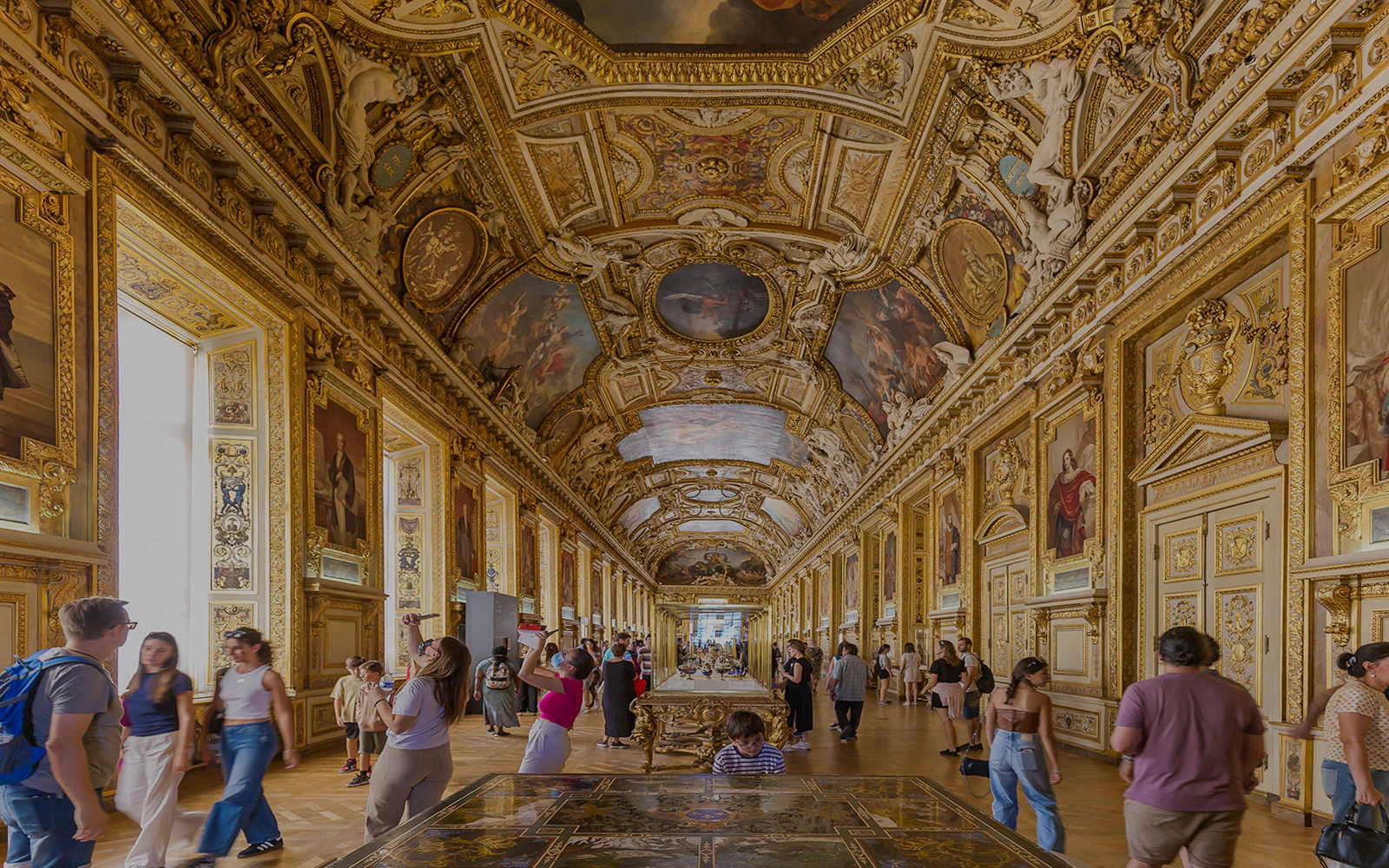
In areas such as Galerie d’Apollon and the former apartments, ceiling painting, gilding, and richly articulated wall surfaces show the Louvre at its most courtly. These rooms are not simply containers for artworks; they are part of the architectural experience themselves.
👉 Want to see what’s inside? Explore the Louvre’s rooms, routes, and standout spaces in our complete interior guide.
Frequently asked questions about Louvre Museum’s architecture
It began in the late 12th century as a fortress built for defense, then gradually became a Renaissance and Classical royal palace. After the French Revolution, the palace opened as a public museum, and modern additions such as the Pyramid reshaped how visitors enter and move through it.
You can spot Medieval remains, French Renaissance façades, Classical court architecture, and modern design in the Pyramid. The building feels unusual because these layers remain visible side by side, rather than being hidden behind a single later redesign.
Because it doesn’t imitate the old stone architecture. Pei used simple geometric glass and steel, creating a clear contrast that keeps the historic façades legible while giving the museum a functional, central entrance and underground distribution hall.
Start with Cour Napoléon for the Pyramid and palace façades, then move to Cour Carrée, the medieval moat, the Daru staircase, and Galerie d’Apollon. For exterior photos, the Arc de Triomphe du Carrousel and the edges of Cour Napoléon give especially strong full-building views.
They meet around the main courtyards and the central underground concourse beneath the Pyramid. Sully sits closest to the historic core, while Denon and Richelieu extend outward, so navigation becomes easier once you think in terms of wings plus courtyards.
Yes, the museum’s main visitor routes are wheelchair and stroller accessible, and elevators support many levels. That said, the Louvre is vast, older in parts, and physically demanding, so it helps to plan a shorter route and allow extra time for movement.
Yes. If you want to explore independently, Louvre Museum Reserved Access Tickets works well for a 60–90 minute self-guided architecture loop. For more context at entry, Louvre Museum Reserved Access With Assisted Entry is helpful, while Louvre Museum Private Guided Tour Tickets offers the most flexible guided format.