The Louvre Museum

Coronation of Napoleon Tickets

Included with The Louvre Museum tickets

Timings

RECOMMENDED DURATION

5 hours
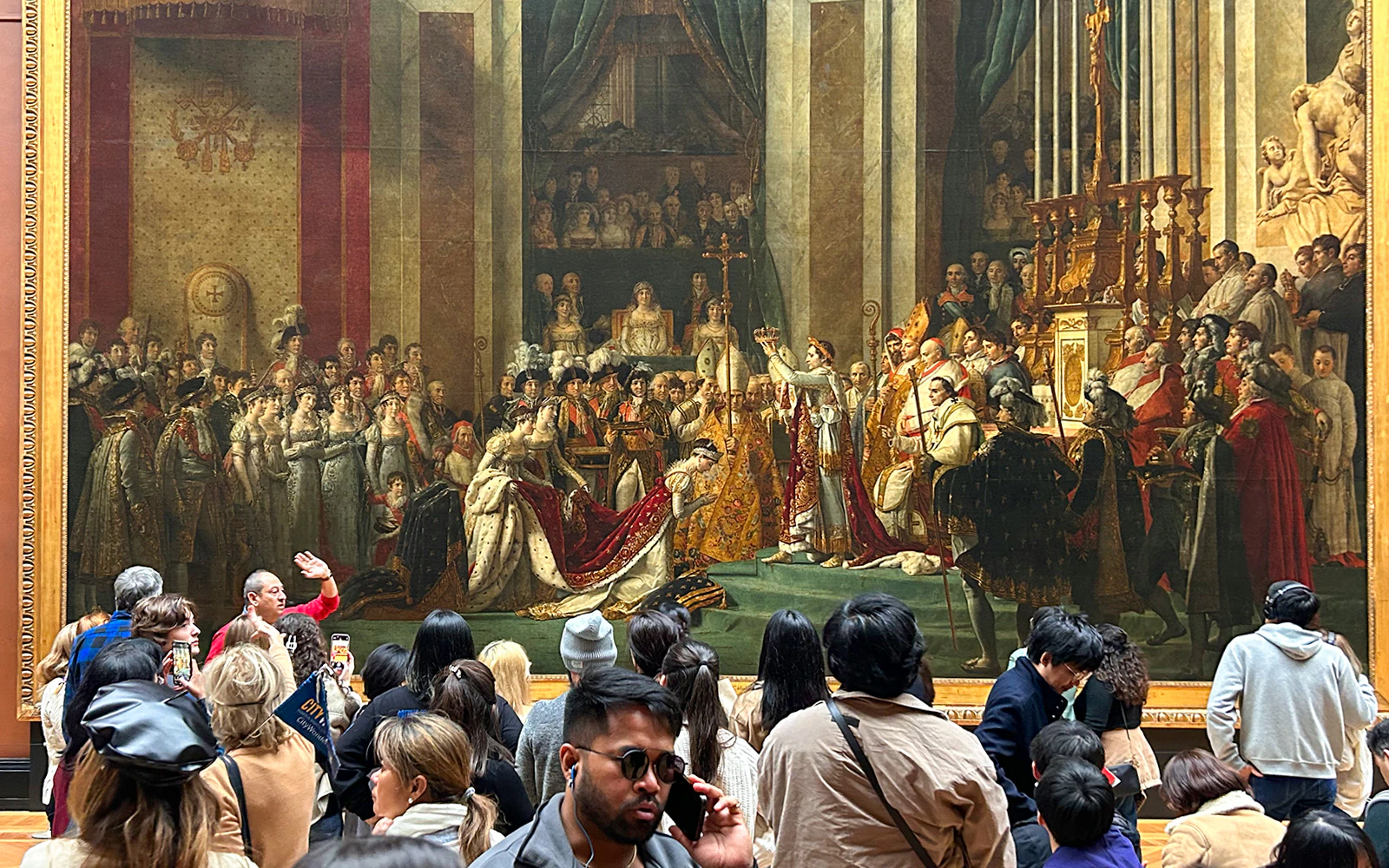
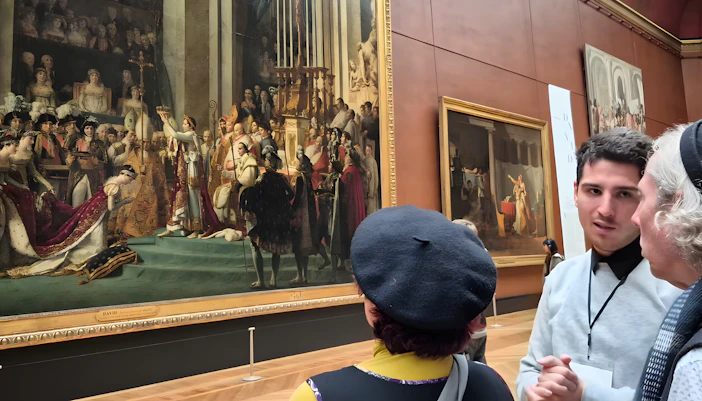
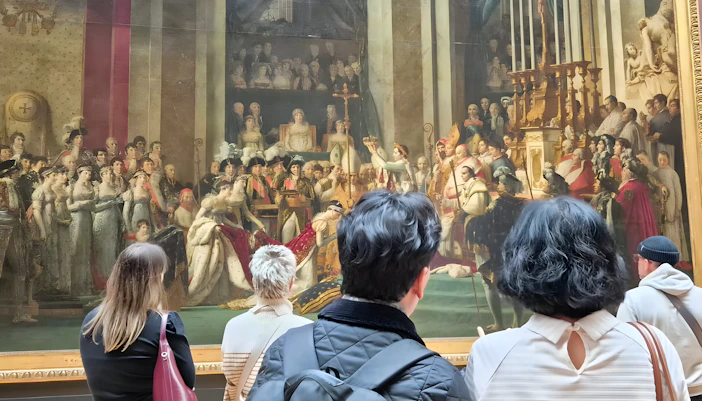
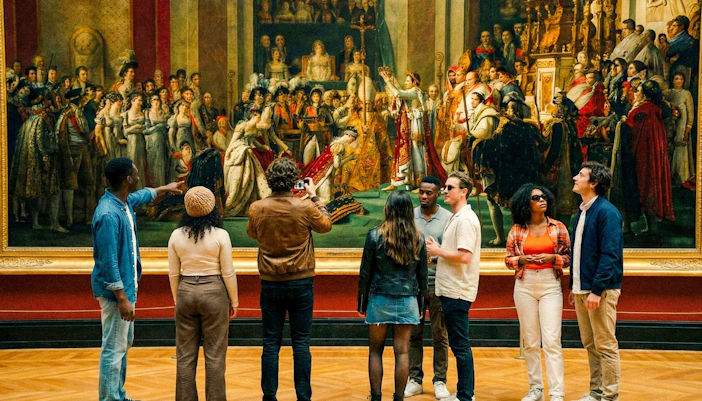
Tourists viewing "The Coronation of Napoleon" painting at the Louvre Museum, Paris.

Top things to do in Paris

Quick overview
Access: Included in all Louvre Museum tickets
Separate ticket: Not required
When you'll see it: Early or midway through the Denon Wing route
Visit duration: 10–15 mins self-guided/15–20 mins with a guide
Best time: 9am–10:30am, or after 4pm on Wednesdays and Fridays
Restrictions: Photography allowed (no flash); normal museum rules apply

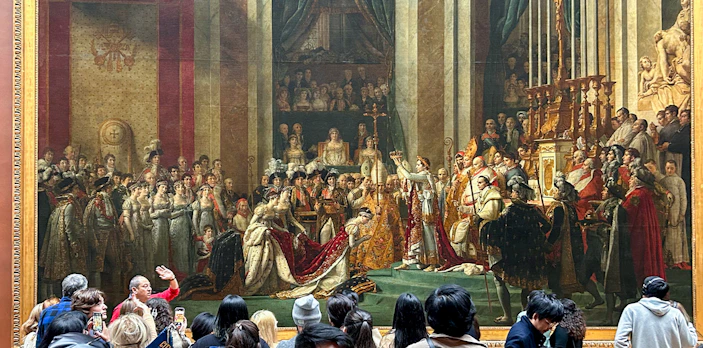
Napoleon's coronation painting by Jacques-Louis David in Louvre Museum, Paris.

The Coronation of Napoleon is included with all Louvre Museum tickets. No separate ticket is needed. You’ll find it in the Denon Wing on the 1st floor, and unlike fixed-route spaces, you can head there directly after entering the museum, so most visitors see it early or midway through their visit. Book reserved access, hosted entry, or a guided tour if you want to reach it without wasting energy in ticketing lines and crowded junctions.

How to best experience the 'Coronation of Napoleon'
Best time to visit
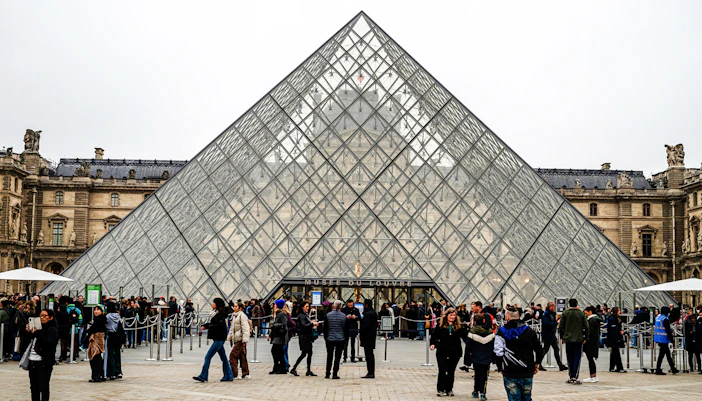
Go between 9am–10:30am, or after 4pm on Wednesday and Friday late-opening days. The Denon Wing gets noticeably busier once Mona Lisa-bound groups spill into nearby French painting rooms. If you arrive from 11am–2pm, expect interrupted sightlines and short waits for space in front of the canvas.

How long to spend

Plan 10–15 minutes self-guided, or 15–20 minutes with a guide. The canvas is 6.21m x 9.79m (20ft x 32ft), so you need time to scan from Napoleon to Joséphine to David’s self-portrait in the crowd. If you rush, it reads like a wall-sized backdrop instead of a staged political statement.

Where it fits in your itinerary

Put it early in a Denon Wing route, before the museum’s heaviest traffic drains your focus. From the Pyramid entrance, a direct walk usually takes about 15–25 minutes. See this before smaller rooms if you can; the painting works best when you still have the patience to step back and read it properly.

Crowd patterns

This gallery rarely reaches Mona Lisa-level density, but it does clog when guided groups stop here in waves around late morning. The busiest stretch is usually 11am–2pm. If the front row is blocked, wait 5 minutes rather than forcing a view from the side; most groups move on quickly.

What to prioritize if time is short

Stand halfway back, centered on the painting, so the composition opens up. First find Napoleon, Joséphine, and Pope Pius VII, then look high into the crowd for Jacques-Louis David painting himself into the scene. If time is tight, keep this stop and trim smaller nearby rooms instead.

Common mistakes to avoid

Most visitors walk too close and study one face at a time. Step back first; the logic of the scene only works at full width. Also, don’t follow a Mona Lisa-only route and leave the Denon Wing immediately afterwards, or you’ll miss one of the Louvre’s clearest examples of art as state power.

Best tickets to experience the 'Coronation of Napoleon'

Ticket typeWhy choose it

Reserved access

Pick a timed slot and reach the Denon Wing without losing 2–3 hours in the ticketing queue

Hosted entry

Best if Louvre navigation feels overwhelming; you’ll get inside fast and start oriented

Small-group guided tour

Best for decoding the ceremony, symbolism, and political staging built into the painting

Why it’s worth seeing

What makes The Coronation of Napoleon irreplaceable within the Louvre is its combination of scale and political theater: Jacques-Louis David turns one ceremony into a nearly 10m-wide argument for imperial legitimacy. Most visitors assume it shows Napoleon crowning himself, but the painting’s emotional pivot is him crowning Joséphine. Use the details below to read it from the center outward, so it feels like a staged message rather than just a very large canvas.

The center: Napoleon crowning Joséphine
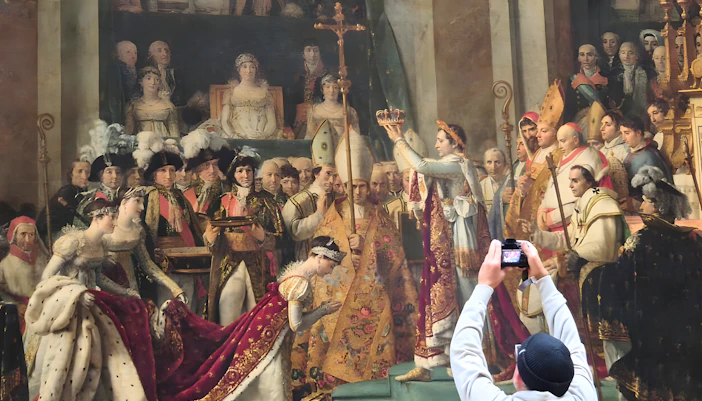
Stand slightly right of center and look to the raised crown above Joséphine’s bowed head. That gesture controls the whole painting. It shifts the image from simple ceremony to deliberate image-making, because David chooses the moment Napoleon looks most sovereign.

The seated Pope: Pius VII

Look just behind and left of the imperial couple. Pope Pius VII is present, but visually subdued, with a restrained blessing rather than command. That matters because it lets religion legitimize the scene without overpowering Napoleon, who remains the painting’s undisputed center.

The artist in the crowd

Look high into the right-hand gallery of spectators. Jacques-Louis David painted himself there, watching the ceremony he later monumentalized. Once you spot him, the picture changes: it becomes not only an event record, but also a signed act of political authorship.

Historical & cultural significance

Painted from 1805 to 1807 by Jacques-Louis David, this work was less a neutral record than a carefully controlled image of legitimacy after Napoleon’s 1804 coronation. The real ceremony took place at Notre-Dame, but David adjusted figures and gestures to strengthen imperial authority, even including Napoleon’s mother, who was not actually there. Today, the painting remains one of France’s clearest visual statements about power, propaganda, and memory.

👉 Explore the full history of the Louvre Museum

Notable figures

Jacques-Louis David | Artist

Painted the work from 1805–1807, turning the ceremony into one of Europe’s defining state images.

Know more

Napoleon Bonaparte | Emperor

Commissioned imagery that presented his rule as orderly, sacred, and visually uncontested.

Know more

Empress Joséphine | Central figure

Shown kneeling as Napoleon crowns her, anchoring the painting’s most deliberate political choice.

Know more

Pope Pius VII | Pontiff

Attended the 1804 coronation and appears here in a deliberately secondary role.

Know more

Know before you go

  • Open: Monday, Thursday, Saturday, and Sunday, 9am–6pm
  • Late hours: Wednesday and Friday, 9am–9pm
  • Last entry: 1 hour before closing
  • Closed: Tuesday, and some holiday schedules vary

Detailed timings

Address: Musée du Louvre, Rue de Rivoli, 75001 Paris

  • Nearest metro: Palais Royal–Musée du Louvre (Lines 1 and 7), about 5 minutes on foot
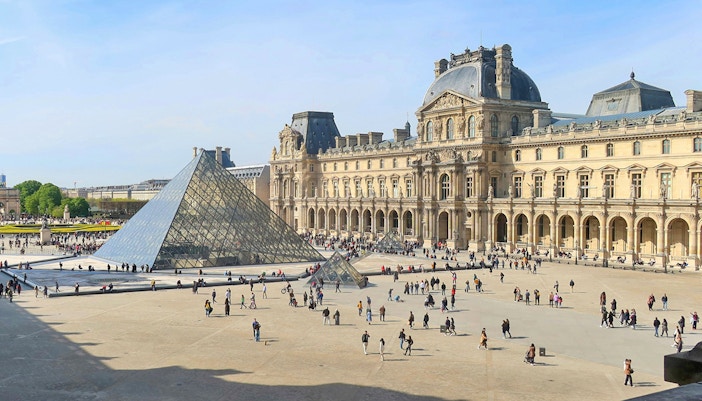
  • Entry point: Enter through the Pyramid or Carrousel du Louvre, then follow signs to the Denon Wing
  • Painting location: Denon Wing, 1st floor, in the large French painting galleries
  • Walk time: Allow 15–25 minutes from the main entrance if you head there directly

Getting there

  • Wheelchair access: Yes; the Louvre and the gallery holding the painting are step-free
  • Accessible route: Elevators connect the main lobby to the Denon Wing and 1st-floor galleries
  • Strollers: Allowed; the museum is stroller-friendly, though circulation narrows around tour groups
  • Visual support: Select reserved-access tickets include a multilingual audio guide
  • Hearing support: Small-group guided tours use headsets when appropriate
  • Walking required: Expect a 15–25 minute indoor walk from the entrance and prolonged standing if the gallery is busy
  • Photography: Non-flash photography is usually allowed; flash, artificial lighting, and selfie sticks are prohibited
  • Bags: Large bags and suitcases are not permitted; free lockers are available for smaller items
  • Re-entry: Not permitted after you leave the museum
  • Security: Mandatory screening can take 15–30 minutes, even with timed access
  • Gallery conduct: Follow staff directions around barriers and keep circulation clear when guided groups stop

Frequently asked questions about the 'Coronation of Napoloeon'

Yes. Entry to The Coronation of Napoleon is included with every valid Louvre ticket. No separate ticket exists.

More reads