Go in the first 90 minutes after opening, or on Wednesday and Friday evening slots if available. The Richelieu rooms stay calmer than Denon, but late-morning groups build fast. If you want space around the stele, avoid 11am–3pm.
Included with The Louvre Museum tickets
Timings
RECOMMENDED DURATION
5 hours
Emilienne C
Nasser A
Jakub D
+5 more
Makiel D
+1 more
Julie P
+1 more
Isabel C
Michaela S
Leutellier K
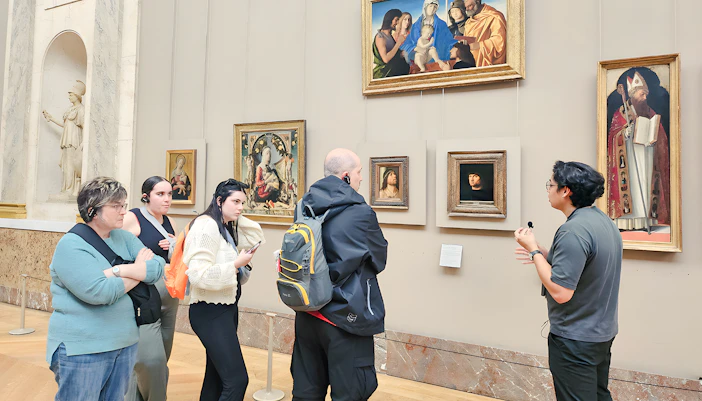
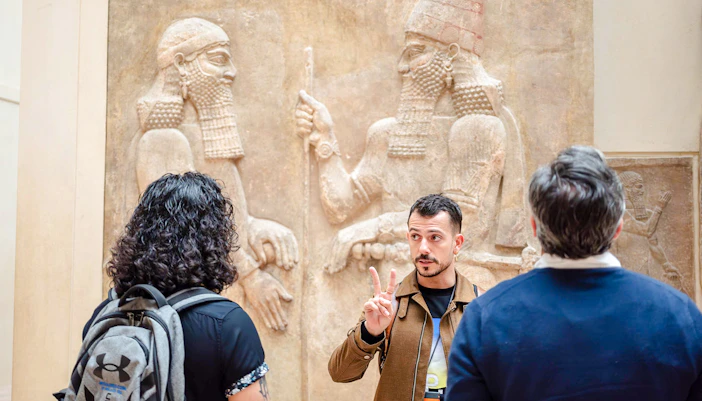
The Code of Hammurabi is included with all Louvre Museum tickets. No separate ticket is needed. You’ll find it in the Near Eastern Antiquities galleries of the Richelieu Wing, and you can head there directly once you’re inside rather than waiting until the end of your visit. Book a reserved-access ticket with an audioguide or choose a guided tour if you want to reach it quickly and understand what you’re looking at.
Go in the first 90 minutes after opening, or on Wednesday and Friday evening slots if available. The Richelieu rooms stay calmer than Denon, but late-morning groups build fast. If you want space around the stele, avoid 11am–3pm.
Plan 10–15 minutes if you’re moving fast, or 20–25 minutes with an audioguide or guide. That gives you time to read the relief above the text and study the inscription below. If you stop only for a photo, you miss the point of the piece.
This is a smart early stop because it sits away from the Louvre’s biggest bottlenecks. Go here before Denon’s headline works, then continue through nearby Mesopotamian rooms. If you leave it for the final hour, museum fatigue makes the text harder to engage with.
The room is quieter than the Mona Lisa corridor, but not empty. Late morning, weekends, and school vacations bring the sharpest swell. In calmer periods, you can stand back and read the stele as a monument, not just a famous object label.
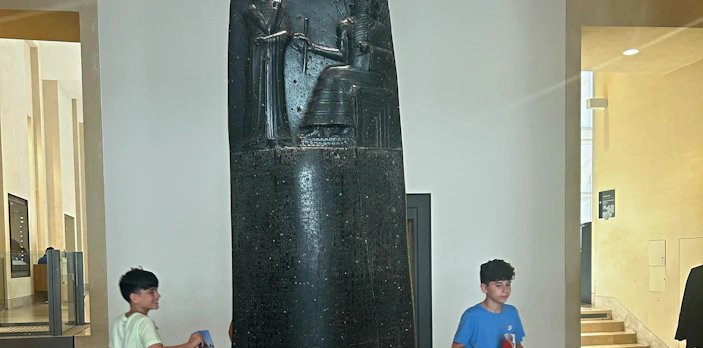
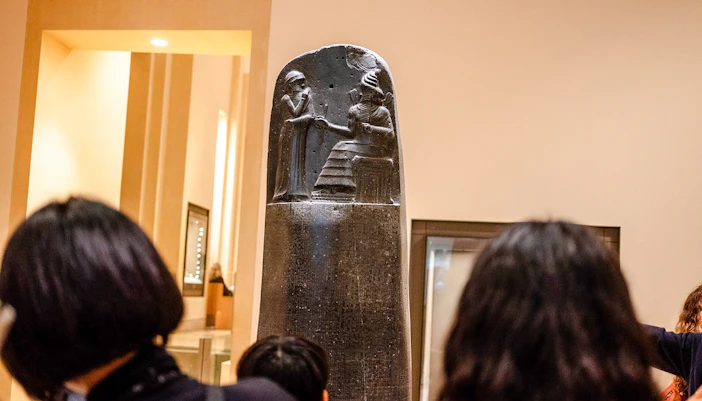
If you only have 5 minutes, stand back first to see the full stele and the carved scene at the top. Then move in to inspect the cuneiform. Skip surrounding cases before you skip this object; it is the anchor of the gallery.
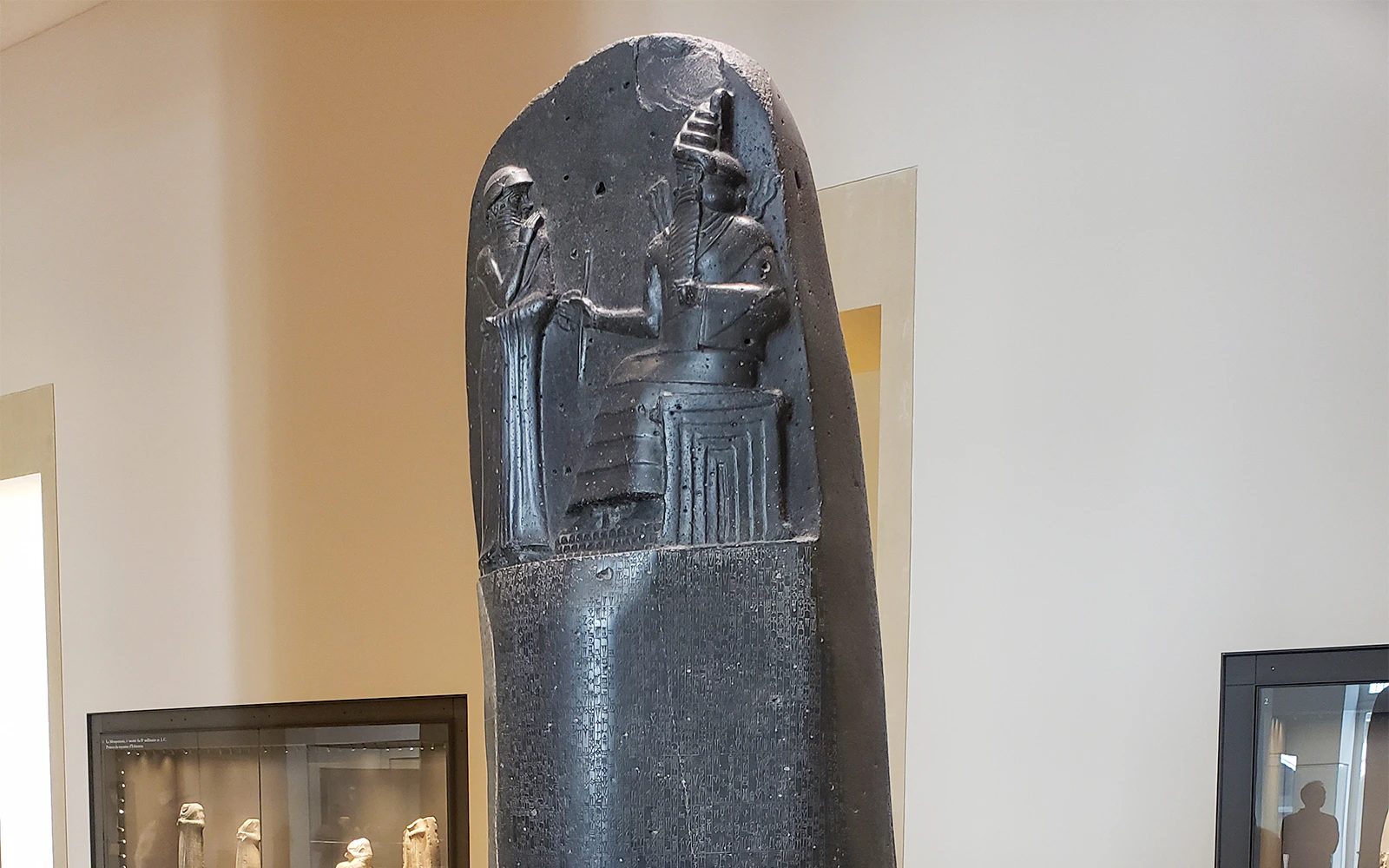
Most visitors photograph the text front-on and leave without noticing the scene above it, where Hammurabi receives authority from Shamash. Another mistake is rushing in with no context. Use an audioguide or short guided visit, or the inscription reads like pattern instead of law.
| Ticket type | Why choose it |
|---|---|
Reserved access ticket | Reach the Richelieu galleries faster and save your attention for the stele, not the ticket line. |
Reserved access with assisted entry | Helpful if the Louvre’s entrances feel confusing; a host gets you oriented before you continue independently. |
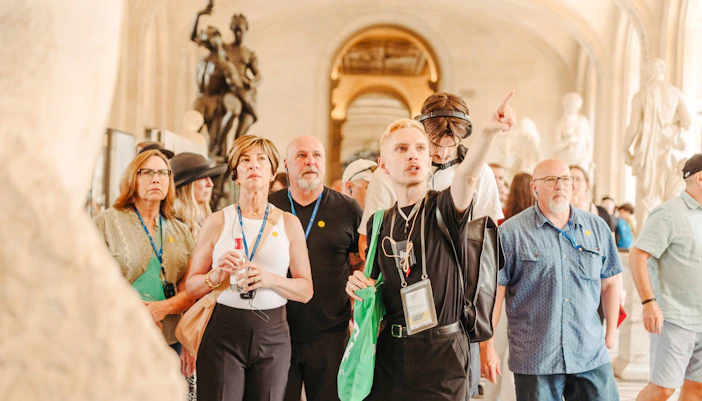
Small-group guided tour | Best if you want the museum decoded quickly and plan to request extra focus on Near Eastern Antiquities. |
Inclusions #
Expert English, French, Spanish or German-speaking guide (as per option selected)
2 to 3-hour private guided tour of the Louvre
Timed access to the Louvre
Small group of up to 20 guests (as per option selected)
Semi-private group of 6 to 10 guests (as per option selected)
Private tour for your group of up to 6 guests (as per option selected)
Headsets when appropriate
Get escorted past Louvre ticket lines with a hosted intro, then explore on your own with smart tips to find the masterpieces faster.
Inclusions #
Reserved access to the Louvre Museum
Hosted introduction to the museum and its highlights
Accompaniment to the museum’s main highlights for orientation (as per option selected)
Exclusions #
Guided tour inside the museum (visit is self-guided after the introduction)
Audio guide (available to rent at the museum)
See Paris in two complementary ways: understand its artistic legacy inside the Louvre with a licensed guide, then step back and take in the city’s grand scale from the Seine.
Inclusions #
1.5 to 3-hour English guided tour of the Louvre
Timed access to the Louvre
Small group tour up to 20 people
Headsets when appropriate
1 – 1.5-hour Seine River cruise with onboard audio guide available in 10+ languages
Cover Paris’s most iconic sites in one day with a guided small-group tour for a seamless experience.
Inclusions #
Entry to Notre-Dame Cathedral
Walking tour of Île de la Cité
Entry to Louvre Museum
Entry to Sainte-Chapelle
Entry to Conciergerie
Entry to Musée de l'Orangerie
Lunch included (as per option selected)
Private Louvre tour with reserved entry and a licensed guide for up to 6 guests.
Inclusions #
2-hour private guided tour of the Louvre Museum
Reserved entry to the Louvre Museum
Licensed private guide for groups of up to 6 people
Private tour in English, Spanish, or French (as per option selected)
Exclusions #
Food and drinks
Gratuities
Access to temporary exhibitions
What makes the Code of Hammurabi irreplaceable in the Louvre is that it is both sculpture and legal text: a royal monument covered with one of the oldest surviving law codes. Most visitors don’t realize the famous inscription begins below a carved scene of Hammurabi before Shamash, which frames the laws as divinely sanctioned rule. These are the details worth finding before you move on.
Before reading the text, look at the carved scene on the rounded top. Hammurabi stands before Shamash, seated at the upper center. This is the key to the whole monument: the laws are presented as royal justice backed by divine authority.
The cuneiform begins below the relief and runs in dense vertical blocks. Stand an arm’s length away first to grasp the layout, then move closer. Even if you can’t read Akkadian, the scale of the text tells you this was meant to be seen as public power.
Walk around the stele. The inscription continues along the sides and back, which many visitors never notice because they treat it like a flat image. Seeing the text wrap around the stone makes the object feel less like a page and more like a monument.
Created around 1754 BC for King Hammurabi of Babylon, this stele was not just a law list but a royal statement about justice, order, and kingship. Centuries later it was carried to Susa, where French archaeologists rediscovered it in 1901. Today it anchors the Louvre’s Near Eastern Antiquities galleries and remains one of the museum’s clearest introductions to Mesopotamian state power, writing, and law.
Commissioned the stele and framed law as royal justice under divine authority.
Published the stele’s text after its rediscovery, making the inscription widely known.
Led the French excavations at Susa that brought the monument back to scholarly attention.
Yes. Entry to the Code of Hammurabi is included with every valid Louvre Museum ticket. No separate ticket exists.
No. Any Louvre ticket gets you in. Reserved access saves time, while a guided tour or audioguide gives the stele much more context.
No. The stele has no independent entrance and sits inside the Near Eastern Antiquities galleries. You must enter the Louvre first.
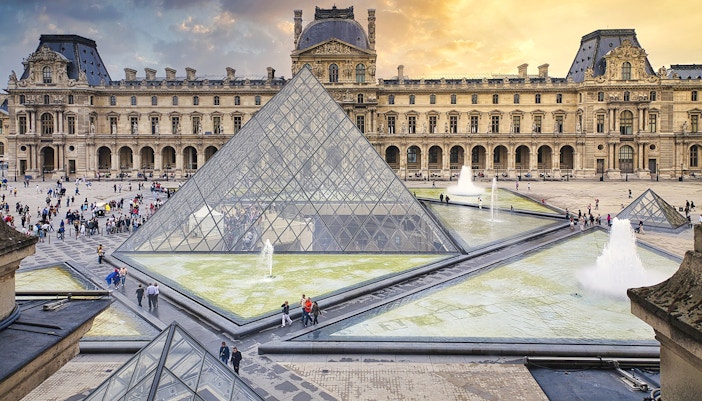
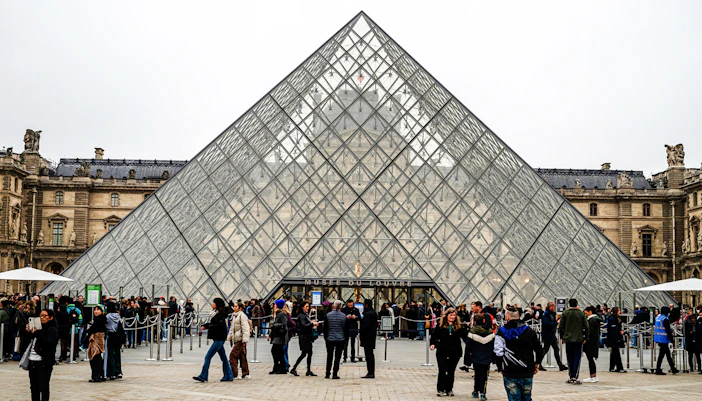
You can see it early if you head straight to the Richelieu Wing. From the Pyramid entrance, allow about 15–20 minutes to reach the gallery.
Plan 10–15 minutes self-guided, or 20–25 minutes with an audioguide or guide. The upper relief and inscription reward a slower look.
Not always. General highlights tours may not stop here, so choose a tour that covers Near Eastern Antiquities or allows custom emphasis.
Yes. Non-flash photography is generally allowed in the Louvre’s permanent collections. Flash, lighting equipment, and selfie sticks are not permitted.
Yes. The Louvre is wheelchair accessible, and the surrounding gallery floors are level. Use museum elevators to reach the Richelieu galleries without stairs.
Look at the rounded top before reading the text. The relief of Hammurabi before Shamash explains the monument’s claim to authority.