Visiting Musee d'Orsay: your complete guide

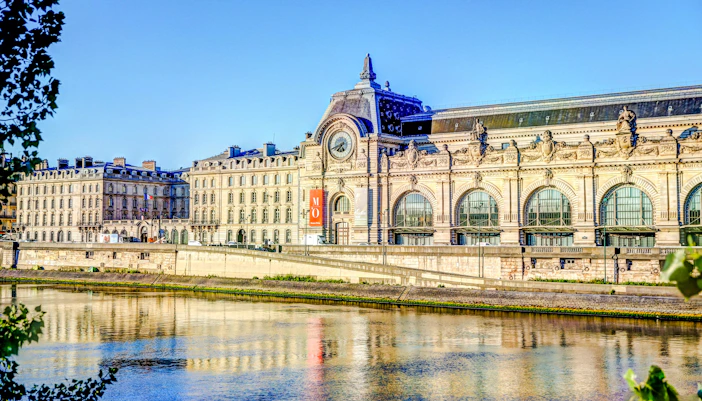
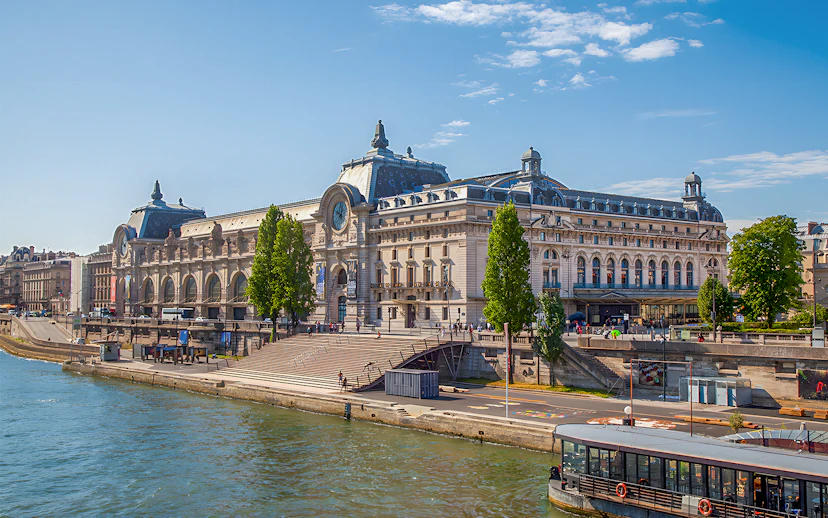
The Musee d'Orsay is a former Beaux-Arts railway station turned museum, best known for the world's strongest concentration of Impressionist and Post-Impressionist masterpieces. It is more manageable than the Louvre, but it still rewards a plan because the rooms most people come for sit higher up and the central nave can distract you on the way. A good visit usually means choosing your route before you enter. This guide covers timing, entrances, ticket choices, and what to prioritize once you're inside.

Quick overview: Musee d'Orsay at a glance

If you want the best version of this visit, decide your route before you book and don't treat it like a museum you can simply drift through.

  • When to visit: Tuesday-Sunday, typically from 9:30am-6pm, with later Thursday hours; weekday mornings in January and February are noticeably calmer than summer afternoons and first Sundays, because the Impressionist rooms draw the heaviest midday crowds.
  • Getting in: From €14 for reserved entry. Guided tours/skip-the-line options usually start higher. Advance booking matters most in summer, on holidays, and for Thursday late slots, while quieter winter weekdays are more forgiving.
  • How long to allow: 2-3 hours for most visitors. It stretches toward 4 hours if you want the sculpture nave, decorative arts, temporary exhibitions, and time to linger with the top-floor paintings.
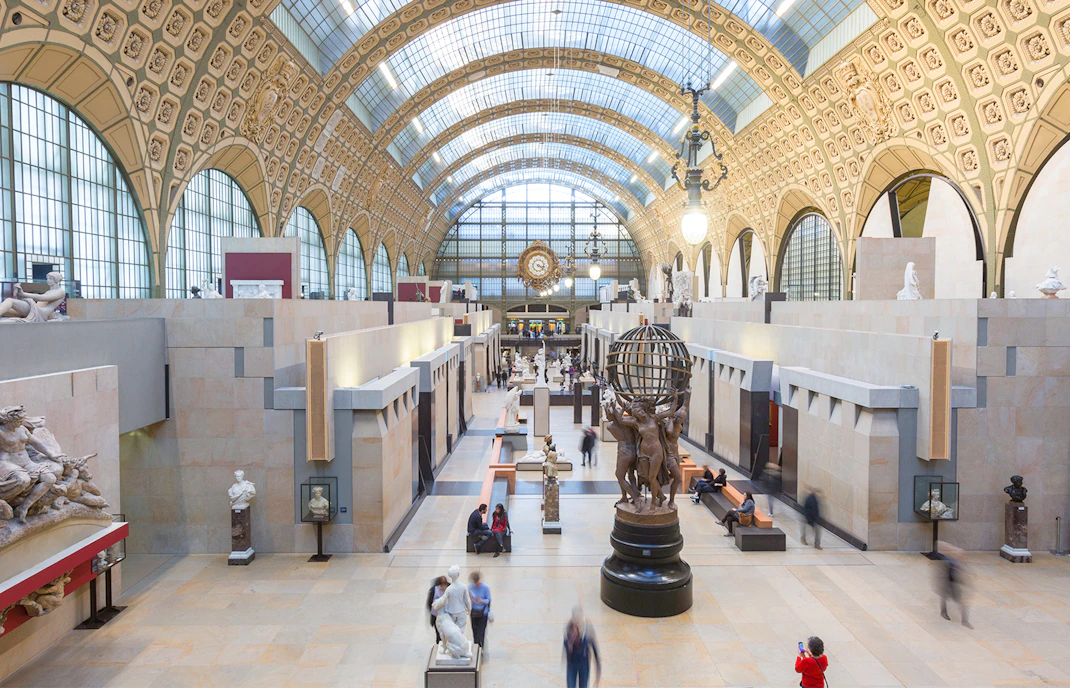
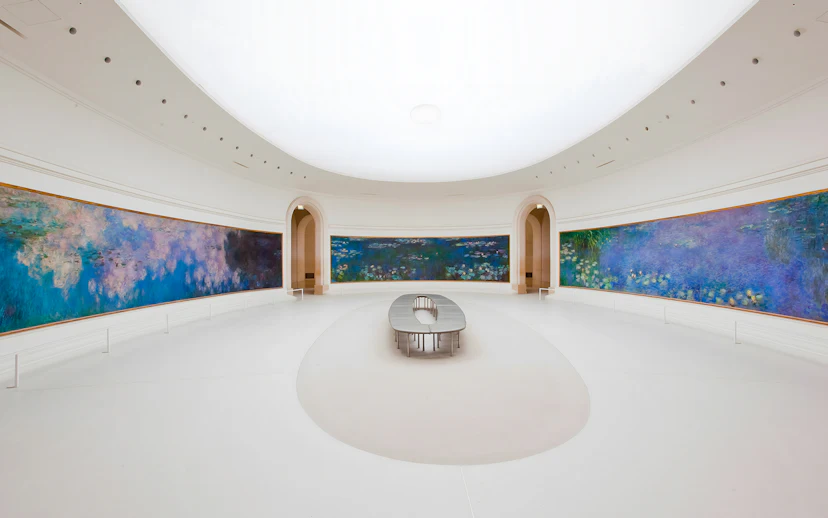
  • What most people miss: The central sculpture nave and the giant station clock are easy to rush past on the way upstairs, even though both help the museum make more sense as a building and collection.
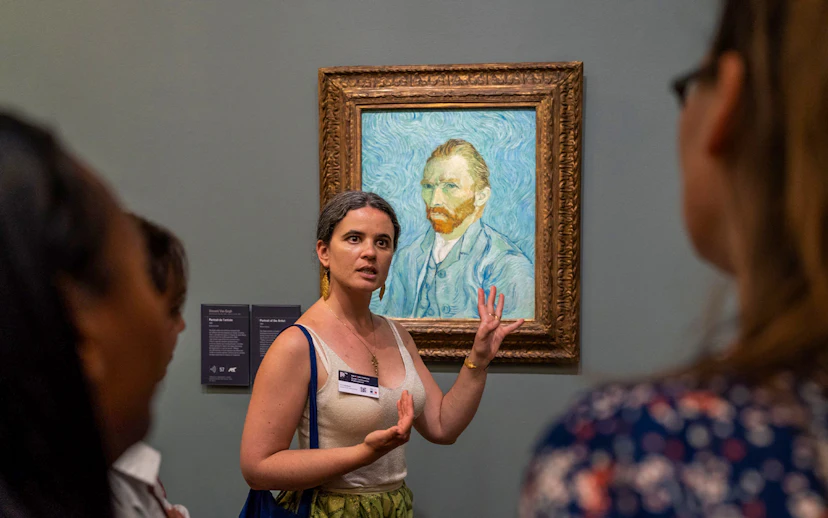
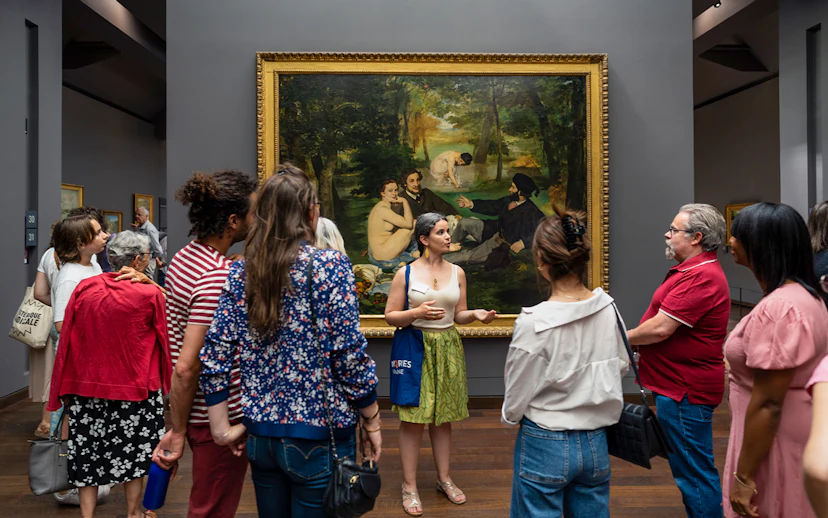
  • Is a guide worth it? Yes, if you want the story behind Impressionism in one efficient visit; otherwise, a good audio guide does enough for a self-paced highlights route.

🎟️ Timed slots for Musee d'Orsay sell out several days in advance during summer and holiday periods. Lock in your visit before the time you want is gone.

Where and when to go

How do you get to the Musee d'Orsay?

The museum sits on the Left Bank of the Seine, opposite the Tuileries Garden, beside the river, and about 1 km from the Louvre.

1 Rue de la Legion d'Honneur, 75007 Paris, France

→ Open in Google Maps

  • RER: Musee d'Orsay station (RER C) → 2 min walk → This is the closest rail stop to the main entrance.
  • Metro: Solferino station (Line 12) → 5 min walk → Best if you're coming from Saint-Germain or central Left Bank stops.
  • Taxi/rideshare: Drop-off on Rue de la Legion d'Honneur → 1-2 min walk → Useful if you're arriving with limited walking time.

Full getting there guide

Which entrance should you use?

The museum uses one main visitor entrance, but the lines split by ticket type, and that is where most people lose time. If you already have a timed ticket, don't join the no-ticket or free-admission queue.

  • Pre-booked tickets: For reserved-entry, combo, and audio guide visitors. Expect around 10-20 min at security on busy afternoons.
  • Guided tours: For visitors joining a hosted or expert-led visit. Expect around 10-15 min while the group is checked in.
  • On-the-day/free entry: For walk-ups and eligible free-entry visitors. Expect the longest waits on first Sundays, school holidays, and summer weekends.

When is Musee d'Orsay open?

  • Tuesday-Sunday: 9:30am-6pm
  • Thursday: Late opening available, with ticketed late-entry options between 6pm-9pm
  • Monday: Closed
  • Last entry: Plan to arrive at least 30 min early for security and check-in

When is it busiest? Summer afternoons, first Sundays, and holiday weekends are the hardest time to move comfortably through the top-floor Impressionist rooms.

When should you actually go? A Tuesday, Wednesday, or Thursday morning in January, February, or November gives you more space in the headline galleries and a calmer first look at the collection.

Orsay museum opening hours

How long should you set aside for the Musee d'Orsay?

You'll need around 2-3 hours for a satisfying visit. That is enough time for the top-floor Impressionist galleries, a few Van Gogh and Monet stops, the central sculpture nave, and the giant clock viewpoint. If you want temporary exhibitions, decorative arts, or long pauses with favorite paintings, plan closer to 4 hours. If you only have 90 minutes, go upstairs first and build the rest of your route around what time remains.

Which Musee d'Orsay ticket is best for you

Ticket typeWhat's includedBest forPrice range

Orsay Museum Reserved Access Tickets

Reserved access + permanent collection access + optional audio guide/Thursday late entry/combo upgrades

A self-paced museum visit where you want a booked arrival time and enough freedom to move quickly toward the galleries that matter most to you

From €14

Orsay Museum Guided Tour with Fast-Track Tickets

Fast-track entry + expert English-speaking guide + access to permanent collections and temporary exhibits

A first visit where you want the major works explained clearly without spending time deciding your own route

From €55

Combo (Save 12%): Orsay Museum with Audio Guide + Orangerie Museum Tickets

Orsay fast-track entry + audio guide + Orangerie entry + permanent and temporary collection access

Seeing the strongest Impressionist pairing in Paris in one plan, without buying two separate museum tickets

From €26

Combo (Save 16%): Orsay Museum & Seine River Cruise Tickets

Orsay entry + downloadable audio guide app + 1-hour Seine River cruise + cruise audio guide

Breaking up a museum-heavy day with an outdoor Paris experience while keeping logistics simple

From €32

Orsay Museum: Renoir and Love Exhibition Tickets

Timed entry to the Renoir and Love exhibition + access to Orsay collections

Visiting during the exhibition dates and wanting a visit anchored around one special show rather than the permanent collection alone

From €18

How do you get around Musee d'Orsay?

How is the museum laid out?

The museum is compact enough to cover in one visit, but the layout still rewards a deliberate route because the most famous paintings are not the first things you see. If you wander without a plan, it is easy to spend too long in the nave and arrive upstairs once the busiest rooms are already full.

  • Ground level / central nave: Monumental sculpture, academic painting, and the building's grand former-station perspective → budget 30-45 min.
  • Middle level: Decorative arts, transitional galleries, and smaller rooms that connect the academic tradition to later experimentation → budget 20-30 min.
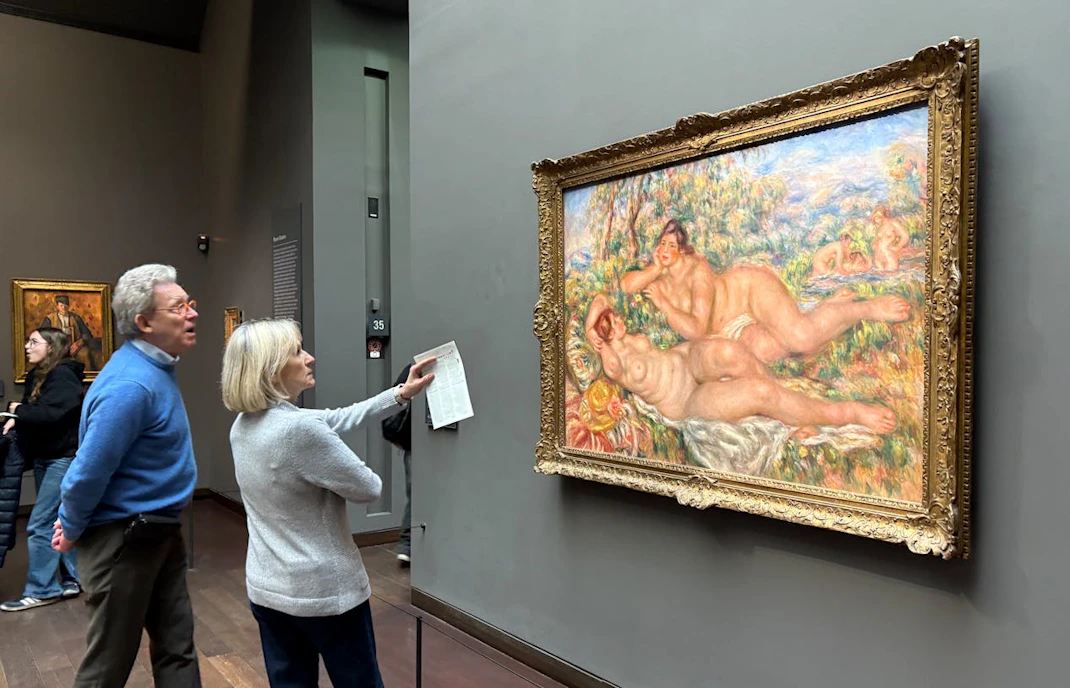
  • Upper level: The core Impressionist and Post-Impressionist galleries, including Monet, Renoir, Degas, and Van Gogh → budget 60-90 min.

Suggested route: If you only have 2 hours, head upstairs first for the paintings most people came for, then work your way back down through the middle level and finish in the sculpture nave. Most visitors do the reverse and lose their best viewing window to crowd build-up.

Maps and navigation tools

  • Map: Download/on-site map → covers the museum's main levels and galleries → get it before arrival or pick one up after entry.
  • Signage: Good in the main spaces, but a downloaded map still helps if you want a fast route to the Impressionist rooms without drifting.
  • Audio guide / app: Available with selected tickets → useful for a self-paced highlights route → best downloaded before arrival, with your own headphones.

💡 Pro tip: If Impressionism is your priority, don't let the station architecture slow you down on arrival - go straight upstairs first, then circle back for the nave and clock once the top-floor rooms fill up.

Where are the masterpieces inside Musee d'Orsay?

Ornate clock inside Orsay Museum, Paris, with glass ceiling background.
1/6

The giant clock

Attribute — Era: Former Gare d'Orsay architecture, 1900

This is not a painting, but it is one of the museum's most memorable stops because it explains why the building feels so different from a conventional gallery. Most visitors photograph it quickly and move on, but the real payoff is pausing long enough to see how the old station frame still shapes the museum's scale and light.

Where to find it: In the upper part of the museum, near the large clock window overlooking the Seine side.

Bal du moulin de la Galette

Attribute — Artist: Pierre-Auguste Renoir

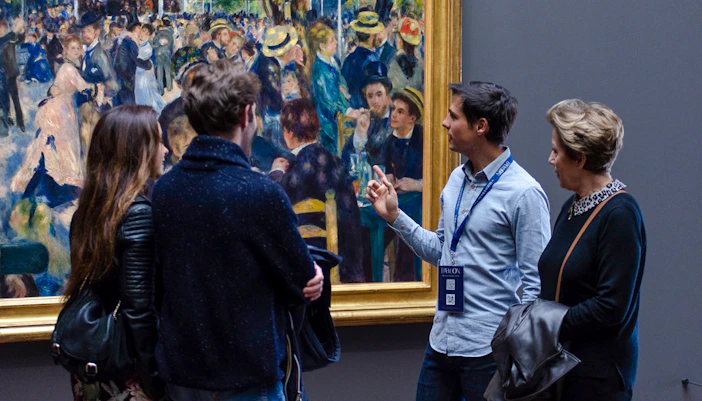
Renoir's crowded Paris dance scene is one of the museum's great mood paintings, full of flickering light, movement, and social energy. People often stand back only long enough to recognize it, but the details in the faces and shifting patches of sunlight are what make it worth slowing down for.

Where to find it: Upper-level Impressionist galleries, alongside other major Renoir works.

Houses of Parliament

Attribute — Artist: Claude Monet

Monet turns a familiar London landmark into an atmosphere study, using haze and color rather than detail to carry the scene. Many visitors glance at the silhouette and walk on, but it is the fading edges and layered light that show how far Impressionism pushed representation away from strict realism.

Where to find it: Upper-level Impressionist galleries, in the Monet rooms.

Starry Night Over the Rhone

Attribute — Artist: Vincent van Gogh

Van Gogh's night sky and reflected lights pull visitors in immediately, but the painting is strongest when you stay with the brushwork a little longer. What many people miss is how carefully the river surface balances the intensity of the sky, giving the work structure as well as emotion.

Where to find it: In the Van Gogh rooms on the upper level.

Luncheon on the Grass

Attribute — Artist: Edouard Manet

Manet's work matters because it challenged what modern painting could be, and it helps explain why later artists broke so sharply from academic rules. Visitors often focus on its reputation and move on too fast, but it is worth noting how flatness, contrast, and directness make it feel disruptive even now.

Where to find it: In the 19th-century painting galleries leading toward the Impressionist sections.

The central sculpture nave

Attribute — Medium: 19th-century sculpture

This long, open nave is easy to underestimate because most people are hurrying upstairs to the paintings. It is worth real time because it shows the museum's period in three dimensions and lets you read the building as a former station instead of just a container for art.

Where to find it: Ground level, running through the heart of the museum.

Facilities and accessibility

  • 🎒 Cloakroom / lockers: Cloakrooms are available free of charge for coats, small luggage, and other accepted items.
  • 🚻 Restrooms: Restrooms are available in the museum, including accessible restrooms for visitors with reduced mobility.
  • 🛍️ Gift shop / merchandise: The museum has on-site retail spaces focused on art books, catalogs, and museum souvenirs, and they are most useful if you want something tied directly to the collection you just saw.
  • 📶 Wi-Fi: Free Wi-Fi is available on-site.
  • 🪑 Seating / rest areas: Seating is scattered through the museum, but the best places to pause are usually between galleries rather than inside the most crowded top-floor rooms.
  • 🦯 Accessibility aids: Free adjustable-height canes with rubber tips are available on-site for visitors who need extra support while walking.
  • Mobility: The museum is wheelchair accessible, elevators and step-free routes cover most areas, wheelchairs are available against an ID, and accessible restrooms are on-site.
  • 👁️ Visual impairments: Guide dogs are welcome, and Braille and audio signage are available to support wayfinding and interpretation.
  • 🧠 Cognitive and sensory needs: For a calmer visit, aim for weekday mornings outside peak season because the upper galleries become the loudest and most crowded by late morning.
  • 👨‍👩‍👧 Families and strollers: The museum is stroller accessible, and its more compact layout makes it easier for families than larger Paris museums, though the busiest galleries still require patient pacing.

The museum works best for children who can handle a 90 min to 2 hr indoor visit and are more likely to engage with recognizable paintings, the giant clock, and the station-like building than with every room in order.

  • 🕐 Time: 90 min to 2 hr is realistic with younger children, and the best use of that time is the upper-level highlights plus one slow pass through the central nave.
  • 🏠 Facilities: Stroller access, restrooms, and cloakroom storage make it easier to keep bags and layers from becoming a distraction.
  • 💡 Engagement: Start with the giant clock or the old station architecture, then use that curiosity to pull children toward Monet, Degas, and Van Gogh rather than beginning with a long art-history explanation.
  • 🎒 Logistics: Bring headphones if your ticket includes an app-based audioguide, arrive 30 min early for security, and avoid first Sundays if you want an easier family pace.
  • 📍 After your visit: Tuileries Garden is about 500 m away and is the easiest nearby reset if children need space after the galleries.

Rules and restrictions

What you need to know before you go

  • Entry requirement: Timed and reserved-entry tickets are the simplest way in, and arriving around 30 min early helps you clear security without rushing your slot.
  • Bag policy: Large luggage is not allowed, while coats, small luggage, and accepted items can go to the cloakroom free of charge.
  • Re-entry planning: Plan your visit as one continuous block because stepping out mid-visit means dealing with screening again and breaking your route through the galleries.

Not allowed

  • 🚫 Food and drink: Food and drinks are not permitted inside the museum galleries.
  • 🐾 Pets: Pets are not allowed inside the museum, but guide dogs and registered service animals are welcome.
  • 🖐️ Flash and pro gear: Flash photography, tripods, selfie sticks, and professional filming equipment are not permitted in exhibition spaces.

Photography

Photography is generally allowed inside the museum, but it is a non-flash policy. The line is between casual personal photos and equipment that disrupts the galleries: flash, tripods, selfie sticks, and professional filming gear are not allowed. If a temporary exhibition applies tighter rules in a specific room, follow the in-gallery signage rather than assuming the main museum policy carries everywhere.

Good to know

  • Skip-the-line does not skip security: Fast-track and reserved-entry products save the ticket queue, but you should still expect screening on arrival.
  • Audioguide logistics matter: If your ticket uses the mobile audioguide app, download it before you arrive and bring your own headphones.

Practical tips

  • Booking and arrival: Book a timed slot in advance if you're visiting in summer, on a Thursday late opening, or on a holiday week, and aim to arrive 30 min early because reserved entry still includes security.
  • Pacing: If you only have 2 hours, go upstairs first for the Impressionist and Van Gogh rooms, then come back down for the sculpture nave and clock once the main crowd has already settled upstairs.
  • Crowd management: The first Sunday of the month is free, but it is usually a worse experience if your goal is quiet viewing, especially in the museum's best-known upper galleries.
  • What to bring or leave behind: Bring headphones if your ticket includes the audioguide app, and keep bags small because large luggage is not allowed and even accepted bags slow down entry.
  • Food and drink: Eat before you enter or after you finish rather than planning a mid-visit break, because the strongest Orsay visit is usually one uninterrupted 2-3 hour route through the collection.

What else is worth visiting nearby?

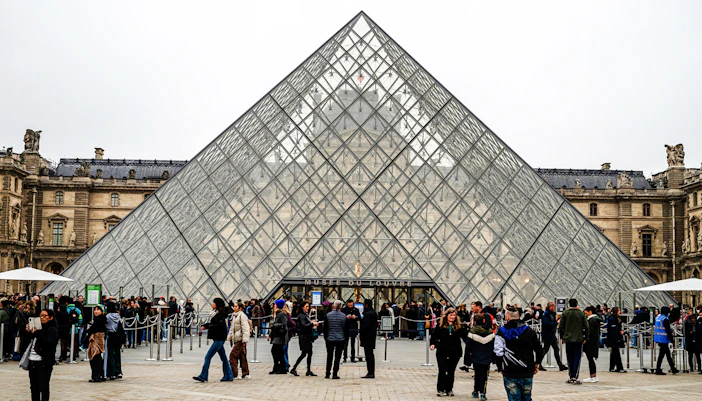
Commonly paired: Louvre Museum

Distance: 1 km — around 12-15 min walk

Why people combine them: The pairing works because the Louvre gives you the earlier, classical foundation of European art, while Orsay picks up the story where modern painting begins.

Book / Learn more

Musee d'Orsay and Louvre Museum are commonly visited together, and the combo route is simpler on one booking. The main advantage is keeping both museums in the same plan, with audio-guided context across two very different collections. → See combo options

Commonly paired: Seine River cruise

Distance: Adjacent riverfront — around 5-10 min walk to nearby boarding areas, depending on your cruise operator

Why people combine them: It breaks up a museum-heavy day well, and the river setting makes sense straight after a visit on the Left Bank beside the Seine.

Book / Learn more

Also nearby

Tuileries Garden

Distance: 500 m — around 7 min walk

Worth knowing: This is the easiest post-museum pause if you want air, open space, and a softer transition before your next stop.

Place de la Concorde

Distance: 1 km — around 12 min walk

Worth knowing: It fits naturally if you want to continue toward central Paris landmarks without needing extra transit after the museum.

Eat, shop and stay near Musee d'Orsay

  • On-site: The safest play is to treat the museum's food options as a convenience stop rather than the main event, especially if you want to keep your visit moving.
  • Rue du Bac brasseries: 7-10 min walk, 7th arrondissement; good for a proper sit-down lunch after the museum without dragging your day far off route.
  • Saint-Germain cafes: 10-15 min walk, Saint-Germain-des-Pres; better if you want coffee, pastry, or a slower break before continuing to another Left Bank stop.
  • Rivoli / Tuileries side spots: 12-15 min walk, across the river; most useful if you're pairing the museum with the Louvre, the Orangerie, or a Tuileries walk.
  • 💡 Pro tip: Eat after your visit, not during it - the museum works best as one uninterrupted 2-3 hour block, and stopping too early usually means returning to the busiest rooms at the worst time.
  • Musee d'Orsay shop: Best for exhibition catalogs, art books, and postcards tied directly to the collection you just saw.
  • Carrousel du Louvre area shops: More practical than distinctive, but useful if you are already continuing toward the Louvre and want one-stop gift shopping.

Yes, if you want a short, museum-heavy Paris stay with easy walks to the Seine, the Louvre side, and Saint-Germain. No, if your priority is nightlife, lower hotel prices, or a broader neighborhood feel after dark. The area is elegant, central, and convenient, but it usually costs more than less tourist-heavy parts of the city.

  • Price point: This area skews mid-range to high-end, with the biggest premium tied to walkability and Left Bank location.
  • Best for: Short-stay visitors who want to walk to major museums and keep transit to a minimum.
  • Consider instead: Saint-Germain-des-Pres for more cafes and evening atmosphere, or the 1st arrondissement if you want to stay closer to the Louvre and Tuileries side of the river.

Frequently asked questions about visiting Musee d'Orsay

Most visits take 2-3 hours. That is enough for the top-floor Impressionist galleries, the Van Gogh rooms, the central sculpture nave, and the giant clock. If you want temporary exhibitions, decorative arts, or time to linger with specific paintings, plan closer to 4 hours.

More reads