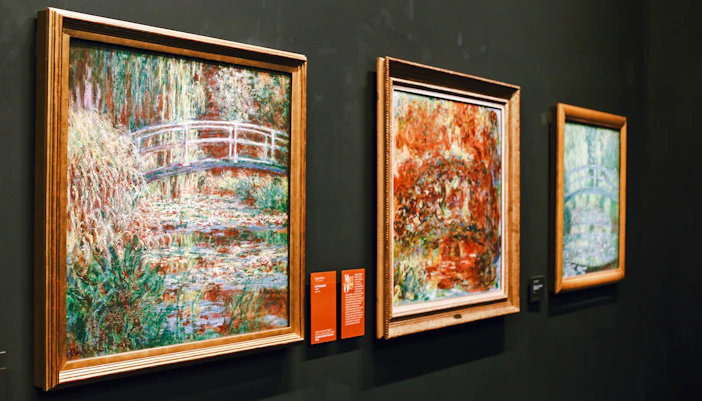
Degas made many sculptures, but Little Dancer Aged Fourteen was the only one he showed publicly during his lifetime. Its 1881 debut became one of the most debated moments of his career.
Witness Little Dancer Aged Fourteen by Edgar Degas in Paris – A Modern Masterpiece
Quick overview
Modeled by Edgar Degas between 1878–1881, Little Dancer Aged Fourteen stands just under 1 m (3.2 ft) tall yet altered the course of modern sculpture. Its taut stance, lowered chin, wax modeling, and real tutu turned a Paris ballet student into a startling study of discipline, youth, and social scrutiny. Seeing it at the Musée d’Orsay is even richer with reserved entry or a guided visit that places Degas’ ballet world in context.
- Where is it located?: You’ll find it in the Impressionist galleries on Level 5 of the Musée d’Orsay in Paris.
- Tickets: Entry is included with a standard Musée d’Orsay ticket; no separate pass is required.
- Enhance your visit with a guide: Degas’ sculpture lands differently when you know why 1881 audiences found it disturbing. The Orsay Museum Reserved Access Tickets with the audio guide, the Musée d'Orsay Skip-the-Line Guided Tour, and the Orsay Museum Guided Impressionist Masterpieces Tour all add useful context on Degas, ballet culture, and the nearby Impressionist rooms.
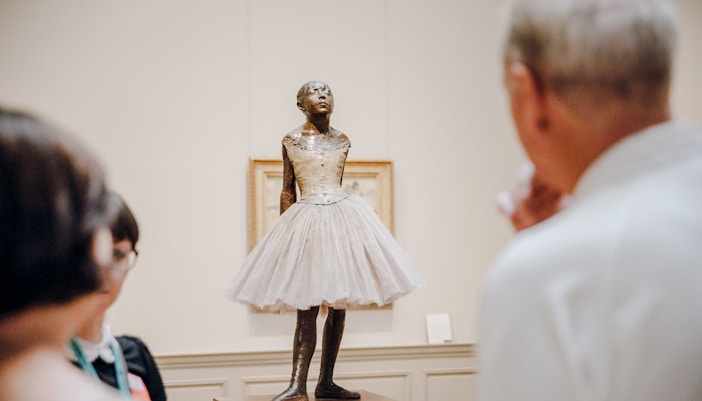
- Start with the full silhouette: Begin from several feet back so the sculpture reads as a single vertical line: lifted chest, angled arms, planted feet, and tightly drawn neck. That first distant view makes the dancer’s rigidity feel almost architectural before you move closer to the face and costume.
- Circle the profile if gallery space allows: The side view sharpens the work’s tension. From that angle, the jut of the chin, the pulled-back shoulders, and the slight thrust of the pelvis make the figure feel less decorative and more disciplined, even weary.
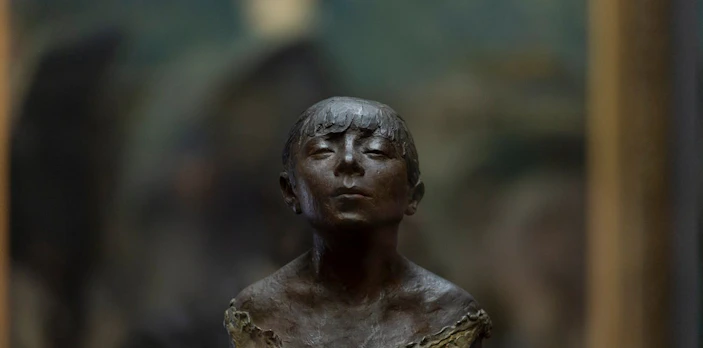
- Look closely at the materials: This is not a smooth, idealized ballerina. Notice the contrast between the bronze body and the real costume elements — tutu, ribbon, and slippers — because that collision of art object and everyday material was central to the sculpture’s shock value.
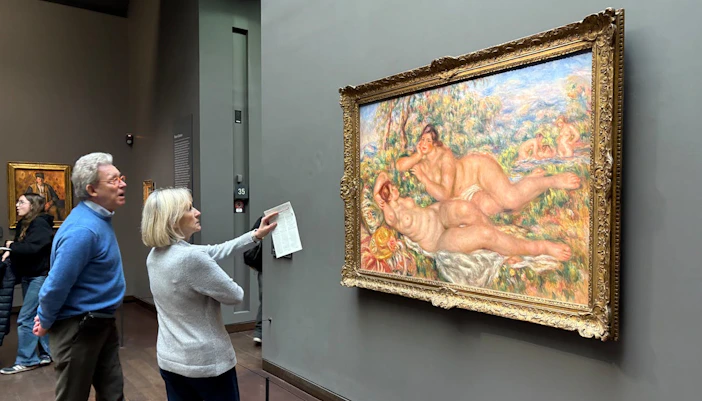
- Choose a quieter viewing window: Level 5 is busiest from late morning through mid-afternoon, when visitors cluster around Degas, Monet, and Van Gogh. For a calmer look, enter at opening or use the museum’s Thursday evening hours; avoid the first Sunday of the month if you want more space around the sculpture.
- Pair it with nearby Degas works: After the sculpture, continue through the surrounding Degas paintings and pastels in the Impressionist galleries. Seeing his dancers on paper and canvas after the sculpture makes clear how he translated rehearsal-room observation into volume, posture, and physical strain.
Did you know?
The only sculpture he exhibited publicly
A real Paris Opera student stood behind it
The model was Marie van Goethem, a teenage ballet student connected to the Paris Opera. Degas chose not an idealized mythological figure, but a working-class girl from modern Paris.
Wax came before bronze
Degas originally modeled the work in wax, a material usually associated with studio experiments, not finished masterpieces. That choice made the figure feel raw, immediate, and unsettlingly lifelike.
The costume was part of the artwork
He added a real bodice, tutu, ribbon, slippers, and human hair. Those materials blurred the boundary between sculpture and living body in a way most 19th-century viewers had never seen.
Critics did not see a charming ballerina
Many early reviewers described the sculpture in harsh, even cruel terms, reading the dancer through the class prejudices of the period. The work exposed how quickly viewers judged young female performers by appearance and social status.
The Paris version is not the original wax
The sculpture you see in Paris is a bronze cast made after Degas’ death. The original wax model survived in his studio and is now preserved separately.
Its bronze afterlife expanded its fame
After Degas died in 1917, bronzes were cast from the original model by the Hébrard foundry. Those casts carried the work into major museums around the world and helped secure its modern reputation.
Its meaning changed over time
What once seemed abrasive or improper is now recognized as radical modern art. The same realism that offended 1881 critics is one reason the sculpture feels so current today.
Story behind Little Dancer Aged Fourteen
A young dancer in modern Paris
Degas turned to Marie van Goethem, a teenage ballet student linked to the Paris Opera, as the basis for the figure. That choice mattered: he was not sculpting an allegorical muse, but a real working girl shaped by training, hierarchy, and scrutiny. Ballet students in late 19th-century Paris occupied an uneasy social space — admired onstage, judged off it. The sculpture carries that tension from the start.
A studio experiment becomes a finished work
Between about 1878 and 1881, Degas modeled the figure in wax over an armature and dressed it with real materials. Instead of polishing the surface into classical perfection, he kept the modeling alive and irregular. The costume and hair made the dancer feel almost documentary, as if observation had stepped off the page. It was a daring move from an artist better known for pastel and paint.
The scandal of 1881
When Degas exhibited the sculpture at the sixth Impressionist exhibition in 1881, many critics were unsettled rather than impressed. Some focused less on the work’s innovation than on the girl’s face, posture, and class markers, reading the figure through contemporary anxieties about morality and urban life. Others could not accept wax, fabric, and human hair as the language of serious sculpture. The controversy made the work unforgettable.
From fragile wax to museum bronze
Degas did not cast the sculpture in bronze during his lifetime. After his death, the original model was found in his studio, and his heirs authorized bronze casts that preserved the form while making it easier to display and study. That transformation altered the work’s material presence, but it also ensured its survival. The cast at the Musée d’Orsay is part of that posthumous history.
Who created Little Dancer Aged Fourteen?
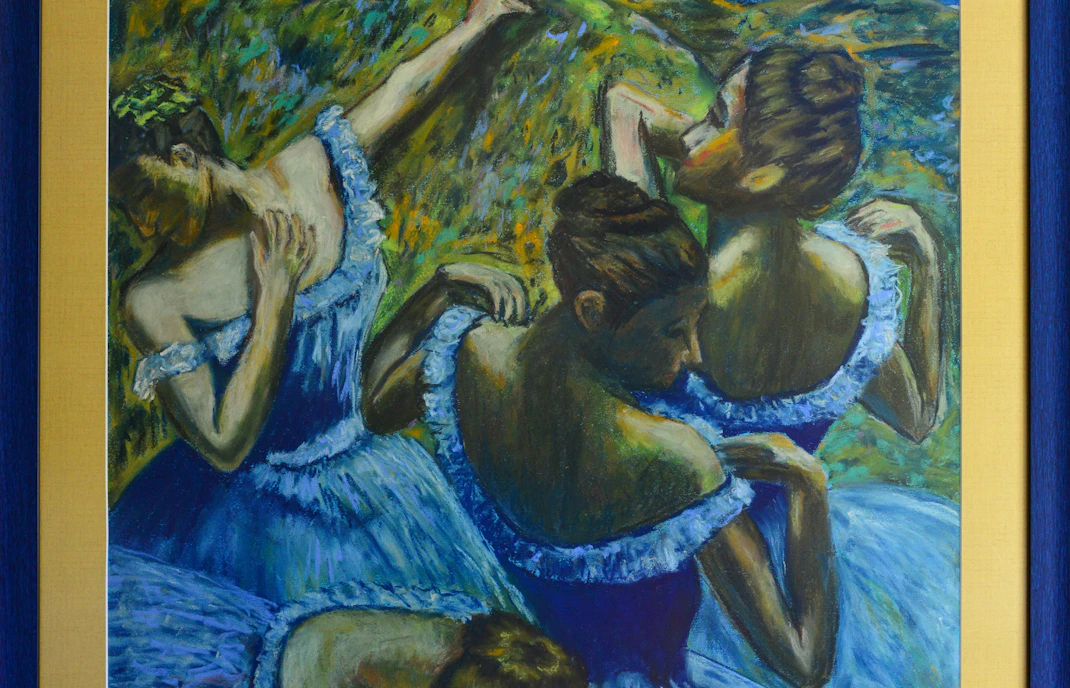
Edgar Degas (1834–1917) was a French artist associated with Impressionism, though he preferred studios, structure, and exact draftsmanship to outdoor spontaneity. For Little Dancer Aged Fourteen, he applied the same relentless observation seen in his ballet pictures to sculpture, modeling a young Paris Opera student in wax and pairing it with real fabric, ribbon, slippers, and human hair. The work grew from decades of studying rehearsal rooms, backstage labor, and fleeting gesture, themes that also animate The Dance Class, The Rehearsal, and many of his pastels of dancers at rest. Yet this sculpture pushes further than those images: it gives physical weight to tension, discipline, class, and adolescence. Degas’ experiments across painting, pastel, printmaking, and sculpture reshaped modern art by proving that everyday movement could carry profound psychological force, and this work remains one of his boldest statements in 19th-century French art.
What makes Little Dancer Aged Fourteen a masterpiece? See for yourself

1/6
An unsentimental pose
Degas did not present a smiling stage heroine or a triumphant performer. The lifted chest, clenched arms, and slightly forward head create a stance that feels drilled, practiced, and psychologically guarded.
A mixed-media collision
What still surprises viewers is the meeting of sculpted form and real costume. Bronze, fabric, ribbon, and slippers create a visual friction that makes the figure feel both art object and social document.
A face without idealization
Look at the chin, mouth, and fixed expression. Degas avoids flattering softness, forcing you to confront the dancer as an individual rather than as a decorative symbol of ballet.
Movement held in tension
This is not a leap or pirouette. Degas captures the stillness before movement — the kind of posture built by repetition, fatigue, and correction — which gives the sculpture unusual emotional weight.
A portrait of class and training
The sculpture is as much about 19th-century Paris as it is about dance. Her costume, body language, and youth point to the strict, competitive world of the Paris Opera and the social pressures placed on young dancers.
A modern break with tradition
Instead of polished marble heroics, Degas offered a contemporary girl rendered with rough surfaces and unsettling realism. That decision helped open the door to modern sculpture’s interest in ordinary subjects, unstable materials, and psychological truth.
Frequently asked questions about Little Dancer Aged Fourteen
No. It’s included with Musée d’Orsay admission; Orsay Museum Reserved Access Tickets are the simplest self-guided option.
At the Musée d’Orsay, 1 Rue de la Légion d’Honneur, 75007 Paris, in the Level 5 Impressionist galleries.
No. Paris shows a bronze cast; Degas’ original was modeled in wax and dressed with real fabric, ribbon, slippers, and human hair.
Critics found its realism unsettling. Many also reacted with class prejudice to Degas’ unidealized portrayal of a teenage ballet student.
Yes. The Musée d'Orsay Skip-the-Line Guided Tour and Orsay Museum Guided Impressionist Masterpieces Tour both add expert context.
Yes, without flash. Tripods, selfie sticks, and professional equipment aren’t allowed in the galleries.
Visit at opening or on Thursday evening. Level 5 is busiest from late morning through mid-afternoon.
Yes. The museum has elevators, accessible restrooms, and wheelchairs available on request against ID.
More reads
Musée d’Orsay guide and visitor information
Edgar Degas: life, works, and legacy