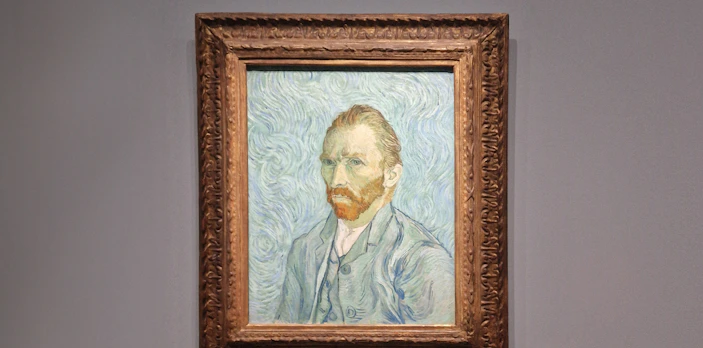
Van Gogh painted Self-Portrait in September 1889 at Saint-Rémy-de-Provence. It is widely regarded as one of his last self-portraits.
Witness Self-Portrait by Vincent van Gogh in Paris – A Post-Impressionist Masterpiece
An overview | Van Gogh's Self-Portrait
Painted by Vincent van Gogh in September 1889 at Saint-Rémy, Self-Portrait turns a modest canvas into psychological drama. The steady gaze, blue-green shadows, and rippling turquoise background make this one of his most revealing late works. Seeing it in person at the Musée d’Orsay is especially rewarding with reserved access or an expert-led tour, which helps you place the painting within Van Gogh’s final year and the museum’s wider Post-Impressionist collection.
- Where is it located?: Self-Portrait is displayed in the Van Gogh galleries on Level 5 of the Musée d’Orsay in Paris.
- Tickets: Entry is included with a standard Musée d’Orsay ticket ; no separate pass is required.
How to best visit Self-Portrait
Start with the whole composition
Stand a few steps back before moving in. From that distance, the orange beard, blue jacket, and turquoise background lock together, and you can feel how tightly Van Gogh structured the picture rather than simply observing a likeness.
Move closer for the facial brushwork
Once you’ve taken in the whole canvas, step closer and study the face. The brushwork becomes shorter and more controlled across the cheeks and forehead, which makes the expression feel steadier than the restless background around it.
Use the gallery lighting carefully
The painting’s cool blues and green shadows can flatten if you look at it from too sharp an angle. A front-facing position, slightly off-center if the gallery is busy, gives you the clearest view with the least glare.
Visit at opening or on Thursday evening
The Van Gogh rooms are busiest from late morning through early afternoon, especially on Tuesdays and free first Sundays. Arriving near opening time or using the museum’s late Thursday hours gives you a quieter moment with the painting.
Pair it with nearby Van Gogh works
Don’t stop at Self-Portrait. Continue through the surrounding Van Gogh galleries to connect it with works such as Starry Night Over the Rhône and Bedroom in Arles, which deepen your sense of his late style and emotional range.
Use a guide for the late-period context
This painting becomes richer when you understand where Van Gogh was living and working in 1889. Reserved-access tickets with an app-based audioguide, or English-led options such as Musée d'Orsay Skip-the-Line Guided Tour and Orsay Museum Guided Impressionist Masterpieces Tour, help place the work within his Saint-Rémy period.
Did you know?
A late self-examination
A practical model
Van Gogh often painted himself because paid models were expensive. Self-portraiture let him keep working while testing color, form, and expression.
A letter to Theo
He told his brother Theo that he was sending a self-portrait. The painting was also a way of reporting on his appearance and state of mind from a distance.
Work clothes, not formal dress
He shows himself in a blue smock rather than bourgeois evening wear. The choice presents him as a working painter, not a society sitter.
Color replaces academic shading
The face is modeled with cool green-blue shadows and warm orange accents, not smooth salon-style transitions. That contrast gives the portrait unusual intensity.
Calm face, restless ground
The expression is controlled, but the background turns in agitated strokes. That tension is one reason art historians keep returning to the painting.
Part of a powerful late period
The work belongs to the same final stretch of Van Gogh’s career that produced some of his most recognized paintings. It compresses that late style into a single head-and-shoulders image.
Smaller than many visitors expect
The canvas measures about 65 x 54 cm (25.6 x 21.3 in). Its scale is intimate, but its psychological force is much larger.
Story behind Van Gogh's Self-Portrait
Saint-Rémy and the need for structure
Van Gogh painted Self-Portrait after entering the asylum of Saint-Paul-de-Mausole in Saint-Rémy in 1889. His mental health had been unstable, and painting gave shape to his days. Within that controlled setting, he turned inward and made himself the subject again.
Painting the nearest available model
Self-portraiture had practical value for Van Gogh. He did not need to hire a sitter, and he could work as often as his strength allowed. More importantly, the mirror let him study how color and brushwork could describe not only appearance, but inner pressure.
A face against a moving world
What makes this painting so compelling is its restraint. Van Gogh does not show himself in open crisis; instead, the face is composed, almost formal, while the background ripples with motion. That contrast creates the portrait’s emotional tension.
A message to Theo
Van Gogh sent the work to his brother Theo, who remained his closest emotional and financial support. The painting functioned as more than an artwork; it was also a personal statement. It showed Theo how he looked, but it also suggested how hard-won that composure was.
Who created the Self-Portrait?
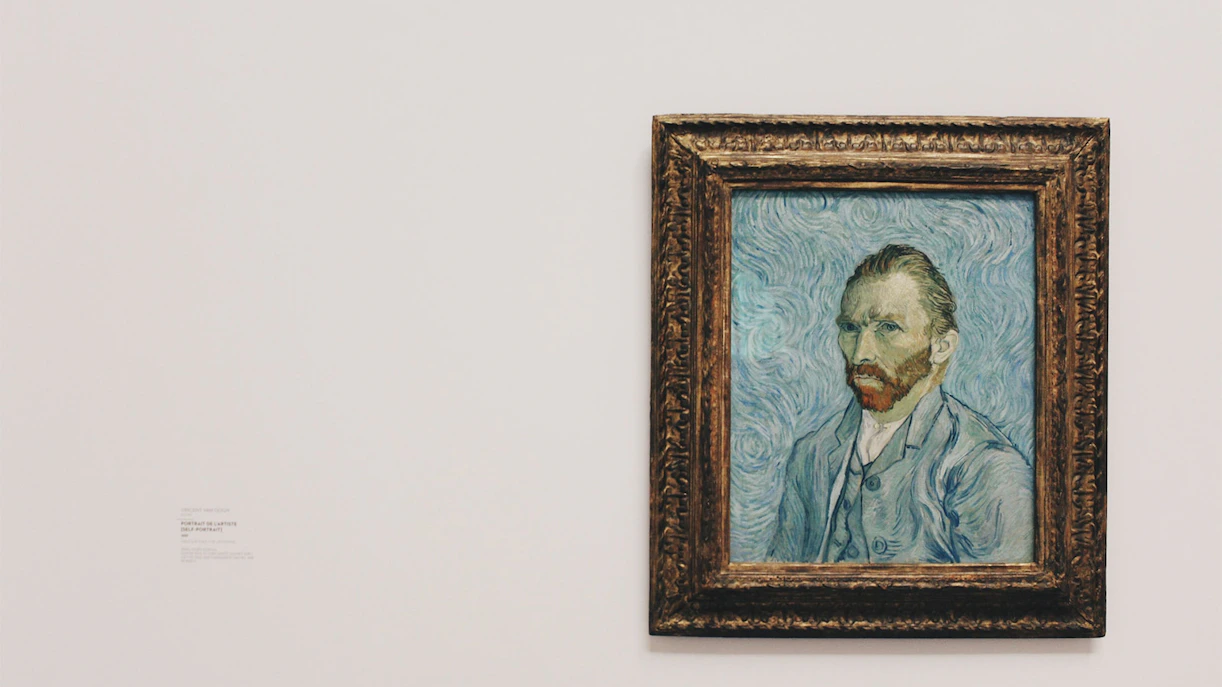
Vincent van Gogh (1853–1890) was a Dutch Post-Impressionist painter whose brief career transformed modern art through intense color, visible brushwork, and emotional directness. In Self-Portrait, he turns those strengths inward. Rather than flattering likeness, Van Gogh uses complementary blues and oranges, tightly controlled brushstrokes in the face, and a vibrating background to show a mind examining itself under pressure. Painted in Saint-Rémy in 1889, the work belongs to his late period, when he was also creating Starry Night Over the Rhône, Bedroom in Arles, and some of his most searching portraits. Van Gogh painted self-portraits partly for practical reasons — models cost money — but he also used them to test color, structure, and psychological expression. That combination of experimentation and feeling shaped artists from the Fauves to German Expressionists, and it explains why Self-Portrait feels both deeply personal and strikingly modern.
What makes Van Gogh's Self-Portrait a masterpiece? See for yourself
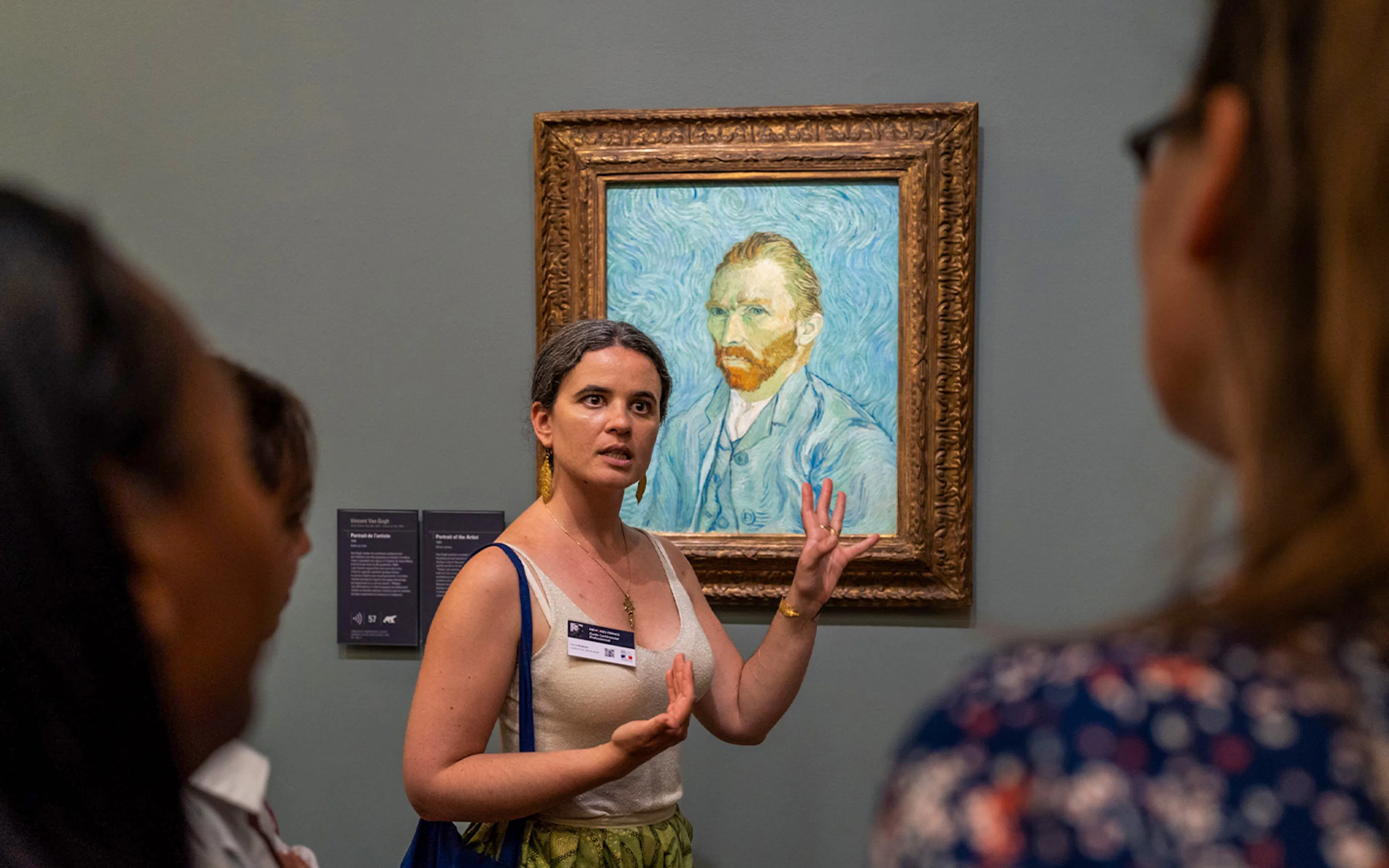
1/7
A direct, unsheltered gaze
Van Gogh looks straight out at you without theatrical gesture or symbolic props. The effect is immediate and slightly unsettling, as if the painting is measuring you while you measure it.
Complementary color tension
Notice how the orange beard and flesh tones press against the blue jacket and turquoise background. Van Gogh uses complementary color not as decoration, but as a structural force that sharpens the entire portrait.
Controlled brushwork in the face
The face is built with shorter, firmer strokes than the background. That difference matters: it gives the features a sense of concentration and self-command, even as the world around them seems to tremble.
A background that never goes still
The swirling backdrop is more than a decorative field. It pushes psychological energy into the painting, making the portrait feel active and unstable without distorting the sitter’s expression.
An intimate scale with major impact
At about 65 x 54 cm (25.6 x 21.3 in), the canvas is not large. Its power comes from compression: Van Gogh packs enormous emotional and formal intensity into a size that invites close viewing.
A late self-portrait without spectacle
Many famous images of Van Gogh are filtered through the legend of his life. This painting resists that simplification. It is searching, disciplined, and self-aware, which is why it feels less like mythmaking and more like a modern psychological portrait.
A bridge to modern art
You can feel older portrait traditions here, but you can also see where 20th-century painting begins. The visible surface, emotional color, and refusal to separate technique from feeling helped open the way for later modern movements.
Frequently asked questions about Self-Portrait
No. It is included with standard Musée d’Orsay admission.
It is displayed in the Level 5 Van Gogh galleries of the Musée d’Orsay.
It is shown in the Van Gogh galleries when on view. Loans and rehangs can occasionally move it within the museum.
He painted it in September 1889 at Saint-Rémy, using himself as a model to study color, structure, and psychological presence.
It is cooler, more controlled, and more probing. The mood is less performative and more inward-looking than many of the earlier Paris works.
Yes. Non-flash photography is allowed in the permanent collection; flash, tripods, and selfie sticks are not permitted.
Go at opening time or on Thursday evening. Midday, especially on Tuesdays, is usually the busiest.
Yes. Level 5 is reachable by elevator, and the museum offers wheelchairs against ID.
More reads
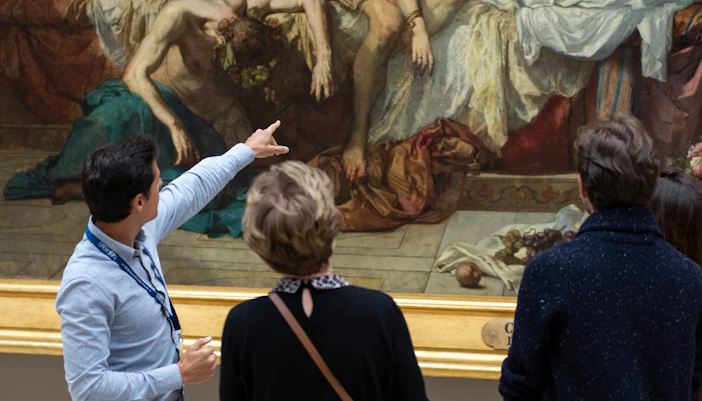
Orsay Museum Reserved Access Tickets
[Experience ID: 6235]
Musée d'Orsay Skip-the-Line Guided Tour
[Experience ID: 39264]
Orsay Museum Guided Impressionist Masterpieces Tour
[Experience ID: 16365]


