The Origin of the World was painted in 1866 for Khalil Bey, an Ottoman-Egyptian diplomat in Paris known for collecting erotic art.
Witness The Origin of the World by Gustave Courbet in Paris – A Realist Masterpiece
Painted in 1866, Gustave Courbet’s The Origin of the World is a small canvas with an outsized place in art history. Measuring just 46 x 55 cm (18 x 21.7 in), its tightly cropped nude rejects myth and idealization in favor of direct, startling realism. Long hidden in private collections, it now invites close looking rather than scandal alone. Reserved access, audioguides, and expert-led Orsay tours make it easier to see the painting in context.
Where is it located?
You’ll find it in the Courbet room on level 0 of the Musée d’Orsay in Paris.
Tickets
Entry is included with a standard Musée d’Orsay ticket; no separate pass is required.
Use an audio guide or guided tour
Courbet’s painting is easy to reduce to shock value if you see it in isolation. An audioguide or an expert-led Orsay visit helps place it within Realism, 19th-century debates around the nude, and Courbet’s broader challenge to academic art. If you want structured context, Headout offers Orsay Museum Reserved Access Tickets with an audio guide option, as well as guided visits such as the Musée d'Orsay Skip-the-Line Guided Tour.
Stand back before moving closer
Because The Origin of the World is modest in size, start from a few steps back so the composition reads as a whole. Then move closer to study the tonal transitions, the precise handling of fabric, and the contrast between softness and physical immediacy. That shift in distance reveals how carefully Courbet controlled an image that can seem abrupt at first glance.
Choose a quieter hour
This work is best seen when the gallery feels calm enough for sustained looking. At the Musée d’Orsay, the lightest crowd levels are usually right after opening and on Thursday evenings, while late morning and early afternoon are typically busier. A quieter hour makes a noticeable difference for a painting that depends on concentration rather than spectacle.
Plan for explicit content
The painting depicts explicit female nudity without allegorical cover, so it is worth preparing anyone in your group before entering the gallery. The museum does not isolate it as a separate-ticket work, which means you may encounter it as part of your normal route through 19th-century painting. If you are visiting with children or teenagers, decide in advance whether you want to include this room.
Photograph discreetly
Personal photography without flash is generally allowed at the Musée d’Orsay, but this is not a work to turn into a prolonged photo stop. Keep your phone low, avoid blocking the painting, and follow any gallery signage in place on the day of your visit. Since the canvas is small, stepping back slightly usually produces a clearer shot than trying to stand directly in front of it.
Pair it with related works
To understand why this painting matters, compare it with other 19th-century treatments of the nude during the same museum visit, especially Manet’s Olympia and Courbet’s larger Realist works. That contrast shows how radically The Origin of the World strips away narrative, costume, and social setting. Set aside 15–20 minutes so you can view it, reflect, and then place it back into the larger story of modern art.
Did you know?
A private commission
A surprisingly small canvas
Many visitors expect a monumental work because of its reputation. In reality, it measures only 46 x 55 cm (18 x 21.7 in).
A body without identity
Courbet removed the sitter’s face, hands, and feet from view. That cropping makes the image feel both intensely physical and deliberately impersonal.
A painting kept out of sight
For decades, the canvas remained in private hands and was often concealed from casual view. Its early owners treated it as something to be shown selectively, not publicly displayed.
A Surrealist cover
When psychoanalyst Jacques Lacan owned the painting, artist André Masson created a cover panel for it. The work was literally hidden behind another artwork.
A late museum debut
Despite being painted in 1866, it did not enter France’s national collections until 1995. For most of its existence, the public could not see it in a museum at all.
A long-running censorship case
The painting continued to provoke debate well into the digital era, when reproductions were removed by online platforms. Its history of scandal did not end with the 19th century.
A key test of Realism
Courbet was not merely painting an erotic subject. He was testing how far Realism could go once mythological excuses and academic idealization were stripped away.
Story behind *The Origin of the World*
The commission
In 1866, Khalil Bey commissioned Gustave Courbet to paint a work for a private collection known for its sensual and provocative character. This was not meant for public exhibition, church display, or official patronage. From the start, the painting belonged to a world of private looking, elite secrecy, and cultivated transgression. That original context shaped its early life as much as the image itself.
A deliberate rupture
Courbet had already become famous for challenging academic expectations with works that treated ordinary life, labor, and the body without idealization. In The Origin of the World, he pushed that Realist program further by eliminating narrative, identity, and symbolic cover. The result was a painting that refused the usual justifications attached to the nude in European art. It was radical not because the subject was unprecedented, but because the treatment was so direct.
A painting meant to be hidden
For much of its history, the canvas circulated quietly among private owners. It was often covered, protected, or revealed only to select viewers, which added to its aura of secrecy. That hidden life also meant the painting escaped the kind of public criticism that would have followed an open display in the 19th century. Its reputation grew in whispers long before it gained a museum audience.
From private possession to public inheritance
In the 20th century, the painting entered the collection of Jacques Lacan and remained concealed behind a panel by André Masson. After Lacan’s death, it eventually passed to the French state through a settlement process tied to inheritance tax. That transfer changed the painting’s status completely. A work once reserved for private interiors became part of the national story of modern art.
From scandal to art history
When The Origin of the World entered the Musée d’Orsay in 1995, it became available for sustained public and scholarly attention rather than rumor alone. Viewers still debate its meaning, its ethics, and its handling of the female body, but it is now studied alongside Courbet’s other major works. Its public display did not erase controversy; it reframed it. Today, the painting stands as both a scandalous image and a landmark in the history of Realism.
Who created *The Origin of the World*?
Gustave Courbet (1819–1877) was a French painter and the leading voice of Realism, a movement that rejected mythic subjects and academic idealization in favor of ordinary bodies, labor, landscapes, and modern life. In The Origin of the World, Courbet pushed that Realist commitment to its furthest limit, stripping away narrative, allegory, and even the sitter’s identity to focus on flesh, texture, and the physical fact of birth. His brushwork is controlled rather than theatrical, using warm tones, soft transitions, and close cropping to make the image immediate and unsettling. Courbet had already challenged viewers with works such as A Burial at Ornans, The Painter’s Studio, and The Stone Breakers. This painting belongs to that same defiant project: forcing art to confront reality without polite filters. Courbet’s influence reached far beyond Realism, shaping later modern artists who treated subject matter, scale, and honesty with equal boldness.
What makes *The Origin of the World* a masterpiece? See for yourself

1/6
Radical cropping
Courbet removes the face, limbs, and surrounding setting, leaving only the torso and drapery in view. That abrupt framing denies the viewer the comfort of portraiture, narrative, or identity. What remains is not a story about a woman, but a confrontation with looking itself.
Unsparing realism
This is not a mythological Venus or a softened academic nude. Courbet paints flesh, hair, fabric, and shadow with an observational precision that rejects beautifying conventions. The effect is direct because he treats the body as material fact rather than idealized symbol.
A modern treatment of the nude
European art had long represented nudity, but usually under the protection of religion, allegory, or classical mythology. The Origin of the World abandons those frames and presents the female body without narrative alibi. That choice marks a major break between traditional studio practice and modern art’s insistence on confronting reality.
Delicate control of tone
The painting’s force does not come from loud color or dramatic gesture. Notice the subtle warm-cool shifts in the skin, the soft white drapery, and the dark background that pulls the body forward. Courbet uses restraint, not spectacle, to intensify the image.
Small scale, huge impact
At 46 x 55 cm (18 x 21.7 in), the canvas is far smaller than its legend suggests. That intimacy matters: you do not encounter it as a monumental public statement, but as a concentrated, private image. Its modest size makes the confrontation feel closer and more deliberate.
Meaning without explanation
Courbet gives you no title within the image, no symbols to decode, and no setting to contextualize what you see. That absence is part of the painting’s power. The work continues to generate debate because it refuses to settle into a single meaning: erotic picture, Realist manifesto, meditation on birth, or critique of the nude tradition.
Frequently asked questions about *The Origin of the World*
Yes. It is included with standard Musée d’Orsay admission, so no separate ticket or add-on is required.
Yes. Headout offers Orsay Museum Reserved Access Tickets with an audio guide option, plus guided visits such as the Musée d'Orsay Skip-the-Line Guided Tour.
Yes, personal photography without flash is generally allowed. Follow gallery signage and avoid blocking the small viewing area.
Yes. The museum has elevators and accessible routes, and the painting is displayed in an accessible gallery on level 0.
Right after opening and on Thursday evenings are usually the calmest times to view it.
Allow 15–20 minutes. The canvas is small, but its subject, scale, and context reward slow viewing.
The museum does not restrict minors, but the work is explicitly sexual. Adults should decide whether it suits their group.
Courbet showed female genitalia without mythological disguise, idealization, or narrative cover, which made the work unusually direct for 1866.
More reads
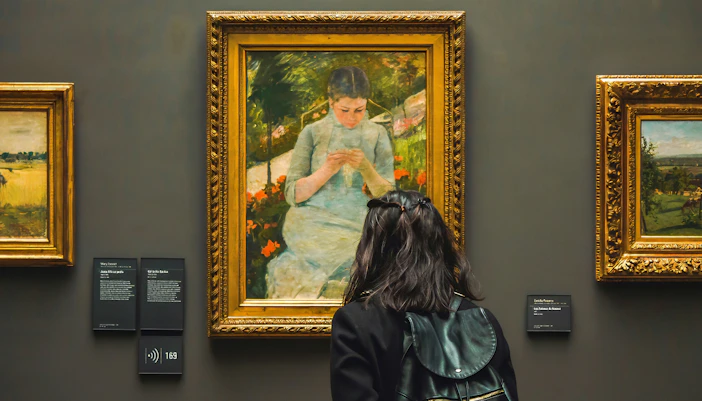
Orsay Museum Reserved Access Tickets
[Headout experience ID: 6235]
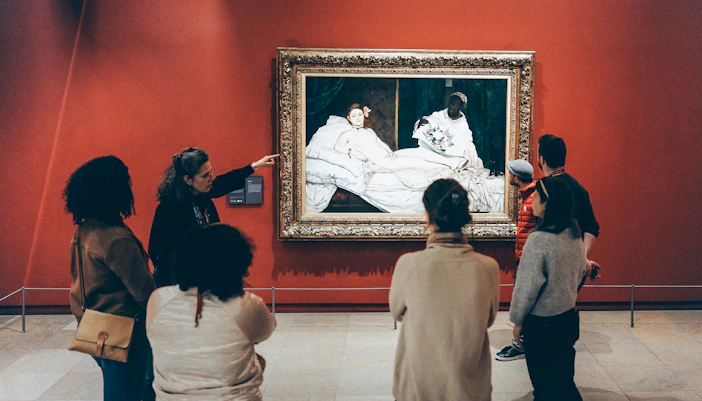
Musée d'Orsay Skip-the-Line Guided Tour
[Headout experience ID: 39264]
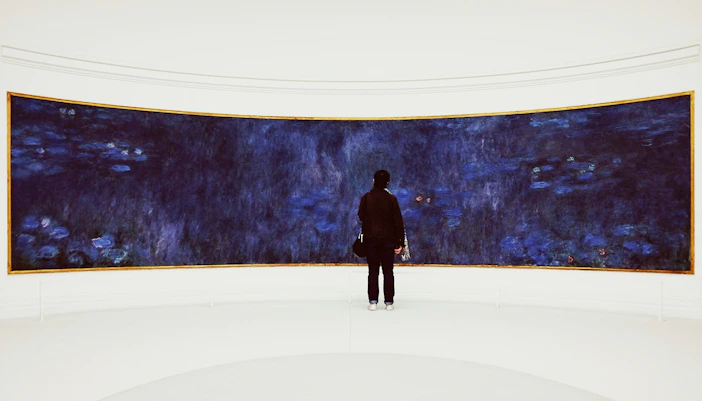
Orangerie Museum Tickets
[Headout experience ID: 8002]
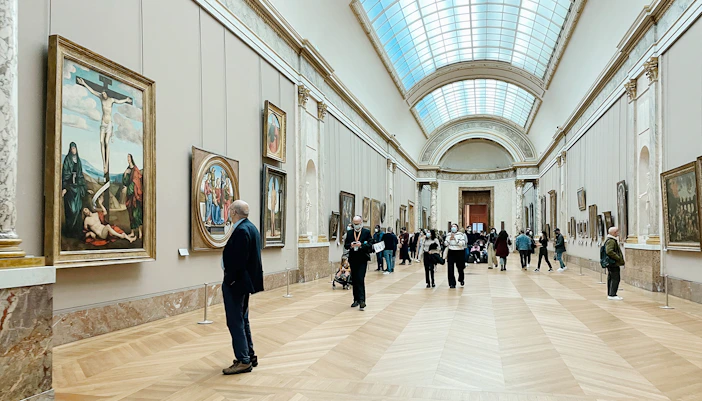
Combo (Save 14%): Louvre Museum + Orsay Museum Tickets with Audio Guide
[Headout experience ID: 27106]


