Palace of Versailles

Explore the Hall of Mirrors at Versailles

Included with Palace of Versailles tickets

Timings

RECOMMENDED DURATION

4 hours

Versailles palace hall of mirrors

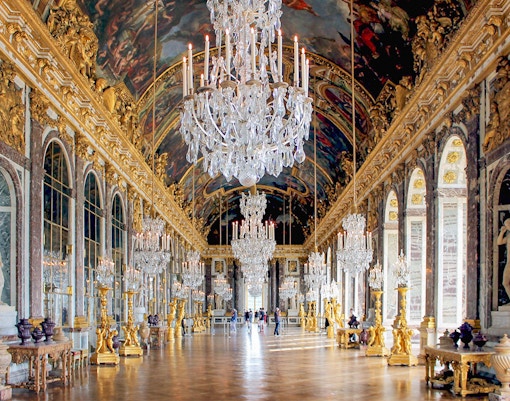
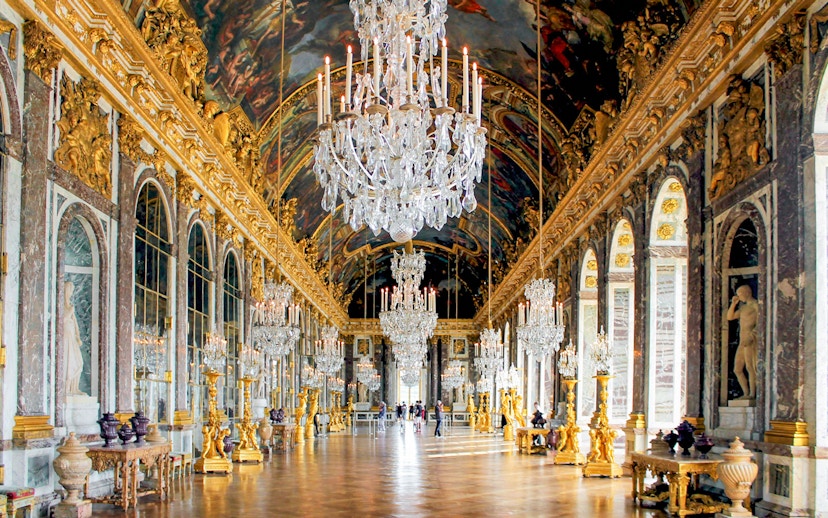
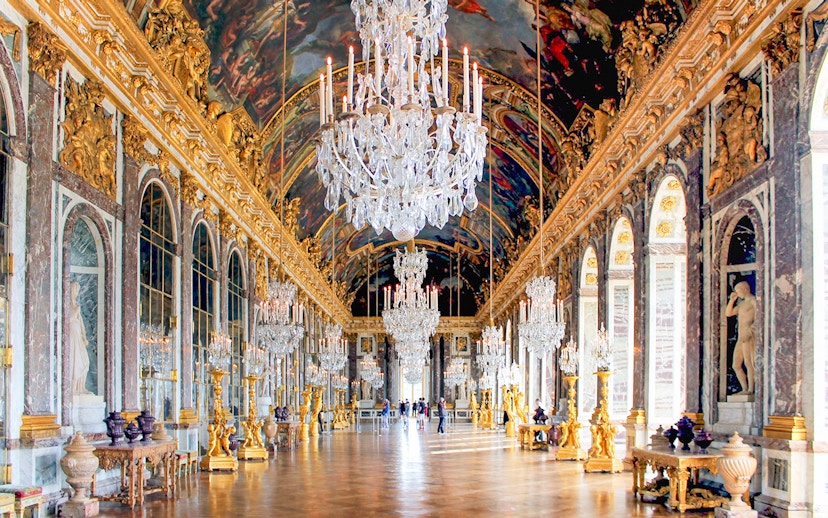
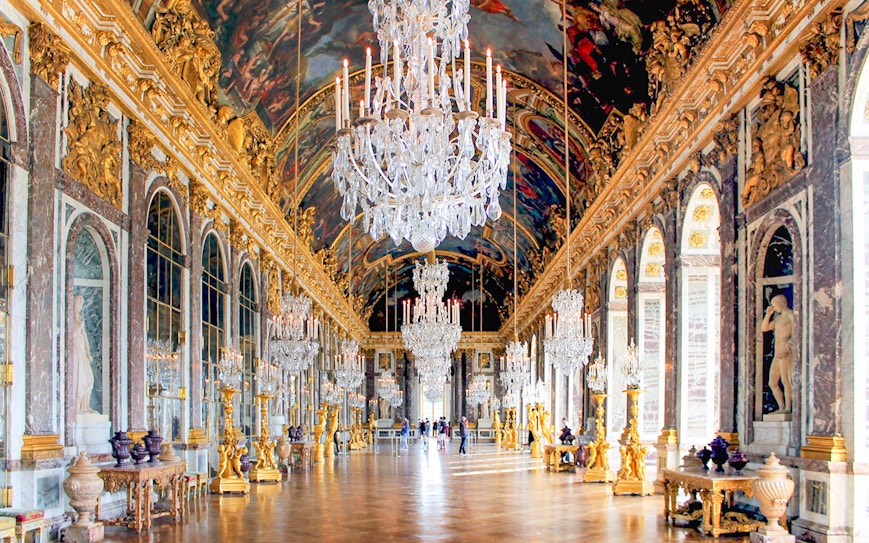
The Hall of Mirrors (Galerie des Glaces) is the most famous room in the Palace of Versailles, showcasing grandeur, artistry, and history in a single breathtaking space. Stretching over 73 meters (239 feet), this opulent hall is adorned with 357 mirrors, gilded sculptures, and elaborate chandeliers, creating a dazzling spectacle that epitomized Louis XIV’s absolute power.

Located between the King’s and Queen’s Apartments, the Hall of Mirrors was once a royal passageway and later became the stage for historic events, including the signing of the Treaty of Versailles in 1919, which ended World War I. Today, it remains one of the most iconic and visited rooms in French history.

How to access the Hall of Mirrors

Entry to the Hall of Mirrors is included in all Palace of Versailles tickets – no separate ticket is required.

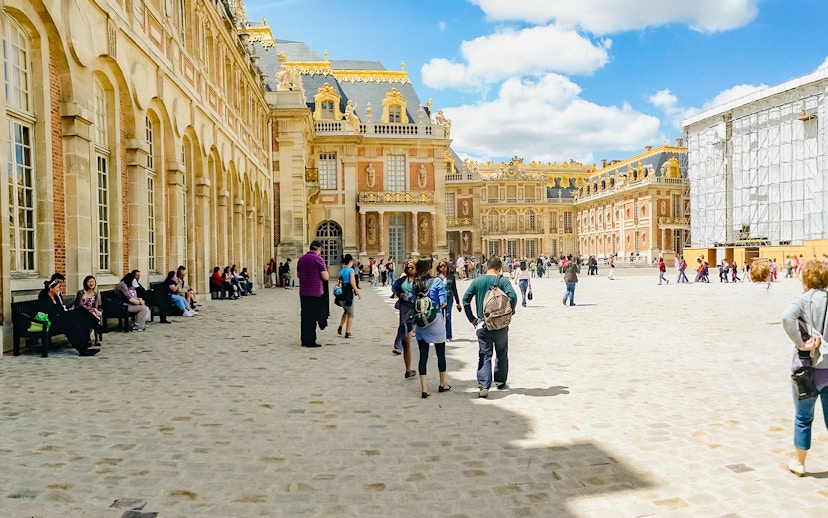
✅ Access is granted through the Palace’s main entrance (Entrance A).

✅ Visitors with a Palace ticket, guided tour, or combo pass can enter and explore the Hall of Mirrors.

✅ The best time to visit is early morning or late afternoon to avoid large crowds.
Hall of Mirrors in a nutshell

  • Name: Hall of Mirrors
  • Address: Palace of Versailles, France
  • Date of creation: Built between 1678-1684
  • Timings: 9am to 6:30pm (Tuesdays to Sundays) during high season and 9am to 5:30pm (Tuesdays to Sundays) during low season
  • Architect: Louis le Vau
  • Architectural style: Baroque
  • Number of visitors per year: 10 Million annually

What's inside the Hall of Mirrors?

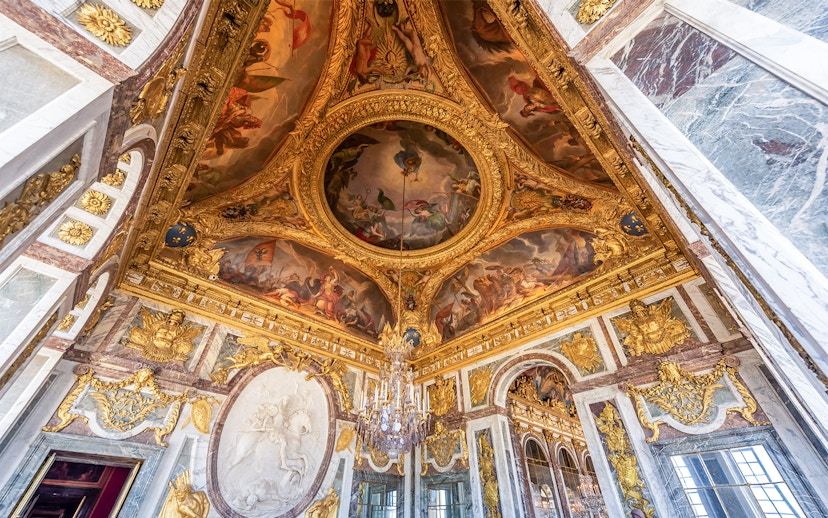
Hall of Mirrors in Versailles Palace with chandeliers and ornate decor.
Placeholder Image Headout Blimp
1/4

The 357 mirrors

Lining the walls opposite the arched windows, these mirrors reflect the lush gardens of Versailles, creating an illusion of infinite space.

Ceiling frescoes

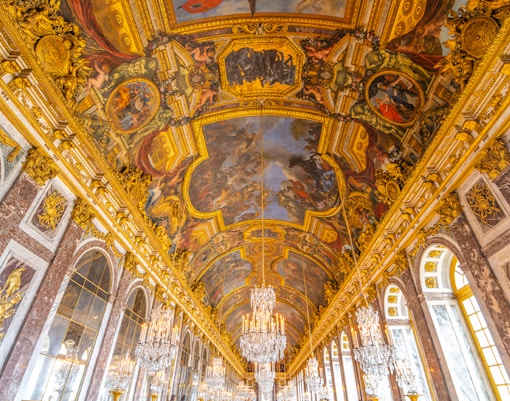
Painted by Charles Le Brun, the ceiling is divided into 30 panels depicting the triumphs of Louis XIV, from military victories to the expansion of France.

The marble pilasters and gilded bronze statues

Along the walls, 17 marble pilasters and gilded bronze sculptures add to the hall’s grandeur, embodying the decorative style of the Grand Siècle (Great Century).

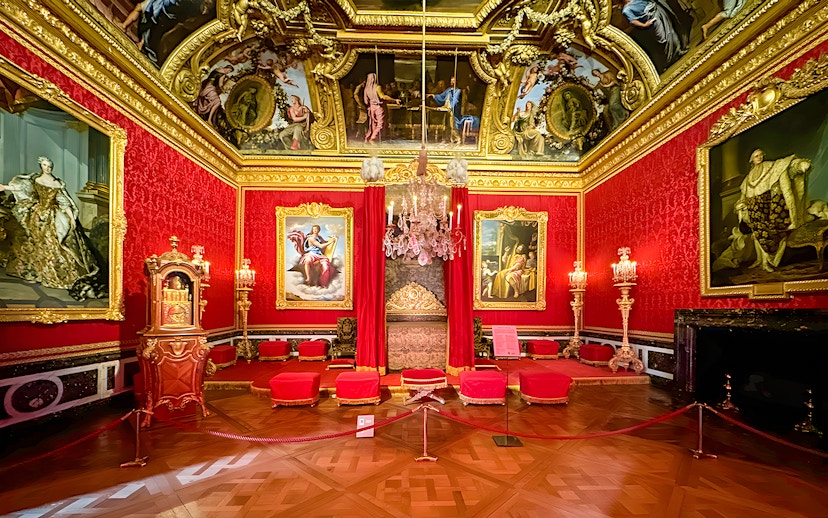
The War and Peace rooms

The Hall of Mirrors connects two significant rooms:

  • The War Room: Celebrates France’s military triumphs with allegorical paintings.
  • The Peace Room: Features themes of diplomacy, used for important receptions.

What makes the Hall of Mirrors special?

Rouge de Rance marble pilasters display French national symbols

The hall features Rouge de Rance marble pilasters made of red reef limestones and gilded bronze capitals based on the 'French Style.' Topped with symbols of French identity, such as the fleur-de-lis and Gallic roosters, these columns reflect the nation's pride and heritage.

Colossal, gold-framed windows illuminate the Hall of Mirrors

The hall is bathed in natural light streaming through its colossal, gold-framed windows. These windows help illuminate the space, making the hall look larger than it is. Fun fact: France was determined to build the Hall of Mirrors using only French materials, so these windows are as authentic as they get. When you look at them, feel the echoes of 17th-century France in every detail!

Louis XIV's reign is illustrated in 30 ceiling compositions

Charles Le Brun painted 30 elaborate compositions on the ceiling representing Louis XIV's legacy and political victories during his first 18 years of rule. They emphasize his success during the Dutch Wars of the 1660s-1670s. One notable painting, 'The King Governs for Himself,' is right in the center of the ceiling and illustrates the Sun King residing on the mighty throne.

Palace of Versailles' gardens are mirrored within the Hall's arches

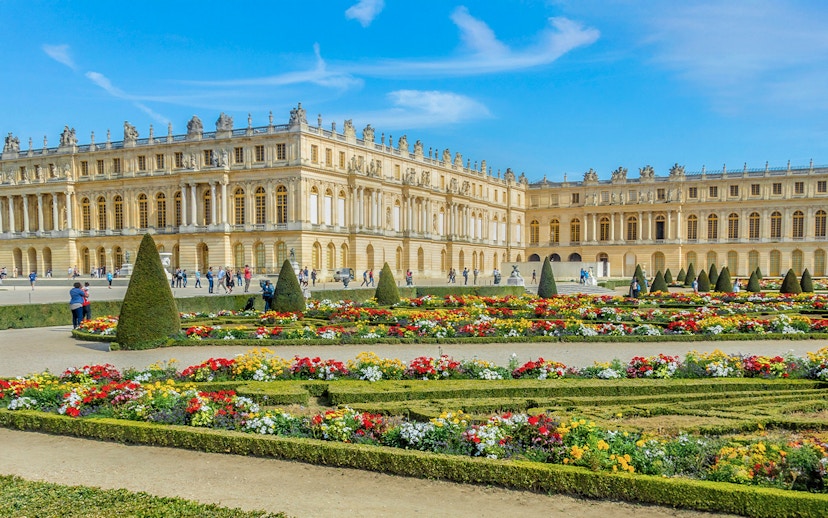
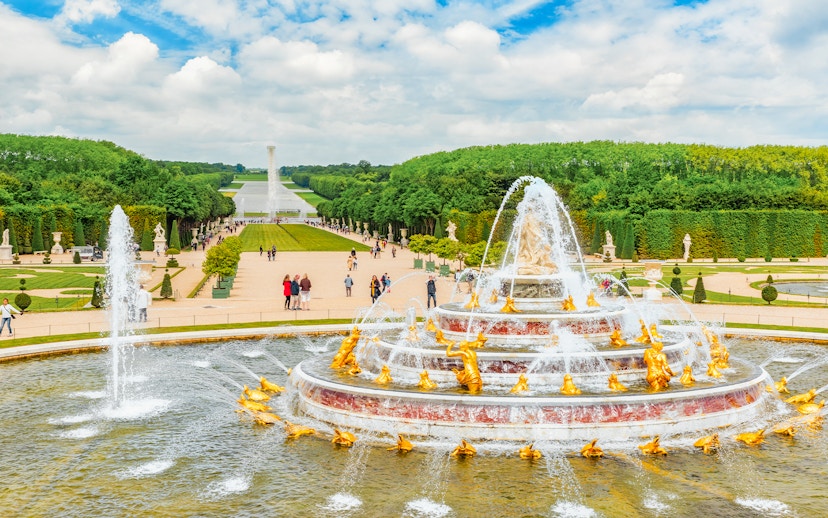
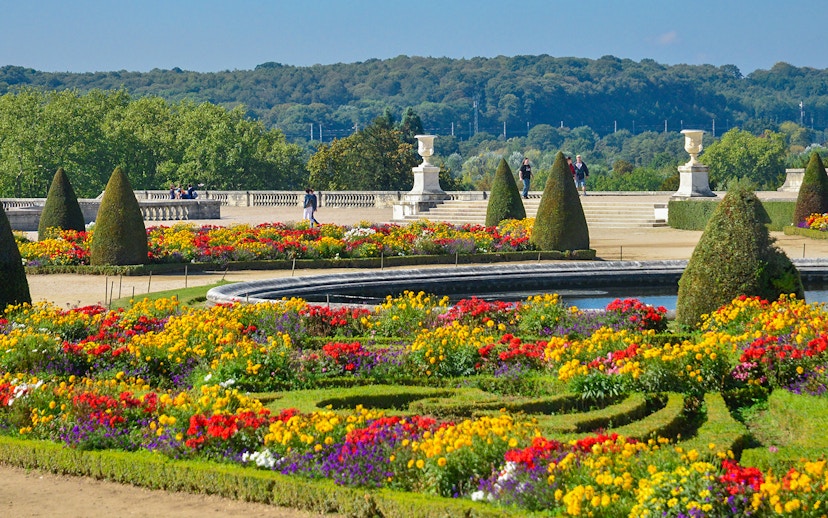
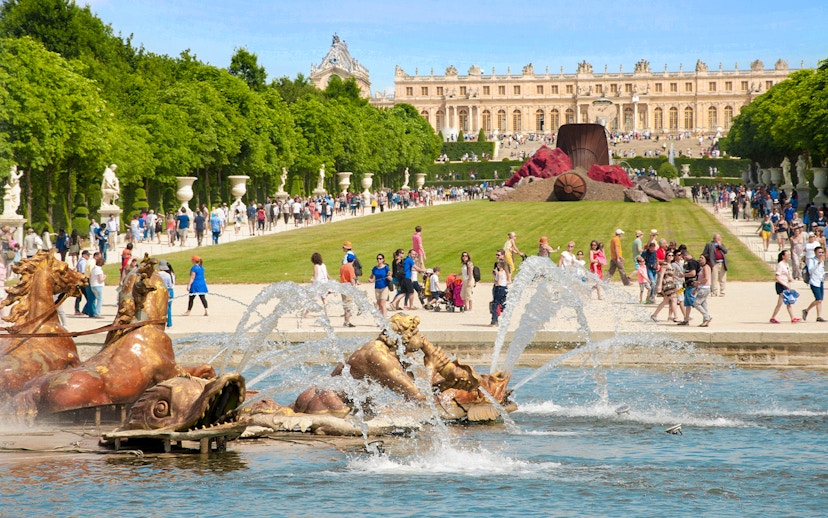
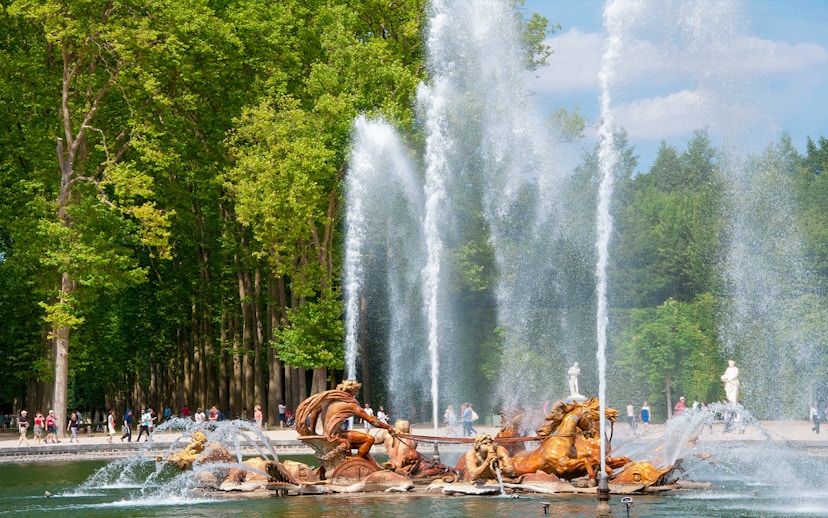
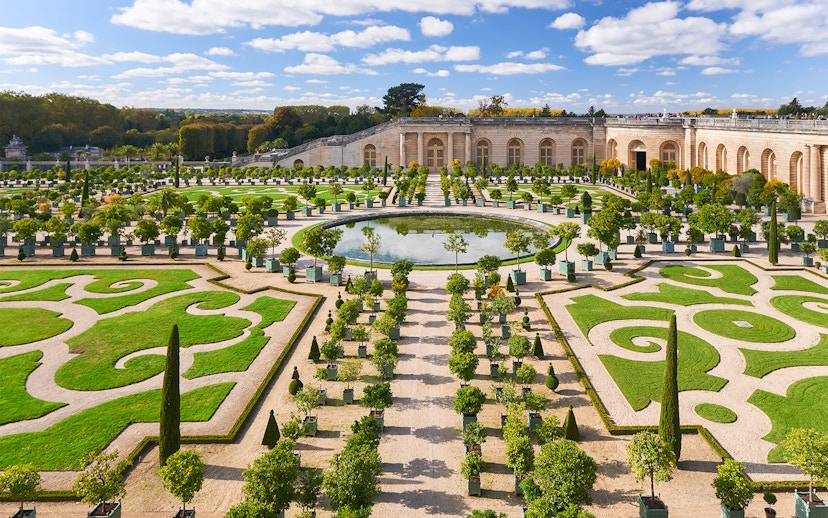
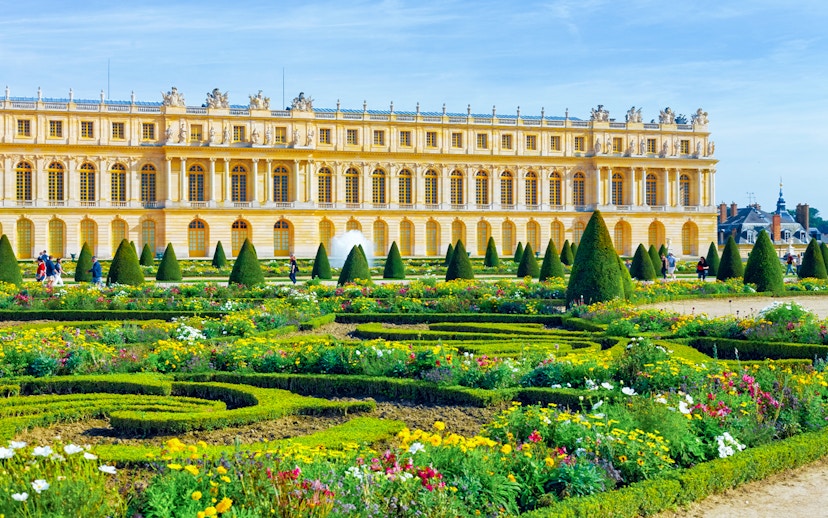
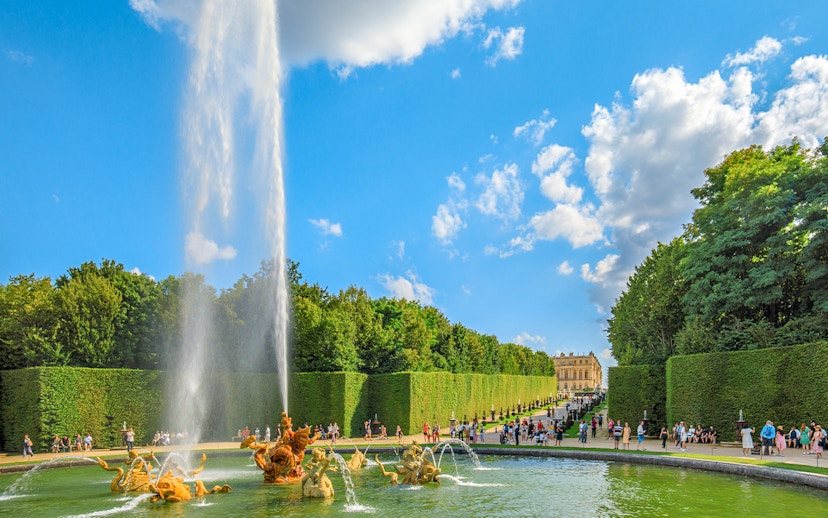
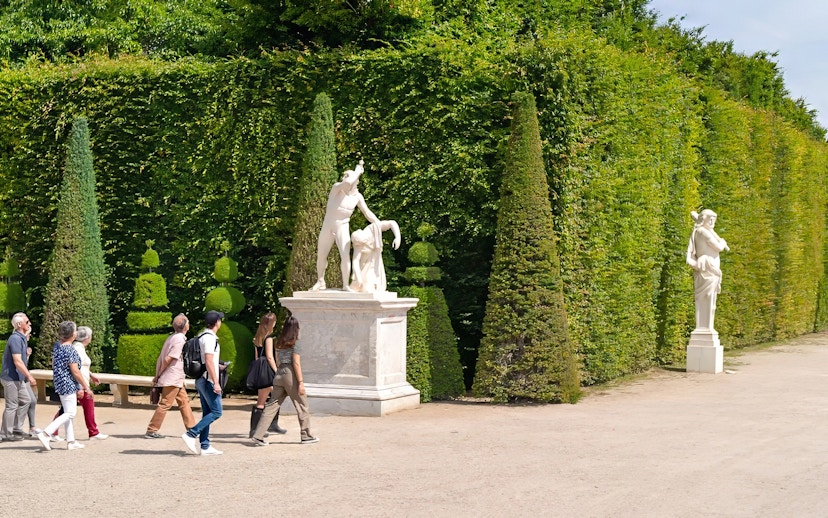
The Hall's 17 arches, adorned with 357 mirrors, are strategically positioned opposite the 17 embowed windows. Outside the windows lies the carefully maintained gardens of Versailles, with ancient trees, bushes trimmed in geometrical shapes, blooming flowers, and monumental fountains depicting Greek gods. This lush view is often reflected in the mirrors on the arches, replicating the garden's beauty inside the gallery.

Architectural highlights of the Hall of Mirrors

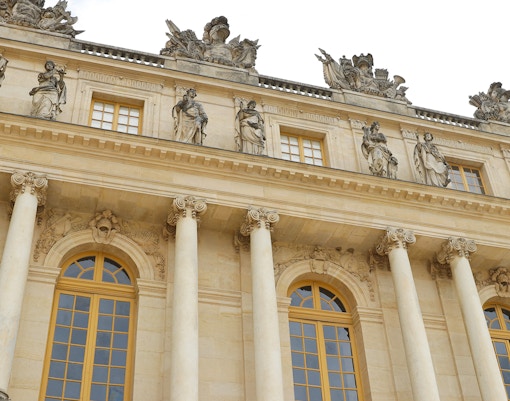
Designed by Jules Hardouin-Mansart and completed in 1684, the Hall of Mirrors is one of the finest examples of French Baroque architecture at its most theatrical. Stretching over 73 metres, the gallery replaces what was once an open terrace, seamlessly blending architecture, light, and landscape. Its most striking feature is the series of 17 arched windows overlooking the gardens, each perfectly mirrored by 17 matching arches lined with 357 mirrors—a revolutionary luxury at the time, when mirror-making was a closely guarded Venetian craft. Gilded sculptures, marble pilasters, crystal chandeliers, and an intricately coffered ceiling come together to create a space that feels both grand and perfectly balanced, designed to impress anyone who entered.

Historical and cultural significance of the Hall of Mirrors

  • Political powerhouse: The Hall of Mirrors was the ceremonial and political centre of Louis XIV’s court, designed to embody and display absolute monarchy.
  • Court life on display: It hosted daily royal rituals, grand receptions, and formal events that reinforced the king’s authority.
  • Diplomatic stage: Foreign ambassadors were received here, with the sheer scale and splendor of the hall meant to impress—and intimidate.
  • Royal propaganda: Charles Le Brun’s ceiling paintings glorify Louis XIV’s military victories and achievements, turning art into a statement of power.
  • World history moment: In 1919, the Treaty of Versailles was signed here, linking the hall to a turning point in global history.

Know before you go

Timings

  • Opening hours: Generally 9am – 6:30pm (last entry at 5:45pm; hours may be shorter in low season)
  • Closed: Mondays and certain public holidays

Location

Address: Palace of Versailles, Place d’Armes, 78000 Versailles, France

Rules

  • Photography is allowed, but flash photography is prohibited to protect the artwork.
  • Large bags, suitcases, and sharp objects are not permitted inside the palace.
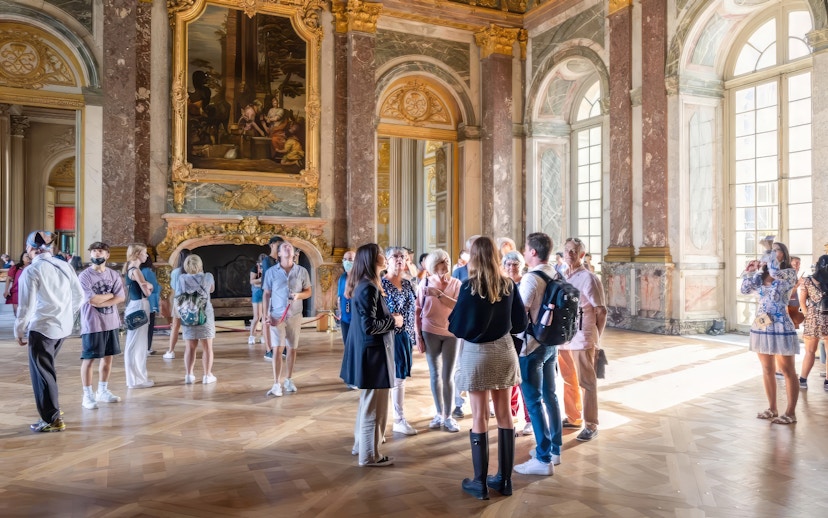
  • Expect crowd-control measures in the Hall of Mirrors, as it is one of the most visited spaces in Versailles—lingering may be limited during busy hours.

Best time to visit: Early morning or late afternoon to avoid peak crowds.
Accessibility: The Hall of Mirrors is wheelchair accessible.

Photography: Allowed, but no flash photography.

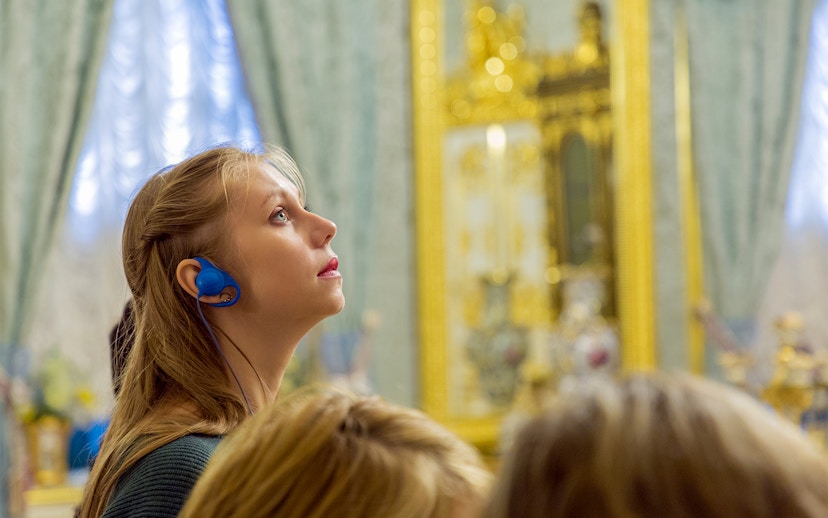
Guided Tours: Available for a deeper understanding of the hall’s history and art.

Duration: Spend at least 20–30 minutes to fully appreciate the details.
Frequently asked questions about Versailles Hall of Mirrors

Yes, all Palace of Versailles tickets include access to the Hall of Mirrors.