






Notre Dame Paris

Notre-Dame rose window tickets

Included with Notre Dame Paris tickets

Timings

RECOMMENDED DURATION

2 hours

Notre-Dame Cathedral rose windows

Top things to do in Paris

Quick overview
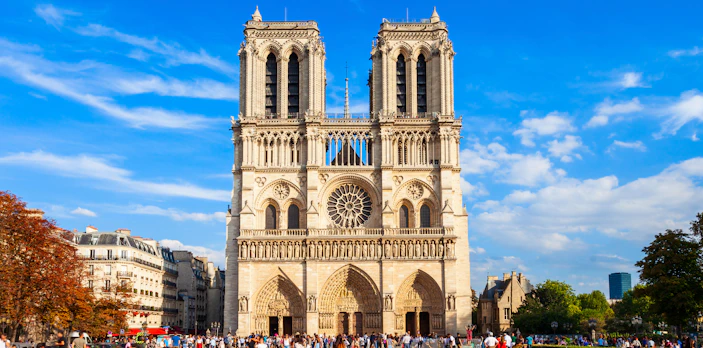
  • Access: Included with entry to Notre-Dame Cathedral
  • Separate ticket: Not required
  • When you'll see it: West rose at the entrance (start); north & south roses in the transept (midway)
  • Visit duration: 30–45 min self-guided / about 60 min with guide
  • Best time: Bright weekday, late morning or late afternoon; south rose peaks around midday
  • Restrictions: Modest dress required. No flash photography, tripods, or loud conversations during worship

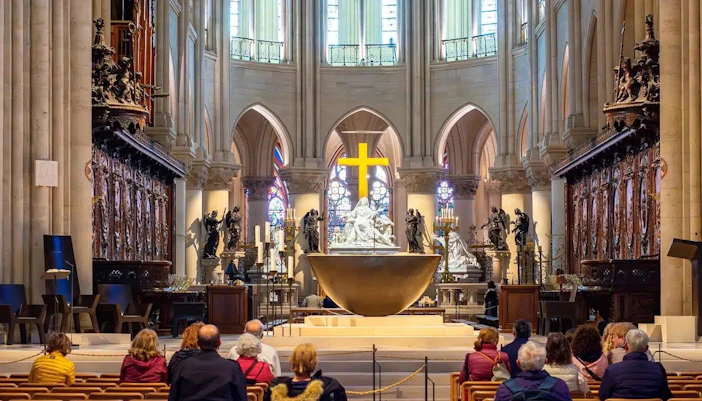
Notre-Dame's three rose windows are part of the cathedral interior and are included with all entry to Notre-Dame de Paris. Entry is free and no separate ticket exists. You'll glimpse the west rose above the entrance as you arrive, then meet the larger north and south roses facing each other in the transept midway through. Reserve a free timed slot, or book a guided tour, to skip the walk-up queue.

How to best experience Notre-Dame's rose windows
Best time to visit

Aim for a bright weekday late morning or late afternoon. The south rose blazes only when direct sun hits it around midday; flat or grey light leaves all three looking dull. Pick a clear day and the colour transforms.

How long to spend

A self-guided cathedral visit runs 30–45 minutes; the roses reward 10–15 of those. A guided interior tour (about 1¾ hours) decodes panels you'd otherwise walk past. Don't treat the windows as a passing glance: sit and let your eyes adjust.

Where it fits in your itinerary

The west rose greets you at the entrance, but the showpiece transept roses come midway, at the crossing. Pace yourself through the nave so you reach the crossing unhurried. Most people rush it and miss the north rose behind them.

Crowd patterns

Crowds peak from late morning through mid-afternoon, especially weekends, when the nave is shoulder-to-shoulder and the transept hard to linger in. Arrive at opening or the last hour before closing, and the crossing clears enough to stand and look up.

What to prioritize if time is short

Head straight to the transept crossing and look both ways: the blue north rose, with the most original glass, and the red-gold south rose, gifted by Louis IX. The west rose is 19th-century — see it last, on your way out.

Common mistakes to avoid

Most visitors face front and never turn around; the west rose above the entrance goes unseen. Turn back as you enter the nave. The other error is going on a grey day. Without sun, the south rose loses its fire.

Best tickets to experience Notre-Dame interior

Ticket typeWhy choose it

Small-group guided tour

Best for understanding the windows, symbolism, and restoration without piecing it together alone.

Exterior history tour with self-paced entry

Useful if you want context outside, then freedom to move through the interior at your own speed.

Multi-attraction Paris combo

Good if Notre-Dame is one stop in a packed day and you want nearby headline sights organized together.

Why it’s worth seeing

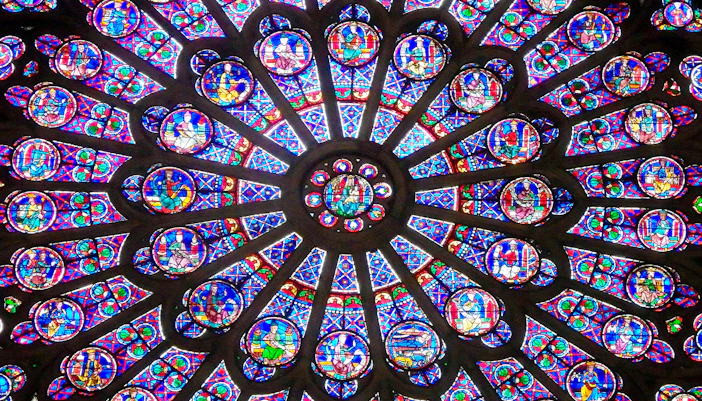
Strip away the restorations and the rebuilt spire, and the rose windows are the one thing in Notre-Dame that is still authentically medieval: the cathedral's only surviving 13th-century glass. Here's what most visitors miss: the north rose is almost entirely original, its deep blues made with ground lapis lazuli shipped from Afghanistan. Once you know that, you stop seeing "old windows" and start seeing 800-year-old pigment.

The West Rose (entrance)

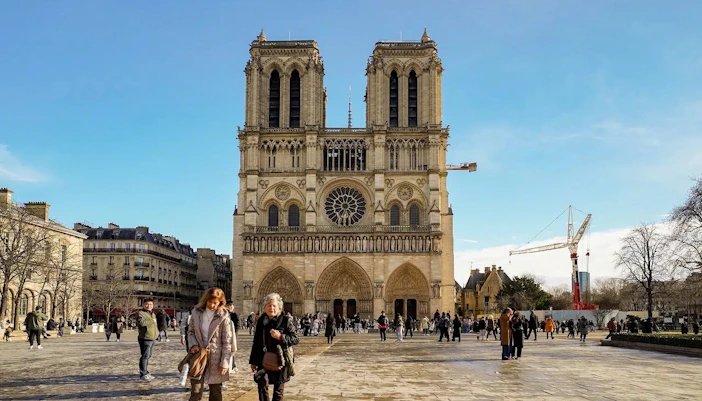
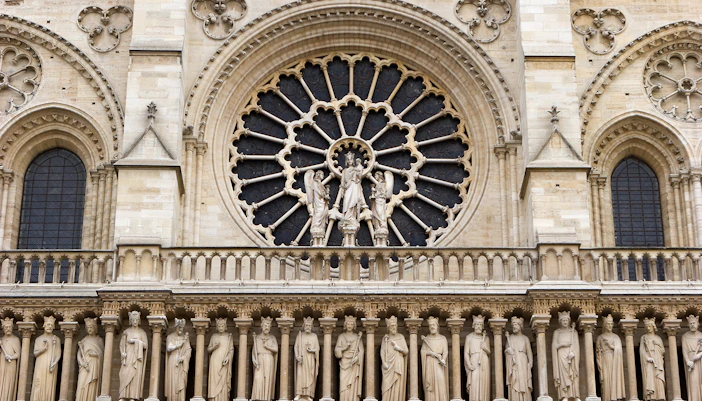
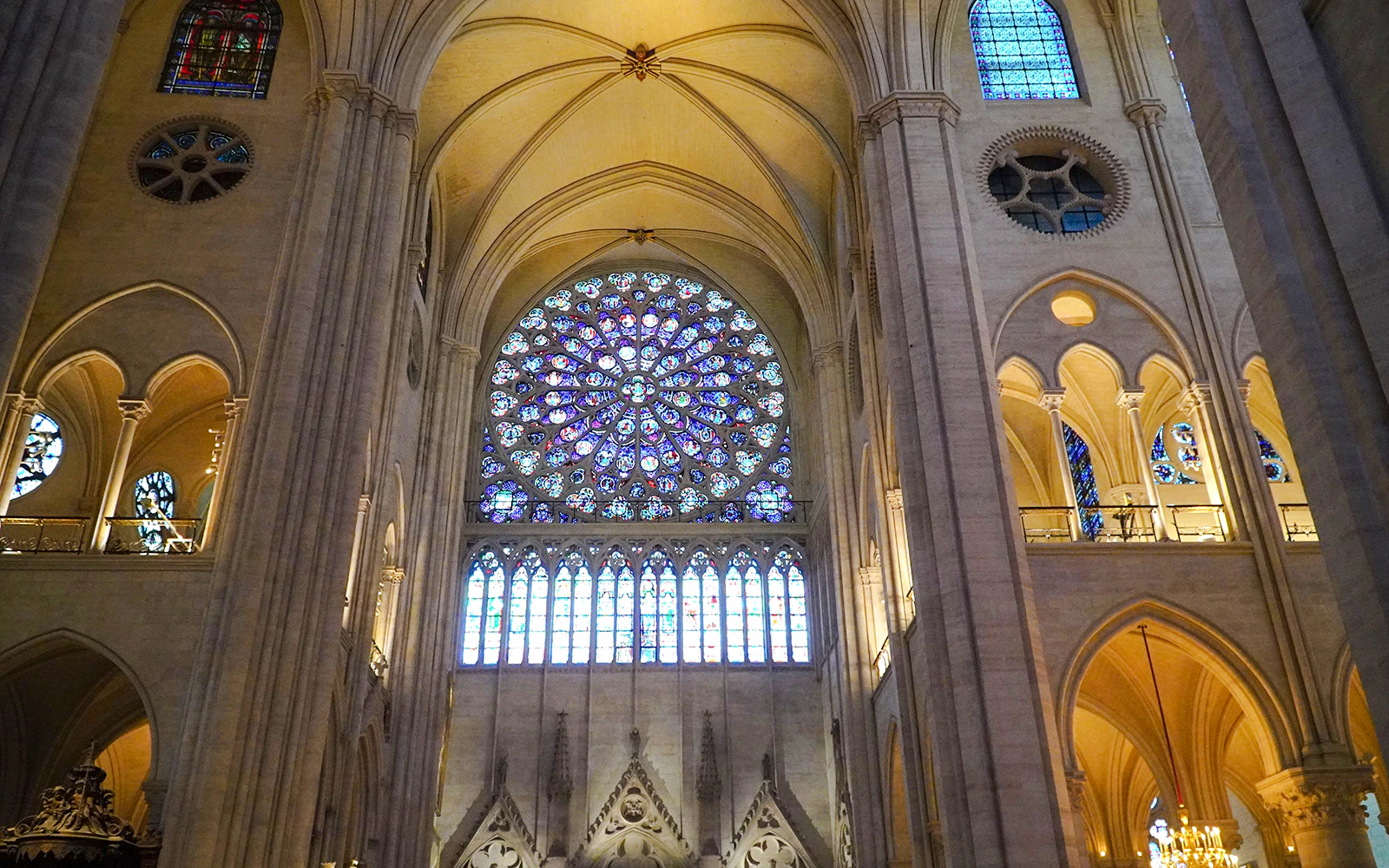
The first you pass, set above the main portal and partly masked by the great organ. At about 9.6 metres it's the smallest and oldest (c. 1225), though most of its glass was remade in the 19th century by Viollet-le-Duc. At its hub sits the Virgin and Child, encircled by the zodiac, the labors of the months, and the virtues battling the vices, painting a medieval calendar in colored light.

The North Rose (transept, midway)

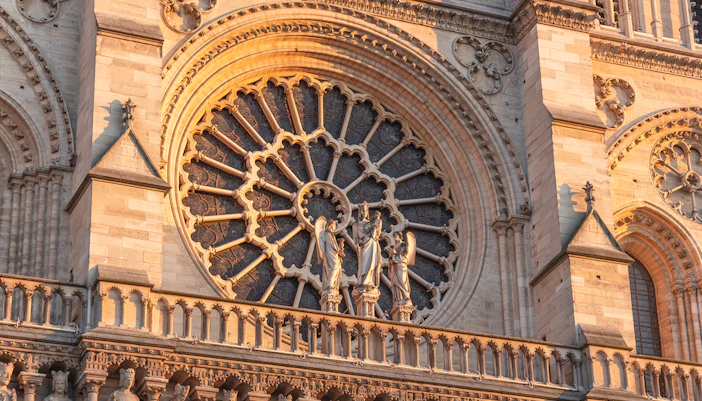
Reach the crossing and turn left. The north rose (c. 1250) is the prize: the best-preserved of the three, still mostly its original 13th-century glass. Cool blues and purples dominate because the window faces away from direct sun, so the tones hold their depth in soft light. At the centre, the Virgin and Child are ringed by some 80 panels of Old Testament kings, judges, and prophets.

The South Rose (transept, opposite)

Directly opposite glows the south rose (c. 1260), the "midday rose" and a personal gift from King Louis IX. Nearly 13 metres across, its warm reds and golds ignite when the southern sun lands on it. Designed by Jean de Chelles and finished by Pierre de Montreuil, its 84 panels across four rings centre on Christ in Majesty among apostles, saints, and martyrs.

Historical and cultural significance

Notre-Dame once held roughly 200 stained-glass windows; nearly all were torn out in 17th- and 18th-century "improvements." The three roses are the survivors — and they outlasted the 2019 fire too, saved by the stone vaulting above. Built to teach scripture to a population that couldn't read, they're now protected national heritage, lit each day for the worshippers and millions of visitors who fill the reopened cathedral.

👉 Explore the full history of Notre-Dame Cathedral

Know before you go

  • Open: Daily, 7:45am–7pm
  • Late opening: Thursday until 10pm
  • Worship times: Mass commonly takes place at 8am, 12pm, and 6pm, which can affect visitor movement
  • Reservations: Free timed-entry slots usually release 48–72 hours ahead and can disappear quickly
  • Official info: Check the official cathedral website before visiting: https://www.notredamedeparis.fr/en/
  • Address: 6 Parvis Notre-Dame – Place Jean-Paul II, 75004 Paris, France (Google Maps: ‘Notre-Dame Cathedral’)
  • Nearest metro: Cité (Line 4), about a 5-minute walk
  • Nearest RER: Saint-Michel Notre-Dame (RER B and RER C), about a 7–10-minute walk
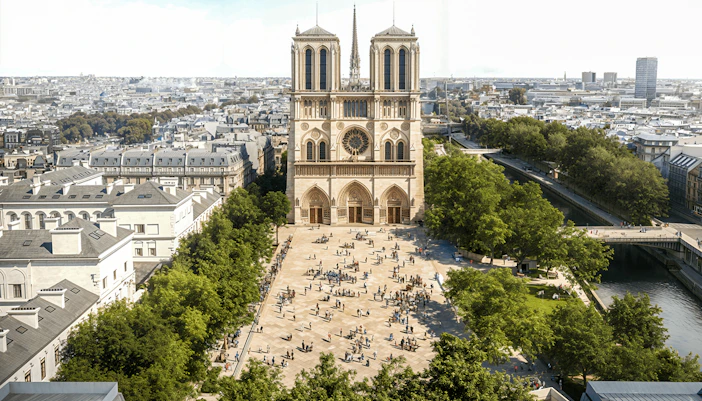
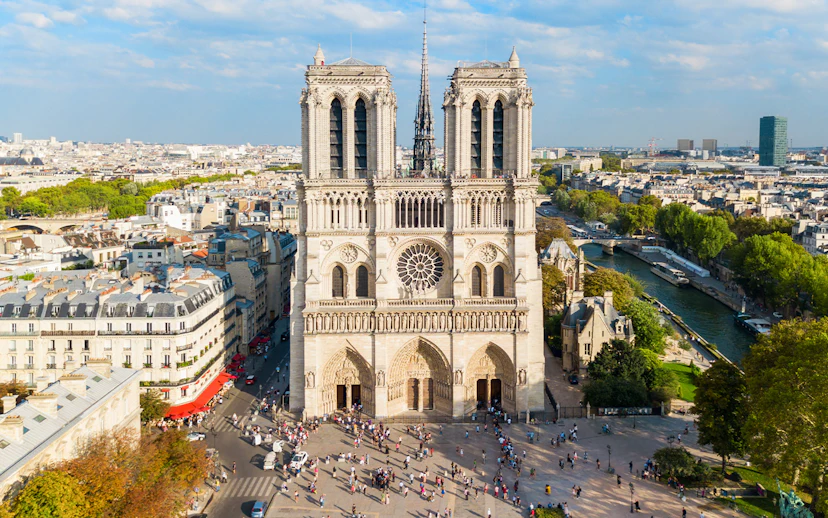
  • Entry point: Main west facade doors on the parvis, after security screening
  • Route: The interior is reached immediately after security; there is no separate interior entrance
  • Wheelchair access: The main interior is accessible for visitors with mobility impairments
  • Wheelchairs: Available on request at the entrance, subject to availability
  • Restrooms: Accessible toilets are available inside the cathedral
  • Flooring: The main route is mostly flat stone flooring, though it can be hard underfoot
  • Audioguide: An on-site audioguide and official app can help with self-guided interpretation
  • Required: Modest attire is required for entry
  • Not permitted: Shorts above the knee, mini-skirts, tank tops, sleeveless shirts, crop tops, and low-cut tops
  • Clothing rules: Clothing with offensive imagery or messages is not allowed
  • Hats: Men must remove hats before entering
  • Enforcement: Staff can refuse entry if dress rules are not followed
  • Bags: Large bags, suitcases, and oversized luggage are not allowed
  • Photography: Flash photography, tripods, and filming equipment are prohibited
  • Food and drink: Eating and drinking are not allowed inside
  • Conduct: Loud conversations and phone calls are not permitted inside the cathedral
  • Pets: Only registered service animals are permitted
  • Activity level: Low for the interior visit; most people walk and stand for 30–45 minutes
  • Stairs: None are required for the main interior route
  • Flooring: Expect historic stone floors rather than soft museum-style surfaces
  • Seating: Pews and benches can offer short pauses when not needed for worship
  • Separate activity: The 422-step tower climb is separate and not part of the interior visit

Frequently asked questions about Notre-Dame Paris' rose windows

Yes. Access to see the rose windows comes with general cathedral entry. No separate interior ticket exists.

More reads