Explore the stunning interiors of Notre-Dame

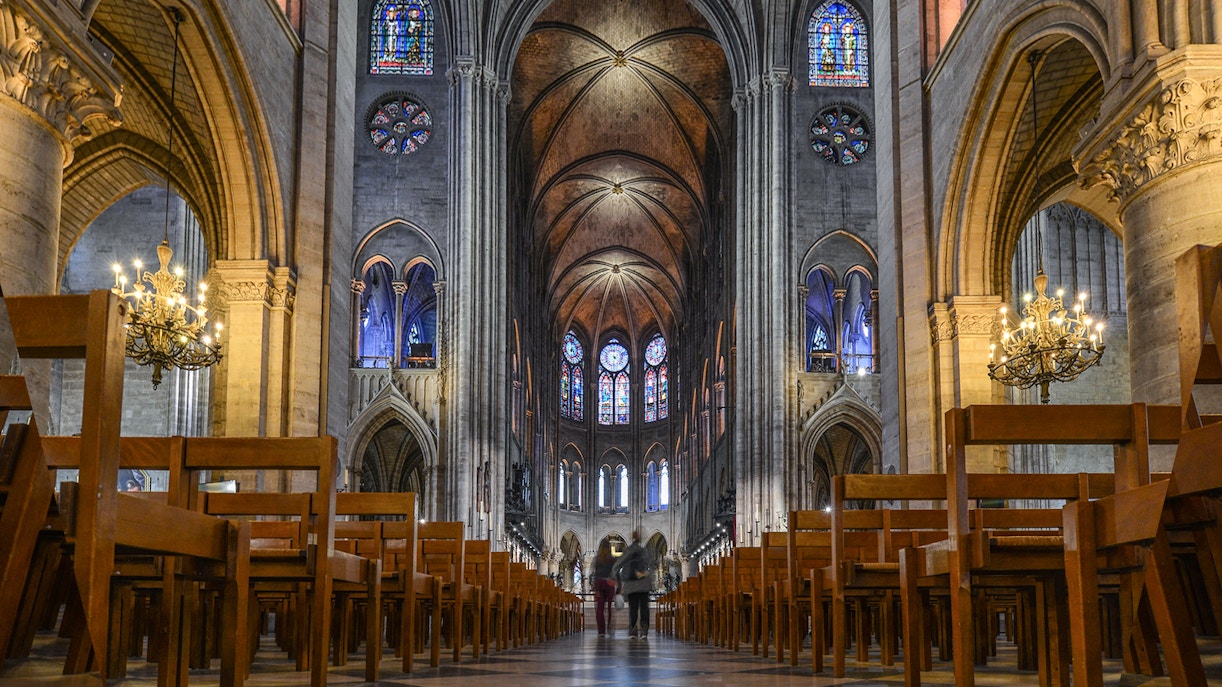
Notre Dame's interior is as breathtaking as its exterior, showcasing a blend of Gothic architecture, historical artifacts, and religious symbolism. Every detail, from its soaring vaults to its intricate carvings, tells a story of faith, craftsmanship, and the passage of time.

Layout

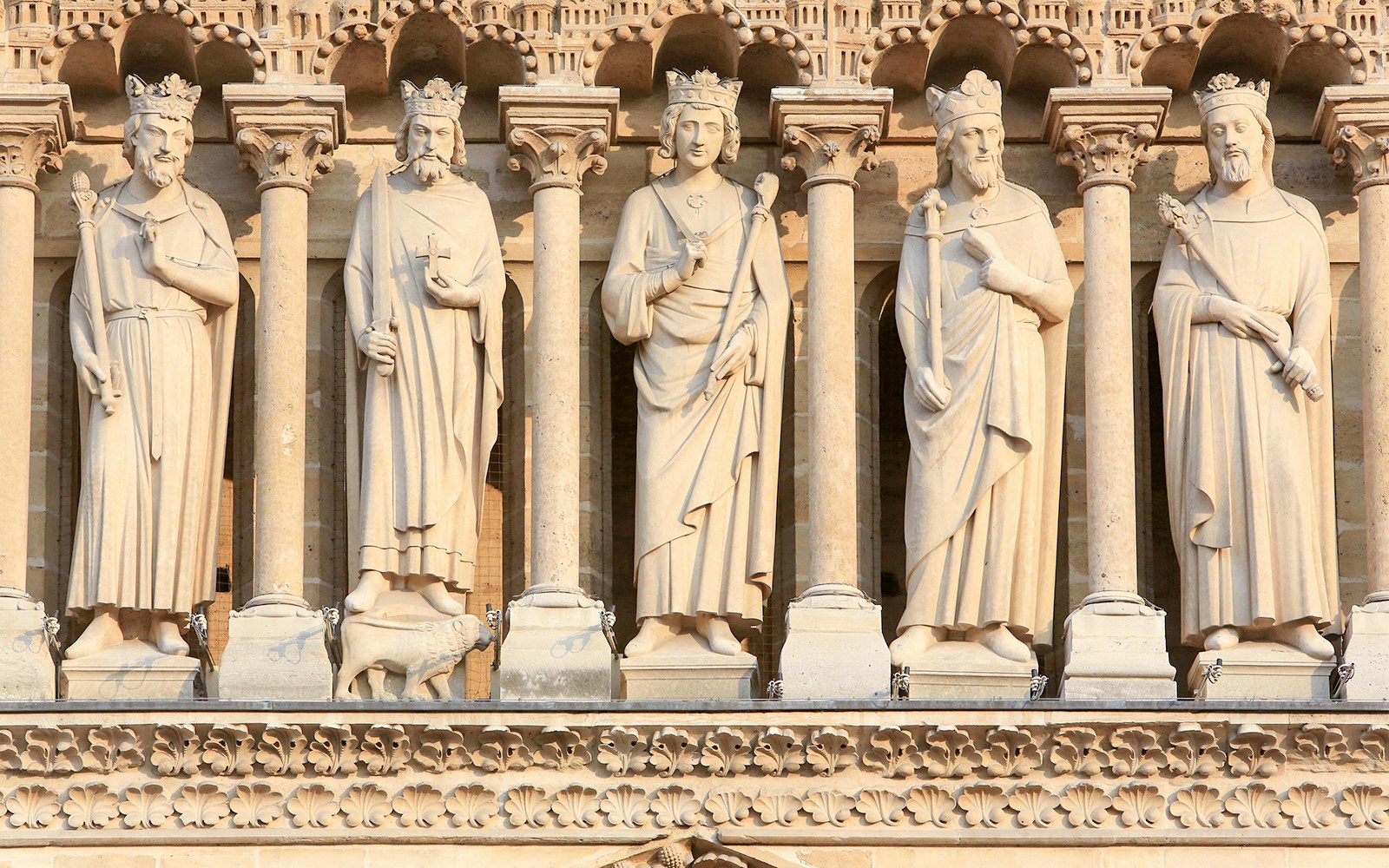
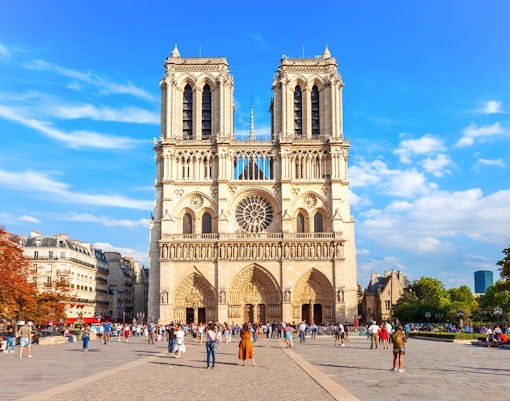
Notre Dame Cathedral facade with sculptures, part of Paris tour including Louvre and Eiffel Tower lunch.
  • Traditional Gothic design: Notre Dame follows the Latin cross layout typical of Gothic cathedrals, with a long nave, transepts, and a choir.
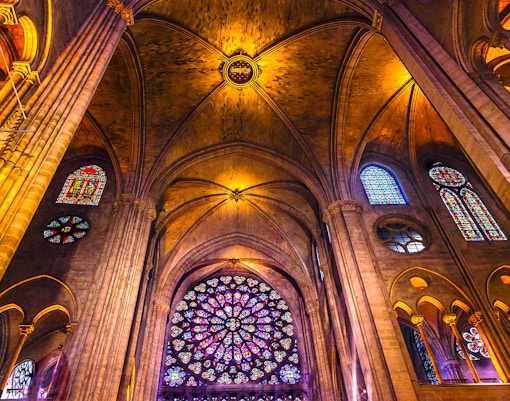
  • Vaulted ceilings: The ribbed vaulting creates a sense of height and lightness, drawing the eyes upward toward heaven.
  • Capacity: The interior can hold around 6,000 worshippers, making it one of the largest cathedrals in Europe.
  • Floor plan: The original medieval floor featured a labyrinth design, a symbolic journey of spiritual enlightenment, although most of it has been replaced or covered over the centuries.

A deep dive into the Notre-Dame Cathedral interior

The Nave

  • The nave, reserved for the faithful during services, was designed to accommodate a large number of worshippers, shaping the overall dimensions of the cathedral. It rises from the ground to the vaulted ceiling, forming the central vessel of the building. 
  • The design emphasizes verticality, with pillars, arcades, pilasters, and columns highlighting this upward flow. These vertical elements are balanced by horizontal arcades and capitals, creating a harmonious rhythm between the vertical and horizontal that defines the nave’s graceful proportions.

Ambulatory, Galleries & Pillars

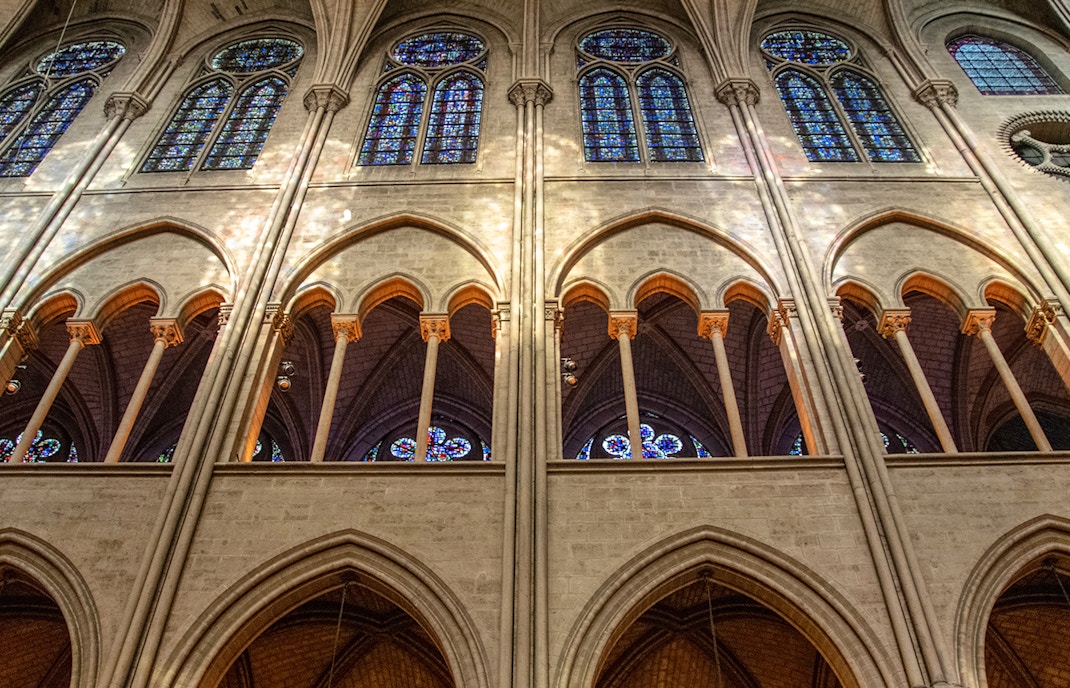
  • The ambulatory, located beyond the row of columns, allows the faithful to walk around the central space. Notre-Dame features a double row of columns forming the unique double aisles, and the ambulatory of the choir is distinctive in medieval architecture.
  • Located above the pillars, the galleries are the same width as the aisles and feature paired windows with pointed arches. They are designed for choristers, with the grand organ placed in the western gallery.
  • The round pillars, adorned with Corinthian capitals, resemble those of ancient buildings. In the second row, simple pillars alternate with those featuring engaged columns, carved from a single stone, which support the arches of the galleries.

The Altar & Choir

  • At the heart of the cathedral is a grand high altar made of marble. Behind the altar is a dramatic sculpture, Pietà, designed by Nicolas Coustou in the early 18th century, depicting Mary cradling Jesus after the crucifixion.
  • The choir area features elaborately carved wooden stalls from the 14th century. These are decorated with biblical scenes and saints.

The Organ

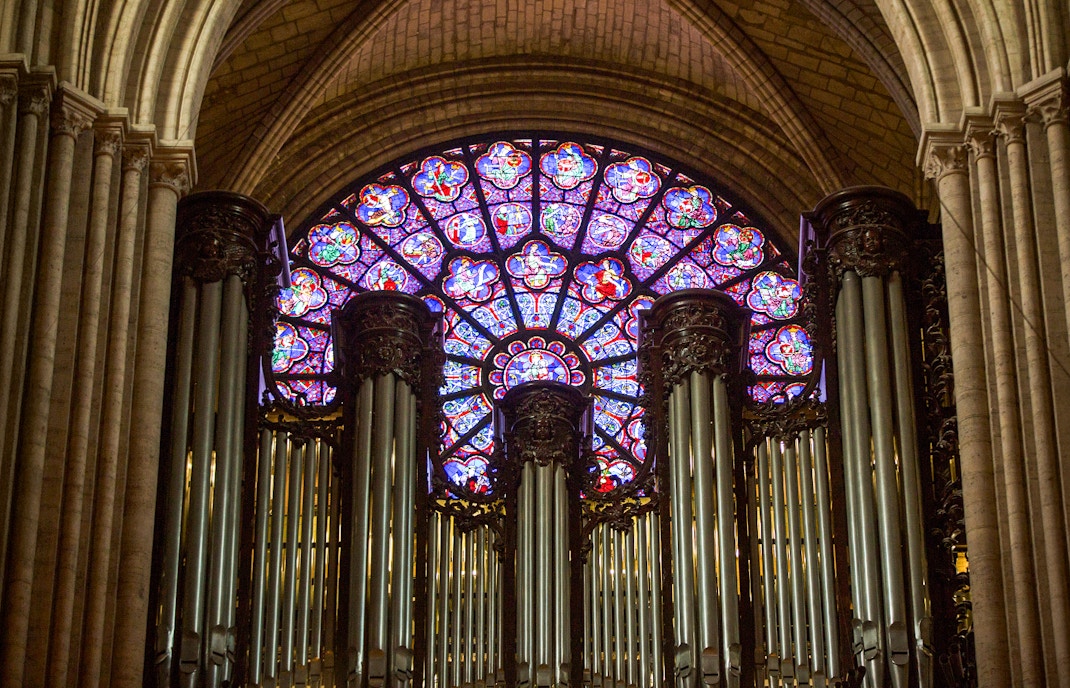
  • One of the largest in the world, Notre Dame’s organ has 8,000 pipes spread across five keyboards.
  • Some pipes date back to the 18th century, though the organ has undergone multiple restorations.
  • It survived the 2019 fire and remains a symbol of resilience.
  • The design of the vaulted ceilings and stone walls creates exceptional acoustics, perfect for organ music and choral singing.

Stained Glass Windows

  • The three Rose Windows (West, North, and South) are among the most famous features.
  • Each tells biblical stories and is an example of medieval stained glass craftsmanship.
  • The stained glass and rose windows transform sunlight into a kaleidoscope of colors that dance across the stone walls and floors.
  • The North Rose, completed in 1250, has 80 panels and depicts scenes from the Old Testament.
  • Smaller windows in the upper walls, the clerestory windows, allow natural light to flood the interior, creating an ethereal atmosphere.

Side Chapels

  • There are 29 side chapels, each with unique artwork, altars, and sculptures.
  • Chapels were often sponsored by wealthy patrons or guilds during the medieval period.
  • Chapel of the Holy Sacrament: Known for its peaceful ambiance, perfect for prayer.
  • Chapel of St. Anne: Contains a 14th-century statue of St. Anne teaching the Virgin Mary.

The Treasury

  • Notre-Dame's treasure, once one of the richest in Europe, consisted of liturgical artifacts. It was lost during the French Revolution, with items scattered or repurposed. 
  • After the Concordat, it was reassembled through donations from the Empire, popes, and sovereigns. The treasure includes relics from the Sainte-Chapelle, Saint Louis' linen shirt, and a penance discipline. 
  • It was plundered again in the 1830 riots, but Viollet-le-Duc’s designs helped restore it in the mid-19th century. Regularly expanded since then, the treasure's display was updated in 2012.

Sculptures and paintings inside Notre-Dame

Pietà by Nicolas Coustou

Pietà by Nicolas Coustou

Located at the high altar, this dramatic sculpture depicts the Virgin Mary holding the body of Christ.

Saint Denis
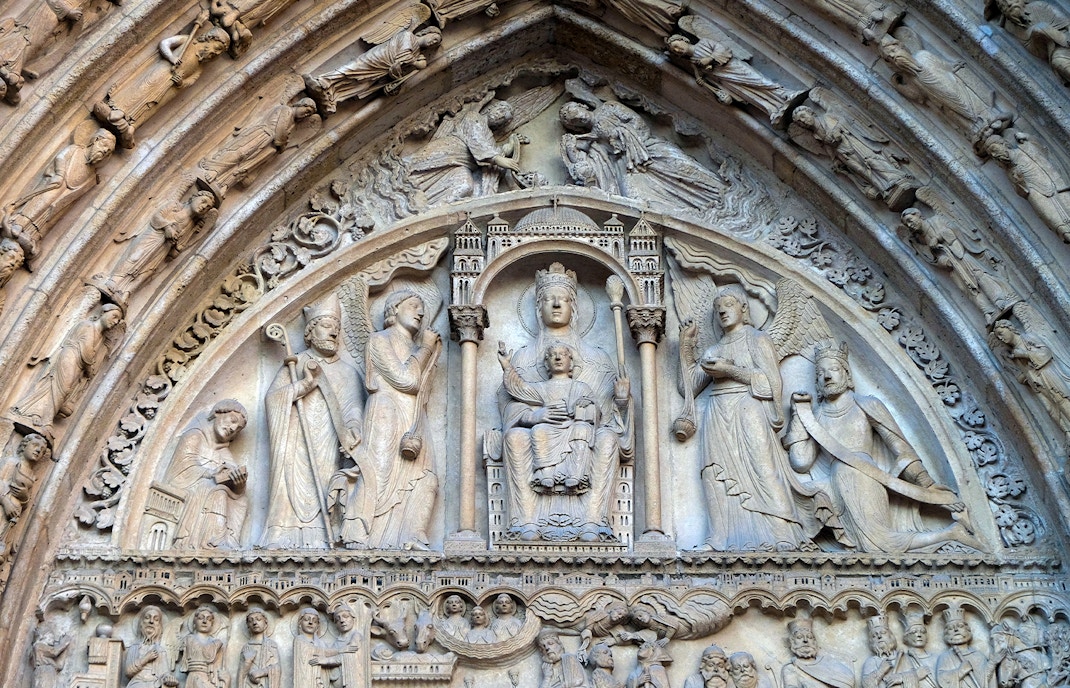
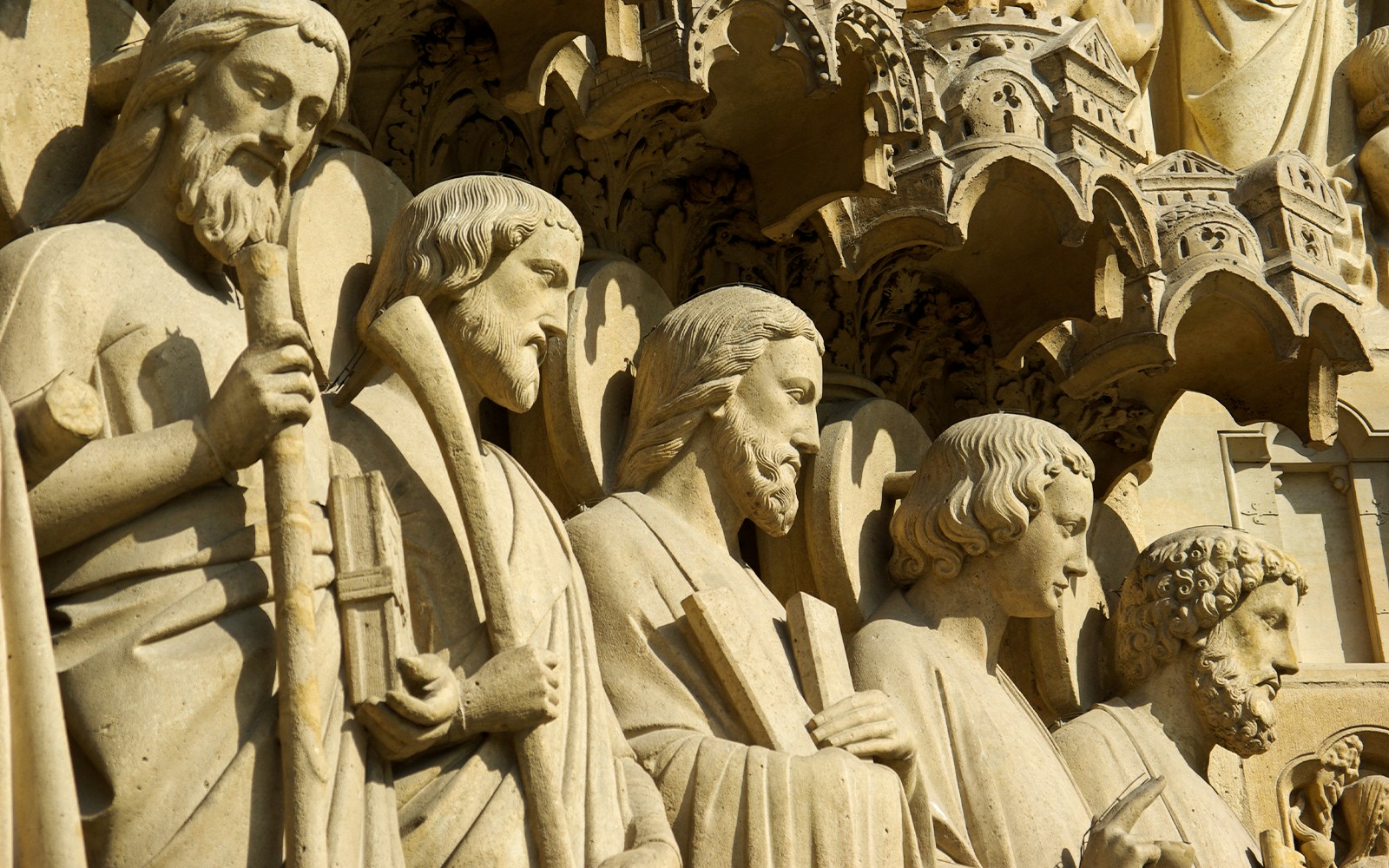
Stone Carvings
Les Mays de Notre-Dame
The Virgin and Child

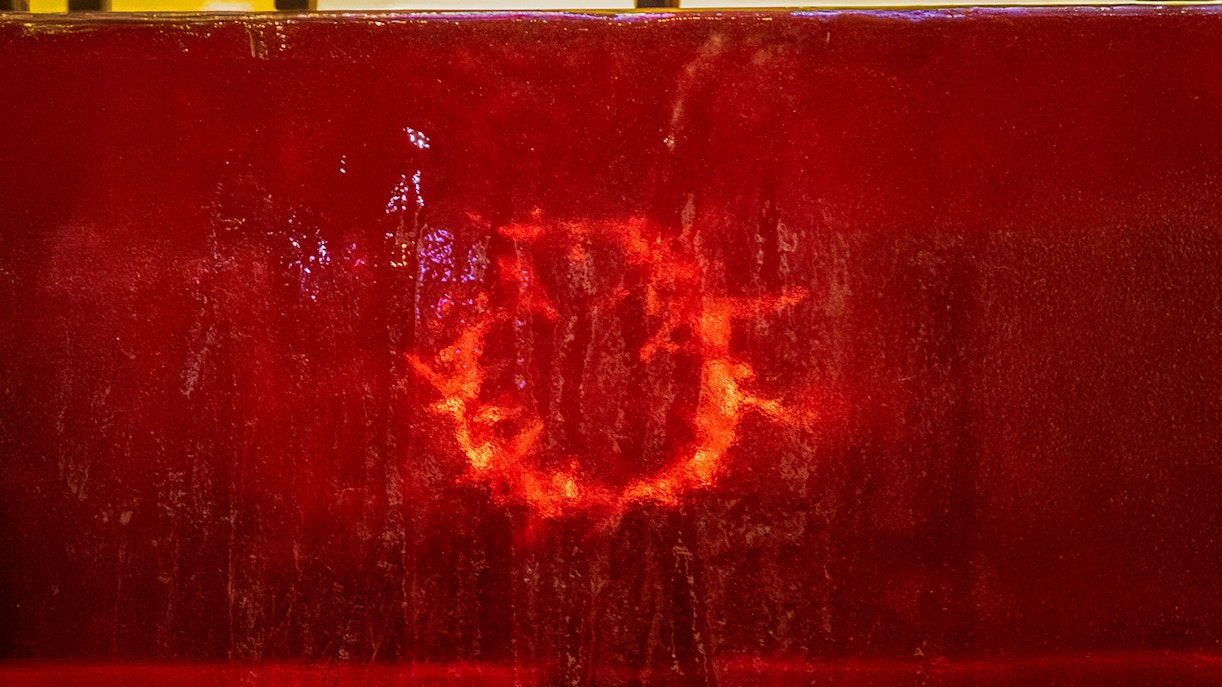
The Crown of Thorns

Notre Dame interior with Crown of Thorns relic displayed in Paris, France.

The Crown of Thorns, one of Christianity's most venerated relics, is housed at Notre Dame Cathedral in Paris. Believed to be the crown placed on Jesus Christ’s head during His crucifixion, it holds profound religious significance as a tangible connection to the Passion. The relic, now a circular band of rushes without its original thorns (distributed to other churches over centuries), was acquired by King Louis IX of France (Saint Louis) in 1238. Originally housed in Sainte-Chapelle, a Gothic chapel constructed specifically to protect it, the Crown was later moved to Notre Dame for safekeeping during the French Revolution.

The Crown is typically displayed in a crystal and gold reliquary and is venerated on special occasions, particularly Good Friday. During the 2019 fire that devastated Notre Dame, the Crown of Thorns was rescued by firefighters and clergy and temporarily housed in the Louvre Museum during the cathedral's restoration. Upon the completion of repairs, it is expected to return to Notre Dame, where it continues to inspire faith and devotion among pilgrims and visitors from around the world.

Frequently asked questions about the Notre-Dame’s Cathedral interior

The interior of Notre-Dame is designed in the Gothic architectural style, characterized by pointed arches, ribbed vaults, and flying buttresses. The interior emphasizes verticality, with tall columns and expansive stained-glass windows.

More reads

Architecture

Book Now

History

Book Now

Entrances

Book Now