The Gothic Brilliance of Notre Dame Cathedral

The architecture of Notre-Dame, one of the most iconic Gothic cathedrals in the world, is a masterpiece of medieval design and engineering. Located on the Île de la Cité in Paris, it embodies the innovations and grandeur of the Gothic style, which emerged in the 12th century.

Architectural style

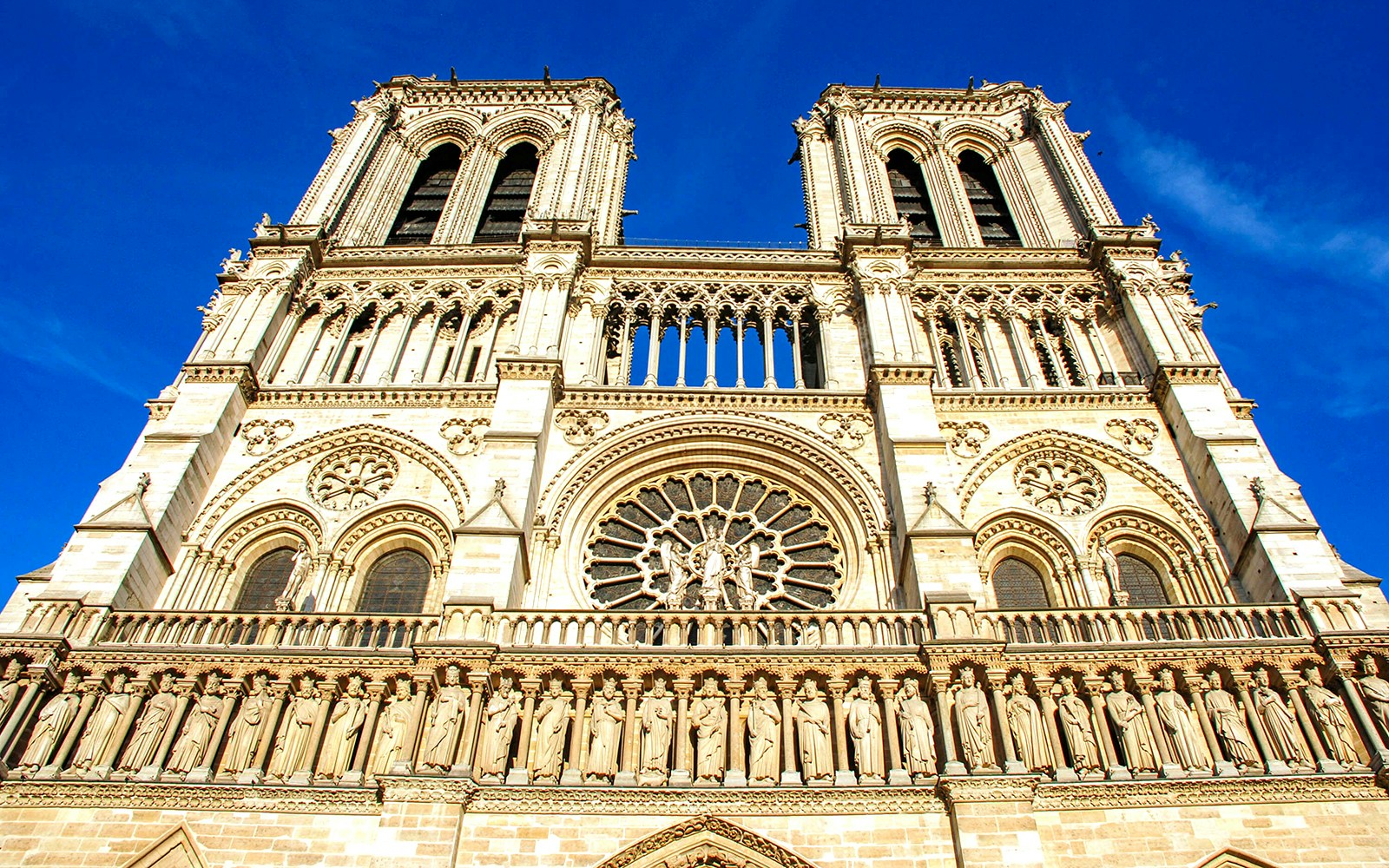
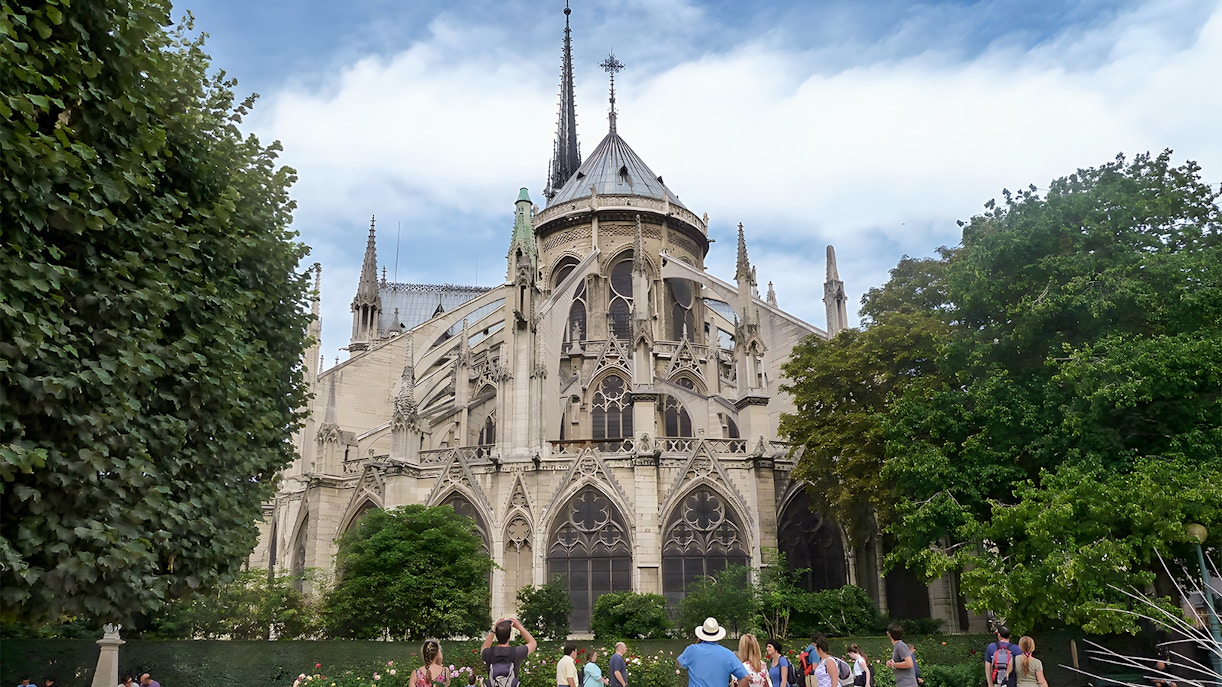
Notre Dame Cathedral facade with tourists on a walking tour in Paris.

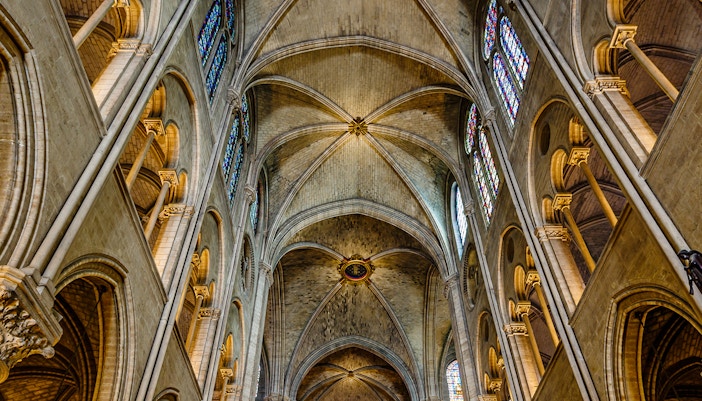
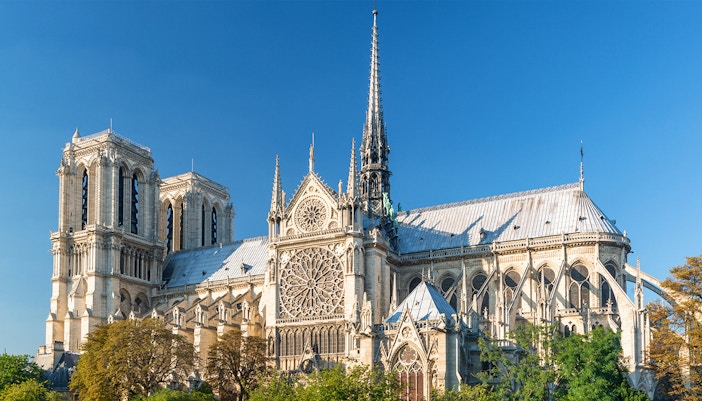
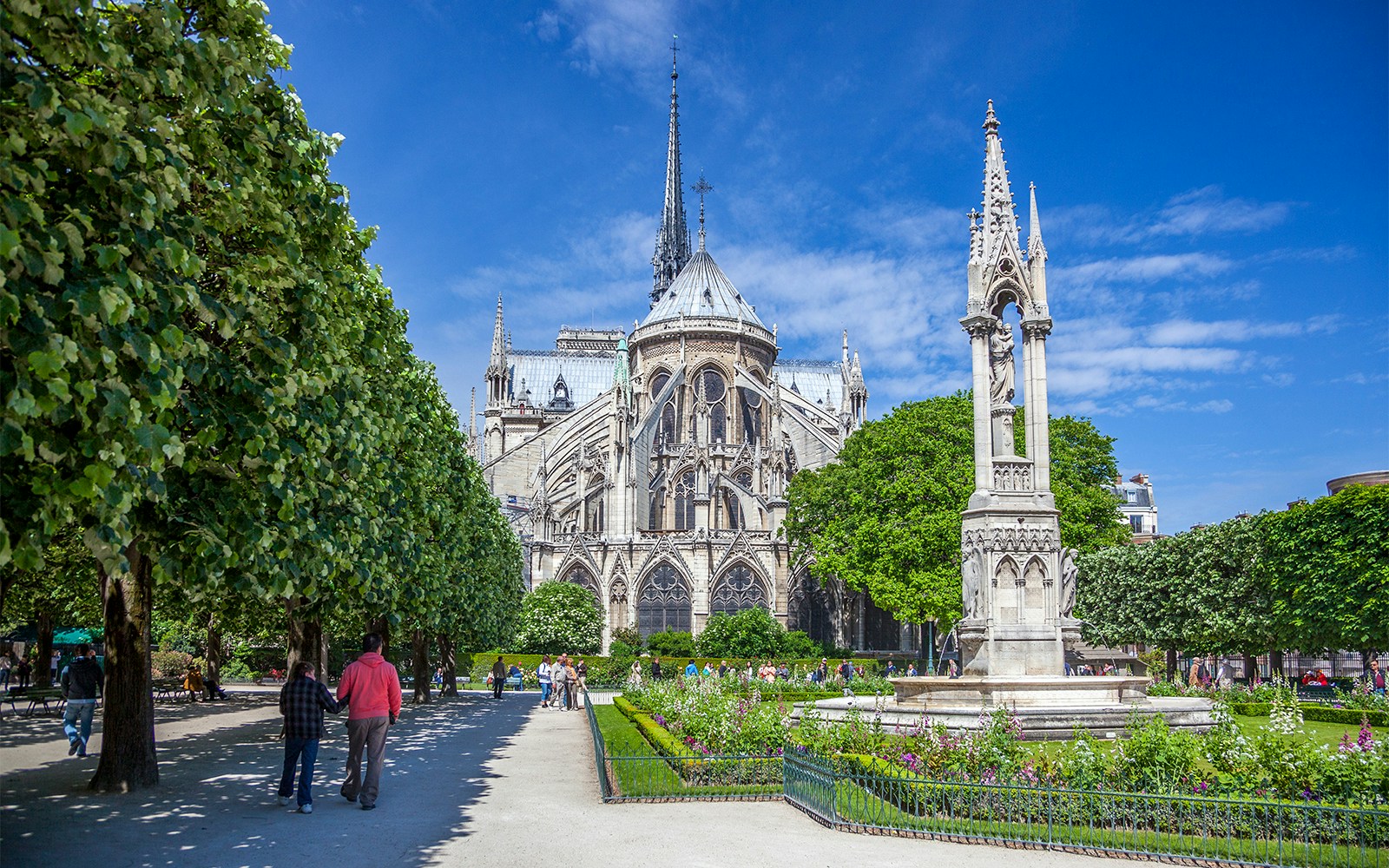
Notre-Dame Cathedral in Paris is a quintessential example of French Gothic architecture, celebrated for its grandeur, innovation, and intricate details. Constructed between the 12th and 14th centuries, it incorporates hallmark Gothic features such as pointed arches, ribbed vaults, and flying buttresses, which allowed for taller walls and larger stained-glass windows.

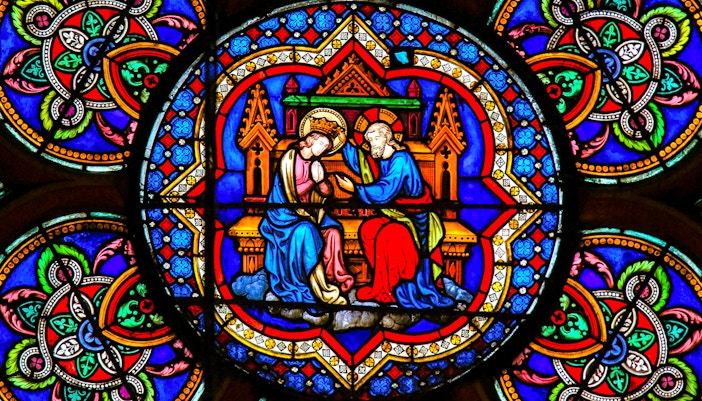
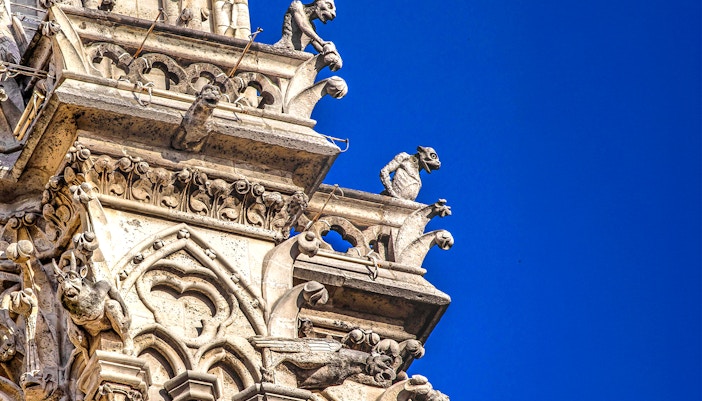
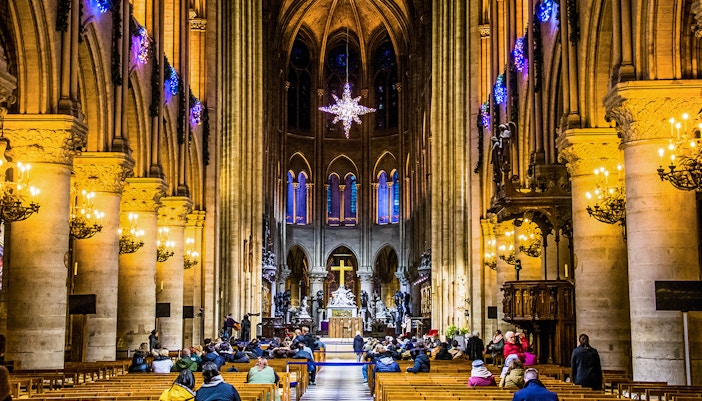
The facade is dominated by twin towers, elaborate portals adorned with biblical sculptures, and the Gallery of Kings—a row of statues symbolizing the connection between church and monarchy. The soaring nave, magnificent rose windows, and ribbed ceilings create an atmosphere of divine light and verticality. Gargoyles and chimeras, both functional and decorative, add to its mystical allure.
What is Gothic architecture?

Gothic architecture is a style of European architecture that flourished during the High and Late Middle Ages (approximately 12th to 16th centuries) and is characterized by its dramatic, intricate, and innovative design. It originated in France and was primarily used for churches, cathedrals, abbeys, and castles. Gothic architecture is known for its emphasis on height, light, and elaborate detail, symbolizing the aspirations and grandeur of medieval society.

Architectural characteristics of Notre-Dame

Pointed arches

Pointed arches

Used extensively in windows, doors, and structural supports, these arches distribute weight more efficiently, allowing for taller structures and larger openings.

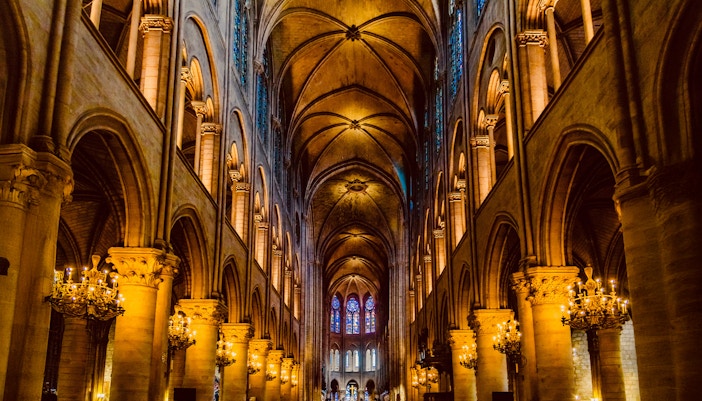
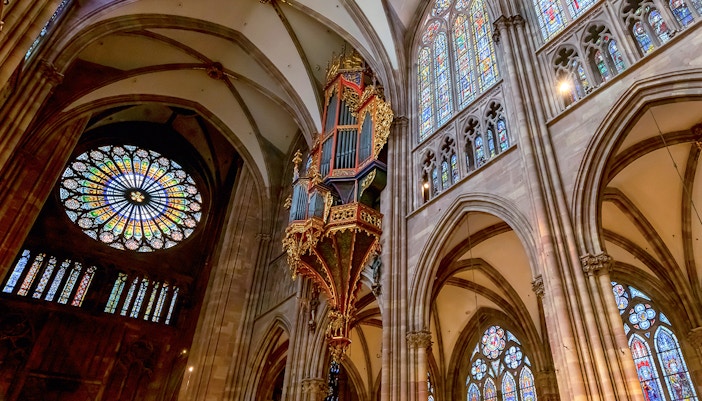
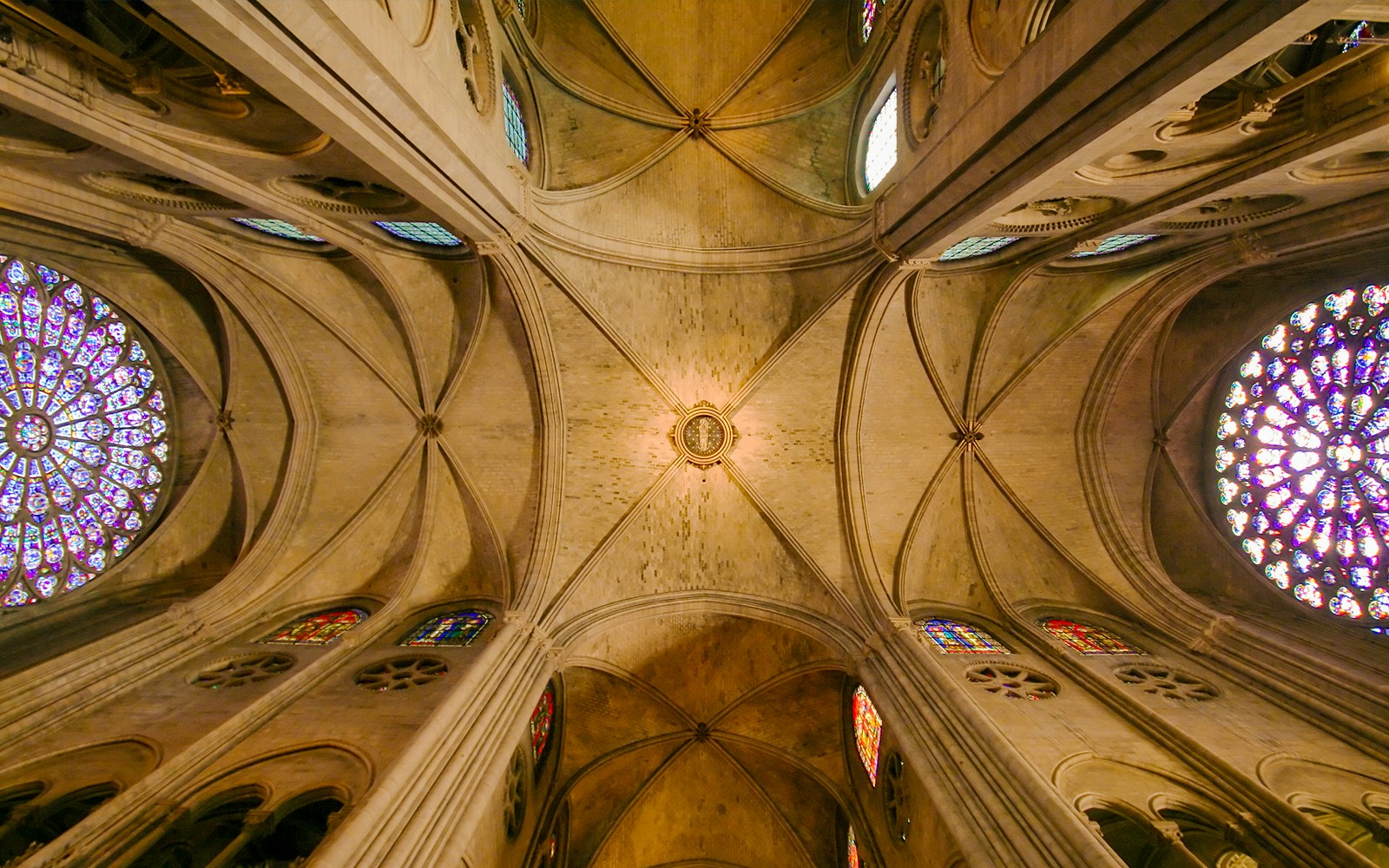
Notre Dame Paris transept interior with stained glass windows and vaulted ceilings.
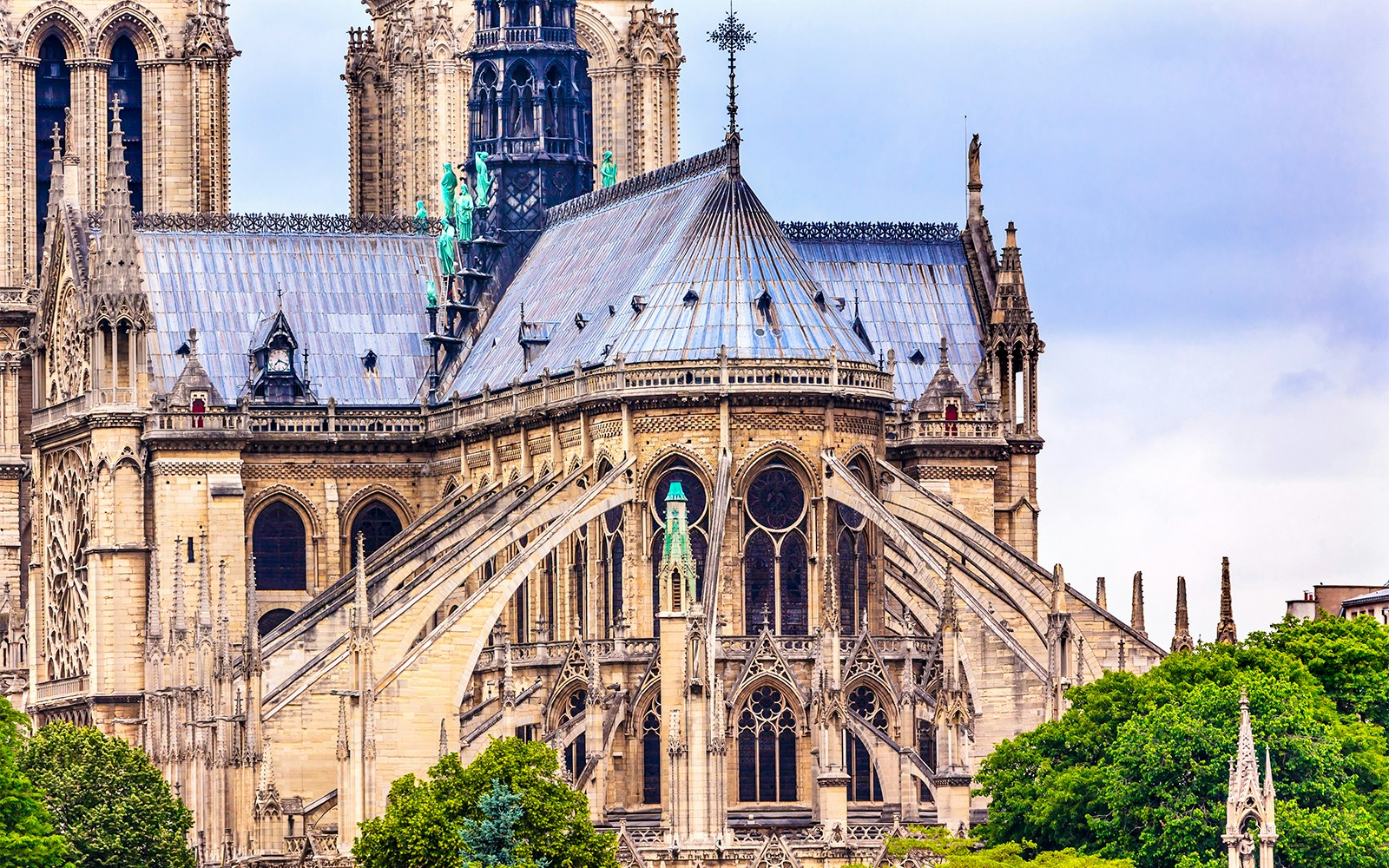
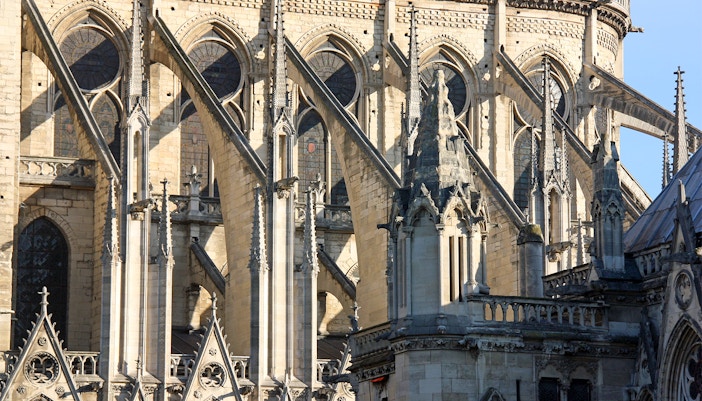
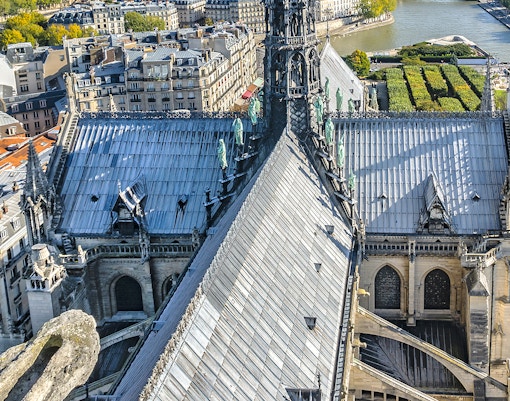
Notre-Dame Cathedral flying buttresses in Paris, showcasing Gothic architecture.
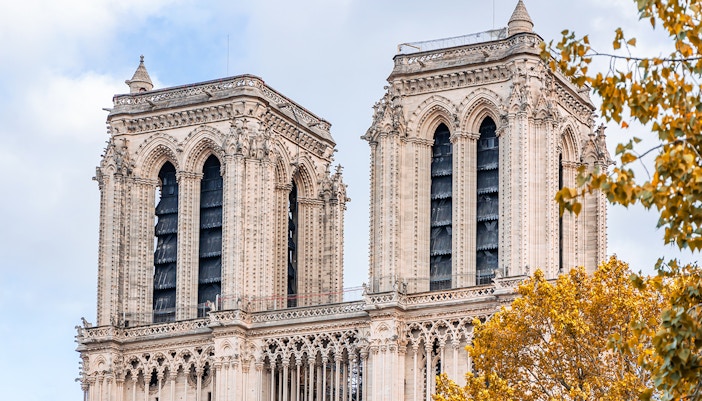
Twin towers
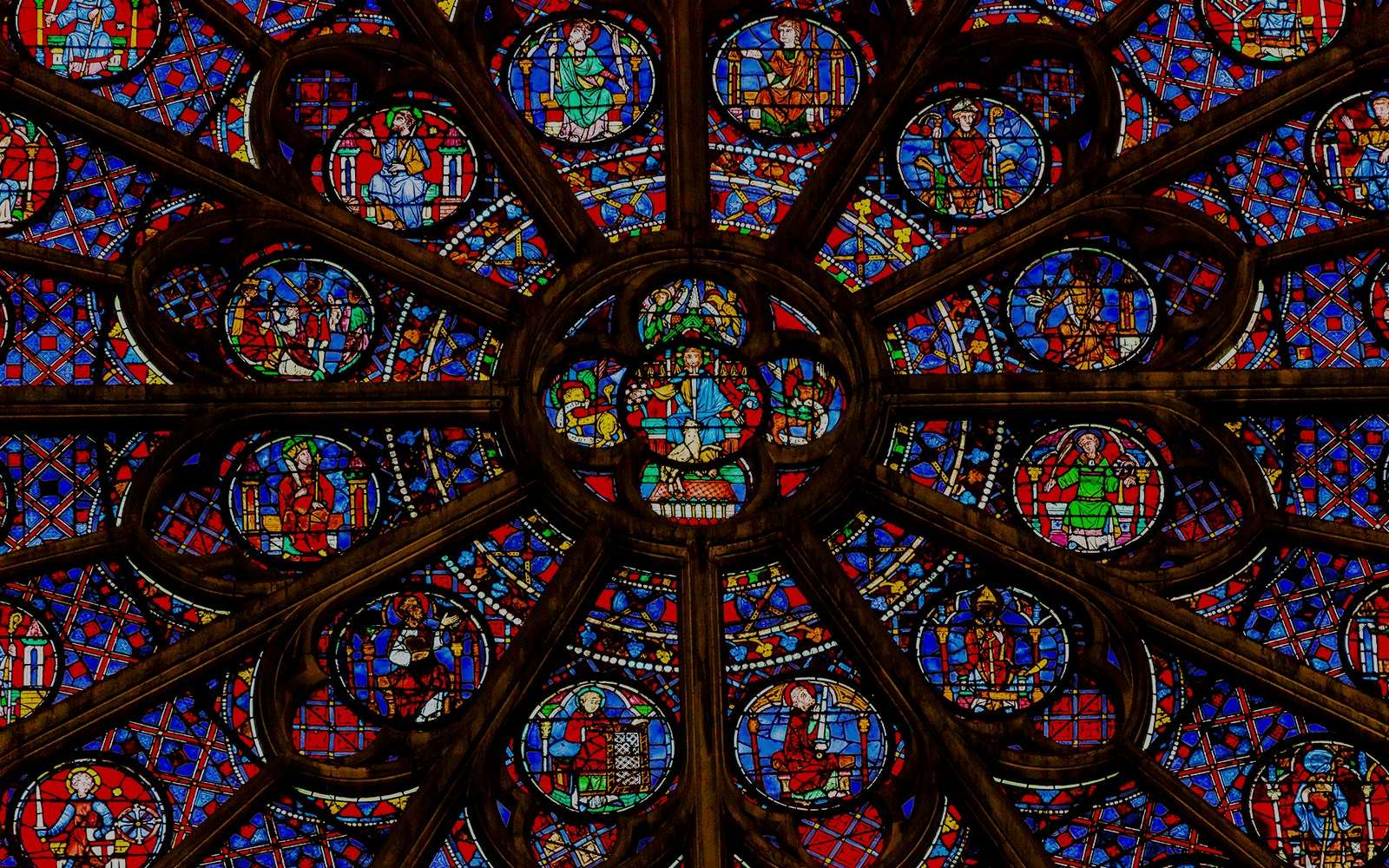
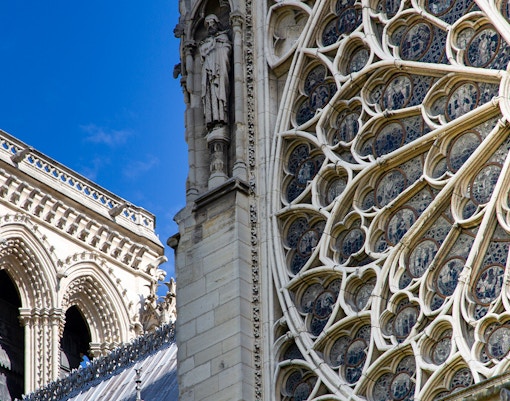
Rose window in Notre Dame Cathedral, Paris, showcasing intricate stained glass design.

Construction of Notre-Dame

The construction of Notre-Damespanned nearly two centuries, reflecting the evolving architectural techniques and artistic styles of the Middle Ages. Its long construction period allowed it to serve as a canvas for evolving styles and techniques, culminating in a structure that became a symbol of medieval ingenuity, faith, and artistic achievement.

Planning and inception

  • In1163, during the reign of King Louis VII, the construction of Notre-Dame was initiated.
  • Bishop Maurice de Sully, envisioned a grand cathedral to reflect the growing importance of Paris as a cultural and religious center.
  • The main purpose wasto replace an earlier, smaller Romanesque church (Saint-Étienne) on the Île de la Cité and provide a fitting space for large congregations.

Foundation (1163)

  • The foundation stone is traditionally believed to have been laid in 1163 in the presence of Pope Alexander III, though exact details remain uncertain.
  • The choir and apse were built first to allow for religious services while the rest of the cathedral was under construction.

Nave (1220)

  • Early work included the use of Romanesque techniques, but Gothic innovations were quickly integrated.
  • The tall, rib-vaulted nave was designed to allow light to enter and emphasize verticality.

West Facade and Towers (1220–1250)

  • Work on the iconic west facade began around 1200 and continued through the mid-13th century.
  • Elaborate sculptures depicting biblical scenes were added as 3 portals.
  • The west rose window was installed during this time.
  • The two western towers were completed, each standing 69 meters high.

Flying Buttresses and structural enhancements (1220–1300)

  • Early structural challenges, such as cracks in the walls, necessitated the addition of flying buttresses.
  • These innovative supports were added to counteract the lateral forces exerted by the high ceilings and heavy stone walls, allowing for taller and lighter construction.

Choir, apse, and chapels (1230–1260)

  • The choir and apse were completed, along with the radiating chapels around the ambulatory.
  • Intricate stained glass, including the north and south rose windows, was added.

Refinements and ornamentation (Late 13th–14th Century)

  • Decorative elements, including gargoyles, chimera, and tracery, were added.
  • The cathedral’s grandeur continued to grow with additions to its sculptures, windows, and interior furnishings.

Modifications and additions

  • 14th–18th centuries: Various modifications were made, including changes to the interior decoration and new altars.
  • 19th century restoration: Eugène Viollet-le-Duc led an extensive restoration after the cathedral fell into disrepair during the French Revolution.

Challenges during construction

  • The lengthy construction period meant that different architects and masons worked on the cathedral, each bringing unique ideas and adjustments.
  • Political and financial difficulties occasionally slowed progress.
  • Structural issues, such as the weight of the vaults, required innovative solutions like the flying buttresses.

Exterior of Notre-Dame

To prevent structural collapse in such a vast building, the exterior architecture of Notre-Dame introduces innovative solutions. The architects reduced the weight of the walls, created large openings, added buttresses and flying buttresses to the facades, and intersected the ribs of the vaults. Each of these techniques demands exceptional expertise.

Western Facade

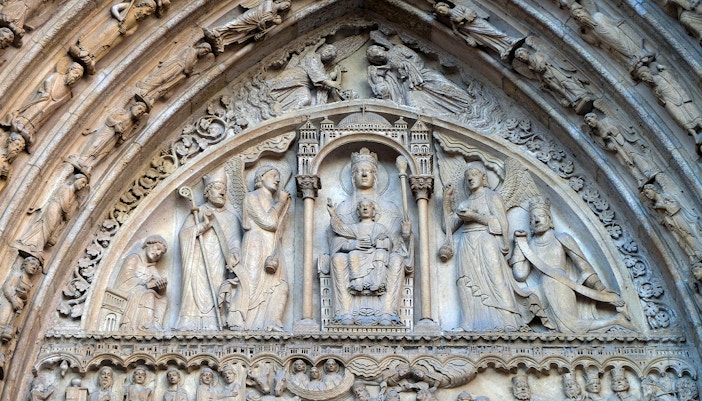
  • The west facade features three portals. The central one, the Portal of the Last Judgment, is larger than the Portal of Saint Anne (right) and the Portal of the Virgin (left). Adorned with biblical figures, these portals help the illiterate faithful understand the gospel and Christian history through images.
  • Below the balustrade, the Gallery of Kings displays twenty-eight figures, representing the generations of Judean kings before Christ, located twenty meters above the ground.
  • The two square towers stand 69 meters tall, with 422 steps leading to the top. Each tower features four faces, pierced by two high bays with voussoirs decorated with beadings and leafy crockets.

Northern Facade

  • The north facade forms a long, dim bay, divided into three recessed levels. It is bordered by a small street and lacks direct sunlight. Later-added chapels obscure the transept arm’s projection.
  • The north transept facade mirrors the south: a gable surmounts the portal, an openwork gallery with a large rose window occupies the center, and a triangular gable tops it. 
  • A large pinnacle with spires rises from each side, pierced by a rose window that illuminates the north-transept attic.

South Facade

  • The Saint-Étienne portal, dating from the 13th century, is located on the south facade facing the Seine.
  • It depicts episodes from the life of Saint Stephen, the first Christian martyr, and also recalls the former Saint-Étienne cathedral, which once stood where the current Notre-Dame forecourt is.

Restoration

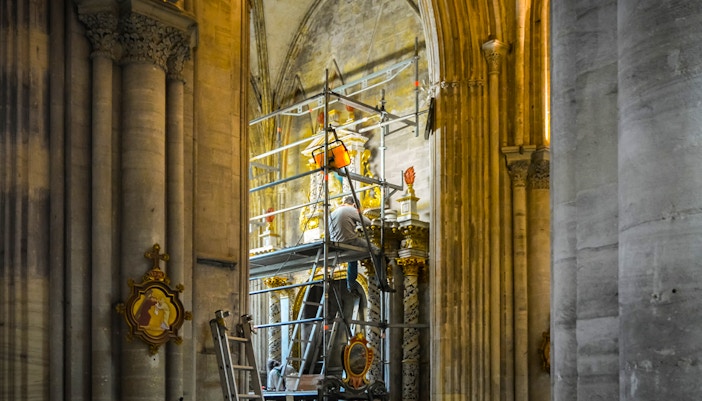
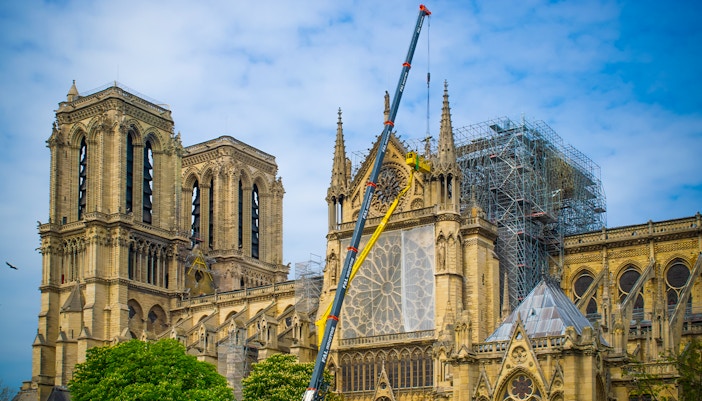
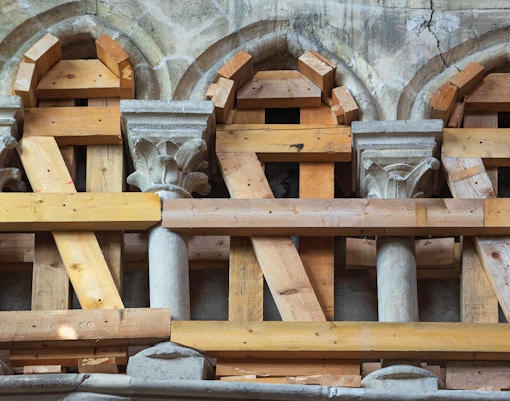
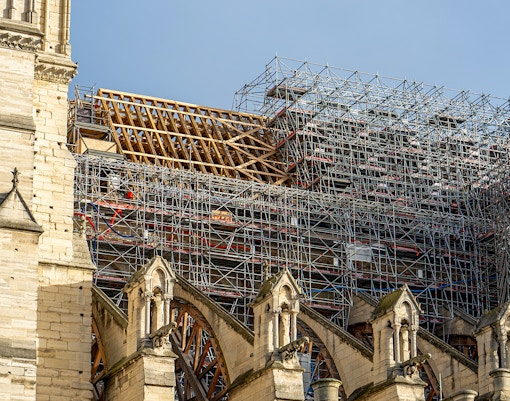
On April 15, 2019, a devastating fire broke out, destroying the spire and most of the wooden roof (known as the "Forest"). The fire threatened the cathedral's structural integrity, but heroic efforts by firefighters saved the main stone structure, including the bell towers and rose windows.

Planning

  • Funds raised: Over €850 million was pledged from around the world.
  • Lead architects: Philippe Villeneuve and a team of heritage experts.
  • Philosophy: The restoration aims to replicate the cathedral's appearance before the fire, based on Viollet-le-Duc's 19th-century design.

Key challenges

  • Stabilizing the structure before restoration began, particularly the vaults and buttresses.
  • Removing toxic lead debris from the destroyed roof and spire.
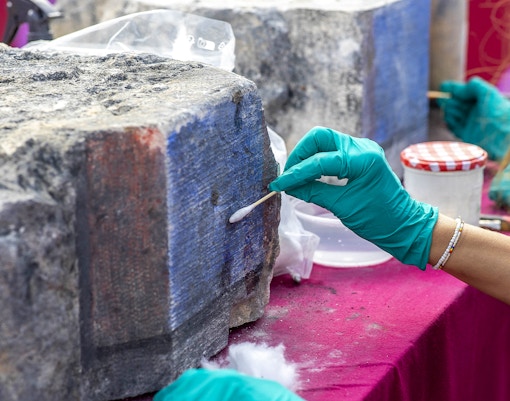
  • Repairing fire-damaged stone and preserving surviving elements like the organ and rose windows.

Innovations

  • Use of 3D laser scanning and digital modeling to guide reconstruction.
  • Advanced materials and techniques are being employed to ensure long-term durability.

Restoration highlights

  • Spire: A faithful reconstruction of Viollet-le-Duc's spire has taken place.
  • Roof: The wooden "Forest" roof structure is rebuilt using oak from sustainably managed forests across France.

Significance of restoration

  • Cultural heritage: Preserving the Notre-Dame is a symbol of resilience and continuity in French and global history.
  • Technological advancement: Combines traditional craftsmanship with cutting-edge technology.
  • Environmental considerations: Efforts are being made to reduce the carbon footprint of the restoration process.

Frequently asked questions about Notre-Dame’s architecture

Construction began in 1163 and was largely completed by 1260, with additional enhancements and modifications made in subsequent centuries, particularly in the 19th century.

More reads

Interior

Book Now

History

Book Now