12 interesting facts about the Arc de Triomphe in Paris

The Arc de Triomphe is full of details that are easy to miss at first glance. From a temporary full-size replica to the names carved into its stone, these facts give you a closer look at the monument before you visit.

12 Arc de Triomphe facts worth knowing

1. Napoleon commissioned it after Austerlitz

Napoleon ordered the Arc de Triomphe after his victory at the Battle of Austerlitz in 1805. It was meant to celebrate the Grande Armée and France’s military successes.

2. It took 30 years to finish

Construction began in 1806, but the monument wasn’t completed until 1836. Napoleon never saw the finished Arc, and the project passed through several political regimes before it finally opened.

3. A temporary Arc came first

When Napoleon married Marie-Louise of Austria in 1810, the real monument was still far from finished. A full-size temporary version was built for the occasion, giving Paris an early glimpse of what the Arc would eventually become.

4. Ancient Rome inspired its design

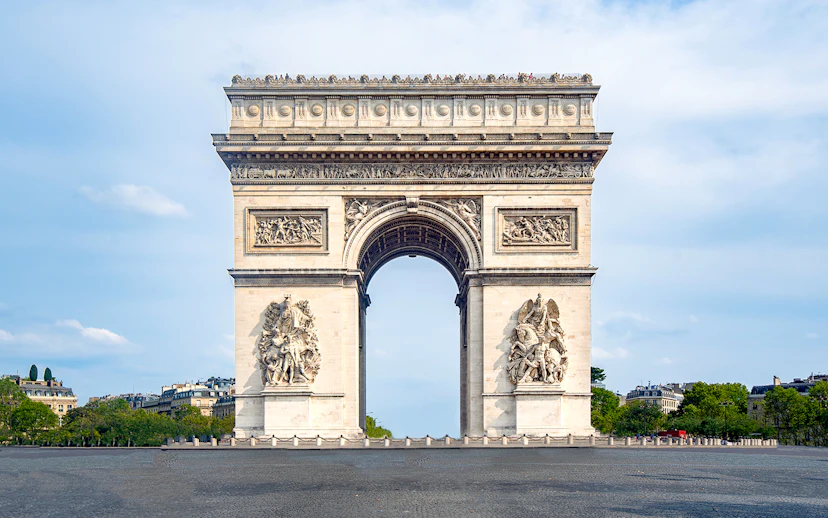
The Arc de Triomphe takes its cues from ancient Roman triumphal arches. Its symmetry, scale, and monumental form were designed to turn military victory into architecture you could see from across the city.

5. Hundreds of names are carved into the stone

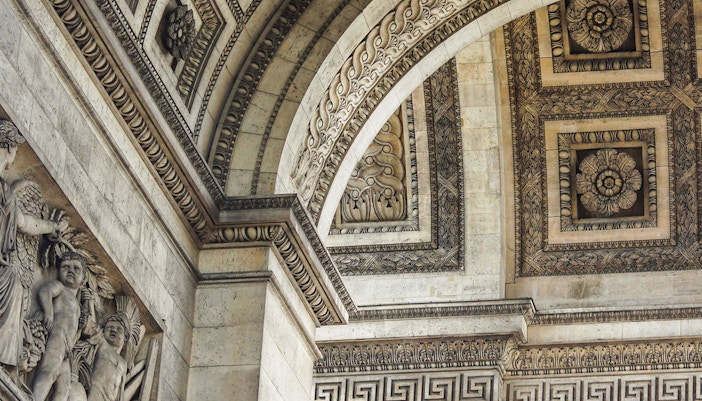
Look closely at the inner walls and you’ll find the names of French generals and battles. Some names are underlined to show that those officers died in battle, turning the Arc into a vast memorial in stone.

6. La Marseillaise is one of its standout sculptures

François Rude’s La Marseillaise, also called The Departure of the Volunteers of 1792, is one of the four monumental sculptural groups on the Arc. Its dramatic movement makes it one of the easiest details to spot.

7. The climb to the rooftop is part of the experience

The rooftop is reached by a long staircase through the monument’s interior. The climb leads past the museum level before opening out onto the terrace and one of the Arc’s biggest rewards: the Paris skyline.

8. The rooftop gives you a 360° view of Paris

From the terrace, you can spot the Eiffel Tower, Sacré-Cœur, Champs-Élysées, La Défense, and more. It’s also one of the best places to see the city’s avenues radiating out from Place Charles de Gaulle.

9. The Tomb of the Unknown Soldier sits beneath the Arc

Beneath the monument lies the Tomb of the Unknown Soldier, created to honour unidentified French soldiers who died in World War I. It gives the Arc a quieter, more reflective side beyond its military grandeur.

10. The Eternal Flame is still rekindled

The flame beside the Tomb of the Unknown Soldier remains one of the Arc’s most important memorial features. It is ceremonially rekindled each evening, keeping the site tied to living remembrance rather than just history.

11. The Arc is part of Paris’s Axe Historique

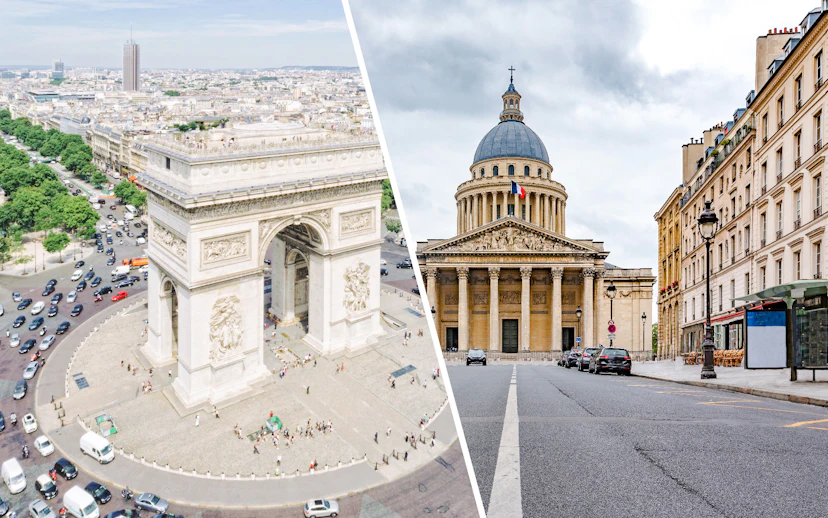
The monument sits on the Axe Historique, the long visual line that runs through some of Paris’s best-known landmarks. From the rooftop, you can see how the Champs-Élysées, Place de la Concorde, Louvre, and La Défense line up across the city.

12. You don’t need to climb it to experience the memorial

The rooftop is a major highlight, but the Arc still has plenty to see at ground level. You can walk beneath the monument, see the Tomb of the Unknown Soldier, and take in the sculptures without making the climb.

More reads

History

Book Now

Timings

Book Now

Guided tours

Book Now