Quick Information

RECOMMENDED DURATION

1 hour

EXPECTED WAIT TIME - STANDARD

1-2 hours (Peak), 30-60 mins (Off Peak)

EXPECTED WAIT TIME - SKIP THE LINE

0-30 mins (Peak), 0-30 mins (Off Peak)

Plan your visit

Did you know?

The construction of Arc de Triomphe took over 30 years and various architects due to political changes and funding issues.

The Arc de Triomphe is the second-largest triumphal arch in the world and was the largest until 1982 before The Arch of Triumph in Pyongyang, North Korea was built.

Although commissioned by Emperor Napoleon, he never had the chance to see the Arch completed as the project continued for 15 years after his death. However, his body was later moved to the arch in 1850.

Is the Arc de Triomphe worth visiting?

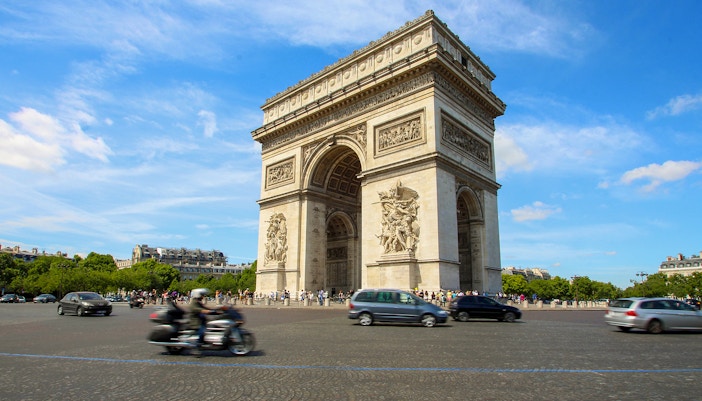
Standing beneath the Arc de Triomphe, the first thing you notice is its scale. Traffic circles around Place Charles de Gaulle while the monument rises above you, covered in monumental sculptures and names carved into stone. Then, from the rooftop, the experience opens up to panoramic views across Paris.

Napoleon commissioned the Arc in 1806 to celebrate France’s armies and military victories. Today, that triumphal purpose sits alongside something more reflective: the Tomb of the Unknown Soldier and its Eternal Flame beneath the arch.

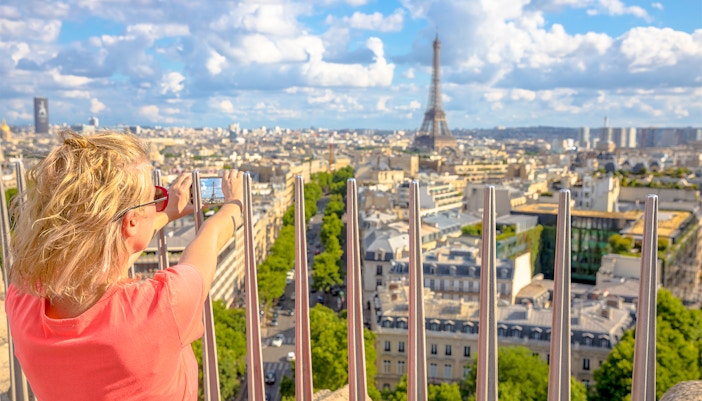
The real payoff is the contrast. You move from the weight of French history at ground level to wide-open views of the Eiffel Tower, Champs-Élysées, Sacré-Cœur, and the avenues radiating across Paris.

Skip it if climbing stairs is difficult for you or panoramic viewpoints aren’t a priority; the rooftop is a big part of what makes the visit memorable.

What to see during Arc de Triomphe visit

Monument of national significance
1/8

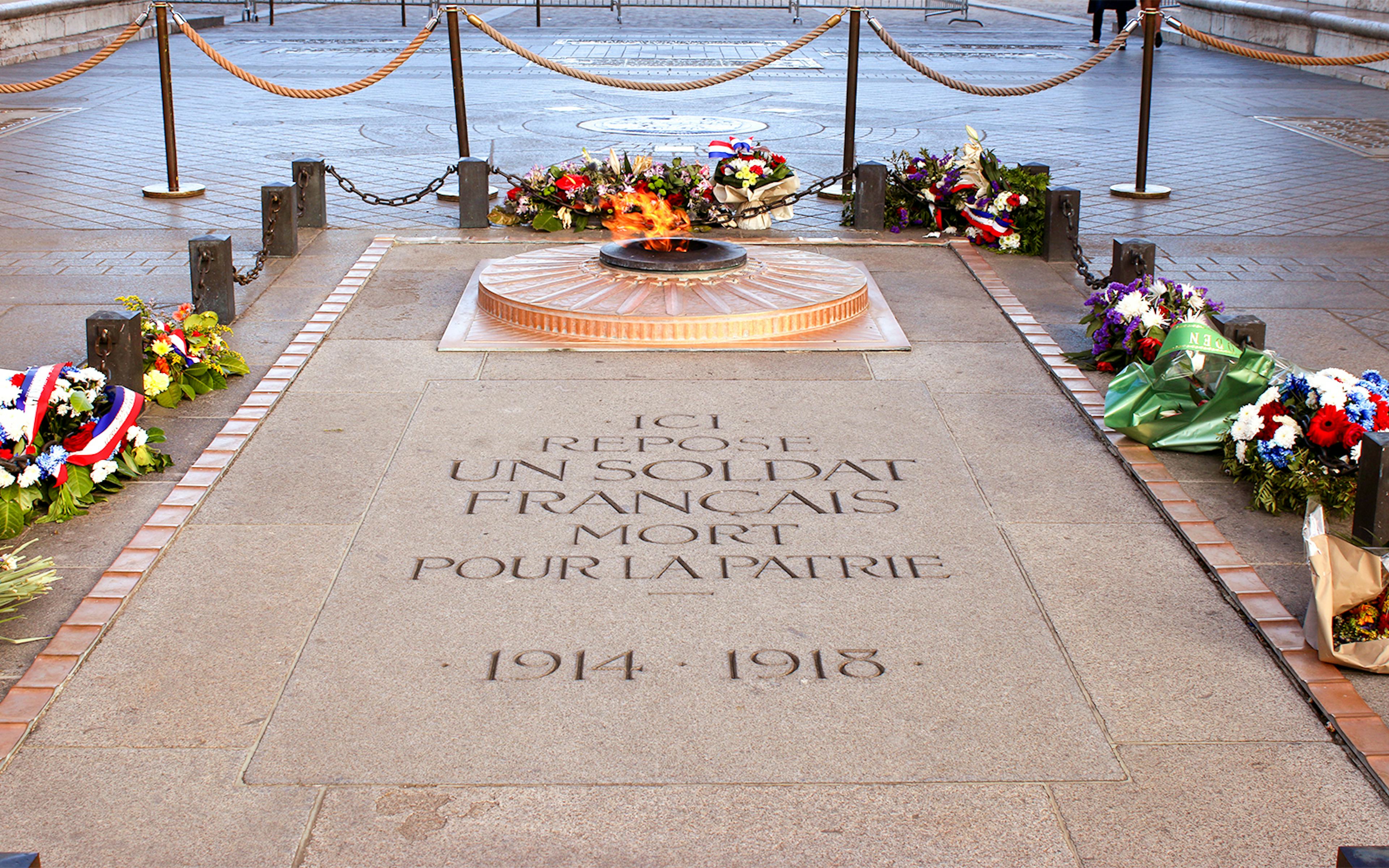
Tomb of the Unknown Soldier

Beneath the arch lies the Tomb of the Unknown Soldier, dedicated to unidentified French soldiers who died in World War I. The Eternal Flame beside it adds a solemn counterpoint to the monument’s triumphal scale and remains one of its most significant memorial features.

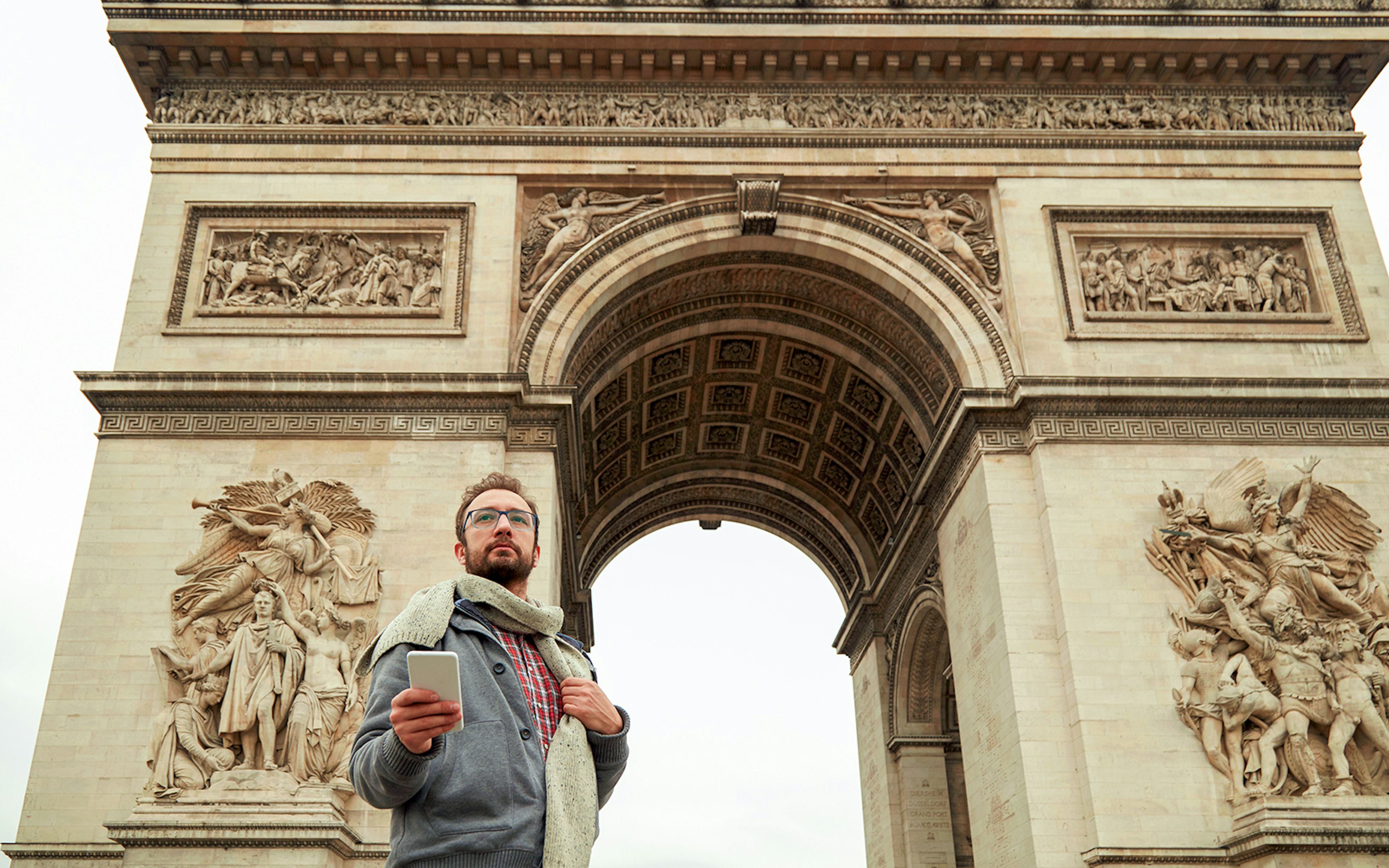
Sculptures and reliefs

Circle the four pillars to see the monumental sculptural groups and battle reliefs that cover the façades. The best-known is François Rude’s La Marseillaise, whose dramatic figures make it one of the Arc’s most recognisable details.

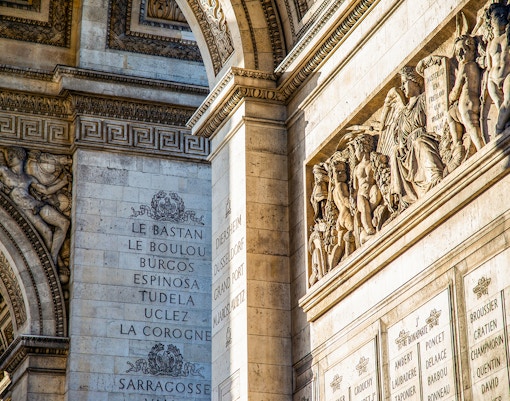
Inscriptions beneath the arch

Look up and around the inner surfaces of the monument to find the names of French generals and battles carved into the stone. These inscriptions turn the Arc into a vast record of France’s military history.

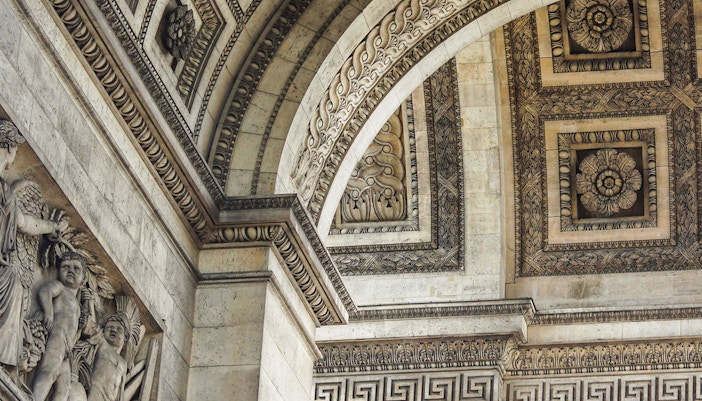
The vaulted passage

The central arch is more detailed than it first appears from the avenue. Step beneath it to see the coffered vault, decorative patterns, and the sheer thickness of the monument’s stonework up close.

Interior exhibition

Inside, a compact exhibition gives context on the Arc’s construction, architectural design, symbolism, and changing role in French history. It is worth seeing before heading higher, especially if you want the rooftop views to make more sense.

Staircase to the top

The climb is part of the experience. The spiral staircase takes you through the monument’s interior and makes the transition from street level to rooftop feel gradual, with the city opening up only once you reach the top.

Rooftop terrace

The rooftop is the standout. From here, you can see the 12 avenues radiating from Place Charles de Gaulle, along with the Champs-Élysées, Eiffel Tower, Sacré-Cœur, La Défense, and wide stretches of central Paris.

The Axe Historique

From the terrace, look east and west along Paris’s historic axis. The alignment links the Arc with the Champs-Élysées, Place de la Concorde, the Louvre, and La Défense, making the city’s grand urban plan unusually easy to read from above.

Highlights to look out for

Tomb of the Unknown Soldier

  • Where: Beneath the Arc de Triomphe.
  • What it represents: A memorial to unidentified French soldiers who died during World War I.
  • Look out for: The Eternal Flame, a lasting symbol of remembrance that is rekindled regularly.

Intricate relief sculptures

  • Where: Across the Arc’s four main pillars.
  • What to see: Large sculptural groups depicting key moments from French military history.
  • Don’t miss: François Rude’s La Marseillaise on the north pillar and The Triumph of Napoleon on the south pillar.

Historical inscriptions

  • Where: Along the inner walls of the Arc.
  • What to see: The names of 660 generals and 158 battles from the French Revolutionary and Napoleonic eras.
  • Look closer: Underlined names mark generals killed in action, while shields highlight major French victories.

Sweeping rooftop vistas

  • Getting there: Climb 240 steps to the mezzanine and another 44 steps to reach the rooftop.
  • On the way: Stop at the museum to learn more about the monument’s history and construction.
  • From the top: Take in 360° views of the Eiffel Tower, Sacré-Cœur, Les Invalides, Notre-Dame, and Paris’s avenues stretching out below.

Brief history of the Arc de Triomphe

Arc de Triomphe in Paris at sunrise, view from Champs-Élysées, tour with audio guide.
  • 1806: Napoleon commissions the Arc de Triomphe after his victory at Austerlitz, intending it as a monumental tribute to France’s armies.
  • 1810: With the Arc still unfinished, a temporary full-scale version is built for Napoleon’s marriage procession with Marie-Louise of Austria.
  • 1814–1823: Construction slows and is interrupted following Napoleon’s fall from power.
  • 1836: The Arc is finally completed under King Louis-Philippe, 30 years after construction began.
  • 1920: The Tomb of the Unknown Soldier is placed beneath the arch to commemorate French soldiers who died in World War I.
  • 1923: The Eternal Flame is lit at the tomb, establishing a tradition of remembrance that continues today.
  • Today: What began as a monument to military victory has evolved into one of France’s most important sites of national commemoration.
Discover the Arc’s history

Architecture of the Arc de Triomphe

Arc de Triomphe with surrounding traffic and tourists in Paris, France.

The Arc de Triomphe is a Neoclassical monument inspired by ancient Roman triumphal arches. Its massive stone structure, sculpted pillars, battle reliefs, and inscribed names create a sense of scale before you even step beneath it. Look up inside the arch to spot the coffered vault and decorative rosettes.

Who built the Arc de Triomphe?

Architect Jean-François-Thérèse Chalgrin designed the monument. Construction continued after his death and was completed in 1836.

Explore the Arc’s architecture

Frequently asked questions about the Arc de Triomphe

It took 30 years to complete the Arc de Triomphe, from 1806 to 1836. Due to political unrest between 1814–1823, the project was temporarily suspended.

More reads

Architecture

Book Now

Plan your visit

Book Now