Is Zoo de Vincennes worth visiting?
Zoo de Vincennes is a good pick if you want a spacious, outdoor wildlife experience without leaving Paris. Instead of moving through a compact set of enclosures, you follow a longer circuit through five biozones: Patagonia, Africa, Europe, Amazonia-Guyana, and Madagascar.
The experience feels more like a walk through changing habitats than a traditional city zoo. You’ll move from open savanna-style areas to the tropical Grande Serre, with animal sightings spread across the route rather than packed into one section.
It works especially well for families and visitors who are happy to spend a few hours exploring at a relaxed pace. If you prefer a short indoor attraction or want guaranteed close-up animal sightings, this may not be the best fit.
What to see at Zoo de Vincennes?
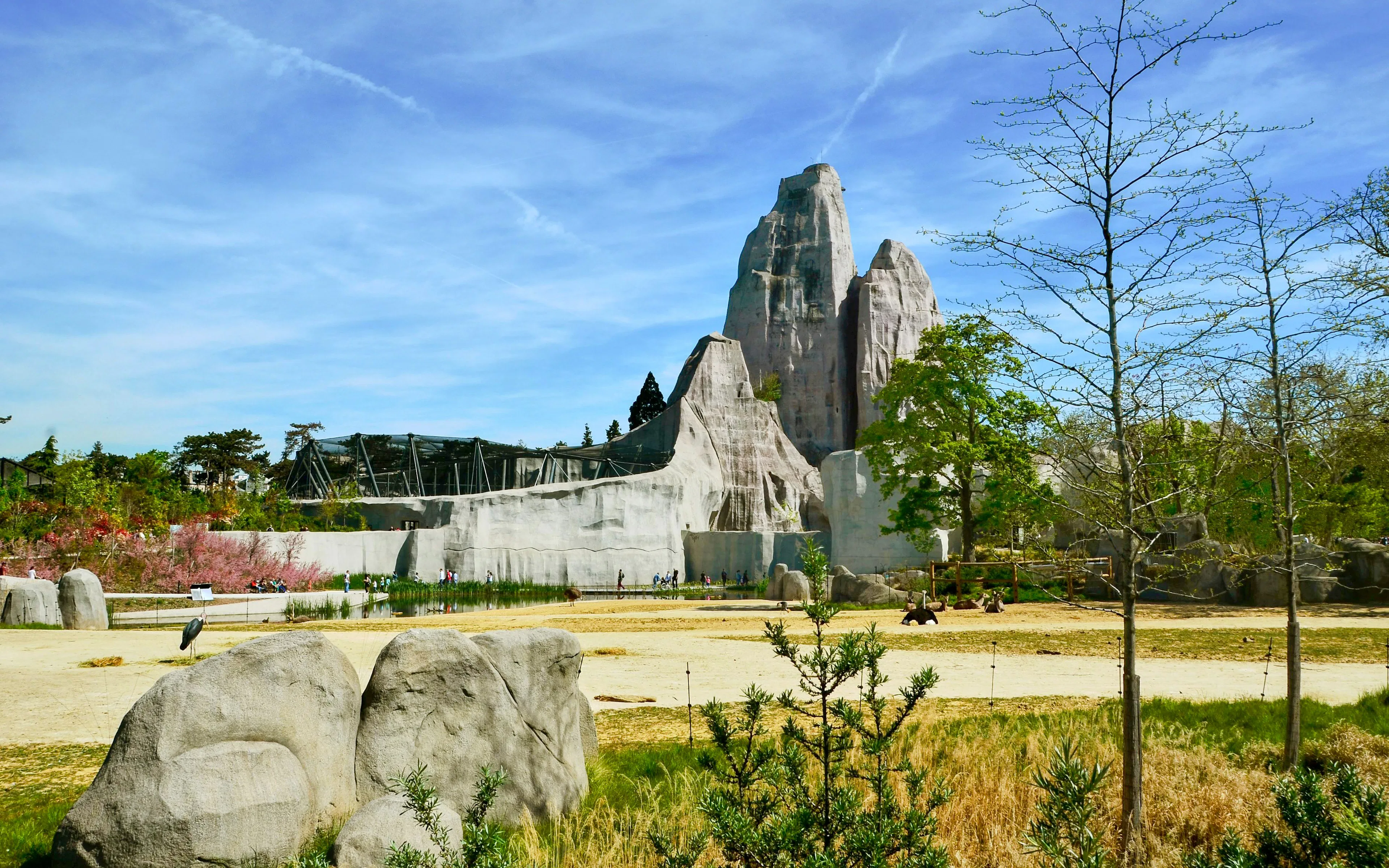
Patagonia
Start with a spacious, slower-paced biozone inspired by South America’s coastal, grassland, and Andean habitats. With fewer headline animals competing for attention, it’s a good section to settle into the zoo’s long outdoor circuit and take your time spotting species.
Sahel-Sudan Africa
This is where the larger animals take centre stage. Giraffes, lions, zebras, white rhinos, and baboons are spread across broad savanna-style habitats, so allow extra time for sightings. If you’re visiting with children, this is likely to be one of the sections they’ll want to linger in.
Grand Rocher and vivarium
The 65m-high Grand Rocher is one of the zoo’s most recognisable landmarks, but there’s more to explore beneath it. Head into the Vivarium for reptiles, amphibians, tortoises, and invertebrates, with the indoor setting offering a welcome change of pace from the open-air habitats.
Europe zone
Expect a quieter stretch as the route moves through forest, wetland, and colder-climate habitats. Look out for Iberian wolves, Eurasian lynx, wolverines, and otters, and take your time—the animals can be less immediately visible than those in the larger open habitats.
Amazonia-Guyana greenhouse
The 4,000m² tropical greenhouse is one of the biggest changes of scenery along the circuit. Humid air, dense vegetation, aquatic habitats, and winding pathways create a more immersive setting for spotting manatees, iguanas, tropical birds, and other species. Don’t rush through this section.
Madagascar
Save some time and energy for the final stretch. Rainforest and dry-forest habitats bring together lemurs, fossas, chameleons, birds, and reptiles, giving this biozone a noticeably different feel from the earlier sections and a strong finish to the main circuit.
How to explore Zoo de Vincennes?
How much time to spend?
Set aside 3–4 hours to explore the full circuit at a comfortable pace. If you’re short on time, around 90 minutes works for the main highlights. Add extra time for lunch, animal-watching stops, or breaks with kids.
Best visit order
Start at the Avenue Daumesnil entrance and follow the biozones in order. Begin with Patagonia, spend more time with the larger animals in Africa, then take an indoor break at the Vivarium beneath the Grand Rocher. Continue through the tropical greenhouse before finishing with Madagascar.
Must-see highlights
Prioritise the Africa biozone for giraffes and other large mammals, the Vivarium beneath the Grand Rocher, and the tropical Grande Serre. If you have more time, slow down through Madagascar or add longer stops for animal spotting and photography.
Worth adding nearby
Pair your zoo visit with Château de Vincennes for a change from wildlife to medieval history, or take a relaxed walk through the Bois de Vincennes. Allow around 1–2 hours for the château or 45–60 minutes for a short park visit.
Guided or self-paced?
A self-paced visit works best for most visitors, as the zoo follows a clear circuit and you can spend longer wherever animal activity is best. A guided experience is worth considering if you want more context on the animals, habitats, and conservation work.
Brief history of Zoo de Vincennes
- 1934: Zoo de Vincennes opens and quickly becomes Paris’s best-known large zoological park.
- 2008: A major closure and redevelopment begin, replacing older enclosures with a new habitat-led plan.
- 2014: The zoo reopens as the Parc zoologique de Paris after a full redesign around five geographic biozones.
- 2014: The new version shifts the focus toward larger habitats, animal welfare, and biodiversity education.
- 2023: The zoo records 621,000 visitors, confirming its place as a major family attraction in Paris.
- 2025: The Muséum national d’Histoire naturelle reports more than 3,400 animals across 276 species on site.
Why Zoo de Vincennes feels more scientific than nostalgic
Zoo de Vincennes is part of the Muséum national d’Histoire naturelle, giving it a wider role beyond displaying animals. Research, conservation, biodiversity education, and animal welfare all shape how the zoo is designed and presented.
You’ll notice this in the focus on naturalistic habitats, species conservation, and information about the ecosystems represented across the five biozones. The result is a zoo that feels more focused on understanding and protecting wildlife than simply seeing animals.
Frequently asked questions about Zoo de Vincennes
Yes. Parc zoologique de Paris is the official name of the attraction commonly known as Zoo de Vincennes or Paris Zoo.
The zoo originally opened in 1934. It later underwent a major redevelopment before reopening as Parc zoologique de Paris in 2014.
The redesign moved away from traditional cage-style displays toward larger, more naturalistic habitats organised around different ecosystems and animal welfare.
The zoo covers around 14 hectares, with its animals distributed across five biozones and a circuit of roughly 4km.
You can see species including giraffes, lions, white rhinos, Humboldt penguins, manatees, jaguars, lemurs, wolves, and fossas.
The Grand Rocher is the zoo’s distinctive 65m artificial rock landmark. It dates back to the original zoo and remains one of its most recognisable features.
The Grande Serre is a 4,000m² tropical greenhouse housing warm, humid habitats for species including manatees, reptiles, tropical birds, and other animals.
Yes. As part of the Muséum national d’Histoire naturelle, the zoo has roles in species conservation, scientific research, biodiversity education, and animal welfare.
Rather than organising animals mainly by species, the zoo groups them into biozones designed around ecosystems, creating a more habitat-led experience.
No. Both belong to the Muséum national d’Histoire naturelle, but they are separate zoos in different parts of Paris.
