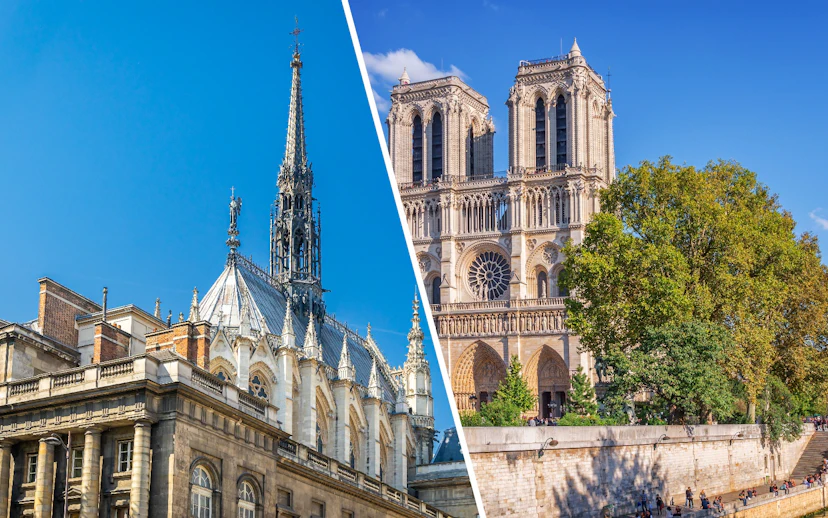
Aim for the first timed slot on a sunny weekday, or the last 60–90 minutes before closing. The glass needs daylight, but midday brings the heaviest traffic. If you go at noon on a gray day, the room feels flatter and busier.
Quick overview
Access: Included in all Sainte-Chapelle tickets
Separate ticket: Not required
When you'll see it: Reached shortly after entering the lower chapel
Visit duration: 15–20 mins self-guided/20–30 mins with guide
Best time: First timed slot on a sunny weekday, or the last 60–90 minutes before closing
Restrictions: No bulky bags or full-size strollers allowed at security
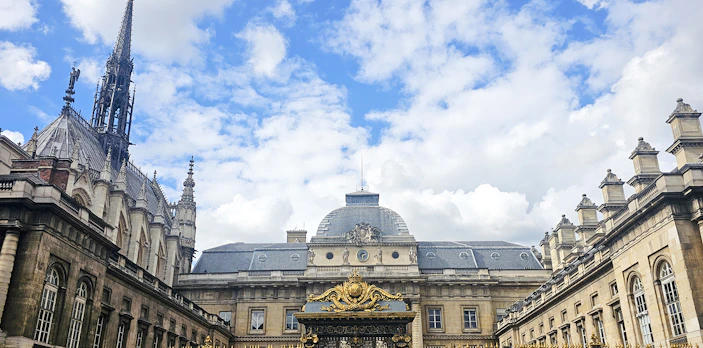
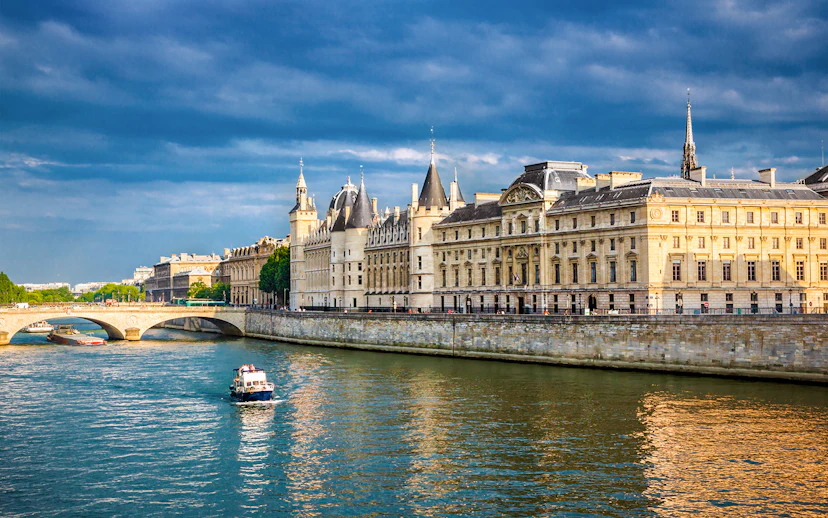
The Upper Chapel is included with all Sainte-Chapelle tickets. No separate ticket is needed. It sits above the lower chapel and is the main second level reached shortly after entry, with no independent entrance and no direct way to bypass the Sainte-Chapelle route. Book a guided tour if you want the stained-glass stories explained, or choose a combo ticket if you want to pair the visit with the Conciergerie next door.
How to best experience the Upper Chapel
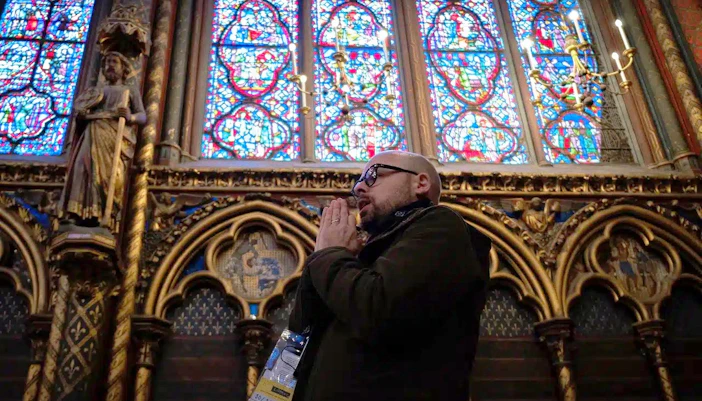
Best time to visit
How long to spend
Plan 15–20 minutes self-guided, or 20–30 minutes with a guide. That gives you time to study a few windows, the rose, and the painted vault without rushing. If you only glance up for five minutes, the storytelling disappears into colour.
Where it fits in your itinerary
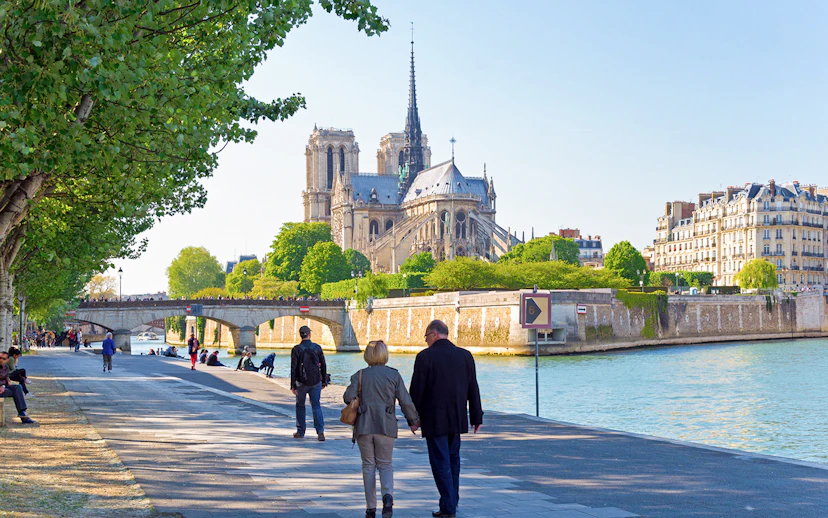
You reach the upper chapel shortly after the lower chapel, so it comes early in the Sainte-Chapelle visit, but after security. Pair it with the Conciergerie or the Notre-Dame area afterwards. Don’t schedule it between tight reservations, because security delays can compress your time.
Crowd patterns
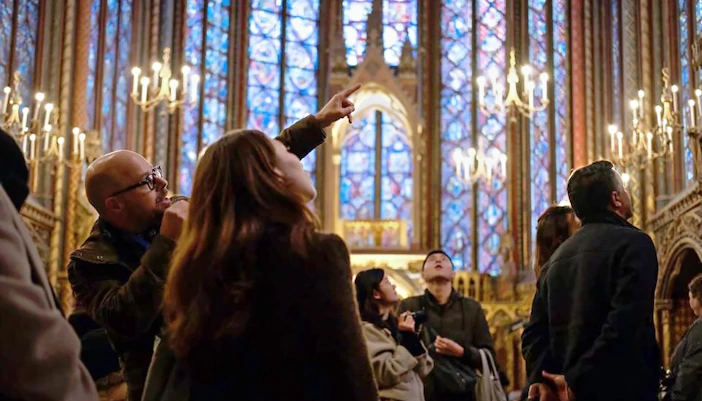
Crowds build fastest from late morning through mid-afternoon, when tour groups and combo-ticket holders overlap. In a room this compact, that means slower movement and blocked sightlines near the center. Earlier or later slots give you more space to step back and read the windows.
What to prioritize if time is short
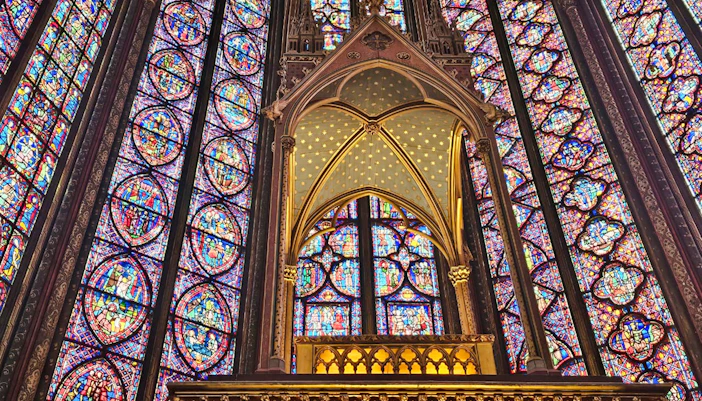
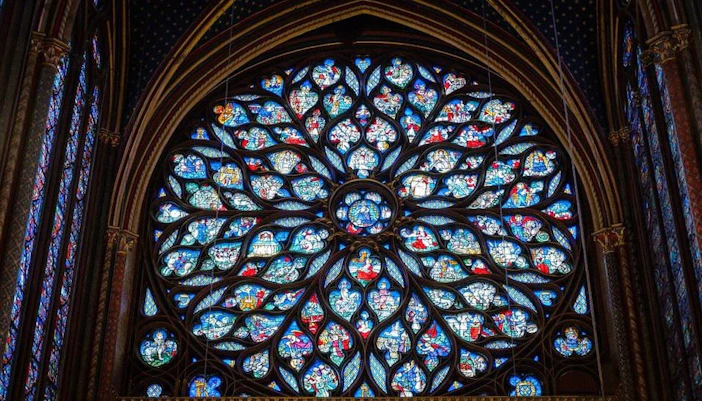
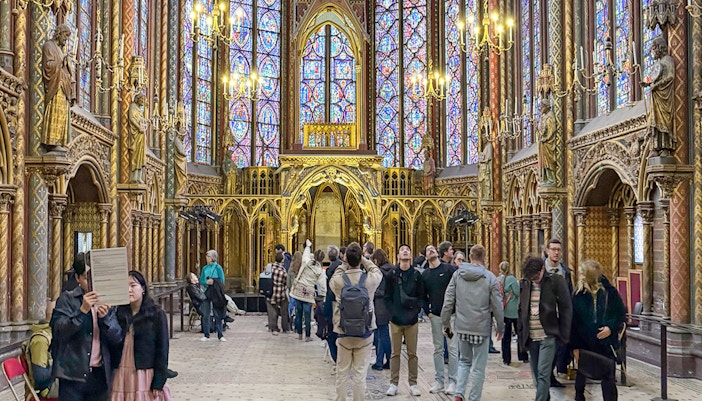
Stand in the center aisle first, then turn to the west-facing rose window, and finally scan one long wall from bottom to top. These three views explain the room quickest. If time is tight, read fewer windows rather than skimming all 15.
Common mistakes to avoid
Most visitors photograph the colour and leave without noticing the scenes. Start with one window and follow the panels upward; the stories become legible fast. Also, don’t arrive with bulky bags or a full-size stroller, because security and access rules slow you down.
Best tickets to experience the Upper Chapel
| Ticket type | Why choose it |
|---|---|
Combo entry | See the Upper Chapel at your own pace, then walk straight to the Conciergerie without managing a second booking. |
Guided tour | Best if you want the stained-glass stories decoded instead of seeing only colour, height, and scale. |
Île de la Cité guided walk | Good when you want Sainte-Chapelle folded into a half-day route with nearby Notre-Dame context. |
Why it’s worth seeing
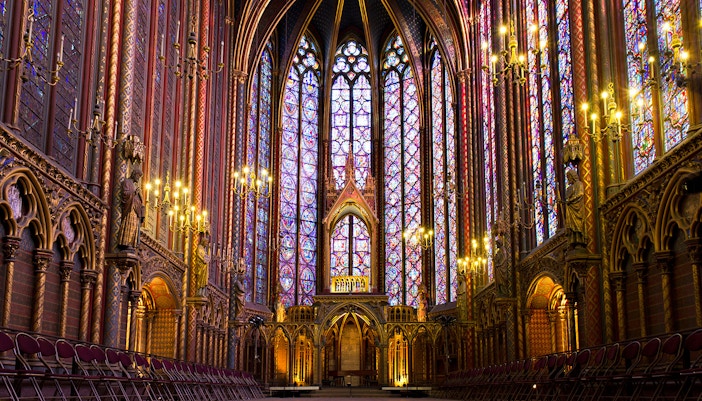
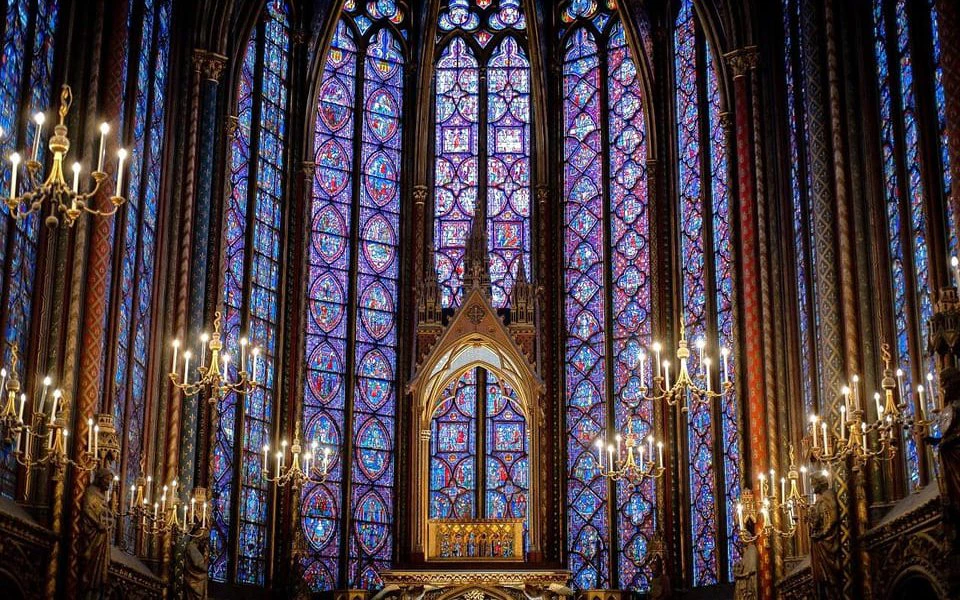
The Sainte-Chapelle Upper Chapel is irreplaceable because the whole monument was designed to deliver this one room: walls that nearly dissolve into glass. Most visitors don’t realize the windows are meant to be read as narratives, not admired as abstract color alone. Once you know where to pause, the chapel becomes easier to navigate. Start with the long walls, then finish at the west rose.
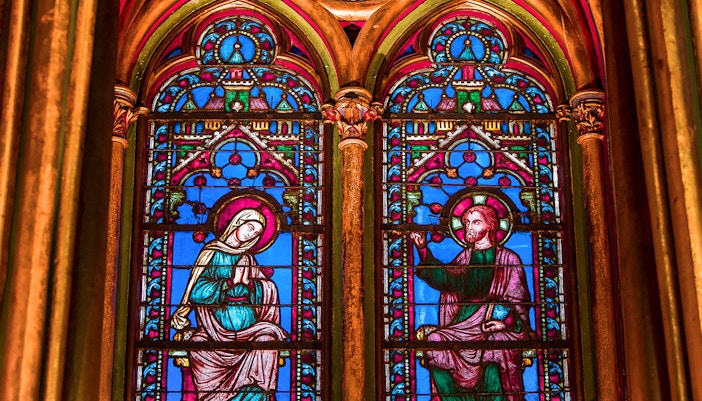
The lancet windows: read one from bottom to top
Stand in the center and choose one long wall before trying to absorb everything. Each tall window stacks biblical scenes vertically, so your eye should move upward, not sideways. This turns the glass from pattern into story.
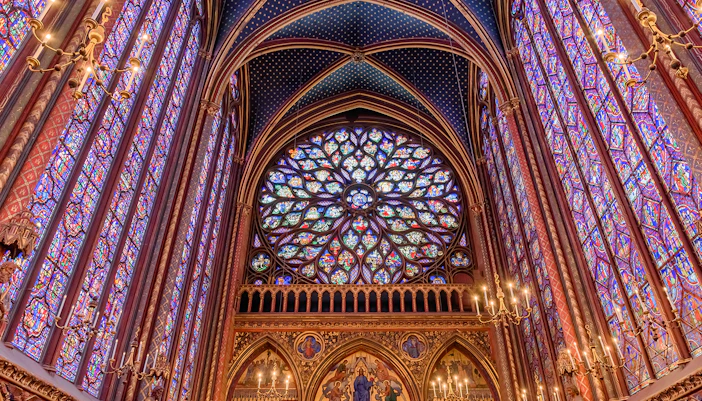
The west rose window
Turn back toward the entrance and look above the west doorway for the circular rose added in the 15th century. Its Apocalypse scenes feel denser and darker than the long windows. Late-day light brings out its reds and deep blues.
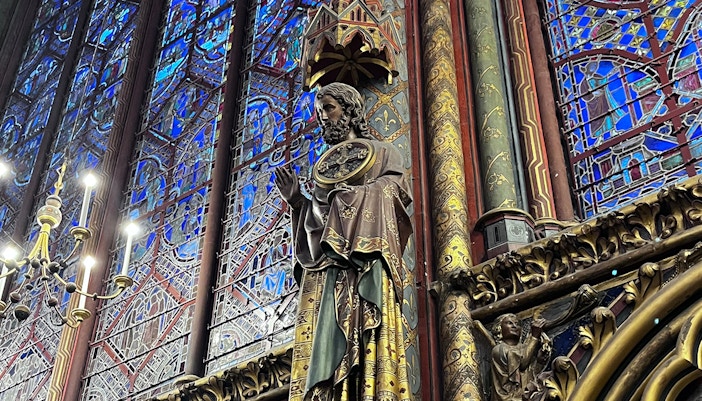
The painted vault and apostles
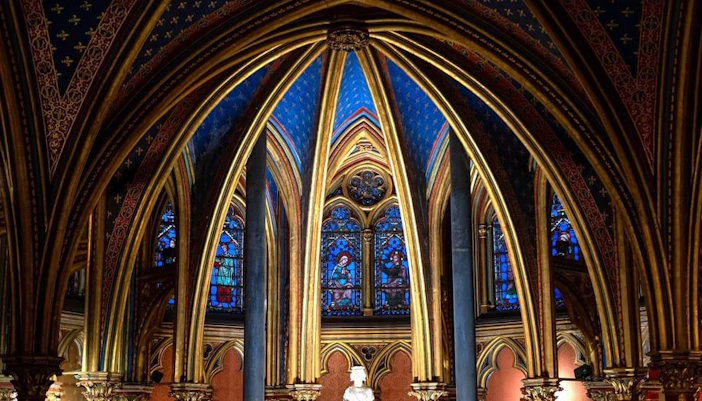
After looking outward at the glass, look up and down. The vaulted ceiling is painted like a night sky, and apostle statues line the walls between the windows. These details show how completely the Upper Chapel was staged as royal sacred space.
Historical and cultural significance
Built for King Louis IX and consecrated in 1248, the Upper Chapel was created as a royal reliquary for the Crown of Thorns and other Passion relics. That purpose shaped everything above you: height, light, and the raised eastern end where the relic display once stood. Today it functions as a protected national monument and concert venue, so you’re entering both a medieval ceremonial space and a living heritage site.
Notable figures
Louis IX | King and patron
Commissioned Sainte-Chapelle to house the Crown of Thorns and other Passion relics.
Eugène Viollet-le-Duc | Restorer
Helped lead the 19th-century restoration that saved the chapel’s Gothic fabric and visual program.
Jean-Baptiste Lassus | Restorer-architect
Worked on the restoration campaign that returned much of Sainte-Chapelle’s medieval character.
Victor Hugo | Preservation advocate
His public defence of medieval Paris helped build support for monuments like Sainte-Chapelle.
Know before you go
- April 1 to September 30: 9am–7pm
- October 1 to March 31: 9am–5pm
- Closed: January 1, May 1, and December 25
- Free-entry days: First Sunday from November to March; free visitors still need to reserve a time slot online
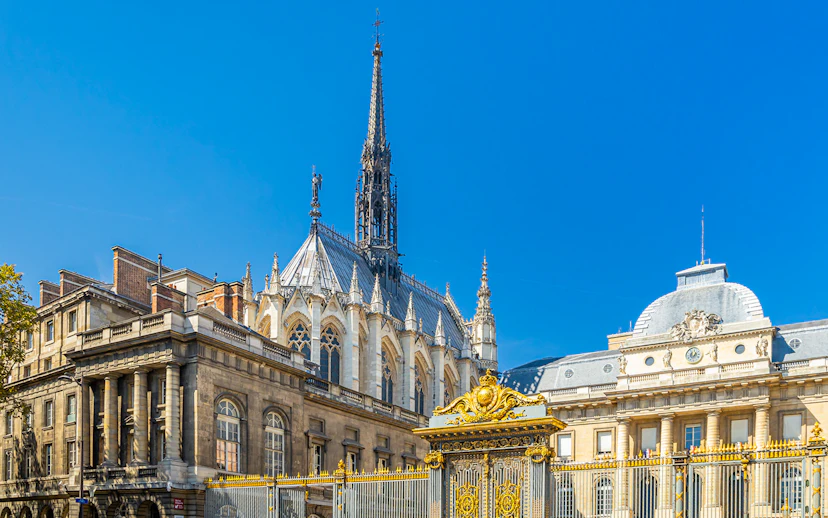
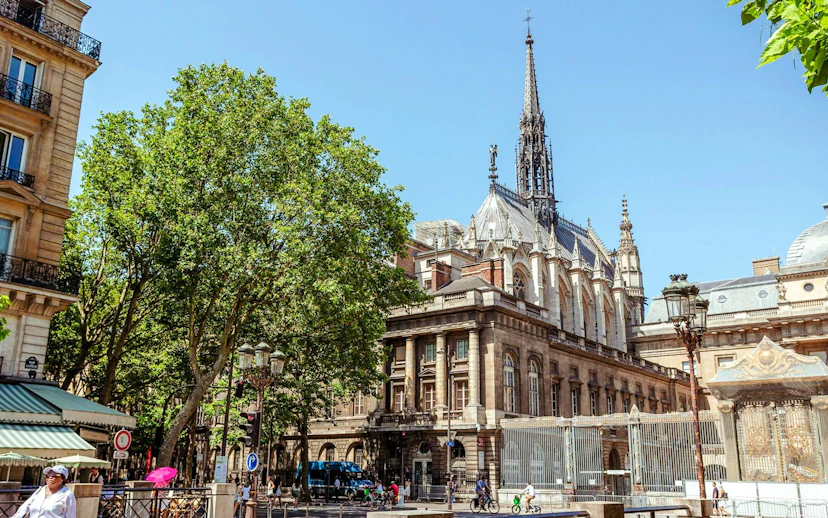
Address: 10 Boulevard du Palais, 75001 Paris
- Nearest metro: Cité (Line 4), about 3 minutes on foot; Saint-Michel–Notre-Dame is another easy option
- Entry point: Use the Sainte-Chapelle entrance inside the Palais de Justice security zone
- Time to reach Upper Chapel: Usually 5–10 minutes after security and the lower chapel
- Route: Direct access is not possible; all visitors follow the lower chapel route before going upstairs
- Wheelchair access: Sainte-Chapelle is wheelchair accessible
- Upper chapel access: A lift route is available to reach the upper level
- Companion policy: A person with a disability and one companion can enter free
- Strollers: Full-size strollers are not permitted in the Upper Chapel; bring a small foldable stroller
- Visit format: Expect a mostly standing visit with limited seating inside
- Security: All visitors pass security screening before entry
- Not allowed: Sharp metal objects, glass bottles, helmets, luggage, and large bags
- Photography: Flash-free photography is generally permitted inside the chapel
- Food and drink: Not permitted inside the chapel spaces
- Strollers: Only small foldable strollers that fit through X-ray machines are allowed
- Stairs: The standard route to the Upper Chapel uses stairs from the lower chapel
- Standing: Plan to stand for most or all of your 15–30 minute visit
- Difficulty: Easy for most visitors, but the stair route can feel tight when crowded
- Alternative access: A lift route is available for visitors who need step-free access
- Space: The Upper Chapel is compact, so movement slows once groups cluster in the center
Frequently asked questions about the Sainte-Chapelle Upper Chapel
Yes. Entry to the Upper Chapel is included with every valid Sainte-Chapelle ticket. No separate ticket exists.
No. Any Sainte-Chapelle ticket gets you in. Guided tours add context, and combo tickets add the Conciergerie.
No. The Upper Chapel has no independent entrance. All visitors enter through Sainte-Chapelle and continue upstairs from the lower chapel.
It comes after the lower chapel. Allow 5–10 minutes from the entrance, longer if security lines are heavy.
Plan 15–20 minutes self-guided, or 20–30 minutes with a guide. The stained-glass scenes reward a slower pace.
Yes. The Upper Chapel is included in guided tours of Sainte-Chapelle. A guide helps you read the windows as stories.
Yes. It is the monument’s centerpiece and the main reason most people book Sainte-Chapelle.
Yes. Flash-free photography is generally allowed. Security rules still prohibit bulky items, sharp objects, and large bags.
Yes. Sainte-Chapelle is wheelchair accessible, and a lift route is available to reach the Upper Chapel.