Aim for a 3pm–5pm slot in winter, or 4pm–6pm in summer, on a clear day. The rose faces west, so late sunlight gives the glass stronger color and sharper tracery. Earlier visits favor the tall side windows more than the rose.
Quick overview
Access: Included in all Sainte-Chapelle tickets
When you'll see it: Final peak of the Upper Chapel route (located on the western facade)
Visit duration: 10–15 mins self-guided/15–20 mins with a guide
Best time: Late afternoon (when the setting sun directly illuminates the western glass)
Restrictions: Flash photography prohibited. Respectful attire required.
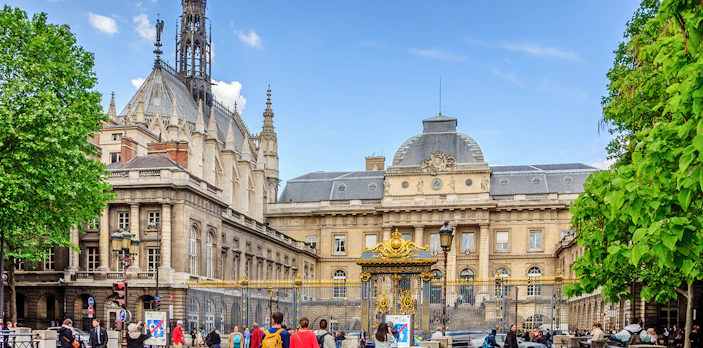
The Sainte-Chapelle rose window is included with all Sainte-Chapelle tickets. No separate ticket is needed. You see it in the upper chapel, a few minutes after the security check and lower chapel, and you can revisit it freely during your visit. Book a guided tour or timed entry that lets you visit later in the day, when the west-facing glass usually reads best.
How to best experience the Sainte-Chapelle rose window
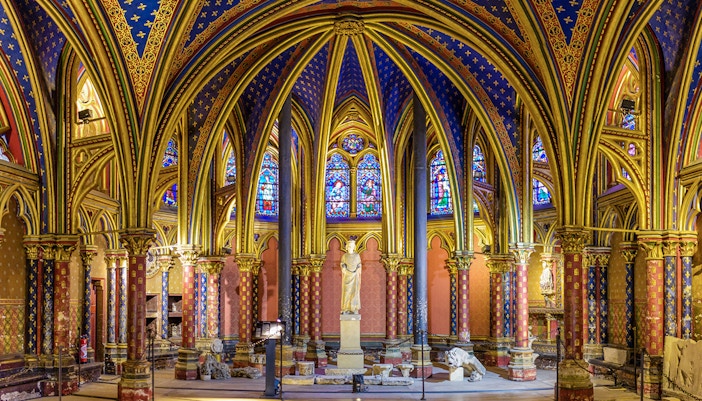
Best time to visit
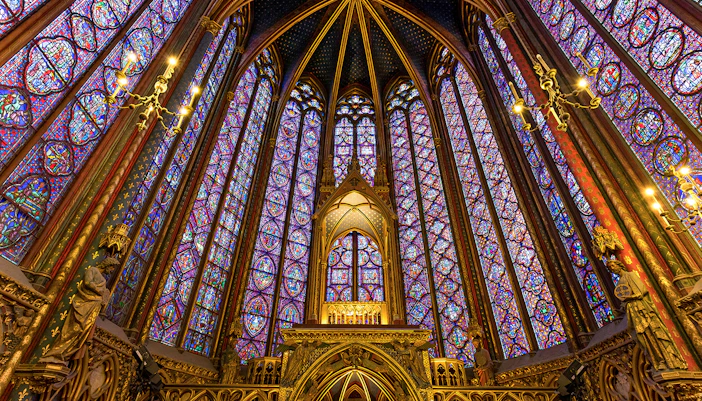
How long to spend
Give the rose 10–15 minutes if you’re self-guiding, or 15–20 minutes with a guide. That’s enough to take in the full wheel, then pick out individual Apocalypse scenes. If you only glance up, the window reads as pattern, not story.
Where it fits in your itinerary
You reach the rose in the upper chapel, usually 5–10 minutes after security. Let your eyes adjust to the side windows first, then save the last 10 minutes of your visit for the west end. If combining with Conciergerie, do Sainte-Chapelle first for better light.
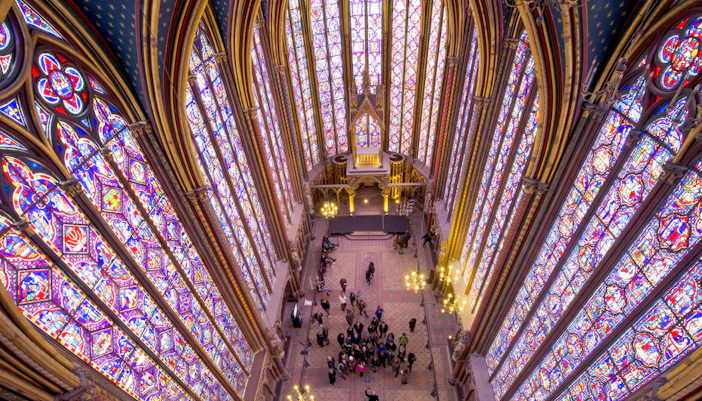
Crowd patterns
Crowds peak roughly 11am–2pm, when timed-entry waves and guided groups compress the center aisle. The rose is still visible, but the best straight-on sightline fills fast. Late-afternoon weekdays feel looser, and you’ll have more room to step back.
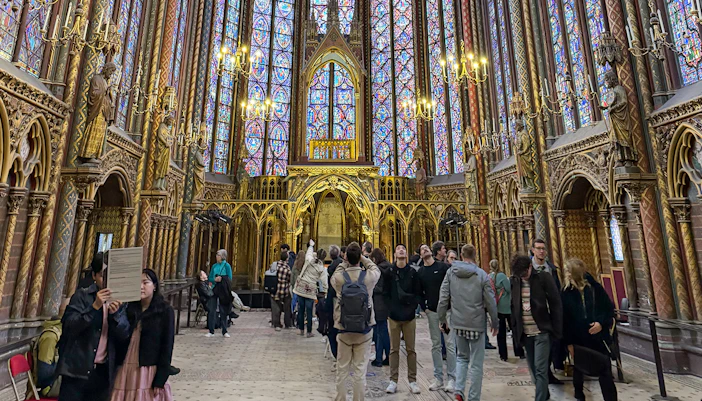
What to prioritize if time is short
Stand just behind the middle of the upper chapel and take in the full 9-meter wheel first. Then study the lower arc of panels, where figures are easiest to read. If time is short, stay upstairs and shorten your lower-chapel stop.
Common mistakes to avoid
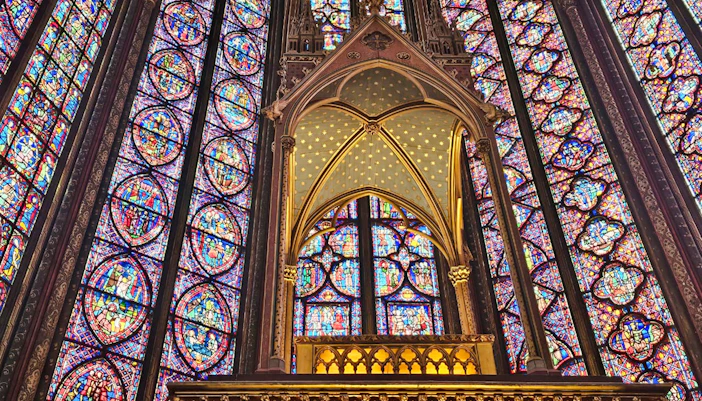
Most visitors give all their attention to the side windows and reach the rose only while leaving. Don’t stand directly underneath it with your phone raised. Step back, center yourself, and read the full design before zooming into details.
Best tickets to experience the Sainte-Chapelle rose window
| Ticket type | Why choose it |
|---|---|
Self-guided entry | Best if you want to linger quietly, return to the west end, and time your visit around late-afternoon light. |
Guided tour | Best for decoding the Apocalypse scenes fast. A guide turns color and pattern into a story you can actually follow. |
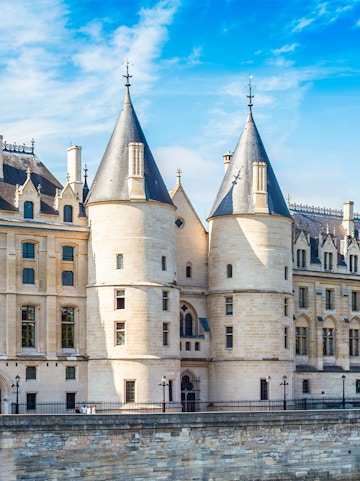
Combo ticket | Best if you want Sainte-Chapelle plus nearby Conciergerie without extra planning. Visit the chapel first while daylight is strongest. |
Why it’s worth seeing
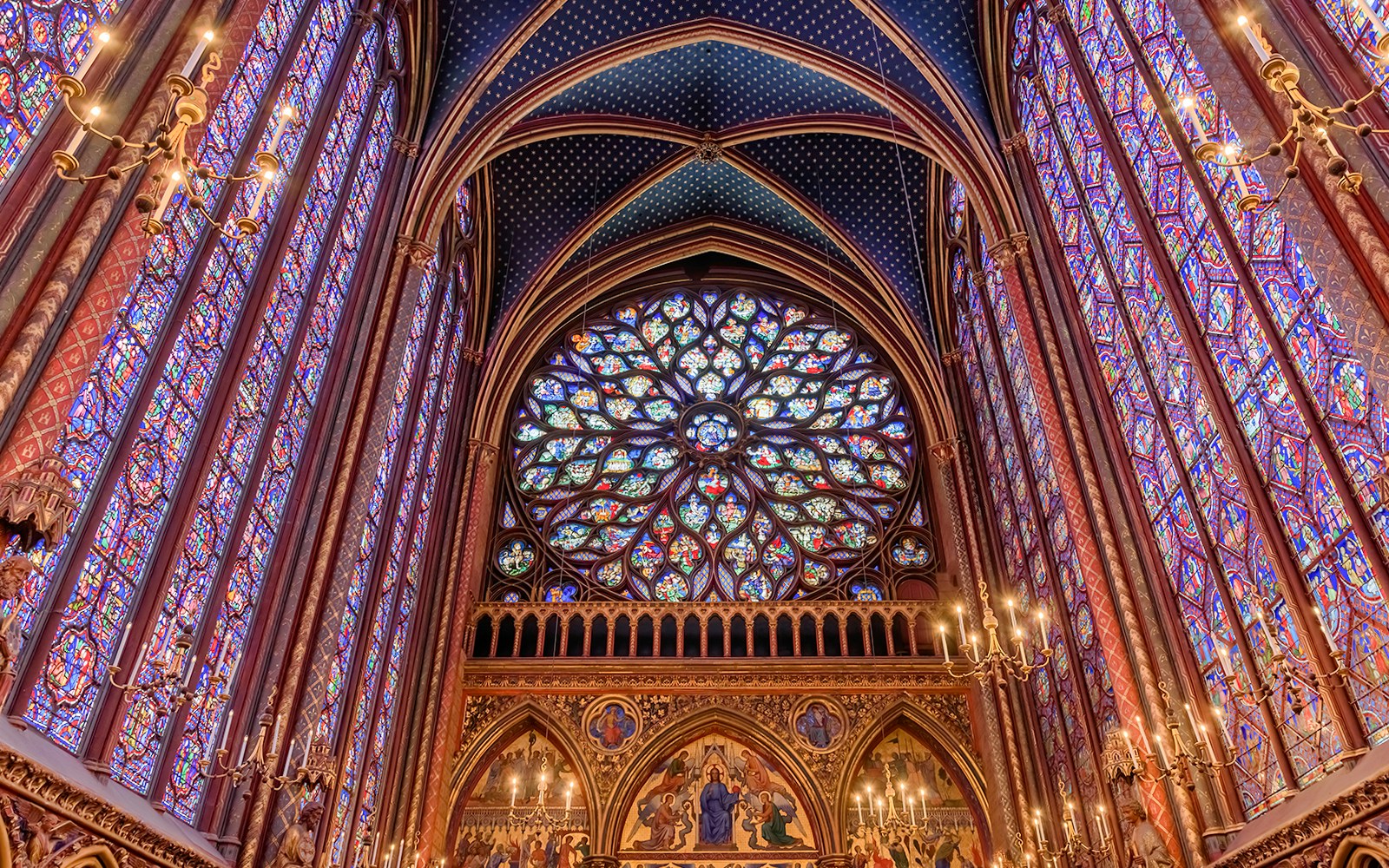
The rose window gives Sainte-Chapelle a different ending from the long biblical timeline on the side walls: instead of narrative panels marching east to west, you get a circular vision of the Apocalypse above the entrance. Most visitors don’t realize it was added about 2 centuries after the chapel opened, which is why its late Gothic tracery feels different from the 13th-century glass around it. Focus on the full wheel first, then the readable lower panels, then the stonework holding it together.
The full wheel: start from mid-chapel
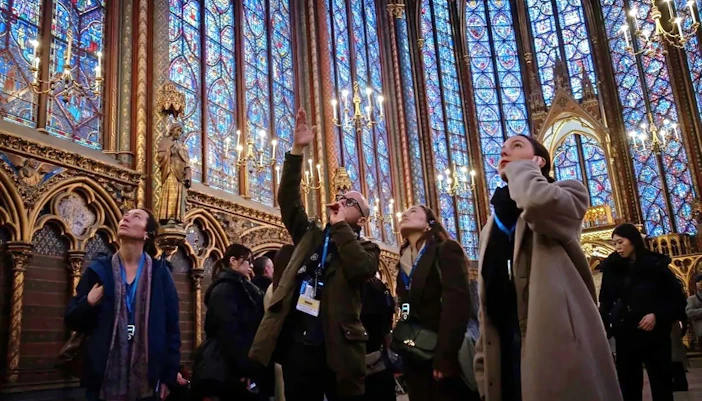
Stand a little behind the center of the upper chapel and look west. From here, the whole rose reads as one composition, with radiating stone spokes carrying your eye from the middle outward through the Apocalypse cycle.
The lower arc: easiest scenes to read
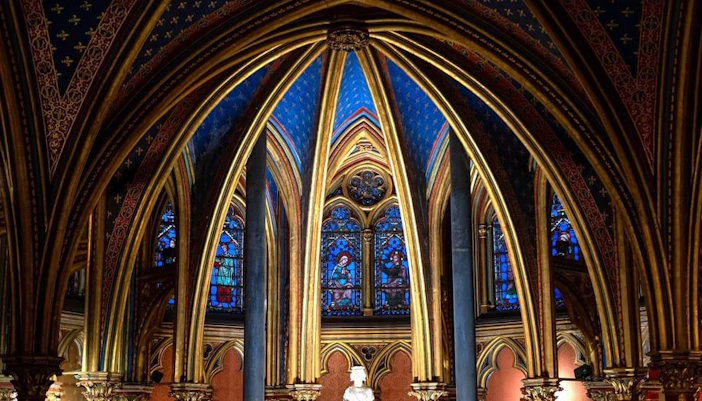
The panels nearest the bottom edge are the easiest to study without straining your neck. Start there before looking higher. You’ll catch figures, gestures, and color contrasts more clearly than in the uppermost sections.

The tracery: watch the stone do the work
Don’t only read the glass. The stone framework is what turns the window into a wheel rather than a flat picture. Move slightly left, then right, and you’ll see how the tracery changes the rhythm of the light.
Historical and cultural significance
Most visitors assume the rose belongs to the original 1248 chapel, but it was added in the late 15th century when the west front was rebuilt in the Flamboyant Gothic style. That makes it a bridge between 2 phases of Sainte-Chapelle’s life: Louis IX’s relic chapel and a later royal reworking of the monument’s image. Today, it remains the visual climax of the upper chapel, especially on late-day visits and during evening concerts.
Notable figures
Louis IX | Royal patron
Built Sainte-Chapelle as a royal reliquary, creating the sacred setting later crowned by the west rose.
Charles VIII | Later patron
Oversaw the late-15th-century rebuilding that introduced Sainte-Chapelle’s great west rose in Flamboyant Gothic style.
Eugène Viollet-le-Duc | Restorer
Helped shape the 19th-century restoration campaign that preserved Sainte-Chapelle’s Gothic fabric for modern visitors.
Know before you go
- Open: April 1–September 30, 9am–7pm; October 1–March 31, 9am–5pm.
- Slot policy: Reserved entry slots remain valid for 30 minutes from your booked time.
- Closed: January 1, May 1, and December 25.
- Free-entry day: The first Sunday from November to March is free, but you still need to reserve a timeslot online.
Address: 10 Boulevard du Palais, 75001 Paris
- Nearest metro: Cité (Line 4), about a 3-minute walk; Saint-Michel–Notre-Dame is about a 7-minute walk.
- Entry point: Use the main visitor entrance on Boulevard du Palais and pass through airport-style security screening.
- Rose window location: The window is in the upper chapel at the west end, above the main entrance side.
- Route: There is no direct exterior access to the rose window; allow about 5–10 minutes from security to reach the upper chapel.
- Wheelchair access: Sainte-Chapelle is wheelchair accessible.
- Accessible route: A lift-assisted route can take visitors to the upper chapel; ask staff on arrival.
- Upper chapel floor: Once upstairs, the viewing area is flat, open, and easy to navigate.
- Strollers: Strollers are not permitted in the upper chapel; only small foldable models that fit security screening are allowed.
- Companion access: Disabled visitors and 1 companion can enter free, with the required reservation or supporting documents.
- Recommended: Wear respectful clothing suitable for a historic chapel.
- Headwear: Remove hats once inside the chapel.
- Avoid: Beachwear or very revealing clothing may cause issues at entry.
- Best practice: Bring a light layer if you’re visiting in warm weather and want zero risk at entry.
- Photography: Non-flash photography is usually allowed inside Sainte-Chapelle.
- Flash and tripods: Flash, tripods, and bulky camera setups are not suitable during standard visits.
- Security: All visitors pass through security screening because the chapel sits beside the Palais de Justice.
- Bags: Sharp objects, glass bottles, helmets, large bags, and luggage are not allowed.
- Strollers: Only small foldable strollers that fit the X-ray machines are accepted.
Frequently asked questions about the Rose Window
Yes. Entry to the rose window is included with every valid Sainte-Chapelle ticket. No separate ticket exists.
No. Any Sainte-Chapelle ticket gets you in. Guided tours matter because they explain the Apocalypse scenes and late Gothic design.
No. The rose window has no independent entrance and sits in the upper chapel. You must enter Sainte-Chapelle and go upstairs.
You see it in the upper chapel, a few minutes after security. Allow about 5–10 minutes from entry for your first full view.
Allow 10–15 minutes self-guided, or 15–20 minutes with a guide. The changing light and symbolism reward a pause.
Yes. The rose window is included in guided tours, and live commentary makes the panels much easier to follow.
Late afternoon is best on a clear day. The rose faces west, so sunlight reaches it more directly then.
Yes, usually without flash. Wide-angle phone shots work best from mid-chapel, not directly underneath the glass.
Yes. Sainte-Chapelle is wheelchair accessible, and staff can direct you to the upper chapel’s accessible route.
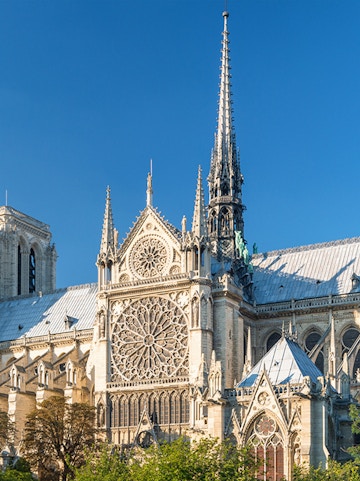
It’s smaller than Notre-Dame’s great roses, but easier to study closely because Sainte-Chapelle’s upper chapel is much more intimate.