Sainte-Chapelle was commissioned by King Louis IX to house some of Christianity’s most prized relics, especially the Crown of Thorns. Consecrated in 1248, the chapel functioned less like an ordinary parish church and more like a monumental reliquary, turning royal devotion into architecture at the very heart of medieval Paris.
Ten interesting facts about the Sainte-Chapelle in Paris
Built to house Christ’s Crown of Thorns, Sainte-Chapelle turns a compact royal chapel into one of Paris’s most dazzling Gothic interiors. Its stained glass is famous, but the stories behind the relics, windows, and restorations are just as striking.
Interesting facts about Sainte-Chapelle
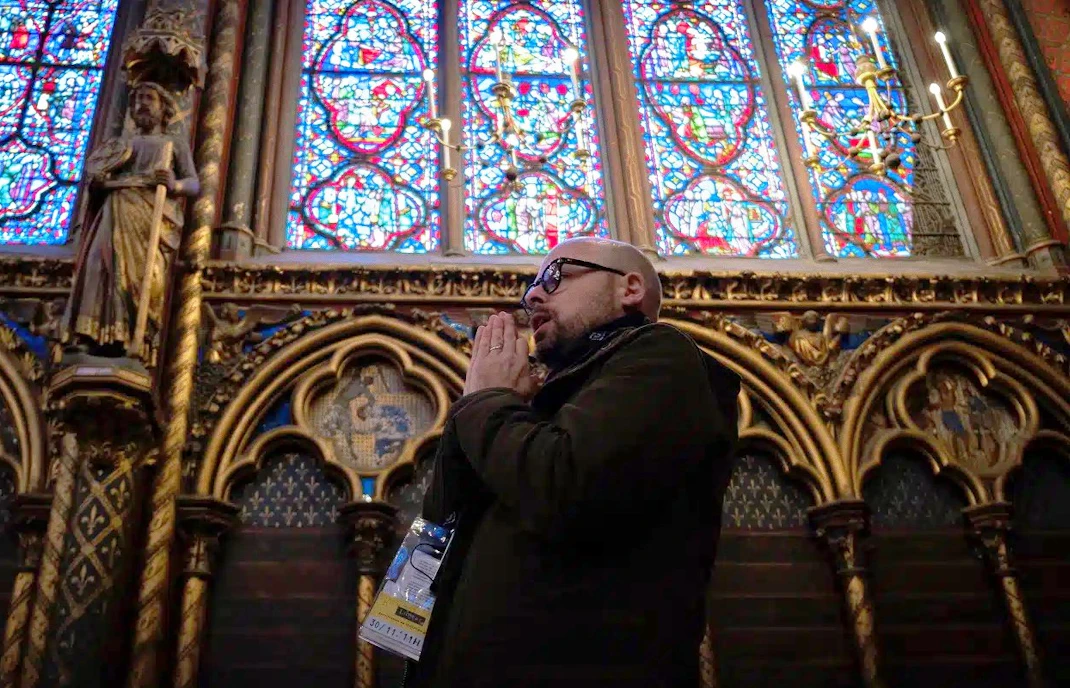
Built for Sacred Relics
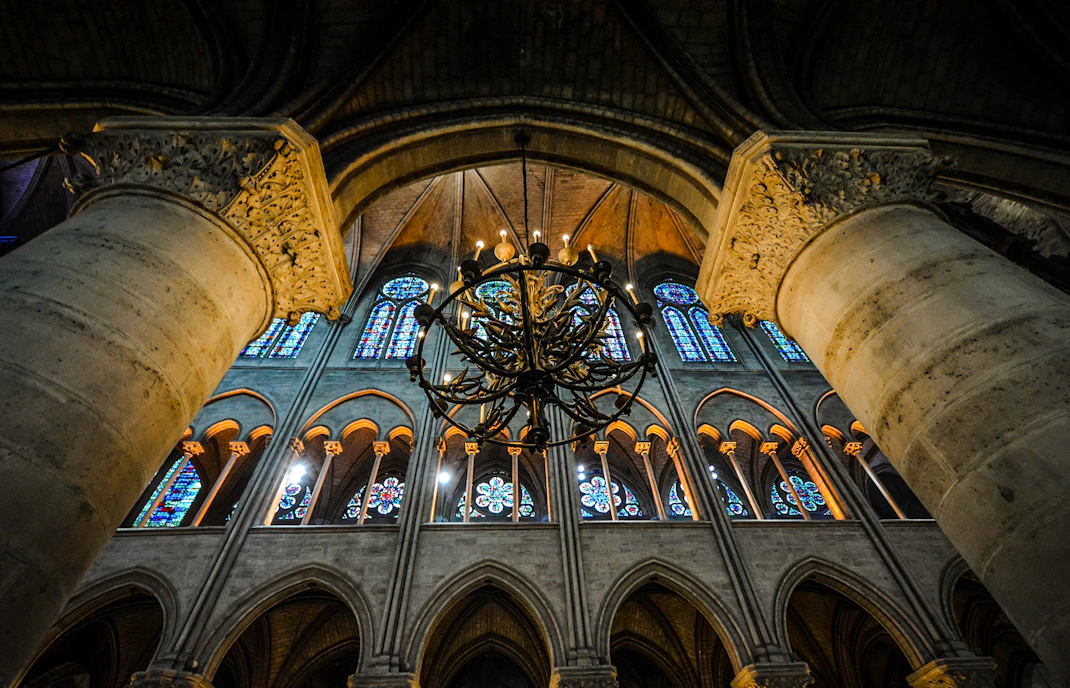
Relics Outpriced the Building
The relic collection was so important that Louis IX reportedly paid far more for it than for the chapel itself. Medieval chroniclers and later historians note that the Crown of Thorns and related Passion relics cost a fortune, showing that Sainte-Chapelle was designed above all as a sacred showcase for royal prestige.
Finished With Remarkable Speed
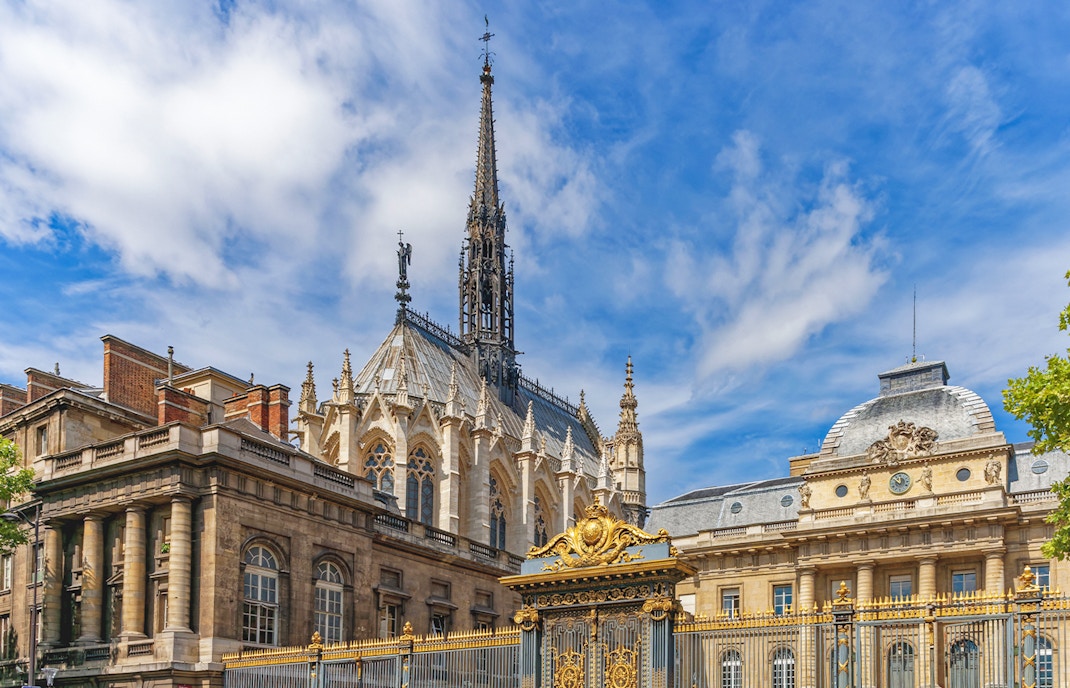
Construction began in the 1240s and the chapel was consecrated in 1248, an unusually fast schedule for such an ambitious Gothic project. Its compact footprint helped, but so did its royal patron: Sainte-Chapelle was funded and prioritized by the crown, allowing craftsmen to complete a building of exceptional richness in roughly seven years.
A Chapel Inside a Palace
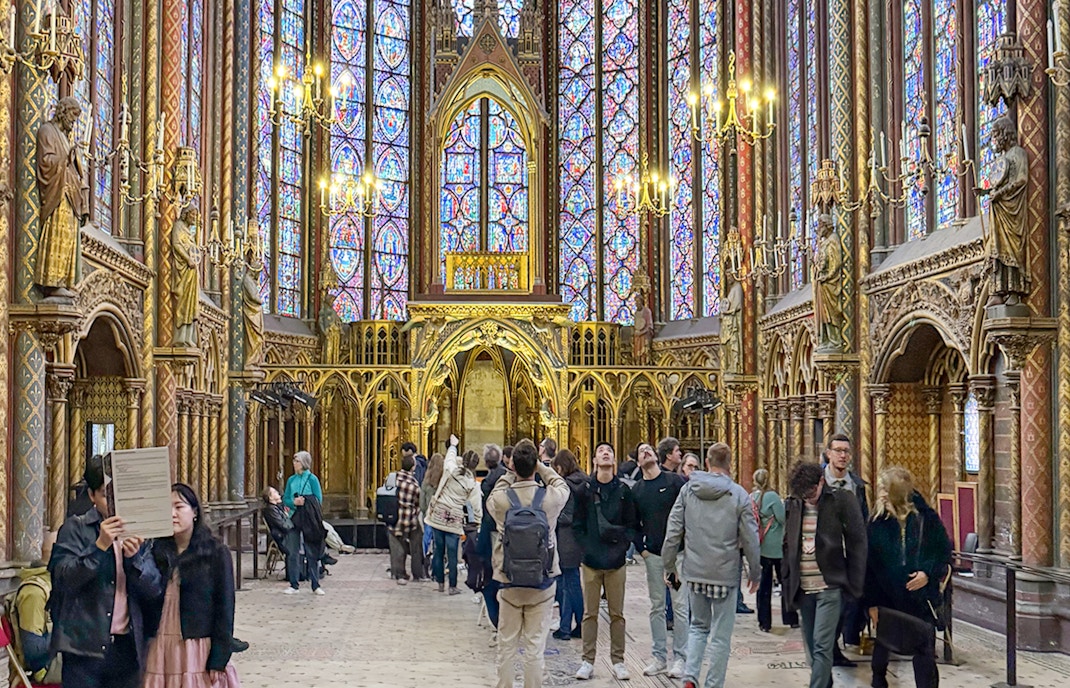
Many visitors assume Sainte-Chapelle was built as a standalone church, but it originally formed part of the vast Palais de la Cité, the residence of the French kings. That setting explains its courtly layout, its royal symbolism, and its close connection to the nearby Conciergerie, once another section of the same palace complex.
Two Chapels, Two Worlds
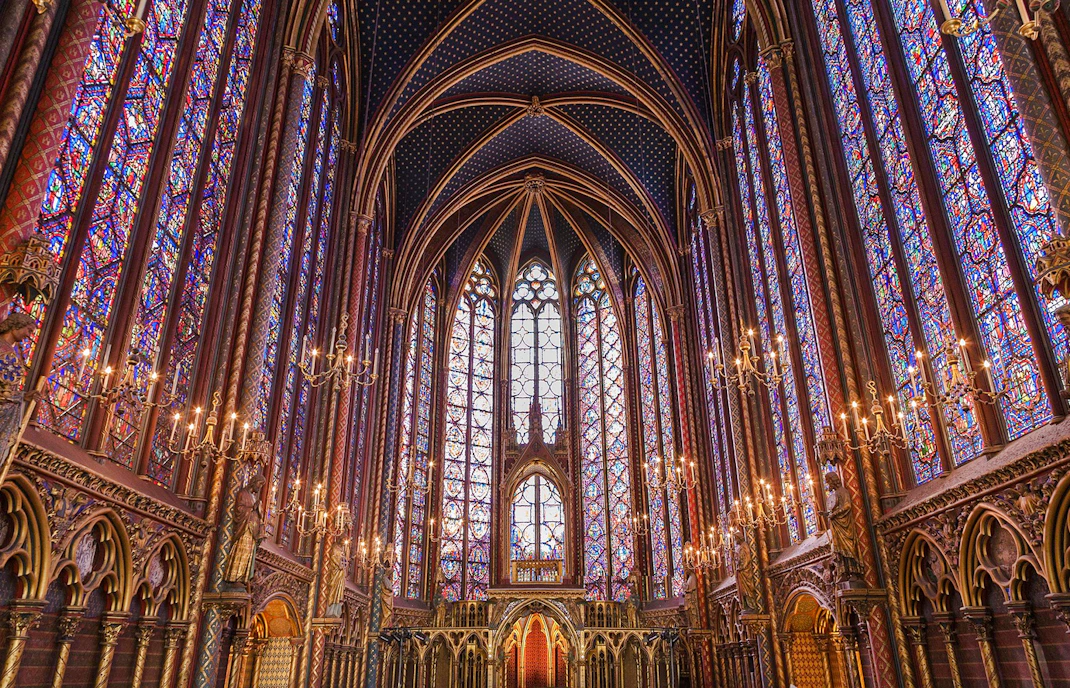
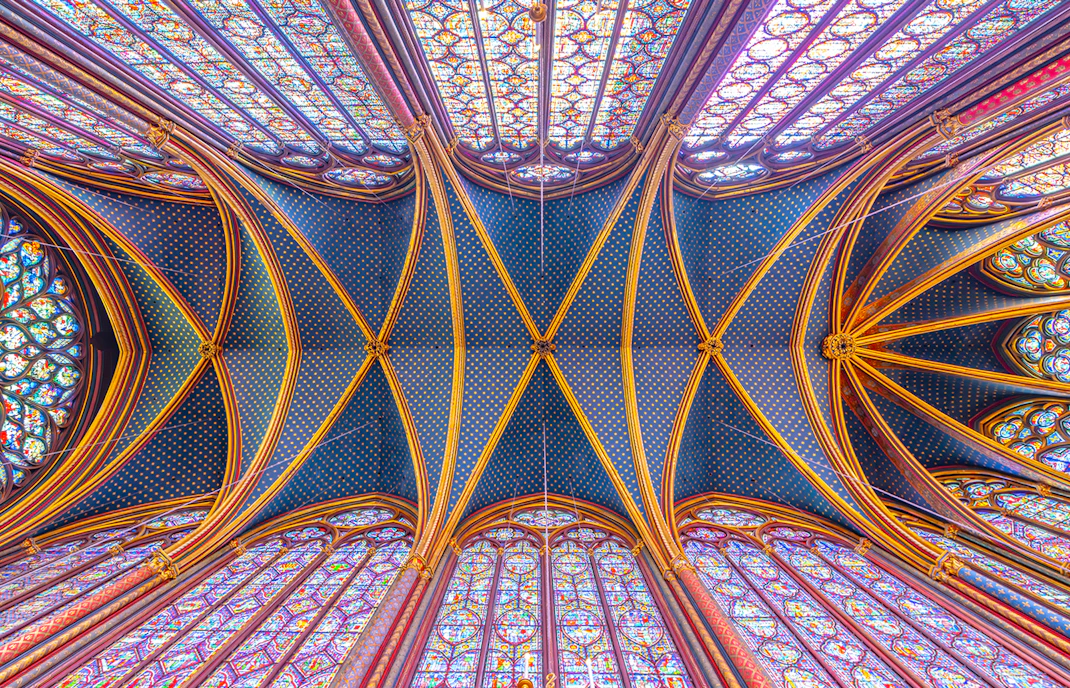
The monument is stacked into two separate chapels, each reflecting medieval hierarchy. Palace staff and servants used the lower chapel, whose blue ceiling is patterned with gold fleur-de-lys, while the upper chapel was reserved for the king, his family, and the relic display, making social order visible in architecture itself.
Walls That Nearly Disappear
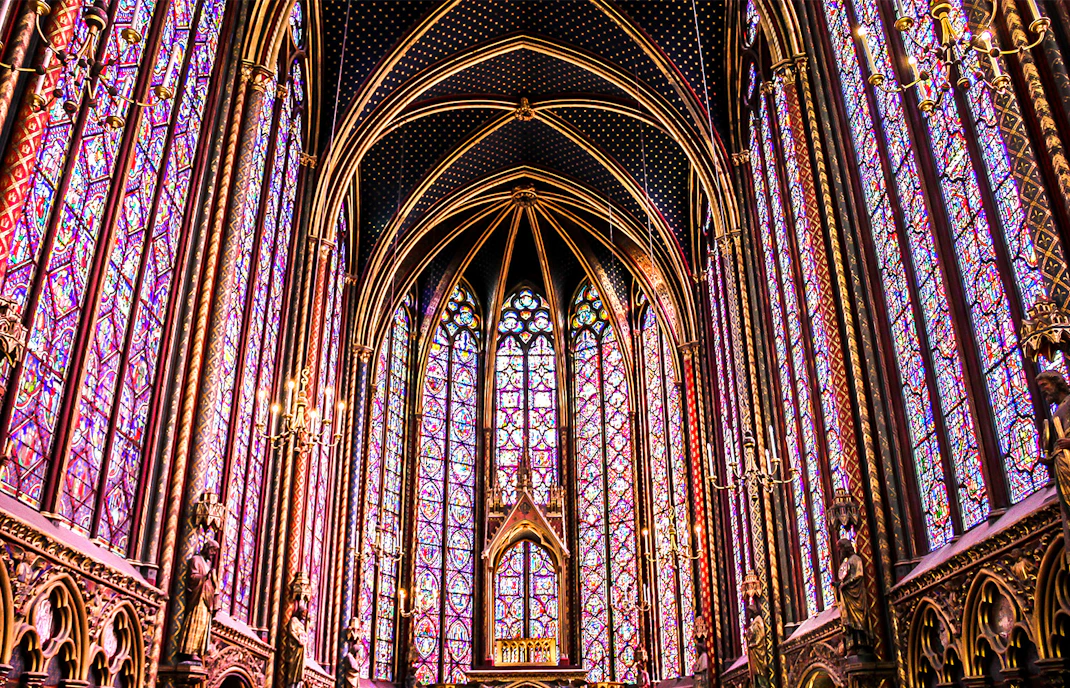
In the upper chapel, masonry seems to vanish beneath glass, color, and light. That effect was a technical achievement of Rayonnant Gothic design: slender supports and iron reinforcement helped open the walls for enormous windows, creating the famous ‘jewel box’ interior that makes Sainte-Chapelle feel much taller and lighter than its modest size suggests.
More Than 1,100 Bible Scenes
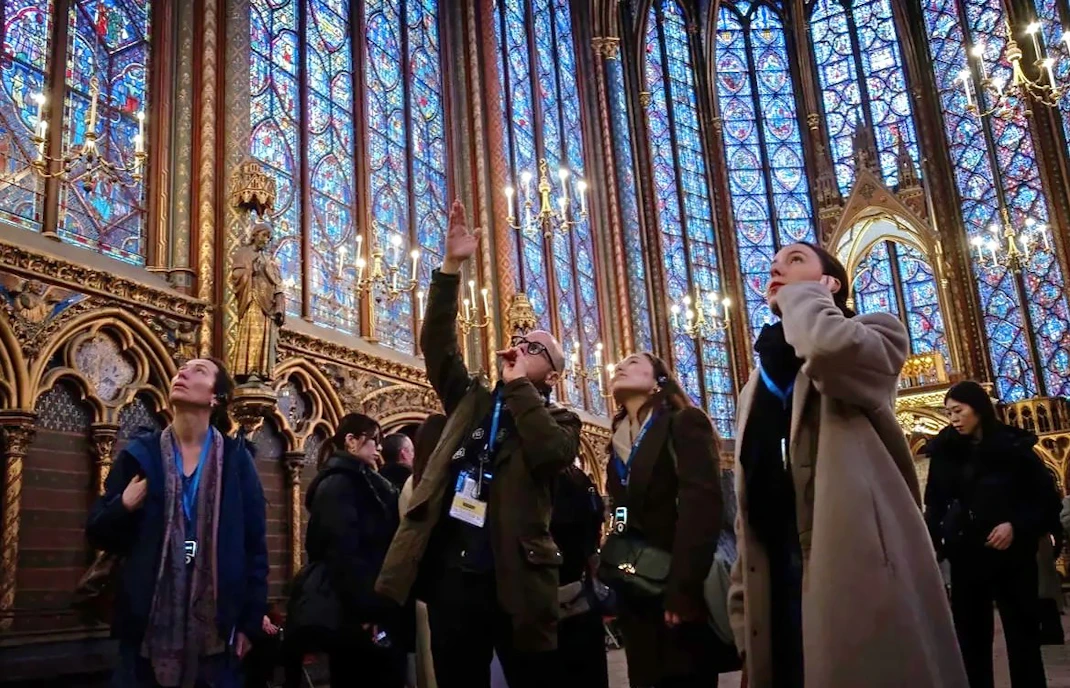
Across 15 towering windows covering more than 600 sq m (6,458 sq ft), Sainte-Chapelle tells 1,113 scenes from the Bible. Medieval worshippers encountered Genesis, Exodus, the Passion, and the Apocalypse in sequence, so the chapel’s glazing functioned not just as decoration, but as a huge narrative program wrapped around the room.
The Rose Came Later
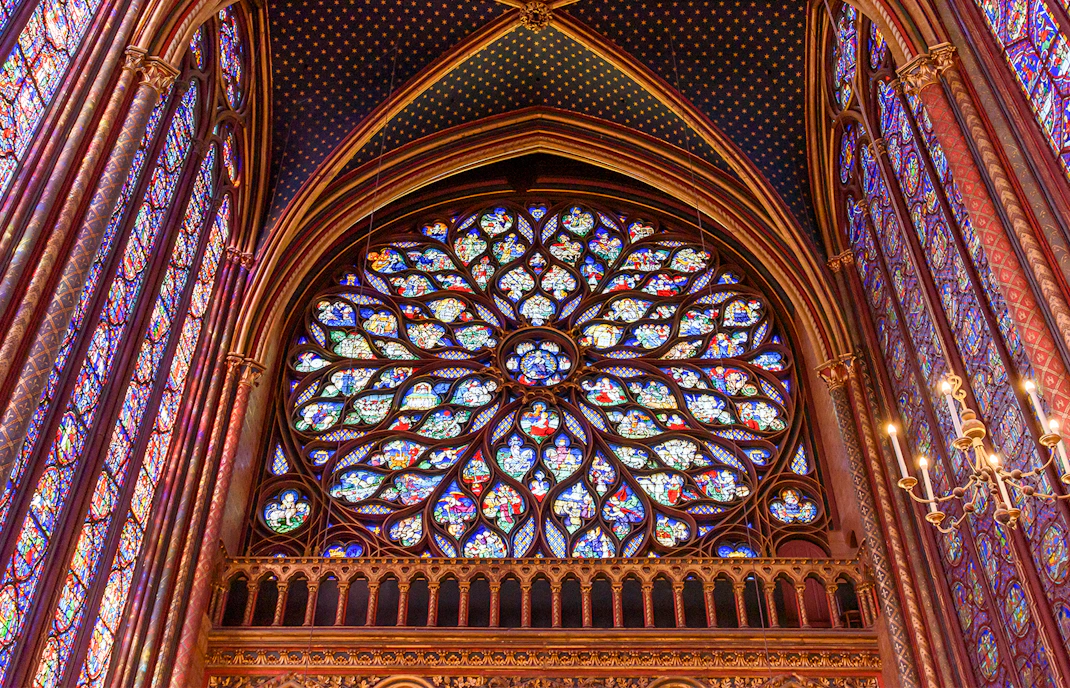
The great west rose window does not belong to the chapel’s original 13th-century campaign. It was added in the 15th century in a Flamboyant Gothic style, and its intricate tracery frames scenes from the Apocalypse, giving Sainte-Chapelle a dramatic visual finale that differs from the long narrative windows surrounding the upper chapel.
Revolution Nearly Unmade It
The French Revolution stripped Sainte-Chapelle of much of its sacred function, and the building suffered damage, removals, and neglect. Relics were dispersed or transferred for safekeeping, while the chapel was used for administrative purposes. Its survival into the modern era was never guaranteed, which makes the monument’s current brilliance feel even more hard-won.
Restoration Reshaped What You See
What visitors admire today is a mix of medieval survival and careful restoration. A major 19th-century campaign repaired revolution-era losses, and a later multi-year stained-glass restoration completed in 2015 cleaned and stabilized the windows, dramatically reviving colors that had dulled under grime and pollution without changing Sainte-Chapelle’s essential visual identity.


