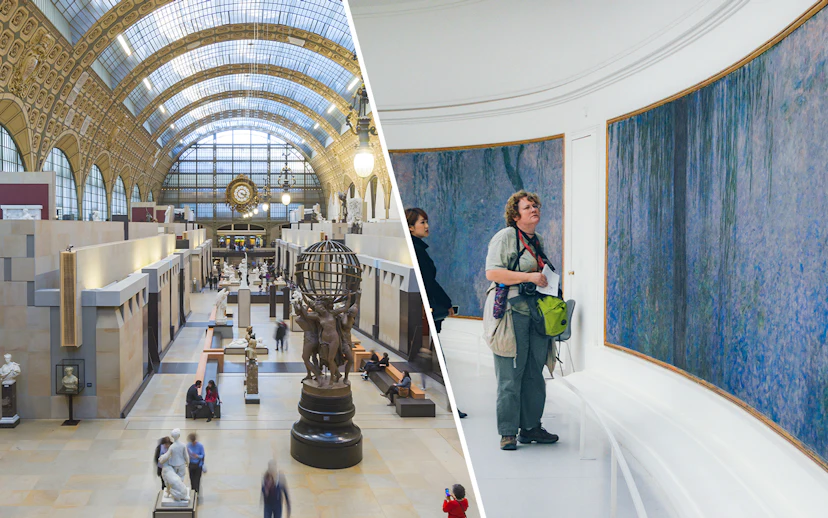
Visiting Musée de l’Orangerie: your guide

The Musée de l’Orangerie is a compact Paris art museum best known for Monet’s immersive Water Lilies installation and a strong lower-level collection of Renoir, Cézanne, Matisse, Picasso, Modigliani, and Soutine. The visit is easy to do in under 2 hours, but the experience changes noticeably with timing because the oval Monet rooms lose their calm once mid-day groups arrive. A good visit starts early, lingers upstairs, and only then moves downstairs — this guide covers the best arrival time, route, tickets, and practical details.

Quick overview: Musée de l’Orangerie at a glance

If you want the short version before you book, these are the decisions that make the biggest difference here.

  • When to visit: Wednesday–Monday, 9am–6pm. Weekday mornings from 9am–10am are noticeably calmer than 11am–3pm, because the Monet rooms are small and tour groups tend to bunch up there mid-day.
  • Getting in: From €11 on-site or €12.50 online for standard entry, with official guided visits from about €22.50 total and audio guide add-ons from €5; booking ahead matters most from April–August, on weekends, and on free first Sundays.
  • How long to allow: 1–2 hours for most visitors. It pushes toward the longer end if you want time to sit with the Water Lilies and properly explore the lower galleries instead of skimming them.
  • What most people miss: The lower-level Soutine and Modigliani rooms, plus the fact that the second pass through Monet’s oval rooms often feels better than the first once your eyes adjust.
  • Is a guide worth it? Yes if you want context across the lower collection, but a good audio guide does most of the job for less if your main goal is to experience Monet at your own pace.

🎟️ Tickets for Musée de l’Orangerie can fill a few days in advance during April–August and on free first Sundays. Lock in your visit before the date you want is gone. → See ticket options

Jump to what you need

🕒 Where and when to go

Hours, directions, entrances and the best time to arrive

🗓️ How much time do you need?

Visit lengths, suggested routes and how to plan around your time

🎟️ Which ticket is right for you?

Compare all entry options, tours and special experiences

🗺️ Getting around

How the galleries are laid out and the route that makes most sense

🖼️ What to see

Monet’s Water Lilies, Soutine rooms, Modigliani portraits

♿ Facilities and accessibility

Restrooms, lockers, accessibility details and family services

Where and when to go

How do you get to Musée de l’Orangerie?

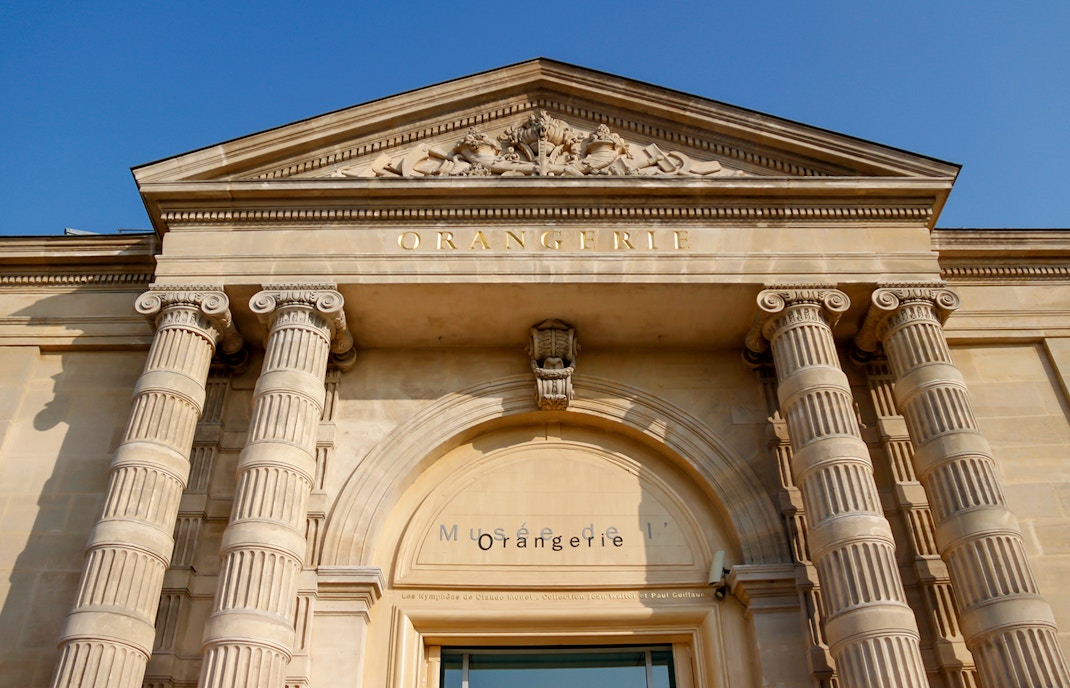
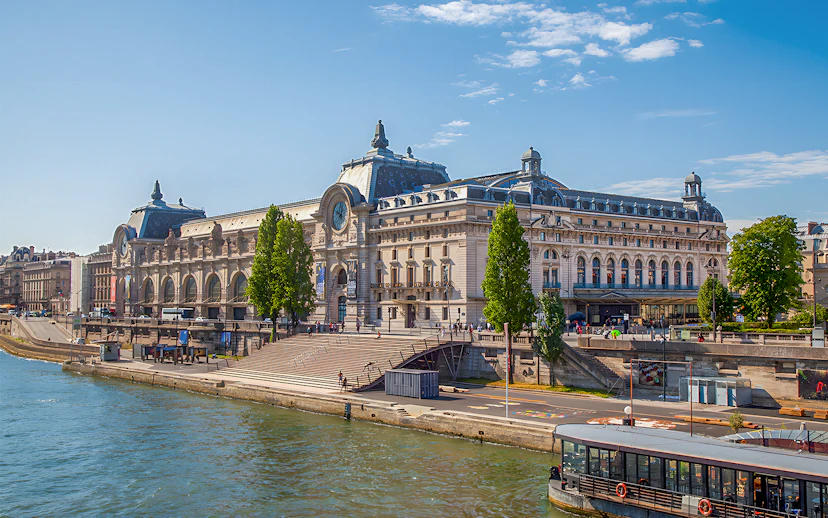
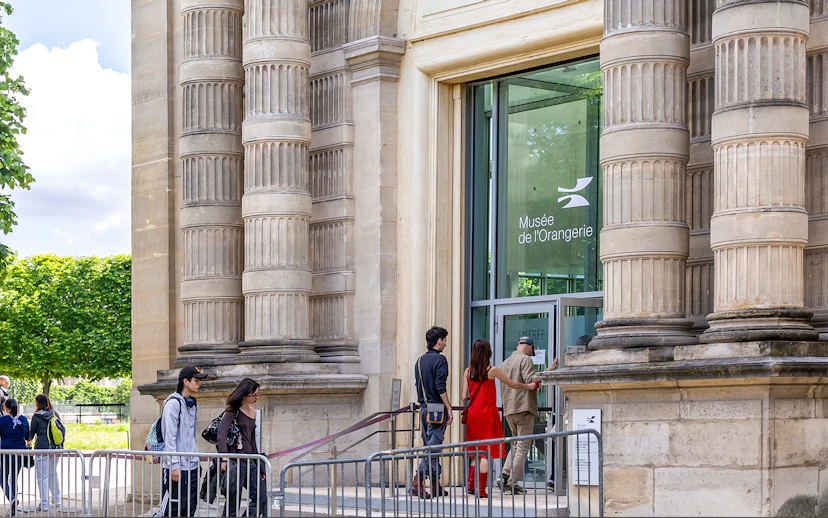
The museum sits at the Seine-side edge of the Tuileries Garden, beside Place de la Concorde and about a 15-minute walk west of the Louvre.

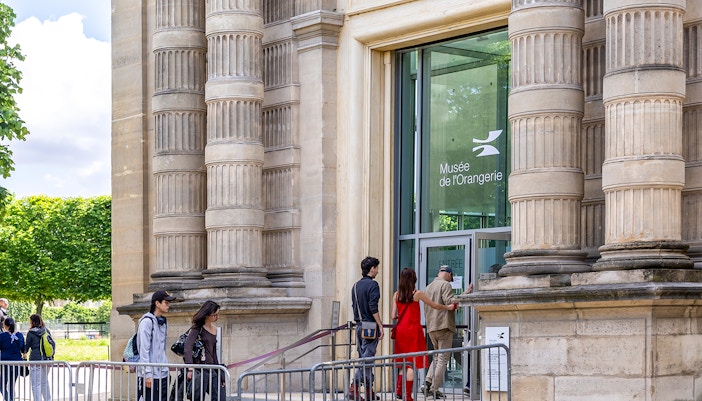
Jardin des Tuileries, Place de la Concorde (côté Seine), 75001 Paris, France

→ Open in Google Maps

  • Metro: Concorde station (Lines 1, 8, 12) → 3-minute walk → Follow signs for Jardin des Tuileries and exit toward Place de la Concorde.
  • RER: Musée d’Orsay station (RER C) → 10-minute walk → Cross the pedestrian bridge and enter the garden from the river side.
  • Taxi / rideshare: Drop-off at Place de la Concorde → 2–4-minute walk → Best if you want the shortest step-free approach.

→ Full getting there guide

Which entrance should you use?

There is one main museum entrance, but the real difference is whether you arrive already ticketed or need to buy on the day — most lost time happens before security, not inside the galleries.

  • Pre-booked tickets / Paris Museum Pass: For visitors with a valid ticket or pass. Expect 5–15 minutes at security during 10:30am–2pm.
  • On-the-day purchase: For same-day buyers. Expect 20–45 minutes during April–August, weekends, and free first Sundays.

→ Full entrances guide

When is Musée de l’Orangerie open?

  • Wednesday–Monday: 9am–6pm
  • Tuesday: Closed
  • Last entry: 5:15pm
  • May 1: Closed
  • July 14: Closed in the morning
  • December 25: Closed

When is it busiest? Expect the heaviest crowding from 11am–3pm, especially from April–August and on the first Sunday of the month, when the Monet rooms feel packed fastest.

When should you actually go? Aim for 9am on a weekday so you can see the oval Water Lilies rooms before group arrivals flatten the quiet, immersive effect.

How much time do you need?

Visit typeRouteDurationWalking distanceWhat you get

Highlights only

Entrance → both *Water Lilies* rooms → quick lower-level sweep → exit

1–1.5 hours

~0.5 km

You get the experience most people came for and a fast look at the collection, but you will skim Renoir, Cézanne, Modigliani, and Soutine.

Balanced visit

Entrance → *Water Lilies* rooms → Jean Walter–Paul Guillaume galleries → key modern rooms → exit

1.5–2 hours

~0.8 km

This gives you Monet plus the lower-level highlights at a comfortable pace, and it’s the best fit for most visitors.

Full exploration

Entrance at opening → *Water Lilies* rooms → full lower level → temporary exhibition if running → second Monet pass → exit

2–2.5 hours

~1 km

This is the most rewarding route if you want mood and context, but it means more standing time in a museum with limited seating and no café inside.

Which Musée de l’Orangerie ticket is best for you

Ticket typeWhat's includedBest forPrice range

Standard Museum Ticket

Entry to permanent collection + temporary exhibitions

A short, flexible visit where you want to arrive early and see Monet without paying for extras you may not use

From €12.50

Standard Museum Ticket + audio guide

Entry + official Audioguide

A self-guided visit where you want context on Monet and the lower galleries without committing to a group pace

From €17.50

Museum-guided tour

Entry + official guided visit

A visit where you want a fixed route and expert context so the lower collection does not blur into ‘more paintings after Monet’

From €22.50

Combined Orsay + Orangerie Ticket

1 entry to Musée de l’Orangerie + 1 entry to Musée d’Orsay within 7 days

A Paris art itinerary where you want both major Impressionist collections without buying separate tickets

From €20

Paris Museum Pass

Entry to Musée de l’Orangerie + other included Paris museums and monuments

A multi-museum trip where you already plan enough included stops to make a citywide pass worth the upfront cost

From €60

How do you get around Musée de l’Orangerie?

Museum layout

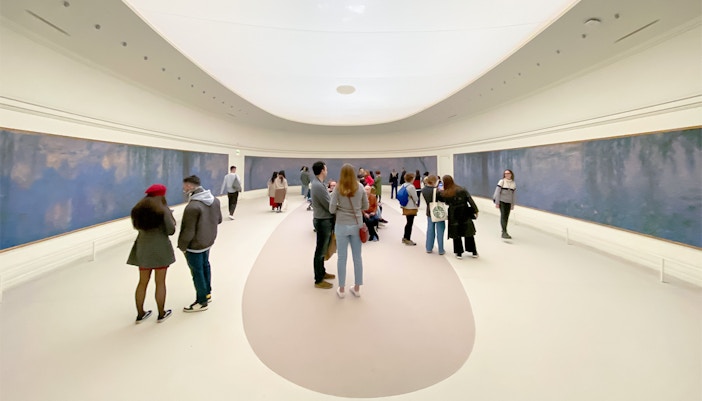
The layout is compact and easy to self-navigate: Monet’s oval rooms come first, then the lower level opens into a sequence of smaller collection galleries. In practice, that means you won’t get lost, but it is easy to give all your attention to Monet and rush everything else.

  • Main level: Two oval Water Lilies rooms → Monet’s immersive panoramic murals → allow 20–30 minutes.
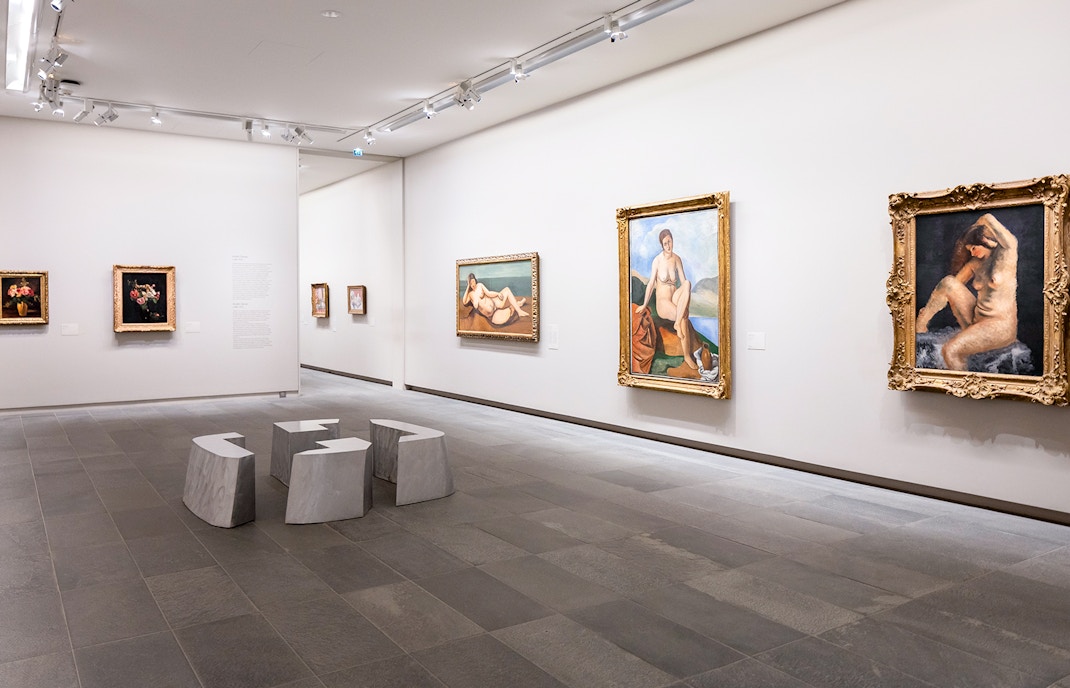
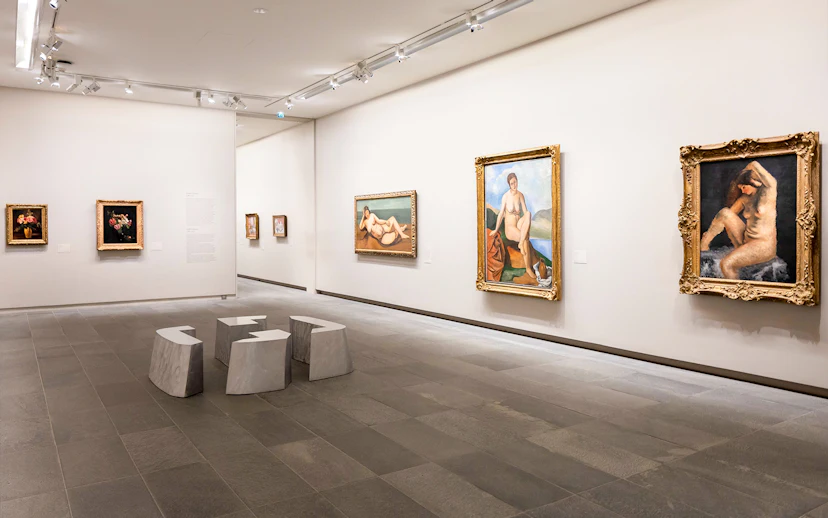
  • Lower level: Jean Walter–Paul Guillaume collection → Renoir, Cézanne, Matisse, Picasso, Modigliani, and Soutine → allow 30–45 minutes.
  • Temporary exhibition spaces: Rotating special shows → worth adding if one matches your interests → allow 20–30 minutes.

Suggested route: Start upstairs with Monet at opening, loop both oval rooms fully, then head downstairs once the crowd builds — most visitors miss how strong the Soutine and Modigliani rooms are because they enter them after rushing out of Monet.

Maps and navigation tools

  • Map: On-site museum map → covers the oval rooms, lower galleries, and temporary exhibition spaces → pick one up at the entrance before going upstairs.
  • Signage: Wayfinding is straightforward, but the lower-level sequence is thematic enough that a map helps if you want to find specific artists again.
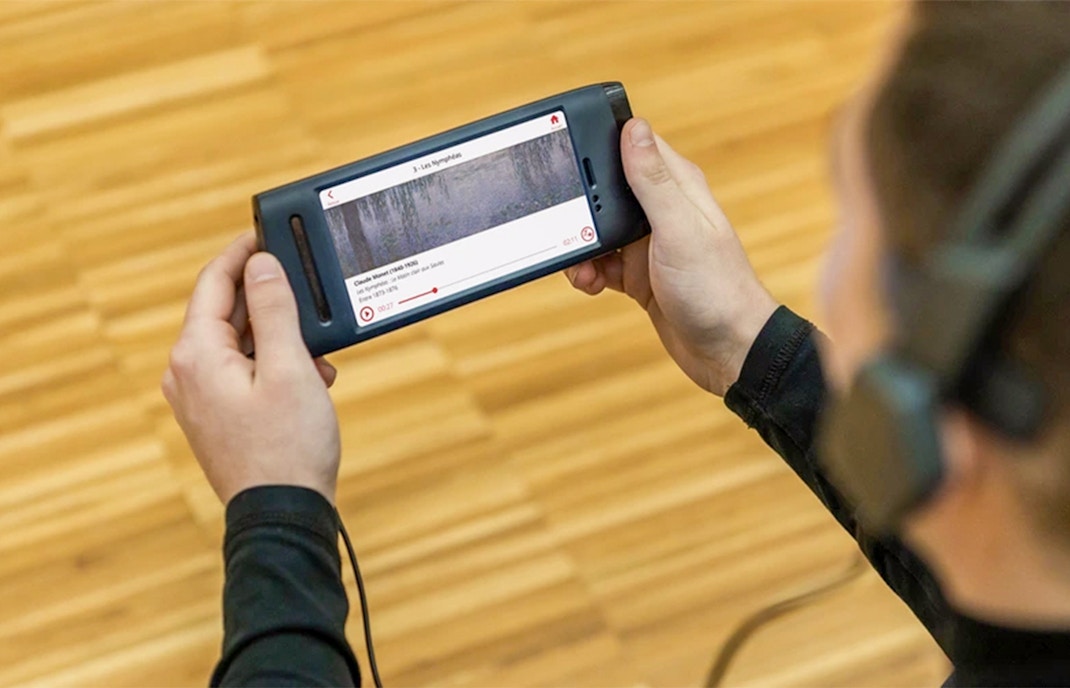
  • Audio guide / app: Official Audioguide → available in multiple languages on-site → worth it if you want context beyond wall labels without joining a tour.

💡 Pro tip: Don’t leave Monet for the end — the rooms feel most meditative early, and downstairs galleries are easier to enjoy once the museum has filled up.

Get the Musée de l’Orangerie map / audio guide

Where are the masterpieces inside Musée de l’Orangerie?
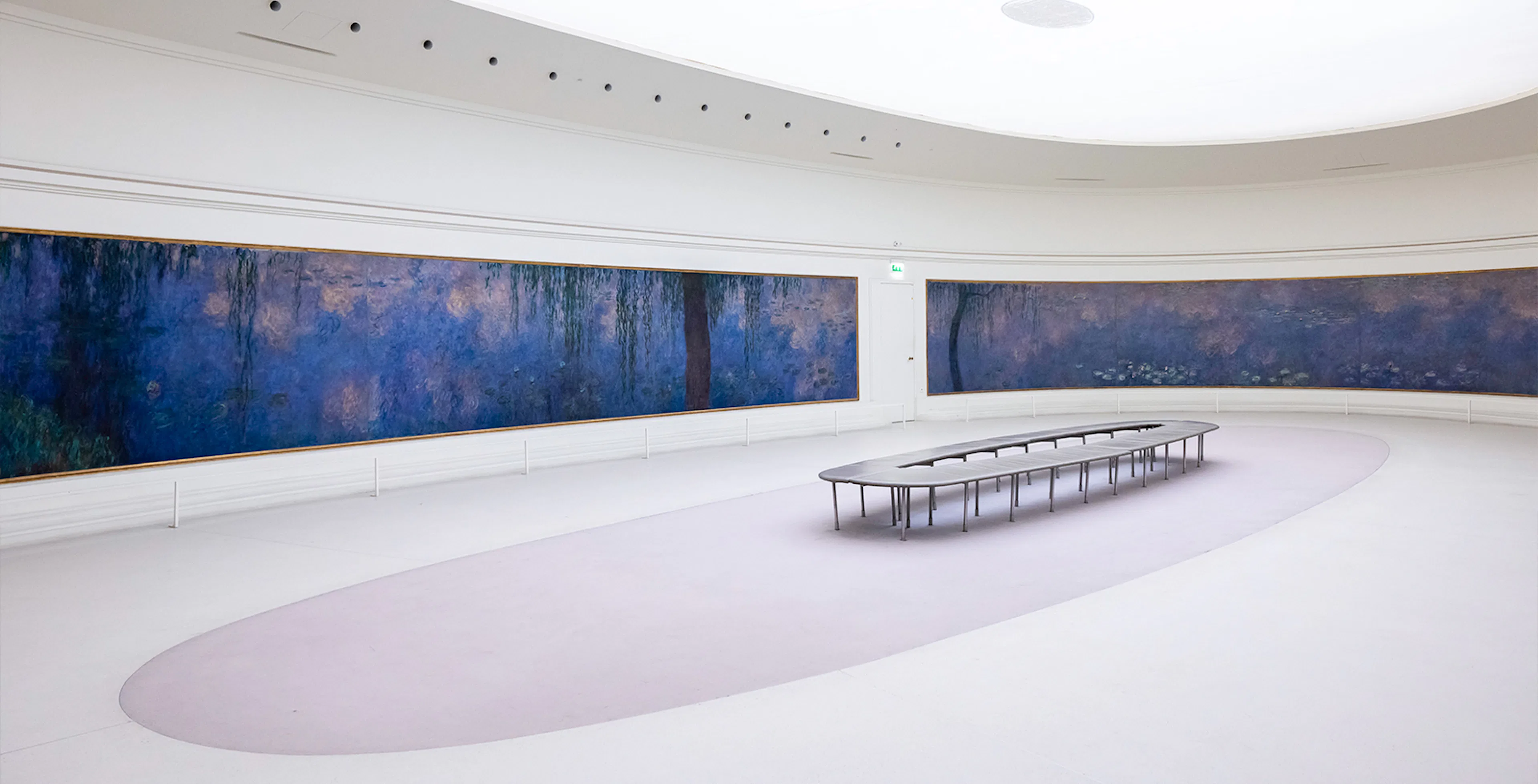
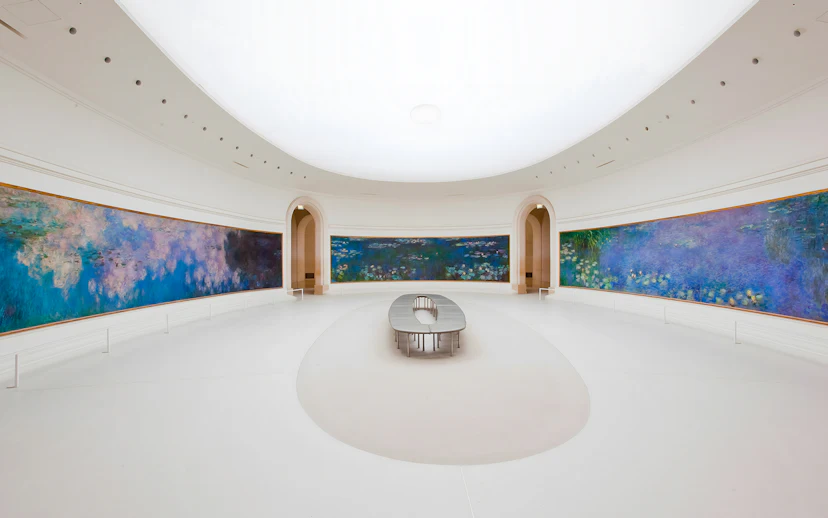
Monet Water Lilies rooms at Musée de l’Orangerie
Renoir works in the lower galleries of Musée de l’Orangerie
Cezanne paintings in the Orangerie lower collection
Modigliani portraits at Musée de l’Orangerie
Soutine room inside Musée de l’Orangerie
1/5

Water Lilies

Attribute — Artist: Claude Monet

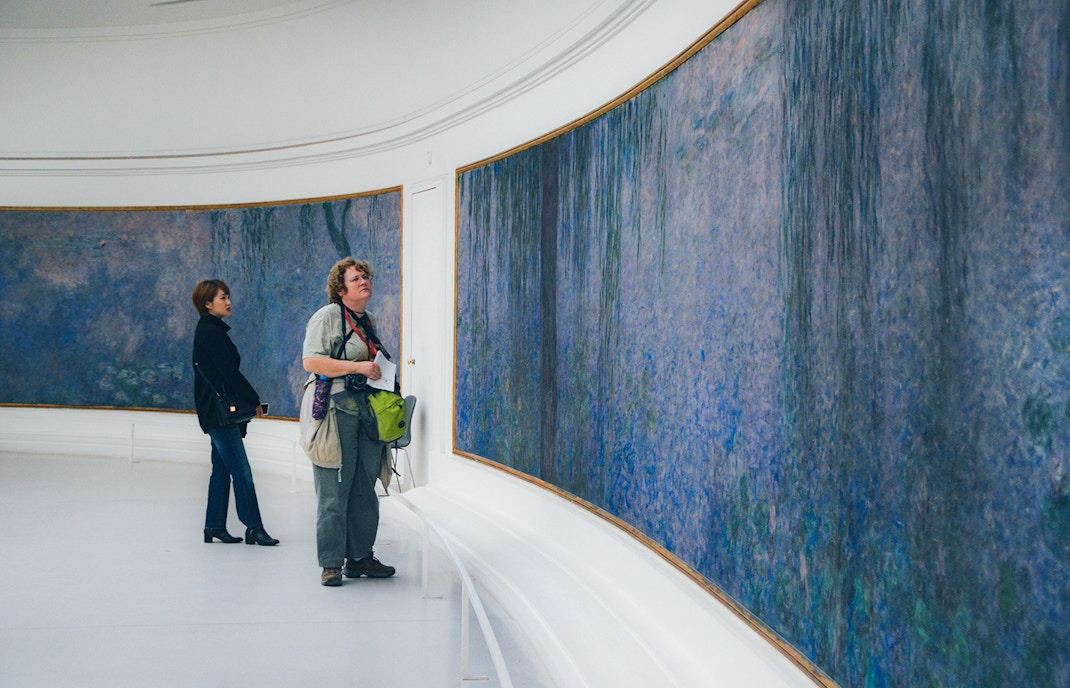
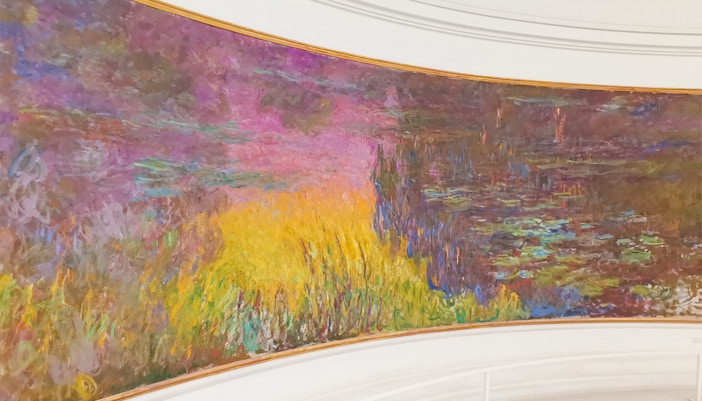
This is the reason most people come, and it still lands even if you think you already know it from photos. The eight murals unfold across two oval rooms, and the scale only makes sense once you stand still long enough for your eyes to adjust. What most visitors rush past is the way the light changes across the canvases as you move around the curve — the second slow circuit is usually better than the first.

Where to find it: Main level, in the two oval rooms immediately after entry.

Renoir works in the Jean Walter–Paul Guillaume collection

Attribute — Artist: Pierre-Auguste Renoir

The Renoirs downstairs give the museum emotional range after Monet’s vast, quiet spaces. They are intimate, warm, and surprisingly easy to overlook because visitors often descend too quickly and keep moving. What most people miss is how close you can get to Renoir’s color and skin tones here compared with much larger museums, where you often see the same artist at a distance.

Where to find it: Lower level, in the Jean Walter–Paul Guillaume collection galleries.

Cézanne still lifes and studies

Attribute — Artist: Paul Cézanne

These works matter because they bridge Impressionism and modern painting, which is exactly what the lower floor is trying to show. They reward slower looking more than flashy first impressions, especially if you compare the structure of Cézanne’s brushwork with the softness you just saw in Monet upstairs. Most visitors give them seconds, not minutes, and that is usually too fast.

Where to find it: Lower level, among the Jean Walter–Paul Guillaume collection rooms near the Renoir galleries.

Modigliani portraits

Attribute — Artist: Amedeo Modigliani

The Modigliani works are one of the lower floor’s quiet payoffs: elegant faces, elongated lines, and a very different emotional tone from Monet’s dissolving landscapes. They are easy to miss because they do not announce themselves with the same scale or crowd. What most people rush past is the tension between grace and melancholy in the faces, which comes through best if you step back first, then move in.

Where to find it: Lower level, in the modern art rooms within the permanent collection.

The Soutine room

Attribute — Artist: Chaim Soutine

If you want one room that changes how you think about the museum, make it this one. Soutine’s thick paint and restless energy are a jolt after the serenity of the Water Lilies, and the contrast is part of what makes the Orangerie feel more than a one-work stop. Most visitors miss it because they are already mentally ‘done’ after Monet.

Where to find it: Lower level, in the room dedicated to Soutine within the permanent collection.

Facilities and accessibility

  • 🛍️ Gift shop: A small shop near the exit is best for postcards, Monet prints, and easy-to-pack souvenirs rather than long browsing.
  • 🍽️ Food: There is no proper in-house café, so plan coffee or lunch before you enter or use nearby garden kiosks and cafés after your visit.
  • 🪑 Seating: Benches in the Monet rooms and some lower galleries give you short rest stops, but seating is limited if the museum is busy.
  • ♿ Elevators: The museum’s updated layout includes elevator access between the main level and lower galleries, which helps if stairs are difficult.
  • 🎧 Audio guide: Official Audioguides are available on-site for an extra fee and are the simplest way to add context without joining a group.
  • ♿ Mobility: The museum is wheelchair accessible, with ramps, elevators, ground-level access to the Monet rooms, and wheelchairs available on request.
  • 👁️ Visual impairments: Adapted visits can be requested, and staff can help direct you to the best starting point on arrival.
  • 🧠 Cognitive and sensory needs: The calmest time is usually 9am–10am on weekdays, while the oval Monet rooms are loudest and most crowded from late morning through early afternoon.
  • 👨‍👩‍👧 Families and strollers: The route is compact and elevator-linked, which makes the museum easier than larger Paris collections, but the Monet rooms feel tight once tour groups arrive.

This is one of the easier Paris art museums to do with children because it is short, visually strong, and easy to combine with outdoor time in the Tuileries.

  • 🕐 Time: 45–75 minutes is realistic with younger children, and the Water Lilies rooms should be your first priority before attention drops.
  • 🏠 Facilities: Family visits and workshops are offered at selected times, which can make the museum feel more participatory than a standard walk-through.
  • 💡 Engagement: Ask children to spot how the colors change as they move around Monet’s curved rooms — it gives them a simple job and slows the visit down in a good way.
  • 🎒 Logistics: Bring water and a small snack for after the visit, not during it, because there is no proper café inside and re-entry is not allowed.
  • 📍 After your visit: The Tuileries Garden just outside is the easiest child-friendly reset, with open space, benches, and room to decompress after indoor galleries.

Rules and restrictions

What you need to know before you go

  • Entry requirement: Bring a valid ticket or museum pass for the date of your visit, and carry ID if you are using a free or reduced admission category.
  • Bag policy: Small bags make security faster, and traveling light matters here because the museum is compact and not designed for bulky day packs.
  • Re-entry policy: Re-entry is not permitted once you leave, so treat your ticket as single-entry and save food, coffee, and longer breaks for after the museum.
  • Good to know: Comfortable layers work better than heavy outerwear because the bright, enclosed Monet rooms can feel warm once they fill up.

Not allowed

  • 🚫 Food and drink: Eating and drinking are not part of the gallery experience, so plan to finish both before entering.
  • 🚬 Smoking and vaping: Smoking and vaping are not for inside the museum; step outside the museum grounds if you need a break.
  • 🖐️ Touching artworks: Keep hands off frames, walls, and benches near the paintings, because the galleries are intimate and staff watch this closely.
  • 📢 Loud behavior: Quiet matters more here than in many museums because the main attraction is meant to feel contemplative, not theatrical.

Photography

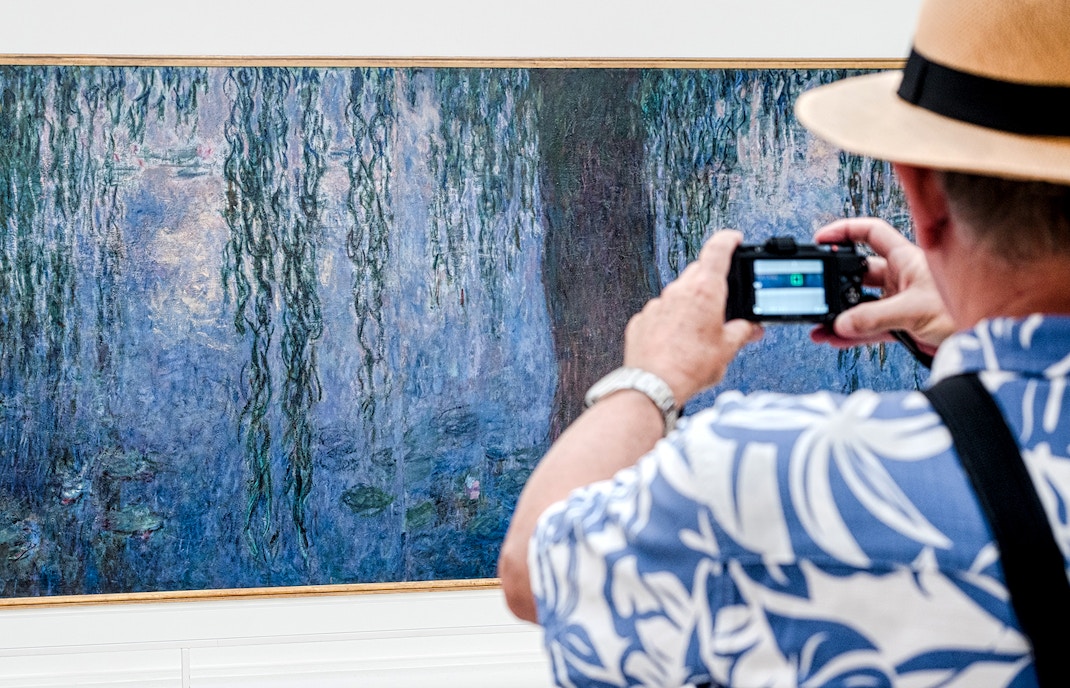
Photography is generally allowed for personal use, including in the Monet rooms, but flash should stay off because it disrupts both the atmosphere and other visitors. The practical distinction is less about room-by-room bans and more about behaving lightly in a small, reflective space — keep equipment minimal, avoid blocking sightlines, and expect staff to intervene if photography becomes disruptive.

Good to know

  • The first Sunday of the month is free, but it is also one of the worst days for a quiet Monet experience because lines and crowd density rise quickly.
  • Friday evening openings during major exhibitions can be one of the easiest times to visit if you want a calmer mood than the mid-day rush.

Practical tips

  • Book at least 2–3 days ahead for April–August weekends and free first Sundays; the museum is not as hard to enter as the Louvre, but same-day options can still become an avoidable hassle.
  • Arrive 10–15 minutes before opening if Monet is your main reason for coming; the first half hour is when the oval rooms still feel like spaces to look, not spaces to queue through.
  • Do Monet first, then go downstairs; visitors who reverse the order usually hit the Water Lilies when the rooms are fullest and lose the quiet effect that makes them special.
  • Bring the smallest bag you can manage; security is faster, and the visit is much more comfortable when you are not carrying extra weight through tight gallery spaces.
  • Eat before you enter or wait until after; there is no real café inside, and the easiest post-visit reset is a coffee or light lunch in the Tuileries or along Rue de Rivoli.
  • If you only have time for one extra stop afterward, pick Musée d’Orsay if you want more Impressionism or stay in the Tuileries if you want to preserve the slower mood of the visit.

What else is worth visiting nearby?

Commonly paired: Musée d’Orsay

Musée d’Orsay
Distance: 900m — 10-minute walk
Why people combine them: It is the natural next stop if you want to turn a focused Monet visit into a broader Impressionist day without changing neighborhoods.
→ Book / Learn more

✨ Musée de l’Orangerie and Musée d’Orsay are most commonly visited together — and simplest to do on a combo ticket. The combined ticket saves you from booking two separate museum entries and gives you up to 7 days to use the Orsay side. → See combo options

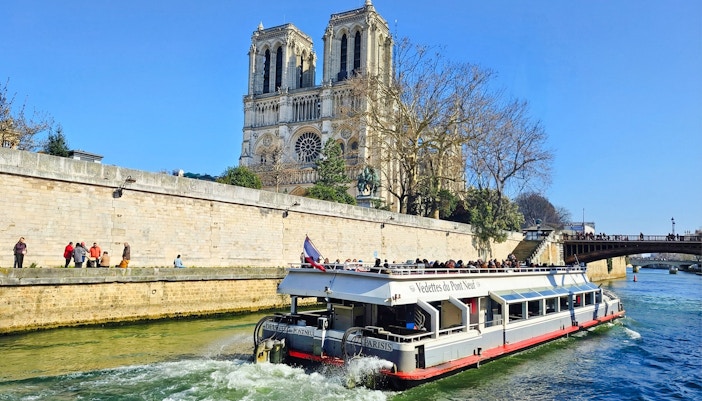
Commonly paired: Seine River Cruise

Seine River Cruise
Distance: 500m — 7-minute walk
Why people combine them: It gives you a clean shift from indoor art to open-air Paris views, and the nearby Concorde departure points make it easy without wasting transit time.
→ Book / Learn more

Also nearby

Louvre Museum
Distance: 1km — 15-minute walk
Worth knowing: It is an easy add-on geographically, but only worth pairing if you are comfortable switching from a compact museum to a much larger, more demanding one.

Jeu de Paume
Distance: 450m — 5-minute walk
Worth knowing: This is the better nearby add-on if you want one more focused art stop without turning the day into another major museum marathon.

Eat, shop and stay near Musée de l’Orangerie

  • On-site: There is no real in-house café, so think of the museum as a short cultural stop rather than a place to pause for lunch.
  • La Terrasse de Pomone (5-minute walk, Tuileries Garden): Garden café fare at mid-range prices, and the easiest option if you want to stay close and keep the post-museum mood relaxed.
  • Café Kitsuné Tuileries (8-minute walk, 208 Rue de Rivoli): Coffee, pastries, and light bites at a higher price point, but convenient for a quick reset before walking on to the Louvre or Rue de Rivoli.
  • Angelina Paris (10-minute walk, 226 Rue de Rivoli): Classic Paris tearoom pricing, richer than a grab-and-go stop, and worth it if you want a proper sit-down break after the museum.
  • Pro tip: Eat either before 12 noon or after 2pm if you are heading to Rue de Rivoli afterward — that window helps you avoid both museum crowding and the thickest lunch rush nearby.
  • Musée de l’Orangerie gift shop: Best for Monet postcards, exhibition books, and compact souvenirs right at the exit.
  • Carrousel du Louvre: Useful if you want practical shopping without committing to the full department-store detour farther from the museum.
  • Rue Saint-Honoré: Best for fashion and window-shopping if you want to turn the museum stop into a longer Concorde-area afternoon.

Yes for a short Paris stay, especially if you want to walk to major sights and keep transport simple. The area around Concorde, Rue de Rivoli, and Saint-Honoré is polished, central, and easy for museums, gardens, and river walks, but it is rarely the cheapest base in the city. If you want charm over convenience, other neighborhoods are often better value.

  • Price point: This area skews expensive, with the best-value exceptions usually found a little farther from Concorde than first-time visitors expect.
  • Best for: Visitors on a short trip who want easy walking access to the Tuileries, the Louvre, Musée d’Orsay, and central Paris landmarks.
  • Consider instead: Saint-Germain-des-Prés or the Marais if you want stronger café-and-neighborhood atmosphere for a longer stay, or Opéra if you want central access with more hotel choice.

Frequently asked questions about visiting Musée de l’Orangerie

Most visits take 1–2 hours. If you only want Monet’s Water Lilies and a quick lower-level sweep, 60–75 minutes is enough, but a more satisfying visit usually needs closer to 90 minutes so you do not rush through the collection after the oval rooms.

More reads

Musée de l’Orangerie tickets

Musée de l’Orangerie highlights

Getting to Musée de l’Orangerie

Paris travel guide