Paris Tickets

Is Montmartre worth visiting?

Cobblestones, café chairs, accordion notes, and the white bulk of Sacré-Cœur above you — Montmartre feels less like a neighborhood than a district and more like a stage set that still has real life inside it. Even before you reach the summit, the hill keeps opening into staircases, vines, painters, and sudden views over zinc rooftops.

Montmartre became Paris’s artistic village because it sat outside the old city, where rents were cheap and studios got clear northern light. The basilica later fixed the hill in the skyline, but the deeper pull is the mix of workshop streets, cabarets, and lived-in corners that never lost their village rhythm.

The payoff is not just a view of Paris, but the feeling of moving through the city’s mythology on foot. You leave with a sharper sense of why artists, writers, and romantics kept climbing back here.

Skip it if: steep streets, crowds, and slow wandering through busy public spaces drain your energy.

What to see in Montmartre?

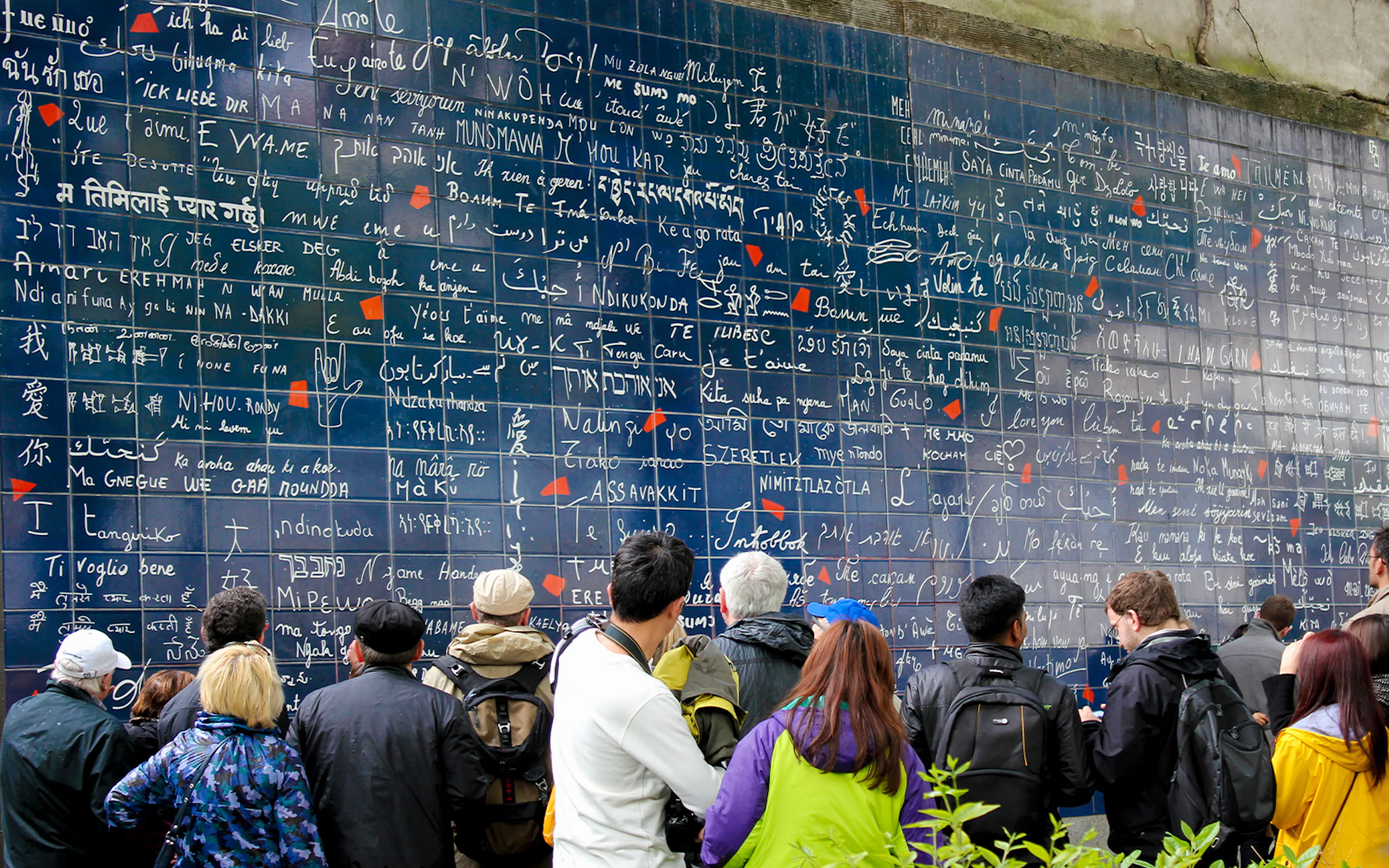
Wall of Love in Montmartre
1/8

Wall of Love

Start near Abbesses with 311 versions of ‘I love you’ tiled across a deep-blue mural. It’s a quick stop, but it captures Montmartre’s mix of romance, performance, and international foot traffic.

Rue Lepic and the old windmills

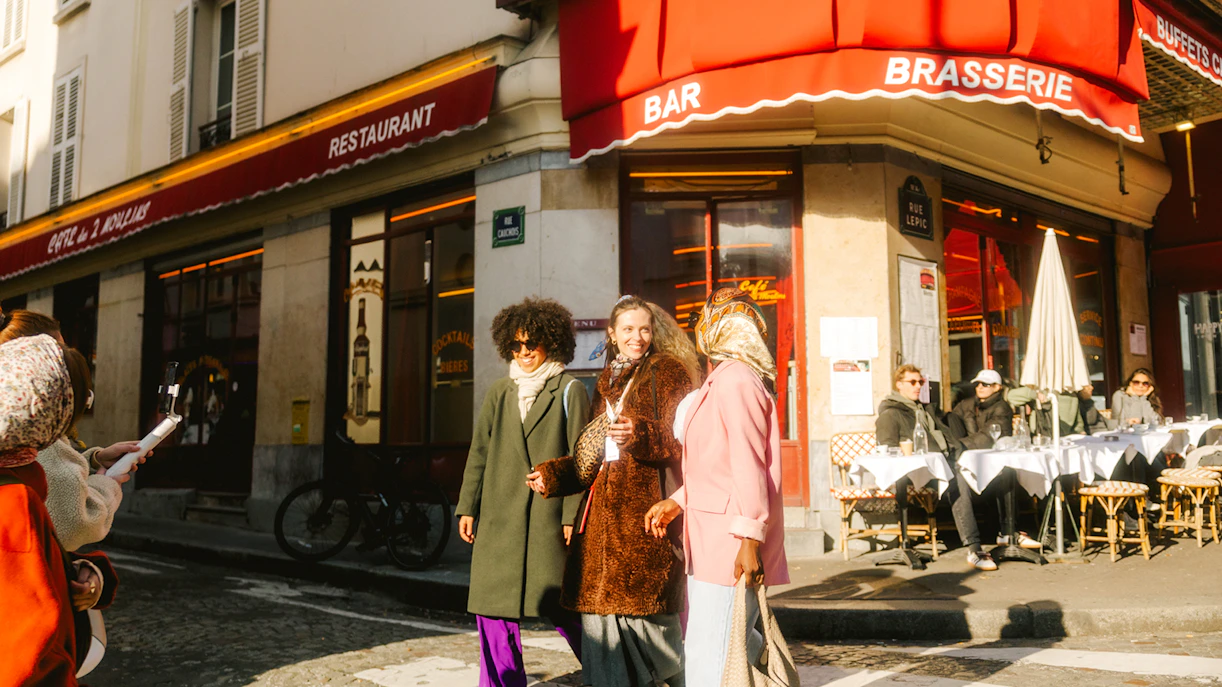
Follow the slope past cafés and the surviving windmills that hint at Montmartre before annexation to Paris. This stretch feels most village-like early in the day, before lunch crowds thicken the sidewalks.

Place du Tertre

The neighborhood’s artists’ square is crowded, noisy, and still worth seeing. Watch painters work, but settle portrait prices before sitting down. Mid-morning is easier; by noon it becomes one of Montmartre’s tightest bottlenecks.

Sacré-Cœur Basilica

Step inside for the shift in mood: cool stone, low voices, candlelight, and the vast Christ in Majesty mosaic overhead. Entry is free, so crowds are constant, but the interior usually feels calmer than the terrace outside.

Sacré-Cœur Dome

The real altitude hit comes after the narrow stair climb. Dome access is ticketed, capacity is limited, and there is no elevator, but the rooftop view over Paris feels more immersive than the terrace below.

Musée de Montmartre and Renoir Gardens

This quieter stop explains the neighborhood’s artistic life better than the main square does. You’ll see posters, paintings, and studio rooms, then step into gardens overlooking the vineyard. Budget at least an hour.

Clos Montmartre and Lapin Agile

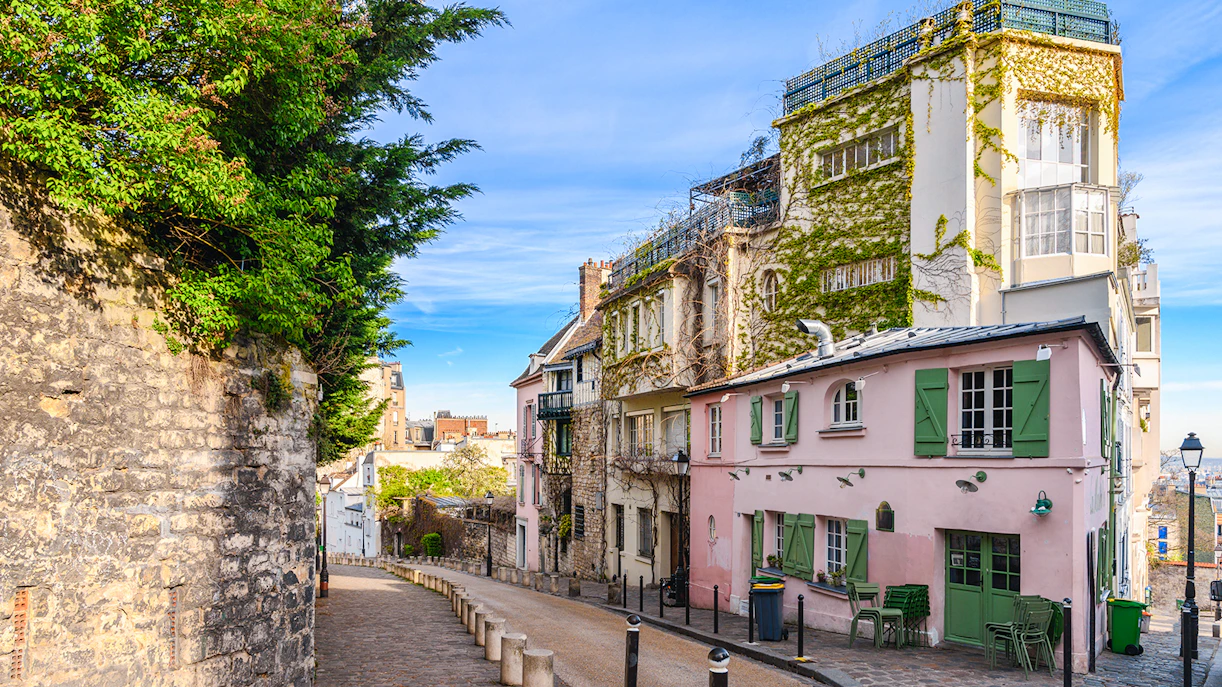
The fenced vineyard and the pink Lapin Agile cabaret show Montmartre’s older, rougher village identity. You can’t wander through the vines freely, but rue des Saules gives one of the area’s best photo stops.

Moulin Rouge

End at the foot of the hill where Montmartre turns theatrical. Even without a show, the red windmill connects the district’s cabaret past to its nightlife. Evening is the right time; daytime photographs flatten the effect.

Montmartre Walking Tour: Stories, Streets & Sacré-Coeur Dome Views

Without a guide, Montmartre’s best stories hide behind ordinary facades and staircases. The Montmartre Walking Tour With Sacré-Coeur Dome Access solves that with local narration, a route through the hill, and dome entry that turns the skyline into your finale.

How to explore Montmartre

Brief history of Montmartre

  • Before the 19th century: Montmartre was a separate hilltop village of mills, vineyards, quarries, and religious houses outside Paris.
  • Mid-19th century: Cheap rents and open studios began attracting artists, writers, and cabaret culture to the butte.
  • 1860: Montmartre was annexed to Paris, but it kept a distinct village identity that still shapes the district today.
  • 1875: Construction of Sacré-Cœur began after the Franco-Prussian War, permanently changing the skyline above the neighborhood.
  • Belle Époque: Cabarets such as Moulin Rouge and Le Lapin Agile helped turn Montmartre into the city’s bohemian stage.
  • 1933: Clos Montmartre vineyard was replanted, preserving one of the hill’s oldest local traditions inside modern Paris.
  • Today: Montmartre remains one of Paris’s most visited districts, balancing pilgrimage site, artist quarter, and lived-in neighborhood.

Who built it?

Montmartre wasn’t created by one patron or architect. It grew over centuries as a hilltop village, then became part of Paris in 1860. The landmark that now defines its silhouette, Sacré-Cœur, was designed by Paul Abadie, but the neighborhood itself is a layered collective work.

Architecture of Montmartre

Who built it?

If you’re thinking of the Montmartre skyline rather than the neighborhood’s streets, Paul Abadie is the key figure. He won the commission for Sacré-Cœur in the 1870s, choosing a Romano-Byzantine design that was intentionally monumental, devotional, and impossible to miss from the city below.

Montmartre still marks the wine harvest

Every October, Montmartre briefly feels less like a postcard and more like a local quarter with its own calendar. The Fête des Vendanges celebrates the Clos Montmartre vineyard with parades, tastings, concerts, and neighborhood events, reminding you that the hill’s identity is not only artistic or religious. It also has an agricultural past that Paris never quite erased. Even outside festival week, that surviving vineyard matters because it anchors Montmartre to an older rhythm — village first, capital city second.

Frequently asked questions about Montmartre

Yes, especially if you want Paris at walking pace, with views, street life, and strong neighborhood character in one compact area.