Liberty is depicted as a female figure, which was an unusual choice for a symbol of freedom during that time. Delacroix used her to personify liberty, strength, and the spirit of revolution.
Experience Liberty Leading the People at the Louvre – A Revolutionary Masterpiece
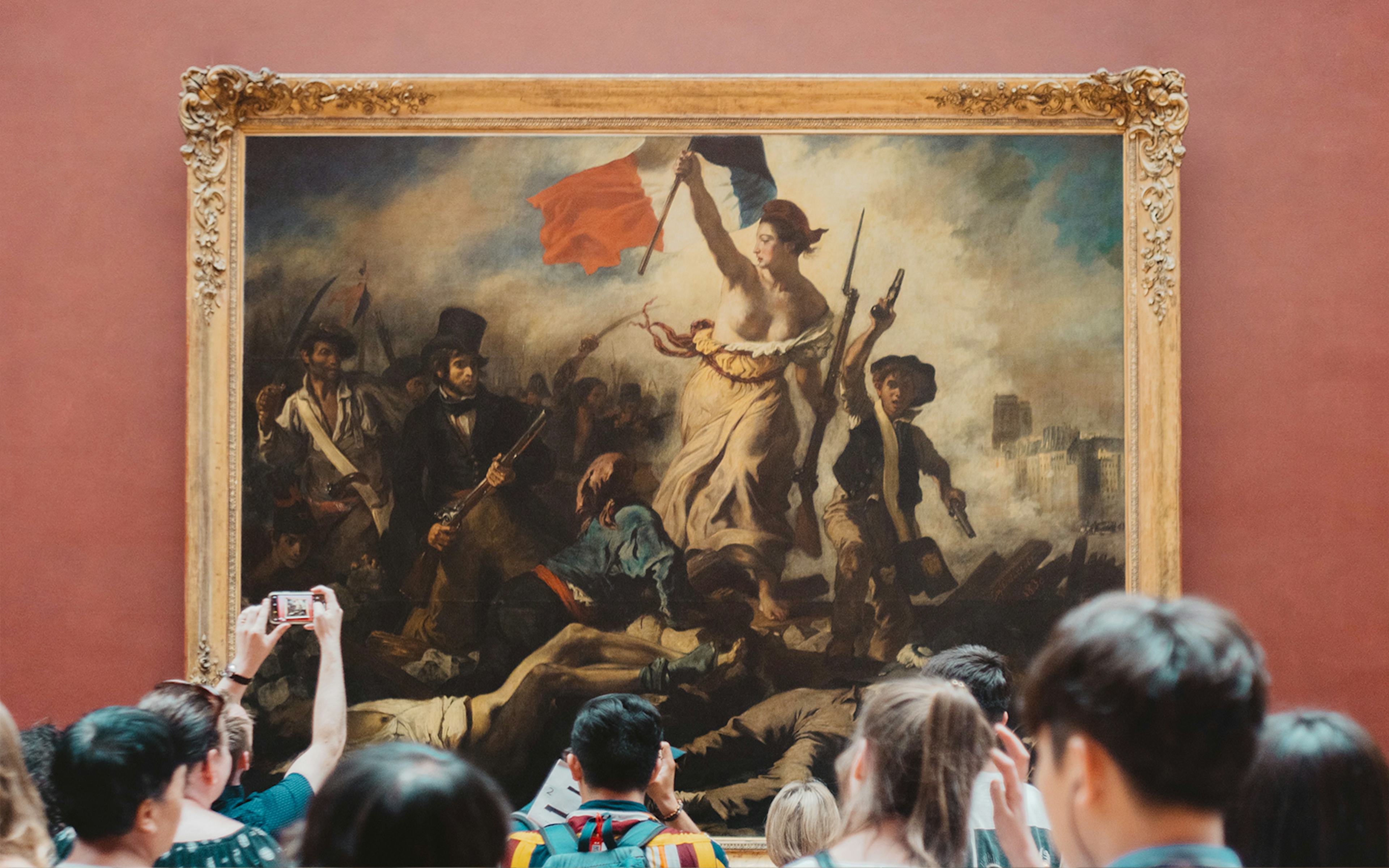
Eugène Delacroix’s Liberty Leading the People is a masterpiece of French Romanticism that portrays the power and struggle of the 1830 July Revolution in Paris. The painting is a powerful allegorical representation of liberty, personified by a bold female figure, leading a diverse group of revolutionaries. Housed at the Louvre Museum, it continues to inspire viewers with its dynamic composition, dramatic use of color, and its stirring political message.
The painting is not only a visual representation of a moment in French history but also a symbol of freedom and the fight against oppression. Whether you’re a history enthusiast, art lover, or simply visiting the Louvre, this painting will captivate your imagination.
Did yo know?
The painting was created in 1830 to commemorate the July Revolution, which led to the overthrow of the Bourbon monarchy and the establishment of the July Monarchy under Louis-Philippe.
Liberty’s flag is a symbol of the fight for freedom, and the tri-color flag is a direct reference to the French Revolution of 1789.
The painting is filled with vivid contrasts, with dark shadows and bright bursts of color, a hallmark of Delacroix’s Romantic style.
Liberty’s face is inspired by a combination of real and idealized figures, including Delacroix’s muse and various female revolutionaries.
The worker in the painting is often seen as a representation of the French lower class, showing how revolutionaries came from all walks of life.
The fallen soldier in the foreground was a deliberate choice to show the cost of revolution, reminding viewers that liberty comes at a great price.
The original title of the painting was La Liberté guidant le peuple ("Liberty guiding the people"), emphasizing the central role of the allegorical figure of Liberty in the scene.
Delacroix never saw the painting displayed publicly during his lifetime, but it has become one of the most famous works of French art.
Story behind Liberty Leading the People
Created in 1830, Eugène Delacroix’s Liberty Leading the People was inspired by the July Revolution of that year, which brought down the Bourbon monarchy and led to the establishment of a new constitutional monarchy. The painting was commissioned to commemorate the revolution, though it was never intended as a literal depiction of the events. Instead, Delacroix used the allegorical figure of Liberty—represented as a strong, triumphant woman—to symbolize the broader struggle for freedom.
The painting is filled with characters representing different segments of society: the worker, the student, the soldier, and even a dead man on the ground. Delacroix’s dramatic use of color and movement captures the chaos and energy of the revolution, making the viewer feel as though they are right there in the midst of it.
Though controversial at the time, Liberty Leading the People has since become an iconic symbol of the French spirit and the fight for justice. It remains one of the most significant and enduring works of Romanticism, continuing to inspire viewers around the world.
Who created Liberty Leading the People?
Eugène Delacroix (1798–1863) was a French Romantic painter and one of the most influential artists of his time. Known for his vivid use of color and dramatic expression, Delacroix’s work often centered on themes of human passion and political upheaval. Liberty Leading the People is one of his most celebrated works and exemplifies his signature style, which combined dynamic movement with strong emotional content.
Delacroix was deeply inspired by both the political climate of his time and the classical tradition, blending them to create compelling, highly charged scenes. Liberty Leading the People reflects his belief in the power of the people to rise up for freedom and justice, capturing the revolutionary fervor of the time in a way that resonated with both his contemporaries and future generations.
What makes Liberty Leading the People a masterpiece? See for yourself
1/6
Iconic full view
A full view of Liberty Leading the People reveals its dynamic composition. Notice how Liberty, standing tall with the flag, leads the charge over the bodies of the fallen, symbolizing triumph through struggle.
Focus on Liberty
Liberty’s intense gaze and raised flag embody the spirit of revolution. Her bare chest and determined expression symbolize the raw power of freedom, undeterred by the cost of battle.
Symbolism in the worker
Look closely at the worker, holding a gun and a revolutionary’s resolve. His humble attire represents the lower classes, emphasizing how the revolution was a collective effort.
The Fallen Soldier
In the foreground, the fallen soldier reminds us of the price of liberty. His death marks both the sacrifice and the collective struggle necessary to achieve freedom.
Dramatic lighting
The way light strikes Liberty’s face, casting shadows and highlighting her figure, creates a sense of movement and energy. The contrast between light and dark adds to the painting’s emotional intensity.
Historical context
Notice how Delacroix blends real events with symbolic representations. The figures around Liberty represent not only the revolutionaries of 1830 but also the enduring ideals of liberty and justice.
How to best visit Liberty Leading the People
To truly appreciate the depth and emotion behind Liberty Leading the People, here are a few tips to help you make the most of your visit:
- Consider a guided tour:
A guided tour or audio guide can provide valuable context about the symbolism in Delacroix’s work and the historical events it represents. Learn how each character in the painting contributes to the narrative of revolution.
- Viewing angles:
The best way to view the painting is from the front, at a distance of about 6-8 feet. This allows you to see both the grand scale and intricate details, like the intensity in Liberty’s face and the chaos in the background.
- Pay attention to the symbolism:
Liberty, with her bare breasts and raised flag, represents the fight for freedom. Look closely at the figures around her—the young revolutionary, the worker, and the fallen soldier—to see how Delacroix captures the diversity of the people involved in the revolution.
- Best time to visit:
The Louvre is busiest between 10:00 am and 3:00 pm. For a more peaceful experience, plan to visit early in the morning or later in the evening, especially on weekdays when crowds tend to thin out.
- Photography tips:
While photography is allowed, be sure to avoid using flash to protect the painting. A good spot for photos is from a few steps back, capturing the entire scene in its full glory.
Frequently asked questions about Liberty Leading the People
No, entry to the Louvre Museum includes access to Liberty Leading the People, along with other exhibits in the Denon Wing.
Liberty Leading the People is located in the Denon Wing, on the first floor of the Louvre Museum.
Yes, photography is allowed, but be sure to avoid flash to preserve the artwork.
For a quieter experience, plan to visit the Louvre early in the morning or later in the evening, especially on weekdays.
Allow around 15-30 minutes to fully appreciate Liberty Leading the People and its surrounding exhibits in the Denon Wing.
No, Liberty Leading the People is an iconic painting housed exclusively at the Louvre Museum in Paris.
While there isn’t a dedicated tour for the painting, many Louvre tours include it as part of their itinerary, especially those focused on Romanticism or French history

