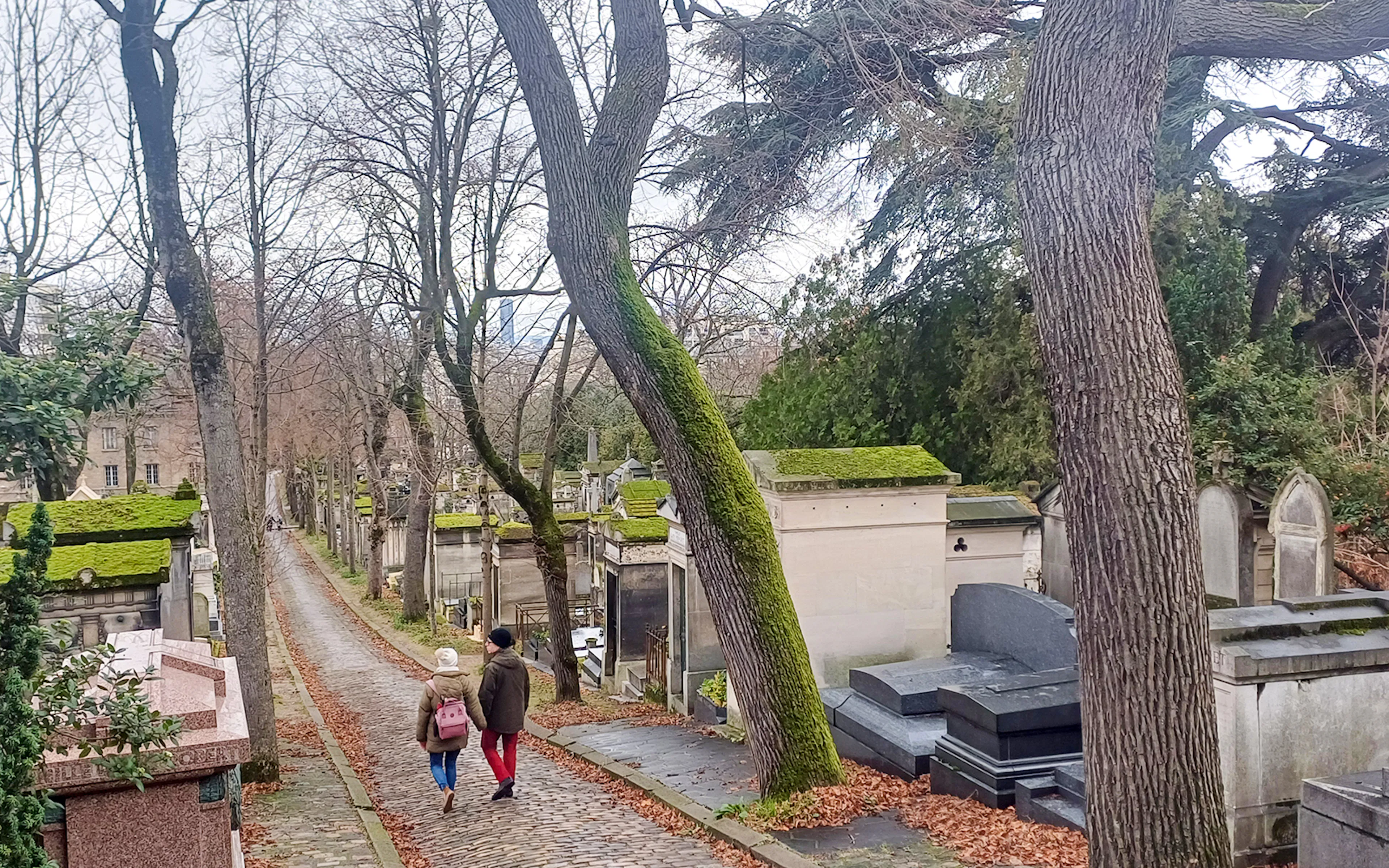
Gravel crunches underfoot, crows call from plane trees, and the city noise falls away almost as soon as you pass the gate. Père Lachaise feels less like a cemetery than a hillside neighborhood of chapels, angels, ivy, and winding lanes, where every turn reveals another life story set in stone.

It opened in 1804 as a new kind of burial ground — outside the crowded city center, landscaped like a garden, and meant to give Paris a dignified public place for memory. That ambition still shapes the visit: you’re not moving through rows of graves, but through a designed landscape of art, fame, and mourning.

The payoff is personal. You leave not with one grand monument, but with a string of encounters — Chopin, Piaf, Wilde, Morrison, anonymous mausoleums — that make Paris feel human, not monumental.

Skip it if: uneven paths, long outdoor walks, and a slow pace frustrate you.

What to see at Père Lachaise Cemetery?

Grand avenue and mausoleums at Père Lachaise
1/8

Main avenues and funerary architecture

The first impression is scale: tree-lined avenues, ivy-covered chapels, sculpted angels, and family mausoleums rising above the paths. Give yourself 10 minutes here before chasing famous names; it helps you read the cemetery as a landscape, not a checklist.

Héloïse and Abélard’s tomb

This neo-Gothic monument honors Paris’s most famous doomed lovers. Couples, literature fans, and first-timers all stop here, and for good reason: it turns a medieval romance into a physical place you can circle, read, and photograph.

Chopin’s grave

Quieter than the celebrity tombs, Chopin’s grave rewards visitors who linger. Look for the muse figure and the Polish tributes; it’s one of the stops where Père Lachaise feels intimate and reflective rather than overtly touristic.

Jim Morrison’s grave

The Doors frontman’s grave is small, easy to miss, and almost always ringed by visitors. Go early if this is a priority; it is the cemetery’s biggest magnet, and the narrow lanes around Division 6 clog quickly.

Oscar Wilde’s tomb

Jacob Epstein’s winged monument still feels modern more than a century later. The protective glass tells part of the story: admirers once left lipstick kisses here, and it remains one of the most photographed stops in Père Lachaise.

Édith Piaf’s grave

Less theatrical than Wilde or Morrison, Piaf’s family tomb lands differently. Visitors often arrive humming a song, then go quiet. If you care more about emotional connection than spectacle, this is one of the most affecting stops.

Victor Noir’s monument

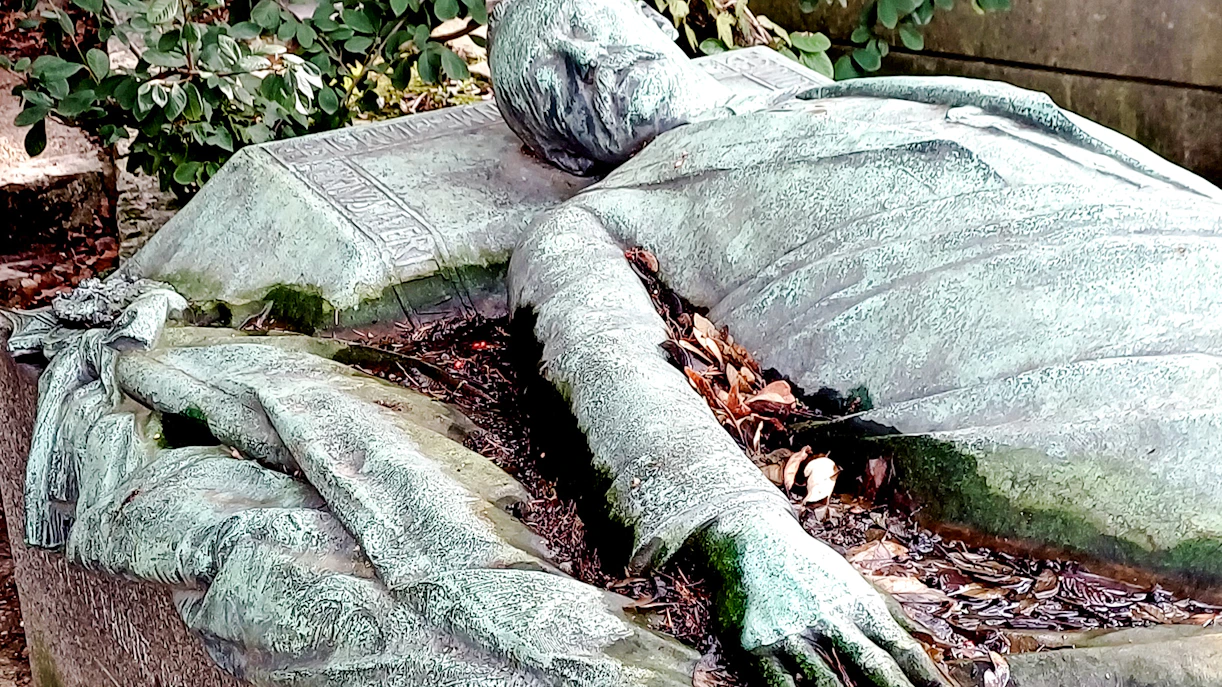
This reclining bronze journalist became an unlikely fertility legend, and the statue’s polished highlights show how many people still follow the ritual. Expect a crowd, cameras, and a sudden shift from solemn remembrance to Parisian folklore.

Mur des Fédérés

At the far end, this memorial wall marks the execution of Communards in 1871. Fewer visitors make it this far, which is exactly why it matters: the cemetery shifts here from celebrity pilgrimage to political memory.

What to see at Père Lachaise Cemetery?

Without a guide, Père Lachaise can feel like a maze of names and dead ends. The Père Lachaise Cemetery Famous Graves Private Guided Tour turns that sprawl into a two-hour walk, with tailored storytelling around the graves you care about.

How to explore the Père Lachaise Cemetery

How to explore

Time needed: Budget 90 minutes if you want a tight route to the best-known graves, and 2.5–4 hours if you want time for the upper terraces, political memorials, and the pleasure of wandering. The difference is less about distance than navigation; Père Lachaise is easy to underestimate, and backtracking on its sloped lanes can eat time fast.

Walking route: Start at the main Boulevard de Ménilmontant entrance, orient yourself on the broad central avenues, then head first to whichever high-demand grave matters most to you — usually Jim Morrison or Oscar Wilde, before the midday clusters build. From there, move east and uphill toward Héloïse and Abélard, then loop across to Chopin, Piaf, and quieter memorials before finishing at Mur des Fédérés or a secondary exit.

Must-see: Jim Morrison’s grave, Oscar Wilde’s tomb, Héloïse and Abélard’s tomb, and at least one stretch of the grand mausoleum-lined avenues.

Optional: Victor Noir’s monument and Mur des Fédérés; together they add about 30–45 minutes and shift the visit from celebrity trail to Parisian folklore and political history. Self-paced works with a map or audio guide, but a guide adds value because signage is limited and grave stories are rarely legible on site.

Brief history of Père Lachaise Cemetery

  • 1804: Père Lachaise opens under Napoleon’s administration as a new extra-mural cemetery designed to ease pressure on overcrowded Paris burials.
  • 1817: The remains of Héloïse and Abélard, and later Molière and La Fontaine, are transferred here to raise the cemetery’s prestige.
  • Mid-19th century: As Paris expands, Père Lachaise becomes the capital’s most fashionable burial ground, filled with elaborate family tombs and memorial sculpture.
  • 1871: The cemetery enters political history when Communards are executed at Mur des Fédérés during the final days of the Paris Commune.
  • 20th century: Graves of figures like Édith Piaf, Marcel Proust, and Jim Morrison turn the site into an international cultural pilgrimage.
  • Today: More than 3 million visitors a year come for its mix of memory, landscape design, art, and famous graves.

Brief history of Père Lachaise Cemetery

Père Lachaise was commissioned during Napoleon’s era by Paris prefect Nicolas Frochot, who wanted to make burial outside the crowded city both hygienic and prestigious. His strategy was clever: create a landscaped cemetery that felt like a public garden, then attract burials important enough to make Parisians want in.

Additional information about Père Lachaise Cemetery

Père Lachaise is not just a celebrity grave map. It remains an active place of mourning, especially around Toussaint, when Parisian families arrive with flowers and the cemetery’s local character becomes more visible than its tourist one. It also holds political memory in a way few major attractions do: Mur des Fédérés is still a site of commemoration for the Paris Commune. That mix — private grief, public history, and global fandom in one landscape is what keeps Père Lachaise from feeling like an outdoor museum frozen in time.

Frequently asked questions about the Père Lachaise Cemetery

Yes, especially if you like history, literature, music, or atmospheric walks. Père Lachaise Cemetery feels more like a quiet outdoor museum than a standard cemetery, with famous graves, sculpted tombs, and leafy paths across Paris’ 20th arrondissement.