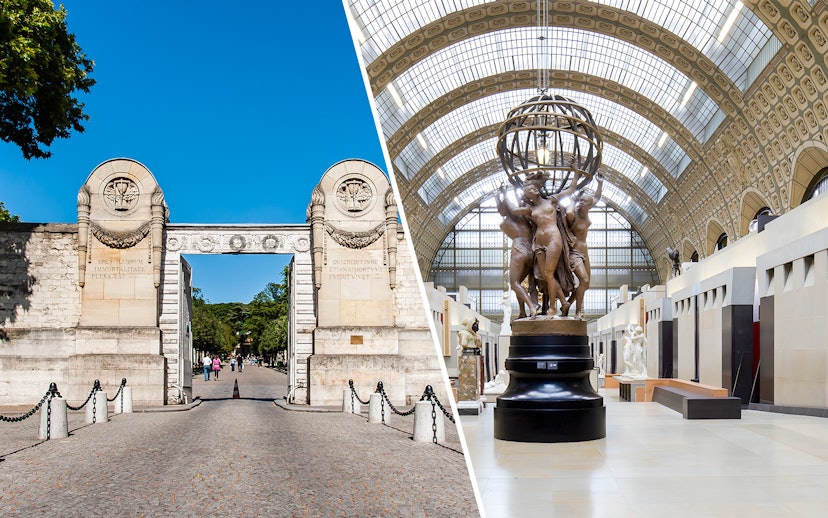
Planning Your Visit to Père Lachaise Cemetery
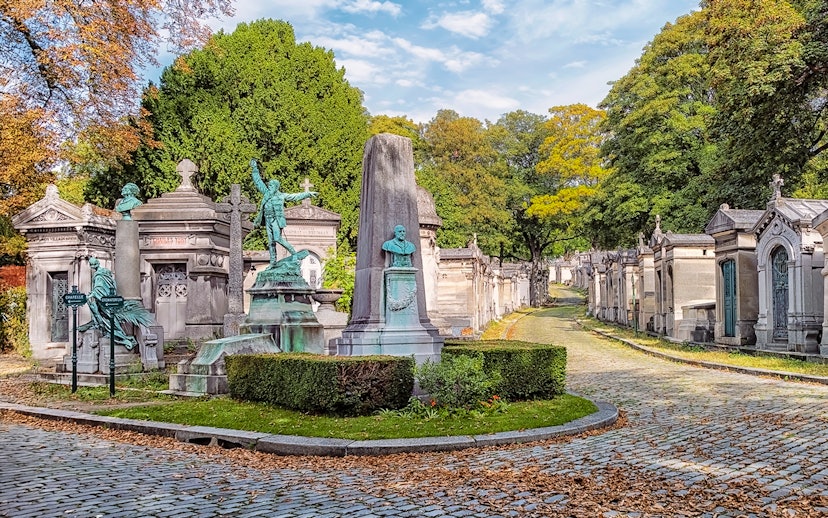
Père Lachaise Cemetery is Paris’s largest and most famous cemetery, best known for its celebrity graves, sculpture-filled avenues, and park-like calm. It’s also much bigger and hillier than many first-time visitors expect, so a good visit depends less on wandering and more on choosing a route before you enter. The difference between a rushed visit and a rewarding one is usually navigation. This guide covers timing, entrances, route planning, and what to prioritize.
Quick overview: Père Lachaise Cemetery at a glance
If you want the visit to feel calm rather than confusing, decide your route before you walk through the gate.
- When to visit: Daily, generally from 8am–6pm, with shorter winter closing around 5:30pm; weekday mornings before 10am are noticeably calmer than weekends and late morning, because the lanes around Jim Morrison and Oscar Wilde clog up first.
- Getting in: From €0 for standard entry. Audio guides start around €7, and third-party guided walks start around €25. You don’t need to book entry, but guided tours are worth reserving in summer and on weekends if you want a fixed start time.
- How long to allow: 2–3 hours works for most visitors. It stretches toward 4 hours if you want both the celebrity graves and the quieter upper and eastern divisions.
- What most people miss: Héloïse and Abélard’s neo-Gothic tomb, Victor Noir’s statue, and the cemetery’s best architectural mausoleums in the quieter divisions beyond the celebrity clusters.
- Is a guide worth it? Yes, if you want history and help with navigation; no, if you’re only here for a short celebrity-graves route and have a good map or audio guide.
Jump to what you need
🕒 Where and when to go
🗓️ How much time do you need?
🎟️ Which ticket is right for you?
🗺️ Getting around
🪦 What to see
♿ Facilities and accessibility
Where and when to go
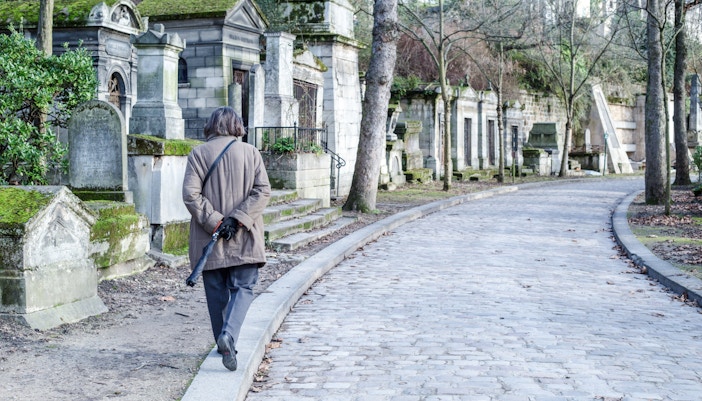
How do you get to Père Lachaise Cemetery?
Père Lachaise is in eastern Paris’s 20th arrondissement, close to several métro stops and around 20 minutes from the center by public transport.
Boulevard de Ménilmontant near Rue du Repos, 75020 Paris, France
- Metro: Père Lachaise (Lines 2 and 3) → short uphill walk → the simplest option if you want a fast start from the boulevard side.
- Metro: 3bis connections help if you are already in eastern Paris → walking time varies by exit → useful for avoiding busier interchange stations.
- Bus: Lines 20, 26, 61, 64, and 69 serve the area → short walk to different gates → Line 69 is especially handy from Bastille.
- Taxi / rideshare: Drop-off near Boulevard de Ménilmontant or Rue du Repos → easiest if you want to avoid the initial uphill climb.
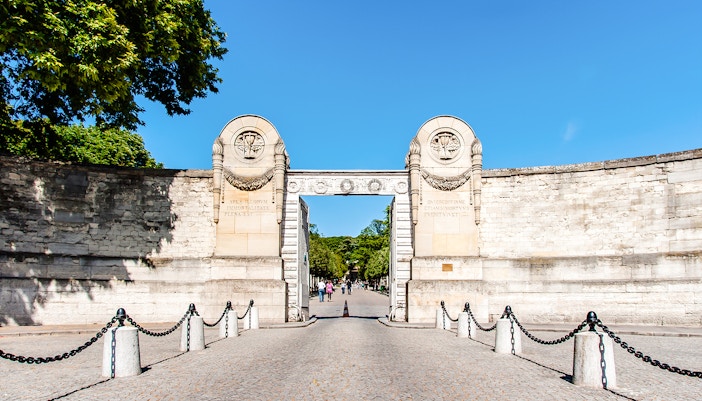
Which entrance should you use?
Père Lachaise has multiple gates, and the most common mistake is entering from the wrong side for the grave you care about most. Pick your entrance based on your shortlist, not just the nearest métro stop.
- Boulevard de Ménilmontant entrance: Best for a classic first route covering Jim Morrison and the western divisions. Expect little or no wait except on major holidays.
- Rue du Repos side entrance: Best for visitors starting from the Philippe Auguste side and wanting a more downhill-friendly route. Expect little or no wait.
- Rue de Bagnolet entrance: Best for quieter eastern and southern sections, including Édith Piaf later in the route. Expect little or no wait.
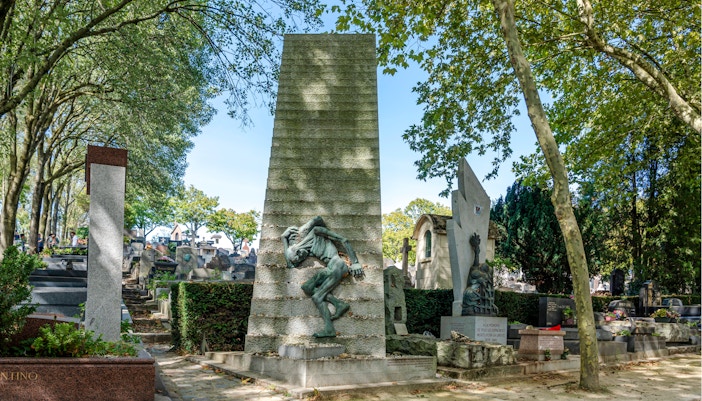
When is Père Lachaise Cemetery open?
- Mid-March–October: Daily, around 8am–6pm
- November–mid-March: Daily, around 8am–5:30pm
- Last entry: About 15 minutes before closing
When is it busiest? Late morning on weekends, in July and August, and on All Saints’ Day, when the celebrity graves and central paths feel noticeably more congested.
When should you actually go? Weekdays from opening to about 10am are your best window, because the light is softer, the paths are quieter, and you can reach Morrison or Wilde before the clusters build.
How much time do you need?
| Visit type | Route | Duration | Walking distance | What you get |
|---|---|---|---|---|
Highlights only | Boulevard de Ménilmontant entrance → Jim Morrison → Frédéric Chopin → Héloïse & Abélard → Oscar Wilde → exit | 1.5–2 hr | ~2km | You cover the best-known names with minimal detours, but you’ll skip Édith Piaf, Victor Noir, and the quieter eastern sectors where the cemetery feels most atmospheric. |
Balanced visit | Main entrance → Morrison → Chopin → Héloïse & Abélard → Wilde → Victor Noir → Piaf → Rue de Bagnolet exit | 2.5–3.5 hr | ~3.5km | This gives you the celebrity graves, a better sense of the cemetery’s architecture, and a more satisfying cross-section of the site without turning it into a half-day commitment. |
Full exploration | Western entrance → central divisions → upper avenues → southern and eastern sectors → quieter mausoleum lanes → Bagnolet or Repos exit | 4+ hr | ~5km | This is the most rewarding route if you care about sculpture, atmosphere, and lesser-known tombs, but the hills, uneven paths, and constant stopping make it tiring by the end. |
Which Père Lachaise Cemetery ticket is best for you
| Ticket type | What's included | Best for | Price range |
|---|---|---|---|
Free self-guided entry | Cemetery access + printed or downloaded map | A flexible visit where you only want a few famous graves and don’t mind navigating on your own | From €0 |
Audio guide | Cemetery access + smartphone or device-based commentary on major tombs | A first visit where you want context and help with wayfinding without committing to a group pace | From €7 |
Guided walking tour | Cemetery access + live guide + themed route | A visit where you want stories, efficient routing, and less time spent searching for key graves | From €25 |
Private guided tour | Cemetery access + private guide + tailored itinerary | A focused visit built around specific figures, themes, or a slower pace with personal attention | From €50 |
How do you get around Père Lachaise Cemetery?
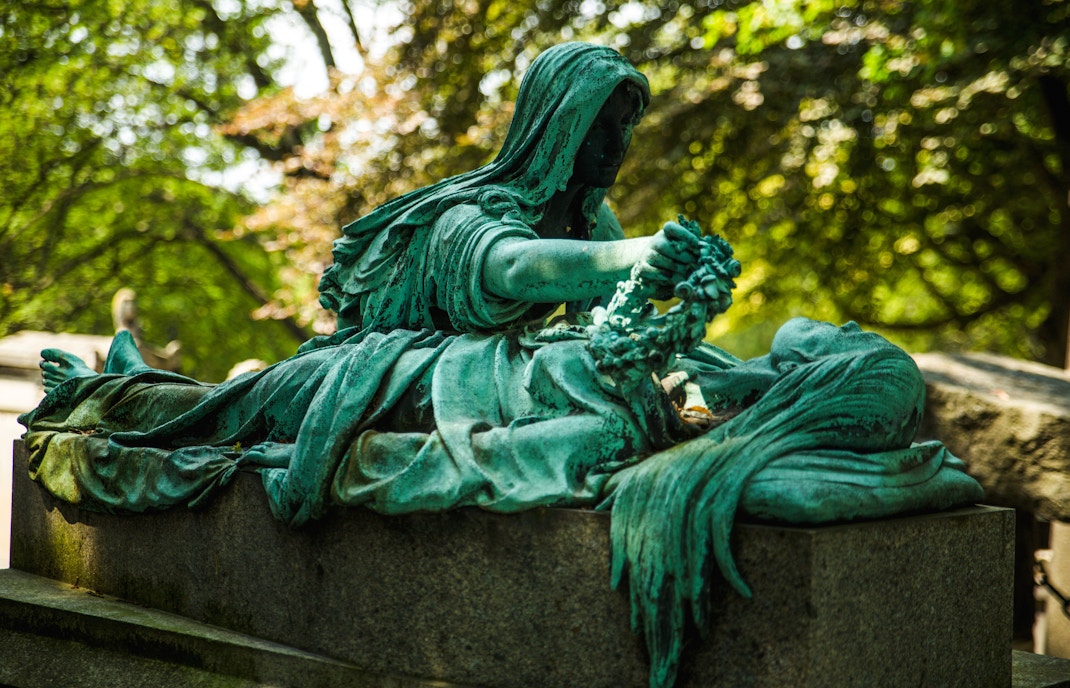
Key areas and the route that works best
Père Lachaise is large enough to need a route, and most visits work best on foot rather than by trying to cover everything. The most searched-for graves sit in different parts of the cemetery, so orientation matters more here than at most Paris attractions.
- Western and central divisions: Jim Morrison, Frédéric Chopin, and some of the busiest celebrity stops → budget 45–60 minutes.
- Upper central avenues: Héloïse & Abélard, broader views, and some of the most elegant funerary architecture → budget 30–45 minutes.
- Eastern and southern sectors: Édith Piaf, Victor Noir, and quieter family mausoleums → budget 45–60 minutes.
- Suggested route: Start with your top-priority grave first, then move outward; most people leave once they’ve seen Morrison and Wilde, which is why the eastern sections stay calmer and more rewarding.
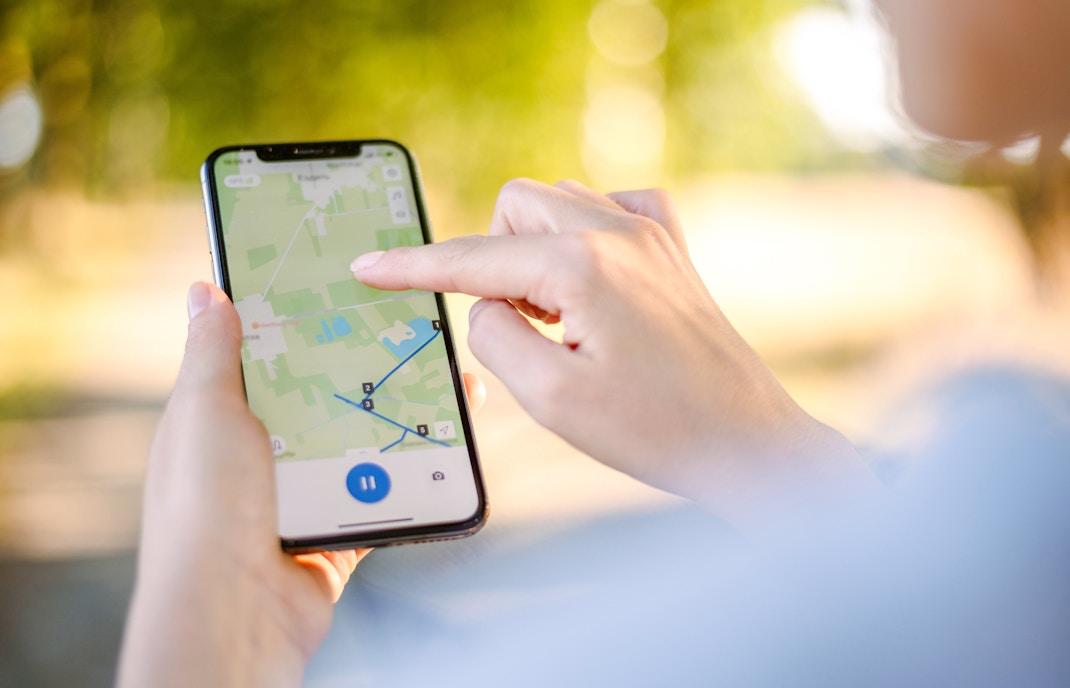
Maps and navigation tools
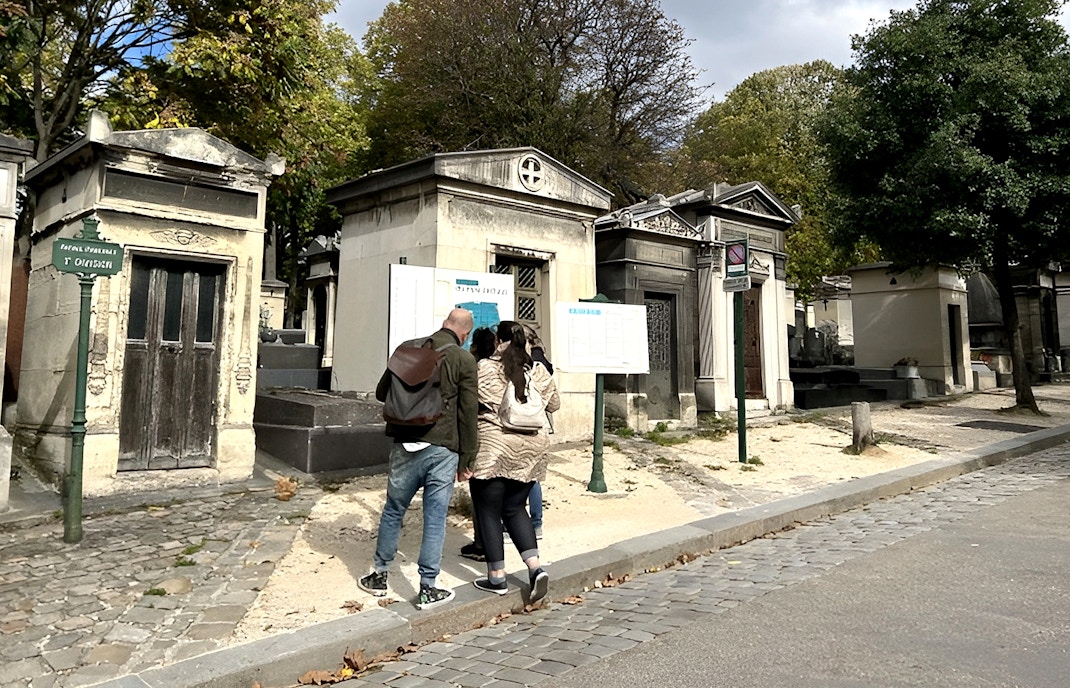
- Map: Downloaded cemetery map or free gate map → covers divisions and main paths → get it before arrival so you’re not trying to orient yourself at the entrance.
- Signage: Wayfinding is workable on the main avenues, but it is not good enough for a stress-free first visit without a map.
- Audio guide / app: Audio guides in French and English add useful context and help stitch together scattered graves into a route that makes sense.
- Large outdoor POIs only: Offline map apps are genuinely useful here, because the cemetery is hilly, spread out, and easy to backtrack through without noticing.
💡 Pro tip: Download the map before you enter, then screenshot the divisions you care about most; the cemetery is much easier once you stop trying to navigate it as one single loop.
What is Père Lachaise Cemetery worth visiting for?
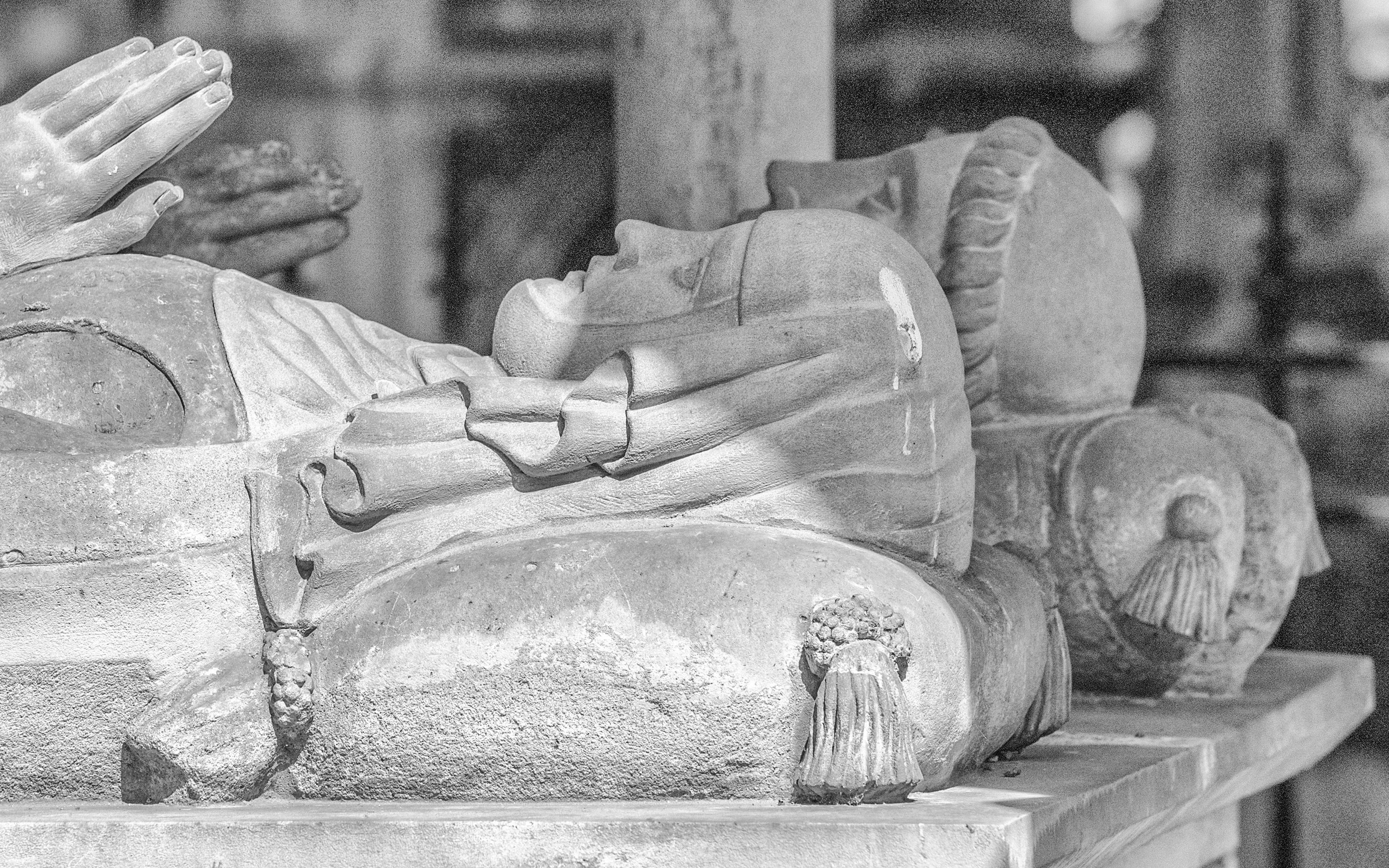
Héloïse and Abélard
Attribute: Medieval lovers’ mausoleum
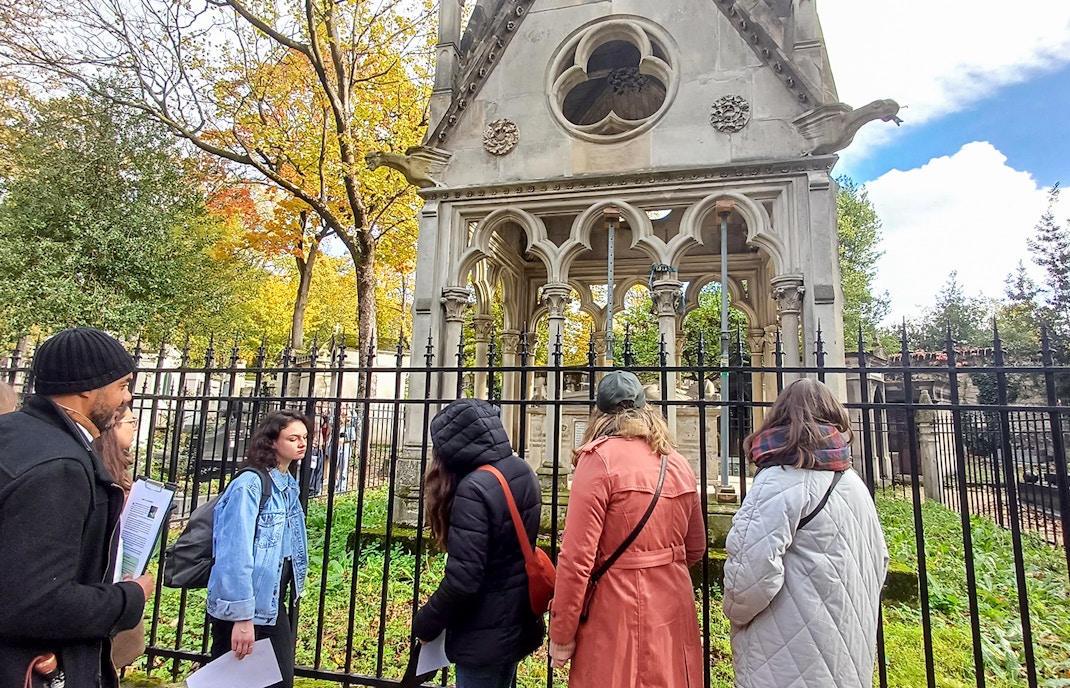
This neo-Gothic monument is one of the cemetery’s most romantic and instantly recognizable tombs. Even visitors who come for the celebrity graves tend to slow down here because the shrine feels older, quieter, and more symbolic than much of the surrounding cemetery. What many people miss is that it’s worth walking around the whole structure rather than taking one front-on photo and moving on.
Where to find it: Division 35
Frédéric Chopin’s tomb
Attribute: Composer
Chopin’s grave is elegant rather than grand, which suits the mood of the cemetery. Visitors usually come for the name, then linger because the monument’s details — the relief work, the urn, and the mournful sculptural style — reward a slower look. The detail many people rush past is the Polish identity built into the site, which gives the tomb an extra layer beyond its Paris setting.
Where to find it: Division 11
Oscar Wilde’s tomb
Attribute: Writer
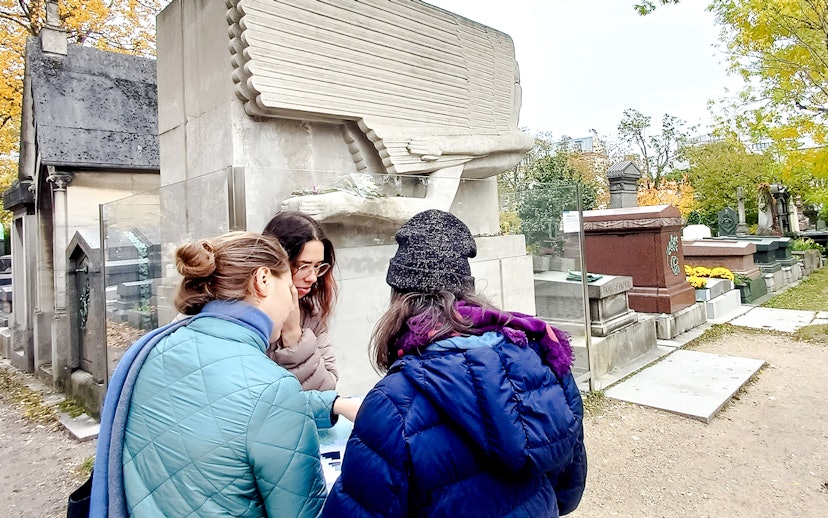
Oscar Wilde’s tomb is one of Père Lachaise’s boldest monuments, marked by Jacob Epstein’s striking winged figure. It stands out immediately from the older funerary styles around it, which is part of why it remains such a magnet. What people often miss is the protective glass around the monument — it tells its own story about decades of fan behavior and why the tomb looks different from the cemetery’s others.
Where to find it: Division 89
Jim Morrison’s grave
Attribute: Music icon
Jim Morrison’s grave is modest in scale, but it draws some of the cemetery’s biggest crowds. It matters less for its monument and more for what visitors bring to it: flowers, notes, stones, and a sense of pilgrimage. The thing most people miss is how small the actual grave is, which is why the surrounding crowd can feel bigger than the site itself.
Where to find it: Division 6
Édith Piaf’s tomb
Attribute: Singer
Édith Piaf’s tomb is one of the cemetery’s most emotionally affecting stops, especially if you know her music. It’s simpler than many of the grand mausoleums, but that simplicity is part of why it lands so strongly. Many visitors never make it this far because it sits away from the most crowded celebrity cluster, which is exactly why the stop often feels calmer and more personal.
Where to find it: Division 97, near the Singer family tomb
Victor Noir’s monument
Attribute: 19th-century journalist memorial
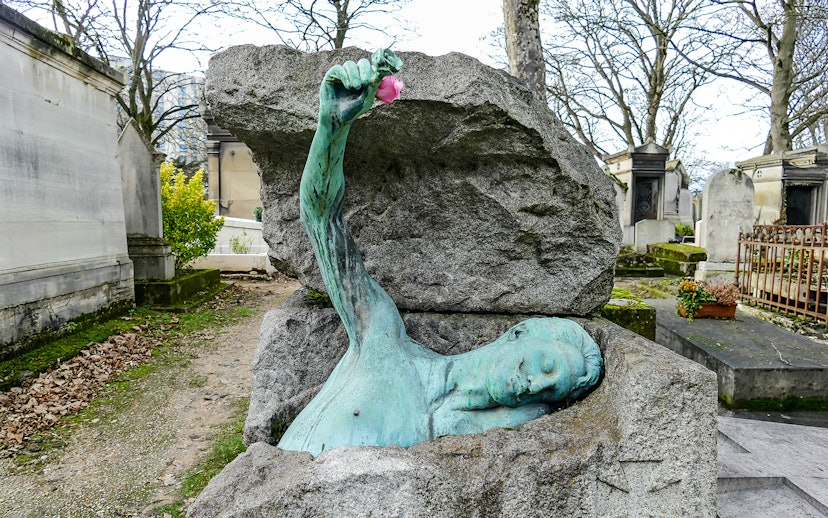
Victor Noir’s bronze effigy is one of Père Lachaise’s strangest and most talked-about monuments. It is famous for the superstition around touching the statue for luck, fertility, or romance, and the polished bronze gives away just how often that tradition is repeated. What people miss is that it works both as a curiosity stop and as a reminder that this cemetery is full of stories far beyond the headline names.
Where to find it: Division 92
Facilities and accessibility
- 🗺️ Printed maps: Free paper maps are often available at the gates, and they’re more useful than the on-site signage for a first visit.
- 🚻 Restrooms: There are no public restrooms inside the cemetery, so use facilities before you enter.
- 🍽️ Food options: There is no café or restaurant inside, which makes eating before or after your visit much easier than leaving mid-route.
- 🪑 Seating / rest areas: Benches appear along some main avenues, but there are long stretches without seating in the upper and quieter divisions.
- 🐕 Pets on leads: Dogs on a leash are allowed, which matters if you’re visiting as part of a longer park-style walk.
- ℹ️ Visitor support: This is a city-managed open-air site rather than a staffed museum, so don’t expect indoor counters or constant on-route assistance.
- ♿ Mobility: Access is partial rather than full, with broader main avenues more manageable but many secondary paths steep, cobbled, gravelly, or stepped.
- 👁️ Visual impairments: Wayfinding can be difficult because the graves are spread out and not consistently signposted, so a companion or downloaded map helps.
- 🧠 Cognitive and sensory needs: Weekday mornings are the easiest window if you want a calmer visit, while weekends and major dates bring tighter crowding around the famous tombs.
- 👨👩👧 Families and strollers: Strollers can manage the main lanes, but the full cemetery is not pushchair-friendly end to end because of slopes and uneven ground.
Père Lachaise works best with older children who enjoy stories, sculpture, or music history rather than a fast playground-style outing.
- 🕐 Time: With young children, 60–90 minutes is usually enough if you focus on 3–4 headline stops instead of trying to cross the whole cemetery.
- 🏠 Facilities: The main family limitation is what isn’t here — no café, no restrooms, and only occasional benches — so plan comfort breaks outside.
- 💡 Engagement: Turn the visit into a treasure hunt by choosing a few names or monuments in advance, because open-ended wandering loses children quickly here.
- 🎒 Logistics: Bring water, a small snack, and good walking shoes, and aim for an early entry before the celebrity-grave clusters build.
- 📍 After your visit: Nearby cafés around Boulevard de Ménilmontant are a better post-visit reset with children than trying to extend the cemetery route.
Rules and restrictions
What you need to know before you go
- Entry requirement: Entry is free during opening hours, and any guided visit you join will be with an independent provider rather than an in-house cemetery tour.
- Bag policy: There is no cloakroom, so bring only what you can comfortably carry across uneven, sloped paths.
- Re-entry policy: Re-entry is generally possible during opening hours, but leaving mid-visit costs time because the cemetery is large and the gates are spread out.
Not allowed
- 🚫 Commercial selling: Unofficial guiding or selling near the gates is not part of the cemetery experience, and you do not need to buy anything to enter.
- 🐾 Pets: Pets are allowed only if kept on a lead, and other visitors’ space should be respected in the narrower lanes.
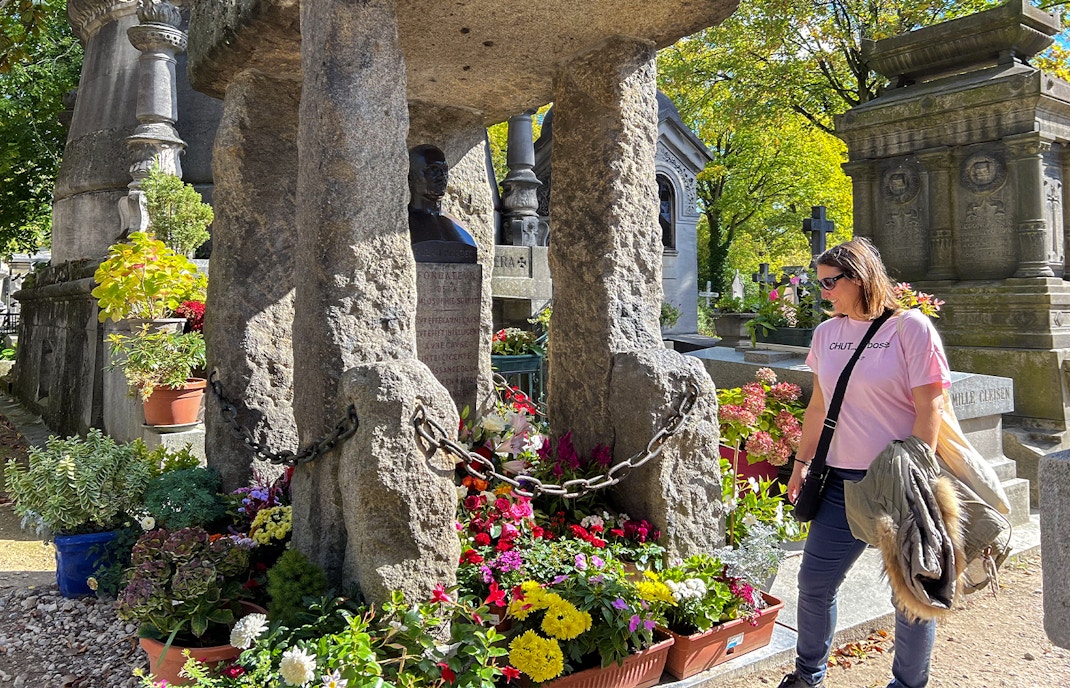
- 🖐️ Touching monuments: Climbing on or handling tombs and sculpture is not allowed, even at monuments with long-standing visitor rituals.
Photography
Photography is generally allowed throughout the cemetery, which is one reason it is so popular with visitors and photographers alike. The practical distinction is less about whole zones and more about behavior: keep flash off in enclosed or chapel-like memorial spaces, stay respectful around mourners or ceremonies, and avoid bulky tripod setups on narrow paths or beside fragile monuments.
Good to know
- No official skip-the-line access: There is no official fast-track ticket because entry is free, so ignore anyone selling ‘priority’ access outside.
- Navigation is the real challenge: What catches most people out is not queueing but poor wayfinding, which is why a downloaded map matters more here than at many Paris attractions.
Practical tips
- Booking and arrival: You don’t need to book entry, but if you want a guided walk in summer or on a weekend, reserve a few days ahead so you’re not stuck with an awkward start time.
- Pacing: Save your energy for the second half of the visit, because the cemetery’s size only really hits once you move beyond Morrison and Wilde into the hillier, quieter divisions.
- Crowd management: Weekday mornings work best here not just because they’re quieter, but because the central celebrity-grave cluster is still readable before people start bunching around it.
- What to bring or leave behind: Bring a small bag, water, and a downloaded map; large bags and unnecessary layers feel heavier than usual once you’ve been walking uphill on gravel for an hour.
- Food and drink: Eat before you enter if you’re planning more than 2 hours, because there is no café inside and stepping out midway can add 20–30 minutes once you reorient yourself.
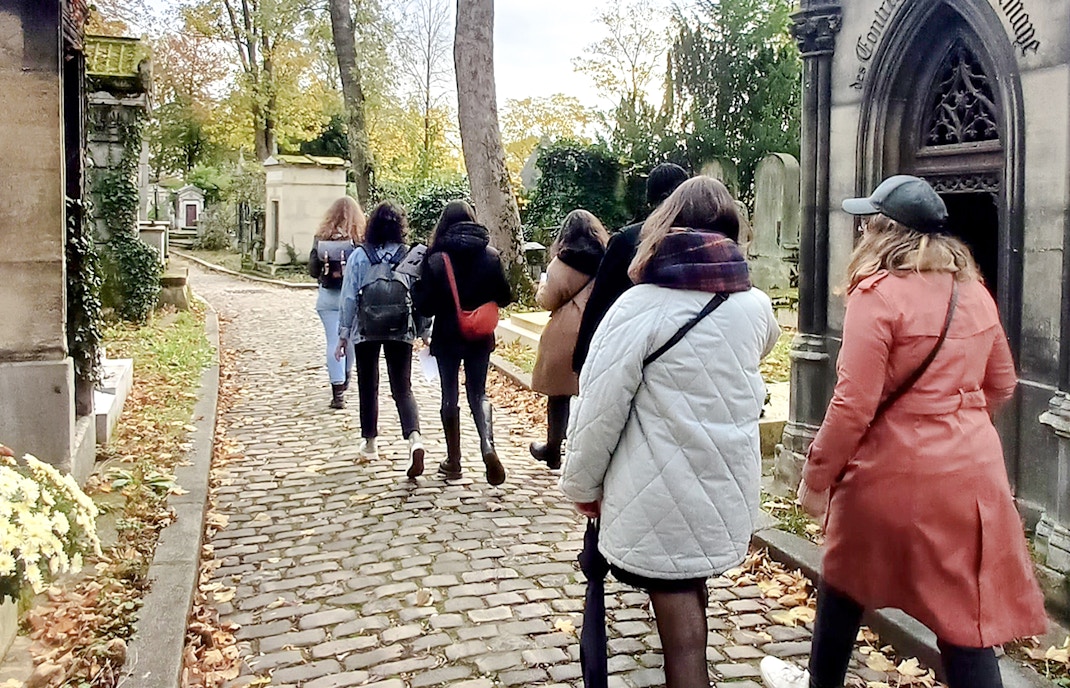
- Footwear: This is one Paris visit where comfortable shoes are not optional, because cobblestones, gravel, and slope changes are constant rather than occasional.
- Route planning: If you only care about 3 or 4 graves, write them down in order before you arrive; trying to decide on the spot is how a short visit turns into aimless backtracking.
What else is worth visiting nearby?
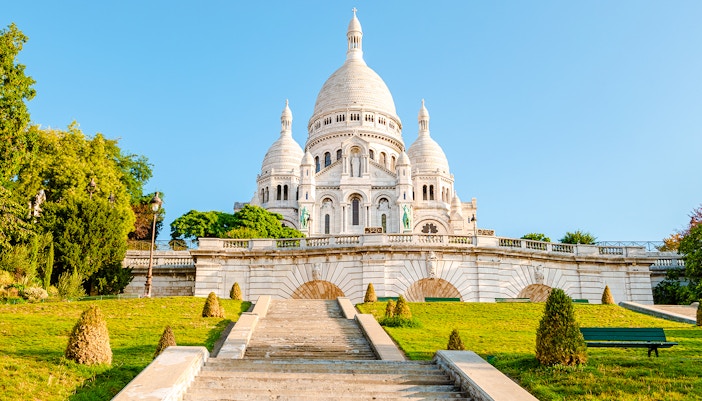
Commonly paired: Sacré-Cœur Basilica
Distance: About 6km — around 20 minutes by métro
Why people combine them: Both are iconic Paris sites tied to art, atmosphere, and strong personal mythologies, and they make a good contrast between panoramic Paris and reflective Paris.
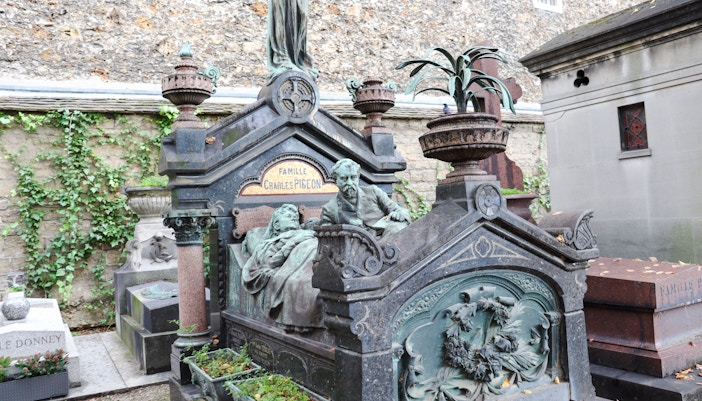
Commonly paired: Montparnasse Cemetery
Distance: About 7km — around 15 minutes by métro
Why people combine them: Visitors interested in writers, artists, and intellectual history often pair the 2 cemeteries for a fuller sense of Parisian memory and memorial culture.
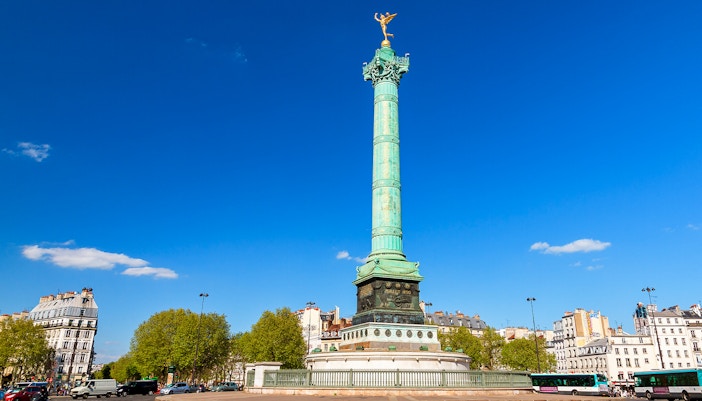
Also nearby
Place de la Bastille
Distance: About 3km — 10–15 minutes by bus or métro
Worth knowing: It’s one of the easiest post-cemetery stops for food and a livelier atmosphere if you don’t want the day to stay entirely contemplative.
Place de la République
Distance: About 3km — around 10 minutes by métro
Worth knowing: République is practical rather than romantic, but it’s a simple transport and food hub if you’re heading elsewhere after your visit.
Eat, shop and stay near Père Lachaise Cemetery
- On-site: There is no café or restaurant inside Père Lachaise Cemetery, so on-site food is not an option.
- Boulevard de Ménilmontant cafés: Just outside the cemetery area, these are the most practical spots for a quick coffee or sandwich before you start walking.
- Bastille bistros: A short bus or métro hop away, Bastille is the better choice if you want a proper sit-down meal after a long visit.
- Belleville bakeries and casual lunch spots: Useful if you want something inexpensive and fast without turning lunch into another destination.
- 💡 Pro tip: Eat before you enter if you’re planning more than 2 hours, because there’s nowhere inside to stop for food without breaking the rhythm of your route.
- Flower stalls by the gates: The most relevant buy here is simple — flowers or a small tribute if you want to leave something at a grave.
- Neighborhood convenience shops: The area is better for practical stops like water, snacks, or umbrellas than for destination shopping.
- Belleville and Bastille retail streets: If you want actual browsing, head there after your visit rather than expecting cemetery-adjacent gift shopping.
The area around Père Lachaise is useful if this cemetery is one of your main priorities and you prefer a quieter local base over classic postcard Paris. It feels more residential than central, and it suits visitors who don’t mind using the métro for most sightseeing. If this is only one stop on a short Paris trip, staying elsewhere is usually easier.
- Price point: The area generally feels more mid-range and neighborhood-driven than the city’s more tourist-heavy central zones.
- Best for: Visitors who want a quieter base, easier morning access to eastern Paris, and less pressure to stay in the busiest districts.
- Consider instead: Bastille or the Marais if you want a shorter-stay base with more food options, stronger evening energy, and easier access to multiple major sights.
Frequently asked questions about visiting Père Lachaise Cemetery
Most visits take 2–3 hours. If you’re only here for Jim Morrison, Oscar Wilde, Chopin, and one or 2 more stops, 90 minutes can work, but a fuller walk across the quieter divisions usually pushes the visit closer to 4 hours.
No, you don’t need to book entry in advance because Père Lachaise Cemetery is free to enter. The only thing worth reserving ahead is a third-party guided tour or audio experience if you want a fixed time slot during summer weekends or busy holiday periods.
Arriving at opening time or within the first hour is your best bet. That window gives you cooler walking conditions, quieter central paths, and the best chance of seeing the most famous graves before late-morning crowding builds around them.
Yes, you can bring a small bag or backpack. The practical limit is comfort rather than security, because there is no cloakroom and the cemetery’s sloped gravel and cobblestone paths make heavier bags feel more annoying the longer you stay.
Yes, photography is generally allowed. The important distinction is how you do it: keep flash off in enclosed memorial spaces, stay respectful around mourners or ceremonies, and avoid turning narrow paths into a setup zone with bulky gear.
Yes, groups can visit Père Lachaise Cemetery. If your group is larger or wants historical context, a guided walk is easier than trying to keep everyone together while navigating scattered graves and poorly signposted divisions on your own.
Yes, but it suits older children better than very young ones. Most families do best with a 60–90 minute route focused on a few well-known graves and statues, because the site is large, quiet, and short on facilities like restrooms or food stops.
Père Lachaise Cemetery is only partially wheelchair accessible. The broader main avenues are the easiest to manage, but many secondary paths are steep, uneven, gravelly, or stepped, so it’s best to plan a limited route instead of expecting full end-to-end access.
Food is available near Père Lachaise Cemetery, but not inside it. The surrounding streets have cafés and casual lunch spots, and it’s smarter to eat before or after your visit than to leave midway and lose time reorienting yourself in the cemetery.
Yes, guided tours and audio guides are available, but they are provided by independent operators rather than the cemetery itself. They’re most useful if you want stories, context, and a route that helps you avoid wasting time searching for specific graves.
The best time of day to visit is early morning on a weekday. That’s when the cemetery feels most peaceful, the light is softer for photos, and the central celebrity-grave cluster is still easy to move through.
Yes, dogs are allowed if they are kept on a lead. That makes the cemetery more flexible than some cultural sites, but it still works best if your dog is comfortable with long, quiet walks and respectful shared spaces.