Hours, directions, entrances and the best time to arrive
How to visit Montparnasse Tower
Montparnasse Tower is a 210 m skyscraper best known for giving you one of Paris’s clearest skyline views — including the Eiffel Tower itself. The visit is straightforward, but timing changes everything: come at the wrong moment and you’ll hit the sunset rush for elevators, bar service, and the best rooftop spots. It’s also a split-level experience, with the open-air terrace only reachable by stairs. This guide covers the timing, entrance, ticket choices, and route that make the visit smoother.
Quick overview: Montparnasse Tower at a glance
If you want a Paris viewpoint that feels easier and calmer than the Eiffel Tower, start here.
- When to visit: Daily, typically 9:30am–10:30pm in October–March and 9:30am–11:30pm in April–September. Weekday late mornings are noticeably calmer than the 30–60 minutes before sunset, when most people arrive for the Eiffel Tower sparkle and rooftop photos.
- Getting in: From €19 for standard entry booked online. Guided tours from about €45. You can usually book daytime visits last-minute, but sunset slots in spring and summer are worth locking in a few days ahead.
- How long to allow: 45–90 minutes for most visitors. Sunset-to-night visits, the VR experience, and a drink on the roof push you to the longer end.
- What most people miss: The Paris Time Travel VR stations on the 56th floor, and the east-facing side of the deck where Notre-Dame and central Paris are easier to pick out.
- Is a guide worth it? Usually no for the standard visit, because the layout is simple and the orientation panels do most of the work, but a guide helps if you want neighborhood history and skyline context rather than just the view.
🎟️ Sunset slots for Montparnasse Tower sell out 2–3 days in advance during April–August. Lock in your visit before the time you want is gone. See ticket options
Jump to what you need
🕒 Where and when to go
🗓️ How much time do you need?
Visit lengths, suggested routes and how to plan around your time
🎟️ Which ticket is right for you?
Compare all entry options, tours and special experiences
🗺️ Getting around
How the tower is laid out and the route that makes most sense
🌆 What to see
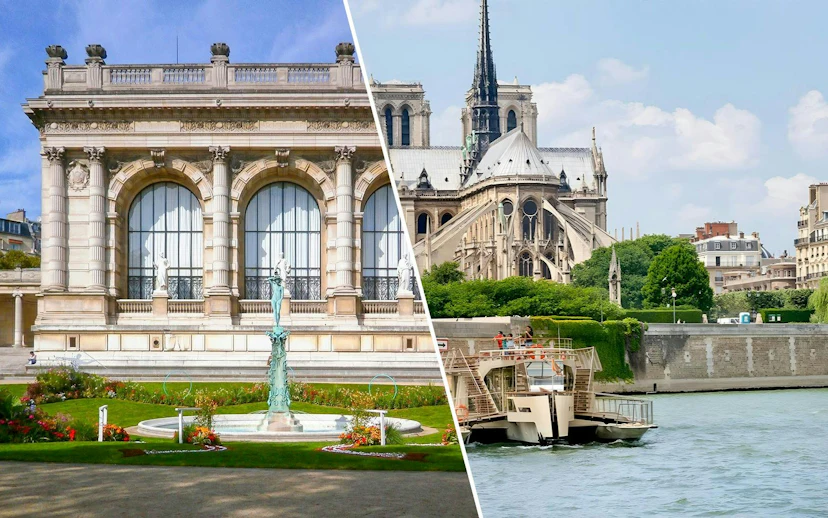
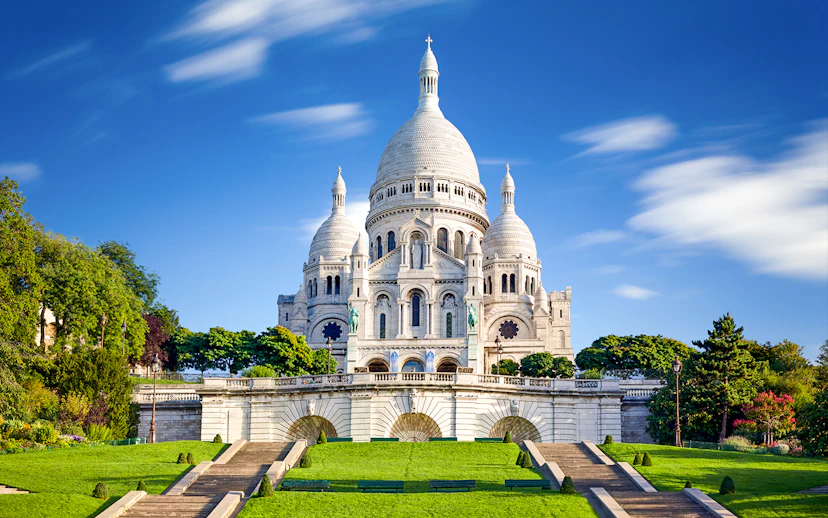
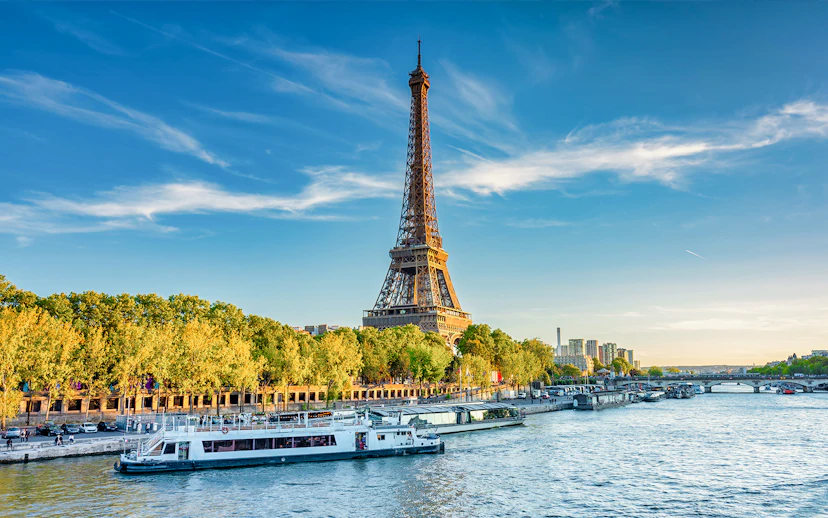
Eiffel Tower, Sacré-Cœur, and Notre-Dame
♿ Facilities and accessibility
Restrooms, lockers, accessibility details and family services
Where and when to go
How do you get to Montparnasse Tower?
Montparnasse Tower is in the Montparnasse district on Paris’s Left Bank, directly above Montparnasse–Bienvenüe station and about 3 km from the Eiffel Tower.
33 Avenue du Maine, 75015 Paris, France
- Metro: Montparnasse–Bienvenüe (Lines 4, 6, 12, 13) → 2–5 min walk → Follow signs for Tour Montparnasse rather than the train station concourse.
- Train: Gare Montparnasse → 5-min walk → Useful if you’re arriving from Versailles or western France the same day.
- Bus: Multiple routes stop around Place du 18 Juin 1940 → short walk → Good if you’re already in the Left Bank.
- Taxi / rideshare: Drop-off at 33 Avenue du Maine or Rue de l’Arrivée → closest access for the observatory entrance.
Full getting there guide
Which entrance should you use?
There’s only one observatory entrance, but the building has enough doors and station access points to confuse first-time visitors. The most common mistake is following the station flow instead of the signs for the panoramic observatory.
- Main observatory entrance: Located on the Rue de l’Arrivée / 33 Avenue du Maine side. Expect 5–15 min wait during sunset, summer weekends, and holiday evenings.
Full entrances guide
When is Montparnasse Tower open?
- April–September: 9:30am–11:30pm
- October–March: 9:30am–10:30pm
- Last entry: 30 minutes before closing
When is it busiest? The busiest window is 30–60 minutes before sunset, especially on Fridays, Saturdays, and clear evenings from April through August, when visitors stack up for golden-hour photos and the Eiffel Tower sparkle.
When should you actually go? Weekday late mornings give you the easiest visit because the view is still crisp, the 56th-floor deck is quieter, and you’re less likely to queue for the elevator down.
Which Montparnasse Tower ticket is best for you
| Ticket type | What's included | Best for | Price range |
|---|---|---|---|
Standard observatory ticket | Timed entry + 56th-floor indoor observatory + 59th-floor rooftop terrace + VR experience | A straightforward skyline visit where you want flexibility and don’t need commentary to navigate the space | From €19 |
Day and night ticket | 2 entries within 48 hours + indoor observatory + rooftop terrace + VR experience | A visit where you want clear daytime views and a separate evening return for the city lights without rushing one slot | From €32 |
Guided Montparnasse neighborhood and tower tour | Timed tower entry + guided walk in Montparnasse + skyline commentary | A first visit where you want the tower to make more sense in the context of Paris history and the surrounding district | From about €45 |
Montparnasse Tower + Seine River Cruise combo | Tower entry + 1-hour Seine cruise | A Paris day where you want one skyline experience and one river-level route without buying each separately | From about €35 |
Montparnasse Tower + Hop-On Hop-Off bus combo | Tower entry + 1-day Hop-On Hop-Off bus pass | A short stay where you want the city orientation piece handled and one easy viewpoint built into the same plan | From about €64 |
How do you get around Montparnasse Tower?
Tower layout
Montparnasse Tower is compact and vertical rather than sprawling, so the visit is easy to self-navigate once you’re through security. The only real decision is whether you’re here for a quick indoor look or you want to stay long enough to use the rooftop properly.
- 56th-floor indoor observatory → Floor-to-ceiling windows, orientation panels, VR stations, café, and gift shop → budget 20–30 minutes.
- 59th-floor rooftop terrace → Open-air 360° views and the clearest Eiffel Tower photos → budget 15–30 minutes, longer at sunset.
- Paris Time Travel VR → Short virtual-reality journey through different eras of Paris → budget 10 minutes.
- Le Ciel de Paris → Separate restaurant one level below the observatory with skyline dining → budget 1–2 hours if you’ve booked a table.
Suggested route: Start indoors on the 56th floor to get oriented, do the VR early while queues are short, then head to the rooftop once you know which landmarks you want to find; most visitors rush straight outside and miss the east-facing city details inside.
Maps and navigation tools
- Map: On-site orientation panels and digital displays → they help you identify the skyline → use them as soon as you step onto the 56th floor.
- Signage: Good once you’re inside, but exterior wayfinding is weaker than it should be → the trick is finding the observatory entrance, not the top floor itself.
- Audio guide / app: Interactive displays do enough for most self-guided visits → you won’t feel under-equipped if you skip extra commentary.
- Observation point strategy: The west-facing side draws the biggest crowd for Eiffel Tower shots → circle the deck fully so you don’t miss the quieter east and north views.
💡 Pro tip: Do one slow indoor lap before climbing to the roof — it saves rooftop backtracking and helps you use the open-air time for photos instead of figuring out what you’re looking at.
Get the Montparnasse Tower map / audio guide
What can you see from Montparnasse Tower?

1/5
Eiffel Tower
Landmark type: Iron lattice tower
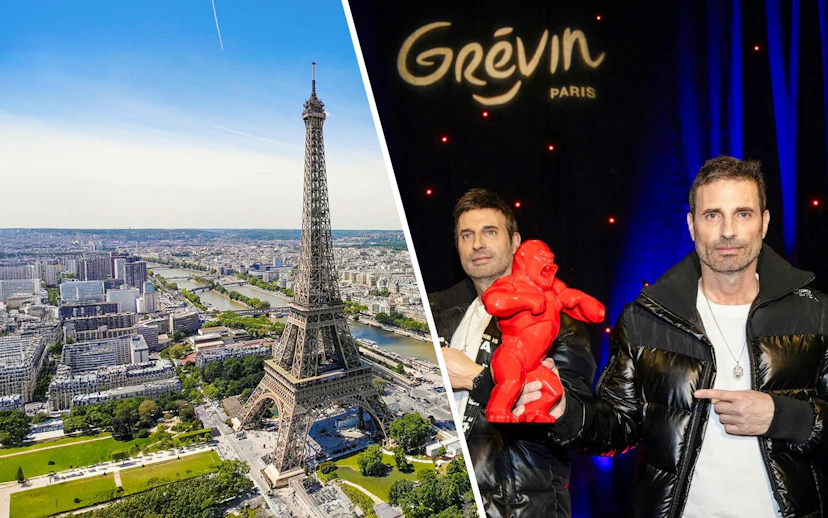
This is the headline view, and it’s the reason many people prefer Montparnasse over going up the Eiffel Tower itself. From here, the Eiffel Tower sits cleanly in the skyline rather than underneath you, which makes your photos feel more recognizably Parisian. What most visitors miss is how different it looks across the visit — crisp and architectural by day, then much stronger once the surrounding city lights come on.
Where to find it: West-facing side of the rooftop terrace and the corresponding western windows on the 56th floor.
Sacré-Cœur
Landmark type: Basilica on a hilltop
Sacré-Cœur stands out because it rises above Montmartre instead of blending into the lower Paris roofline. It’s one of the easiest landmarks to spot once you look beyond the obvious Eiffel Tower side, and it helps you understand just how broad the panorama is from Montparnasse. Many visitors rush past it because they stop scanning once they’ve taken their Eiffel Tower shots.
Where to find it: North-facing side of the deck, slightly north-west from the center of the rooftop.
Notre-Dame
Landmark type: Gothic cathedral
Notre-Dame is smaller in the skyline than first-time visitors expect, which is exactly why it’s worth slowing down for. From Montparnasse, you’re reading Paris at city scale, not monument scale, so the cathedral rewards a more patient look. What people often miss is that the east-facing side of the observatory is usually quieter, making it easier to pick it out with less shoulder-to-shoulder crowding.
Where to find it: East to north-east side of the 56th-floor windows and rooftop perimeter.
Les Invalides
Landmark type: Historic domed complex
Les Invalides is one of the best landmarks for understanding Paris’s geometry from above because its golden dome anchors the skyline so clearly. It’s particularly striking late in the day, when the light catches the dome before dusk settles over the rest of the city. Many visitors see it without naming it, especially if they haven’t used the orientation screens first.
Where to find it: West to north-west side of the observatory, between central Paris rooftops and the Eiffel Tower zone.
Arc de Triomphe and La Défense axis
Landmark type: Monument and modern business district
This is the view that makes Montparnasse feel more than just a photo stop. You can trace Paris’s grand westward line from the Arc de Triomphe toward La Défense, which gives the city a sense of scale you don’t get from street level. What most people miss is the contrast — Haussmann Paris in the foreground, glass-and-steel towers far beyond it.
Where to find it: West-facing side of the rooftop, slightly north of the Eiffel Tower line.
Facilities and accessibility
- 🎒 Bag policy: Large suitcases and sharp objects are not practical for entry, so keep your visit to a small day bag if you want the quickest security check.
- 🚻 Restrooms: Restrooms are available on the 56th floor, and there is an accessible restroom on that level.
- 🍽️ Café / bar: The 56th-floor café is useful for coffee, hot chocolate, or a quick break, and the rooftop Champagne bar operates seasonally in good weather.
- 🛍️ Gift shop / merchandise: A gift shop is located on the observatory level, so it’s easiest to browse before you head back to the elevator.
- 🪑 Seating / rest areas: Seating is limited near the main windows, so this is better as a stand-and-circulate viewpoint than a long seated stop.
- ♿ Mobility: Elevators and ramps make the 56th-floor observatory accessible, but the 59th-floor rooftop terrace is reached only by stairs, so the full experience is only partially accessible.
- ♿ Accessible restrooms: An accessible restroom is available on the 56th floor, which is the main level for visitors who cannot use the final stair section.
- 🧠 Cognitive and sensory needs: The easiest low-stress window is right at the 9:30am opening, while sunset is the loudest and most compressed period around the west-facing side of the deck.
- 👨👩👧 Families and strollers: Strollers can reach the 56th floor by elevator, but they must be carried if you want to continue up to the rooftop terrace.
Montparnasse Tower works well with children because the elevator ride is fast, the visit is short, and the payoff is immediate — they can spot familiar landmarks without a long museum-style attention span.
- 🕐 Time: 45–60 minutes is realistic with young children, and the 56th floor plus a short rooftop stop is usually enough.
- 🏠 Facilities: Restrooms and the café on the 56th floor make it easier to reset before or after the rooftop section.
- 💡 Engagement: Turn the visit into a landmark hunt by asking children to find the Eiffel Tower first, then Sacré-Cœur, then the Seine.
- 🎒 Logistics: Bring a light layer even on warm days because the rooftop gets windy, and avoid strollers you can’t comfortably carry up stairs.
- 📍 After your visit: Luxembourg Gardens is a strong follow-up because it gives children space to run around after a compact indoor-outdoor visit.
Rules and restrictions
What you need to know before you go
- Entry requirement: A timed ticket is the simplest option, and digital QR tickets work well for a quick entry process.
- Bag policy: Keep to a small backpack or day bag, because large luggage and sharp items slow screening and may be refused.
- Re-entry policy: Single tickets do not include re-entry, so if you leave before sunset or before the Eiffel Tower sparkle, you’ll need a new ticket unless you bought the day and night option.
Not allowed
- 🖐️ Climbing or leaning over rooftop barriers: Safety barriers are there for a reason, and staff expect visitors to keep clear of them while taking photos.
- 🎒 Large luggage and sharp objects: These are the items most likely to cause issues at security, so leave them elsewhere before you arrive.
Photography
Photography is one of the main reasons to visit Montparnasse Tower, and handheld photos are generally fine throughout the indoor observatory and rooftop terrace. The real distinction is practical rather than by room: indoor windows can create glare, while the rooftop gives you cleaner shots. Tripods and bulky photo setups can be limited during busy sunset periods for safety and circulation.
Good to know
- The biggest thing that catches people out is the entrance, because the tower sits over a station and shopping complex with multiple access points.
- The rooftop terrace is not elevator-accessible, so anyone with limited mobility should plan the visit around the 56th-floor observatory.
Practical tips
- Book sunset slots 2–3 days ahead in April–August, because daytime visits usually remain easy to get but the golden-hour window is the first to tighten.
- Spend your first 20–30 minutes on the 56th floor before going outside, because the orientation panels make the rooftop feel much less random and help you use the best photo angles faster.
- If you want the fullest experience, enter 45–60 minutes before sunset rather than at sunset, so you can see Paris in daylight, at dusk, and after dark without feeling rushed.
- Bring a light jacket even in warmer months, because the rooftop can feel much windier than street level and people often cut their visit short once the sun drops.
- Use the 56th-floor café or grab your drink before the sunset rush, because the Champagne queue tends to bunch up just when the light is best.
- Keep your bag small and simple, because this is one of those attractions where a quick security check helps preserve the ‘easy’ feel people like about it.
- If you care about skyline photos more than atmosphere, go on a clear weekday late morning; if you care about mood more than sharp detail, go for sunset and stay for the Eiffel Tower sparkle.
What else is worth visiting nearby?
Commonly paired: Paris Catacombs
Paris Catacombs
Distance: 1.2 km — 15 min walk / 2 metro stops
Why people combine them: It’s one of Paris’s best contrast pairings — you go from the city’s underground tunnels to one of its widest skyline views in the same part of town.
Book / Learn more
Commonly paired: Luxembourg Gardens
Luxembourg Gardens
Distance: 1.5 km — 20 min walk
Why people combine them: It makes for an easy Left Bank day, with a relaxed park stop before or after the tower and a completely different view of Paris at ground level.
Book / Learn more
Also nearby
Montparnasse Cemetery
Distance: 350 m — 5 min walk
Worth knowing: It’s a calm, historically rich stop if you want something slower and more local-feeling after the tower.
La Coupole and the Boulevard du Montparnasse café strip
Distance: 500–700 m — 7–10 min walk
Worth knowing: This stretch gives you the classic Montparnasse café atmosphere that the tower itself can’t, so it’s a smart place to decompress after the visit.
Eat, shop and stay near Montparnasse Tower
- On-site: Le Ciel de Paris, on the 56th floor, serves French dishes at splurge prices and is worth it more for the view than for a quick casual meal.
- La Coupole (7-min walk, 102 Boulevard du Montparnasse, 75014 Paris): Classic Paris brasserie, mid-to-high price range, and a good post-visit pick if you want atmosphere that matches the neighborhood’s history.
- Le Dôme Café (8-min walk, 108 Boulevard du Montparnasse, 75014 Paris): Seafood-leaning Paris institution, mid-to-high price range, and best if you want a slower sit-down meal after sunset.
- Crêperie de Josselin (10-min walk, 67 Rue du Montparnasse, 75014 Paris): Breton crêpes, lower-to-mid price range, and the most useful nearby option if you want something quick, satisfying, and distinctly Parisian.
- 💡 Pro tip: Eat before your evening slot if you care about the full sunset-to-sparkle window, because once you come back down on a standard ticket you can’t go back up for the night view.
- Montparnasse Tower gift shop: Basic souvenirs and skyline mementos, located on the observatory level, and easiest to browse on your way back to the elevator.
- Galeries Lafayette Montparnasse (about 5 min walk, 22 Rue du Départ, 75015 Paris): Useful for practical shopping and French brands if you want something more substantial than observatory souvenirs.
Montparnasse is practical rather than romantic. It’s one of Paris’s easiest bases for train connections, metro access, and quick movement around the city, but it doesn’t have the same charm density as Saint-Germain or the Marais. If you value convenience over postcard atmosphere, it works well.
- Price point: The area usually skews mid-range business-hotel, with some better-value stays than central tourist districts.
- Best for: Short stays, rail travelers using Gare Montparnasse, and anyone who wants a direct metro hub without paying Saint-Germain prices.
- Consider instead: Saint-Germain-des-Prés or the 7th arrondissement if you want a prettier, more walkable base for longer stays and evening wandering.
Frequently asked questions about visiting Montparnasse Tower
Most visits take 45–90 minutes. If you’re just doing the indoor observatory and a short rooftop stop, you can be done in under an hour, but sunset visits usually stretch longer because people stay to watch the city lights come on and the Eiffel Tower sparkle.
No, you don’t always need to book far in advance, but it’s smart for sunset slots and peak spring-summer dates. Daytime entry is often still available last-minute, while the golden-hour window can tighten 2–3 days ahead when the weather is clear.
Usually no, because Montparnasse Tower is easier and less crowded than Paris’s biggest landmarks. The real advantage is booking online so you skip the cashier line and secure your preferred time, especially if you’re aiming for sunset rather than a random daytime slot.
Arrive about 10–15 minutes early. That gives you enough time for security and finding the right entrance, which is more useful here than building in a big buffer because the main delay is often locating the observatory access point, not waiting in a long line.
Yes, a small backpack or day bag is fine. Large luggage and sharp objects are the bigger problem, so this is not a good stop to do with suitcases in tow, especially if you’re coming straight from Gare Montparnasse.
Yes, photography is one of the main reasons to visit. The rooftop is best for clean shots without window glare, while the 56th floor is more comfortable in bad weather; tripods and bulky setups may be restricted at busy sunset times for safety.
Yes, Montparnasse Tower works well for groups because the space is easy to navigate and the visit is short. The main thing to plan around is timing, since larger groups arriving too close to sunset can slow down movement between the elevator, rooftop, and café areas.
Yes, it’s a good family stop because the elevator ride is fast, the visit is short, and the payoff is immediate. Most families do well with 45–60 minutes here, especially if children are turned loose on a simple landmark-spotting game rather than a long explanatory visit.
Partly. The 56th-floor indoor observatory is accessible by elevator, but the 59th-floor rooftop terrace requires stairs, so wheelchair users and some visitors with limited mobility will not get the full open-air version of the experience.
Yes, both on-site and nearby. There’s a café on the 56th floor, a seasonal rooftop Champagne bar, and plenty of solid neighborhood options within a 5–10 minute walk once you come back down to street level.
Weekday late morning is best for space and clarity, while the best overall atmosphere comes 45–60 minutes before sunset. That timing lets you see Paris in full daylight, catch the golden hour, and stay on for the evening lights without feeling like you arrived too late.
The visit is still open, but the value drops if low cloud or heavy rain blocks the skyline. Because the experience is so view-dependent, many visitors wait for a clear forecast before booking, especially if they’re deciding between a daytime slot and a sunset visit.