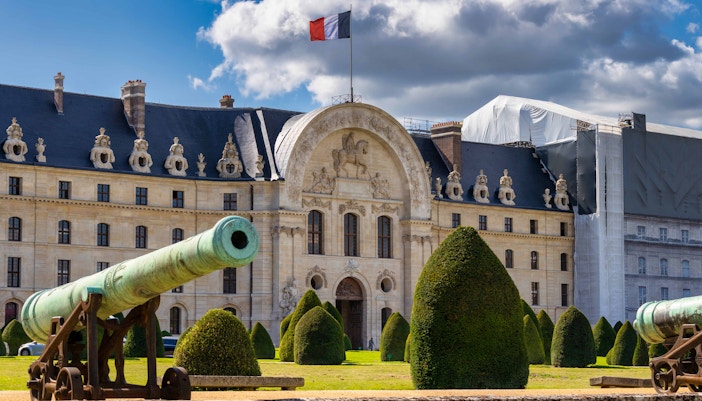
Plan your visit to Les Invalides

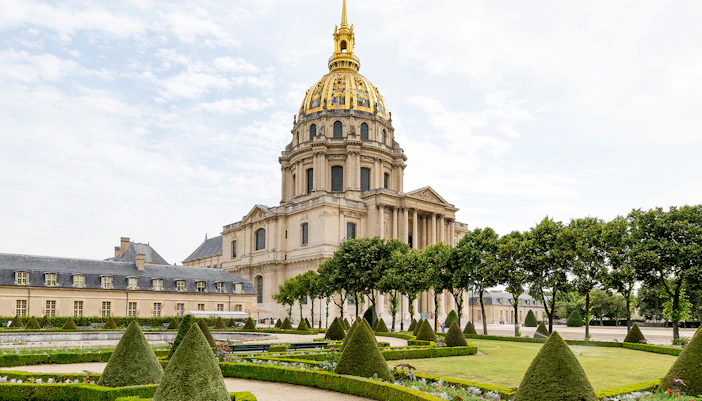
Les Invalides is a major Paris museum-and-monument complex best known for Napoleon I’s tomb beneath the gilded Dôme des Invalides. It’s more sprawling than many visitors expect, with military collections, smaller specialist museums, free-access areas, and a route that can feel scattered if you don’t choose your priorities early. The biggest difference between a rushed visit and a satisfying one is starting with the Dôme before gallery fatigue sets in. This guide helps you time your visit, pick the right ticket, and move through the site smartly.

Quick overview: Les Invalides at a glance

If you want the short version before you book, this is what changes the visit most.

  • When to visit: Monday–Sunday, 10am–6pm, with a first-Friday evening opening until 10pm; the first hour on weekday mornings feels much calmer than weekend afternoons, because most visitors go straight from Napoleon’s tomb into the main galleries at the same time.
  • Getting in: From €17 for standard entry. Skip-the-line entry tickets are available, and guided tours are available in small-group formats; booking ahead matters most on weekends, school holidays, and first-Friday evening openings.
  • How long to allow: 2–4 hours for most visitors. A full route pushes toward the longer end if you add the Dôme, World Wars galleries, relief maps, and the smaller museums.
  • What most people miss: The Musée des Plans-Reliefs and the Musée de l’Ordre de la Libération add real depth, but many visitors leave after the tomb and the headline galleries.
  • Is a guide worth it? Yes if you want Napoleon’s story and the military chronology explained clearly; if you mainly want the Dôme and a few major objects, a self-guided visit with the digital audio guide is usually enough.

🎟️ Tickets for Les Invalides can tighten up in advance during peak weekends, holidays, and first-Friday evening openings. Lock in your visit before the time you want is gone. See ticket options

Where and when to go

How do you get to Les Invalides?

Les Invalides sits in Paris’ 7th arrondissement, between the Esplanade des Invalides and the Dôme, a short ride or walk from the Seine and several central Paris landmarks.

129 rue de Grenelle, 75007 Paris, France

→ Open in Google Maps

  • Metro: Varennes (Line 13) → about a 5-minute walk → the easiest approach for the Place Vauban and Dôme side.
  • Metro/RER: Invalides (Line 8 and RER C) → about a 10-minute walk → useful if you’re coming from the Seine or Eiffel Tower side.
  • Metro: La Tour-Maubourg (Line 8) → about a 7-minute walk → a good option for the Esplanade approach.
  • Bus: Lines 28, 63, 69, 82, 83, 92, and 93 → nearby stops → useful if you want to avoid stairs in the metro.
  • Car: Paid parking is available near 23 rue de Constantine → best only if you’re arriving from outside central Paris.

Full getting there guide

Which entrance should you use?

Les Invalides has more than one public entrance, and the most common mistake is using the wrong side for the part of the complex you care about most. If Napoleon’s tomb is your priority, choose the Dôme side; if you’re starting with the museum galleries, the Esplanade side is simpler.

  • Esplanade entrance: Located at 129 rue de Grenelle. Best for most daytime museum visits and standard entry holders heading into the main collections.
  • Place Vauban entrance: Located at 2 place Vauban. Best for the Dôme, Napoleon’s Tomb, and the Aura evening experience.
  • Accessible museum access: Located at 6 boulevard des Invalides. Best for visitors using step-free access to the museum spaces, though the Dôme itself still has stairs and is not accessible.

When is Les Invalides open?

  • Monday–Sunday: 10am–6pm
  • First Friday of the month: Evening opening until 10pm
  • Annual closures: January 1, May 1, and December 25
  • Last ticket desk access: 30 minutes before closing

When is it busiest? Weekend afternoons, holiday periods, and the middle of the day feel busiest, especially once visitors bunch up around the Dôme and then spill into the main historical galleries.

When should you actually go? A weekday opening-hour slot gives you the clearest look at Napoleon’s tomb and the easiest start through the museum before the site fills out.

Timings guide

How much time do you need?

Visit typeRouteDurationWalking distanceWhat you get

Highlights only

Esplanade entrance → Dôme des Invalides → Napoleon’s Tomb → one major gallery → exit

1.5–2 hours

~1 km

You get the headline experience and one strong museum section, but you’ll skip the smaller specialist museums and most of the deeper military timeline.

Balanced visit

Esplanade entrance → Dôme des Invalides → Napoleon galleries → Arms and Armour or World Wars → Musée de l’Ordre de la Libération → exit

3–4 hours

~2 km

This gives you the tomb, the core military story, and one smaller museum that many visitors miss, without turning the day into a full museum marathon.

Full exploration

Esplanade entrance → Dôme des Invalides → main permanent collections → World Wars → Musée de l’Ordre de la Libération → Musée des Plans-Reliefs → Cour d’Honneur → Saint-Louis Cathedral → exit

4.5–6 hours

~3 km

You see the complex properly, including the spaces most people cut, but the site is large enough that the final hour feels heavy if you haven’t paced yourself.

Which Les Invalides ticket is best for you

Ticket typeWhat's includedBest forPrice range

Invalides: Napoleon's Tomb & Army Museum Skip-the-Line Entry Tickets

Skip-the-line to Invalides + access to Dôme and Napoleon's Tomb + Museum of Relief Maps + access to Museum of the Order of Liberation + access to Cour d'Honneur and Saint-Louis des Invalides Cathedral

A self-paced visit where you want the full daytime complex without being tied to a group schedule

From €17

Small-Group Guided Tour of Napoleon’s Tomb and the Invalides

Guided tour of Les Invalides + access to Napoleon’s Tomb + access to Army Museum galleries + English-speaking local guide + small group

A first visit where you want Napoleon’s story explained clearly instead of piecing together the galleries on your own

From €43.97

Combo (Save 5%): Invalides Napoleon's Tomb & Army Museum + Rodin Museum Skip-the-Line Tickets

Entry to Les Invalides + access to Napoleon’s Tomb and Army Museum + Museum of Relief Maps + Museum of the Order of Liberation + skip-the-line entry to Rodin Museum + sculpture garden access

A culture-heavy day in the 7th arrondissement where you want two strong museums within easy reach of each other

From €26

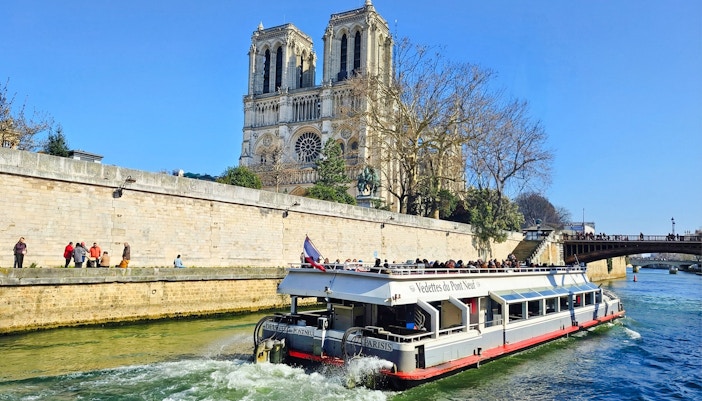
Combo (Save 13%): Napoleon's Tomb & Army Museum Skip-the-Line Tickets + Seine River Sightseeing Cruise

Skip-the-line entry to Invalides + Dôme and tomb access + smaller museums + 1-hour Seine cruise + multilingual audio guide

A same-day or split-day plan where you want one dense indoor visit and one lighter Paris overview afterward

From €31.28

Invalides: Aura Immersive Experience Entry Ticket

Nighttime entry to Dôme des Invalides + 50-minute Aura show

An evening visit focused on atmosphere, architecture, and spectacle rather than the daytime museum route

From €10

Combo (Save 5%): Invalides Napoleon's Tomb & Army Museum + Aura Immersive Experience Skip-the-Line Tickets

Skip-the-line to the Invalides + access to Dôme des Invalides and Napoleon's Tomb + access to all included museums + nighttime entry to Dôme des Invalides + access to 50-min Aura Invalides show

A same-day or split-day visit where you want the full historic route in daylight and the Dôme reinterpreted after dark

From €42.75

How do you get around Les Invalides?

Les Invalides is best treated as a museum complex rather than a single monument: the Dôme, Napoleon’s tomb, and the main Army Museum route connect well, but the side museums are easy to miss if you arrive without a plan. It’s manageable on your own, though a map helps once you move beyond the tomb and into the deeper collections.

The layout at Les Invalides

Les Invalides is a multi-part complex rather than a single straight museum, so it’s easy to cover the headline spaces but miss entire smaller museums if you wander without a route. In practice, it’s easiest if you treat the Dôme as your anchor and then add galleries by interest.

  • Dôme des Invalides: Napoleon’s tomb, the circular crypt, and the painted interior of the dome → budget 30–45 minutes.
  • Main Musée de l’Armée galleries: Arms, armor, uniforms, paintings, and the long French military chronology → budget 1.5–3 hours.
  • Musée de l’Ordre de la Libération: French Resistance and Liberation history → budget 20–30 minutes.
  • Musée des Plans-Reliefs: Large-scale fortress models and military planning displays → budget 20–30 minutes.
  • Cour d’Honneur and Saint-Louis Cathedral: The open courtyard and free-access church space → budget 15–20 minutes.

Suggested route: Start with the Dôme and Napoleon’s tomb while your attention is fresh, then choose either the Napoleon-era galleries or the World Wars wing as your main museum block, and save the relief maps for the end because they’re rewarding but easy to skip once you’re tired.

Maps and navigation tools

  • Map: Use the on-site visitor material and the digital guide flow to keep track of the Dôme, main galleries, and smaller museums before you drift back to the exit.
  • Signage: The main route is manageable, but signage favors the headline spaces, so smaller museums are the first things most visitors miss.
  • Audio guide / app: A free digital audio guide is available through museum Wi-Fi and QR codes; bring earphones, and use it if you want context without committing to a tour.

💡 Pro tip: Do the Dôme first, even if the museum galleries pull you in on the way, because once you’ve spent 90 minutes with armor and objects, many visitors start cutting corners and rush the tomb.

Where are the masterpieces inside Les Invalides?

Napoleon's Tomb at Les Invalides, Paris, with ornate sarcophagus and surrounding statues.
Dome interior of Napoleon's Tomb at the Paris Army Museum, featuring ornate frescoes.
Metal armour suits on display at Army Museum, Paris.
Armour suits and uniforms displayed at Army Museum, Paris with visitors exploring exhibits.
Visitors engaging with interactive map exhibit at Les Invalides, Paris.
Tour guide explaining to a group during the Invalides & Napoleon's Tomb tour in Paris.
1/6

Napoleon I’s tomb

Era: 19th-century imperial mausoleum

This is the emotional center of Les Invalides, and it works best if you pause on the upper ring before walking down toward the crypt. Most visitors head straight for the railing, take a photo, and move on too quickly to notice how deliberately the tomb is staged beneath the dome. The tomb also sits among the resting places of other major military figures, which gives the whole space more of a national pantheon feel than a single grave site.

Where to find it: Inside the circular crypt directly beneath the Dôme des Invalides.

The painted interior of the Dôme

Attribute — Architecture: 17th-century Baroque chapel interior

The gilded dome is famous from outside, but the inside is what slows people down once they actually look up. Visitors often focus only on the tomb below and miss the ceiling paintings, the height of the space, and the way the light changes the atmosphere from one side of the church to the other. If you’re doing a short visit, this is the one place where standing still for a minute pays off.

Where to find it: Above and around the upper viewing ring inside the Dôme des Invalides.

Arms and Armour galleries

Attribute — Collection type: Medieval to early modern armor and weapons

This is one of the most visually immediate parts of the museum and the easiest gallery to enjoy even if you’re not a military-history specialist. The craftsmanship, scale, and ornamentation make it a strong early stop, especially with kids or anyone who struggles with long chronological galleries. Most visitors remember the armor itself, but not the detail work and symbolism built into elite pieces, so look closely instead of just scanning the room.

Where to find it: In the main Musée de l’Armée permanent collections, reached from the central museum route.

Louis XIV to Napoleon galleries

Attribute — Era: 17th to 19th centuries

If you want Napoleon’s tomb to feel like more than a photo stop, this is the gallery block that gives it context. It connects monarchy, empire, state ceremony, and military identity through uniforms, portraits, weapons, and personal objects. Many visitors rush past the objects tied directly to Napoleon because the tomb feels like the main event, but the smaller items are what make the larger monument make sense.

Where to find it: In the permanent historical galleries covering the early modern and Napoleonic periods.

Musée des Plans-Reliefs

Attribute — Collection type: Relief models and fortified-city maps

This is one of the most distinctive spaces in the complex, and it’s also one of the first things visitors cut when time gets tight. The large-scale models reveal how France thought about defense, borders, and military geography in a way that ordinary wall maps never do. People often assume it’s a niche add-on, but it’s one of the most memorable spaces precisely because it feels unlike the rest of the museum.

Where to find it: In the dedicated Musée des Plans-Reliefs within the Les Invalides complex.

Musée de l’Ordre de la Libération

Attribute — Era: 20th-century Resistance and Liberation history

This smaller museum adds emotional weight to the complex by shifting the story from monarchs and empire to occupation, resistance, and liberation. It’s easy to miss because the Dôme and main galleries dominate the visit, but it gives the site a much fuller historical range. If you only know Les Invalides for Napoleon, this is the section that most changes your sense of what the complex really covers.

Where to find it: In the Musée de l’Ordre de la Libération, accessed within the museum circuit.

Facilities and accessibility

  • 🎒 Cloakroom / lockers: A free cloakroom is available for ticket holders and accepts coats, umbrellas, scooters, roller skates, and bags up to 55 × 35 × 25 cm.
  • 🚻 Restrooms: Restrooms are available inside the museum areas and in the Cour d’Honneur, and accessible toilets are available for visitors with reduced mobility.
  • 🍽️ Café / restaurant: On-site eating options are available, and they work best as a break during a long visit rather than a destination meal.
  • 🛍️ Gift shop / merchandise: A book and gift shop is available on site, and it’s a better stop for history books and military-themed souvenirs than for generic Paris keepsakes.
  • 📶 Wi-Fi: Museum Wi-Fi supports the free digital audio guide, so it’s useful even if you’re only using your phone for navigation and commentary.
  • 💳 Cash machine: An ATM is available near the Place Vauban ticket desk hall, which is handy if you need cash before entering.
  • Mobility: Most museum spaces are lift-equipped and accessible, wheelchair loans are available at the Esplanade and Place Vauban ticket desks with an ID deposit, but the Dôme and Napoleon’s tomb are not accessible because of exterior and interior stairs.
  • 👁️ Visual impairments: Adapted guided tours can be arranged for visitors with visual disabilities, and registered service animals are allowed on site.
  • 🧠 Cognitive and sensory needs: The calmest window is usually soon after opening, while the Aura evening show includes flickering lights and high sound volume that can be difficult for sensitive visitors.
  • 👨‍👩‍👧 Families and strollers: The museum route is easier than the Dôme for families with small children, and the site works best with a shorter object-led route instead of a full chronological sweep.

Les Invalides works best for school-age children and teens who like armor, cannons, or Napoleon stories, and it’s much more engaging when you treat it as a visual history visit rather than trying to read every label.

  • 🕐 Time: Around 1.5–2 hours is realistic with younger children, and the Dôme plus one strong gallery is usually enough.
  • 🏠 Facilities: Restrooms and cloakroom facilities make it easier to visit with kids, especially if you want to shed coats and keep bags light.
  • 💡 Engagement: Start with armor, oversized artillery, or the Dôme, because these visual anchors make the later historical rooms easier for children to care about.
  • 🎒 Logistics: Bring earphones for the digital guide, keep bags small enough for the cloakroom rules, and choose the first part of the day before attention dips.
  • 📍 After your visit: The Rodin Museum is a smart follow-up nearby because the sculpture garden gives children more room to move than another indoor museum block.

Rules and restrictions

What you need to know before you go

  • Entry requirement: Online booking is the smoothest option because it lets you go straight past the cash desk, while free-entry visitors still need to collect or hold a valid admission ticket.
  • Bag policy: The cloakroom only accepts items up to 55 × 35 × 25 cm, so large luggage and oversized bags should be left elsewhere before you arrive.
  • Re-entry policy: Plan to do the paid route in one go and keep your ticket until the end, because staff may ask to see it again between different parts of the complex.

Not allowed

  • 🚫 Food and drink: Food and drinks are not allowed inside the exhibition spaces, so eat before you enter or use the on-site break options between sections.
  • 🚬 Smoking / vaping: Smoking is not permitted inside the site, and the Aura experience also bans electronic cigarettes.
  • 🐾 Pets: Pets are not allowed inside, except for registered service animals.
  • 🖐️ Large items and disruptive gear: Flash photography, tripods, filming equipment, large bags, and suitcases are not allowed because they slow circulation and create security issues in the galleries.

Photography

Handheld personal photography is fine for most visitors, but don’t treat Les Invalides like a full photo shoot. Flash photography, tripods, and filming equipment are not permitted inside the museum, and the distinction that matters is equipment rather than the tomb versus gallery route. If you want photos in the Dôme, keep them quick and non-flash so you don’t hold up the viewing points around the crypt.

Good to know

  • Free-access areas: The Cour d’Honneur and Saint-Louis Cathedral can be visited without buying the full museum ticket, but the Dôme and Napoleon’s tomb cannot.
  • Audio guide tip: The standard ticket includes a free digital audio guide, so bringing earphones makes a bigger difference here than at many Paris museums.

Practical tips

  • Booking and arrival: Book online if you want to skip the cash desk, and arrive at least 15 minutes early for timed entry or guided tours so you’re not starting the visit already behind.
  • Pacing: Do the Dôme first if Napoleon’s tomb is the main reason you came, because the museum is big enough that many visitors lose energy before they reach it properly.
  • Crowd management: Weekday mornings are the easiest daytime window, but the first Friday evening opening is the smarter choice if you want atmosphere and fewer daytime tour groups.
  • What to bring or leave behind: Bring earphones for the free digital audio guide, and keep bags within the 55 × 35 × 25 cm cloakroom limit if you don’t want entry friction.
  • Route planning: If you only have 2 hours, choose the Dôme plus one gallery block; trying to squeeze in the relief maps and Liberation museum on top usually turns the end of the visit into a skim.
  • Food and drink: Eat before a full museum route or save your break for the middle, because once you leave the historical flow to look for food, it’s hard to rebuild momentum.

What else is worth visiting nearby?

Commonly paired: Rodin Museum

Why people combine them: It’s the cleanest same-neighborhood pairing, and the shift from military history to sculpture makes the day feel varied rather than repetitive.

Book / Learn more

Les Invalides and Rodin Museum are most commonly visited together — and simplest to do on a combo ticket. The combo removes the need to book them separately and makes it easier to plan one strong museum day in the 7th arrondissement. → See combo options

Commonly paired: Seine River cruise

Why people combine them: It balances a dense indoor visit with an easy hour on the water, which is especially useful if you don’t want a second museum after Les Invalides.

Book / Learn more

Also nearby

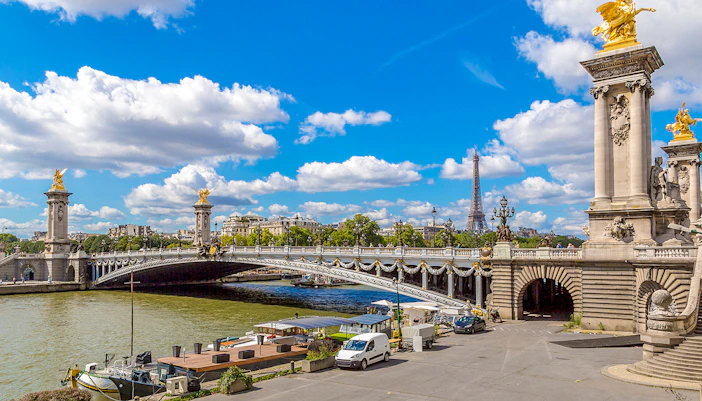
Pont Alexandre III

Worth knowing: It’s an easy architectural detour after the museum and one of the best nearby spots for photos once you’ve finished the indoor route.

Worth knowing: This works better as a post-Invalides stroll or evening plan than as a tight same-slot add-on, especially if you’ve already spent 3+ hours inside the complex.

Eat, shop and stay near Les Invalides

  • On-site: Les Invalides has on-site eating options that are useful as a convenience break, but they make more sense mid-visit than as the main reason you eat here.
  • Better options nearby: Not applicable.
  • 💡 Pro tip: If you’re doing the full museum route, eat before you enter or after the Dôme, because stopping too early breaks the visit rhythm and makes it harder to return to the smaller museums later.
  • Musée de l’Armée book and gift shop: Best for military-history books, exhibition catalogues, and more specific souvenirs than the standard Paris gift-store mix, and it’s located on site within the complex.

Yes, if you want a quieter, more polished base with strong walkability to major 7th-arrondissement sights. The area feels more residential and less hectic than some central Paris districts, which makes it good for short stays built around museums, monuments, and easy walks. It is usually pricier than more mixed neighborhoods, though, so it’s better for convenience than for budget value.

  • Price point: The area leans upscale, with convenience and calm usually costing more than in livelier outer-center neighborhoods.
  • Best for: Visitors on a short Paris trip who want a walkable, low-stress base near major sights rather than nightlife.
  • Consider instead: Saint-Germain-des-Prés or areas around the Latin Quarter work better for longer stays if you want more cafés, evening energy, and easier variety across different days.

Frequently asked questions about visiting Les Invalides

The stunning architecture, the impressive Dôme des Invalides, and the Napoleon's Tomb are visually captivating. Plus, the complex offers a peaceful, beautiful atmosphere that's worth experiencing for its cultural and architectural value alone.

More reads

Army Museum

Book Now

Plan your visit

Book Now