Nothing quite prepares you for the Dome Church, where Napoleon Bonaparte’s tomb rests beneath one of Paris’ most iconic gilded domes. The scale, symmetry, and silence make it feel less like a monument and more like a national statement.
Quick Information
ADDRESS
75007 Paris, France
RECOMMENDED DURATION
3 hours
Timings
10:00–17:00
VISITORS PER YEAR
100000
TICKETS
From $18.99
NUMBER OF ENTRANCES
3
EXPECTED WAIT TIME - STANDARD
30-60 mins (Peak), 0-30 mins (Off Peak)
EXPECTED WAIT TIME - SKIP THE LINE
30-60 mins (Peak), 0-30 mins (Off Peak)
Did you know?
The iconic Hôtel des Invalides has been featured in the Netflix series Emily in Paris and the James Bond film A View to a Kill.
During World War II, Hôtel des Invalides covertly sheltered Allied pilots, playing a hidden yet crucial role in the war effort.
Every day at 8am, the French national flag is hoisted and lowered from the top of Les Invalides' dome.
Why visit Les Invalides?
If there’s one place in Paris where military history feels monumental, personal, and deeply French all at once, it’s Les Invalides. Beneath its golden dome, you’ll find emperors, soldiers, weapons, and stories that shaped France.
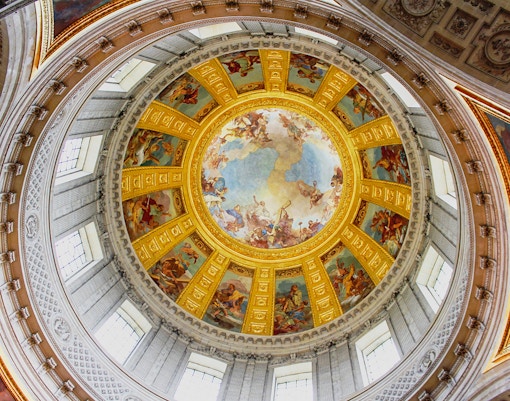
Stand beneath Napoleon’s golden dome
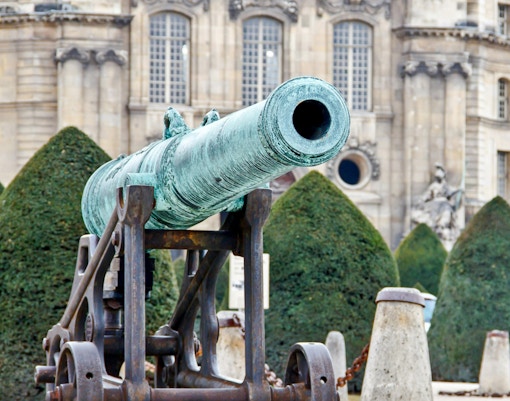
Trace France’s military past
From medieval armor and royal cannons to World War uniforms and battlefield maps, the Musée de l’Armée walks you through centuries of conflict, strategy, and power. It’s one of the best places to understand how France’s history was shaped on and off the battlefield.
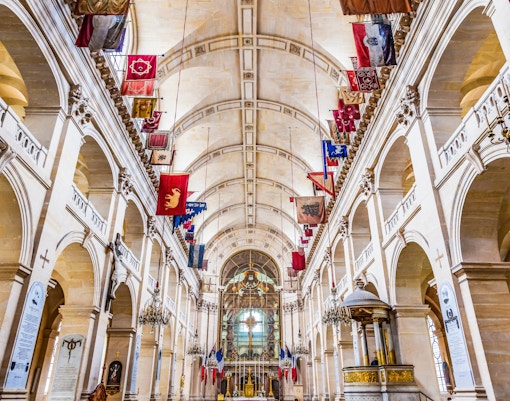
See the humans caught in war
Beyond grand victories and famous generals, Les Invalides also tells the stories of soldiers, veterans, resistance fighters, and ordinary lives changed by war. Exhibits on the World Wars, the French Resistance, and Charles de Gaulle add depth beyond the spectacle.
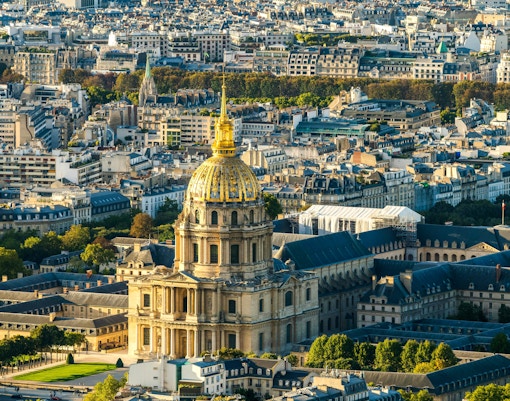
Explore a landmark built for soldiers
Les Invalides was originally created by Louis XIV as a home and hospital for wounded veterans. As you walk through its grand courtyards, chapels, and museums, you’re not just visiting a collection—you’re stepping inside a landmark built around service, memory, and legacy.
Collection at Les Invalides
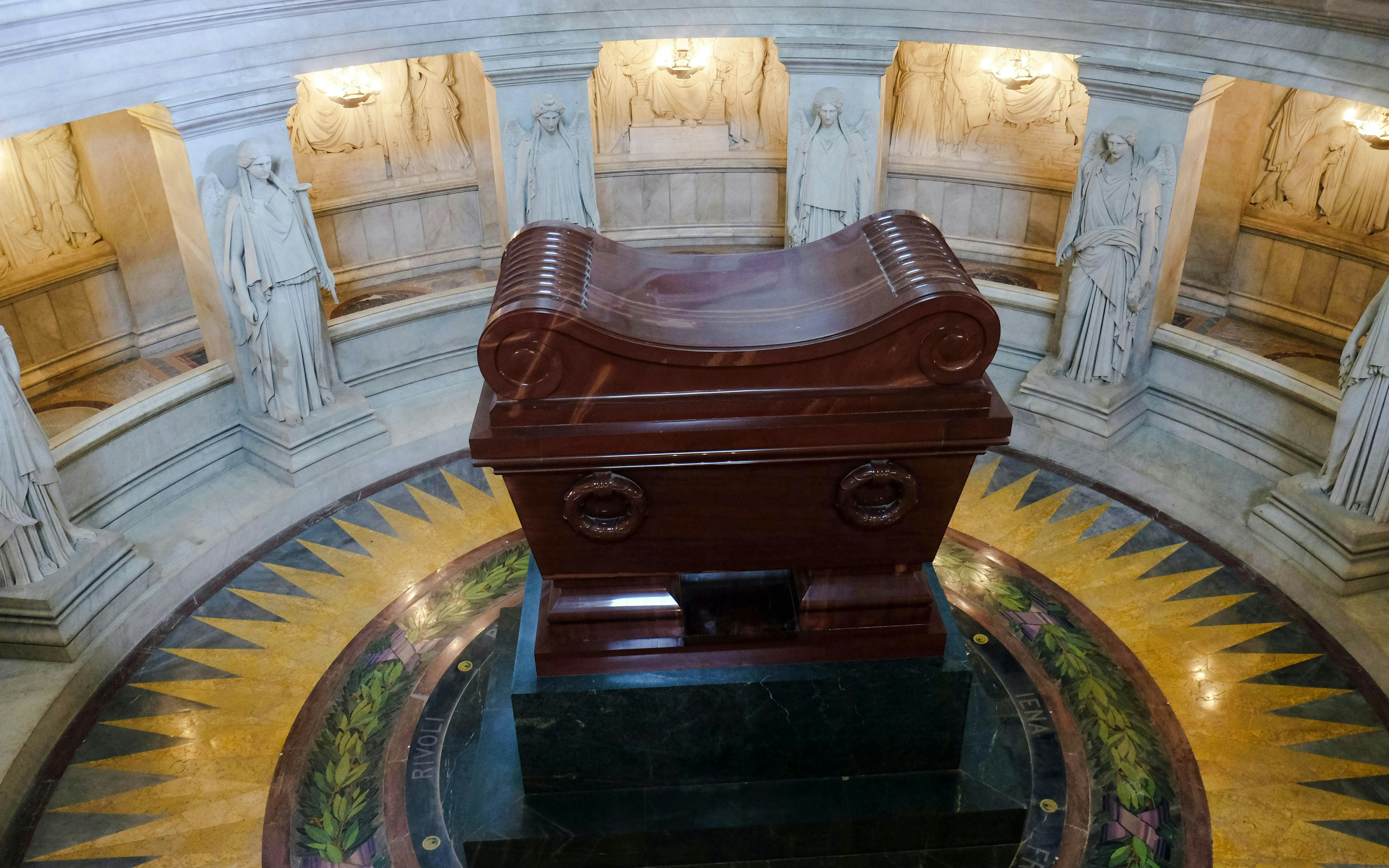
Napoleon’s tomb
The museum’s most iconic sight, set beneath the Dome Church’s golden cupola in a monumental red quartzite sarcophagus.
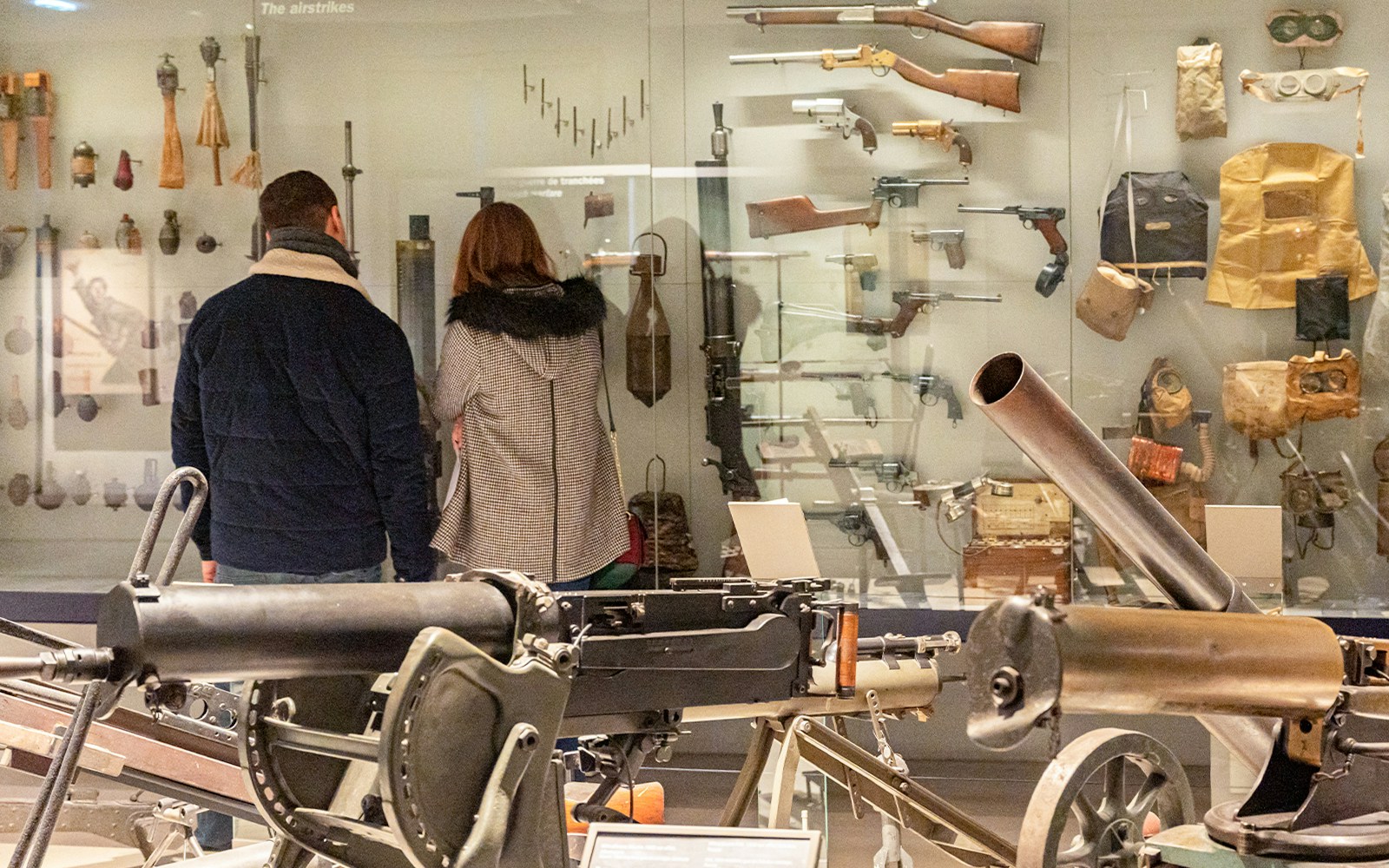
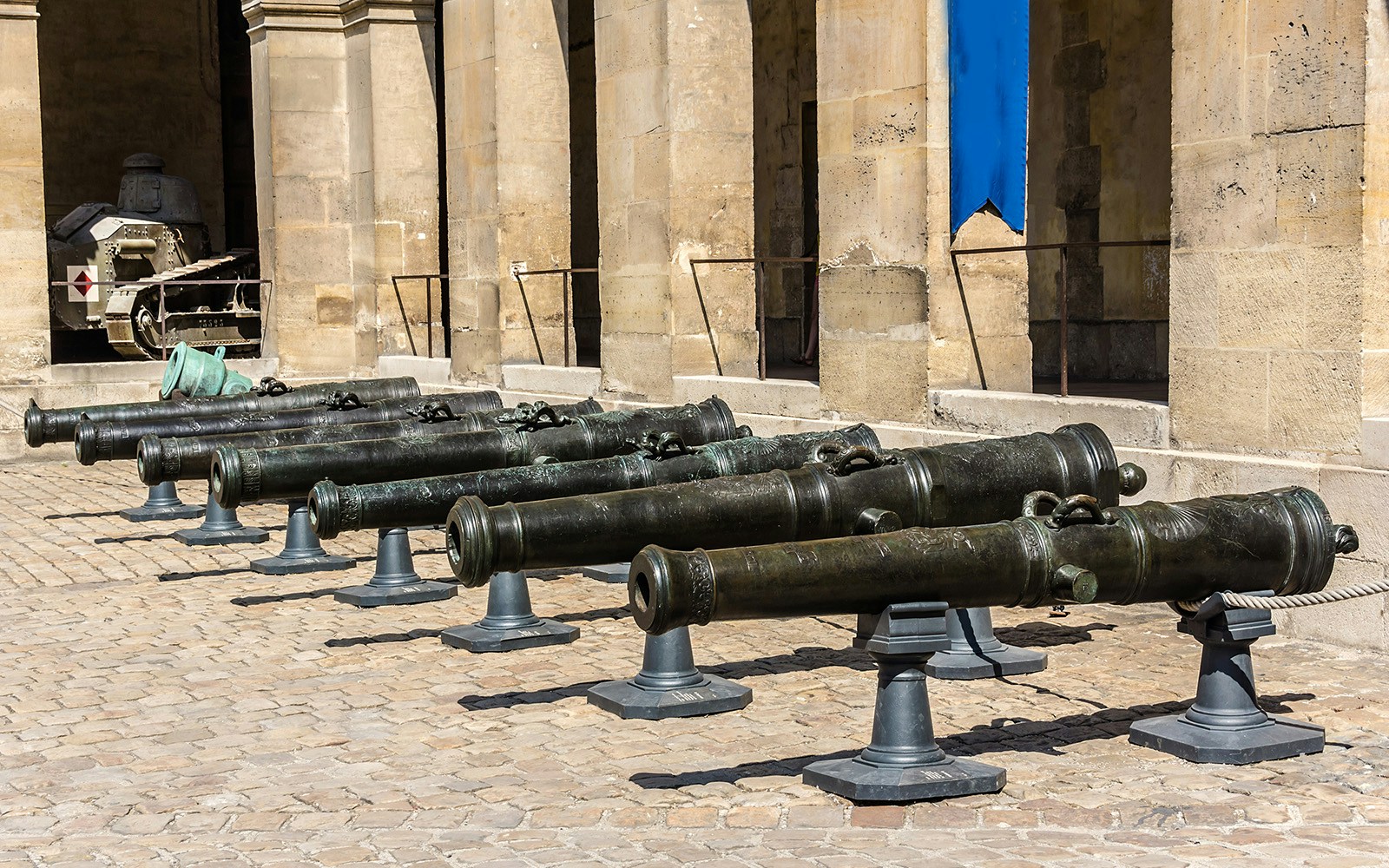
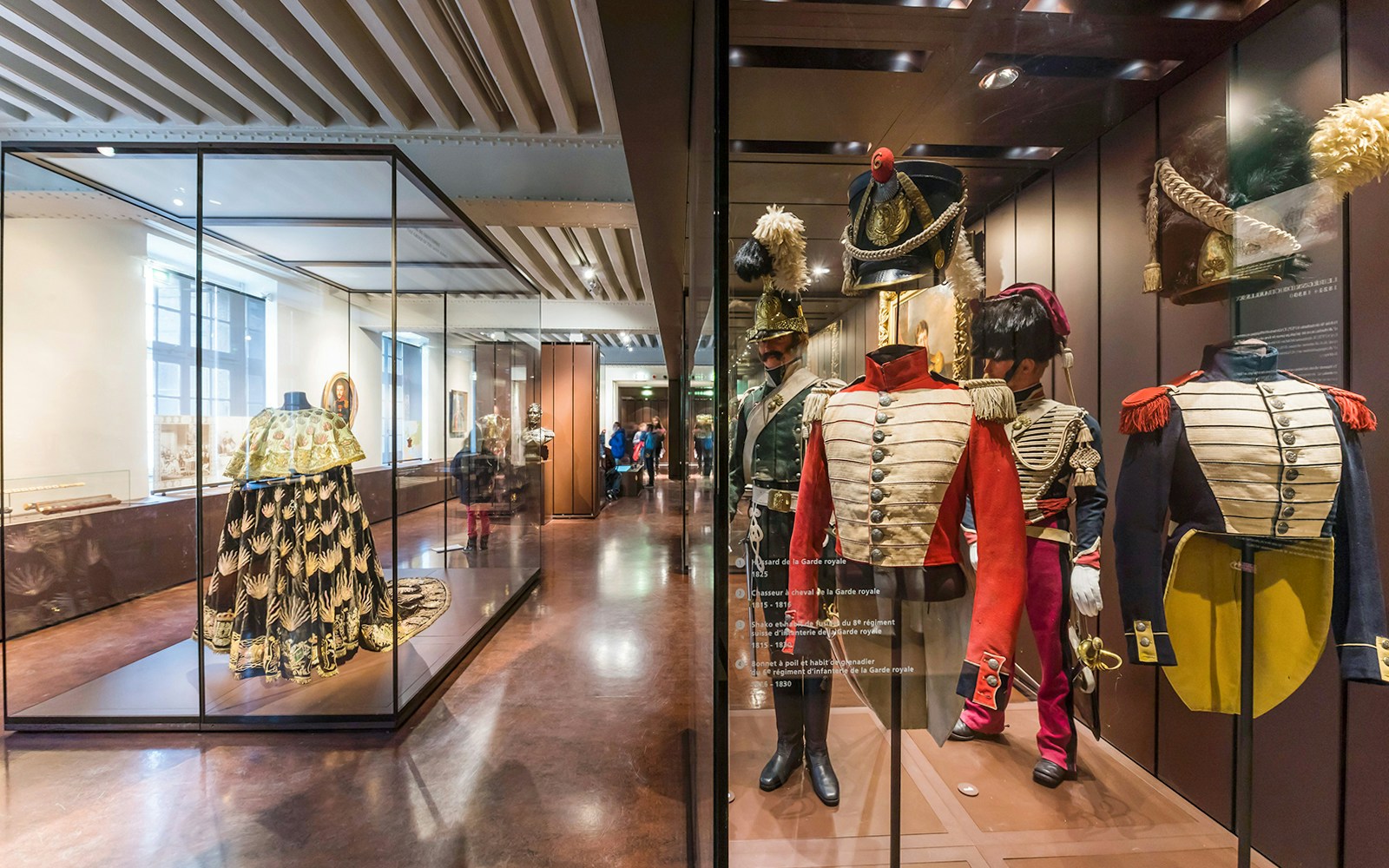

Museums inside the Les Invalides complex
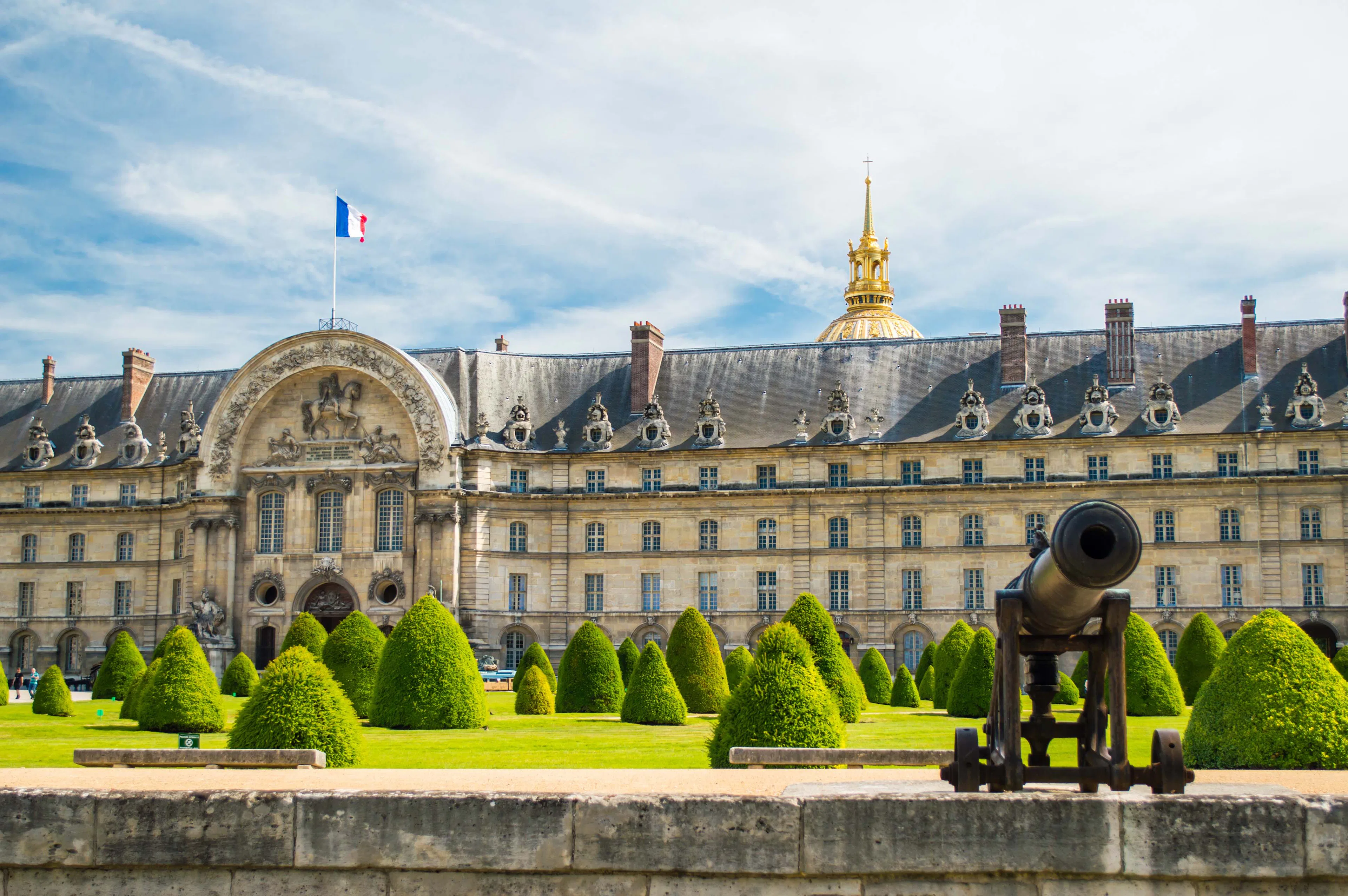
1/11
The Army Museum
The Army Museum stands as France's largest military history museum, housing more than 500,000 rare weapons, relics, and more. This collection shows the evolution of military equipment from the 13th to the 17th century and contains some noteworthy archeological finds, including the personal belongings of Napoleon Bonaparte.
Dôme des Invalides
With its gilded lantern stretching up to 107 meters, the originally built church can be seen from almost all over Paris. It inspired the Capitol Building in the United States. Napoleon had ordered the conversion of the royal chapel into a resting place for France’s military heroes. The Dôme des Invalides is also home to Napoleon I's tomb.
Museum of Relief Maps
Discover a unique collection of historical scale models charting over two centuries of military history. The Museum showcases 28 examples of a collection of relief maps of fortified towns, made between 1668 and 1875. These impressive models were used as strategic planning tools and symbols of mastery of the territory.
Museum of the Order of Liberation
The Museum of the Order of the Liberation tells the story of the Companions of the Liberation, including Free France, the Interior Resistance, and the deportation.
St. Louis Cathedral
St. Louis Cathedral houses the graves of the governors of the Invalides, and also many Marshals of France and commanding officers' graves. Mass is still often celebrated, especially on the anniversary of Napoleon's death and on the anniversary of the Invalides Mansion foundation.
Main Courtyard
A significant portion of the artillery and monumental sculpture collections are on display in the main courtyard, which serves as the hub of the Hôtel National des Invalides complex and hosts several events.
Armor and Weapons | 13th to 17th Century
This collection shows the evolution of military equipment from the 13th to the 17th century and contains some noteworthy archeological finds. It illustrates the role that armor and weaponry had throughout Europe during the Middle Ages and Renaissance, in the lives of aristocratic communities, royal courts, and even individual cities
Louis XIV –Napoleon |17th – 19th Century
The diversity and quantity of the collections housed in this department are unmatched in the world. Items belonging to notable personalities like Napoleon Bonaparte and his marshals coexist with simple soldier uniforms and luxury pieces, equipment from numerous French and foreign regiments, weapons, harnesses, and more.
World War | 20th Century
This department is devoted to the two World Wars and tells the story of the French Army from 1871 to 1945 and that of the two great conflicts of the 20th century. Admire the French and foreign uniforms, personal objects of soldiers, ceremonial swords, postcards, paintings, and other items from the archives that depict life during the 20th century's greatest conflicts.
Extraordinary Cabinets
Explore three unique cabinets displaying a collection of artillery models from the 16th to the 19th centuries, musical instruments belonging to the military, and a fascinating collection of military figurines including 5,000 toy soldiers exhibited out of a collection of 140,000 of them.
The Charles De Gaulle Monument
Immerse yourself in an interactive space honoring the work and journey of Charles de Gaulle, the founding President of the Fifth Republic. The space pays homage to a key figure in French history, featuring a multi-screen room, multimedia exhibits, and a circular glass ring displaying archived footage, photographs, and narratives of wars.
Timeline of Hôtel des Invalides
- Foundation (1670): King Louis XIV ordered the construction of the Hôtel des Invalides to provide a home for war veterans and soldiers who were injured in battle. The project is designed by architect Liberal Bruant.
- Construction begins (1674): Construction begins under the supervision of architect Jules Hardouin-Mansart, who is responsible for the grand design, including the vast central building and chapel.
- Completion of the Dome (1706-1715): The iconic Dôme des Invalides (the golden dome) is completed, designed by Hardouin-Mansart. It becomes a defining feature of the Paris skyline.
- Napoleon’s Burial (1800): After Napoleon's death in 1821, his remains were transferred to the Dôme des Invalides, where he was buried in a grand tomb beneath the dome, solidifying the site's historical significance.
- Transformation (19th century): Over time, parts of the Hôtel des Invalides were repurposed for military use, and it also became home to several museums and institutions, including the Musée de l'Armée (Army Museum), founded in 1905.
- Cultural and military importance (20th century): The Hôtel des Invalides continues to be a site of military ceremonies, and its museums, such as the Musée de l'Armée, become key institutions for preserving France's military history.
- Restoration and modernization (21st century): The Hôtel des Invalides undergoes extensive restoration work to preserve its historical integrity while continuing to serve as a symbol of France's military heritage and as a cultural landmark. The Army Museum and other parts of the complex continue to attract visitors from around the world.
Hôtel des Invalides architecture
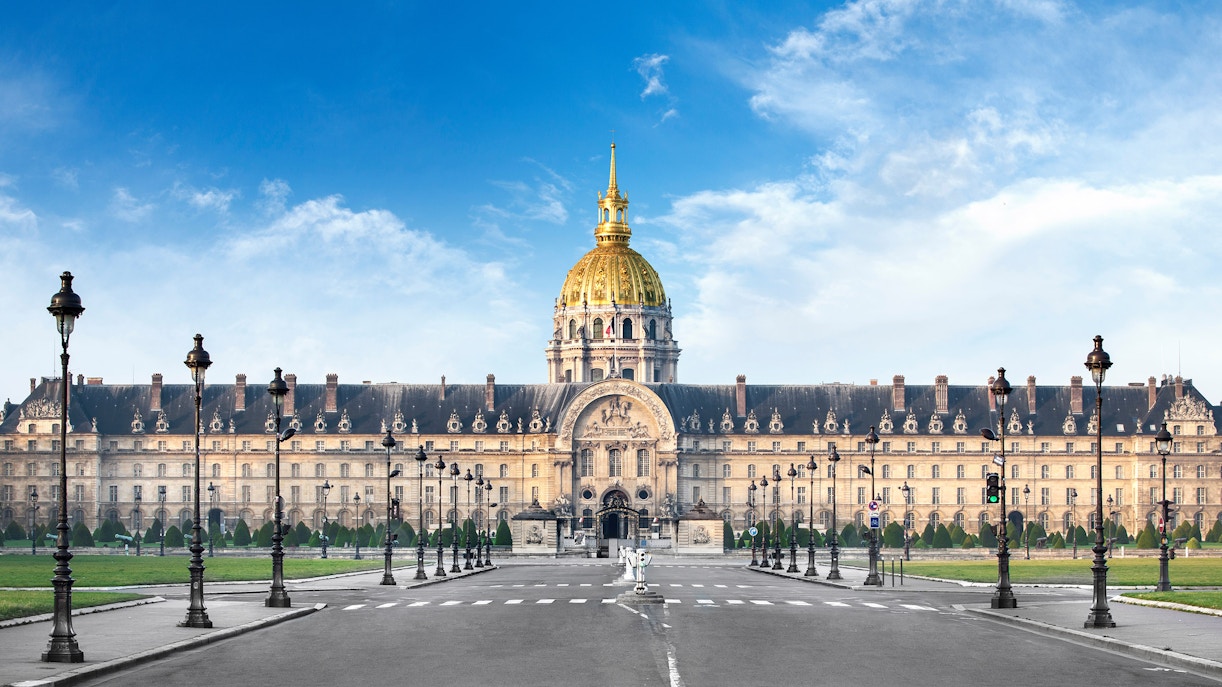
Hôtel des Invalides' building is a magnificent illustration of classical French architecture. It was created by Jules Hardouin-Mansart, the principal architect of Louis XIV, and its highlight is the magnificent gold dome that is visible from all across Paris. The main structure consists of multiple wings and courtyards, but the most remarkable aspect is the dome, an incredible achievement of engineering and architecture. The complex has many noteworthy spaces, such as the Army Museum, which has a sizable collection of armor and weapons, and the tombs of various notable Frenchmen, including Napoleon Bonaparte. The most Instagrammable spot is undoubtedly the courtyard with the golden dome in the background, but the view from the top of the dome is also breathtaking.
Frequently asked questions about Hôtel des Invalides
Yes, with the Army Museum ticket, you can access all parts of the Hôtel des Invalides complex.
The Hôtel des Invalides holds immense historical significance for several key reasons, spanning its roles in military history, its connection to notable figures like Napoleon Bonaparte, and its evolution from a hospital for veterans to a major museum.
The distinctive, shimmering appearance of the dome is because it's covered with gold leaf. The dome in itself is made out of copper.
Inside Napoleon’s Tomb is a large sarcophagus made of red quartzite, which holds the remains of Napoleon Bonaparte. Several commemorative plaques and statues surround the tomb, and the tomb itself is located beneath the Dôme des Invalides.
The name "Hôtel des Invalides" comes from the French word "invalides," meaning "disabled" or "wounded veterans." The term "Hôtel" in this context refers to a large residence or establishment
Yes, these tickets are available and come in handy during the peak tourist seasons, as they allow you to bypass long queues and save up to 1 hour.
For an enhanced experience, embark on a guided tour where you can learn interesting facts about the museum through the local English-speaking guide.
The best time to visit Hôtel des Invalides is during weekdays to avoid crowds, preferably in the morning when it opens or late afternoon just before closing time.
No, there is no dress code for visiting Les Invalides.
Yes, photography is allowed in most sections of the Hôtel des Invalides. However, restrictions may apply in specific exhibit areas. Please ensure you do not use flash or carry any camera equipment, like tripods, inside the premises.
You could visit the Rodin Museum, dedicated to the works of the French sculptor Auguste Rodin, the majestic Eiffel Tower, or the Orsay Museum, home to the collection of Impressionist, and Post-Impressionist artworks.
