Go Monday–Thursday soon after 10am. The Italian Museum is easier to enjoy before temporary-exhibition traffic spreads through the mansion.
Virgin and Child | devotional art at the Jacquemart-André Museum
Mary and the infant Jesus appear again and again in European art because the subject joins devotion, tenderness, and theology in one image. At the Jacquemart-André Museum, you can start with Sandro Botticelli’s Virgin and Child, Giovanni Bellini’s Virgin and Child on a Throne, and Botticelli’s The Flight into Egypt in the Italian Museum. These works are included with standard admission, and Headout’s Jacquemart André Museum Tickets with Temporary Exhibition Access also includes skip-the-line entry, the permanent collection, the temporary exhibition, and a multilingual digital audio guide app.
Virgin and Child works at the Jacquemart-André Museum
1/3
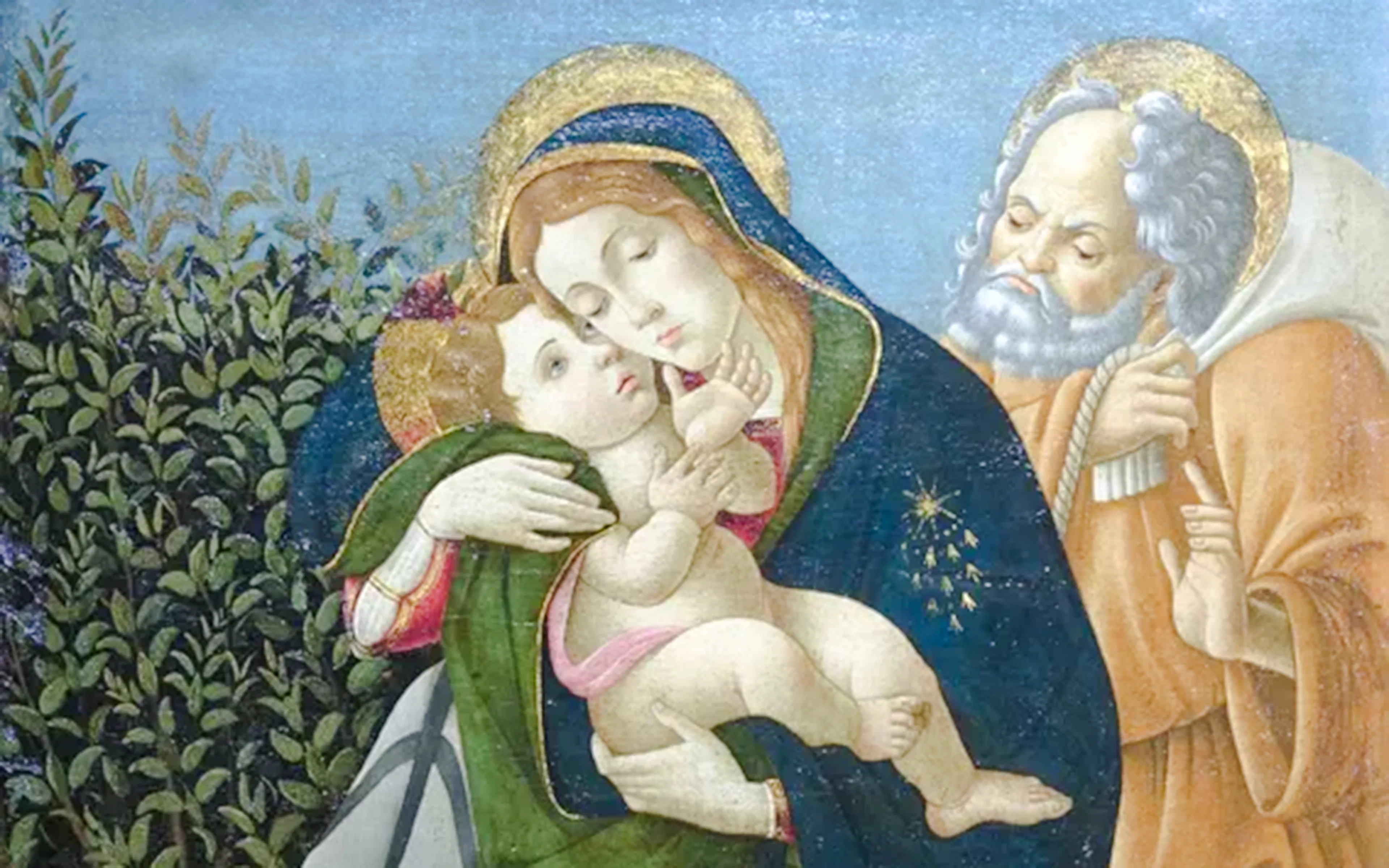
*Virgin and Child*
Location: Located in the Italian Museum – Italian Renaissance galleries
This Botticelli panel turns a familiar sacred subject into something lyrical and intimate. Mary’s face is calm, the child feels alert and alive, and the flowing lines give the image its unmistakable Florentine grace. It matters because it shows how Renaissance artists made holy figures feel emotionally close without losing their dignity.
*Virgin and Child on a Throne*
Location: Located in the Italian Museum – Italian Renaissance galleries
Bellini’s version feels steadier and more monumental. The throne, the architectural setting, and the weight of the figures give the scene a calm, grounded presence. It stands out because Bellini uses light and structure to make a devotional image feel believable, spacious, and quietly human rather than purely symbolic.
*The Flight into Egypt*
Location: Located in the Italian Museum – Italian Renaissance galleries
This is not a formal enthroned Madonna, but it is still a powerful Virgin-and-Child image. Mary carries the infant Jesus through a biblical journey, so you see motherhood, protection, and narrative all at once. The work matters because it expands the theme beyond still devotion and shows how artists placed the pair inside a living story.
Tips for viewing Virgin and Child at the Jacquemart-André Museum
⌛ Start early
👁️ Compare two traditions
View Botticelli and Bellini back to back. Botticelli favors lyrical line, while Bellini gives Mary more weight, space, and stillness.
🔍 Read the hands first
Study Mary’s grip and the child’s reach before reading the label. Gesture often carries the work’s emotion faster than background detail.
🎧 Use the included app
The Headout ticket includes a multilingual digital audio guide. It helps you connect the mansion rooms, Italian panels, and temporary exhibition without rushing.
🪑 Give one panel five quiet minutes
Jacquemart-André is compact. Use that advantage and linger with one image instead of treating the mansion like a checklist.
● 400s–600s – Early Christian and Byzantine artists establish Mary holding Christ as a devotional image of motherhood and divinity.
● 1100s–1200s – Romanesque and Gothic art makes the pair more frontal, formal, and symbolic, often with Mary enthroned.
● 1300s–1400s – Italian painters bring greater tenderness and human feeling to the subject.
● Late 1400s – Renaissance masters such as Botticelli and Bellini add believable anatomy, light, and space. Renaissance means a rebirth of classical balance and natural-looking form.
● 1600s – Baroque artists heighten movement, drama, and emotional intensity. Baroque art favors strong feeling and theatrical effect.
● 1800s – Collectors such as Édouard André and Nélie Jacquemart help preserve and display older devotional works for public audiences.
● Today – Paris lets you see the theme across museums and churches in a single trip.
Did you know?
● The subject is often called Madonna and Child in Italian art.
● A gold background usually signals sacred space, not a real room.
● An apple can hint at redemption after Adam and Eve.
● A book in Mary’s hand often points to wisdom or prophecy.
● The theme appears in painting, sculpture, ivory, and stained glass.
● At Jacquemart-André, Botticelli and Bellini show two distinct Renaissance moods.
The subject changes dramatically across time. Gothic versions often look more formal and symbolic, with elegant curves and flatter space. Renaissance versions feel calmer and more human, with softer bodies, believable depth, and a clearer bond between mother and child.
Artists used tempera on wood, oil on panel, marble, and stained glass depending on place and period. Tempera allowed crisp detail, while oil made soft blending and richer light possible. Repeating symbols — books, fruit, thrones, gardens, and halos — help you read whether the image stresses majesty, tenderness, sacrifice, or protection.
Virgin and Child vs contemporaries [Optional]
Not applicable. This page focuses on a subject in Christian art rather than one single artist, so a same-venue artist comparison would be misleading here.
Where else to see Virgin and Child
Louvre Museum, Paris
The Virgin and Child with Saint Anne
Leonardo folds three generations into one turning pyramid. Soft shadow and subtle expressions make this sacred image feel intimate, living, and psychologically rich.
CTA: Visit the Louvre Museum
Louvre Museum, Paris
La Belle Jardinière
Raphael places Mary outdoors with the Christ Child and young Saint John. Clear color, calm balance, and simple geometry make High Renaissance harmony easy to recognize.
CTA: Visit the Louvre Museum
Notre-Dame Cathedral, Paris
The Virgin of Paris
This 14th-century sculpture bends in a graceful Gothic curve. It shows medieval Paris’s taste for elegance, symbolic presence, and devotional intimacy over Renaissance realism.
CTA: Visit Notre-Dame Cathedral
Frequently asked questions about Virgin and Child
It shows Mary with the infant Jesus. Artists used the subject to express both Christ’s divinity and a tender, approachable image of motherhood.
Jacquemart-André Museum is an easy starting point. It is compact, and its Italian Museum lets you compare Botticelli and Bellini without the scale of the Louvre.
The Louvre is the main stop for Leonardo and Raphael. Jacquemart-André adds a quieter, more intimate look at Botticelli and Bellini inside a 19th-century mansion.
Gothic versions often look flatter, more symbolic, and more curved. Renaissance works add believable anatomy, calmer space, and a more human exchange between mother and child.
Yes. Notre-Dame Cathedral’s Virgin of Paris is the best-known free example, and it gives you a strong medieval contrast to painted museum versions.
Weekday mornings, especially soon after 10am, are usually calmest. Friday also works well if you want extended hours and a slower evening visit.
Allow 2–3 hours for Jacquemart-André Museum alone. For a fuller day, pair it with the Louvre, or combine it with Notre-Dame for a museum-and-church contrast.
More reads
[Information unavailable]
