Quick Information

ADDRESS

29 Rue Pasquier, 75008 Paris, France

Timings

13:30–18:30

TICKETS

From $7.97

Plan your visit

Did you know?

Although the chapel commemorates Louis XVI and Marie-Antoinette, their remains were exhumed in 1815 and reinterred at Saint-Denis Basilica; the monument marks the former burial spot instead of housing their graves.

The chapel was commissioned by Louis XVIII and built from 1815 to 1826 to atone for the executions of Louis XVI and Marie-Antoinette during the French Revolution.

Its architect, Pierre-François-Léonard Fontaine, was a major figure in both Napoleonic and Restoration architecture, yet this monument uses a notably restrained neoclassical style.

Expiatory Chapel tickets

Tickets to Expiatory Chapel

Explore at your pace

Why visit the Expiatory Chapel?

Through the gate on Rue Pasquier, Paris seems to mute itself. You cross a garden, pass stone memorials, and step into a cool, pale interior where the dome gathers the light and every footstep feels softer. The chapel is small, but it has the stillness of a place people enter more slowly than they intended.

It was built by Louis XVIII to honor his brother Louis XVI and Marie-Antoinette on the cemetery ground where they were first buried after the guillotine. That purpose gives the building its emotional charge: this is not a royal showpiece, but an act of mourning in stone.

What stays with most visitors is the intimacy of the history. You read the king’s final words, stand beside the queen’s farewell letter, then descend to the crypt where the burial site is marked with severe simplicity.

Skip it if: You want a long, high-energy attraction or need full wheelchair access, since the visit is brief and the crypt is reached by steps.

What to see inside the Expiatory Chapel?

Placeholder Image Headout Blimp
1/5

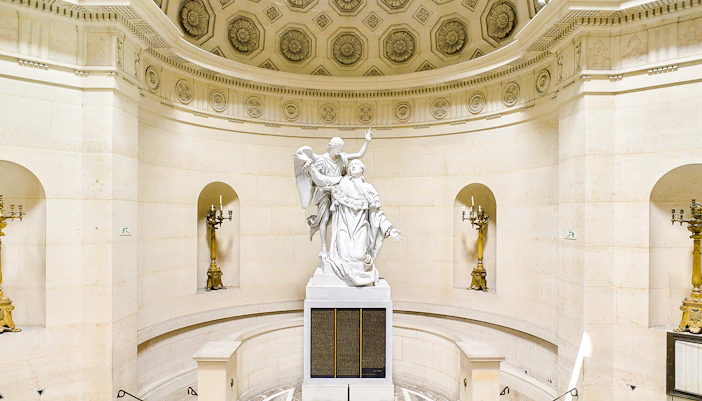
Sculptures of the royal martyrs

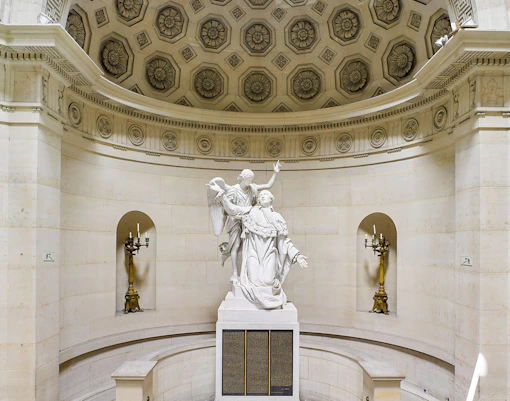
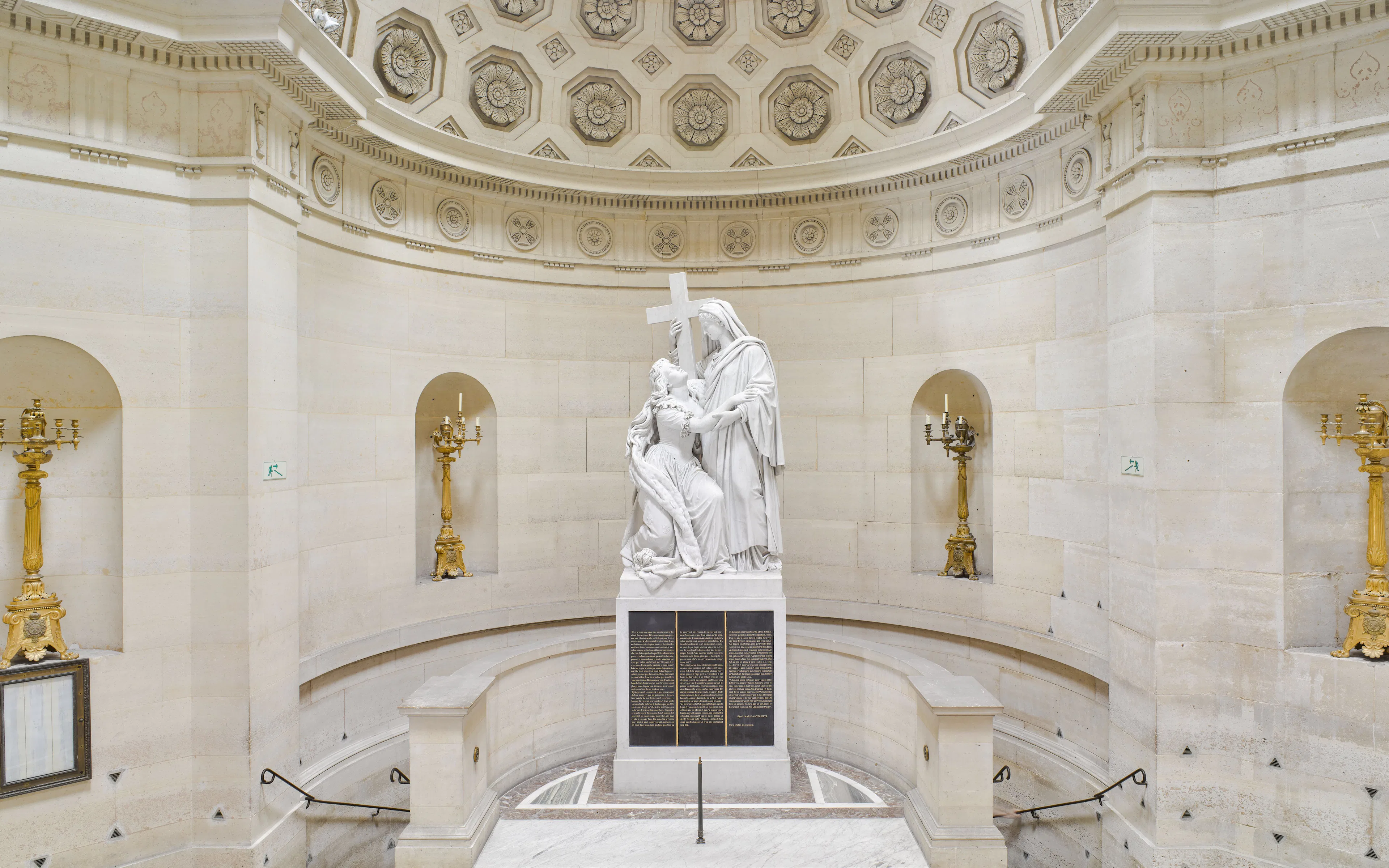
Inside the chapel, you’ll see two moving marble sculptures: Louis XVI being guided by an angel, and Marie-Antoinette kneeling in prayer. They turn the royal couple’s final moments into quiet memorial scenes.

The crypt and black marble altar

The crypt marks the spot where the remains of Louis XVI and Marie-Antoinette were first found before being moved to the Basilica of Saint-Denis. Its black marble altar keeps the space simple and solemn.

The chapel dome

Look up at the pale dome and circular oculi, where soft natural light filters into the chapel. The design keeps the interiors calm, balanced, and focused on reflection rather than grandeur.

Memorial inscriptions

Beside the sculptures, you’ll find engraved excerpts from Louis XVI’s will and Marie-Antoinette’s final letter. These personal words make the chapel feel less like a monument and more like a human memorial.

The courtyard and cenotaphs

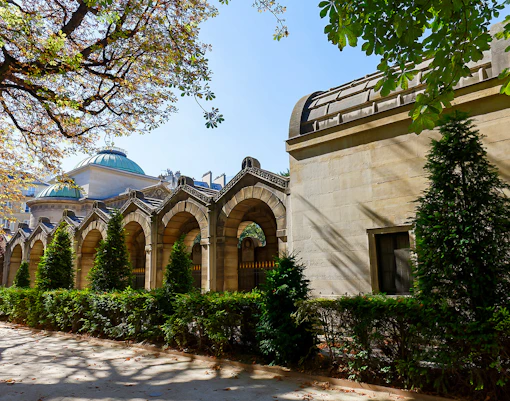
Before entering the chapel, walk through the courtyard lined with symbolic cenotaphs. They honor those buried at the former Madeleine Cemetery, including many victims of the French Revolution.

Tickets to Expiatory Chapel

Visit the chapel, crypt, and courtyard with a ticket that includes a multilingual booklet to help you understand the royal memorials and inscriptions.

Book Expiatory Chapel tickets →

How to explore the Expiatory Chapel

Start at the courtyard

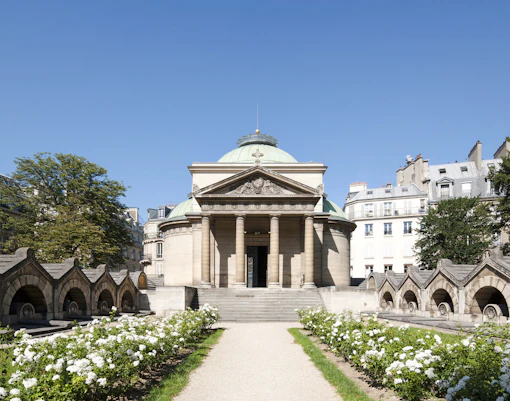
Your visit begins before you enter the chapel. The peaceful courtyard stands on the grounds of the former Madeleine Cemetery and prepares you for the monument's reflective atmosphere.

  • Enter through Rue Pasquier.
  • Walk past the memorial garden and cenotaphs.
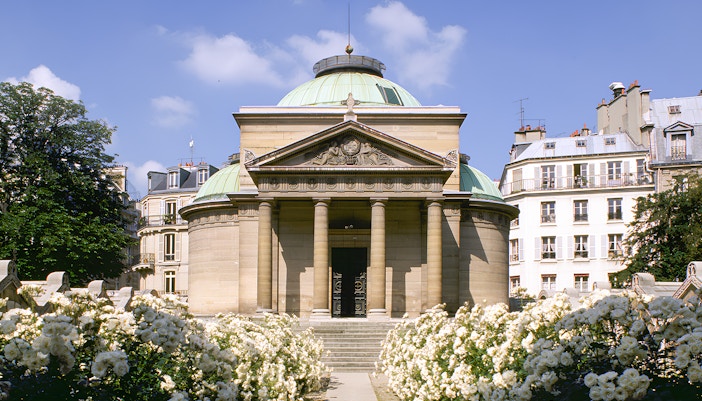
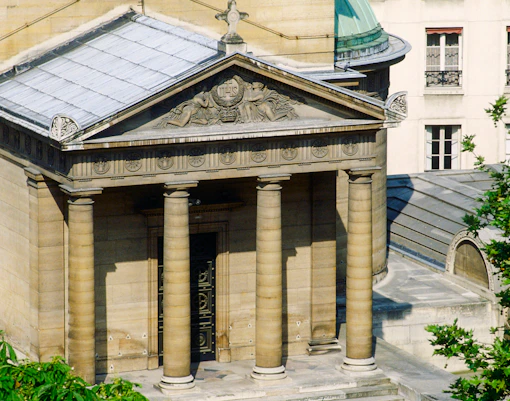
  • Pause to appreciate the chapel's symmetrical Neoclassical façade before heading inside.
Visit the main chapel

The central chapel is the heart of the monument, where architecture, history, and remembrance come together in a calm, light-filled space.

  • Admire the marble statues of Louis XVI and Marie-Antoinette.
  • Look up at the elegant domed ceiling and classical columns.
  • Notice the restrained Neoclassical design that reflects the chapel's memorial purpose.

Go down to the crypt

A short staircase leads to the crypt, where the original burial site of the royal couple is commemorated with quiet simplicity.

  • See the black marble altar marking the burial site.
  • Learn where Louis XVI and Marie-Antoinette were first laid to rest.
  • Take a moment to reflect in one of the chapel's most solemn spaces.

Read the memorial details

The chapel's inscriptions and symbols reveal the personal stories behind its construction and offer deeper insight into France's royal history.

  • Read excerpts from Louis XVI's final testament.
  • Discover passages from Marie-Antoinette's farewell letter.
  • Use the multilingual booklet to better understand the memorial's symbolism.

For timings, facilities, accessibility, and nearby tips, see our Expiatory Chapel visitor guide

Brief history of Expiatory Chapel

  • 1793: Louis XVI and Marie-Antoinette are buried in the Madeleine Cemetery after their executions during the French Revolution.
  • 1815: Louis XVIII orders their remains to be identified and transferred to the Basilica of Saint-Denis, then commissions a memorial chapel on the burial ground.
  • 1816: Architect Pierre-François-Léonard Fontaine begins work on a late Neoclassical design shaped as a Greek cross.
  • 1826: The Expiatory Chapel is completed and consecrated as a place of royal memory and prayer.
  • 19th century: The chapel survives Paris’ political upheavals and remains one of the city’s most unusual Restoration-era monuments.
  • Today: It functions as both a historic monument and a quiet memorial open to visitors in central Paris.

Who built the Expiatory Chapel?

The Expiatory Chapel was commissioned by Louis XVIII in 1815 as an act of royal mourning and political repair after the Revolution. He entrusted the design to Pierre-François-Léonard Fontaine, a leading Neoclassical architect, whose restrained, temple-like plan turned a former burial ground into a solemn royal memorial.

Architecture of the Expiatory Chapel

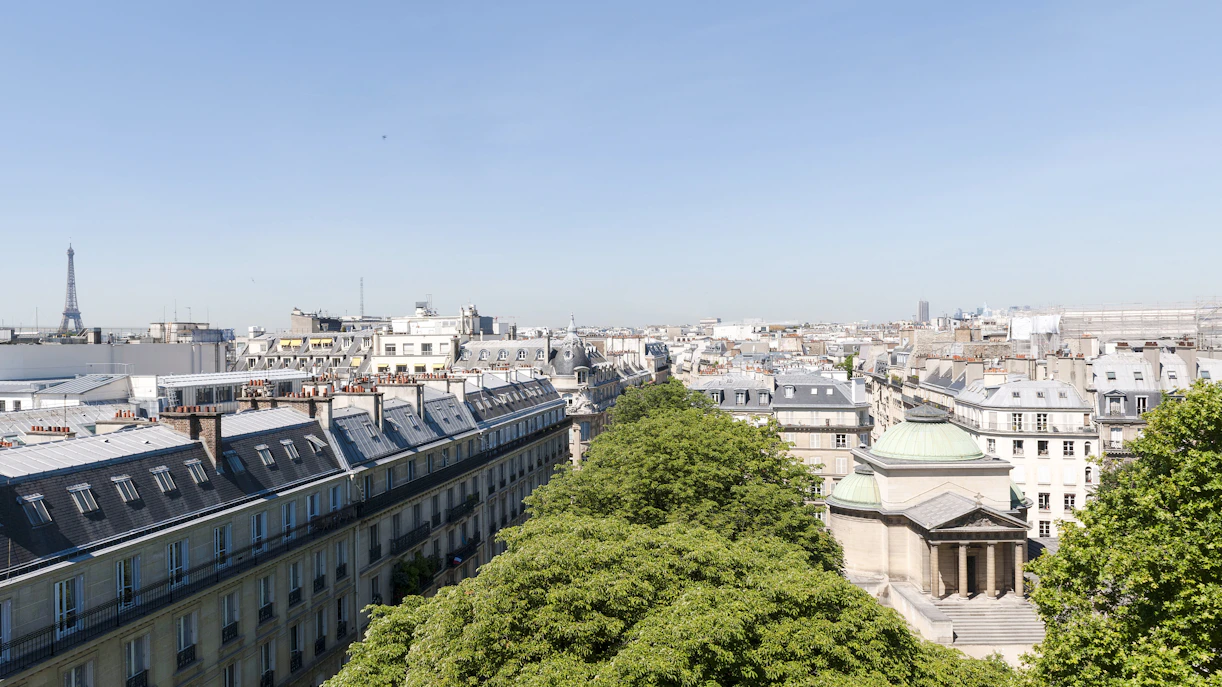
The Expiatory Chapel was designed by Pierre-François-Léonard Fontaine in a late Neoclassical style. Its Greek-cross plan, pale stone, symmetrical courtyard, and temple-like forms give the monument a controlled, solemn feel rather than the grandeur of a royal church.

  • The chapel is laid out in the shape of a Greek cross.
  • Classical columns and arches create a balanced, temple-like structure.
  • The dome and oculi bring soft natural light into the central chapel.
  • The crypt below keeps the burial site deliberately simple and severe.
  • The courtyard separates the chapel from the street, making the visit feel quieter and more reflective.

Why the chapel still matters in Paris

The Expiatory Chapel matters because it preserves a quieter, more royalist view of the French Revolution. Most visitors encounter the Revolution through public squares, former prisons, and republican monuments. Here, the story shifts to royal grief after revolutionary violence. Built during the Bourbon Restoration, the chapel shows how 19th-century France tried to process trauma, politics, faith, and remembrance in one space. Visit around January 21, the anniversary of Louis XVI’s execution, and you may still see commemorative observances linked to this living memory.

Frequently asked questions about the Expiatory Chapel

The Expiatory Chapel was commissioned by King Louis XVIII in 1815 to honor his brother, Louis XVI, and sister-in-law, Marie-Antoinette. It stands on the site of the former Madeleine Cemetery, where the royal couple were first buried after their executions during the French Revolution.

More Reads

Timings

Directions

Plan your visit