Plan Your Visit to the Expiatory Chapel
Expiatory Chapel is a small memorial chapel best known for marking the original burial site of Louis XVI and Marie-Antoinette. The visit is quiet, compact, and more reflective than spectacular, so it works best if you arrive knowing what you’re looking at. Most people spend under an hour here, but the difference between a moving visit and a forgettable one is simple: don’t rush straight to the crypt before taking in the garden memorials and royal statues. This guide covers timing, tickets, layout, and what to prioritize.
Want the story before planning your route? Read about the Expiatory Chapel →
Quick overview: Expiatory Chapel at a glance
This is one of the easiest historic sites in Paris to fit into a short day, but a little timing still makes the visit feel much better.
- When to visit: Tuesday–Saturday, 10am–12:30pm and 1:30pm–6pm. Right after opening or just after 1:30pm feels noticeably calmer than late morning, because nearby shoppers and Saint-Lazare foot traffic haven’t drifted in yet.
- Getting in: From €7 for standard entry. You can usually just show up, but booking ahead helps if you want a fixed day or you’re visiting on a free-admission date, when this otherwise quiet chapel gets busier.
- How long to allow: 30–60 minutes for most visitors. It stretches toward an hour if you read the inscriptions, use the booklet, and spend time in the crypt.
- What most people miss: The Swiss Guard cenotaphs in the garden and the text carved into the royal statues are what give the chapel its emotional weight, not just the crypt below.
- Is a guide worth it? Usually no for a first visit, because the site is small and the free booklet covers the essentials, but a guide adds value if you want deeper French Revolution context.
Jump to what you need
🕒 Where and when to go
🗺️ Getting around
⛪ What to see
♿ Facilities and accessibility
Where and when to go
How do you get to Expiatory Chapel?
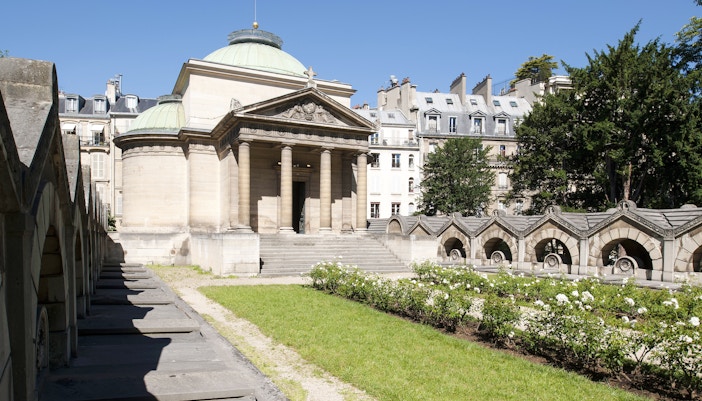
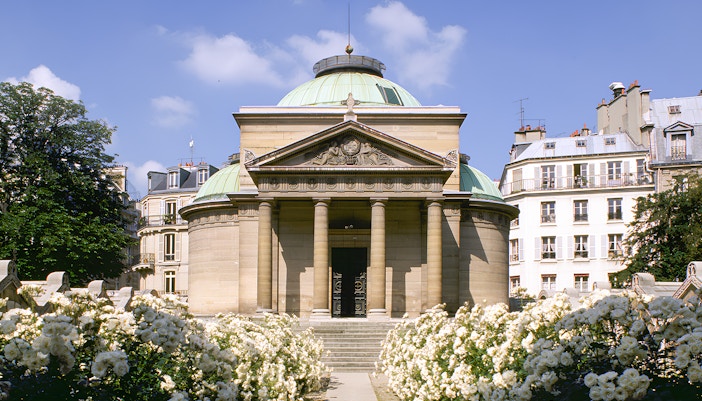
The chapel sits in the 8th arrondissement inside Square Louis XVI, just behind Boulevard Haussmann and a short walk from Saint-Lazare, about 2km (1.2 miles) northwest of the Louvre.
Address: 29 Rue Pasquier, 75008 Paris, France
- Metro: Saint-Augustin (Line 9) → 2-minute walk → Exit toward Rue Pasquier for the quickest approach.
- Metro/RER/train: Saint-Lazare (Lines 3, 12, 13, 14, Transilien) → 3–4-minute walk → Use the Rue de la Pépinière side for the most direct route.
- Bus: Lines 32, 43, 49, 84, and 94 → nearby stops around Saint-Lazare and Madeleine → easiest if you’re already above ground.
- Taxi/rideshare: Drop-off on Rue Pasquier → the gateway into Square Louis XVI is easy to miss, so ask for the chapel entrance, not just the square.
Which entrance should you use?
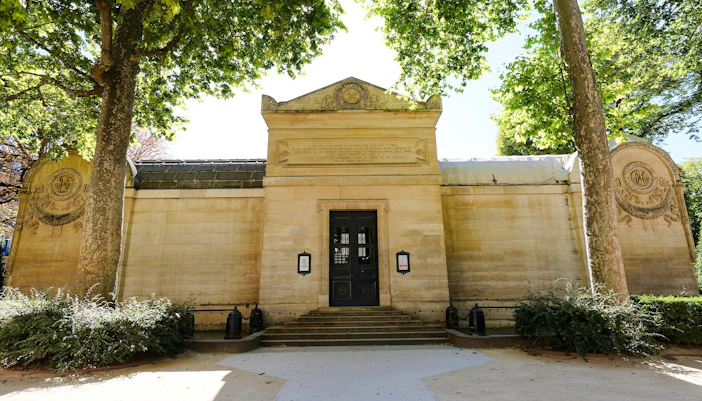
There’s only one public entrance, and the most common mistake is walking past it because it feels more like a gated garden than a monument entrance.
- Main entrance: Located on Rue Pasquier through the gate into Square Louis XVI. Expect little to no wait on regular days, and around 10–15 minutes on free-admission dates.
When is Expiatory Chapel open?
- Tuesday–Saturday: 10am–12:30pm and 1:30pm–6pm
- Sunday–Monday: Closed
- January 1, May 1, and December 25: Closed
- Midday closure: Closed from 12:30pm–1:30pm
When is it busiest? Free-admission Sundays from November to March, European Heritage Days in September, and late mornings in spring and summer bring the only noticeably fuller visit windows here.
When should you actually go? Arrive close to 10am or just after 1:30pm if you want the garden, statues, and crypt at their calmest before nearby foot traffic builds.
How do you get around Expiatory Chapel?
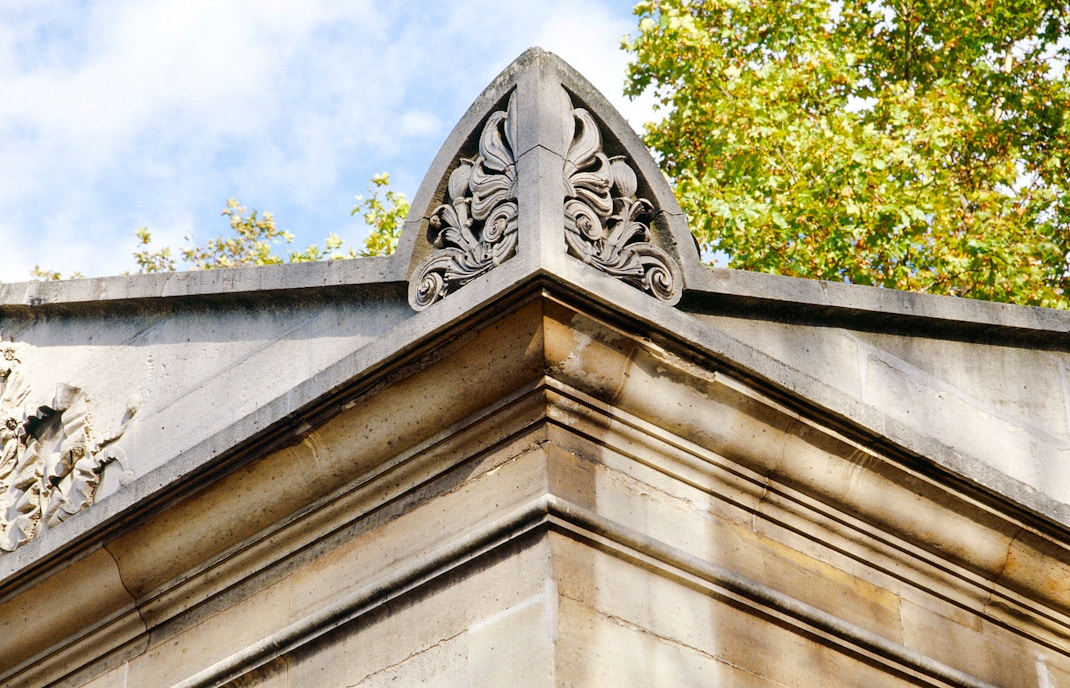
Expiatory Chapel is best explored on foot, and the full route is compact enough to cover comfortably in 30–60 minutes. The main chapel sits beyond the garden entrance, with the royal statues on either side of the upper interior and the crypt directly below.
Getting around the chapel
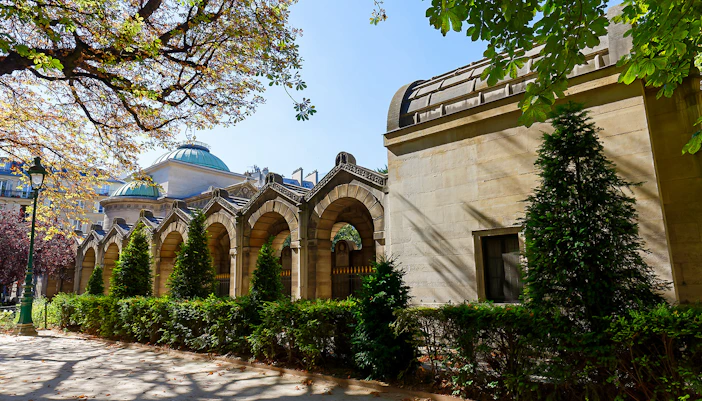
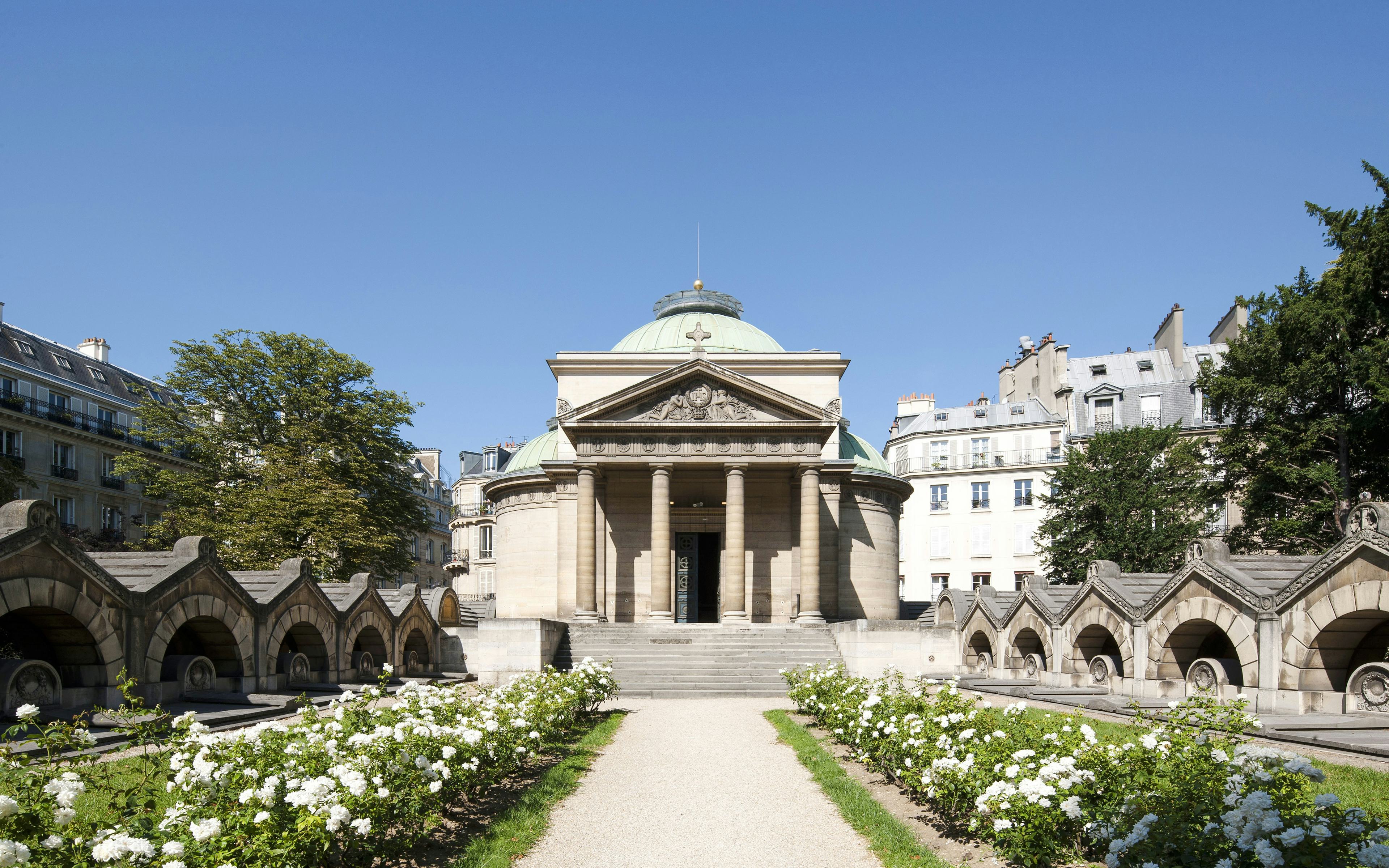
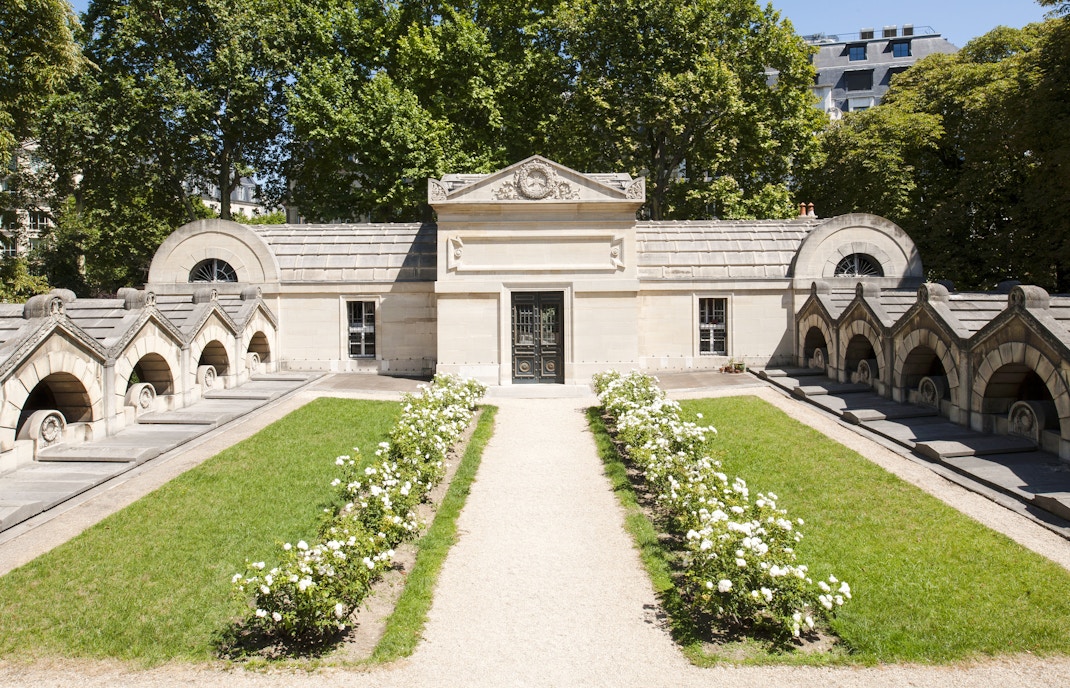
- Square Louis XVI garden: Swiss Guard cenotaphs, hedges, and the memorial approach → budget 10 minutes.
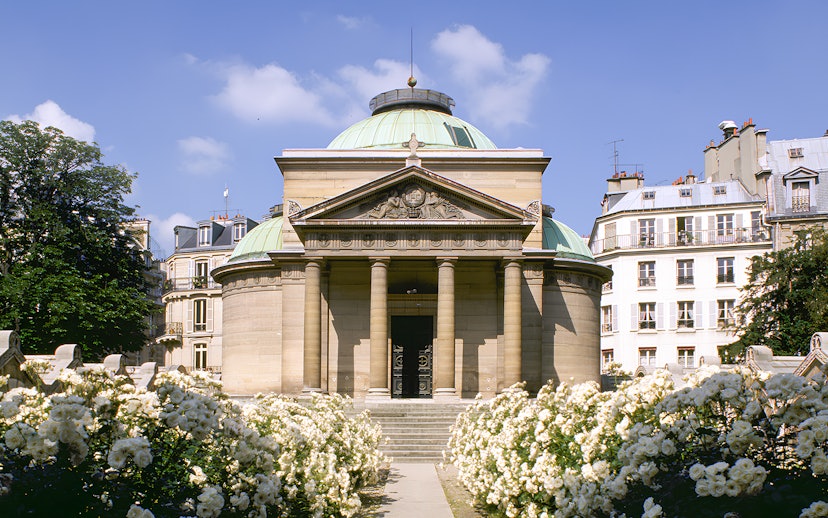
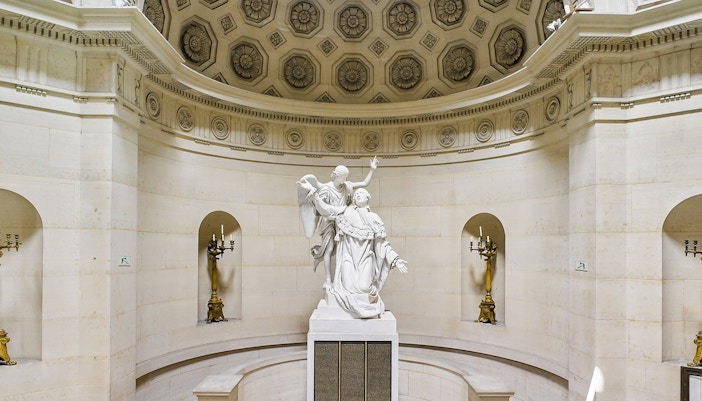
- Main nave and dome: Central Greek-cross interior, coffered dome, and the strongest architectural view → budget 10–15 minutes.
- Louis XVI statue: Marble memorial with the king’s final words inscribed below → budget 5–10 minutes.
- Marie-Antoinette statue: Companion sculpture with her farewell letter and nearby relief details → budget 5–10 minutes.
- Crypt: Black-and-white marble altar marking the original burial spot → budget 5–10 minutes.
The smartest route is garden first, then the upper chapel, then the statues, and the crypt last. Most visitors go downstairs too quickly and miss the emotional setup that makes the crypt land properly.

Maps and navigation tools
- Map: Free booklet at the entrance → covers the chapel’s history and key spaces → pick it up as soon as you enter.
- Signage: Basic wayfinding is enough for the layout, but the booklet matters because the most meaningful details are easy to miss without context.
- Audio guide / app: There’s no on-site audioguide → the multilingual booklet does the practical job well enough for most self-guided visits.
💡 Pro tip: Read the garden memorials before stepping inside — the royal statues and crypt make far more sense once you’ve seen who else is being remembered on this ground.
What are the most significant spaces in Expiatory Chapel?
Swiss Guard cenotaphs
Attribute — Type: Memorial garden monuments
Most visitors think the experience starts inside, but the cloistered garden is where the visit’s tone is set. These cenotaphs honor the Swiss Guards killed defending the monarchy in 1792, and they explain why the site feels like a memorial precinct rather than a standard chapel. What many people rush past is how quiet this first approach is — it’s one of the few places in central Paris where the city noise drops away almost immediately.
Where to find it: Along the garden path inside Square Louis XVI, before you reach the chapel doors
The central dome
Attribute — Era: Restoration-era Neoclassical design
The dome is the architectural high point of the visit, and it’s worth stopping directly beneath it instead of drifting through. The restrained symmetry, soft light, and coffered ceiling give the space its dignity without relying on heavy decoration. What many visitors miss is that the side apses and skylights shape the whole mood here — the chapel works because the light feels controlled, not dramatic.
Where to find it: In the center of the upper chapel, directly above the main crossing
Statue of Louis XVI
Attribute — Type: Marble royal memorial sculpture
This statue shows Louis XVI being guided heavenward, but the real reason to slow down is the inscription below: his final will. It turns a well-known historical figure into a specific human voice, which is where the chapel becomes more moving than many visitors expect. What people often miss is the angel’s gesture upward, which frames the whole sculpture as an act of political and spiritual rehabilitation.
Where to find it: In one side alcove of the upper chapel, off the main central space
Statue of Marie-Antoinette
Attribute — Type: Marble memorial with inscribed farewell letter
The queen’s statue is the emotional counterpoint to the king’s, and the carved text below it matters as much as the sculpture itself. Her final letter gives this side of the chapel its emotional pull, especially if you pause long enough to read or translate part of it. Many visitors miss the nearby relief that helps explain the later recovery and transfer of the royal remains.
Where to find it: In the opposite side alcove from Louis XVI’s statue, on the upper level
The crypt altar
Attribute — Type: Burial-site marker
The crypt is the most solemn part of the visit, with a simple marble altar marking the original burial location of Louis XVI. It’s physically small, but it carries the strongest sense of place in the entire monument. What many people miss is that the crypt works best after the upper chapel, because the memorial logic of the whole site clicks into place only once you’ve seen the royal statues above.
Where to find it: Down the stairs from the upper chapel, directly below the central space
Facilities and accessibility
- 🎒 Cloakroom / lockers: There are no lockers on-site, so bring only a small bag you can keep with you.
- 🚻 Restrooms: There are no visitor restrooms inside the chapel complex, so use facilities before you arrive.
- 🍽️ Food options: There’s no café or food counter on-site, and eating inside the monument isn’t part of the visit.
- 🛍️ Gift shop / merchandise: There isn’t a full gift shop, but you may find a small selection of postcards near the entrance desk.
- 🪑 Seating / rest areas: Wooden benches inside the upper chapel make it easy to sit for a few quiet minutes during the visit.
- ♿ Mobility: Accessibility is limited, because the crypt is reached by stairs and the site is not a reliable full-access visit for wheelchair users.
- 👁️ Visual impairments: Guide dogs are allowed, but there’s no on-site audioguide and much of the interpretation depends on reading the booklet or inscriptions.
- 🧠 Cognitive and sensory needs: This is usually one of the quietest monuments in central Paris, and the least stimulating windows are right after opening and just after the lunch closure.
- 👨👩👧 Families and strollers: The upper level is compact and manageable with a stroller, but the stairs to the crypt make the full route less smooth end to end.
Expiatory Chapel suits older children and teens better than very young kids, especially if they already have some interest in kings, queens, or the French Revolution.
- 🕐 Time: 30–40 minutes is realistic with children, and the garden, statues, and crypt are the parts most likely to hold their attention.
- 🏠 Facilities: Family facilities are limited, so treat this as a short stop rather than a place to settle in for a long break.
- 💡 Engagement: Start outside with the memorial garden and ask children why a chapel would be built on a burial site — it gives the whole visit a story to follow.
- 🎒 Logistics: Bring only a small bag, use a restroom before arrival, and aim for the first entry window when the space is quietest.
- 📍 After your visit: Galeries Lafayette’s rooftop is a short walk away and gives kids a fast change of pace after a quiet, reflective stop.
Rules and restrictions
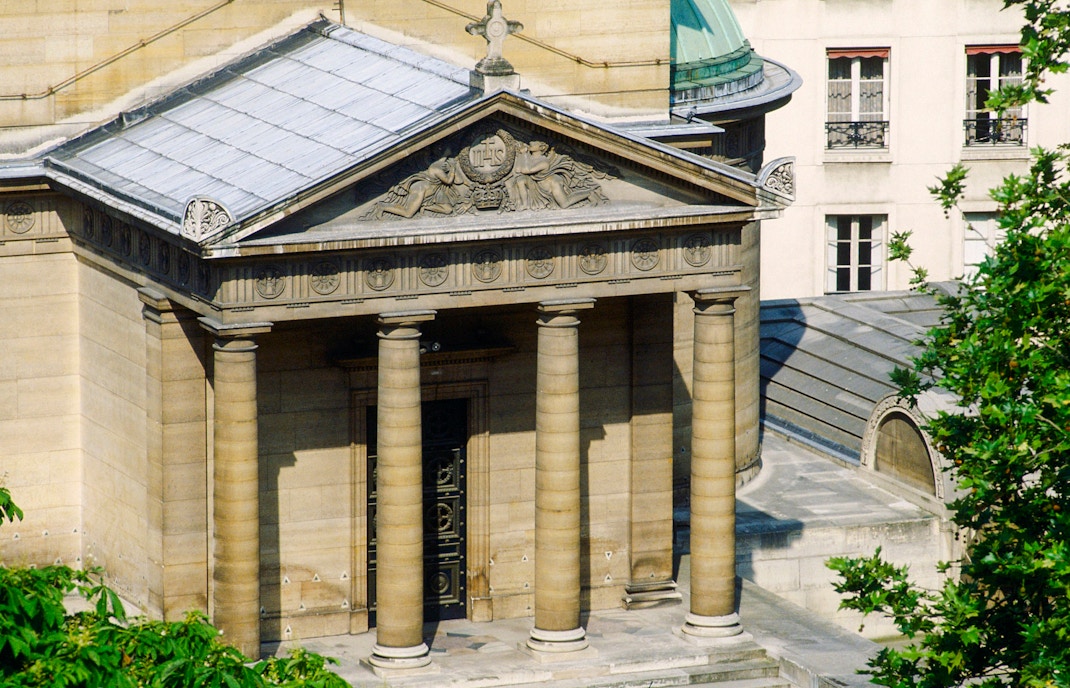
What you need to know before you go
- Entry requirement: A standard entry ticket is enough for most visitors, while free-entry categories and pass holders should carry ID or their valid pass.
- Bag policy: Travel light, because there are no lockers and large bags can make a short visit unnecessarily awkward.
- Re-entry policy: Re-entry is not permitted once you leave, so use a restroom before arrival and finish the full route in one go.
Not allowed
- 🚫 Food and drink: Food and drinks aren’t part of the visit, so finish them before entering the chapel grounds.
- 🚬 Smoking and vaping: Smoking and vaping aren’t appropriate within the monument precinct.
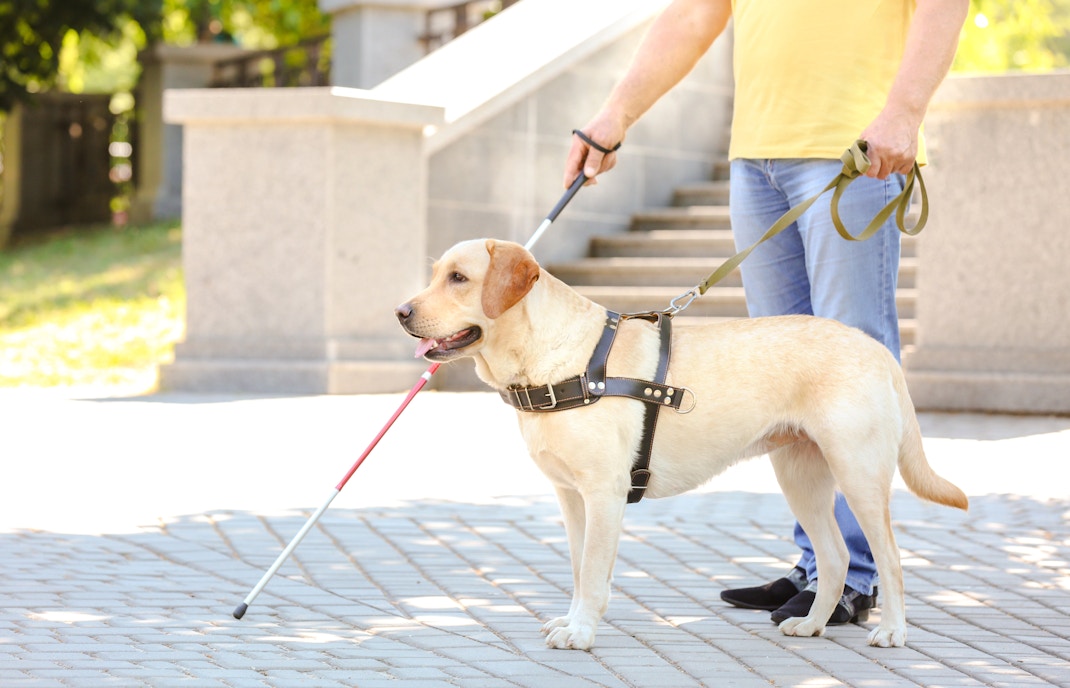
- 🐾 Pets: Pets are not allowed, except for guide dogs.
- 🖐️ Touching memorials: Don’t climb on or handle the cenotaphs, sculptures, or altar area, because this is both a historic monument and a memorial site.

Photography
Handheld photography is allowed in the garden, upper chapel, and crypt, but flash should not be used. The line is simple here: quiet personal photos are fine, while anything that disrupts the contemplative atmosphere or blocks tight interior spaces is not. Because the crypt is dim and compact, plan for low-light shots rather than trying to force bright images.
Good to know
- Free-admission days: First Sundays from November to March and European Heritage Days are the rare times this usually calm site feels noticeably busier.
- Annual commemoration: Around January 21, the anniversary of Louis XVI’s execution can make the memorial atmosphere feel even more pronounced than usual.
Practical tips
- Booking and arrival: You usually don’t need to book far ahead here — same-day or next-day planning is often enough — but don’t arrive close to 12:30pm unless you’re happy to wait through the lunch closure.
- Pacing: Save 10 minutes for the garden before you go inside, because the Swiss Guard memorials explain the tone of the whole site and make the crypt feel earned rather than abrupt.
- Crowd management: Tuesday or Wednesday right at 10am works especially well here, because you’ll often have the garden and upper chapel nearly to yourself before nearby Saint-Lazare foot traffic picks up.
- What to bring or leave behind: Bring a small bag and your phone for translation if you don’t read French, because the inscriptions beneath the royal statues are central to the visit and worth understanding.
- Food and drink: Eat before or after, not during, because there’s no café and no restroom on-site; the best fallback plan is to head toward Madeleine or Saint-Lazare once you’re done.
- Context: If you have time, pair this visit with Place de la Concorde or the Conciergerie the same day, because Expiatory Chapel makes much more sense when you place it inside the wider Revolution story.
What else is worth visiting nearby?
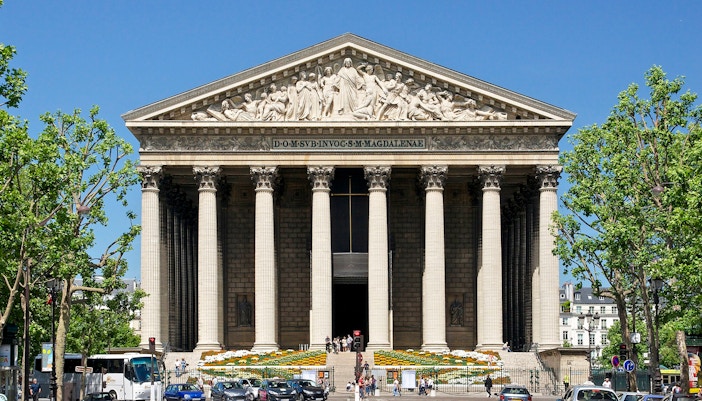
Commonly paired: La Madeleine Church
Distance: 700m — 9-minute walk
Why people combine them: They’re close, architecturally linked by their Neoclassical style, and the shift from memorial chapel to grand Paris church makes for an easy, coherent short itinerary.
Book / Learn more
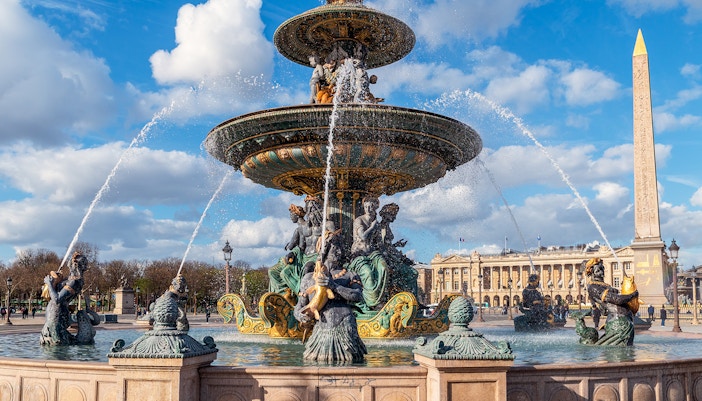
Commonly paired: Place de la Concorde
Distance: 1.5km — 20-minute walk or about 10 minutes by metro
Why people combine them: This is the strongest history pairing, because you move from the site memorializing Louis XVI and Marie-Antoinette to the square where they were executed.
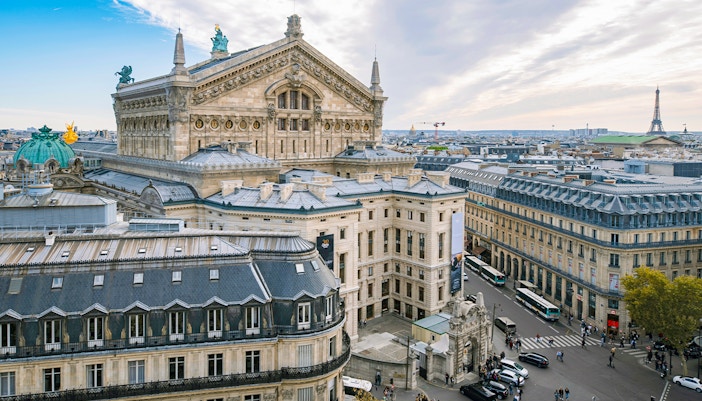
Also nearby
Galeries Lafayette Haussmann
Distance: 650m — 8-minute walk
Worth knowing: If you want a lighter stop after the chapel, the rooftop terrace gives you city views without demanding another long museum-style visit.
Palais Garnier
Distance: 1.1km — 14-minute walk
Worth knowing: It’s not part of the same historical story, but it’s an easy add-on if you want to swap quiet memorial architecture for one of Paris’ most theatrical interiors.
Eat, shop and stay near Expiatory Chapel
- On-site: There’s no café or food service inside Expiatory Chapel, so treat it as a short cultural stop rather than a meal stop.
- Printemps du Goût (8-minute walk, 64 Boulevard Haussmann, 75009 Paris): Food hall counters and casual sit-down options make this the easiest post-visit choice if you want flexibility.
- Galeries Lafayette Le Gourmet (10-minute walk, 35 Boulevard Haussmann, 75009 Paris): Good for pastries, coffee, or a quick lunch if you’re already heading toward the department stores afterward.
- Café de la Paix (16-minute walk, 5 Place de l’Opéra, 75009 Paris): A better pick if you want to turn a short chapel visit into a slower, classic Paris lunch.
- 💡 Pro tip: Visit the chapel first, then eat after 1pm — showing up too close to the 12:30pm closure and planning lunch in between is the easiest way to break the visit awkwardly.
- On-site postcards: A small postcard selection near the entrance is the only real on-site souvenir option, so don’t expect a full museum shop.
- Galeries Lafayette Haussmann: Fashion, beauty, and gourmet shopping in one stop, about 8 minutes away on Boulevard Haussmann.
- Printemps Haussmann: Another strong nearby option for department-store shopping if you want to combine a cultural stop with a shopping afternoon.
- Fauchon Madeleine: Gourmet gifts and classic Paris food souvenirs at 11 Place de la Madeleine, useful if you want something more distinctive than standard monument merchandise.
Yes, this is a practical area to stay if you want strong transit, walkable shopping, and easy access to central Paris, but it feels more polished and businesslike than atmospheric after dark. It works well for short stays and first-time visitors who care more about convenience than neighborhood charm.
- Price point: This area skews mid-range to expensive, especially around Madeleine, Saint-Lazare, and Boulevard Haussmann.
- Best for: Travelers on a short trip who want quick metro access, easy airport connections, and the option to fit smaller sights like Expiatory Chapel between bigger Paris plans.
- Consider instead: Opéra works better if you want the same convenience with a little more evening energy, while Le Marais or Saint-Germain are better picks for longer stays built around cafés, wandering, and neighborhood character.
Frequently asked questions about visiting Expiatory Chapel
Most visits take 30–60 minutes. That’s enough time for the garden memorials, the upper chapel, the statues of Louis XVI and Marie-Antoinette, and the crypt below. If you read the inscriptions carefully or use the booklet as you go, you’ll be closer to the one-hour mark.
No, you usually don’t need to book Expiatory Chapel tickets far in advance. This is one of the quieter monuments in Paris, and same-day entry is common on regular days. Booking ahead is mostly about convenience or locking in a specific day around free-admission periods, not about avoiding major sellouts.
Arriving 5–10 minutes early is enough. The bigger issue here isn’t a long line at the door, but the midday closure from 12:30pm to 1:30pm. If you turn up too close to that break, you may have to rush or come back later to finish the visit properly.
Expiatory Chapel is usually open Tuesday–Saturday from 10am–12:30pm and 1:30pm–6pm. It is closed on Sundays, Mondays, and major closure dates such as January 1, May 1, and December 25. The lunch closure is the one timing detail that catches most visitors out.
Yes, Expiatory Chapel is included in the Paris Museum Pass. That makes it an easy add-on if you’re already using the pass for bigger monuments and want a quieter stop nearby. Even with a pass, it’s still smart to check opening days carefully because the site is closed two days a week.
Yes, but keep it small. There are no lockers on-site, and a bulky backpack makes a compact visit less comfortable than it needs to be. Since this is usually a 30–60 minute stop, it’s best to arrive with only what you actually need for the visit.
Yes, you can take photos inside Expiatory Chapel and in the garden, but flash should not be used. The chapel works best as a quiet memorial space, so handheld photography is the safest approach. The crypt is dim, so expect low-light shots rather than bright, high-contrast photos.
Yes, small groups work well here. The site is compact, so larger groups need to move carefully and keep the atmosphere quiet, especially in the crypt. If your group wants deeper context, a pre-arranged specialist visit makes more sense than trying to improvise explanations on the spot.
Yes, but it suits older children and teens better than very young kids. The visit is short, which helps, and the royal story gives children something concrete to follow. What it doesn’t offer is hands-on interaction, family facilities, or much space to move around once you’re inside.
No, Expiatory Chapel is not a reliable full-access visit for wheelchair users. The crypt is reached by stairs, and accessibility is limited enough that you shouldn’t expect a barrier-free route through the whole monument. Visitors with reduced mobility may manage parts of the upper level, but the site is not fully accessible end to end.
Food is available nearby, but not inside the chapel complex itself. There’s no café or snack counter on-site, so the simplest plan is to eat before or after your visit. Boulevard Haussmann, Madeleine, and the Saint-Lazare area all give you easy post-visit options within a 10-minute walk.
No, there isn’t an actively enforced dress code like you’ll find at some major religious sites. Still, this is a memorial chapel, so modest clothing and quiet behavior are the right fit. You won’t need special coverage for entry, but beachwear or loud group behavior will feel out of place fast.