Eiffel Tower 101: Facts about the Iron Lady you didn’t know before

Eiffel tower fun facts

🎨 It wasn’t always brown

The Eiffel Tower was originally painted reddish-brown, and in 1899 it even turned yellow-ochre before eventually getting its signature bronze-brown shade.

☀️ It grows in summer

Heat makes the iron expand, so the Eiffel Tower can become up to around 15 cm taller during hot weather.

🌬️ It moves in the wind

The tower is designed to flex slightly, so strong winds can make the top sway several centimetres.

📻 Radio saved it from demolition

The Eiffel Tower was meant to stand for only 20 years, but its usefulness for radio and military communications helped ensure it stayed.

🎭Facts about the tower’s architecture

Built by Gustave Eiffel, designed by others

While the tower was named after Gustave Eiffel, the Eiffel Tower's design wasn't his solo act. It was conceived by Maurice Koechlin and Émile Nouguier, engineers at Eiffel’s company and collaborated with architect Stephen Sauvestre. Eiffel backed the project financially and later bought the patent rights, ensuring the tower became his legacy.

🔍 Easter eggs: The secrets hidden in plain sight
The Eiffel Tower's hidden tributes
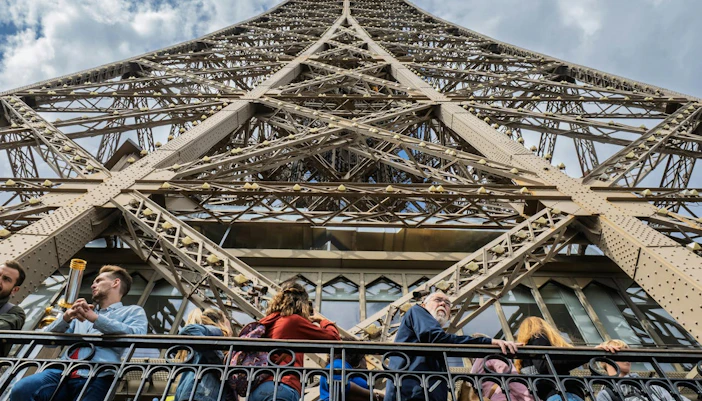
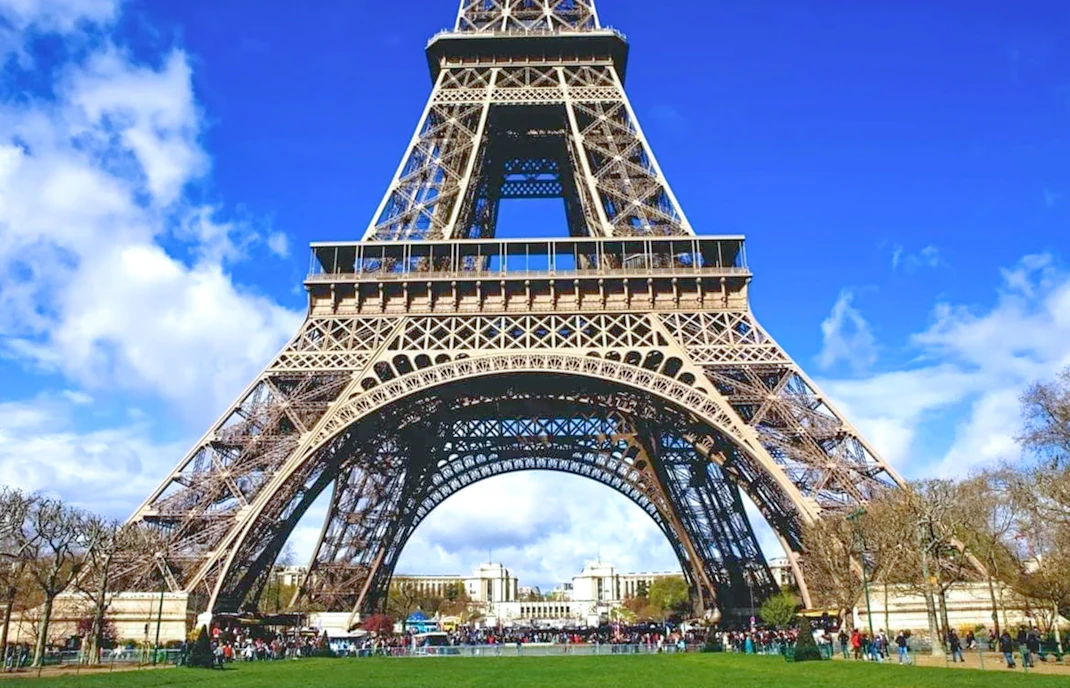
The Eiffel Tower honors 72 French scientists and engineers, their names etched into the iron on the tower’s base. These engravings were painted over in the 20th century but restored in the 1980s. Look closely on the first floor and you’ll spot names like Foucault, Dumas, and Perrier—a science lover’s scavenger hunt!

The tower has a (not-so) secret apartment 

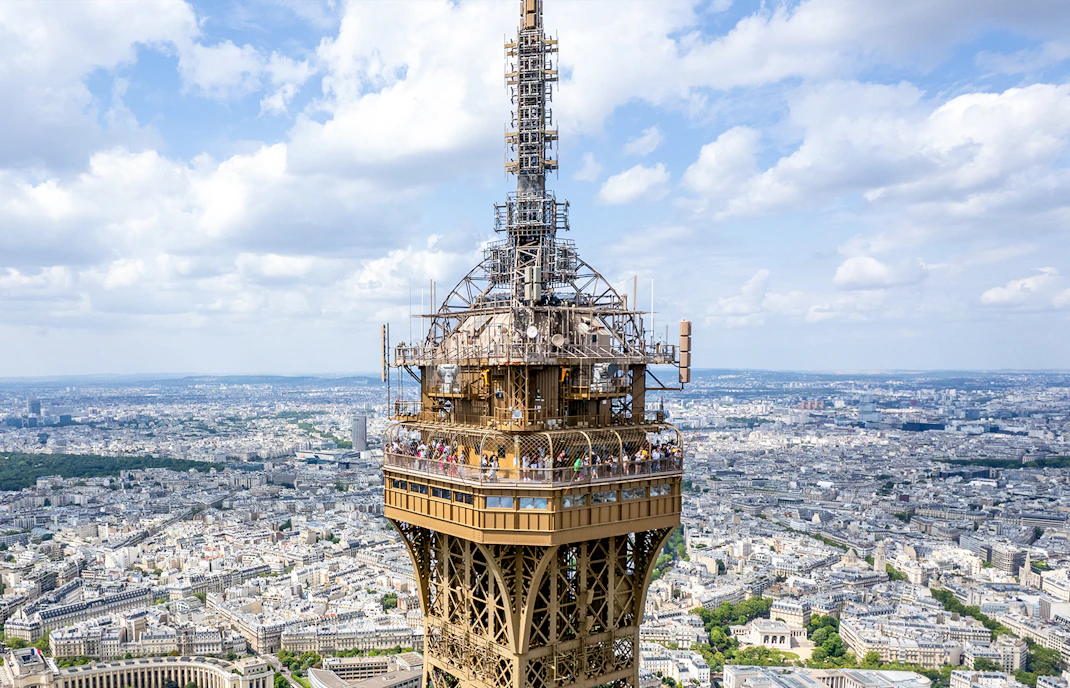
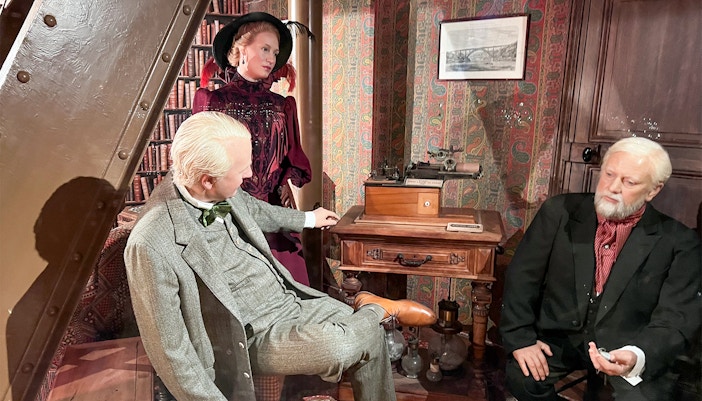
Gustave Eiffel reserved a private apartment at the top of the tower, where he hosted famous guests like Thomas Edison. It even had a science lab for experiments. You can view the restored space, complete with wax figures of Eiffel, his daughter, and Edison, frozen in mid-conversation against a stunning Parisian backdrop.

Explore the tower's summit

The Eiffel Tower had a post office

Among its many surprises like the Le Figaro newsroom, a radio station and ]a theater, the Eiffel Tower once had a post office—located 187 meters high! It allowed visitors to send postcards with special Eiffel Tower stamps and postmarks. In fact, mailboxes on every level let you send greetings with proof you conquered each stage of the tower!

🎖️ The Eiffel Tower: Historical war hero edition
The Eiffel Tower served during the World War

During World War I, the tower’s radio transmitter jammed German communications in 1914, helping the French win the First Battle of the Marne. It also intercepted enemy messages from Berlin, giving the Allies a major strategic edge—proving once again the tower’s unexpected utility.

Know more about its history

How the Eiffel Tower escaped Hitler’s destruction

Do you remember how in The Hunger Games, District 13 had been turned into rubble by the Capitol? Paris almost faced a similar fate. In 1944, with the Allies nearing Paris, Hitler ordered the city destroyed, including the Eiffel Tower. Thankfully, General Dietrich von Choltitz—the German commander in charge—refused to carry out the order.

💖 The Eiffel's romantic side

The Eiffel is bonded in holy matrimony: with a human

Not only is the Eiffel a symbol of romance, it has its own love story too! In 2004, Erika Aya, an American competitive archer saw the tower for the first time and felt an instant attraction, following which she “married” the Iron Lady in 2007 in a commitment ceremony. She later changed her surname to Erika Eiffel and founded Object Sexuality Internationale, a support network for people who form romantic bonds with inanimate objects.

Eiffel tower | Myth vs facts

Myth: Parisians loved the Eiffel Tower from day one.
Fact: Many famous artists and writers initially protested its construction, calling it an eyesore.

Myth: You can photograph the Eiffel Tower freely at any time.
Fact: Daytime photos are generally unrestricted, but the nighttime light display is protected by copyright for commercial use.

Myth: The Eiffel Tower has always been the tallest structure in the world.
Fact: It became the world’s tallest man-made structure in 1889, but lost the title to New York’s Chrysler Building in 1930.

More reads

History

Book Now

Trocadero Gardens

Book Now

Entrances

Book Now