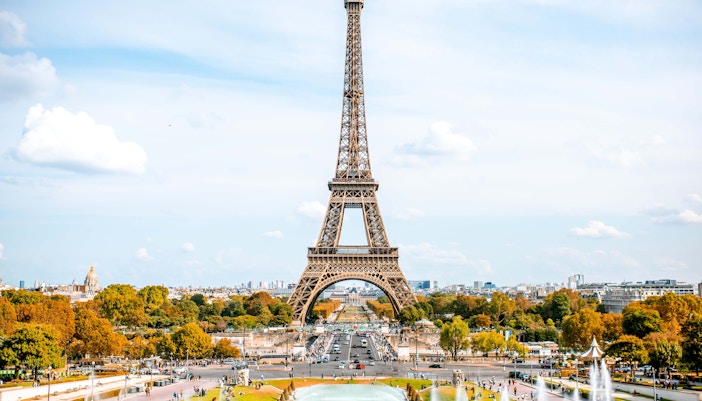
Eiffel Tower architecture | Design & construction explained

The Eiffel Tower isn’t just a famous landmark—it’s a game-changer in architecture. When Gustave Eiffel built it for the 1889 World’s Fair, critics called it an eyesore. But over 130 years later, it’s still standing strong, proving them all wrong.

With its bold use of iron and groundbreaking design, the tower set the stage for modern skyscrapers. This guide dives into how it was built, why it’s so revolutionary, and what makes it last.

Who designed and built the Eiffel Tower?

One of the world's greatest wonders, the Eiffel Tower, took only 2 years, 2 months, and 5 days to build. The engineers and architects who made it possible are:

Gustave Eiffel

Gustave Eiffel was a visionary French engineer best known for the Eiffel Tower. Before that, he made his mark designing bridges, including the Garabit Viaduct. His company also built the metal framework for the Statue of Liberty. After retiring, he shifted focus to meteorology and aerodynamics, proving he was always ahead of his time.
Emile Nouguier and Maurice Koechlin

Emile Nouguier and Maurice Koechlin were the brains behind the Eiffel Tower’s design. As top engineers in Eiffel’s company, they sketched out the tower’s original concept in 1887. Their expertise in structural engineering helped turn an ambitious idea into one of the world’s most iconic landmarks.

Stephen Sauvestre

Stephen Sauvestre gave the Eiffel Tower its signature look. Brought in to refine Nouguier and Koechlin’s design, he added decorative arches, a glass pavilion, and a top cupola—transforming the tower from a raw structure into a masterpiece. His vision helped win over critics and even Gustave Eiffel himself.

Want to learn more about the Eiffel Tower’s history? Read our Eiffel Tower history guide.

Eiffel Tower architectural style: A modern engineering feat

Unlike the Neo-Gothic, Neo-Baroque, and Renaissance styles that dominated 19th-century Paris, the Eiffel Tower was a bold leap into modern engineering.

Key features:

  • Lattice iron design: Inspired by the 1853 Latting Observatory in New York.
  • Precision engineering: Built with 18,000+ iron pieces, joined by 2.5 million rivets.
  • Wind-resistant structure: The curved form reduces wind pressure, allowing the tower to sway only up to 9 cm in storms.
  • Massive four-leg base: Distributes weight evenly, eliminating the need for deep foundations.

🔎 Why did Eiffel choose iron?

At the time, reinforced concrete wasn’t widely used, but puddle iron— the same material in railway bridges— was:

  • Lighter & more flexible: Withstands strong winds.
  • Durable: Built to last, and over 130 years later, it’s still standing strong.

This groundbreaking approach made the Eiffel Tower a blueprint for modern skyscrapers and a true revolution in architecture.

Check out the inside of the Eiffel >

How tall is the Eiffel Tower?

Standing at 330 meters (1,083 ft), the Eiffel Tower was the tallest structure in the world when it was completed—and it still dominates the Paris skyline today!

Breaking down the heights:

  • Base to first floor → 57m
  • First to second floor → 115m
  • Second to summit → 276m

How does it compare to other famous landmarks?

  • Eiffel Tower → 330m
  • Statue of Liberty → 93m
  • Big Ben → 96m
  • Empire State Building → 443m

Wondering how to get to the top of the Eiffel? Read more

Why is the Eiffel Tower repainted every 7 years?

To protect it from rust and oxidation, the tower has been repainted 19 times since it was built. But how does the repainting process work?

  • Surface preparation: The entire tower is stripped and cleaned.
  • Rust-proofing: Two coats of anti-rust primer are applied.
  • Final coat: A protective paint layer gives the tower its signature look.

⛅ Why does the weather matter?

Repainting only happens in dry, mild weather to ensure the paint adheres properly. This process happens every 7 years, using traditional methods—meaning painters still work with harnesses, safety nets, and lines.

Changing colors through history

The Eiffel Tower has had several color makeovers over the years:
1887-88: Venetian Red
1889: Reddish-Brown
1899: Yellow-orange gradient (light yellow at the top!)
1907-47: Yellow-Brown
1954-61: Brownish-Red
1968 - Present: Eiffel Tower brown, with a gradient (darkest at the bottom, lightest at the top)

Is the Eiffel Tower rusting?

Recent reports say the tower is riddled with rust and needs serious repairs. Ideally, 30% of the structure should be stripped, treated, and repainted. However, due to delays and budget constraints, generally only 5% of the tower is gets treated in a €60 million paint job ahead of major events like the Paris Olympics.

While puddle iron (the tower’s material) can last forever with proper maintenance, factors like pollution, weather, and even bird droppings keep the restoration teams busy!

The Eiffel Tower’s legacy in architecture

The Eiffel Tower was a game-changer for architecture. Its iron lattice structure defied traditional building methods and became a blueprint for modern skyscrapers.

  • First of its kind: Proved that tall buildings didn’t need stone or brick.
  • Inspired skyscrapers: Influenced structures like the Empire State Building.
  • More than a landmark: Used for science, radio signals, and innovation.

Whether you admire it from below or sip champagne at the top, its brilliance is undeniable.

Frequently asked questions about the Eiffel Tower architecture

The Latting Observatory (New York, 1853) and early iron bridge designs influenced its framework.

More reads

Guided tours

Book Now

Entrances

Book Now