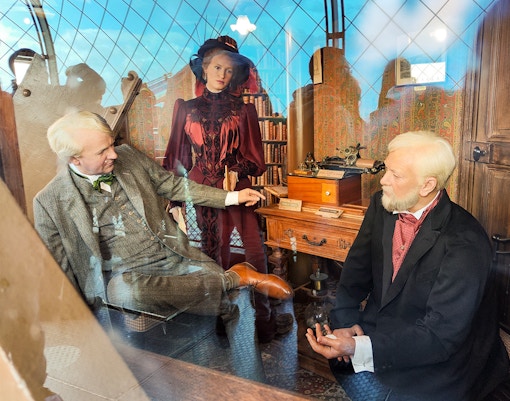
Gustave Eiffel, the man behind the Eiffel Tower, once had a private apartment on the third floor. Now open to visitors, it still has its original décor, giving a peek into his world and the style of his time.
The Eiffel Tower undergoes repainting every 7 years to preserve its legendary appearance. This meticulous process requires approximately 60 tons of paint to cover the entirety of the structure, ensuring its continued visual splendor.
The Eiffel Tower's height can vary by up to 6 inches, depending on the changing temperature. In summer, the iron expands, and in winter, it contracts.
What makes Eiffel Tower such a popular landmark?
1/5
A Parisian time machine
A historical documentary in itself, the Eiffel Tower’s 135-year history ties closely with that of the City of Love and Lights. From Gustave Eiffel’s apartment at the top to the names of 72 scientific figures etched along the frieze to its involvement in the First World War that led to the victory of the Allies, the Iron Lady is more than just a pretty face in the Parisian cityscape.
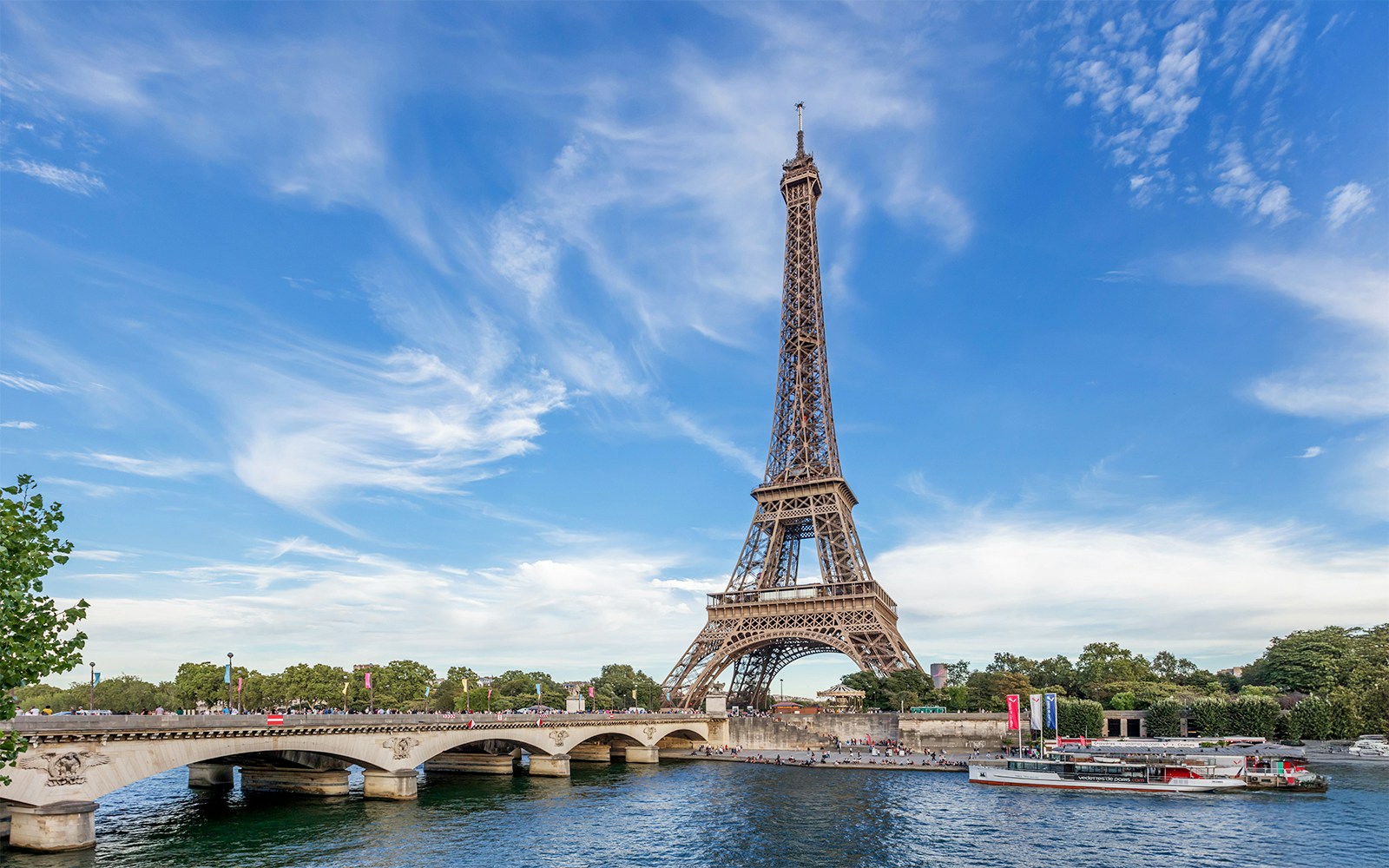
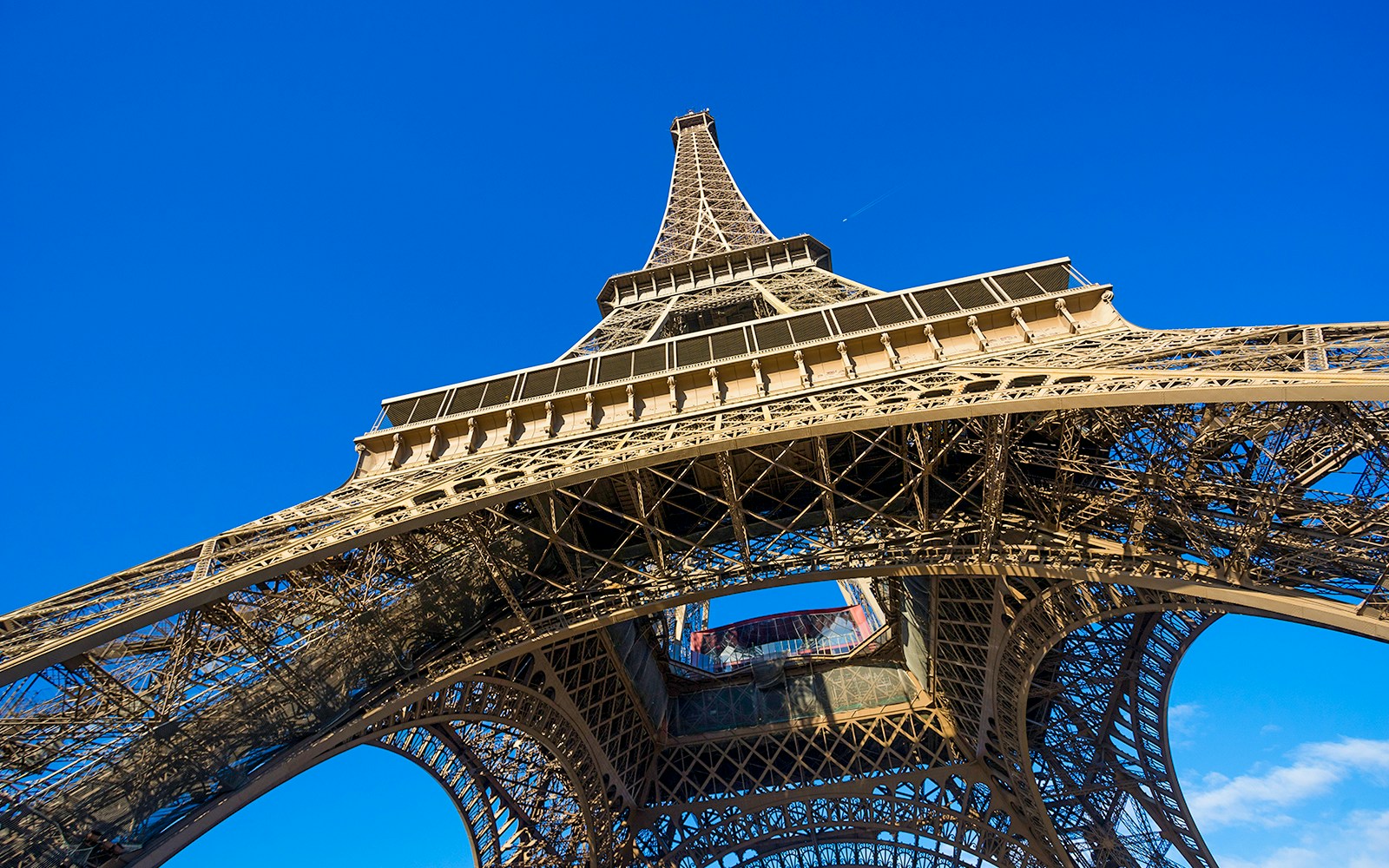
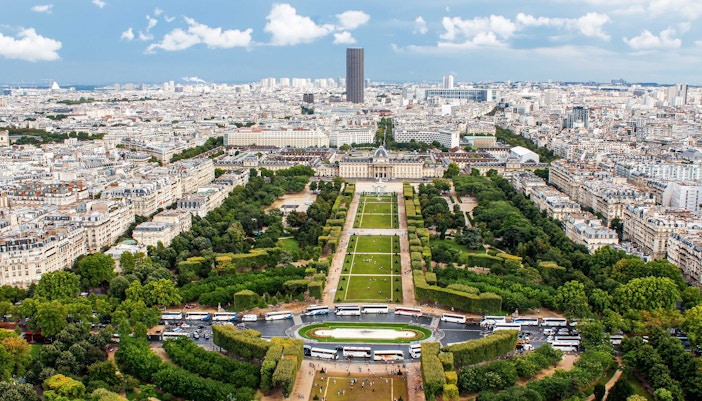
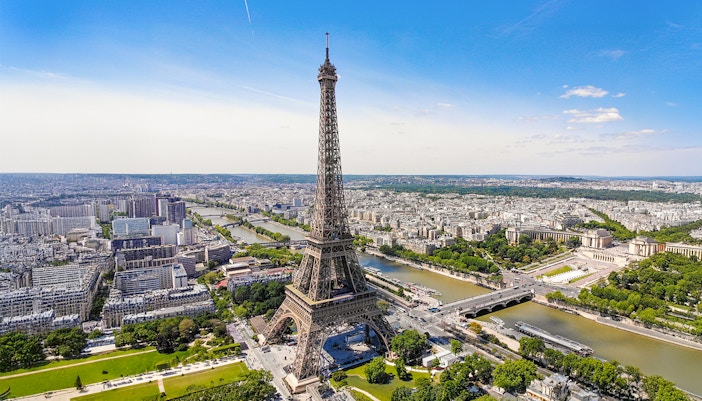
Did you know that the wrought iron lattice structure of the Eiffel Tower is made up of 18,038 parts held by 2,500,000 rivets? Well, it won’t come as a surprise that this emblem of modern architecture can be seen from all over Paris! Wondering what is the best vantage point? Catch it from the Trocadero Gardens.
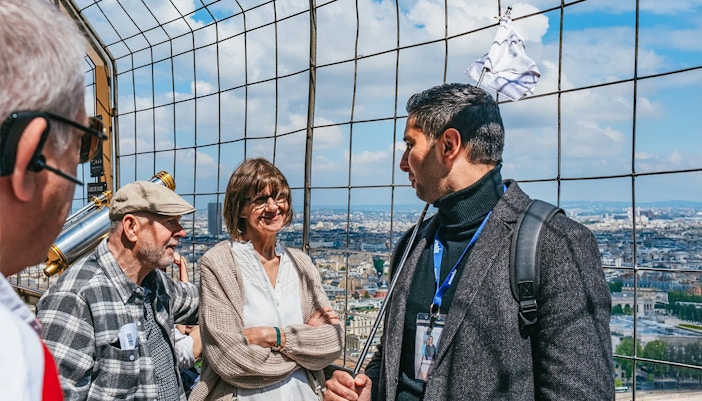
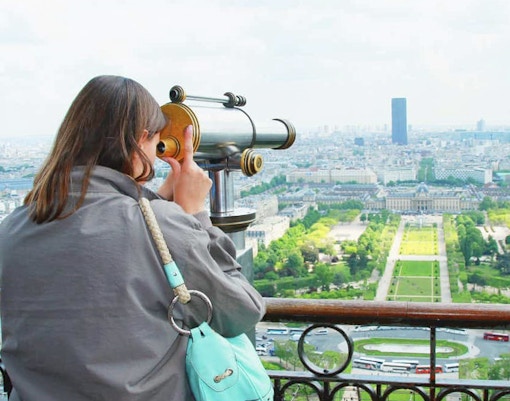
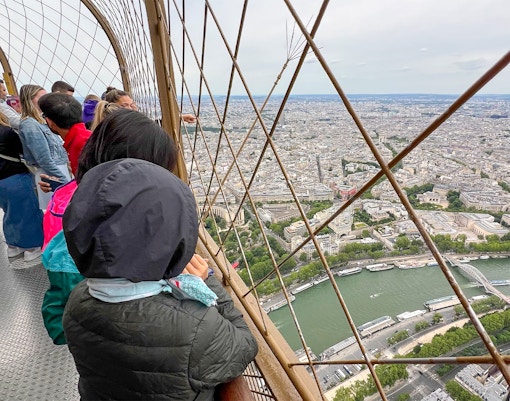
Not only is the Eiffel a breathtaking view as an imposing edifice itself, but it also provides the best vistas of the city as you make your way up! As you ascend the second floor or the summit, you can easily spot the popular landmarks the Louvre, the Seine River, the Champs Elysées, and the Notre Dame– it’s like a sightseeing tour without moving!
The nighttime spectacle
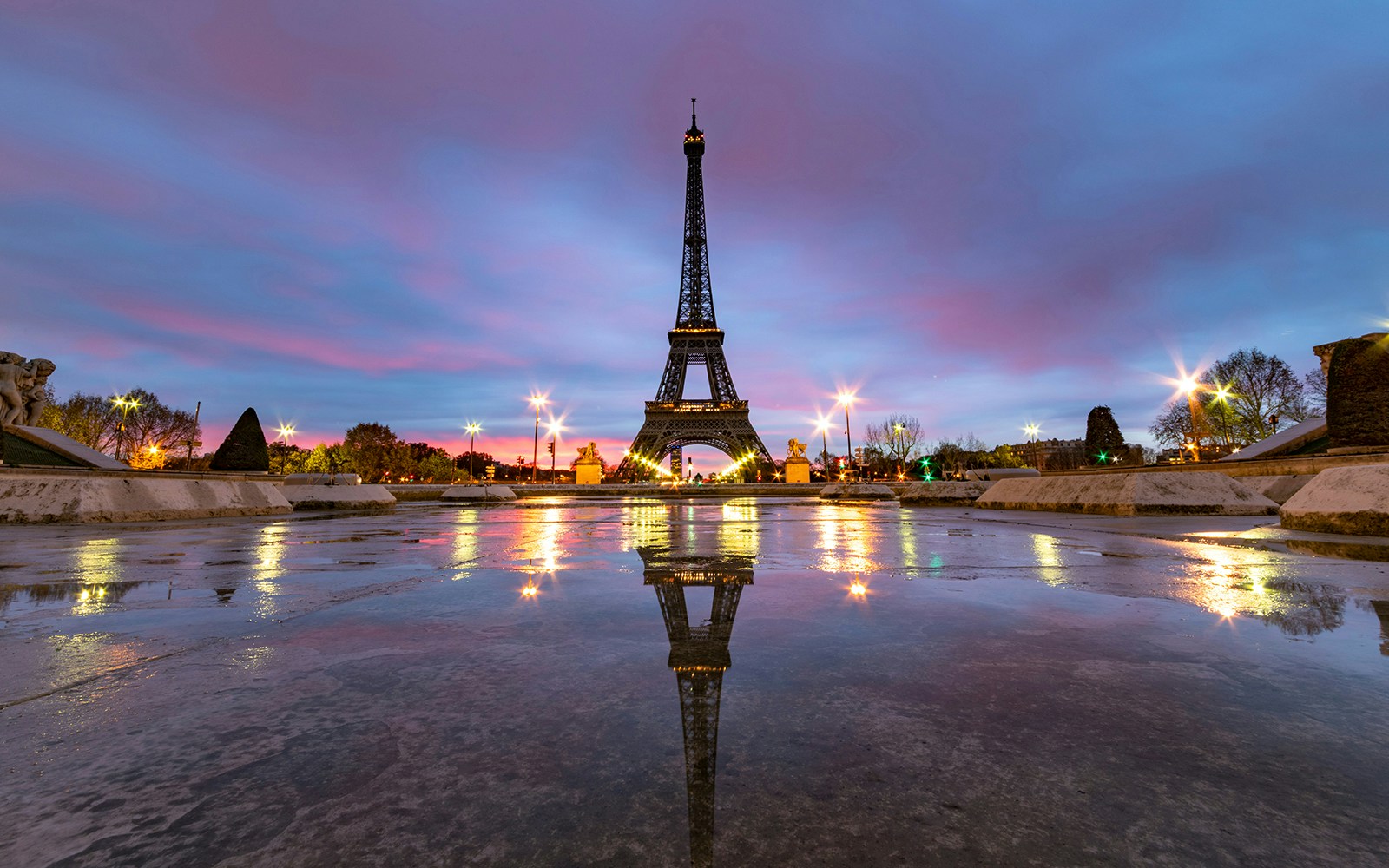
Gear up for a fairytale moment at night, as when the sun goes down, the Iron Lady’s sparkling robe takes precedence! The 20,000 light bulbs on the Eiffel create a magical display, with the tower sparkling in synchrony every hour for 5 minutes, all molding core memories.
The Eiffel Tower isn’t just a pile of iron—it’s an architectural masterpiece of elegance and engineering. Designed by Gustave Eiffel, its graceful lattice structure makes it light yet incredibly strong. Standing 330 meters tall, it was once the world’s tallest structure and remains a symbol of Parisian romance and innovation.
Highlights of the Eiffel Tower
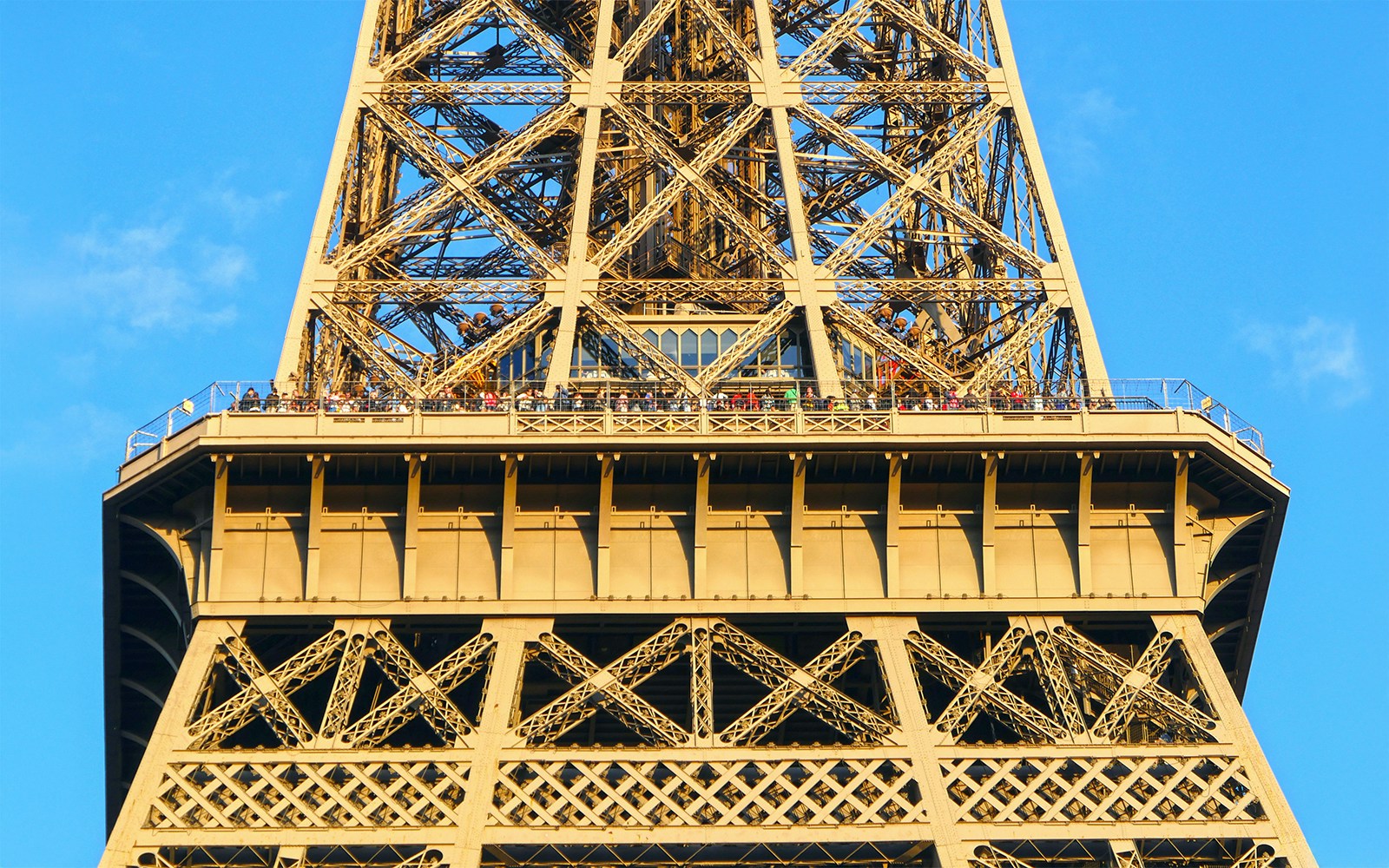
Visitors can explore three levels, each offering a unique experience. The first and second floors have restaurants and viewing decks, while the third level—the highest public point—gives you breathtaking, 360° views of Paris.
Gardens and fountains
Where: Ground floor
Located on the ground floor of the Eiffel Tower, you can take a peaceful stroll through the lush green gardens and beautiful fountains before ascending to the top. The garden is home to 60 varieties of trees, including a 200-year-old sycamore tree!
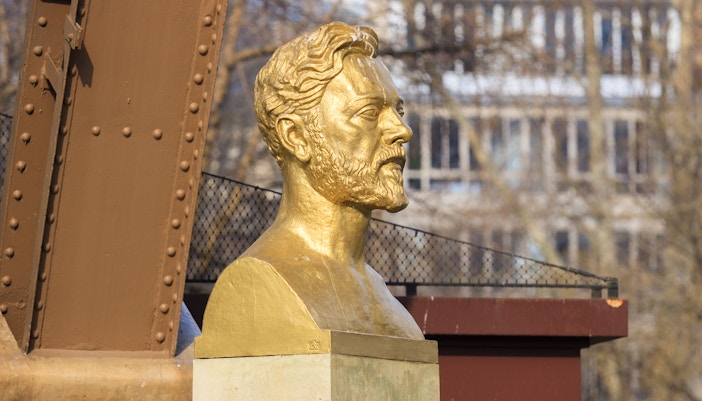
Bust of Gustave Eiffel
Where: Ground floor
Near the North leg of the tower, you can admire the bronze bust of Gustave Eiffel, the mastermind behind the design and construction of the Eiffel Tower. On the ground floor, you can also get a glimpse of the hydraulic lift that has been powering the tower’s elevator for more than 100 years!
Glass floor
Where: First floor
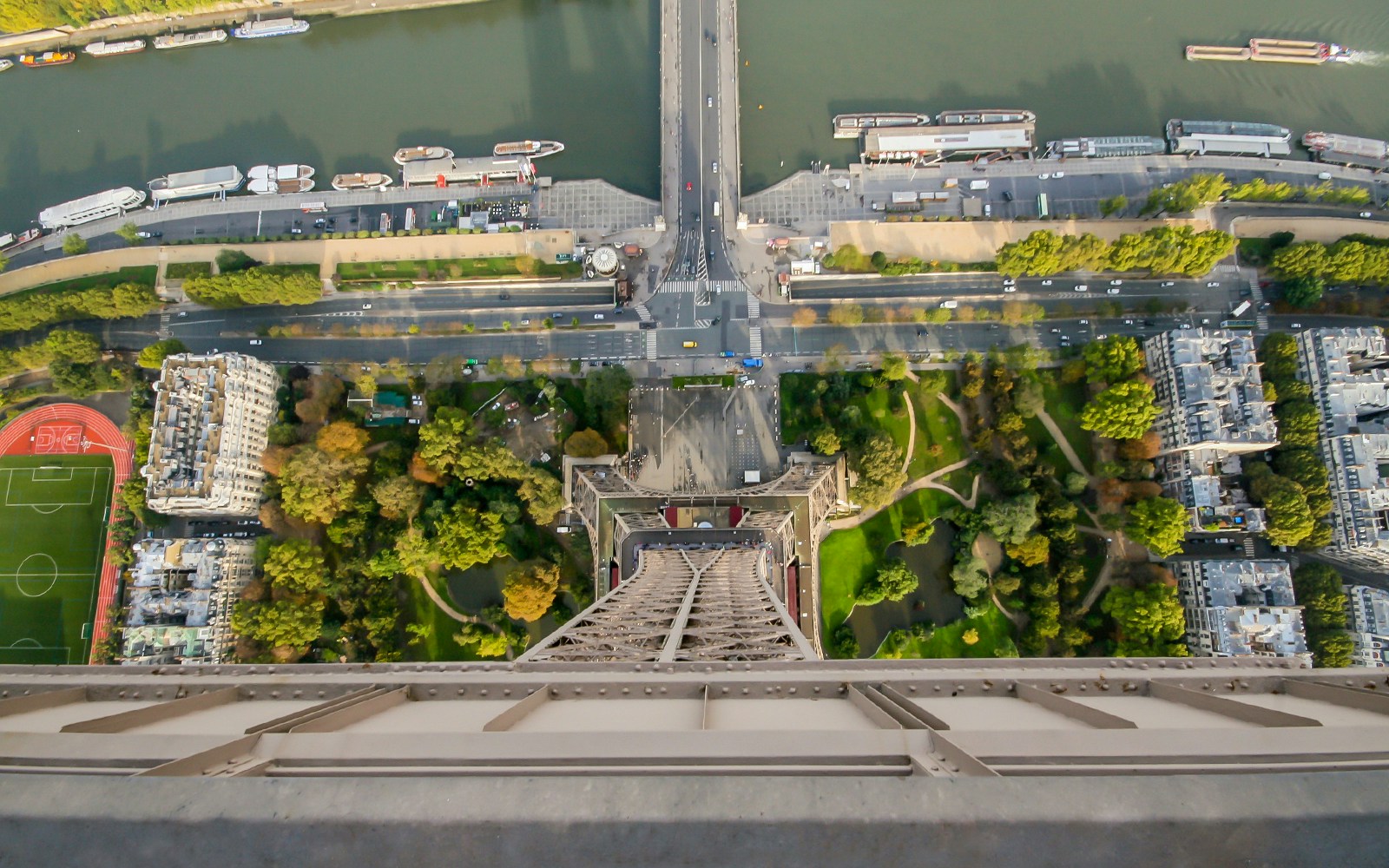
In 2014, the Eiffel Tower’s first floor, got a daring upgrade—a glass floor that lets visitors stand 187 feet above the ground and look straight down! It’s a heart-racing experience, perfect for thrill-seekers. The renovation also added sleek glass railings, better accessibility, and eco-friendly lighting to modernize the space.
Old spiral staircase
Where: First floor
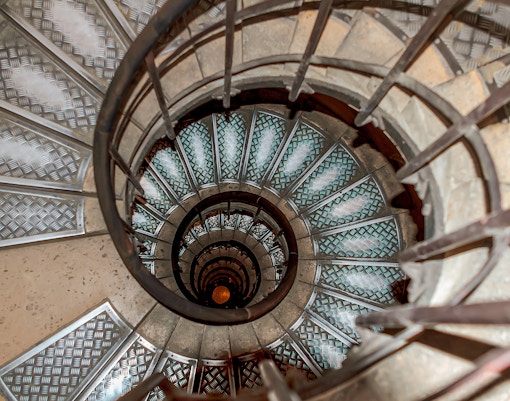
On the first floor, you can also see a 4.3-meter tall section of the old spiral staircase that linked the first floor of the Eiffel Tower to the summit during its heyday.
Observation deck
Where: Second floor
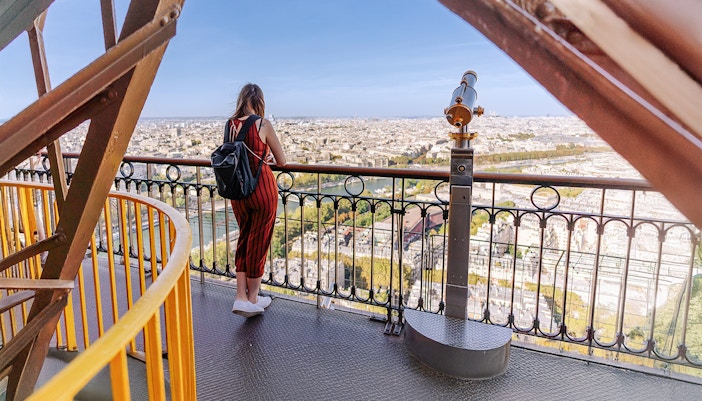
Located 377 feet above the ground, the observation deck on the second floor is the final stop before reaching the summit. From here, you can enjoy views of landmarks like the Louvre, Notre Dame, and the Seine.
Highest public viewpoint
Where: Summit
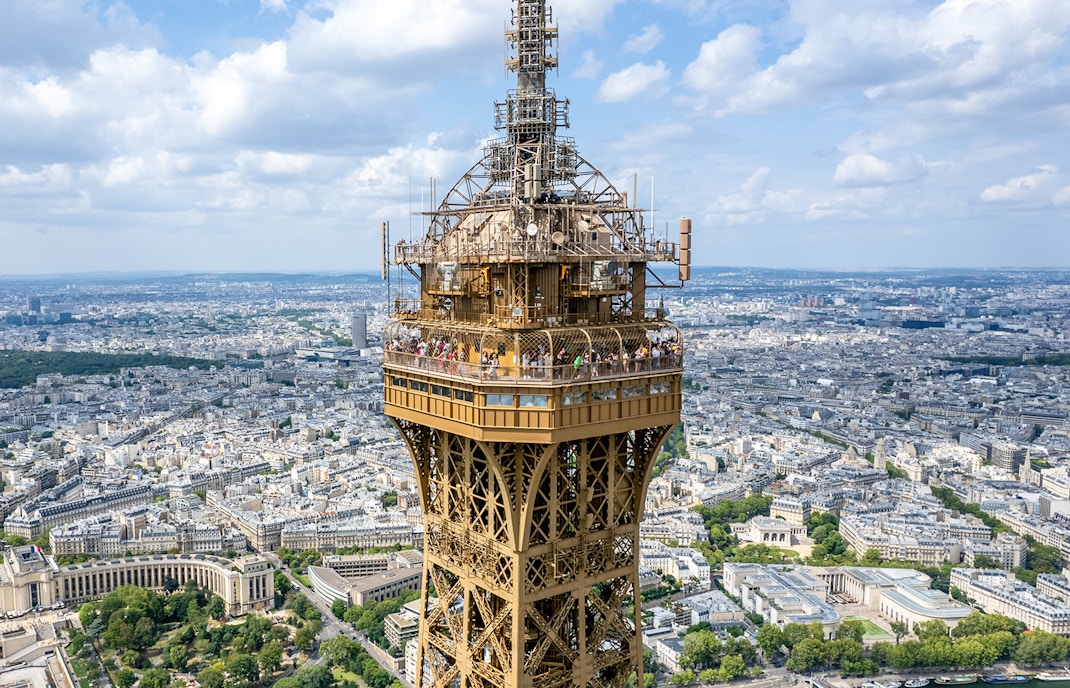
The third floor of the Eiffel Tower at 907 feet is the highest point in Paris. Offering unparalleled views of Paris, the summit of the Eiffel Tower is the stunning grand finale of your visit! With a flute of champagne in your hand, don’t forget to toast yourself and Paris from the summit.
Reconstruction of Gustave Eiffel’s office
Where: Summit
On the third floor of the Eiffel Tower, you can also see a beautiful and life-like reconstruction of Gustave Eiffel’s office. The reconstruction is brought to life with wax figures of Gustave Eiffel, his daughter Claire and Thomas Edison.
🔎 Did you know?
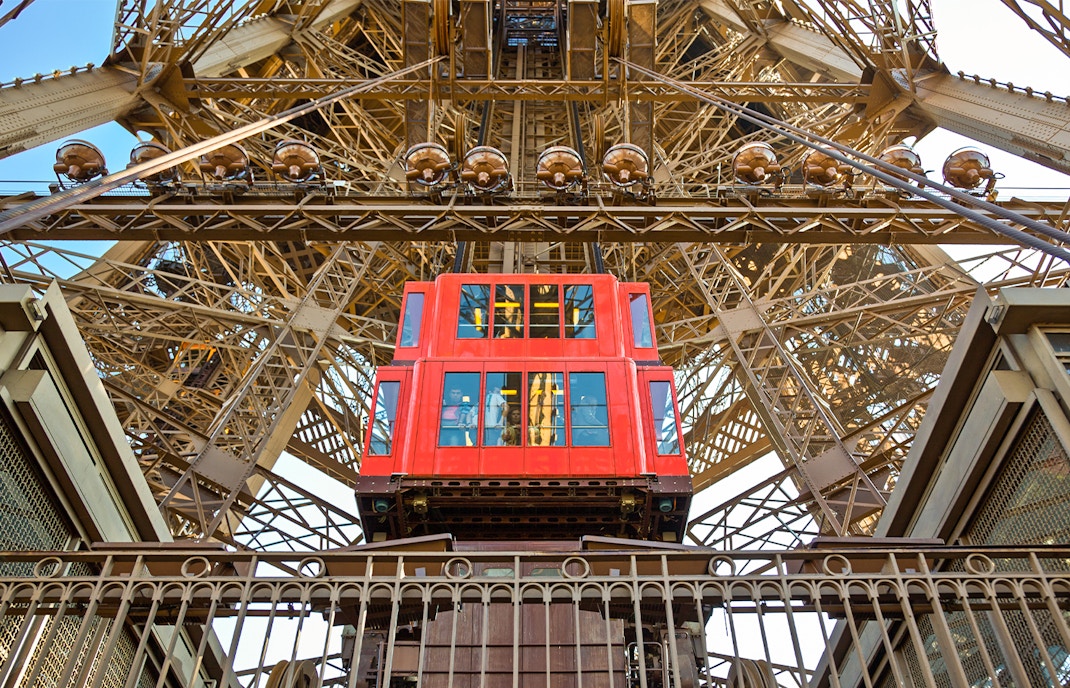
Not everything is accessible. Between the second and third floors, an intermediate platform exists—but it's off-limits to the public. Originally part of an old elevator system designed by Félix Léon Edoux, it became obsolete in 1983 when modern double-cabin electric elevators were installed. Today, it’s used for storage and emergency stops.
A tower that shaped history & pop culture
1884: A vision takes shape: The idea of an iron lattice tower is conceived by engineers Maurice Koechlin and Émile Nouguier.
1885: A bold proposal: Gustave Eiffel, a renowned engineer, presents the tower design to the Société des Ingénieurs Civils.
1886: A monumental decision: The design is approved for the 1889 Exposition Universelle, commemorating the French Revolution's centennial. Despite initial artistic protests, construction begins in late January 1887.
1888: A tower takes form: The first level of the tower is completed.
1889: A Parisian marvel: On March 15th, the Eiffel Tower is inaugurated, standing tall as the world's highest man-made structure. The tower quickly becomes a symbol of innovation and a popular tourist attraction.
1909: A scientific endeavor: To avoid demolition, the tower's purpose is extended to scientific research, including meteorology and wireless telegraphy.
20th century and beyond: The tower continues to evolve, undergoing various renovations and adaptations. It becomes a beacon of hope and resilience, especially during World War II.
🎬 From the silver screen to the canvas, the Eiffel Tower has always been the ultimate Parisian star. It's the backdrop for romantic rendezvous, dramatic chases, and breathtaking cityscapes. Here are some of its influences in pop culture!
Paintings of the Eiffel Tower
‘Eiffel Tower’ by Georges Seurat (1888)
‘The Red Tower’ by Robert Delaunay (1911-1912)
‘Eiffel Tower’ by Henri Rousseau (1910)
‘Eiffel Tower’ by Maurice Utrillo (1924)
‘The Eiffel Tower’ by Raoul Dufy (1926)
‘The Eiffel Tower Series’ by Bernard Buffet (1952-1968)
Built for the 1889 World’s Fair, it was meant to be temporary, yet over 130 years later, it still stands tall, defying expectations.
At 330 meters, it was the tallest structure in the world until the Chrysler Building took the title in 1930. What made it so revolutionary?
Unlike the heavy stone monuments of the past, Gustave Eiffel and his team designed a lattice structure of 18,038 prefabricated iron parts, held together by 2.5 million rivets. This open framework wasn’t just visually striking—it made the tower incredibly strong yet surprisingly light, able to withstand wind and weather with ease.
In fact, the tower isn’t as rigid as it looks. It flexes with the wind, sways up to 7 cm, and even “grows” and “shrinks” by about 15 cm with temperature changes. Its sweeping arches at the base aren’t just decorative—they provide essential support, distributing the tower’s weight efficiently.
Originally met with skepticism, the Eiffel Tower has since become one of the most beloved landmarks in the world. Thanks to meticulous maintenance, including a fresh coat of paint every seven years, it continues to stand as a testament to human ingenuity, engineering brilliance, and the enduring magic of Paris.true" />
Beyond tourism: How is the Eiffel tower used today?
Science and discovery
Beyond being one of the most recognizable structures in the world, the Eiffel Tower has also been a hub for scientific discovery. Gustave Eiffel himself designed it with more than just aesthetics in mind—he even built a laboratory at the top for experiments, including some of the earliest studies in radio transmission.
Climate and space research
Thanks to its impressive height, the tower has been the perfect spot for climate research, weather forecasting, and testing radio communication. It has also been used for astronomical observations, offering a clear, high-altitude vantage point above the city.
Experimenting with Physics
Even physics experiments have taken place here! Scientists have used the tower to study gravity, pendulum dynamics, and other precise measurements that require a stable environment.
A legacy of innovation
From meteorology to telecommunications, the Eiffel Tower has contributed to major scientific advancements while standing tall as a symbol of both artistic and engineering brilliance.
Moreover, Eiffel Tower plays an important role in the current affairs of the city. In 2024, it had some contributions to its name for the Paris Olympics:
🔥 The Paris 2024 Olympic and Paralympic medals featured a piece of metal from the original iron used in the construction of the Eiffel Tower.
🔥 The Eiffel Tower was adorned with the iconic Olympic rings, creating a visual symbol of the Games and adding to the celebratory atmosphere.
🔥 The area around the Eiffel Tower, specifically the Champ de Mars, was transformed into a temporary stadium for hosting beach volleyball and blind football events.
🔥 The Eiffel Tower underwent extensive renovations, including a new paint job in a golden hue ahead of the Olympics.
Frequently asked questions about the Eiffel Tower
Yes! The Eiffel Tower has a secret, inaccessible floor located between the second and third levels. Originally part of the historic two-step elevator system designed by Félix Léon Edoux, this intermediate platform became obsolete in 1983 when modern electric elevators were installed.
Including its antenna, the Eiffel Tower stands at a towering height of 330 meters (1,083 feet).
To maintain its appearance, the tower is repainted every 7 years, using about 60 tons of paint.
Yes, visitors can see the recreated apartment on the tower’s third floor by purchasing a ticket to the top.
Yes, the Eiffel Tower often hosts special events, particularly during Parisian holidays like Bastille Day. These events can include stunning fireworks displays, light shows, and other festive celebrations.
Many artists and intellectuals in 1889 called it an "ugly metal monster" and thought it ruined Paris’ beauty. Today, it’s one of the most beloved structures in the world!
Yes, but only for special promotions or contests. In 2016, a temporary luxury apartment was available in the Eiffel Tower as part of a contest from the vacation rental site HomeAway. The winners got to stay overnight in the Eiffel Tower with five guests.
It’s highly fire-resistant because it's made of wrought iron, but lightning has struck it many times! Luckily, it has lightning rods to protect it.