Quick Information

ADDRESS

2 Bd du Palais, 75001 Paris, France

RECOMMENDED DURATION

1 hour

VISITORS PER YEAR

400000

EXPECTED WAIT TIME - STANDARD

30-60 mins (Peak), 0-30 mins (Off Peak)

UNESCO YEAR

2006

Plan your visit

Why visit the Conciergerie?

If there’s one place in Paris where royal grandeur and revolutionary history meet under the same vaulted roof, it’s the Conciergerie.

Step inside a medieval royal palace

Before it became a prison, the Conciergerie was part of the Palais de la Cité, the residence of French kings. Walk through the vast Salle des Gens d’Armes, with its soaring Gothic arches, and you’ll get a sense of the scale, power, and ceremony of medieval Paris.

Trace the final days of Marie Antoinette

The Conciergerie is best known as the prison where Marie Antoinette spent her last weeks before her execution in 1793. Her reconstructed cell and the memorial chapel built in her memory make this one of the site’s most moving stops.

Understand Paris during the French Revolution

During the Reign of Terror, thousands of prisoners passed through the Conciergerie before facing the guillotine. The exhibits help you understand how this former palace became one of the Revolution’s most feared prisons.

Explore a quieter side of Île de la Cité

Set near Sainte-Chapelle and Notre-Dame, the Conciergerie is often less crowded than Paris’ headline landmarks. It’s a powerful, atmospheric visit that adds depth to any walk through the historic heart of the city.

What to see at the Conciergerie

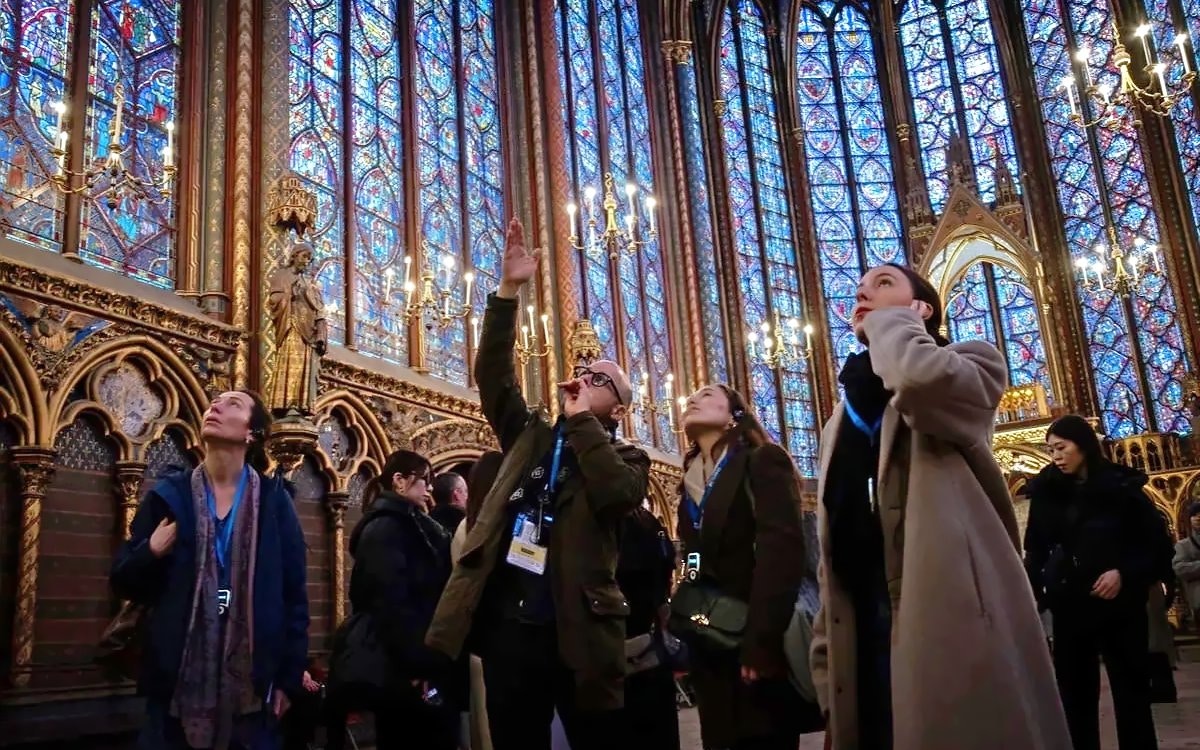
Visitors admire stained glass windows during Sainte Chapelle and Conciergerie guided tour in Paris.

Salle des Gens d’Armes

Start with the grand Gothic hall once used by palace guards and staff. Its ribbed vaults, stone columns, and vast scale give you a strong sense of the Conciergerie’s royal past before it became a prison.

Placeholder Image Headout Blimp

Conciergerie’s architectural evolution

The Conciergerie began as part of the medieval Palais de la Cité, the royal residence of French kings. Its Gothic halls, vaulted ceilings, and towers reflected royal power in the heart of Paris. When the monarchy moved to the Louvre in the 14th century, the building shifted to legal and prison functions. During the French Revolution, its cells and courtrooms became central to the Reign of Terror.

Today, its architecture preserves both identities: medieval palace and revolutionary prison.

History of the Conciergerie in Paris

  • 10th–14th century – Part of the Palais de la Cité, home to French kings.
  • 14th century – The royal court moved to the Louvre; the building became linked to justice and administration.
  • Late Middle Ages – The Conciergerie began functioning as a prison.
  • 1789–1794 – It became a key Revolutionary prison during the Reign of Terror.
  • 1793 – Marie Antoinette was held here before her execution.
  • 19th century onward – Restored and preserved as a historic monument.

Frequently asked questions about the Conciergerie

The Conciergerie is famous as a former royal palace and later the prison where Marie Antoinette was held before her execution.