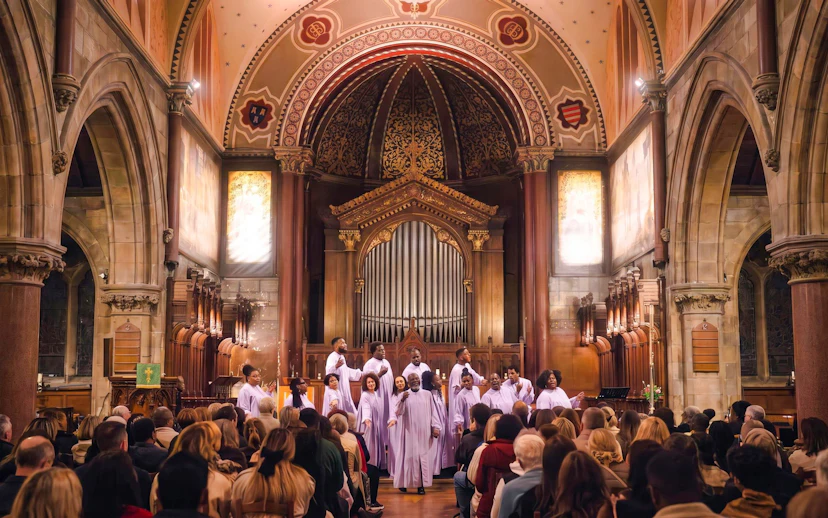
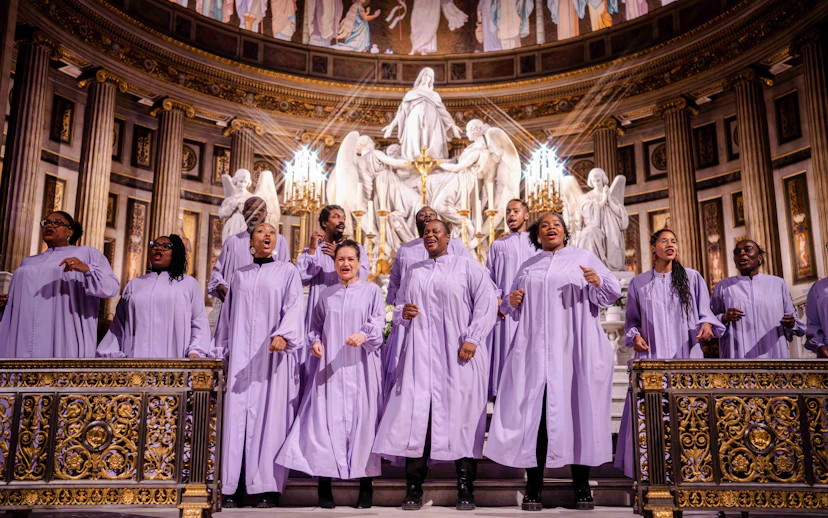
Sunday is your best bet if hearing the organ is the priority. Plan your visit around a service or scheduled organ performance rather than simply dropping into the church during the week. Always check the latest parish programme before you go, as timings can change.
Guide to the St Sulpice Paris organ
Look up as you enter Saint-Sulpice and you’ll spot a wall of pipes towering above the doorway. This is the church’s Grand Organ, a huge instrument with around 6,900 pipes that can fill the entire nave with sound. It’s especially loved by organ enthusiasts because it still preserves much of its 19th-century character, making a recital here feel less like a performance and more like hearing the church itself come alive.
Quick overview | Saint-Sulpice organ
- Access: The grand organ is inside the Church of Saint-Sulpice and is heard as part of the church’s liturgical and musical programme rather than visited as a standalone attraction.
- Separate ticket: Not usually required for regular services or public organ performances; separately organised concerts may have their own ticketing arrangements.
- When you’ll hear it: Most commonly during Sunday services and scheduled organ performances, with additional concerts and special programmes at certain times of year.
- What makes it special: Built by Aristide Cavaillé-Coll in 1862, the organ has five manuals, 102 stops, and roughly 6,900 pipes, while retaining important pipework from the earlier 18th-century Clicquot organ.
- Location: At the west end of the Church of Saint-Sulpice, high above the main entrance, overlooking the nave.
- Known for: Its largely preserved Cavaillé-Coll design and its association with celebrated Saint-Sulpice organists including Charles-Marie Widor, Marcel Dupré, and Daniel Roth.
What makes the Saint-Sulpice organ special?

1/5
It is Cavaillé-Coll's largest completed organ
The instrument was built with 100 stops, five manuals and pedal; two additional pedal stops were added later.
It combines two eras of French organ building
Cavaillé-Coll retained a significant amount of pipework from Clicquot's 18th-century instrument while creating the powerful, colourful sound associated with the French Romantic organ.
Its original character has been exceptionally well preserved
Unlike many historic organs that were substantially rebuilt or modernised, Saint-Sulpice has avoided fundamental changes to its design.
It helped shape French organ music
Saint-Sulpice was closely associated with influential organists including Charles-Marie Widor, Marcel Dupré and Daniel Roth. Widor served at Saint-Sulpice for more than six decades, and the instrument became closely linked with the development of the French symphonic organ tradition.
Its scale is remarkable even before you hear it
The organ occupies several levels above the west end of the church, with thousands of pipes ranging from delicate solo voices to powerful reeds capable of filling Saint-Sulpice's vast nave.
History of St Sulpice organ
- 1781: Organ builder François-Henri Clicquot completes a major organ for Saint-Sulpice, parts of which still survive in the instrument today.
- 1862: Aristide Cavaillé-Coll completes a major rebuild of the organ, incorporating much of Clicquot’s earlier pipework rather than replacing it entirely.
- 1862: With 100 stops across five keyboards and pedal, it becomes the largest organ Cavaillé-Coll ever built.
- 1870–1934: Composer and organist Charles-Marie Widor serves as titular organist at Saint-Sulpice for more than six decades, helping establish the organ’s international reputation.
- 1934–1971: Marcel Dupré, another major figure in French organ music, succeeds Widor and continues the church’s celebrated organ tradition.
- 20th century: Unlike many historic organs, Saint-Sulpice undergoes relatively few major alterations, helping preserve much of Cavaillé-Coll’s original design and sound.
- Today: The Grand Organ has 102 stops and roughly 6,900 pipes and remains one of the best-preserved and most famous Cavaillé-Coll organs in the world.
How to best experience the Saint-Sulpice organ
🕰️ Best time to visit
⏳ How long to visit
Allow around 45–60 minutes if you mainly want to hear the organ and look around the church. Give yourself 1–1.5 hours if you're attending a service or recital and want time to explore Saint-Sulpice before or afterwards.
🗺️ Where it fits into your itinerary
Saint-Sulpice is easy to combine with a Saint-Germain-des-Prés and Latin Quarter itinerary. Visit the church for the organ, then continue towards Luxembourg Gardens, Saint-Germain-des-Prés, or the cafés and streets of the 6th arrondissement.
👥 Crowd patterns
Regular sightseeing hours are generally easier than periods around Sunday Masses, organ performances, and special concerts, when more people arrive specifically for the music. For a better choice of seats, arrive before the service or performance begins.
⚠️ Common mistakes to avoid
Don't assume the organ is played continuously throughout the day or that every church visit includes music. Avoid arriving midway through a service purely to hear the organ, and don't rely on an old recital timetable.
🎼 What to prioritise if time is short
Time your visit to actually hear the grand organ played. The instrument's scale and historic importance are impressive, but hearing it fill Saint-Sulpice's vast nave is the part of the experience you can't get from simply viewing the organ case.
Frequently asked questions about the Saint-Sulpice organ
Not necessarily. The grand organ is most reliably heard during Sunday services and scheduled organ performances, with additional concerts on selected dates. Check the current parish programme before visiting.
Regular liturgical organ music and some public recitals may be free to attend, while separately organised concerts can have their own ticketing arrangements. Always check the listing for the specific date you plan to visit.
Usually not for regular church services, but special concerts or events may require advance booking. Reservation requirements vary by programme.
There is no single fixed duration. Short performances connected to services may last only part of the liturgy, while dedicated recitals and concerts can run longer.
Photography rules can vary depending on whether you are visiting during sightseeing hours, a service, or a concert. Avoid flash, filming, or disruptive photography during worship, and follow any signs or staff guidance on the day.