Paris Tickets

Book Château de Vincennes tickets

Château de Vincennes Entry Tickets

Book now, pay later
Explore at your pace
Audio guide

Château de Vincennes Tickets + Père Lachaise Cemetery Audio Guide Tour

Explore at your pace
Audio guide

Château de Vincennes Tickets + Seine River Sightseeing Cruise from the Eiffel Tower

Explore at your pace
Audio guide
Meals included

Is Château de Vincennes worth visiting?

Yes—especially if medieval castles, French history and architecture are more your thing than lavish palace interiors.

  • Walk through a real fortified royal complex rather than reconstructed rooms.
  • See how the keep worked as a royal residence, government centre, fortress and later a prison.
  • Step into the Sainte-Chapelle for the biggest contrast of the visit: Gothic height and stained glass after the heavy stonework of the keep.
  • Reach the château easily from central Paris on Metro Line 1.
  • The overall experience tends to feel calmer than many of Paris’s headline monuments, although crowd levels can vary.

Skip it if: you’re mainly looking for Versailles-style state rooms and ornate furnishings. Vincennes is about surviving architecture, history and atmosphere instead.

What to see at Château de Vincennes

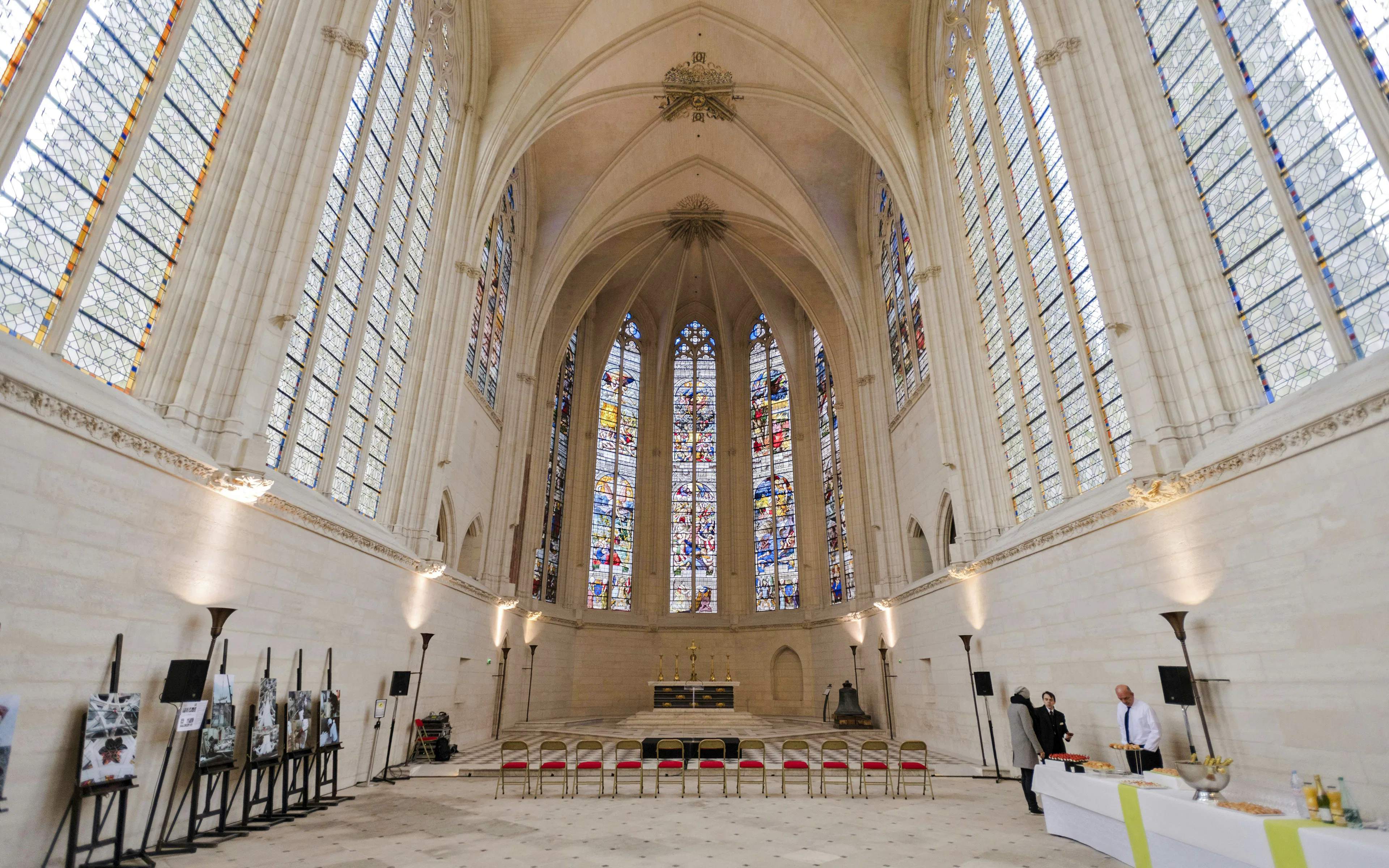
Stained glass windows inside Château de Vincennes chapel, Paris.
1/11

The keep

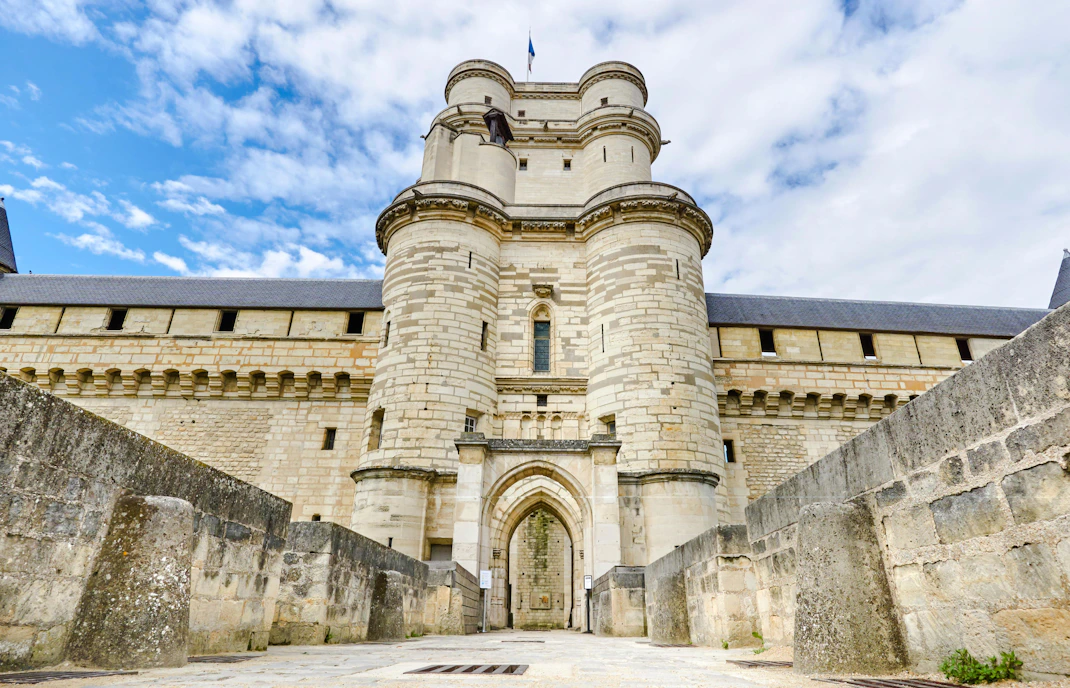
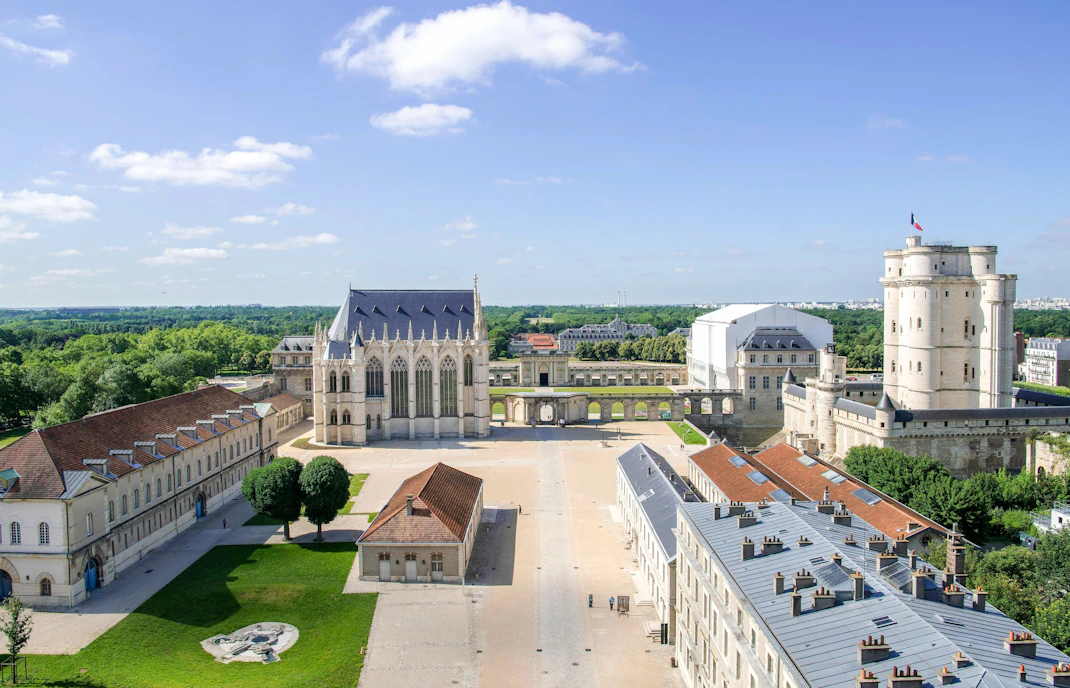
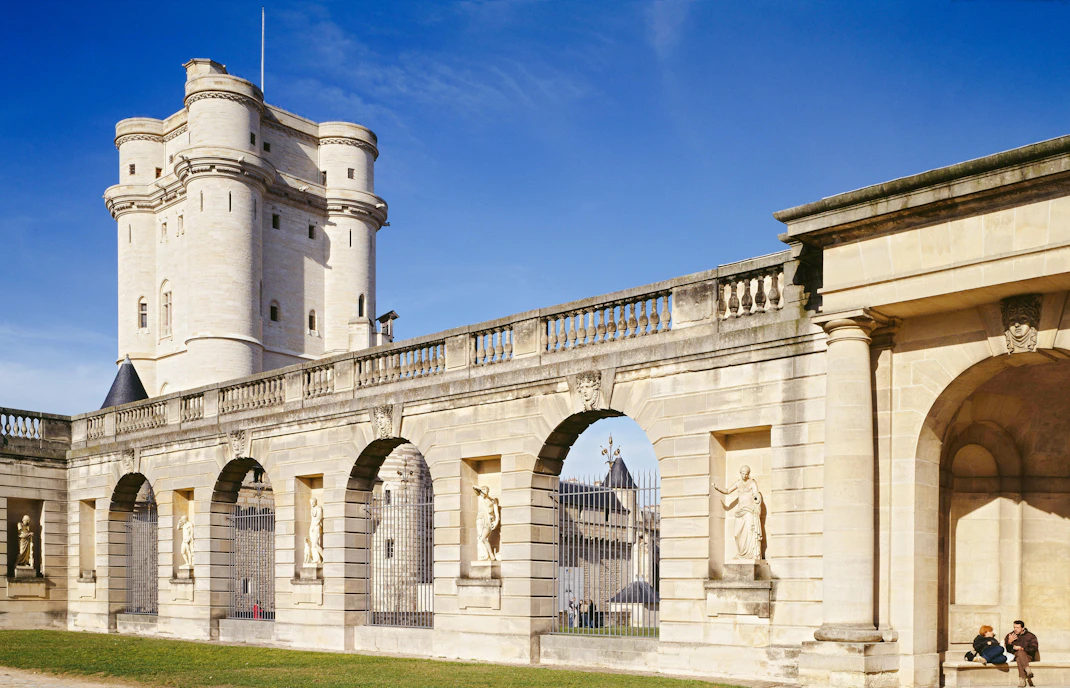
Charles V’s fortified keep is the château’s main landmark. It combined defence, royal living and government functions in one structure, and the official monument describes the roughly 50m-tall donjon as Europe’s tallest medieval keep.

Keep Châtelet

This fortified gatehouse controlled access to the keep enclosure and once displayed large royal and religious sculptures. Think of it as the threshold to the king’s most heavily protected part of the château.

Council Chamber

The Council Chamber was used for receptions, meetings and banquets, showing that the keep was a working centre of royal government, not just a defensive tower. It was also occasionally used to accommodate royal relatives.

King’s Chamber

Part of Charles V’s private apartment, the King’s Chamber retains ribbed vaulting and royal fleurs-de-lis. Its original blue decoration used pigment made with lapis lazuli.

King’s study

Charles V worked and received visitors here, while secretaries occupied the adjoining turrets. It’s one of the best spaces for imagining how the king actually used the fortress day to day.

Prison spaces and graffiti

The keep later became a state prison, holding figures such as Denis Diderot, Mirabeau and the Marquis de Sade. Look out for surviving inscriptions and graffiti left behind on the walls.

Keep enclosure, moat and footbridge

The donjon had its own moat and fortified wall, adding another layer of protection around the royal residence. Historically, the footbridge was the only route into the keep, making it feel like a fortress within a fortress.

Sainte-Chapelle de Vincennes

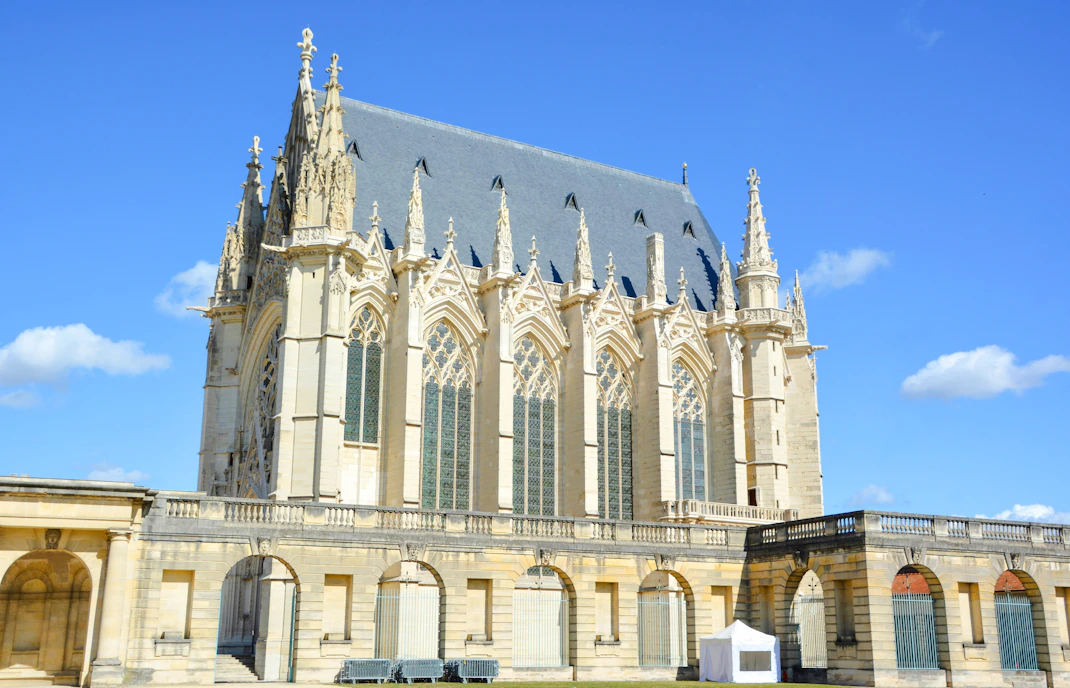
Founded by Charles V in 1379, the chapel was inspired by Sainte-Chapelle in central Paris. Unlike its Paris counterpart, Vincennes’ chapel has one principal level, with Gothic height and stained glass creating a striking contrast with the heavy keep.

Apocalypse stained-glass cycle

Found in the chapel choir, this stained-glass cycle was donated under Henri II between 1556 and 1559. The windows depict the Apocalypse according to St John and were created by master glassmaker Nicolas Beaurain.

Western façade and rose window

The western façade shows increasingly elaborate Flamboyant Gothic decoration. Its rose window was later strengthened after damage linked to the 1999 storm, so it’s worth taking a moment outside before heading in.

King’s and Queen’s Pavilions

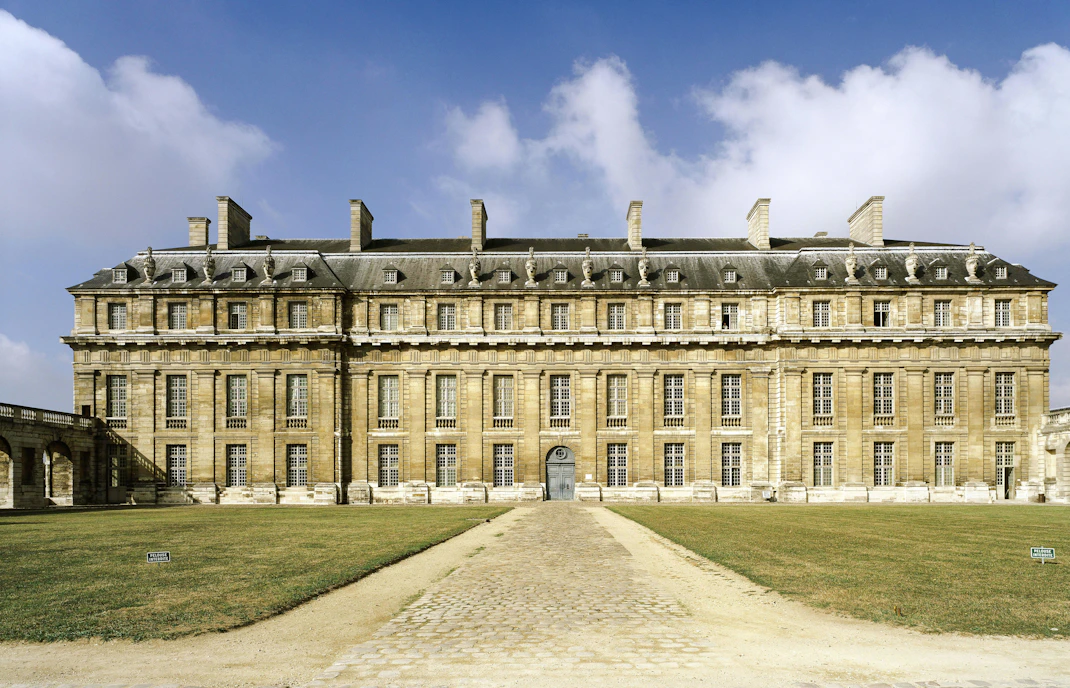
Designed by Louis Le Vau in the 17th century, these classical pavilions show how Vincennes evolved from a medieval fortress into a later royal residence. Their formal design stands in clear contrast to Charles V’s keep.

How to explore Château de Vincennes

How much time should you spend?

  • Full visit: Around 2 hours.
  • Multimedia route: Around 1.5 hours.
  • Short visit: Prioritize the keep and Sainte-Chapelle.
  • Half-day plan: Add Parc Floral or Bois de Vincennes afterwards.

Two hours gives you enough time to see the main interiors, chapel and outdoor fortifications without rushing from one room to the next.
Best visit order

  • Enter from Avenue de Paris and get your bearings in the main enclosure.
  • Visiting close to lunchtime? Go to the Sainte-Chapelle first, as it temporarily closes around midday.
  • Continue to the keep enclosure and take in the moat and châtelet.
  • Head inside to the Council Chamber and King’s Chamber.
  • Look out for traces of the keep’s prison history.
  • Finish with the wider enclosure and King’s and Queen’s Pavilions.

Must-see highlights

  • Don’t miss: The keep, King’s Chamber, prison spaces, Sainte-Chapelle and Apocalypse stained glass.
  • If you have more time: Explore the outer enclosure, Village Tower, archaeological remains and 17th-century pavilions.
  • For history buffs: Special guided visits can sometimes include spaces outside the standard route.

Worth adding nearby

  • Bois de Vincennes: Right beside the château and ideal for a walk, cycle or picnic afterwards.
  • Parc Floral de Paris: Roughly 0.5–1km away, depending on the entrance, and an easy way to turn the visit into a half-day.
  • Paris Zoological Park: Better treated as a separate substantial visit rather than a quick add-on.

Guided or self-paced?

  • Self-paced: Best for most first-time visitors.
  • Multimedia: The Revelacio tablet adds useful context to the château’s relatively sparse interiors.
  • Guided: Worth considering if you want deeper historical interpretation or special access.
  • Good to know: Guided and special visits depend on the calendar, so check availability before planning around one.

Best time to explore

  • Start with the Sainte-Chapelle near lunchtime: If you arrive close to midday, visit the chapel first since it temporarily closes around lunch. Otherwise, either the keep or chapel can be your starting point.
  • Save time for the keep: The upper levels involve around 150 steps, so explore them before moving on to the wider enclosure, especially if you prefer to tackle the most physically demanding part first.

Brief history of Château de Vincennes

  • 12th–13th centuries: Vincennes develops from a Capetian hunting residence into an important royal site.
  • 14th century: Charles V transforms it into a heavily fortified royal complex.
  • 1367–1368: Charles V moves into the keep.
  • 1379: Work begins on the Sainte-Chapelle.
  • 1556–1559: Henri II donates the chapel’s major Renaissance stained-glass cycle.
  • 17th century: Louis Le Vau designs the King’s and Queen’s Pavilions.
  • 1682: Louis XIV leaves Vincennes for Versailles with his court.
  • 18th century: The keep operates as a state prison.
  • 19th century: Napoleon I reinforces its military role.
  • 1853: The Sainte-Chapelle becomes the first part of the château to receive historic-monument protection.
  • 20th century: The site continues to play a military role.
  • Today: The Service historique de la Défense remains at Vincennes and preserves more than 120 linear kilometres of military archives.

Architecture of Château de Vincennes

  • Built over several centuries: Château de Vincennes has no single architect. Charles V shaped its medieval transformation in the 14th century, while Louis Le Vau added the King’s and Queen’s Pavilions in the 17th century.
  • Medieval keep: Built as both royal residence and defensive stronghold, with five main levels and walls over 3m thick.
  • Defensive layers: Moats, fortified walls and gatehouses protected the royal residence.
  • Sainte-Chapelle: Gothic height, stained glass and a single-level design give it a lighter feel than the keep.
  • 17th-century pavilions: Louis Le Vau’s classical additions show the château’s move towards a more formal royal residence.

Walk across the site and you can see centuries of French architecture in one place—from medieval fortifications to Gothic chapel design and classical royal pavilions.

#

Additional information about Château de Vincennes

From royal residence to state prison

  • The keep began as a heavily protected royal residence for Charles V.
  • It later became a state prison.
  • Denis Diderot, Mirabeau and the Marquis de Sade were among its most famous prisoners.
  • Prison inscriptions and graffiti can still be seen in parts of the keep.
  • Napoleon I later reinforced Vincennes’ military role.
  • The French General Staff operated here before the fall of France in 1940.

That long afterlife is part of what makes Vincennes interesting. The same walls have served kings, prisoners and the military over several centuries.

Frequently asked questions about Château de Vincennes

Historically, it was both a royal residence and a fortified château. Today, it feels much more like a castle, with defensive architecture and surviving royal spaces rather than richly furnished palace rooms.