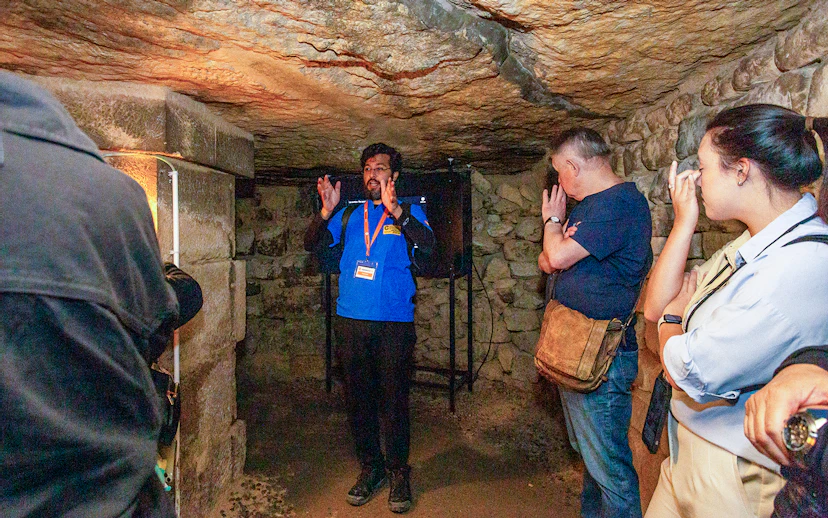
By the 1700s, Paris’ cemeteries had become severely overcrowded after centuries of burials. The biggest concern was Les Innocents Cemetery, where piled-up remains created sanitation problems and raised fears about public health.
Who do the Paris Catacombs skulls belong to?
Paris Catacombs skulls | An overview
→ The skulls lining the walls of the Catacombs belonged to former residents of Paris who lived centuries ago.
→ They were not buried directly in the Catacombs; they were transferred from overflowing city cemeteries in the late 18th and early 19th centuries.
→ Today, the ossuary holds the remains of around 6 million Parisians. Ossuaries reveal stories about a city’s history, burial traditions, and how communities have adapted to the challenges of limited space.
Paris Catacombs skulls | What to expect?
1/4
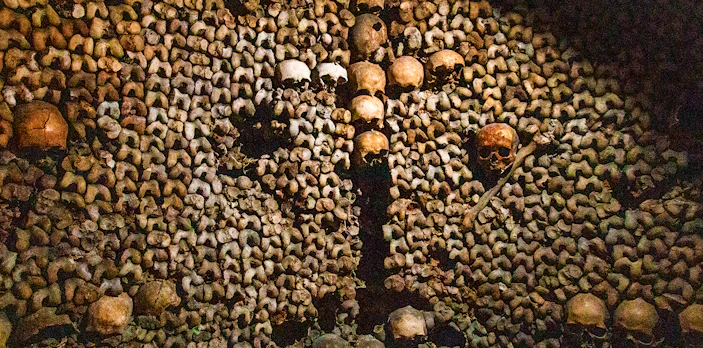
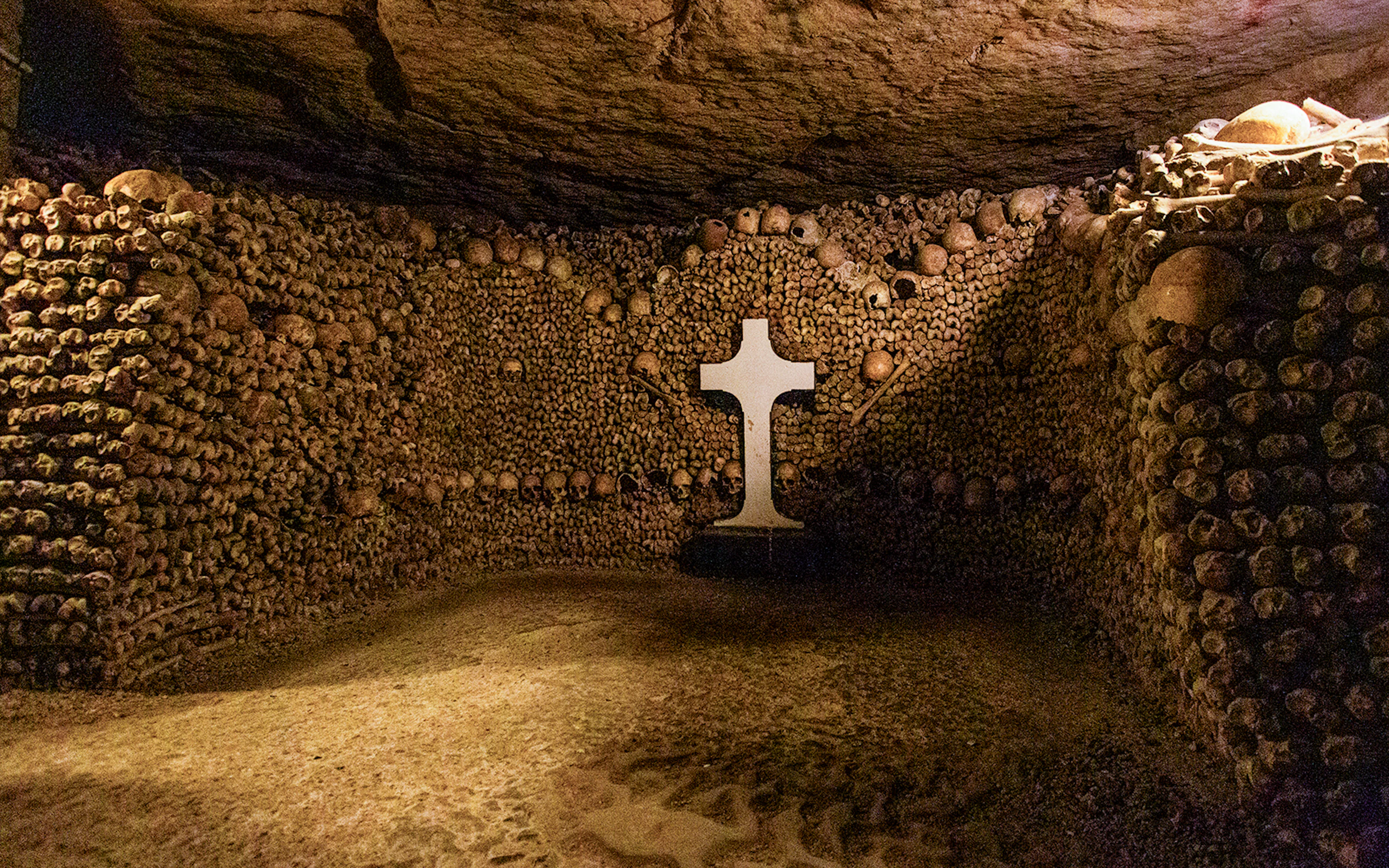
💀 See the famous walls of skulls and bones
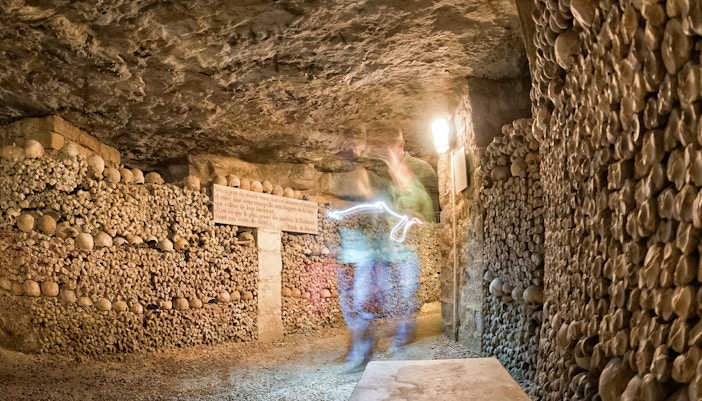
Walk through the underground galleries lined with thousands of carefully arranged skulls and bones, creating one of the most unforgettable sights in Paris. These unique displays offer a rare look at how the city transformed its burial crisis into a historic memorial.
📜 Uncover the story behind the world’s largest Ossuary
Step into the Paris Catacombs Ossuary and discover why millions of remains were moved beneath the city, how former limestone quarries became a final resting place, and the history behind the famous walls of skulls and bones.
🕯️ Explore the mystery of Paris’ underground bone chambers
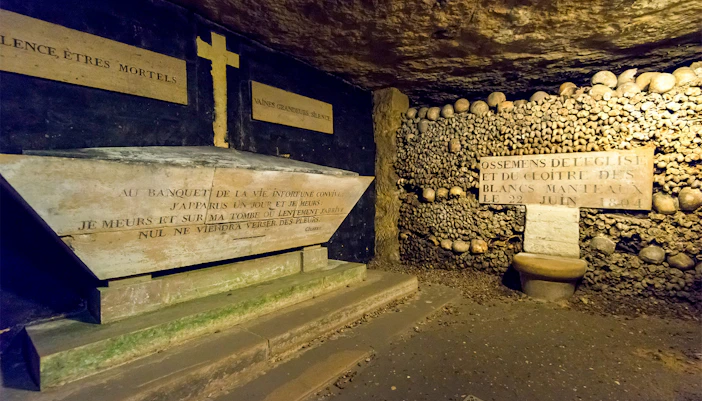
Go beyond the skulls and discover the stories hidden within the ossuary — from the careful arrangement of bones to the inscriptions and symbols that reveal how Paris remembered its dead.
📜 Get to know Paris history in a unique way
The Paris Catacombs Ossuary is unlike any other landmark in the city. See how human remains were transformed into a powerful memorial that reflects Paris’ past, its burial traditions, and its relationship with death.
Whose skulls are in the Paris Catacombs ossuary?
- Most remains are anonymous. Names and identities were lost over time.
- Many came from major Paris cemeteries, especially: Cimetière des Innocents (the largest source of transferred remains), other parish cemeteries across old Paris.
- The remains belong to ordinary Parisians: workers, merchants, artisans, nobles, and families who lived through different periods of the city's history.
Why the Catacombs became an Ossuary
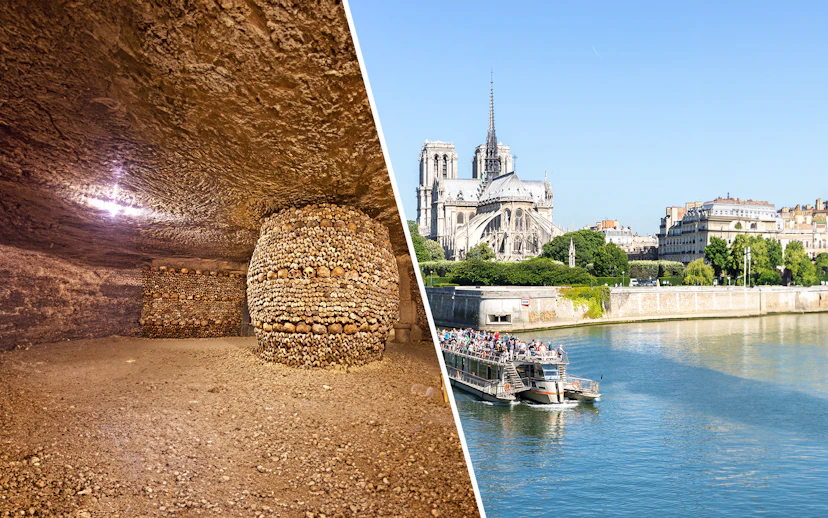
The Paris Catacombs were never meant to be a burial site. Beneath the city were ancient limestone quarries that supplied stone for Paris’ monuments and buildings. It was only in the late 18th century, when the city faced a major cemetery crisis, that these underground tunnels were transformed into the world’s largest ossuary.
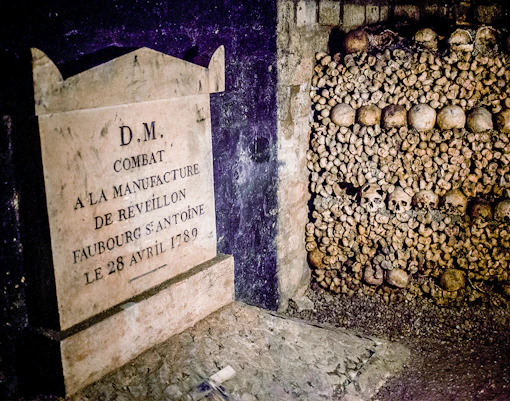
🪦 Paris’ overcrowded cemeteries
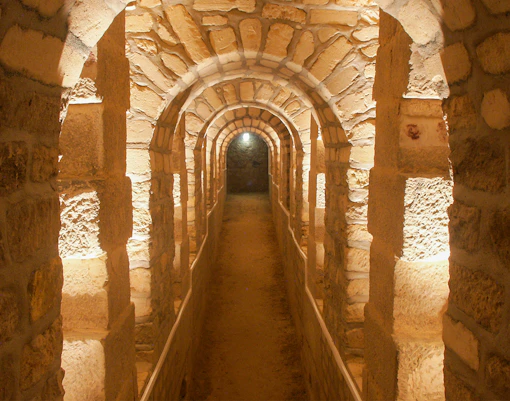
🕳️ A Solution beneath the streets
In 1786, city officials began transferring bones from overflowing cemeteries into the abandoned limestone quarries beneath Paris. These underground tunnels provided a safe and spacious place to preserve human remains away from the crowded city above.
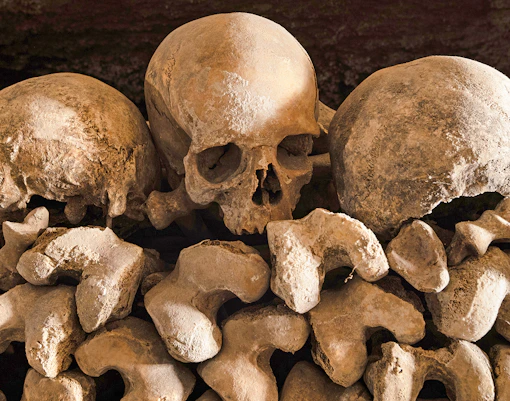
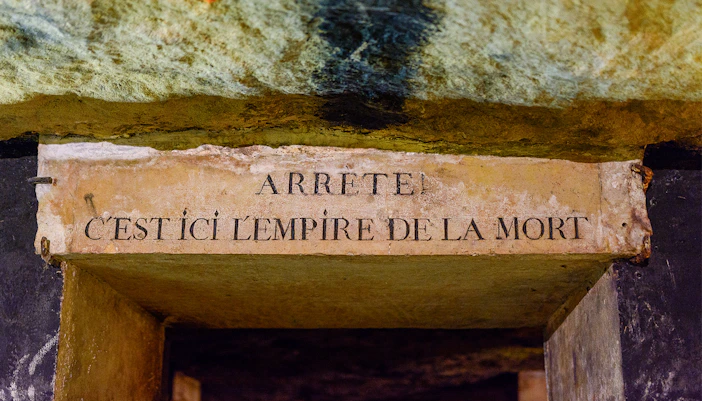
💀 From quarries to the “Empire of the Dead”
Over several years, millions of bones were carefully moved into the tunnels. Later, they were arranged into the striking walls of skulls and bones that make the Paris Catacombs famous today.
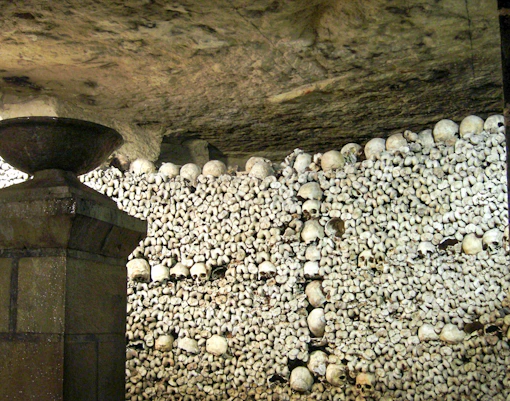
🏛️ A memorial to Paris’ past
What started as a practical solution to a burial crisis became a powerful historical landmark. The ossuary now offers a glimpse into Paris’ past, preserving the stories of the millions whose remains rest beneath the city.
Paris Catacombs Ossuary vs regular cemetery: What’s different?
| Cemetery | Ossuary |
|---|---|
Individual graves | Collective resting place |
Above ground | Underground |
Memorials for individuals | Millions of anonymous remains |
Burial space | Historical monument |
Seeing the Paris Catacombs skulls with kids | Is it safe?
You can visit the Paris Catacombs Ossuary with kids, but it depends on their age and how comfortable they are with dark, underground spaces and human remains. Children under 14 must be accompanied by an adult.
A few things to consider:
- Best for: Older children (around 8–10+) who enjoy history, mysteries, or unusual attractions.
- May not suit: Very young children or kids who get scared easily — the visit involves long underground tunnels lined with real skulls and bones, which can feel eerie.
- Duration: The route takes around 45 minutes and includes a descent underground with about 130 steps down and 112 steps back up.
- Good approach with kids: Frame it as a history lesson rather than a scary attraction — explain that the bones were moved here in the 18th century to solve Paris’ overflowing cemetery problem.
- Practical tip: Bring a light jacket even in summer; the underground tunnels stay cool.
Frequently asked questions about Paris Catacombs skulls
The Paris Catacombs skulls are the remains of millions of Parisians who were moved from overcrowded cemeteries in the late 18th century. The bones were carefully arranged in the ossuary to create a respectful final resting place and memorial.
The Paris Catacombs Ossuary is an underground burial site that houses the remains of around 6 million people. It was created when former limestone quarries beneath Paris were transformed into a place to store bones from the city’s overflowing cemeteries.
The ossuary contains the remains of approximately 6 million people, including countless skulls and bones arranged along the underground galleries. The exact number of individual bones is unknown.
Yes, the skulls and bones displayed in the Paris Catacombs are genuine human remains that were transferred from historic Paris cemeteries between the late 1700s and early 1800s.
Paris’ cemeteries became dangerously overcrowded, especially Les Innocents Cemetery. To address health concerns and create more burial space, authorities moved remains underground into the former quarry tunnels.