Is the Jardin des Plantes worth visiting?
Ménagerie feels more like a historic garden zoo than a large modern wildlife park. Tree-lined paths, heritage pavilions, and compact animal enclosures create a quieter, more intimate setting in the heart of Paris.
Founded in 1794 as part of the National Museum of Natural History, the zoo has long been connected to scientific study and observation. That history remains a visible part of the experience today.
Its smaller scale makes it a good fit if you want to combine animals, gardens, and history in one relaxed visit.
Skip it if: You’re looking for a large modern zoo with expansive habitats. For that experience, the Parc zoologique de Paris is likely a better fit.
What to see at Jardin des Plantes?
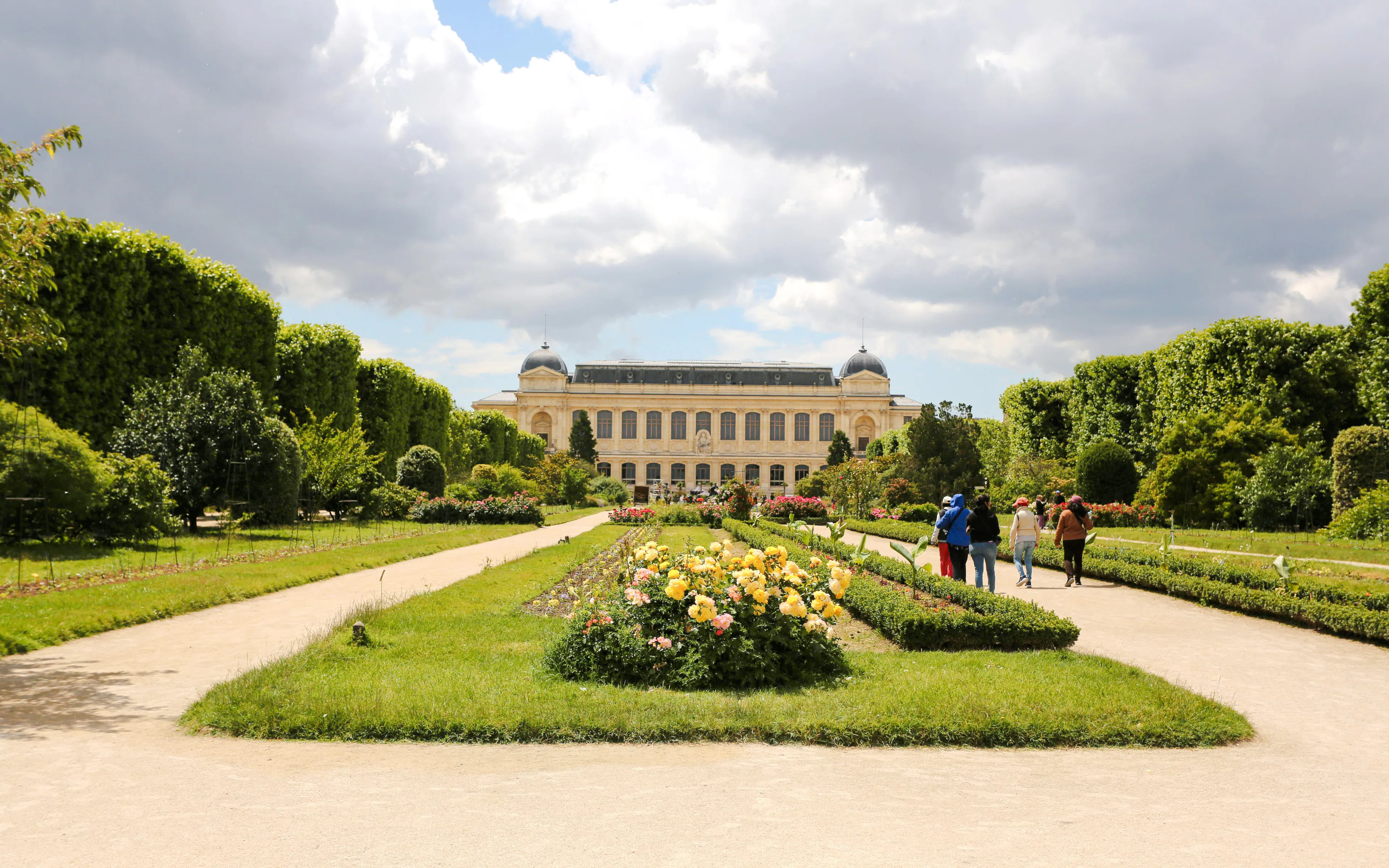
The historic layout
Start with the setting itself: 19th-century animal houses, mature trees, and compact paths within the Jardin des Plantes. It feels closer to a historic scientific garden with animals than a large modern zoo.
The big cat enclosures
The big cats are among the more popular stops and can draw small crowds as the morning gets busier. If they’re high on your list, head here earlier in your visit for a quieter look before more families begin moving through the central paths and surrounding enclosures.
The primate areas
The primate areas are where the Ménagerie’s compact scale can work particularly well. You can spend time watching how the animals move, interact, and behave rather than viewing them from a distance, making this section an engaging stop for families visiting with children.
The aviaries
The bird enclosures fit naturally into the Ménagerie’s historic garden setting. Take time to look up as well as ahead as you explore—the experience here comes as much from seeing the aviaries among mature trees and greenery as it does from spotting the birds themselves.
The reptile and amphibian displays
These indoor displays add a change of pace to the largely outdoor route and make the overall visit feel more varied. They’re also useful places to spend more time during colder or wetter weather, and you may find yourself staying longer here than initially planned.
The rarer conservation species
Beyond the more familiar zoo animals, the Ménagerie is also home to lesser-known species that reflect its wider scientific and conservation role. This is a section worth slowing down for if you’re particularly interested in biodiversity and discovering animals beyond the usual headline species.
How to explore Jardin des Plantes?
How much time to spend?
Allow 1–2 hours for the Ménagerie. You can cover the main areas in about an hour if you’re short on time, but around 90 minutes gives you a more relaxed visit. If you’re visiting with children or adding another paid attraction on the same campus, set aside half a day.
Best visit order
If the Ménagerie is your main stop, enter from 57 rue Cuvier or Place Valhubert and start with the outdoor enclosures while the paths are quieter. Move to the indoor reptile and amphibian displays midway through or towards the end, then finish with a walk through the Jardin des Plantes.
Must-see highlights
Prioritise the historic zoo setting, big cat enclosures, primate areas, and aviaries. If you have more time, add the reptile and amphibian displays and a longer walk through the surrounding gardens, which can add another 30–60 minutes.
Worth adding nearby
The Grande Galerie de l’Évolution is the easiest same-campus add-on, especially if the weather turns or you want to follow your zoo visit with a museum.
Brief history of Jardin des Plantes
- 1794: The zoo is founded during the French Revolution as the Ménagerie of the National Museum of Natural History.
- Late 18th century: Animals from royal and private collections are transferred here, giving the new republic a public scientific menagerie.
- 19th century: The site expands with purpose-built animal houses, aviaries, and pavilions that still shape its historic feel today.
- 1880s–1930s: The wider Jardin des Plantes campus grows into a major scientific complex, and the zoo becomes part of that larger educational mission.
- 20th century: Its role shifts from display toward research, breeding, and conservation within a modern museum institution.
- Today: The zoo remains one of the world’s oldest public menageries, valued for its central Paris location, historic setting, and scientific identity.
Why the zoo still matters to conservation
As part of the National Museum of Natural History, the Ménagerie plays a role beyond being a historic city zoo. Its work includes species conservation, breeding programmes, and public education, with particular attention to lesser-known and threatened animals.
That connection shapes the visit. You’re exploring a living collection that sits alongside botanical research and natural-history galleries on the same Jardin des Plantes campus, giving the zoo a stronger scientific and conservation focus than its compact size might suggest.
Frequently asked questions about Jardin des Plantes Zoo
Yes. Entry to the outdoor Jardin des Plantes is free, but the Ménagerie is separately ticketed.
No. The Ménagerie is the smaller, historic zoo in central Paris, while Paris Zoo at Vincennes is a larger modern zoo with more expansive habitats.
Use the 57 rue Cuvier or Place Valhubert side, depending on which is more convenient for your route.
No. The Ménagerie and Grande Galerie de l’Évolution are separate paid attractions. If you want to visit both, plan them as a half-day combination.
Yes. The Ménagerie is generally open on Tuesdays, while the Grande Galerie de l’Évolution and Grandes Serres are usually closed.
Many areas are accessible, but some outdoor paths and historic sections have uneven surfaces, so navigation may be less straightforward in places.
There is no general visitor parking for individuals. Public transport, taxis, or walking are usually the easiest ways to reach the zoo.
The Grande Galerie de l’Évolution is the easiest same-campus add-on. It pairs well with the Ménagerie if you want to combine the zoo with an indoor natural-history experience.
