Cité Immersive des Fables visitor guide

Cité Immersive des Fables is a compact walk-through immersive exhibition best known for turning Jean de La Fontaine’s animal fables into room-sized sets, projections, and soundscapes. The visit is easy physically, but the rooms are enclosed, timed around a continuous route, and can feel busy once family groups stack up. The biggest difference between a smooth visit and a rushed one is choosing an early slot and not lingering too long before the final projection room. This guide covers timing, arrival, tickets, and how to pace the experience well.

Quick overview: Cité Immersive des Fables at a glance

This is a short, high-production indoor visit, so timing matters more than stamina.

  • When to visit: Tuesday opens 2pm–7:30pm, and Wednesday–Sunday runs 10:30am–7:30pm; the first slot after opening is noticeably calmer than weekend afternoons, because the route is linear and the smaller rooms fill quickly once families bunch together.
  • Getting in: From €19.90 for adults, with youth tickets from €13.90 and family passes from €55; book ahead for the exact slot you want, especially on weekends, school breaks, and holiday periods.
  • How long to allow: 1–1.5 hours suits most visitors, and it stretches closer to the longer end if you stop for photos in the themed rooms or watch the Dream Room sequence twice.
  • What most people miss: The opening study room sets up the whole experience better than many visitors expect, and the Lion room often gets rushed even though it leads directly into the strongest finale.
  • Is a guide worth it? Most visitors do fine without one because the route is straightforward and the storytelling is built into the rooms, but added commentary helps more if you want deeper literary and historical context.

Where and when to go

How do you get to Cité Immersive des Fables?

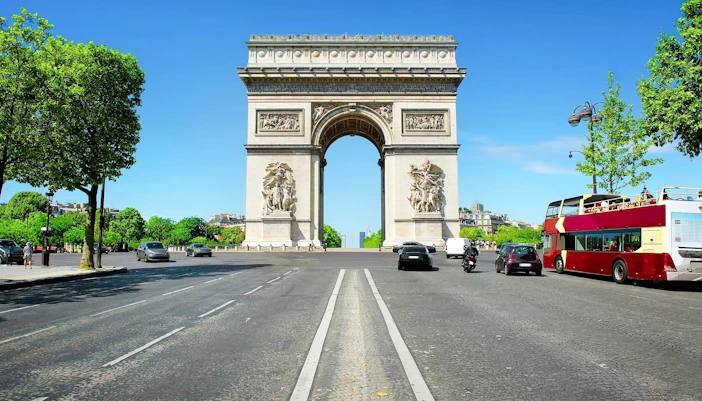
The exhibition sits inside Galerie Berri-Washington just off the Champs-Élysées in Paris’s 8th arrondissement, a 2-minute walk from George V metro station and an easy stop if you’re already near the Arc de Triomphe.

5 Rue de Berri, 75008 Paris, France

Open in Google Maps

  • Metro: George V (Line 1) → 2-minute walk → fastest option if you want the least walking.
  • Metro: Franklin D. Roosevelt (Lines 1 and 9) → 5-minute walk → useful if you’re coming from other central Paris sights.
  • Metro/RER: Charles de Gaulle–Étoile (Lines 1, 2, 6, and RER A) → 9-minute walk → easiest if you’re pairing the visit with the Arc de Triomphe.
  • Bus: Routes 43, 52, 72, and 73 → George V/La Boétie stops → close drop-off near the gallery entrance.
  • Car: Parc Berri–Champs-Élysées and Parc George V are the nearest parking options → best reserved for evening or bad-weather visits in this busy area.

Which entrance should you use?

There’s one main entrance inside Galerie Berri-Washington, and the mistake most visitors make is searching from the street longer than necessary instead of heading straight into the covered arcade.

  • Timed-entry line: Located inside the gallery entrance area. Best for all pre-booked visitors. Expect a short check-in wait at opening and longer slowdowns on weekend afternoons.

When is Cité Immersive des Fables open?

  • Tuesday: 2pm–7:30pm
  • Wednesday–Sunday: 10:30am–7:30pm
  • Monday: Closed outside school vacations
  • Last entry: 6pm

When is it busiest?: Weekend afternoons, school holidays, and spring or fall group-visit periods are the busiest, when the compact themed rooms feel more crowded and photo stops take longer.

When should you actually go?: The first entry after opening is your best bet because you’ll move through the smaller story rooms before family traffic builds and before the Dream Room develops a wait.

How do you get around Cité Immersive des Fables?

Cité Immersive des Fables is compact and linear rather than sprawling, so you move through it as a single narrative path instead of choosing between separate wings. In practice, that makes it easy to self-navigate, but it also means crowding in one room can slow the entire flow behind it.

Layout and route

  • La Fontaine’s study: Introductory room with manuscripts, desks, and historical framing → budget 10 minutes.
  • Crow room: One of the most recognizable fables with strong visual staging and comic dialogue → budget 10 minutes.
  • Wolf room: Darker, moodier setting built around power and deceit themes → budget 10–15 minutes.
  • Frog and Lion rooms: Brighter family favorite followed by a more regal, reflective space → budget 15–20 minutes together.
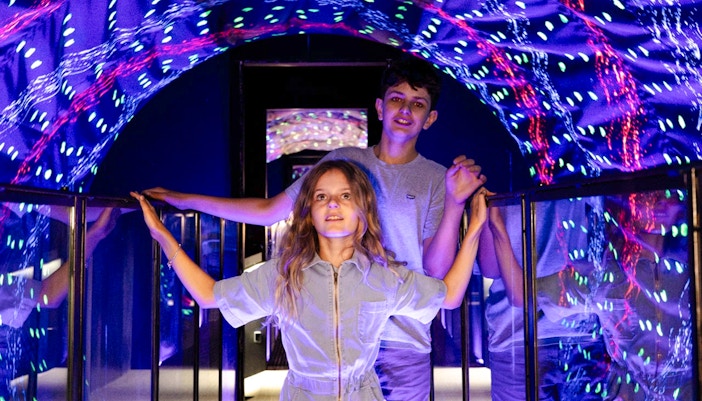
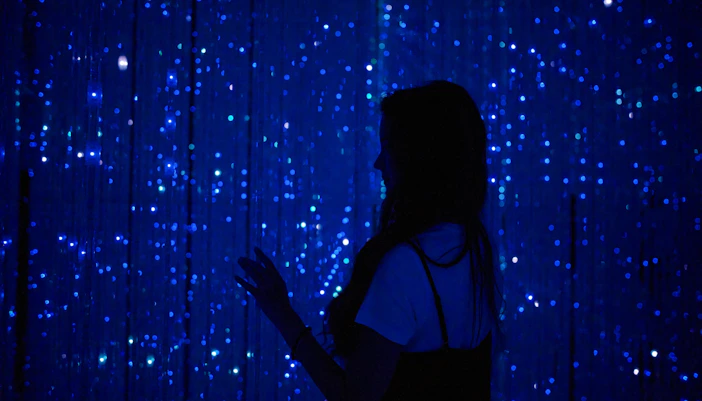
  • Dream Room: Circular 360° finale with the strongest visual payoff → budget 5–10 minutes depending on whether you stay for another cycle.

Suggested route: Follow the rooms in order, but don’t rush through the opening study just to get to the animal sets; it gives the later rooms more meaning, and many visitors hurry past the Lion room because they’re focused on reaching the finale.

Maps and navigation tools

  • Map: The route is on-site rather than map-led → you won’t need to plan a complex path before arrival.
  • Signage: Wayfinding is simple once you’re inside, but the gallery entrance is easier to spot if you know you’re looking for Galerie Berri-Washington rather than a large street-front lobby.
  • Audio guide/app: The experience relies on built-in narration, projections, and sound design rather than a separate audioguide.
  • Indoor route: This is a contained indoor exhibition, so navigation is easier than at larger museums and guided help is more about context than directions.

💡 Pro tip: Save a little extra time for the Dream Room instead of spending it all in the first photo-friendly sets — it’s the only part many visitors want to see twice.

What happens inside Cité Immersive des Fables?

Bureau de La Fontaine room
1/6

Bureau de La Fontaine

Room type: Introductory historical set

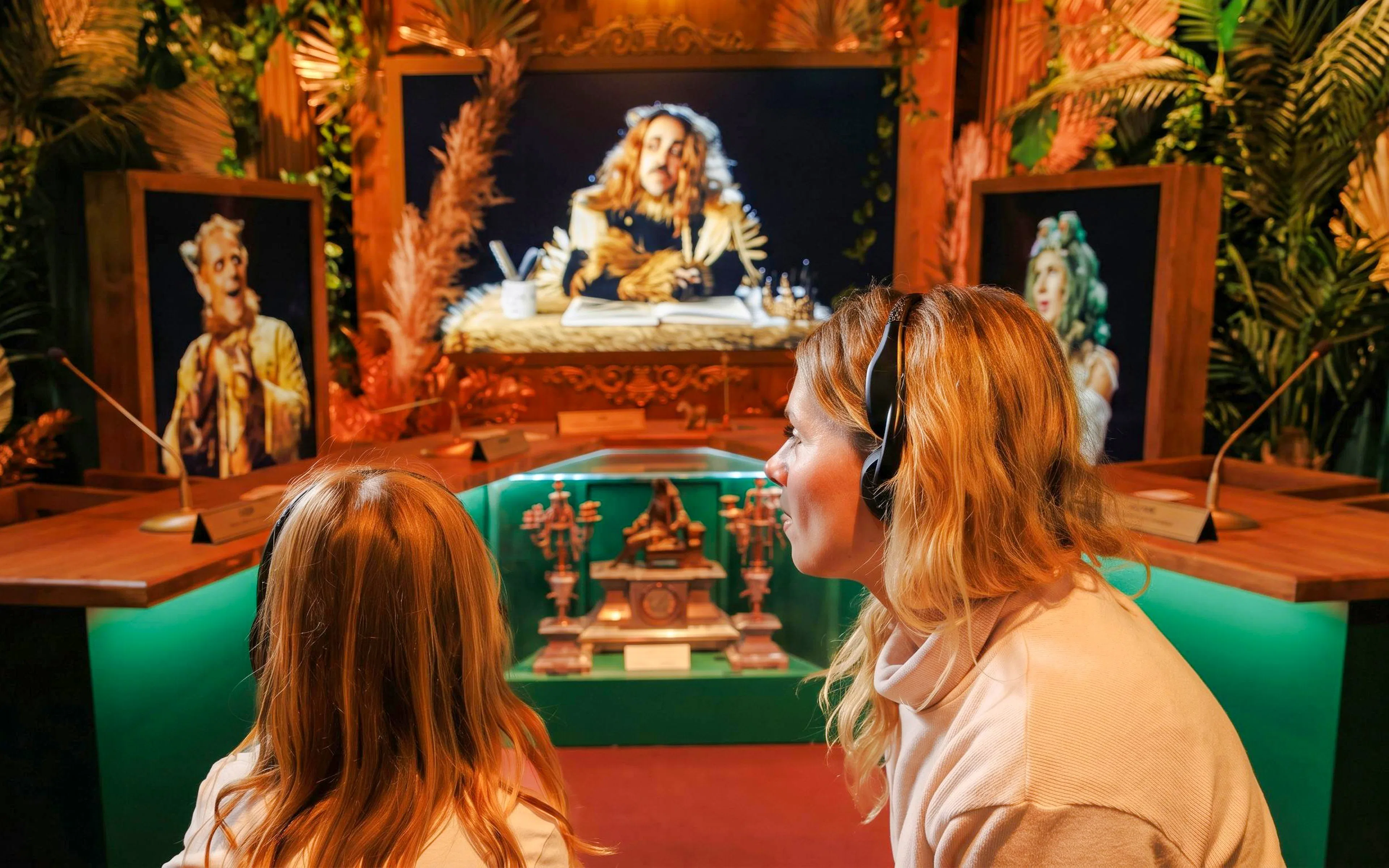
This first room frames the whole experience around Jean de La Fontaine rather than dropping you straight into spectacle. Desks, manuscripts, and oversized books establish the Grand Siècle mood, while the narration explains why these fables mattered then and why they still land now. What many people rush past here is the setup for the later humor and voice performances, which works much better once you’ve taken in the context.

Where to find it: Immediately after check-in, at the start of the route.

Salle du Corbeau

Room type: Themed fable room

This is one of the exhibition’s clearest crowd-pleasers, built around 'The Crow and the Fox' with oversized animal figures, layered scenery, and sharp, modernized dialogue. It lands well even if you already know the story, because the room turns a familiar moral tale into a visual joke that plays in real time. Visitors often focus on the main figures and miss how much of the humor sits in the surrounding forest details and voice timing.

Where to find it: Early in the route, directly after the introductory study.

Salle du Loup

Room type: Atmospheric dramatic room

The Wolf room is darker, more theatrical, and slightly more intense than the brighter spaces around it, which is why it tends to leave a stronger impression on older children and adults. It pulls in fables such as 'The Wolf and the Lamb' and uses misty lighting, spatial sound, and a more menacing tone to shift the mood. What gets missed here is that the atmosphere is doing as much storytelling as the spoken lines.

Where to find it: Mid-route, after the Crow room and before the more playful family scenes.

Salle de la Grenouille

Room type: Family-friendly comic set

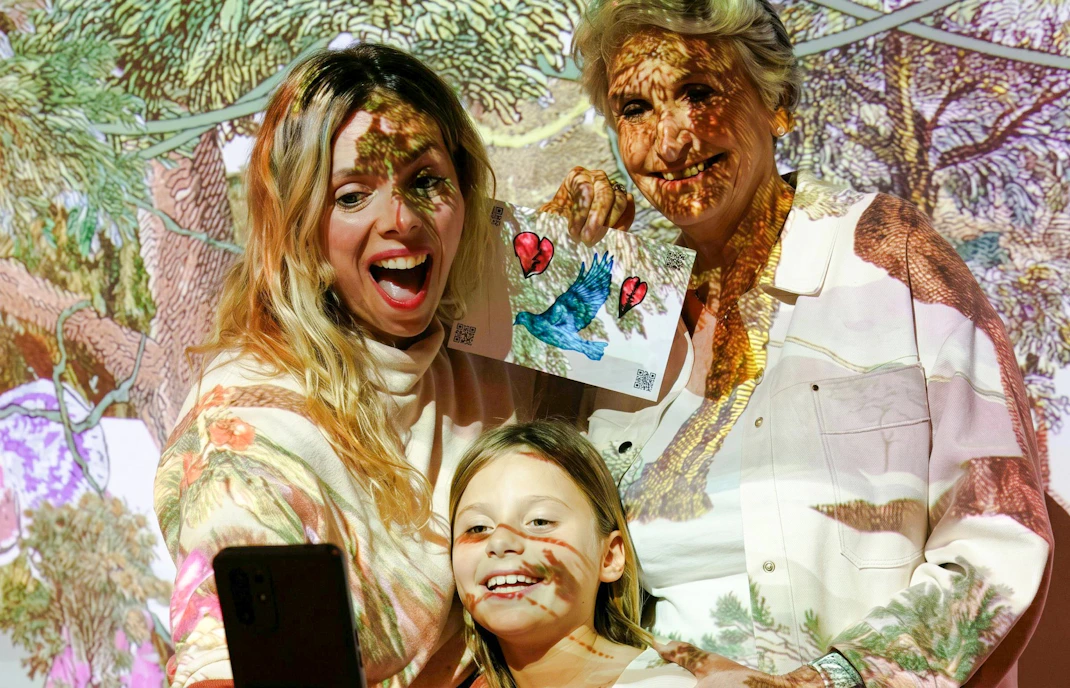
This room leans into bright color, exaggerated scale, and playful energy, making it one of the easiest stops for younger visitors to connect with quickly. Inspired by 'The Frog and the Ox,' it uses humor more openly than the darker rooms and tends to become a natural photo stop for families. Many people move on after the main visual gag, but the smaller interactive details are what keep children engaged for a few extra minutes.

Where to find it: In the middle section of the exhibition, after the darker wolf sequence.

Salle du Lion

Room type: Regal narrative room

The Lion room shifts the tone again, using a dimmer, more stately design with hunting-lodge cues and a spotlighted central figure. It works because the fables here feel less comic and more reflective, and the room acts as a bridge into the finale rather than just another stop on the route. The detail most visitors miss is how the pacing slows intentionally here, making the Dream Room feel bigger when you finally step into it.

Where to find it: Near the end of the route, immediately before the final projection space.

Salle des Rêves

Room type: 360° finale room

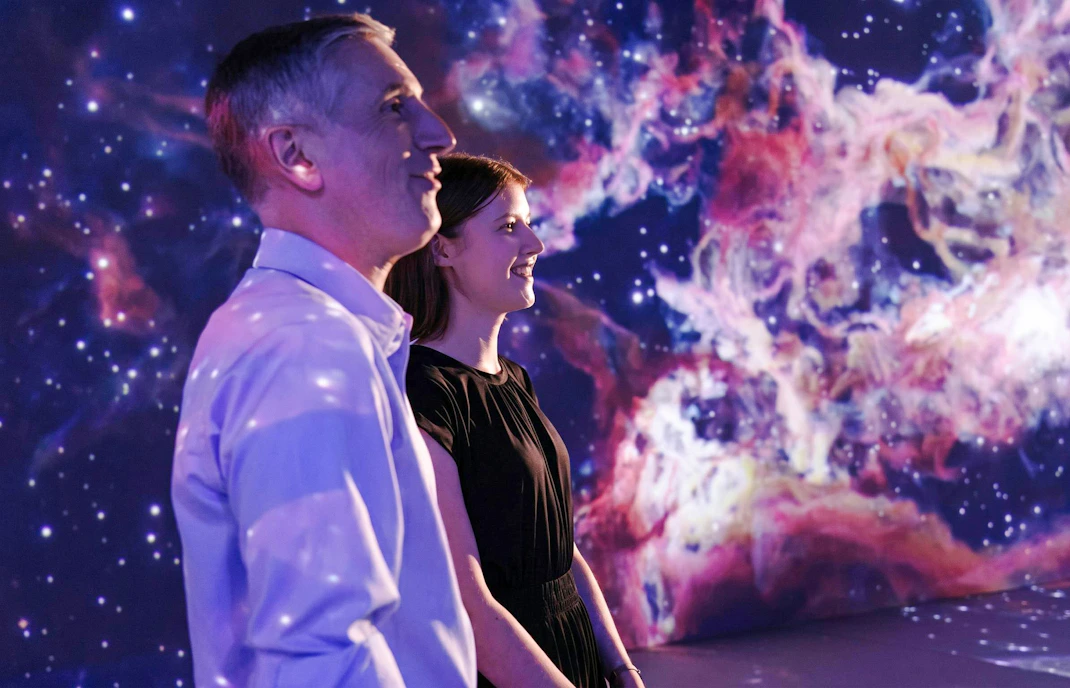
This circular projection chamber is the payoff for the whole visit, with floor-to-ceiling visuals, Bon Entendeur’s soundtrack, and short immersive sequences that pull the fables into one emotional closing set-piece. It’s visually the strongest room, but it also works because you’ve already passed through the individual stories on foot. Visitors often spend the whole time filming and miss the way the music ties the earlier rooms together.

Where to find it: Final room of the exhibition, at the end of the linear route.

Facilities and accessibility

  • 🎟️ Check-in: Timed-entry tickets are scanned on arrival, so keep your QR code open before you reach the front desk.
  • 🚪 Entrance: The venue is inside Galerie Berri-Washington, which makes arrival weather-proof and easier than a street-side queue.
  • 🎒 Strollers: Strollers are accepted, and the route is wide enough for them, though compact rooms are easier to manage with a smaller stroller.
  • 🍽️ Food and drink: There is no full food service inside the exhibition, so it works better as a pre-lunch or post-lunch activity than a stop with a built-in break.
  • 🛍️ Gift shop / merchandise: The visit exits through a small shop with souvenirs such as magnets, storybooks, and plush toys tied to the fables.
  • 📸 Photo-friendly sets: The Crow and Frog rooms are the easiest places for family photos because they are brighter and more visually open than the darker dramatic rooms.
  • Mobility: The venue has ground-level access and is wheelchair-accessible, and the route is compact enough that most visitors can complete it without long physical strain.
  • 👁️ Visual impairments: The experience relies heavily on large-scale projections, theatrical lighting, and voiced storytelling, so you’ll get more from it with a companion if you prefer descriptive support.
  • 🧠 Cognitive and sensory needs: Sound, lighting shifts, and enclosed immersive rooms are part of the format, so quieter opening slots usually feel easier than weekend afternoons if overstimulation is a concern.
  • 👨‍👩‍👧 Families and strollers: The route is stroller-friendly, but some younger children may find the darker Wolf room or the narration-heavy sections harder to follow than the brighter comic rooms.

This works best for children around age 6 and up, who can follow the stories, spot the morals, and stay engaged through the full room-to-room sequence.

  • 🕐 Time: Around 1 to 1.5 hours is realistic with children, and the Frog room, Crow room, and Dream Room are usually the easiest priorities if attention starts to dip.
  • 🏠 Facilities: The indoor route, stroller access, and compact layout make logistics simpler than at larger family attractions with multiple floors or outdoor walking.
  • 💡 Engagement: Prep children with one or two fables before you arrive, because they engage more when they recognize the crow, fox, wolf, or frog on sight.
  • 🎒 Logistics: Eat beforehand, keep the stroller easy to maneuver, and aim for the first slot of the day if you want fewer pauses behind other families.
  • 📍 After your visit: The Arc de Triomphe is a simple next stop if your group still has energy and you want to add a short classic Paris landmark to the day.

Rules and restrictions

What you need to know before you go

  • Entry requirement: Entry is by timed ticket, and you should arrive with your booked slot and mobile QR code ready to scan.
  • Bag policy: Pack light for the compact room-to-room route, especially if you are also managing children or a stroller.
  • Visit flow: The exhibition is designed as one continuous indoor route, so it works best if you plan to complete it in a single pass rather than treating it as a stop-in, stop-out visit.

Not allowed

  • 🚫 Food and drink: This is not a snack-stop attraction, so finish food before entry and plan meals for before or after the visit.
  • 🖐️ Disruptive behavior: Keep voices low and children close in the smaller rooms, because staff actively manage the pace and atmosphere of the experience.

Photography

Photos are allowed inside the exhibition, which is one reason families tend to linger in the brighter Crow and Frog rooms. Flash photography is not permitted. The darker rooms and the Dream Room are still worth capturing, but you’ll get better results if you pause briefly rather than trying to film every sequence from start to finish.

Good to know

  • Finale timing: The Dream Room sequence is short, so arrive ready to watch rather than spending the whole cycle setting up your phone.
  • Age fit: Children under about 6 years may enjoy the visuals, but the story-led narration and darker rooms usually land better with slightly older kids.

Practical tips

  • Booking and arrival: Book your slot in advance and aim to arrive 10–15 minutes early, because this is timed entry rather than a drop-in exhibition and the most convenient weekend slots go first.
  • Pacing: Don’t burn all your time in the first two photo-heavy rooms; the route is short, and the Lion room plus the Dream Room are where the visit feels most complete.
  • Crowd management: The first opening slot is the smartest choice here, because the exhibition is compact and even a modest surge of families can slow the whole route by midday.
  • What to bring or leave behind: Keep bags small and strollers easy to steer, since the layout is stroller-friendly but still more comfortable when you’re not maneuvering bulky gear through enclosed sets.
  • With children: If your child is under 6 years old, quietly preview the wolf scenes beforehand so the darker sound-and-light sections don’t become the point where attention drops.
  • Food and drink: Eat before you go or plan something afterward near the Champs-Élysées, because there isn’t a full café break built into the visit and the experience only runs about 90 minutes anyway.
  • Finale strategy: If you want good photos in the Dream Room, stand back and watch the first cycle, then re-enter or capture a second round instead of filming blindly the whole time.

What else is worth visiting nearby?

Commonly paired: Arc de Triomphe

Distance: About 10 minutes on foot
Why people combine them: It’s the easiest same-area pairing, turning a short indoor cultural visit into a half-day Champs-Élysées plan with almost no extra logistics.
Book / Learn more

Commonly paired: Bateaux-Mouches Seine cruise

Distance: About 20–30 minutes by metro or taxi
Why people combine them: The cruise is a good contrast after the exhibition — calm, open-air, and low-effort after an indoor, projection-heavy experience.

Also nearby

Théâtre des Marionnettes du Luxembourg
Distance: About 20–25 minutes by metro
Worth knowing: This is the better add-on if you’re visiting with younger children who respond more to live puppetry than narration-led immersive rooms.

Musée des Illusions Paris
Distance: About 20 minutes by metro
Worth knowing: This works well for teens and adults who want a second interactive stop with a more playful, puzzle-led format than the literary storytelling here.

Eat, shop and stay near Cité Immersive des Fables

  • On-site: There is no full café or snack bar inside the exhibition, so it’s best treated as a short indoor stop between meals rather than a venue where you’ll linger over food.
  • Champs-Élysées cafés: The immediate area has plenty of quick café options within a short walk, which makes pre-visit coffee or a simple post-visit lunch easy.
  • Neighborhood brasseries: If you want a longer sit-down meal, save it for after the exhibition since the visit itself only runs around 90 minutes and doesn’t break naturally in the middle.
  • Family-friendly option: This area is convenient rather than quiet, so families who need flexibility will usually do best with casual spots near George V or back toward Étoile.
  • 💡 Pro tip: Eat before the first slot of the day if you’re visiting with children — once you’re inside, the route moves best when you keep going rather than pausing for snack breaks.
  • Gift shop: The exit shop is the most relevant stop here if you want a visit-specific souvenir, especially storybooks, magnets, and plush toys tied to the fables.
  • Champs-Élysées retail: The surrounding blocks are packed with mainstream shopping, so it’s easy to turn the visit into a broader afternoon around the avenue without adding extra transit.

If you want to be near central landmarks and don’t mind higher prices, this area is a practical base. You can walk to the Champs-Élysées, Arc de Triomphe, and plenty of metro connections, which makes short stays easy. If you’re in Paris for longer or want a more neighborhood feel, it’s better as a day-visit district than as your only base.

  • Price point: This area skews upscale, especially around the Champs-Élysées, with convenience often costing more than character.
  • Best for: Visitors on a short trip who want easy access to major sights and don’t want to spend time crossing the city.
  • Consider instead: Le Marais or Saint-Germain-des-Prés suits longer stays better if you want more atmosphere, more varied dining, and a less business-heavy evening feel.

Frequently asked questions about visiting Cité Immersive des Fables

Most visits take about 1 to 1.5 hours. That gives you time for the full route, photo stops in the themed rooms, and the Dream Room finale. If you’re moving quickly as adults, you may finish closer to an hour, while families often stay longer in the brighter, more interactive spaces.