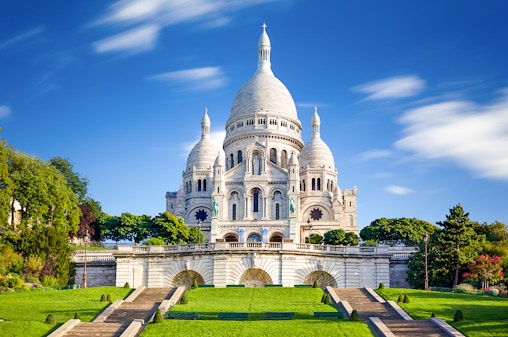

Why visit: Montmartre is Paris's most distinctive hilltop neighborhood, set on the Butte Montmartre in the 18th arrondissement. It is home to Sacré-Coeur Basilica, the Moulin Rouge, Place du Tertre, the Musée de Montmartre, the Montmartre vineyard and one of the most storied artistic histories of any neighborhood in Europe.
Atmosphere: Bohemian, hilly, tourist-busy around Sacré-Coeur and Place du Tertre, notably quieter on the northern and eastern slopes. Lively and neon-lit along Boulevard de Clichy at night.
Top things to do: Visit Sacré-Coeur Basilica and climb the dome for the panoramic view; walk Place du Tertre and the streets of the old village; ride the Montmartre Little Train up the hill; explore the Musée de Montmartre; see the Moulin Rouge; attend a cabaret show in the evening.
Best for: First-time Paris visitors wanting the iconic hilltop view, art history enthusiasts, evening cabaret and dinner show visitors, walkers who enjoy exploring a neighborhood on foot.
Time needed: Two to three hours covers the main hilltop sites; a full day adds the museum, food tour, vineyard and the lower Pigalle and Clichy cabaret strip.
Best time to visit: Early morning at Sacré-Coeur before the crowds build; Thursday evenings for gallery openings; after 9pm for the Moulin Rouge and cabaret strip atmosphere.
The Montmartre and Sacré Coeur Basilica Tour + Moulin Rouge Show combo covers Montmartre in a day. Guided morning at the basilica, evening show at the Moulin Rouge, both highlights in one saving.
Montmartre rewards walking but the hill is steep and the layout is not immediately legible to first-time visitors.
The Montmartre Guided Tour covers the principal streets, monuments and artistic history of the Butte in a structured route.
The Montmartre Walking Tour With Sacré-Coeur Dome Access Montmartre Walking Tour With Sacré-Coeur Dome Access combines the neighborhood walk with dome access, removing the need to manage the dome ticket separately.
Both tours navigate the village lanes that most visitors miss when heading directly for Sacré-Coeur.
The Montmartre Little Train Tour is the most practical option for covering the elevation change without walking, running a fixed 40-minute circuit from Place Blanche to Sacré-Coeur and back.
It is particularly useful for families, visitors with mobility considerations and those who want an overview before exploring specific streets on foot.
The Montmartre Food Tour covers the neighborhood's market streets, food producers and eating culture with a guide, including stops at Rue Lepic, the area around Place des Abbesses and the Montmartre vineyard on Rue des Saules.
It is the most direct way to understand the local food culture that exists alongside the tourist-facing restaurants around Place du Tertre.
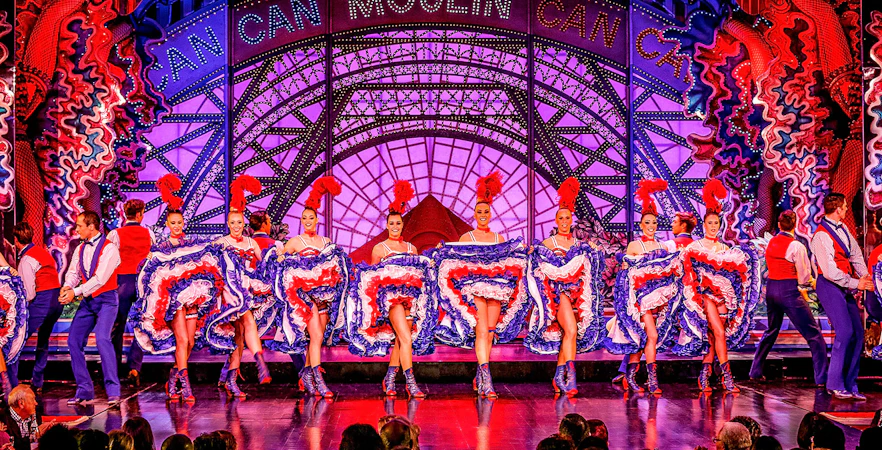
An evening at the iconic Moulin Rouge is one of the most classic ways to experience Montmartre after dark. Multiple booking formats are available, from show-only tickets to packages with champagne or dinner, letting you tailor the night to your pace and budget.
For a more intimate cabaret setting, La Nouvelle Eve on Rue Fontaine offers a smaller-scale alternative. Options typically include either a show with champagne or a full dinner-and-show experience, with a more relaxed, close-up atmosphere.
Montmartre & Sacré-Cœur experiences
Explore Montmartre’s charm on a guided tour with Sacré-Cœur and dome access for stunning views. Or focus on the basilica’s beauty with the Sacré-Cœur Guided Tour. Book :
Montmartre Walking Tour With Sacré-Coeur Dome Access
Sacré-Cœur Guided Tour
Plan your visit
Montmartre occupies the Butte Montmartre in the 18th arrondissement, a hill rising approximately 130 metres above the surrounding Paris plain. The summit is around the Sacré-Coeur Basilica and Place du Tertre. The foot of the hill is bounded by Boulevard de Clichy to the south (where the Moulin Rouge and the cabaret strip are located) and Boulevard Barbès to the east.
Cabaret Shows in Montmartre
The Moulin Rouge and La Nouvelle Eve are Montmartre’s two main cabaret experiences. The Moulin Rouge offers a large-scale dinner show in its iconic 850-seat venue, while La Nouvelle Eve provides a more intimate Belle Époque setting nearby. Both also offer champagne-only options.
Book Moulin Rouge Show with Dinner
Book La Nouvelle Eve Cabaret Show with Dinner
Free things to do in Montmartre
Suggested itinerary for visiting Montmartre
Montmartre is best approached as two zones: the upper hilltop (Sacré-Coeur, Place du Tertre, the village streets, the Musée de Montmartre, the vineyard) and the lower slope and Pigalle area (Rue Lepic, Place des Abbesses, the Moulin Rouge, Boulevard de Clichy). The Montmartre Little Train Tour covers the hill in overview and is a useful starting point for visitors not wanting to walk the full elevation.
Tips for visiting Montmartre
Go early or late: Before 9am or after 4pm = far fewer crowds at Sacré-Coeur Basilica and Place du Tertre
Take the funicular if doing the dome: Skip the 237 steps—save energy for the climb inside
Don’t stop at the main square: Streets like Rue Cortot & Rue des Saules show the real village side
Book Moulin Rouge in advance: Dinner shows sell out fast; earlier slots (≈7pm) get better seating
Try La Nouvelle Eve as an alternative: Smaller, more intimate, often better value
Explore beyond tourist routes: Rue Lepic and local market streets feel more authentic (best with a food tour)
Combine experiences to save time: Pair a daytime Montmartre tour with an evening cabaret for a full-day plan
Dining in Montmartre
Paris by day, Moulin Rouge by night
City tour + Moulin Rouge show in one booking. Perfect for tight schedules. Or choose the Montmartre combo: Sacré-Coeur by day, cabaret at night.
Should you stay in Montmartre?
Short answer: Yes, if you want character and a local feel. Less convenient for central sightseeing.
The vibe: Around Sacré-Coeur Basilica and Place du Tertre: busy and tourist-heavy by day. Around Abbesses, Rue Lepic, and the lower Butte: a genuine neighborhood with cafés, markets, and daily life. Evenings split between quiet village streets and the cabaret energy near Moulin Rouge.
Getting around: The hill means more walking than flat central areas. Metro lines 12 (Abbesses/Lamarck) and 2 (Anvers/Pigalle) connect well, but most major sights are 20–30 minutes away.
Best for: Travelers who value atmosphere, scenic streets, food spots, and staying somewhere that feels distinctly Parisian.
Less ideal for: First-time itineraries focused on the Louvre, Le Marais, or the Left Bank with frequent back-and-forth travel.
Where to stay:
Village feel: Rue Lepic, Abbesses, Rue Caulaincourt (quiet, local, walkable to hilltop)
Nightlife & convenience: Pigalle or Place de Clichy (close to cabarets + easy Metro access)
Explore other Paris neighbourhoods
Frequently asked questions about Montmartre
Yes. Entry to the basilica is free. The dome requires a paid ticket (~300 steps) [VERIFY]. The steps and esplanade are always free.
The funicular (Metro ticket valid) is fastest and avoids the 237 steps. The Little Train is best for a full overview; walking is free.
Book 2–4 weeks ahead for dinner shows in peak season. Champagne-only shows have more availability but still benefit from advance booking.
Moulin Rouge: large, high-production (850 seats). La Nouvelle Eve: smaller (~350 seats), more intimate Belle Époque style.
Yes. For limited mobility, families, or a quick overview. Otherwise, walking or guided tours offer more context.
A Montmartre + Sacré-Cœur tour paired with a Moulin Rouge show covers the hill by day and a cabaret by night.
Upper streets (Abbesses, hilltop) are quiet and safe. Pigalle/Boulevard de Clichy is busy but stick to main streets.
Why visit Montmartre
1/5
Sacré-Cœur Basilica offers the best free city view
Steps give a south-facing panorama over Paris at 130m, no ticket needed. The dome adds a higher 360° view. The Montmartre Walking Tour With Sacré-Coeur Dome Access includes guided time and entry.
Montmartre has Paris’s richest artistic history
Pablo Picasso, Henri de Toulouse-Lautrec, and Pierre-Auguste Renoir all worked here. The Montmartre Guided Tour covers key sites tied to their lives and work.
Moulin Rouge defines Paris cabaret culture
Opened in 1889, it popularised the cancan and shaped Belle Époque imagery. Experience it via Moulin Rouge Show with Dinner or Moulin Rouge Show with Champagne.
Village streets preserve pre-Haussmann Paris
Areas around Place du Tertre and Rue Lepic retain 19th-century scale and charm. Explore via the Montmartre Guided Tour or Montmartre Food Tour.
Rue Lepic is a standout local food street
A lively stretch with bakeries, cheesemongers, and wine shops near Place Blanche. The Montmartre Food Tour covers its best stops with a guide.
Best photo spots in Montmartre
Sacré-Coeur Basilica esplanade (south view)
Best skyline view (Eiffel Tower → La Défense). Go before 8:30am or at blue hour for lights + color.
Sacré-Cœur Basilica
A Romano-Byzantine basilica atop Montmartre, begun in 1875 and completed in 1919. Its white facade dominates the skyline, while the vast apse mosaic is among the world’s largest. The dome offers sweeping 360° views over Paris. Entry is free; dome access requires a ticket.
Best for: First-time visitors, architecture lovers, panoramic views
Duration: 30–45 mins; +30 mins for dome
Combine with: Place du Tertre (5 minutes on foot) or a walk down the Montmartre village streets
Explore experiences:Montmartre Sacré-Cœur Guided Tour
Moulin Rouge
The world’s most famous cabaret, opened in 1889 and birthplace of the cancan. Linked to Toulouse-Lautrec, it stages the Féerie show with dancers, acrobats, and live music in a grand theatre. The iconic windmill facade remains original.
Best for: Classic Paris nightlife, Belle Époque culture
Duration: 1.5–2 hrs; 3–4 hrs with dinner
Combine with: A Montmartre walking tour in the afternoon before an evening show, or the Moulin Rouge Show & Paris City Tour for a combined day and evening experience
Explore experiences:Moulin Rouge Show with Dinner
La Nouvelle Eve
A historic 1898 cabaret near Pigalle with a smaller, more intimate setting. Shows blend dance, comedy, and acrobatics in a Belle Époque interior, offering a less crowded alternative to larger venues.
Best for: Intimate cabaret experience, smaller venues
Duration: 1.5–2 hrs; 3–3.5 hrs with dinner
Combine with: A walk along Boulevard de Clichy or a visit to the Moulin Rouge facade before the show
Explore experiences:La Nouvelle Eve Cabaret Show with Champagne
Place du Tertre
A historic Montmartre square once central to the village, now filled with licensed artists creating and selling work. Surrounding streets retain pre-Haussmann charm. Best visited early to avoid crowds.
Best for: Art lovers, street artists, village walks
Duration: 20–30 mins
Combine with: Sacré-Coeur (5 minutes south) or the Musée de Montmartre (3 minutes east on Rue Cortot)
Explore experiences:Montmartre Walking Tour With Sacré-Coeur Dome Access
Musée de Montmartre
Set in a 17th-century house, this museum traces Montmartre’s artistic past. Artists like Renoir once worked here, and exhibits span Impressionist to bohemian eras. Gardens recreate scenes from Renoir’s paintings.
Best for: Art history, deeper cultural context
Duration: 1–1.5 hrs
Combine with: Place du Tertre (3 minutes west) or the vineyard walk along Rue des Saules
Clos Montmartre
A rare working vineyard within Paris, planted in 1934 and producing limited wine annually. Visible from the street, it’s a quiet, unexpected pocket of greenery in the city.
Best for: Unique Paris sights, photography, wine interest
Duration: 10–15 mins
Combine with: Au Lapin Agile cabaret (directly opposite on Rue des Saules) or the Musée de Montmartre (2 minutes north on Rue Cortot)
Explore experiences: Montmartre Food Tour
Espace Dalí
A museum dedicated to Salvador Dalí, featuring over 300 sculptures and graphic works. The theatrical display and audio elements create an immersive, slightly surreal experience.
Best for: Dalí fans, quick indoor visit
Duration: 45–60 mins
Combine this with: Place du Tertre (2 minutes east) or Sacré-Coeur (5 minutes south)
Montmartre Little Train
A road train linking Place Blanche to Sacré-Cœur in a 40-minute loop. Covers steep streets with multilingual commentary, offering an easy overview of Montmartre.
Best for: Families, mobility-friendly access, orientation
Duration: 40 mins
Combine with: A self-guided walk after disembarking at Sacré-Coeur, or the Montmartre Sacré-Cœur Guided Tour after the overview
Explore experiences:Montmartre Little Train Tour
Sacré-Cœur steps & basilica
Enjoy one of Paris’s best free panoramas from the steps and esplanade, with views toward the Eiffel Tower, Panthéon, and La Défense. Entry to the basilica is free; only the dome is ticketed.
Best for: First-timers, photographers, anyone wanting the classic view.
Duration: 20–30 minutes.
Combine with: Sacré-Cœur dome (paid) or Place du Tertre (5 minutes).
Place du Tertre
Stroll the artists’ square for free and watch portraits and paintings being created from the surrounding pavements. Nearby lanes like Rue Norvins and Rue Saint-Rustique keep a village feel.
Best for: Art lovers, slow wanderers.
Duration: 20–30 minutes.
Combine with: Sacré-Cœur (5 minutes) or Musée de Montmartre (3 minutes).
Clos Montmartre vineyard
See Montmartre’s hillside vineyard for free from the street at Rue des Saules and Rue Saint-Vincent. The vines, slope, and village backdrop are especially photogenic.
Best for: Photographers, exploring the quieter northern slope.
Duration: 10–15 minutes.
Combine with: Au Lapin Agile (opposite) or Musée de Montmartre (2 minutes).
Place des Abbesses & Wall of Love
Relax in this local square with its original art nouveau Guimard Metro entrance and the Wall of Love mural. It feels calmer than the tourist crowds higher up the hill.
Best for: Architecture fans, couples, a quieter pause.
Duration: 15–20 minutes.
Combine with: Rue Lepic market walk uphill or Rue des Abbesses cafés.
Rue Lepic market street
Walk downhill between Place du Tertre and Place Blanche, browsing traditional food shops and everyday local life. You can also see the historic Moulin de la Galette from the street.
Best for: Food lovers, Impressionism fans, a more local feel.
Duration: 20–30 minutes.
Combine with: Place des Abbesses (bottom) or Place du Tertre (top).
Quick bites
Arnaud Larher Top-tier chocolatier & patisserie (MOF). Great for macarons, tarts, chocolates. Price: €6–€12 (pastries), €10–€20 (light treat stop)
Le Grenier à Pain Award-winning boulangerie (best baguette titles). Ideal for croissants & takeaway breakfast. Price: €2–€6 per item
Cafés
Café des Deux Moulins Famous Amélie café; classic Parisian menu, more about the vibe. Price: €15–€25 per person
La Maison Rose Iconic pink café near the vineyard; light meals in a scenic setting. [VERIFY status] Price: €20–€35 per person
Restaurants (fine dining / sit-down)
Le Relais Gascon Known for huge salads & southwest French dishes; strong value. Price: €18–€30 per person
Le Moulin de la Galette Historic windmill setting (Renoir painting); contemporary French menu. [VERIFY status] Price: €40–€70 per person
Street food & snacks
Rue Lepic food shops Fromageries, bakeries, butchers—perfect for DIY picnic. Price: €5–€15 total
Crêpe stands at Place du Tertre Sweet & savoury crêpes; touristy but reliable. Price: €5–€10 per crêpe
Student heart of Paris around the Sorbonne, with bookshops, cafés, and narrow streets. Classic Left Bank atmosphere with the Panthéon and riverside walks nearby.
A more local, residential base with excellent transport links. Known for traditional crêperies, Montparnasse Tower views, and a calmer pace than central tourist areas.
Metro:
Anvers (line 2): Closest for Sacré-Cœur; 5-minute walk up Rue de Steinkerque to the foot of the steps and funicular.
Abbesses (line 12): Best for Montmartre village and Place des Abbesses; a short uphill walk to the hilltop.
Pigalle (lines 2 & 12): Ideal for the Moulin Rouge and lower Montmartre; about 2 minutes to the cabaret.
Funicular:
The Montmartre funicular links the base of Rue Foyatier to just below Sacré-Cœur, runs roughly 6:00–00:45 daily, and accepts standard Metro (t+) tickets and passes.
Walking distances:
Abbesses–Place du Tertre 8 min
Anvers–steps 5 min
Pigalle–Moulin Rouge 2 min
Sacré-Cœur–Place du Tertre 5 min
Place du Tertre–Musée 3 min.
Early (8–10 am): Quiet streets, local vibe.
Midday (11 am–2 pm): Peak crowds. Join a guided tour to skip congestion.
Late (3–6 pm): Calmer; best for Musée de Montmartre or vineyards.
Evening (7 pm on): Lively cabarets and dining; illuminated basilica with panoramic night view.
2–3 hrs: Sacré-Cœur + Place du Tertre.
5–6 hrs: Add Musée de Montmartre, vineyard, Rue Lepic, and Abbesses.
Full day: Above + evening Moulin Rouge show or combo tour.
Sacré-Cœur Basilica: Step-free wheelchair entrance at the rear/side of the basilica; interior nave and main floor are accessible, but the dome and crypt are not.
Montmartre funicular: Fully wheelchair accessible, with elevators/ramps and level boarding at both stations; a practical alternative to the stairs up the hill.
Moulin Rouge: Wheelchair-accessible entrance, elevator to the main hall, dedicated seating, and accessible restrooms (advance notice recommended).
Abbesses Metro: Very deep station with a lift; stairs are long and tiring, so wheelchair users and most visitors should use the elevator when available.
General Montmartre area: Streets are steep and often cobbled, making much of the upper hill only partially accessible; the funicular and a taxi/ride service to the top are the most practical options.
Pickpockets (Sacré-Coeur steps): High-risk zone due to crowds + street activity. Keep bags front-facing and closed.
Bracelet scam (steps area): Unwanted bracelet tied on wrist → immediate payment demand. Avoid contact and keep walking.
Night on Boulevard de Clichy: Busy nightlife corridor near Pigalle; stay on main streets.
Footwear warning: Cobblestones + steep slopes can be slippery, especially downhill or after rain.
Best for: Visitors combining Montmartre with other Paris neighborhoods in a single day. Total time: ~2 hours
Route:
Funicular or steps to Sacré-Coeur (10 minutes travel) Take the funicular from Rue Foyatier or climb the steps. The funicular accepts a standard Metro ticket.
Sacré-Coeur Basilica and esplanade (30–40 minutes) Enter the free basilica interior, see the mosaic above the apse, and stand on the esplanade for the Paris panorama. The Montmartre Sacré-Cœur Guided Tour covers the building in full if booked in advance.
Place du Tertre and village walk (30–40 minutes) Walk 5 minutes to Place du Tertre, walk the immediate surrounding lanes, and return via Rue Norvins or Rue des Saules.
Rue Lepic downhill to Place des Abbesses (20–25 minutes walking) Descend via Rue Lepic through the market street to Place des Abbesses, noting the Guimard Metro canopy and the Wall of Love.
Optional upgrade: Book Montmartre Walking Tour With Sacré-Coeur Dome Access to add the dome panorama and guided village walk in a single ticket.
Tip: The funicular line can have a wait during midday peak. If you arrive at Anvers Metro and the funicular queue is long, the steps (237 steps) take approximately 5–7 minutes for a reasonably fit visitor and have a better view of the basilica as you approach.
Best for: Visitors who want to cover the main hilltop sites, the Musée de Montmartre and a walk through the village lanes. Total time: ~3.5 hours
Route:
Montmartre Walking Tour With Sacré-Coeur Dome Access (2–2.5 hours) Start with the guided walk, which covers the principal streets of the village and the artistic history of the Butte before entering Sacré-Coeur and ascending the dome.
Musée de Montmartre (1–1.5 hours) Walk 3 minutes east from Place du Tertre to Rue Cortot. The permanent collection covers the Impressionist and Post-Impressionist artistic community of the Butte, and the garden overlooks the vineyard below.
Vineyard and Rue des Saules (15–20 minutes) Walk downhill from the museum to the Clos Montmartre on the corner of Rue des Saules and Rue Saint-Vincent. The Au Lapin Agile historic cabaret is directly opposite.
Optional upgrade: Add the Montmartre Food Tour in the afternoon to cover the market culture of Rue Lepic and the food producers of the neighborhood with a guide.
Tip: Book the Montmartre Walking Tour With Sacré-Coeur Dome Access for an early morning slot to reach the dome before the main visitor wave and see Paris with the lowest possible haze.
Best for: Visitors with a full day who want to cover the hill comprehensively and end with a cabaret evening. Total time: ~6 hours plus 1.5–3.5 hours for the show
Route:
Montmartre Little Train Tour (40 minutes) Start with the Little Train for an orientation circuit from Place Blanche up through the village streets and back, with commentary on the main sites.
Montmartre Guided Tour or Montmartre Walking Tour With Sacré-Coeur Dome Access (2–2.5 hours) Follow the overview with a guided walk through the village, basilica and dome.
Musée de Montmartre (1 hour) Cover the permanent collection and the vineyard garden view.
Montmartre Food Tour (2 hours) Afternoon food tour covering Rue Lepic, Place des Abbesses and the food culture of the neighborhood.
Moulin Rouge Show with Dinner or La Nouvelle Eve Cabaret Show with Dinner (evening) Head down to Boulevard de Clichy or Rue Fontaine for the evening show. The Combo (Save 4%): Montmartre and Sacré Coeur Basilica Tour + Moulin Rouge Show combines the daytime tour and the evening show in a single booking.
Optional upgrade: Replace the separate tour and Moulin Rouge bookings with the Combo Montmartre and Sacré Coeur Basilica Tour + Moulin Rouge Show for a saving and a single booking covering the full day.
Tip: Allow at least 90 minutes between the end of the afternoon itinerary and the Moulin Rouge dinner seating time. The walk from the hilltop to the Moulin Rouge takes 15–20 minutes downhill via Rue Lepic, but freshening up before a dinner show is worth the time.
Things to do in Montmartre
Crafted by Headout, a global experiences brand offering curated tours, tickets & experiences. Discover with ease, book with peace.