Sainte-Chapelle: A Gothic masterpiece in stained glass and stone

Sainte-Chapelle represents the peak of Rayonnant Gothic architecture, an evolution of the earlier Early Gothic and High Gothic styles. While its proportions and light-filled interior are characteristic of the period, its design placed an even greater emphasis on verticality and light than most other Gothic buildings, influencing the development of French Gothic architecture in the years to come.

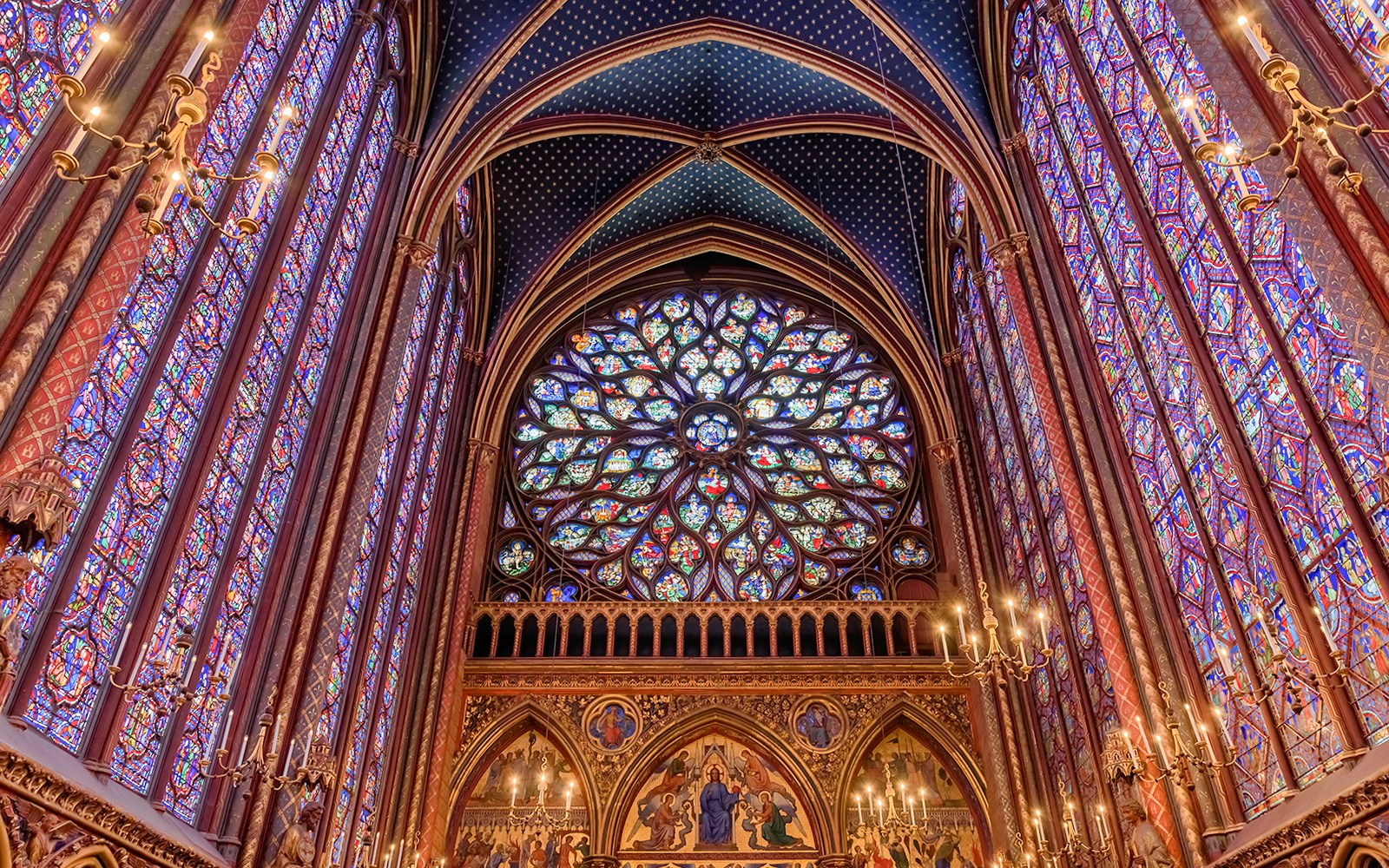
Through its innovative use of stained glass, ribbed vaulting, and pointed arches, the chapel creates an ethereal atmosphere meant to symbolize the divine. Its design as a two-level chapel, its use of vibrant colors and biblical narratives in the glass, and the stunning rose window all contribute to its reputation as one of the most spectacular and spiritually significant buildings in Paris.

The Chapel's impact on Gothic architecture
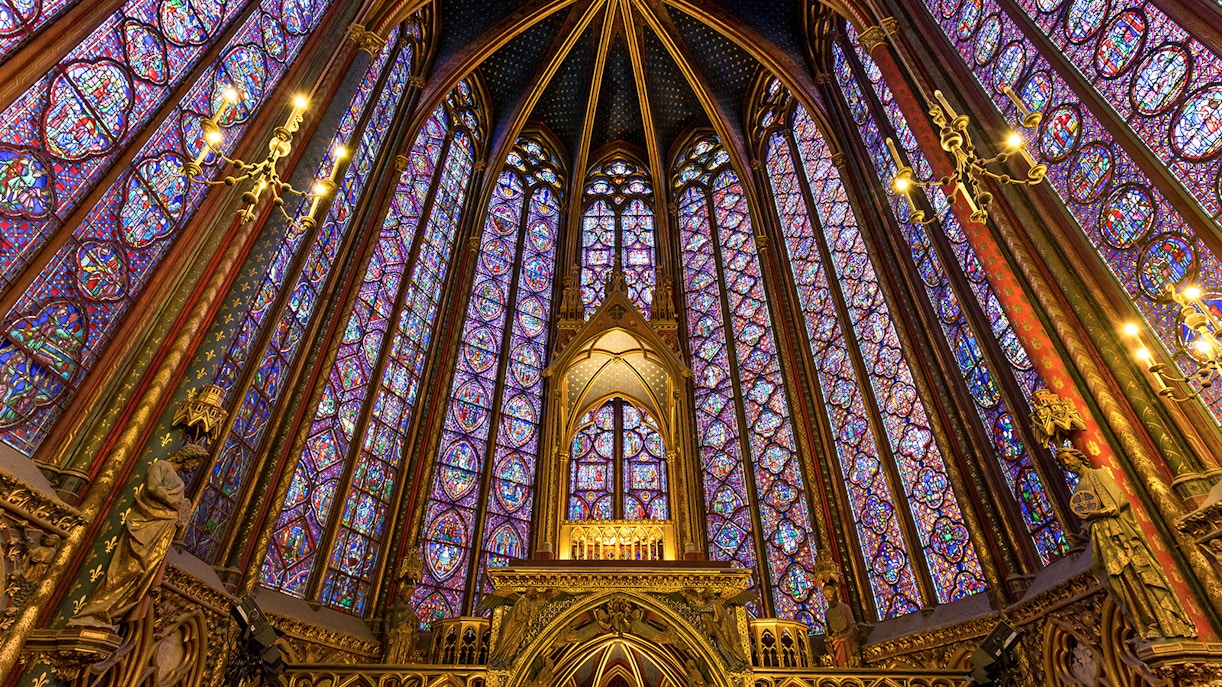
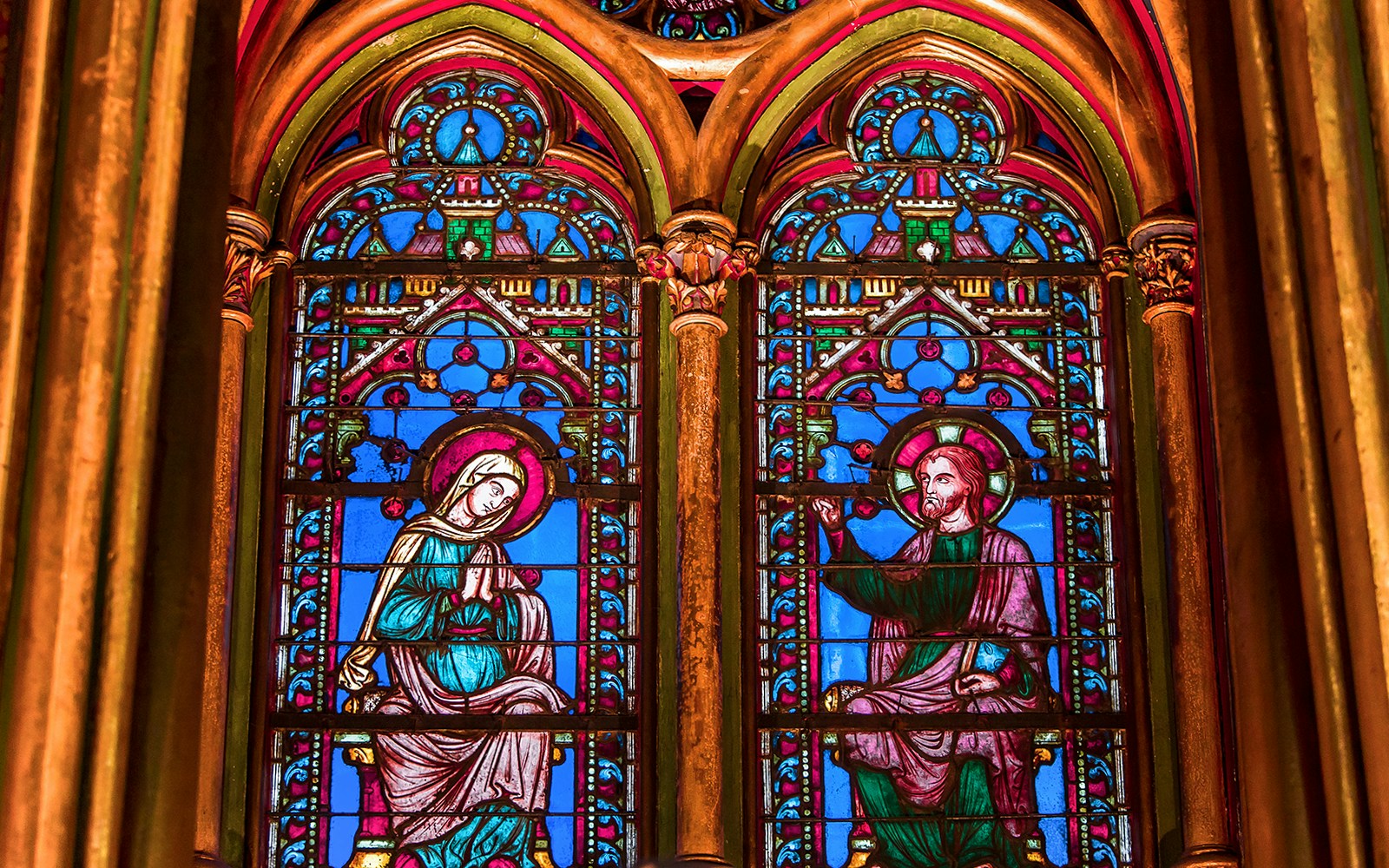
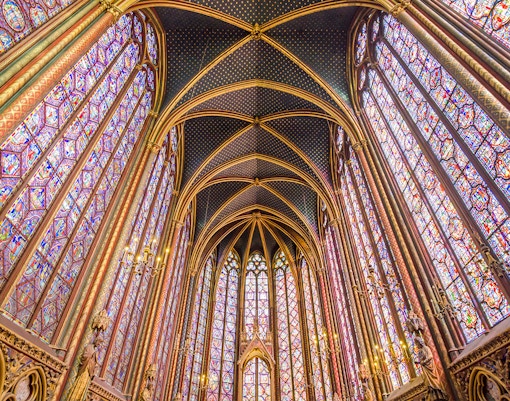
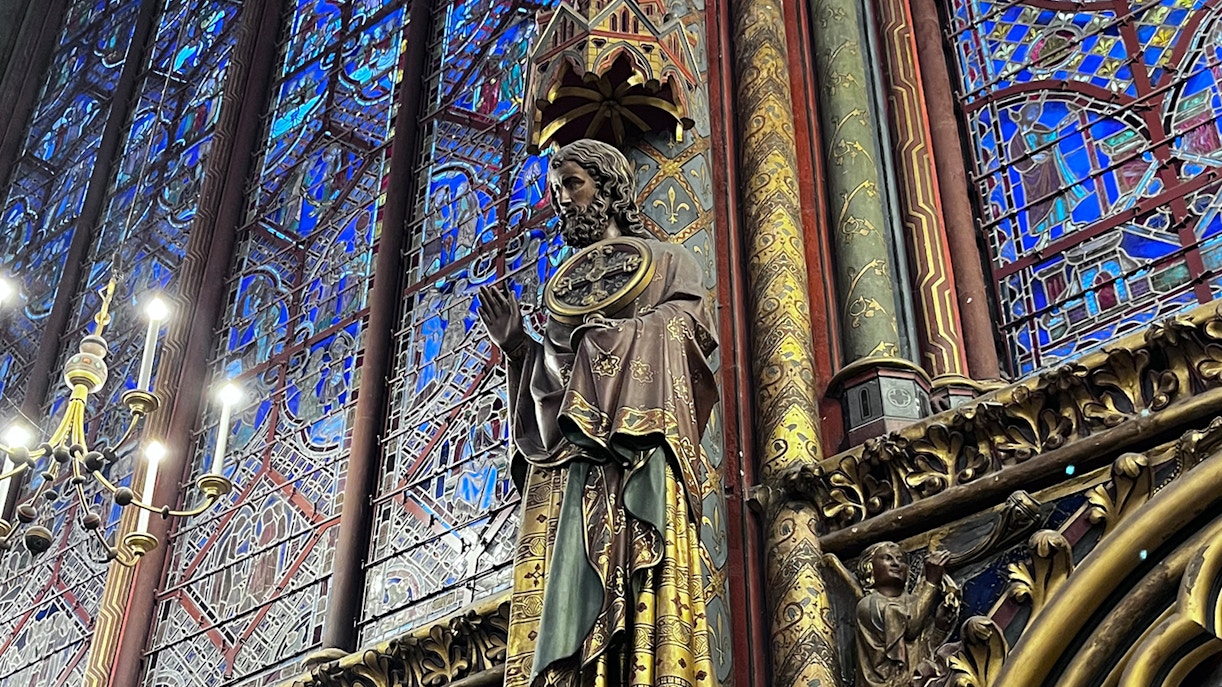
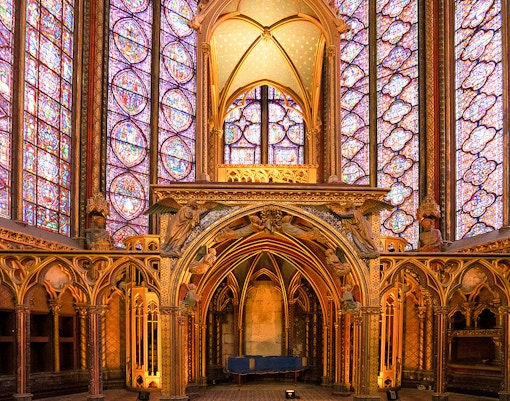
Stained glass windows inside Sainte Chapelle, Paris, showcasing biblical scenes.

The chapel's overall architectural harmony—from its soaring walls and slender columns to its light-filled interior—became a guiding influence for subsequent Gothic cathedrals. While many later Gothic buildings, such as Notre-Dame or Chartres, expanded on the principles set out at Sainte-Chapelle, the innovative design and artistic achievements of the chapel set a new standard for the Gothic style, solidifying its place as a key moment in the evolution of medieval architecture.

What makes the architecture of Sainte-Chapelle stand out?

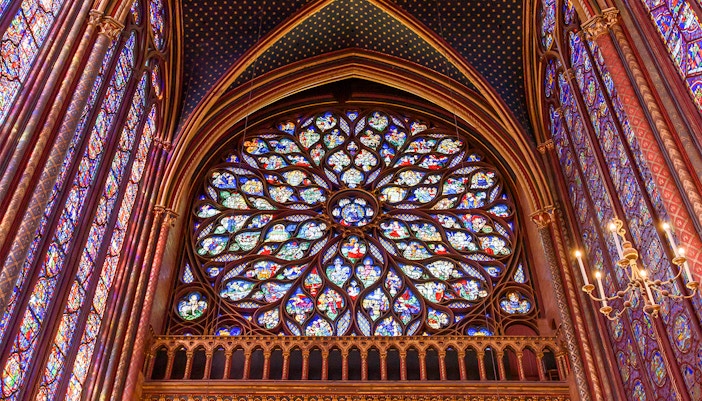
Rose Window inside Sainte Chapelle inside
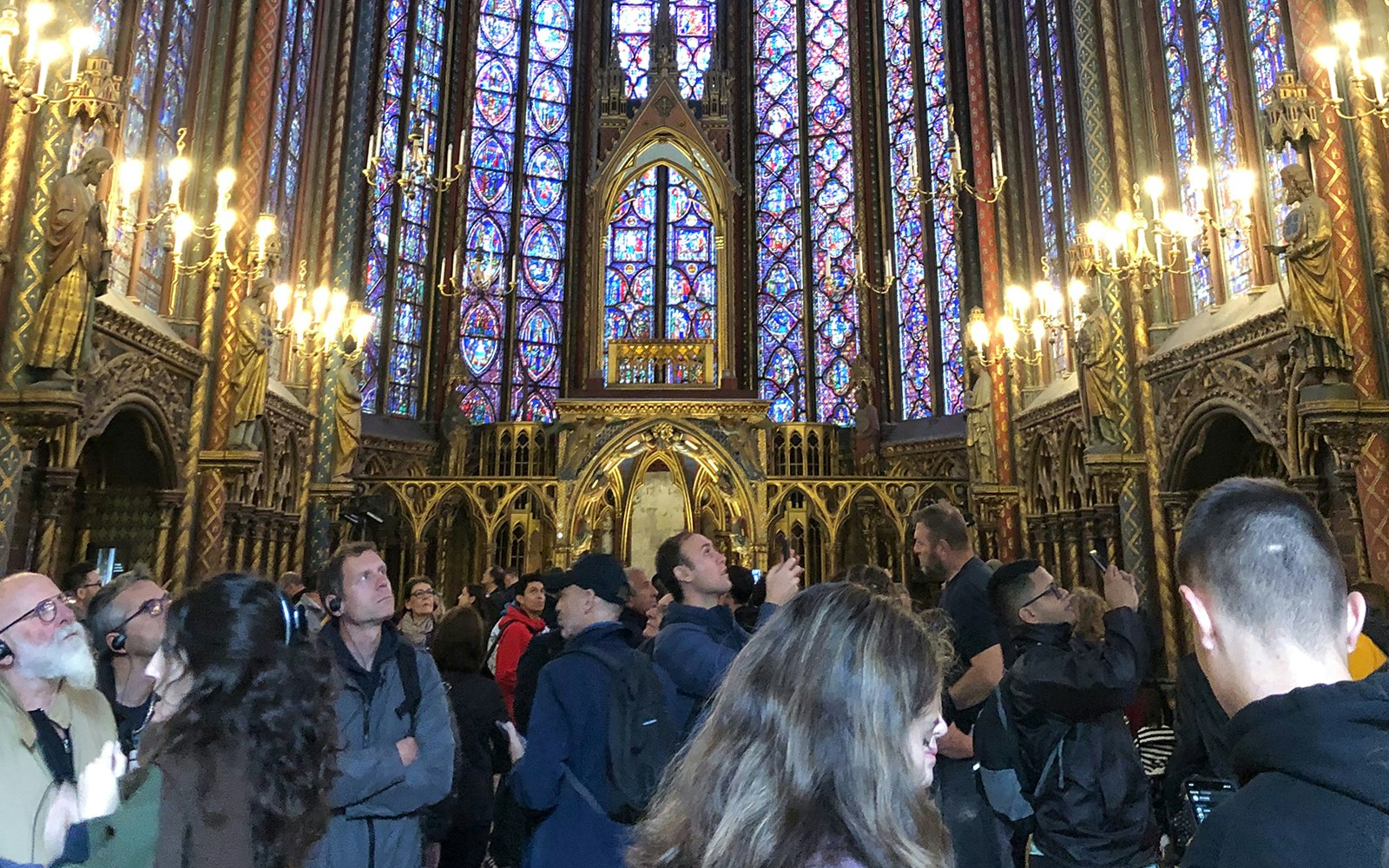
Sainte Chapelle stained glass windows in Paris showcasing intricate biblical scenes.
Sainte Chapelle Paris
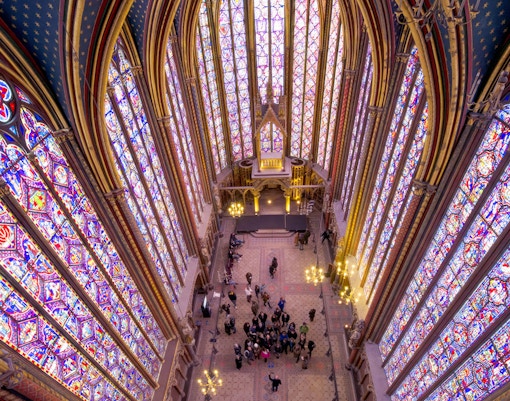
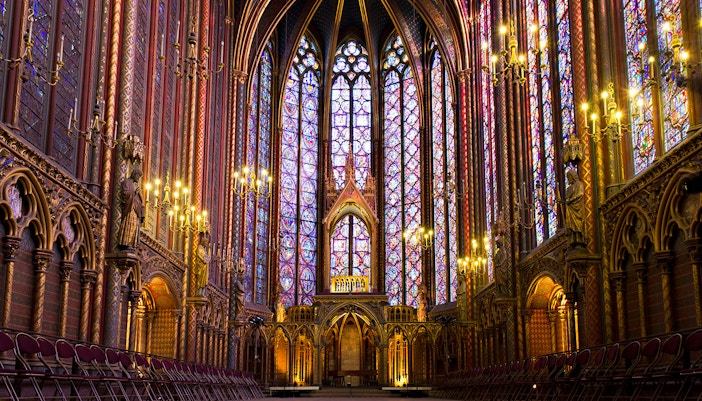
Monumental interior of Sainte-Chapelle with stained glass windows
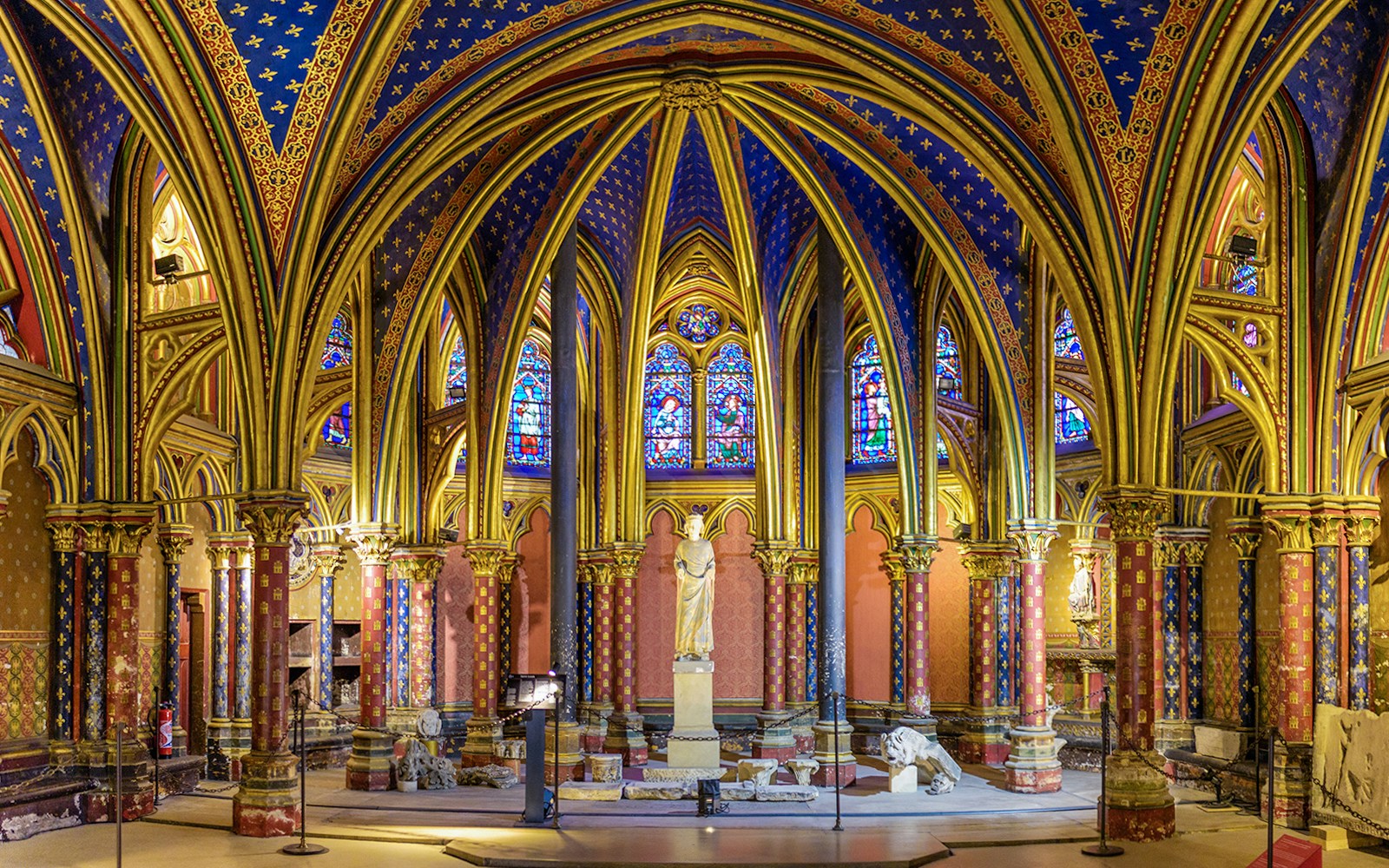
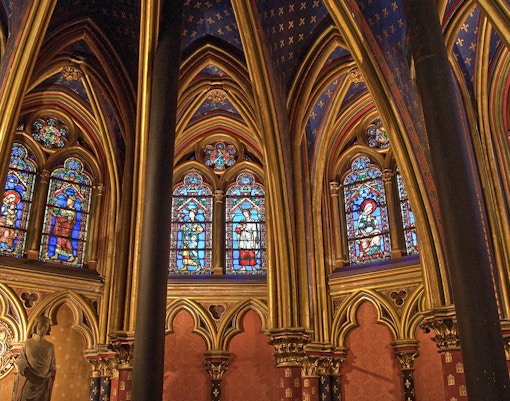
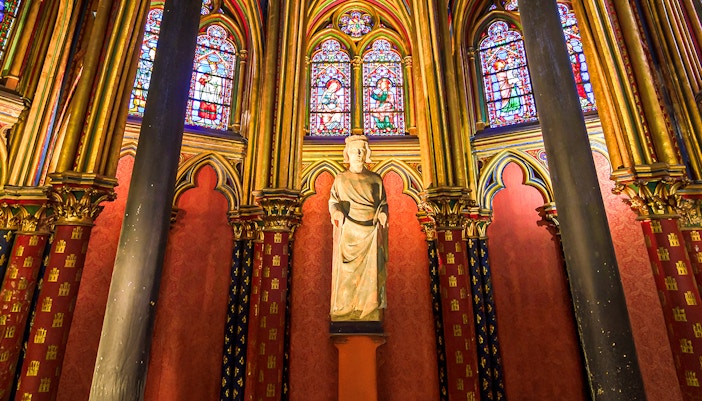
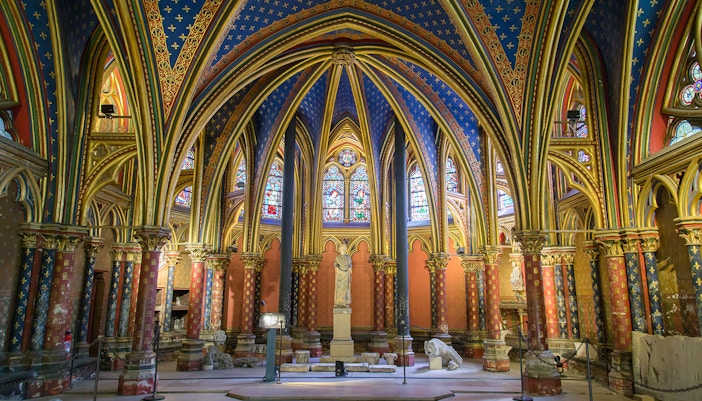
Lower Chapels in Sainte Chapelle with stained glass windows, Paris, France.
Sainte Chapelle interior with stained glass windows, Paris, France.
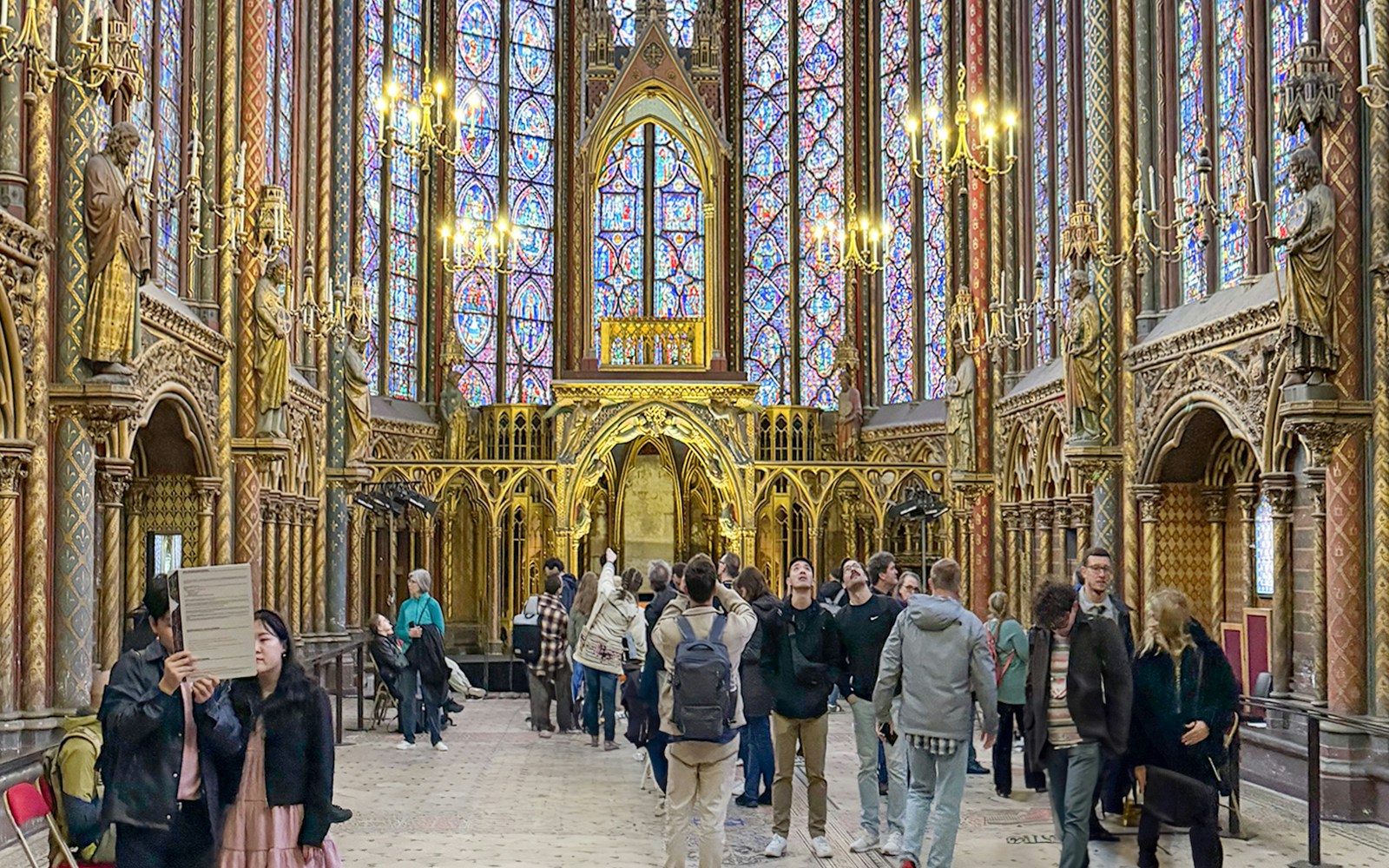
Visitors exploring the stained glass windows inside Sainte Chapelle, Paris.
1/7

A "wall of glass" concept

Stained glass dominates 75% of the upper chapel's surface area, making the walls almost entirely composed of glass. This was an architectural innovation of the Gothic Rayonnant style, emphasizing light and color to create a heavenly atmosphere.

The tallest stained-glass windows of its era

The 15 stained-glass windows in the upper chapel are approximately 15 meters (50 feet) high, among the tallest and most intricate windows of their time. They depict over 1,100 biblical scenes, making them one of the largest collections of medieval stained glass in the world.

Read more

The Crown of Thorns inspired its creation

The architecture of Sainte-Chapelle was specifically designed to house the Crown of Thorns, a relic acquired by King Louis IX. The chapel’s verticality and luminosity were meant to exalt the relics and highlight their spiritual significance.

A starry sky on the ceiling

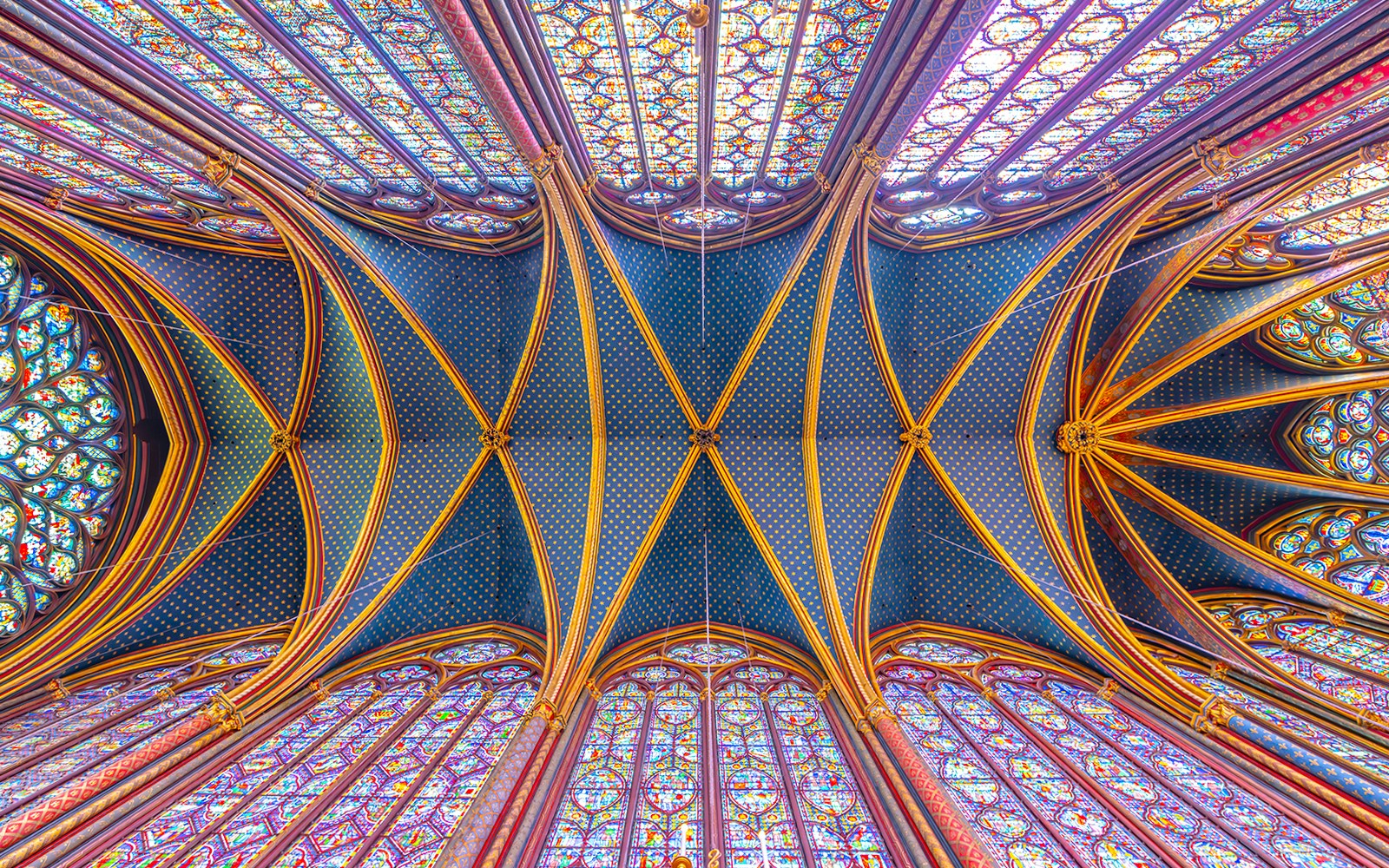
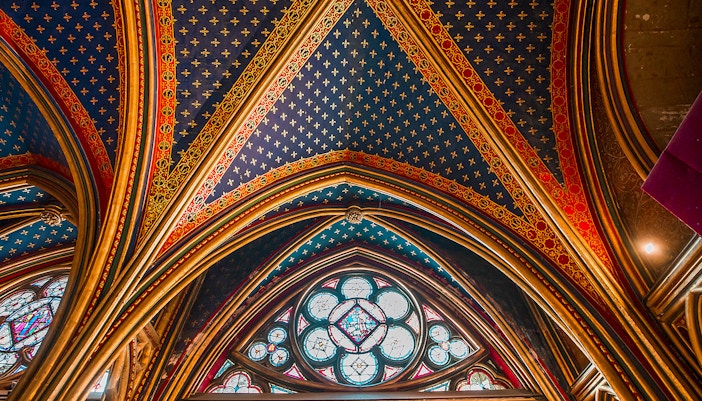
The vaulted ceiling of the upper chapel is painted a deep blue and adorned with golden stars, symbolizing the celestial heavens. This design further enhances the otherworldly feel of the space.

Minimal masonry design

The use of slender stone supports and concealed flying buttresses allowed for larger stained-glass windows. This minimal use of masonry makes the chapel feel light and ethereal, emphasizing its verticality.

Symbolism of divine light

The emphasis on stained glass was symbolic: the interplay of light and color was meant to represent divine light illuminating the space, creating a spiritual and uplifting experience for worshippers.

Iconic colors and themes

The interior’s vibrant colors—reds, blues, golds, and greens—along with the stained-glass windows, create a cohesive visual narrative. The colors are not random but are chosen to symbolize divinity, royalty, and the celestial kingdom.

Read more

Gothic elements to look out for

Flying Buttresses

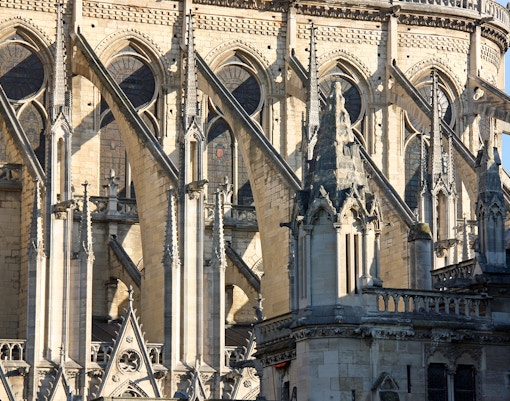
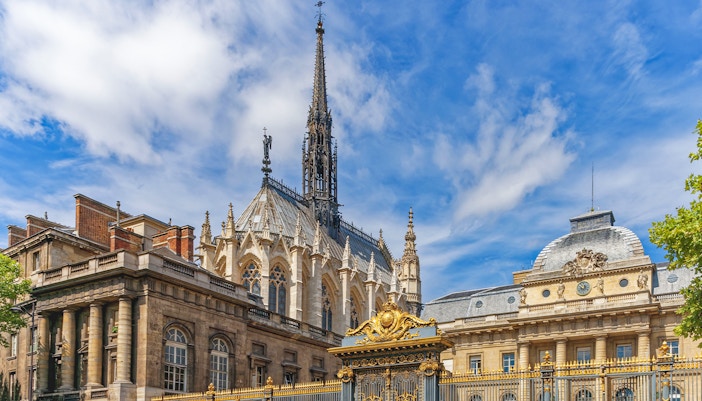
Like many Gothic churches, Sainte-Chapelle employs flying buttresses—external supports that distribute the weight of the structure, allowing the walls to be thin and filled with glass. These buttresses are less pronounced in Sainte-Chapelle compared to other Gothic cathedrals, as the chapel is relatively small, but they are still integral to the building's structural integrity.

Ribbed vaulting

The chapel features ribbed vaulting, a hallmark of Gothic architecture, which helps distribute the weight of the roof. This system allows for more slender and higher ceilings, giving the chapel its airy, ethereal feel.

Pointed arches

The use of pointed arches helps to achieve a tall, vertical interior. These arches allow for larger windows and give the chapel its characteristic soaring height, directing attention upwards towards the heavens.

Spire

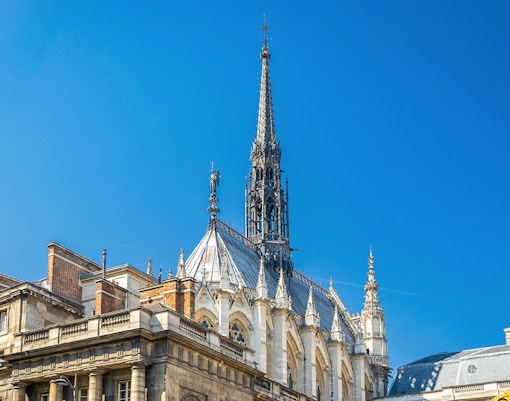
The spire of Sainte-Chapelle rises high above the roof, accentuating the chapel's soaring verticality. The spire is one of the defining features of the building's silhouette, adding to the Gothic style's focus on reaching toward the heavens. The spire's graceful form makes it an important exterior element that should not be overlooked.

Pinnacles and gables

The pinnacles and gables along the roofline are another key exterior feature. These slender, vertical elements contribute to the chapel’s elegant and towering silhouette. Pinnacles are placed at the tops of the flying buttresses and at the corners of the chapel’s roof, reinforcing the upward-reaching design typical of Gothic architecture. The gables also feature intricate details that add texture and ornamentation to the exterior.

Layout and structure of Sainte-Chapelle

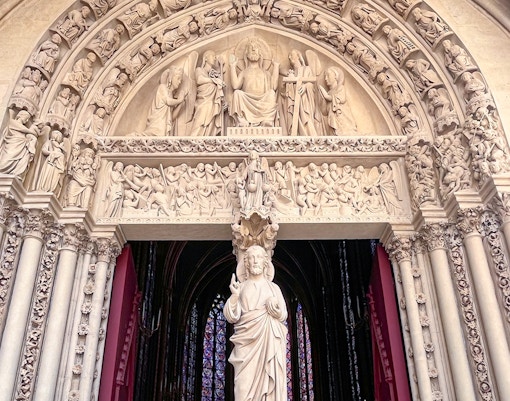
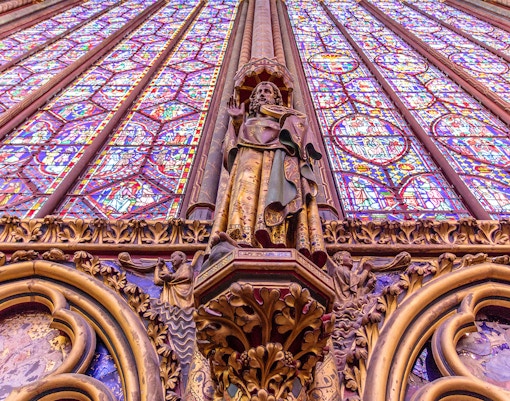
Sainte Chapelle interior with stained glass windows and statue.

Sainte-Chapelle is a two-level chapel, which was an unusual architectural choice that allowed for differentiation between the social classes:

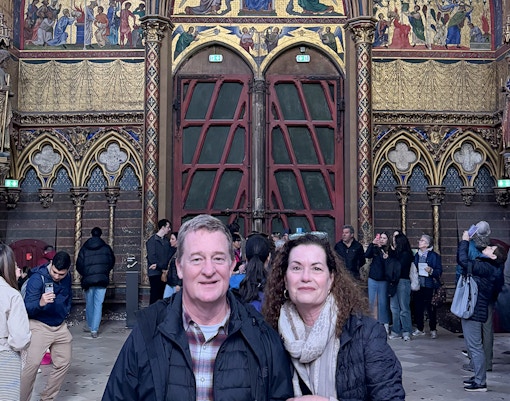
  • Lower Chapel (Chapel for the Commoners): The lower chapel, or lower sanctuary, was meant for the palace staff, servants, and ordinary people who could not access the royal chambers above. The chapel has a relatively simple design with vaulted ceilings and star-patterned motifs painted in dark blue, symbolizing the night sky. This part of the chapel was originally used to house relics and serve as a place of worship for those of lower rank.
  • Upper Chapel (Royal Chapel): The upper chapel was the primary and most important part of Sainte-Chapelle, reserved for the royal family and close courtiers. It was designed to house the Crown of Thorns and other relics of Christ's Passion, which King Louis IX had purchased to elevate France's religious prestige. The upper chapel features delicate stone columns, intricate sculptures of biblical figures, and floral patterns, complementing the windows and the play of light. The ceiling of the upper chapel is painted with stars and religious motifs in gold leaf on a deep blue background, symbolizing the celestial and divine realm.

The verticality and light of Sainte-Chapelle

One of the most striking features of Sainte-Chapelle is its emphasis on height and light. The chapel’s design is based on the principle that light, especially when filtered through the stained glass windows, brings the divine into the earthly realm.

Nave

The nave of the upper chapel soars to a height of about 20 meters (66 feet). Its vaulted ceiling is a prime example of the Rayonnant Gothic style, with complex, pointed ribbed arches designed to draw the viewer's eyes upward. The ribs and the spires seem to almost “stretch” towards heaven.

Stained glass windows

The walls are nearly entirely made of stained glass, leaving very little room for solid stone construction. This feature helps create the effect of light-filled walls, with the windows casting vibrant colors and illuminating the interior.

The stained glass windows of Sainte-Chapelle are undoubtedly the most famous aspect of its architecture. They cover nearly 600 square meters of the chapel’s walls and depict over 1,100 scenes from the Bible.

The windows are rich in color—blues, reds, yellows, and greens—creating a spectacular kaleidoscope of light. The red and blue hues are particularly dominant, symbolizing the sacred and divine.

The grandeur of the stained glass windows

The Rose Window

In addition to the long, vertical windows, the west facade of Sainte-Chapelle is dominated by a large rose window. Added in the late 15th century, the rose window is an outstanding example of Flamboyant Gothic style, which evolved from Rayonnant Gothic. It is much more complex and ornamented than the earlier windows.

The rose window’s design reflects the idea of divine order and cosmic harmony, with Christ at the center, radiating light and knowledge outward toward the faithful.

Construction of Sainte-Chapelle

Historical context and commissioning

  • The construction of Sainte-Chapelle was commissioned by King Louis IX in 1239 to house the Crown of Thorns, which he had acquired from the Byzantine Emperor Baldwin II.
  • The relic was of great religious significance, and Louis IX wished to build a royal chapel that would demonstrate his piety and the power of the French monarchy.
  • The chapel was designed not only to house the relics but also to serve as a royal chapel for the royal court.
History of Sainte-Chapelle

Architectural design

  • The design of Sainte-Chapelle is a prime example of Rayonnant Gothic architecture, a style characterized by lightness, verticality, and an emphasis on stained glass.
  • The chapel’s architect, Pierre de Montreuil, used this style to create a space that was not only a place of worship but also an expression of divine light and beauty.

Construction begins

  • Work on Sainte-Chapelle began in 1243, just four years after Louis IX obtained the Crown of Thorns. Construction was overseen by royal architects and builders, including Pierre de Montreuil.
  • The construction used the latest techniques in Gothic architecture, with an emphasis on pointed arches, ribbed vaults, and flying buttresses.
  • The chapel was completed in 1248, marking the building as one of the fastest-completed projects of its time.

Construction challenges

  • The design and construction of Sainte-Chapelle required many new technical innovations, particularly in terms of the stained-glass windows.
  • The height and size of the windows required advanced techniques to ensure structural integrity while allowing for maximum light and space for the glass.

Significance and symbolism in construction

  • The construction of Sainte-Chapelle was deeply symbolic. The use of stained glass was not only a technical achievement but also a way to represent divine light entering the sacred space.
  • The vast, colorful windows were intended to create an atmosphere of celestial illumination, drawing worshippers’ attention toward the divine and away from the material world.

Frequently asked questions about the architecture of Sainte-Chapelle

The vaulted ceiling of the Upper Chapel is painted deep blue with gold stars, symbolizing the celestial heavens. This design creates a spiritual atmosphere, drawing the worshipper’s eyes upward to connect with the divine.

More reads

Interiors

Book Now

Stained glass windows

Book Now