Plan your visit to Roland-Garros Stadium
Jump to what you need
🕒 Where and when to go
🗓️ How much time do you need?
🎟️ Which ticket is right for you?
🗺️ Getting around
🎾 What to see
♿ Facilities and accessibility
Where and when to go
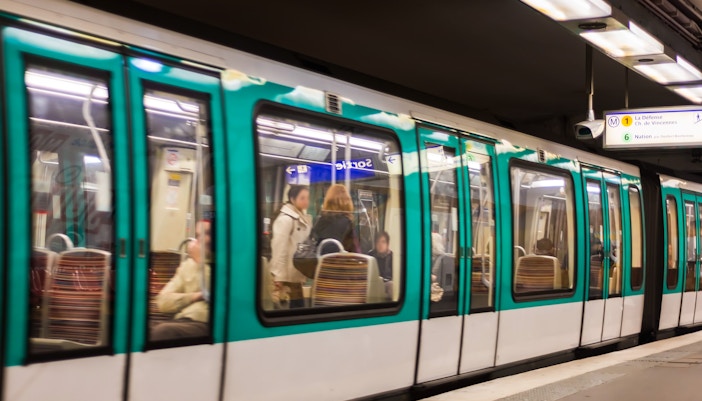
How do you get to Roland-Garros Stadium?
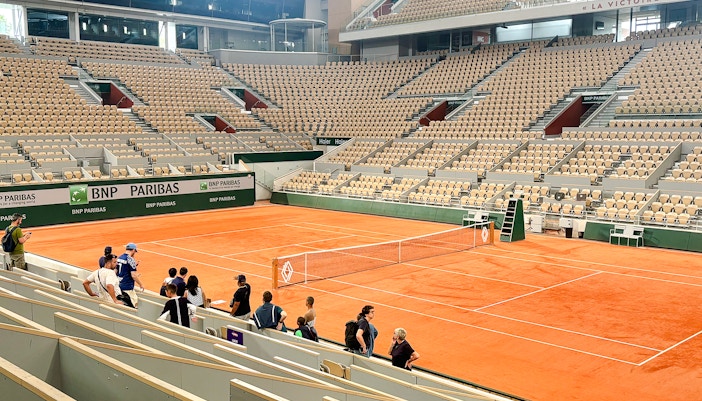
Which entrance should you use?

When is Roland-Garros Stadium open?
How much time do you need?
| Visit type | Route | Duration | Walking distance | What you get |
|---|---|---|---|---|
Highlights only | Gate 36 → Philippe-Chatrier → players’ tunnel → press room → museum exit | 1.5–2 hrs | ~1.2 km | You cover the core backstage spaces and center-court views, but you’ll move briskly and likely only skim the Tenniseum. |
Balanced visit | Gate 36 → Philippe-Chatrier → locker rooms and tunnel → press room → Tenniseum → Four Musketeers monument → boutique | 2–2.5 hrs | ~1.8 km | This adds enough museum time and outdoor context to make the stadium’s history land, without turning it into a half-day commitment. |
Full exploration | Gate 36 → full guided route → Tenniseum in depth → boutique → Serres d’Auteuil / Simonne-Mathieu exterior | 3–3.5 hrs | ~2.5 km | This is the best version if you care about tennis history and architecture, but it only works if you’re happy staying on your feet after the guided portion ends. |
Select your experience
What to bring
- Bring your booking confirmation for a smooth check-in at the Grande Boutique, which will be your meeting point.
Accessibility
- This tour is wheelchair accessible.
Additional information
- Some areas may be closed on the day due to ongoing stadium activities.
- Group tours can be requested in French, English, German, Spanish, and more.
- The stadium shop can be visited before or after the tour.
- Access via Métro Porte d’Auteuil, Michel-Ange Auteuil/Molitor, and multiple bus lines.
- A café and restaurant are available inside the stadium for guests.
- Discounted tickets and under-18 pricing are available for eligible visitors.
Inclusions #
Entry to Roland-Garros Stadium
Guided tour (English/French/Spanish as per option selected)
Access to press rooms, locker rooms, Court Philippe-Chatrier corridor
View of the clay court
Visit the Yannick Noah mural
Entry to the Tenniseum museum
Access to the Presidential stand
View Roland-Garros trophies
Exclusions #
No transportation to/from the stadium
No food or drinks included
Some stadium areas may be closed during your visit due to ongoing activities
- Get full refund if you cancel 72 hours before the experience start time.

Combo (Save 5%): Roland-Garros Stadium + Stade de France Guided Tour
Visit 2 iconic sports stadiums with the convenience of just 1 ticket
- Discover the world of French sport with this cost-effective combo, offering exclusive access to both Roland-Garros Stadium and Stade de France.
- Step into the magnificent Roland-Garros, the heart of world tennis, and explore this legendary stadium with a guided tour in English, or French.
- Feel the thrill of walking down the same corridor as tennis legends like Rafael Nadal, and explore the architectural marvel that is the Philippe-Chatrier court.
- Journey through the Stade de France, where the French football team clinched the World Cup in 1998. Get a firsthand feel of the pitch, stands, and players' locker rooms.
- The tour also includes entry to the Stade de France Museum, where you can explore the stadium's illustrious history and see memorabilia like Zinedine Zidane's 1998 World Cup jersey.
Inclusions #
Roland-Garros Stadium
Entry to Roland-Garros Stadium
English or French guided tour
Stade de France
1.5-hour tour of Stade de France
Guided tour in French or English (optional)
Exclusive behind-the-scenes access at the Stade de France
Access to Stade de France Museum
Roland-Garros Stadium
- Tip: If you're a tennis fanatic, bring a small piece of chalk to mark your visit on the visitors' wall.
- This tour is wheelchair accessible.
- The stadium shop can be visited before or after the tour.
- Due to the stadium's activities, some areas may not be accessible on the day of your visit.
Stade de France
- Tip: For a fun photo opportunity, try to recreate the iconic victory pose of Zinedine Zidane in the 1998 World Cup final.
- Because of events held in the stadium, the tour is subject to change according to security requirements in force on the day of your visit.
- For security reasons, your bag will be searched before you enter the stadium.
- Wearing a mask is recommended.
- Get full refund if you cancel 72 hours before the experience start time.

Brasserie Auteuil: French-Mediterranean Restaurant Near Roland Garros Stadium
Mediterranean rooftop dining just a short stroll from Roland-Garros.
- Everything you get: You’ll enjoy a Mediterranean-inspired menu with fresh, colorful dishes in a vibrant setting. Relax on the rooftop terrace, sip cocktails at the bar, and enjoy valet parking — all just 1km from Roland-Garros Stadium with a €50 voucher for food and drinks, perfect for groups or special occasions.
- Why choose this: Premium Mediterranean dining just minutes from Roland-Garros, giving you an elevated, elegant meal without leaving the neighborhood.
- Upgrade: Unwind on the rooftop with drinks and light bites, enjoying a lively atmosphere perfect for an afternoon break with an Aperitif voucher (3pm–6pm).
Inclusions #
Mediterranean-inspired menu
€50 voucher for food and drinks (as per option selected)
Aperitif Voucher from 3pm to 6pm (as per option selected)
Exclusions #
Entry to Roland-Garros Stadium
Tour of Roland-Garros Stadium
What to bring
- Bring a valid photo ID to match the name on your booking if requested at the entrance.
- Bring your digital or printed voucher to redeem your experience.
What’s not allowed
- Outside food and beverages are not permitted inside the restaurant.
- Pets are not allowed, except for registered service animals.
- Smoking is not permitted inside the indoor dining areas.
Accessibility
- The venue is accessible via public transport (Metro Porte d'Auteuil, Bus 52, and nearby bike station).
- Wheelchair accessibility is not explicitly stated; please contact the venue in advance to confirm specific accessibility needs.
Additional information
- The restaurant is open daily from 9am to 1:30pm.
- Valet parking, terrace seating, and complimentary WiFi are available.
- Payment methods accepted include Apple Pay, Lyf, Sunday, American Express, Visa, Mastercard, Carte Bleue, and cash.
- The venue offers options for private events; contact the restaurant directly for details.
- Menus are available in multiple languages and can be viewed online.
- The restaurant uses cookies on its website for essential and optional services; you can manage your preferences online.
- For a quieter dining experience, consider visiting outside peak meal times.
- These tickets can't be cancelled or rescheduled.

Meals at Brasserie Auteuil + Roland-Garros Stadium Guided Tour
Step onto the same clay courts Rafael Nadal dominated, then unwind just minutes away with Mediterranean flavors and Riviera-style charm. It is the perfect blend of sport and style in one effortless outing.
- Everything you get at Roland-Garros Stadium: Explore Paris’s legendary tennis arena on a guided tour in English, French, or Spanish. Walk through the players’ corridor, step onto the iconic center court, visit the locker rooms, and discover exclusive areas usually reserved for the pros.
- Everything you get at Brasserie Auteuil: Enjoy a €50 dining credit and savor Mediterranean favorites like hummus, mezze, and Turkish pizzas with refreshing cocktails. With terracotta tones, bougainvillea-lined terraces, and a breezy rooftop setting, it is the ideal place to relax after your tour.
- Why choose this combo: Go from center-court excitement to center-stage dining, where Mediterranean flavors, sunshine, and city views bring the perfect post-match calm.
Inclusions #
Roland-Garros Stadium
1.5-hour English, Spanish, or French guided tour of Roland-Garros Stadium (as per option selected)
Access to the clay court
Access to the locker rooms
Access to the corridor leading to the court
Access to Tenniseum, the in-house museum
Access to the Garden of the 4 Musketeers
Access to Tennis Welcome Building, the ball boy pit, and the Presidential Stands
Brasserie Auteuil
- €50 dining credit at Brasserie Auteuil
Exclusions #
- Extra items on the menu not covered in the ticketing charge
What to bring
- Bring a valid photo ID that matches the name on your booking, as it may be requested at the entrance.
- Bring your digital or printed voucher to redeem your dining experience.
What’s not allowed
Brasserie Auteuil
- Outside food and beverages are not permitted inside the restaurant.
- Pets are not allowed, except for registered service animals.
- Smoking is not permitted inside the indoor dining areas.
Roland-Garros Stadium
- Large bags or suitcases are not permitted due to stadium security rules.
- Food and drinks may be restricted in certain areas of the tour.
- Only registered service animals are allowed inside the stadium.
Accessibility
Brasserie Auteuil
- The venue is accessible via public transport (Metro Porte d'Auteuil, Bus 52, and nearby bike station).
- Wheelchair accessibility is not explicitly stated; please contact the venue in advance to confirm specific accessibility needs.
Roland-Garros Stadium
- This tour is wheelchair accessible. Ramps and elevators are available in most public areas.
- Some behind-the-scenes zones may have limited access.
Additional Information
Brasserie Auteuil
- The restaurant is open daily from 9am–1:30am.
- Valet parking, terrace seating, and complimentary WiFi are available.
- Accepted payment methods include Apple Pay, Lyf, Sunday, American Express, Visa, Mastercard, Carte Bleue, and cash.
- The venue offers private event options upon request.
- Menus are available in multiple languages and can be viewed online.
- For a quieter dining experience, consider visiting outside peak meal times.
Roland-Garros Stadium
- Certain areas may be closed on the day of your visit due to ongoing stadium activities or maintenance.
- Tours can be requested in French, English, German, Spanish, and other languages.
- The stadium shop can be visited before or after your tour.
- Access is available via Metro Porte d’Auteuil, Michel-Ange Auteuil or Molitor, and multiple bus lines.
- A café and restaurant are available inside the stadium.
- Discounted tickets are available for under-18 visitors and eligible guests.
- These tickets can't be cancelled or rescheduled.

What to bring
Parc des Princes Stadium
- Dress for the weather, as parts of the stadium tour route are outdoors or semi-covered.
Roland-Garros
- Bring your booking confirmation for smooth check-in at the Grande Boutique, the meeting point for the tour.
What’s not allowed
Parc des Princes Stadium
- Glass or plastic bottles, cans, knives, laser pointers, vuvuzelas, and long umbrellas are not permitted.
- Pyrotechnics, flares, smoke bombs, weapons, drugs, and animals are prohibited inside the stadium.
- Bags larger than A4 size are not allowed, and there is no luggage storage available at the venue.
Accessibility
Parc des Princes Stadium
- The stadium tour is accessible to visitors with wheelchairs and strollers.
Roland-Garros
- This tour is wheelchair accessible.
Additional information
Parc des Princes Stadium
- Children under 5 years can enter for free.
- The tour is not available on match days or on the day before a Champions League match.
- The stadium may close with short notice due to team training sessions.
- The audio guide is available on the PSG Official app under the “Services at the Stadium” section.
- Photography is allowed during the tour.
Roland-Garros
- Some areas may be closed on the day due to ongoing stadium activities.
- Group tours can be requested in French, English, German, Spanish, and more.
- The stadium shop can be visited before or after the tour.
- The venue is accessible via Métro Porte d’Auteuil, Michel-Ange Auteuil/Molitor, and several bus lines.
- A café and restaurant are available inside the stadium for visitors.
- Discounted tickets and under-18 pricing are available for eligible visitors.
Inclusions #
Roland-Garros Stadium
- Entry to Roland-Garros Stadium
- Guided tour (English/French/Spanish as per option selected)
- Access to press rooms, locker rooms, Court Philippe-Chatrier corridor
- View of the clay court
- Visit the Yannick Noah mural
- Entry to the Tenniseum museum
- Access to the Presidential stand
- View Roland-Garros trophies
Parc des Princes Stadium
- Visit of the Parc des Princes
- Access to the field edge
- Access to the wall of trophies
- Access to the PSG locker room
- Access to the press room
- Audio and video guide on the app available in nine languages
- These tickets can't be cancelled or rescheduled.
Which Roland-Garros Stadium ticket is best for you
| Ticket type | What's included | Best for | Price range |
|---|---|---|---|
Behind-the-Scenes Guided Tour | Timed stadium entry + guide + Philippe-Chatrier access + players’ areas + press room + Tenniseum entry | A first visit where you want the locker rooms, tunnel, and center-court context rather than just the museum displays | From €19 |
Tenniseum Museum Ticket | Museum entry + permanent exhibits + temporary exhibits when running | A shorter visit when you mainly want tennis history and don’t need the guided backstage route | From €10 |
Private Roland-Garros Tour | Private guide + tailored pacing + stadium access subject to route availability | A visit where you want more flexibility for questions, pacing, or traveling as a family or small group | |
Combo: Roland-Garros Stadium + Parc des Princes | Roland-Garros guided visit + Parc des Princes tour | A sports-focused day in west Paris where you’d rather book both stadiums together than plan them separately | From €45 |
How do you get around Roland-Garros Stadium?

Getting around the stadium
Maps and navigation tools
What are the must-see areas at Roland-Garros Stadium?
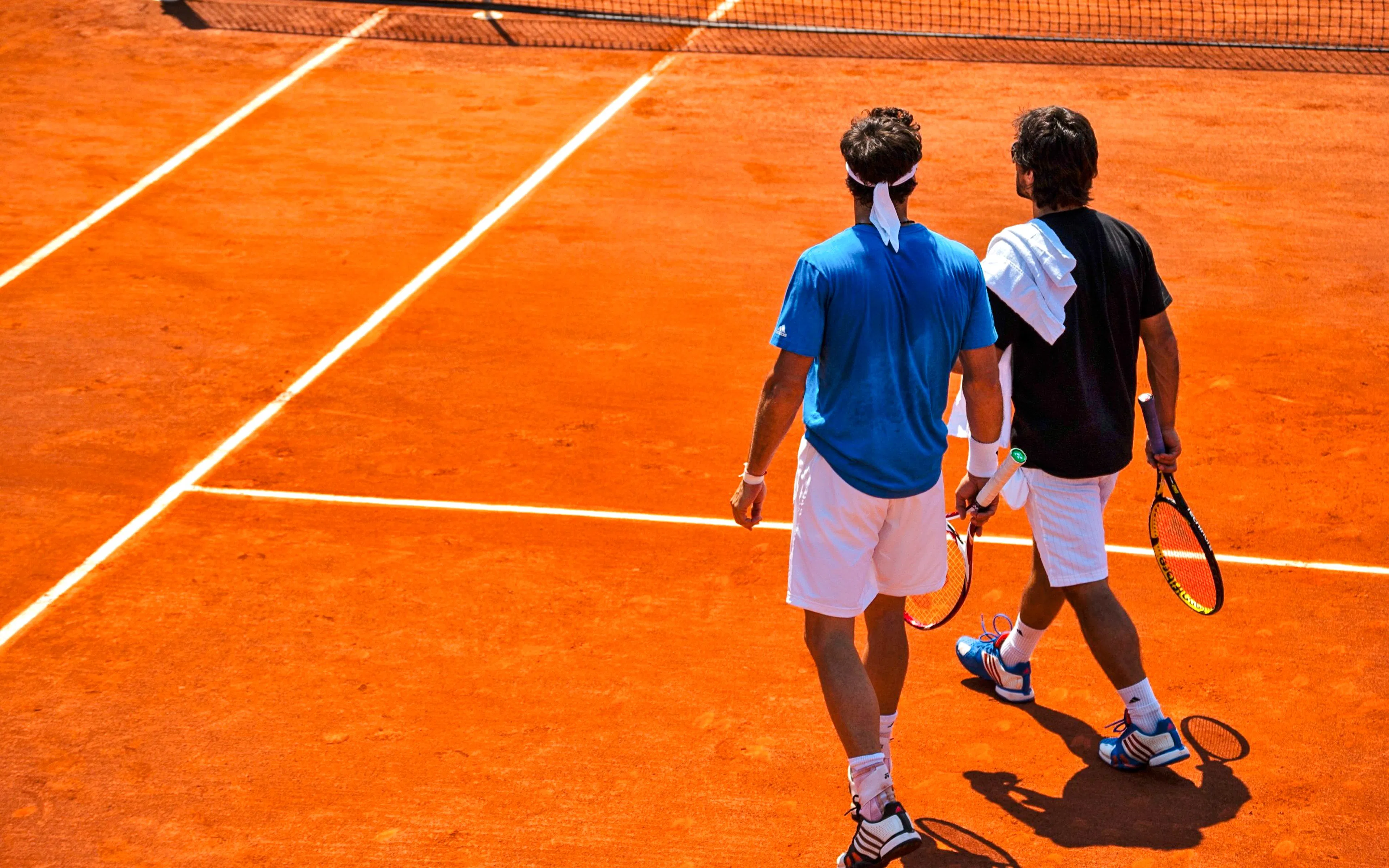
Philippe-Chatrier
Suzanne-Lenglen
Court Simonne-Mathieu
Players’ tunnel and locker rooms
Press conference room
Tenniseum
Facilities and accessibility
Know before you go

What you need to know before you go

Not allowed

Photography
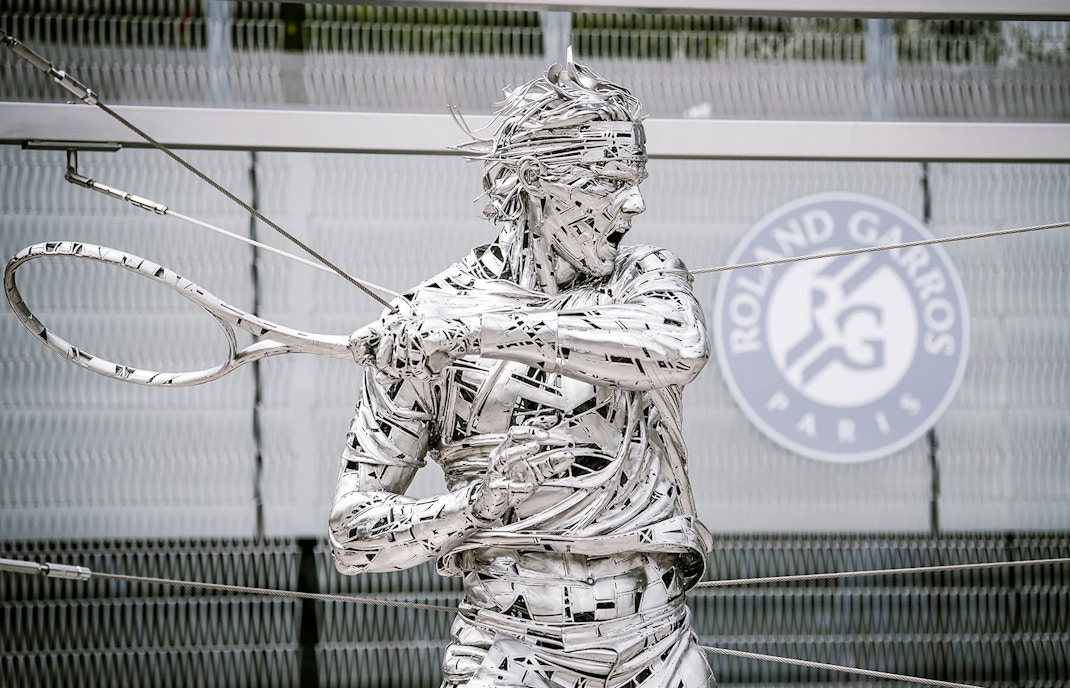
Good to know
What else is worth visiting nearby?

Commonly paired: Parc des Princes

Commonly paired: Serres d’Auteuil

