Paris Tickets

Why is Roland Garros Stadium a must-visit attraction?

Tennis player serving on clay court at Roland Garros Stadium.
Spectator watching a tennis match at Roland Garros Stadium.
Tennis players discussing strategy in Roland Garros Stadium locker room.
Tennis player preparing to serve on clay court at Roland Garros Stadium.
1/4

Walk the same path as tennis legends

A visit to Roland Garros lets you experience the energy of a Grand Slam arena even outside tournament season. A guided tour takes you through areas that only the world’s best players usually see, from the warm-up rooms to the players’ tunnel and onto the iconic red clay itself.

Feel the atmosphere of a world-class arena

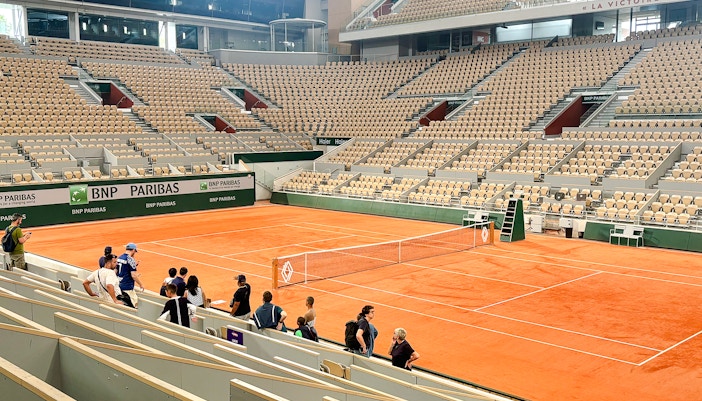
Standing inside the 15,000+seat Philippe-Chatrier Stadium is a highlight. The tall stands, impressive design, and retractable roof make it feel exciting and intense. Close by is the Suzanne-Lenglen Court, which provides a cozier setting.

Go behind the scenes of the French Open

You’ll explore spaces that millions only glimpse on TV: the press conference room where post-match emotions unfold, the locker rooms where champions prepare, and the Presidential Box where the French Open trophies are displayed.

Discover the cultural layers of Roland Garros

Roland Garros blends athletic prestige with Parisian charm, with landscaped gardens dedicated to the Four Musketeers, the striking Rafael Nadal statue, and quiet walkways around the stadium.

What to see at Roland Garros Stadium

Roland Garros stadium with visitors viewing the Yannick Noah tribute mural.

Philippe-Chatrier Court

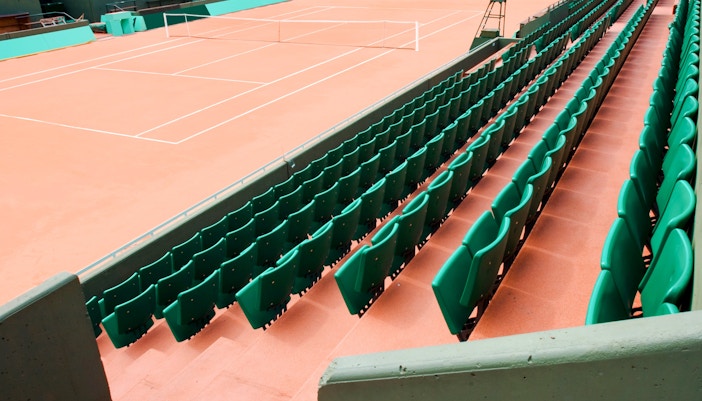
This is the star of Roland-Garros with seating for about 15,000 people and a sleek retractable roof added in 2020. Your guide leads you through the players’ tunnel and right onto the clay, so you can stand exactly where Grand Slam champions have played their biggest matches.

Empty clay tennis court with green seating at Roland-Garros Stadium.

Suzanne-Lenglen Court

Suzanne-Lenglen Court feels a little more intimate, with around 10,000 seats and a roof that opens and closes smoothly. You will also spot a sculpture of Suzanne Lenglen in her match outfit. It is a great moment to hear stories about her influence on French tennis.

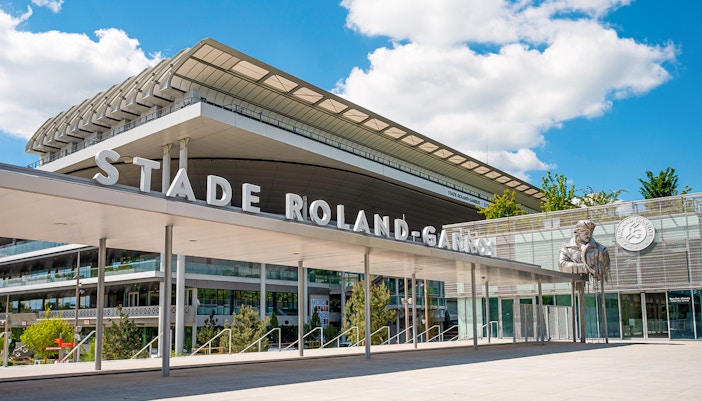
Roland-Garros Stadium entrance with modern architecture and statue, Paris.

Jardin des Mousquetaires

The tour usually begins or passes through this garden dedicated to the Four Musketeers who shaped French tennis in the 1920s. Each statue has its own story, and guides explain how their victories helped build the modern Roland-Garros we know today.

Trophies displayed at Roland-Garros Stadium, including Coupe Simone Mathieu and Coupe Marcel Bernard.

Trophy Room and Presidential Box

Inside the Presidential Box you get a close look at the real French Open trophies along with vintage tournament posters. The space has a calm, exclusive feel to it and offers a beautiful view of Philippe-Chatrier Court. It is one of the most memorable moments of the tour.

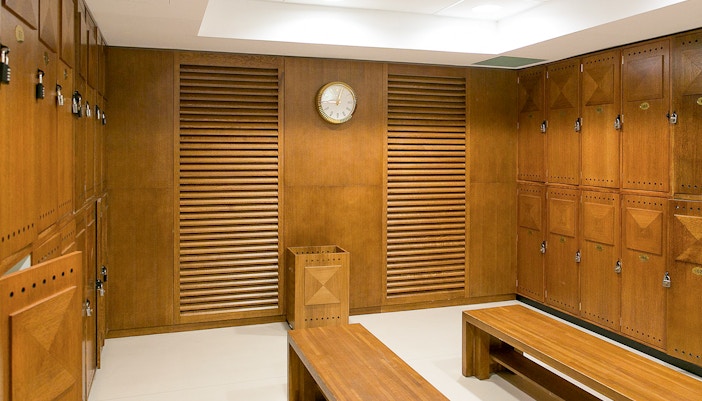
Locker room at Roland Garros Stadium during backstage tour in Paris.

Players’ Corridor and Locker Rooms

This part gives you a real sense of what athletes experience on match day. You will walk past the corridor lined with champion names, step into the locker rooms and then move into the press conference area. Finally, you follow the same path players take on their way to center court.

Roland Garros statue at Paris stadium entrance during guided tour.

Rafael Nadal Statue

Unveiled in 2021, this impressive three-meter steel statue shows Rafael Nadal mid-forehand and celebrates his incredible record at Roland-Garros. It sits near the entrance and has quickly become a fan favorite. Most visitors stop here for photos before or after the tour.

Brief history of Roland Garros Stadium

Roland Garros was built in 1928 as France’s dedicated clay-court venue for hosting the Davis Cup. Named after pioneering aviator Roland Garros, the site grew from a single show court into a full-scale stadium complex as tennis rose in global popularity. Over the decades, expansions added new courts, spectator facilities, and landscaped public areas.

Major modernization arrived in the 21st century. Philippe-Chatrier Court received its impressive retractable roof in 2020, allowing matches to continue uninterrupted. Suzanne-Lenglen Court followed with its own new roof in 2024. Statues, gardens, and improved walkways were added, transforming the venue into both a sports and cultural landmark that remains active year-round.

Architecture of Roland Garros Stadium

Roland Garros blends classic clay-court tradition with state-of-the-art engineering. Philippe-Chatrier Court is its architectural centerpiece, defined by a dramatic steel retractable roof that maintains outdoor play conditions while protecting matches from rain. Suzanne-Lenglen Court mirrors this innovation with its sleek, newly added roof.

Across the complex, warm terracotta tones, steel frameworks, glass facades, and landscaped plazas create a cohesive, village-like aesthetic. The layout is designed to move thousands of spectators efficiently during tournament days while remaining open and walkable during guided tours. Behind the scenes, carefully planned circulation paths — including tunnels, locker rooms, and press zones support seamless athlete movement and logistical precision.


Frequently asked questions about Roland Garros Stadium

Why is Roland-Garros considered one of the most iconic stadiums in the world?

Roland-Garros is the historic home of the French Open and the only Grand Slam played on clay. Built in 1928, it has hosted countless legendary matches and remains a symbol of endurance, precision, and European tennis heritage.

Why is Suzanne-Lenglen Court important in French tennis history?

Suzanne-Lenglen Court is named after Suzanne Lenglen, one of France’s greatest tennis icons. The court’s new roof and the life-sized statue nearby honor her influence on early women’s tennis and her role in shaping the identity of the French Open.

What is the Jardin des Mousquetaires and why is it included in tours?

This garden sits at the heart of the complex and honors France’s early tennis heroes. Guides use the space to introduce the story of the French Open before leading visitors to the courts, creating a thoughtful transition from history to the modern venue.

Who were the Four Musketeers and why are they celebrated at the stadium?

The Four Musketeers were France’s legendary 1920s champions: Lacoste, Borotra, Brugnon, and Cochet. Their victories elevated French tennis on the world stage, and the Jardin des Mousquetaires celebrates their legacy through statues and guided stories.

Why was the Roland-Garros stadium originally built?

Roland-Garros was constructed in 1928 so France could host and defend its Davis Cup title. The venue was named after aviator Roland Garros and eventually evolved into the permanent home of the French Open.

Does Roland-Garros have unique design elements compared to other Grand Slam venues?

Yes. Roland-Garros is known for its terracotta-toned clay courts, village-like grounds, and integration of gardens and statues. Its recent roof additions blend innovation with tradition, allowing matches to continue while preserving the stadium’s signature clay-court character.

Is photography allowed inside Roland Garros Stadium?

Yes, photography is allowed in most tour areas, including courts, tunnels, and press rooms.

Does the tour operate during the French Open?

Tours are limited or paused during major tournaments. Check availability before planning your visit.