Hours, directions, entrances and the best time to arrive
Visiting Musée du quai Branly in Paris
The Musée du quai Branly – Jacques Chirac is Paris’s major museum for the arts and civilizations of Africa, Asia, Oceania, and the Americas, and it’s best known for turning that collection into a dark, atmospheric, almost cinematic experience. This is not a quick, linear museum stop: the galleries are immersive, the route can feel non-linear, and the scale is easy to underestimate. The biggest difference between a rushed visit and a rewarding one is choosing a route before you enter. This guide helps you time it, pace it, and pick the right ticket.
Quick overview: Musée du quai Branly – Jacques Chirac at a glance
Plan this as a real museum visit, not a quick add-on after the Eiffel Tower.
- When to visit: Opening hours vary by day, but morning opening and the last 2 hours before closing are calmer than early to mid-afternoon, when Eiffel Tower area foot traffic and temporary exhibition visitors overlap.
- Getting in: From about $15–$20 for standard admission. Full exhibition access is usually about $20–$25. Booking ahead matters most in summer, school holidays, and whenever a temporary exhibition is drawing extra demand.
- How long to allow: 2.5–4 hours suits most visitors. It stretches closer to 5 hours if you add the temporary exhibition, gardens, and a meal.
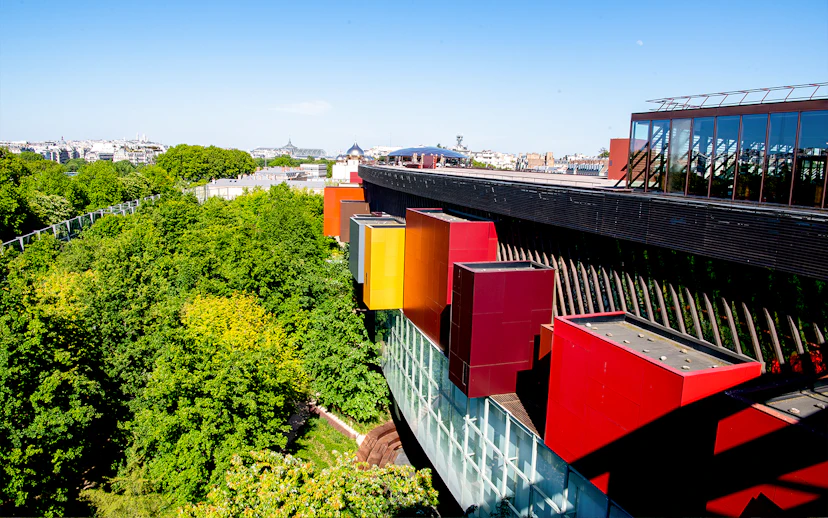
- What most people miss: The gardens and the museum’s architecture are worth slowing down for, and many visitors rush past the geographic transitions in the permanent galleries without noticing how the route changes mood and scale.
- Is a guide worth it? Yes, if you want stronger cultural context in a dim, non-linear museum; if you mainly want to browse at your own pace, a multilingual audio guide usually gives you enough structure for less.
🎟️ Temporary exhibition slots for Musée du quai Branly – Jacques Chirac can sell out several days in advance during peak tourism months. Lock in your visit before the time you want is gone. See ticket options
Jump to what you need
🕒 Where and when to go
🗓️ How much time do you need?
Visit lengths, suggested routes and how to plan around your time
🎟️ Which ticket is right for you?
Compare all entry options, tours and special experiences
🗺️ Getting around
How the galleries are laid out and the route that makes most sense
🖼️ What to see
Permanent galleries, Jean Nouvel architecture, and the gardens
♿ Facilities and accessibility
Restrooms, lockers, accessibility details and family services
Where and when to go
How do you get to the museum?
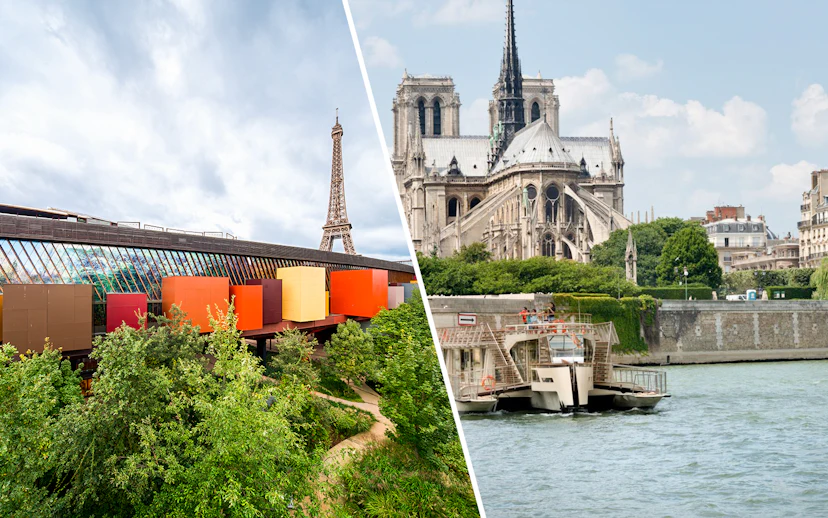
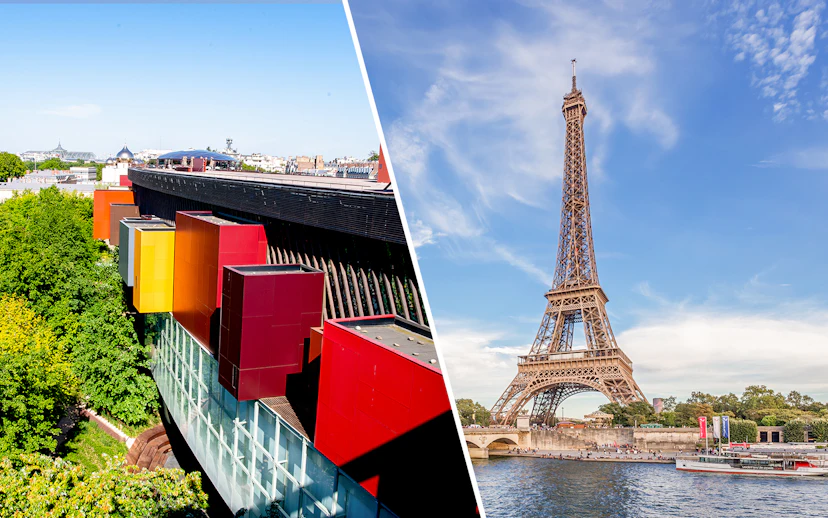
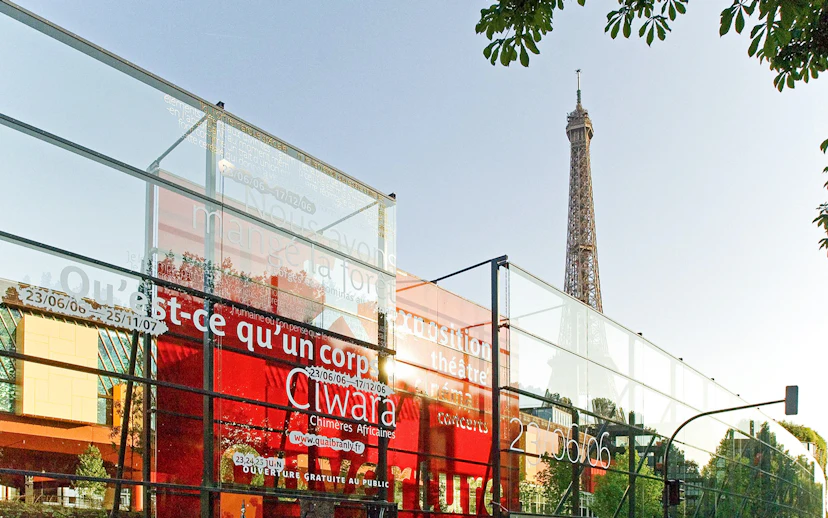
The museum sits on the Left Bank near the Eiffel Tower and the Seine, in the 7th arrondissement, and it’s an easy add-on if you’re already sightseeing around Pont de l’Alma or Trocadéro.
37 Quai Jacques Chirac, 75007 Paris, France
- RER: Pont de l’Alma → 8–10 min walk → easiest if you’re coming from central Paris or the western riverfront
- Metro: Alma-Marceau → 12–15 min walk → good option if you want to combine the museum with the Eiffel Tower area
- Bus: Seine-side and Eiffel Tower area routes stop nearby → short walk → useful if you’re already moving between central sights
- Taxi / rideshare: Drop-off on Quai Jacques Chirac or nearby side streets → shortest walk → best if you’re arriving close to your entry time
Which entrance should you use?
Most visitors get this wrong by treating the museum like a quick walk-in stop after the Eiffel Tower. If you’re visiting a temporary exhibition or arriving in peak season, timed-entry planning matters more than people expect.
- Main entrance: Located on Quai Jacques Chirac. Best for general admission, Paris Museum Pass holders, and pre-booked visitors. Expect the slowest flow in early to mid-afternoon.
When is Musée du quai Branly – Jacques Chirac open?
- Daily schedule: Check the current museum calendar before booking, as hours can vary by day and program
- Temporary exhibitions: Timed entry may apply during high-demand periods
- Last practical entry: Arrive at least 2 hours before closing if you want more than a quick highlights sweep
When is it busiest? Early to mid-afternoon is usually the heaviest stretch, especially in summer and on days when temporary exhibitions are drawing extra visitors.
When should you actually go? Go at opening or in the last 2 hours of the day if you want the permanent galleries to feel more contemplative and the dim layout easier to navigate at your own pace.
How much time do you need?
| Visit type | Route | Duration | Walking distance | What you get |
|---|---|---|---|---|
Highlights only | Gardens → architecture exterior → 2 permanent collection regions → exit | 2–2.5 hours | ~1.5km | You get the museum’s mood, Jean Nouvel’s design, and a focused look at the permanent collection, but you’ll skip at least half the geographic sections and usually the temporary exhibition |
Balanced visit | Gardens → full permanent collection sweep → short pause → exit | 3–4 hours | ~2.5km | This is the best first visit because you cover all 4 geographic zones without rushing every label, though you’ll still need to be selective inside each section |
Full exploration | Gardens → full permanent collection → temporary exhibition → break → architecture details | 4.5–5 hours | ~3.5km | This gives you the most complete visit and makes room for the museum’s changing program, but the dim, non-linear layout can feel tiring by the end if you don’t pace yourself |
Which Musée du quai Branly – Jacques Chirac ticket is best for you
| Ticket type | What's included | Best for | Price range |
|---|---|---|---|
Standard Museum Ticket | Permanent collection access | A first visit where you want the core galleries, the architecture, and the gardens without committing to a longer exhibition-heavy route | From $15 |
Full Exhibition Ticket | Permanent collection + temporary exhibition access | A visit where the temporary show is part of the reason you’re going, or where you want a fuller half-day museum plan | From $20 |
Guided tour | Museum entry + guided visit | A first visit to a museum where the lighting, layout, and limited label depth can leave you wanting more context than a self-guided route provides | From $40 |
Paris Museum Pass | Admission to multiple Paris museums, including this one | A short Paris stay where you’re planning several museum stops and don’t want separate booking for each major visit | From $60 |
Eiffel Tower + museum combo | Museum visit + nearby sightseeing pairing | A day where you want to anchor a major Eiffel Tower-area itinerary around 1 strong cultural stop instead of 2 separate museum days | From $60 |
How do you get around Musée du quai Branly – Jacques Chirac?
The museum is sprawling and non-linear rather than room-by-room straightforward, so it rewards a loose plan more than spontaneous wandering. In practice, it’s easy to self-navigate if you stay selective, but easy to lose momentum if you try to read everything.
Main gallery zones
- Africa: Ceremonial masks, sculpture, ritual objects, and textiles → allow 35–50 minutes
- Asia: Sacred art, textiles, objects, and cross-regional material culture → allow 30–45 minutes
- Oceania: Ancestral objects, carved works, and ceremonial pieces → allow 25–40 minutes
- The Americas: Sacred artifacts, sculpture, jewelry, and cultural objects → allow 30–45 minutes
- Gardens and architecture: Exterior walkways, the green wall, and quiet pauses between galleries → allow 20–30 minutes
Suggested route: Start with the permanent collection while your attention is fresh, move by region rather than trying to read every label, then finish with the gardens and architecture when you’re ready for a slower reset.
Maps and navigation tools
- Map: Use the museum map or floor guide at entry → it helps you keep the 4 geographic zones straight → pick it up before starting the permanent collection
- Signage: Wayfinding is usable, but the dim, atmospheric layout makes a map more helpful here than at a standard white-wall museum
- Audio guide / app: Audioguides are available in multiple languages → they add structure and context → worth it if you want more than a visual browse
💡 Pro tip: Pick 2 regions you care most about before you enter. The museum is much more rewarding when you go deep in a few sections than when you skim the whole route just to say you covered it.
Where are the masterpieces inside Musée du quai Branly – Jacques Chirac?

1/5
Africa galleries
Artist / creator / era: Ceremonial masks, sculpture, and ritual objects from multiple regions and periods
This is where many first-time visitors realize the museum is less about one famous object and more about atmosphere, symbolism, and material culture. Slow down for the variation in carving, scale, and ritual use rather than trying to identify a single ‘must-see’ piece. What people often miss is how much the lighting changes your reading of the objects.
Where to find it: In the permanent collection route, within the Africa section of the main galleries
Oceania galleries
Artist / creator / era: Ancestral objects and ceremonial works from Pacific cultures
These galleries are among the museum’s strongest because the objects often feel inseparable from the room design around them. Many visitors move through them too quickly, even though the forms, textures, and spiritual associations reward a slower pass. The detail most people rush past is the contrast between intimate carved pieces and much larger ancestral forms.
Where to find it: In the permanent collection route, in the Oceania section after the main central flow
The Americas galleries
Artist / creator / era: Sacred artifacts, jewelry, textiles, and sculptural works from across the Americas
This section is especially rewarding if you want to see how the museum moves beyond a single-country lens and presents a broader civilizational story. It’s worth slowing down for the object groupings, not just the standout pieces. Many visitors miss the smaller material details because they move on too fast in the low light.
Where to find it: In the permanent collection route, within the Americas section of the main galleries
Jean Nouvel’s architecture
Artist / creator / era: Architecture by Jean Nouvel, opened in 2006
The building is part of the experience, not just the container for it. The elevated walkways, curved circulation, dark interiors, and layered sightlines are meant to shape how you encounter the collection. Many visitors photograph the green wall outside, but miss how the interior design deliberately slows and disorients your route in a productive way.
Where to find it: Throughout the museum, especially the exterior approach, walkways, and main gallery circulation
The gardens
Artist / creator / era: Landscape design and outdoor museum environment
The gardens are the easiest thing to cut when you’re short on time, and that’s exactly why they’re worth protecting in your route. They give you a quieter, more breathable counterpoint to the dark galleries and make the museum feel distinct from central Paris’s denser museum circuit. Many visitors never realize how much of the visit’s mood comes from this outdoor transition space.
Where to find it: Outside the main museum building, surrounding the site along the Seine-facing grounds
Facilities and accessibility
- 🍽️ Restaurant: There is on-site dining, but it works best as a separate reservation plan rather than a spontaneous mid-visit stop.
- 🪑 Seating / rest areas: The gardens are your best built-in rest zone, especially if the permanent galleries start to feel visually dense.
- 🎧 Audioguide: Audioguides are available in multiple languages and add useful structure in a museum where labels can feel lighter than expected.
- 🎟️ Temporary exhibition access: Some temporary exhibitions may use timed entry during busy periods, so treat them as a fixed part of your route, not an improvisation.
- 🌿 Gardens: The outdoor garden area is part of what makes the visit easier to pace, and it’s the best place to reset between the darker interior sections.
- ♿ Mobility: The museum is better tackled in sections than as one continuous loop, because the circulation paths are long and some visitors find them tiring.
- 👁️ Visual impairments: The dim gallery lighting is part of the design, but it can make labels harder to read than in a more traditional museum.
- 🧠 Cognitive and sensory needs: The low light, theatrical layout, and non-linear route feel immersive, but they can also feel disorienting if you try to cover everything at once.
- 👨👩👧 Families and strollers: The easiest approach is a shorter route focused on 1 or 2 geographic sections, followed by time in the gardens rather than a full sweep.
This museum works best for school-age children, teens, and curious younger visitors who respond well to masks, musical instruments, and strong visual storytelling rather than long text panels.
- 🕐 Time: 1.5–2 hours is the realistic family sweet spot, and the permanent collection plus gardens is usually a better plan than adding everything.
- 🏠 Facilities: The gardens give families a natural decompression break, which matters in a museum built around dark, immersive galleries.
- 💡 Engagement: Let children ‘collect’ 1 favorite object from each region instead of trying to follow the whole museum narrative from start to finish.
- 🎒 Logistics: Bring a light bag and start earlier in the day, because the museum is easier with fresh attention and less surrounding area crowding.
- 📍 After your visit: The Eiffel Tower area and Seine-side walks make an easy follow-up if children still have energy and you want an outdoor reset.
Rules and restrictions
What you need to know before you go
- Entry requirement: Standard admission covers the permanent collection, while temporary exhibitions may need an upgraded or timed ticket.
- Booking method: Online booking is the safer choice in summer, school holidays, and for temporary exhibitions that are drawing strong demand.
- Museum pass: The Paris Museum Pass generally includes admission, which can simplify planning if this is one stop in a museum-heavy Paris itinerary.
Not allowed
- 🚫 Food and drink: Treat the galleries as museum spaces rather than casual indoor sightseeing areas, and plan any eating around your visit instead of during it.
- 🐾 Pets: Assume standard museum rules and arrange pet care ahead of time unless you’re traveling with a service animal and have checked policy directly.
- 🖐️ Handling objects: The collection is made up of cultural and sacred artifacts, so this is a look-closely museum, not a hands-on one.
Photography
Photography is best treated as policy-by-space rather than one blanket rule. The safest approach is to follow room signage closely, especially in temporary exhibitions, and to assume flash and bulky photo gear may be more restricted than casual phone photography. If photography matters to you, the architecture and gardens are the least frustrating places to focus.
Good to know
- Low-light design: The museum is intentionally dark, so if you care about context as much as visuals, the audio guide is often worth it.
- Route planning: Trying to cover every gallery in one go is what makes this museum feel tiring; choosing 2–4 priority sections usually leads to a better visit.
Practical tips
- Booking and arrival: Book ahead if you’re visiting in summer or want a temporary exhibition, and aim to arrive 15–20 minutes early so you’re not starting a dim, non-linear museum already rushed.
- Pacing: Save your concentration for the permanent collection first, because this is where most visitors either go too broad and tire out or go too fast and miss the point of the museum.
- Crowd management: Opening time and the last 2 hours of the day are your best windows, because the surrounding Eiffel Tower area is less likely to spill extra foot traffic into the museum.
- What to bring or leave behind: Travel light. This museum is easier with a small bag because the galleries are long, dark, and better enjoyed when you’re not physically managing extra stuff.
- How to use the audio guide: If you’re torn, get it on a first visit and skip it on a repeat one. The main pain point here is not lack of objects, but lack of obvious narrative in the route.
- Food and drink: Eat before you enter or plan a proper meal after, because the museum works best as a continuous visit and the gardens are a better break than interrupting the route halfway through.
- Pairing it with nearby sights: Don’t sandwich this between too many headline attractions. It works much better as 1 strong cultural stop near the Eiffel Tower than as a rushed museum add-on.
What else is worth visiting nearby?
Commonly paired: Eiffel Tower
Distance: ~800m — 10–12 min walk
Why people combine them: It’s the most logical same-area pairing in Paris if you want 1 major landmark and 1 quieter cultural stop in a single half-day.
Book / Learn more
Commonly paired: Seine River cruise
Distance: ~700m–1km — 10–15 min walk to nearby embarkation points
Why people combine them: The museum’s contemplative pace pairs well with a river cruise because both fit naturally into a slower Seine-side itinerary without extra transit.
Also nearby
Trocadéro
Distance: ~1.5km — 20–25 min walk or short transit ride
Worth knowing: It’s the best follow-up if you want classic Eiffel Tower views after a museum visit that feels quieter and more introspective.
Les Invalides
Distance: ~1.8km — 20–25 min walk or short transit ride
Worth knowing: This pairing works well if you want 2 serious cultural stops in the same part of Paris, but it makes for a fuller museum-heavy day.
Eat and stay near Musée du quai Branly – Jacques Chirac
- On-site: The museum has on-site dining, but it’s best treated as a planned stop or reservation rather than a guaranteed walk-in fallback.
- Better options nearby: Not applicable.
- 💡 Pro tip: Eat either before the museum or after it, not in the middle — the visit flows better as 1 continuous route, and the surrounding Eiffel Tower area gives you more post-visit flexibility.
This part of the 7th arrondissement is very walkable and makes sense if you want easy access to the Eiffel Tower, Seine-side walks, and several museum stops without much transit. It’s convenient and polished, but it usually skews pricier than other Paris bases. It suits shorter trips better than longer stays built around nightlife or neighborhood variety.
- Price point: Expect a higher-than-average central Paris price point, especially the closer you stay to the Eiffel Tower and riverfront.
- Best for: Visitors on a short trip who want to walk to major sights and keep logistics simple.
- Consider instead: Saint-Germain-des-Prés or Le Marais if you want a stronger café, restaurant, and evening atmosphere for a longer Paris stay.
Frequently asked questions about visiting Musée du quai Branly – Jacques Chirac
Most visits take 2.5–4 hours. If you only want the highlights, you can do it in 1.5–2 hours, but a full visit with the temporary exhibition, gardens, and a meal can stretch to 4.5–5 hours.
Yes, it’s smart to book ahead in summer, school holidays, and whenever you want a temporary exhibition slot. Standard admission is more flexible on quieter days, but pre-booking still makes timing the rest of your Paris day much easier.
It can be worth it in peak months or on days when a temporary exhibition is drawing extra demand. If you’re visiting on a quieter morning and only want the permanent collection, the value is lower than at Paris’s most crowded headline museums.
Arrive about 15–20 minutes early. That gives you enough buffer for entry and orientation without standing around too long before a museum that’s best enjoyed at a steady, unhurried pace.
Yes, but a smaller bag is the better choice. The galleries are long, dim, and easier to enjoy when you’re moving lightly, so this is one museum where carrying less genuinely improves the visit.
Usually, yes, but you should follow room signage closely. Photography rules can be stricter in temporary exhibitions, and the low-light design means even when photography is allowed, it isn’t always the easiest museum for it.
Yes, and it works especially well for groups that want cultural context rather than just a checklist of famous works. Guided visits tend to add more value here than in a straightforward museum because the layout and interpretation are less linear.
Yes, especially for families with school-age children and teens. The museum’s masks, sculpture, instruments, and immersive design are more engaging than long text-heavy galleries, but most families are happier with a 1.5–2 hour route plus garden time.
Yes, but it’s better approached as a paced visit than a continuous loop. The museum’s long circulation paths can feel tiring, and the dim lighting means some visitors may prefer a more selective route rather than trying to cover everything.
Yes, there is on-site dining, and the surrounding Eiffel Tower area gives you plenty of options before or after your visit. In practice, eating after the museum usually works better than breaking the visit in half.
Opening time and the last 2 hours before closing are usually the best windows. That’s when the galleries feel calmer and the surrounding Eiffel Tower area is less likely to add extra crowd pressure to your route.
Yes, if the subject genuinely interests you and you have at least 4 hours total. If you only have 2–3 hours, the permanent collection and gardens already give you the strongest sense of what makes this museum special.