Hours, directions, entrances and the best time to arrive
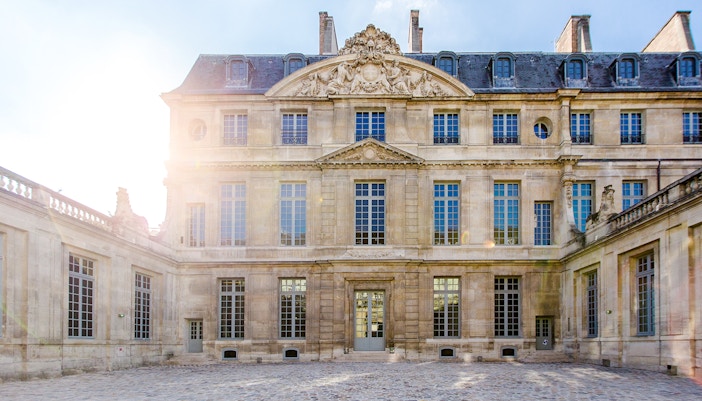
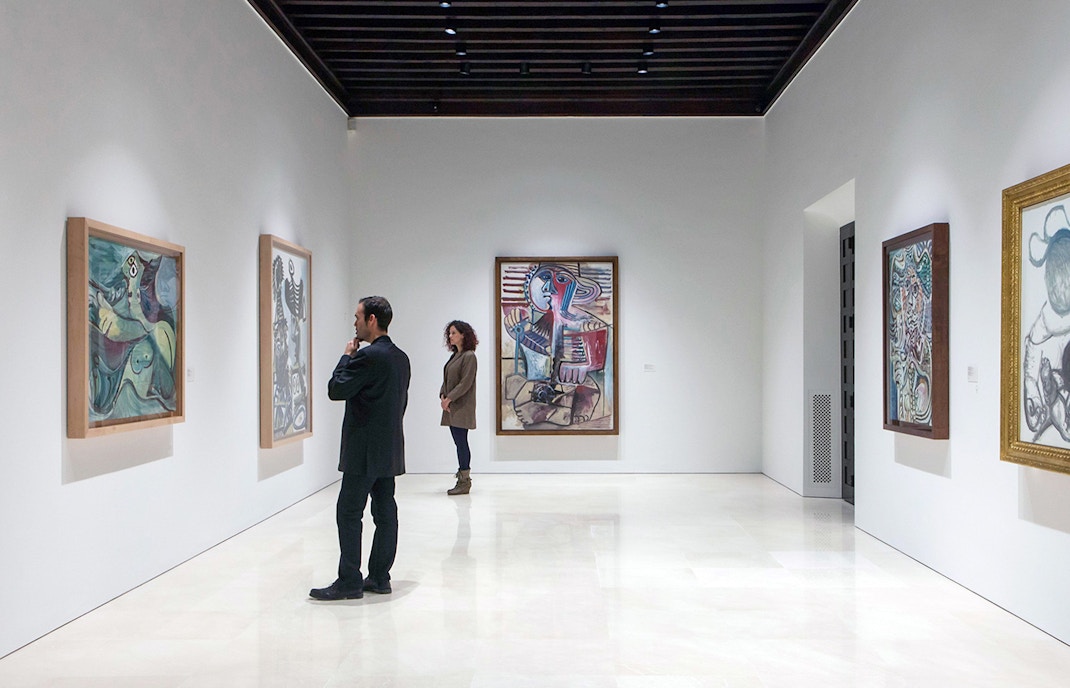
The Musée National Picasso-Paris is a monographic museum inside the 17th-century Hôtel Salé, best known for showing Picasso’s work as a long creative diary rather than a greatest-hits wall. The visit is manageable in size, but the five-level route, security bottleneck, and shifting top-floor displays mean timing matters more than people expect. The biggest difference between a rushed visit and a rewarding one is saving time for the attic collection and not assuming ‘skip the line’ skips security.
If you want the short version before you book, start here.
🎟️ Time slots for Musée National Picasso-Paris can disappear a few days ahead during summer weekends and major temporary exhibitions. Lock in your visit before the time you want is gone. See ticket options
Hours, directions, entrances and the best time to arrive
Visit lengths, suggested routes and how to plan around your time
Compare all entry options, tours and special experiences
How the galleries are laid out and the route that makes most sense
Bull’s Head, Dora Maar, and Picasso’s personal collection
Restrooms, lockers, accessibility details and family services
The museum sits in Le Marais in the 3rd arrondissement, around 1.2km from Châtelet and a short walk from Saint-Paul and Saint-Sébastien–Froissart.
5 Rue de Thorigny, 75003 Paris, France
Full getting there guide
The museum has one main entrance, but queues split by ticket need — and most confusion comes from assuming priority entry skips security. It does not.
Full entrances guide
When is it busiest? Sunday afternoons, first Sundays of the month, and 11am–3pm in July and August are the most congested, because every visitor funnels through the same security line before the compact upper galleries.
When should you actually go? A Tuesday or Thursday opening slot gives you the quietest run through the staircase, early galleries, and attic rooms before guided groups and late arrivals compress the route.
| Visit type | Route | Duration | Walking distance | What you get |
|---|---|---|---|---|
Highlights only | Entrance → grand staircase → early works → Cubism rooms → Bull’s Head → attic collection → exit | 1.5–2 hours | ~0.8km | You get the core arc of Picasso’s career and the building’s best visual moments, but you will likely skip the basement archives, slow-looking, and the café. |
Balanced visit | Entrance → staircase → ground-floor early works → first-floor Cubism and portraits → attic collection → rooftop café → exit | 2–2.5 hours | ~1.2km | This adds breathing room, the personal collection, and a proper pause on the terrace, which makes the museum feel more coherent than a checklist visit. |
Full exploration | Entrance → basement studies and archives → all permanent galleries chronologically → temporary exhibition floor → attic collection → café → boutique | 3.5–4 hours | ~1.8km | You get the full ‘working diary’ experience, including sketches, letters, and temporary programming, but five levels and repeated stops can feel tiring by the end. |
| Ticket type | What's included | Best for | Price range |
|---|---|---|---|
Standard entry | Timed entry to the permanent collection + access to temporary exhibitions | A short, self-guided visit where you already know you want to keep the pace flexible | Entry (from €16) ↗ |
Priority entry + physical Audioguide | Timed entry + physical Audioguide in 6 languages | A first visit where you want structure and context without committing to a guided group | Audioguide entry (from €22) ↗ |
Evening Nocturne | Evening admission on the first Wednesday of the month + extended opening hours | A quieter, atmosphere-led visit where you care more about space and mood than squeezing in a full sightseeing day | Nocturne (from €12) ↗ |
Picasso + Rodin dual museum ticket | Entry to Musée National Picasso-Paris + entry to Rodin Museum | A same-day art plan where you want two strong monographic museums without the scale of the Louvre or Orsay | Dual museum (from €31) ↗ |
Picasso Museum + Seine River Cruise combo | Museum entry + 1-hour Seine cruise | A first Paris trip where you want one cultural stop in the Marais and one classic city view later in the day | Combo (from €30.36) ↗ |
Small-group or private guided tour | Certified guide + priority access | A context-heavy visit where abstract work, Picasso’s biography, and the ‘dation’ story matter as much as the objects themselves | Guided tour (from ~€300/group) ↗ |
The museum is compact by Paris standards, but it is vertical rather than flat, with five levels inside a 17th-century mansion. That makes it easy to navigate overall, but also easy to skip the attic and basement if you simply follow the crowd.
Suggested route: start with the basement only if you want the ‘working diary’ angle; otherwise do the main chronology first, then save the attic for the end, because many visitors accidentally exit after the Cubism rooms and miss Picasso’s own Matisse and Cézanne.
💡 Pro tip: Don’t treat the Cubism galleries as the finish line — the attic personal collection is one of the most revealing parts of the visit, and crowd flow makes it easier to miss than it should be.
Get the Musée National Picasso-Paris map / audio guide


Attribute — Era: 17th-century Baroque architecture
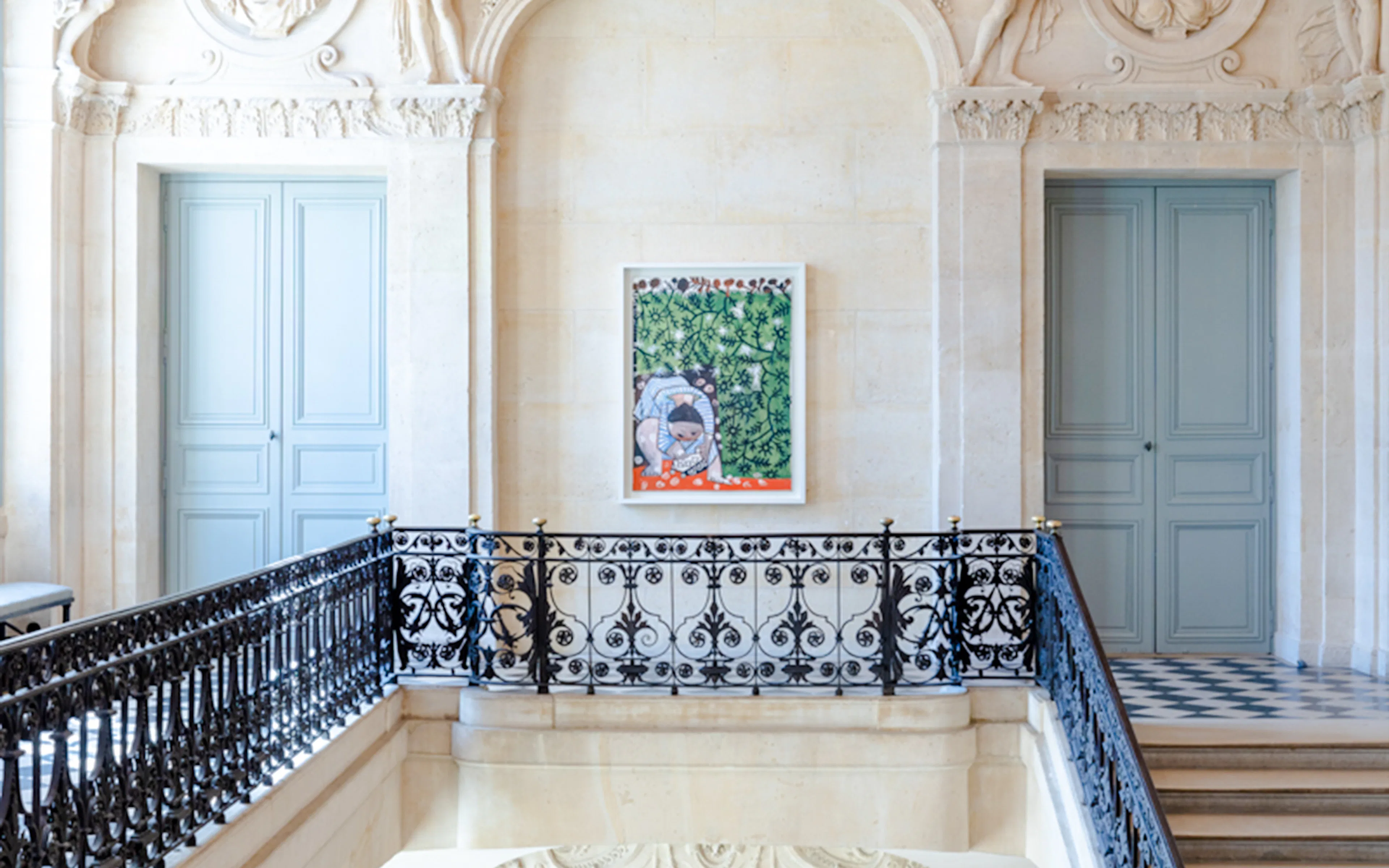
Before you even settle into Picasso, the staircase tells you what kind of museum this is: a clash between aristocratic Paris and radical modern art. Most visitors use it as transit, but it is one of the building’s real highlights, especially if you stop halfway up and look back at the theatrical perspective. The sculpted stuccos are easy to miss because people climb quickly toward the galleries.
Where to find it: Immediately beyond the entrance lobby, rising through the center of the Hôtel Salé.
Attribute — Artist: Pablo Picasso
This is one of the clearest entry points into the Blue Period, and it lands best if you give it more than a quick glance. The dark coat, tight posture, and muted blues make the emotional shift visible even if you do not know the chronology well. What people often rush past is how direct and stripped-down it feels compared with the louder later rooms.
Where to find it: Early galleries on the ground floor, in the sequence covering the Blue Period.
Attribute — Medium: Found-object sculpture, 1942
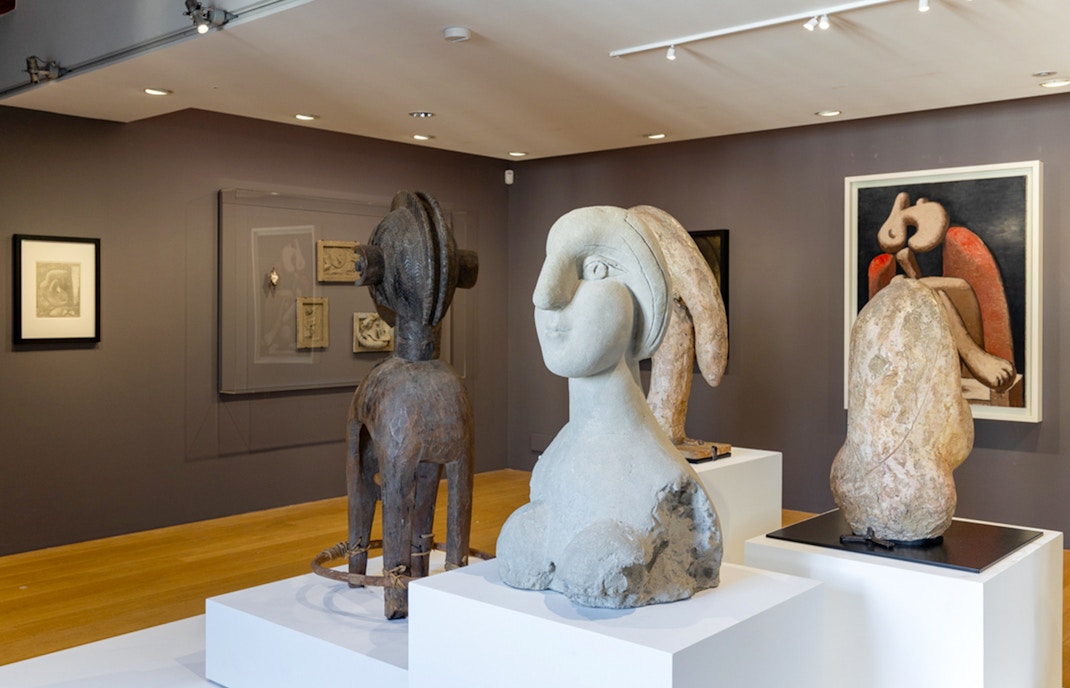
Bull’s Head is one of Picasso’s smartest jokes, but it is also a perfect clue to how his mind worked. From a distance it reads as a bull; up close it becomes a bicycle seat and handlebars with almost nothing added. The detail visitors often miss is that the simplicity is the point — the work is less about craft than about the leap of recognition.
Where to find it: In the main permanent collection galleries, usually along the route through the sculpture-focused upper rooms.
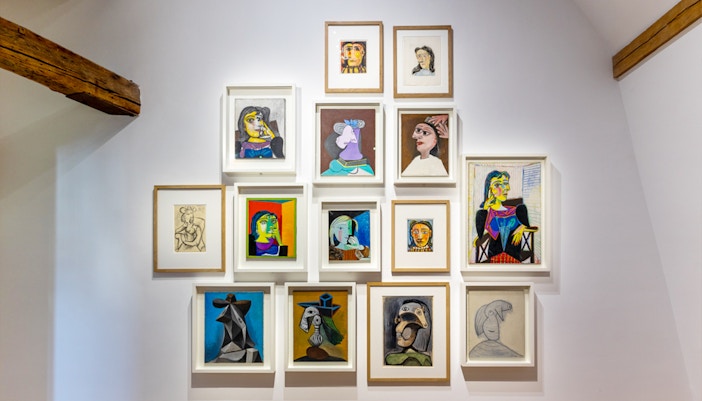
Attribute — Subject: Dora Maar, 1937
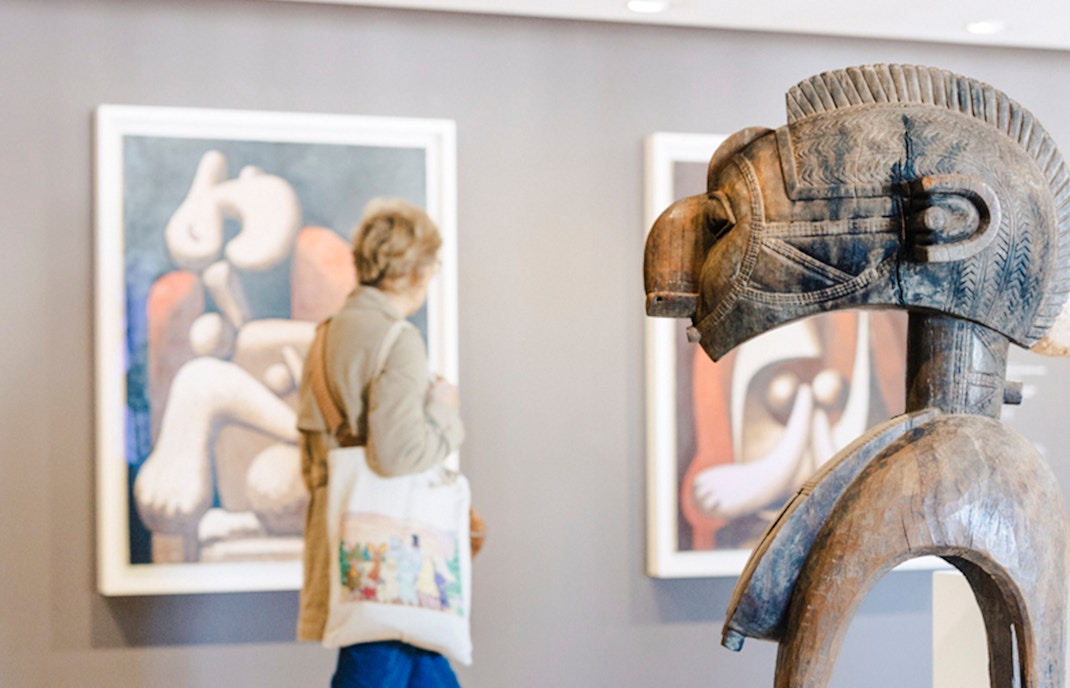
This is one of the museum’s strongest reminders that Picasso’s portraits are never only portraits. The fractured face, bright contrasts, and unstable geometry make the emotional tension do the work, especially if you step back rather than study it nose-first. Many visitors rush to the label too soon; it reads better when you let the distortion settle before identifying what each part of the face is doing.
Where to find it: In the upper permanent galleries among the portrait and late-1930s rooms.
Attribute — Collection: Works by Matisse, Cézanne, Degas, and others
These attic rooms are what separate this museum from a straightforward Picasso retrospective. You are not just seeing what influenced him in theory; you are seeing the art he chose to live with. What people miss is how much the low beams and smaller scale change the mood — it feels more private, slower, and less public than the main floors below.
Where to find it: In the attic galleries at the top of the museum route.
Attribute — Theme: Anti-war painting, 1951
Massacre in Korea matters because it widens the visit beyond style and biography into politics. The composition is colder and harsher than many visitors expect, and it rewards distance more than close inspection. What people often miss is the mechanical stiffness of the executioners, which gives the picture its emotional shock even before you read the title.
Where to find it: In the later permanent galleries on the upper floors.
Attribute — Designer: Diego Giacometti, 1985 museum commission
These benches, lamps, and fittings are easy to treat as décor, but they are works in their own right and part of the museum’s identity. Owls, leaves, and small animal forms hide in the bronze details, so the best way to notice them is while resting rather than walking past. They quietly bridge the mansion’s history and the modern collection better than any wall text can.
Where to find it: Distributed throughout the museum, especially in resting points and transitional gallery spaces.
The museum works best for school-age children because the visit is short, the building is dramatic, and Picasso’s shapes invite guessing rather than passive looking.
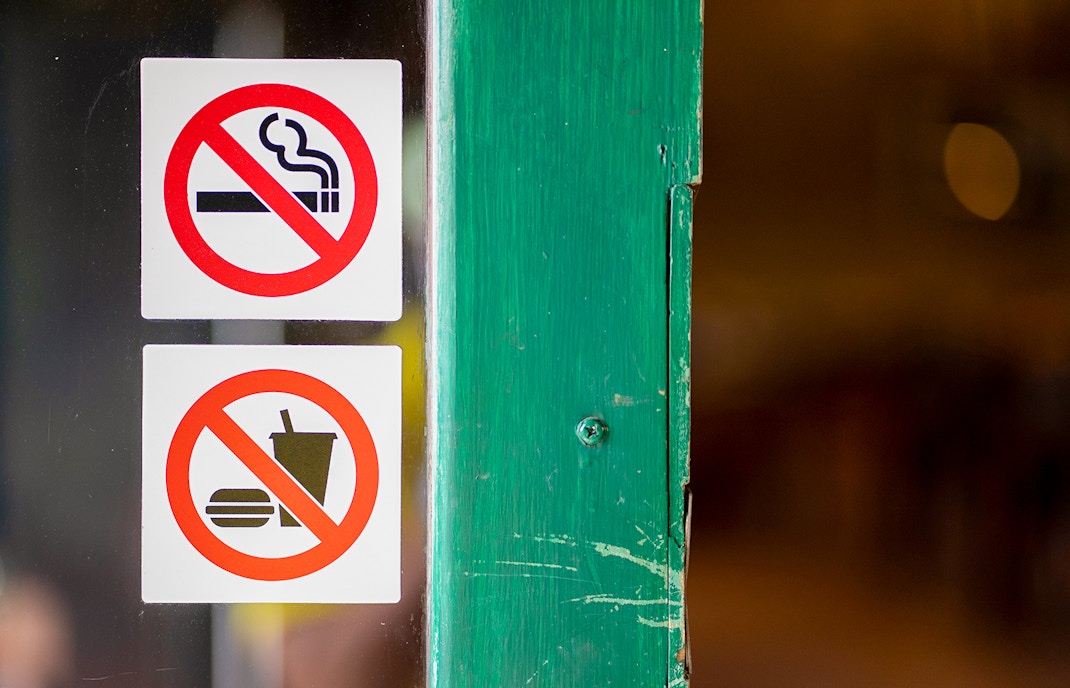
Photography is generally allowed in the permanent collection if you do not use flash. Temporary exhibitions can have stricter room-by-room bans, so check the signage rather than assuming the same rule applies everywhere. Flash, tripods, and selfie sticks are not permitted.
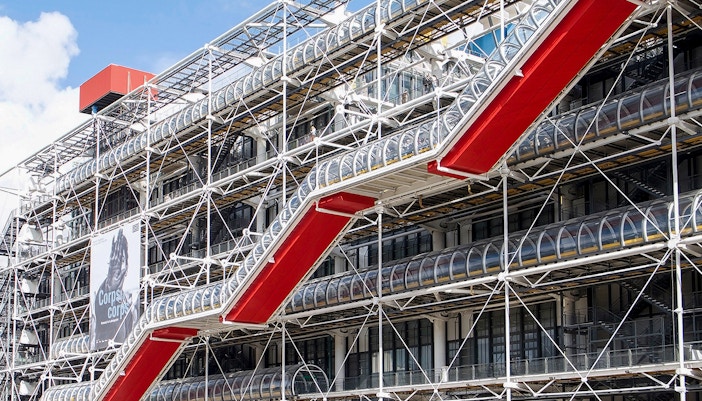
Centre Pompidou
Distance: 1.1km — 15-min walk
Why people combine them: Picasso gives you the intimate, single-artist version of modern art, while Pompidou gives the wider 20th-century context in the same half-day stretch across central Paris.
Book / Learn more
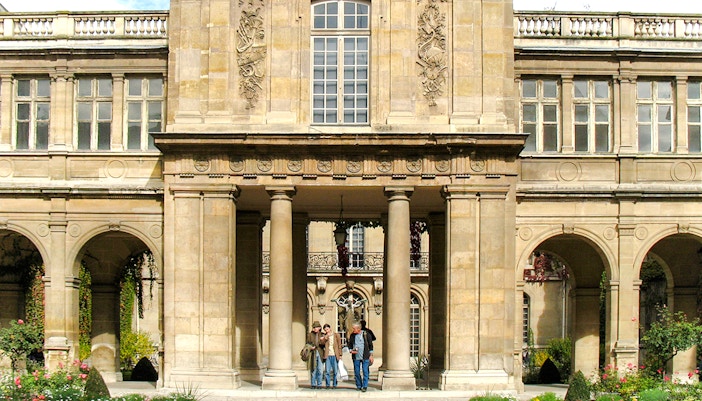
Carnavalet Museum
Distance: 500m — 6-min walk
Why people combine them: It fits naturally into the same Marais walk and gives you Paris history after a dense, artist-focused museum visit.
Book / Learn more
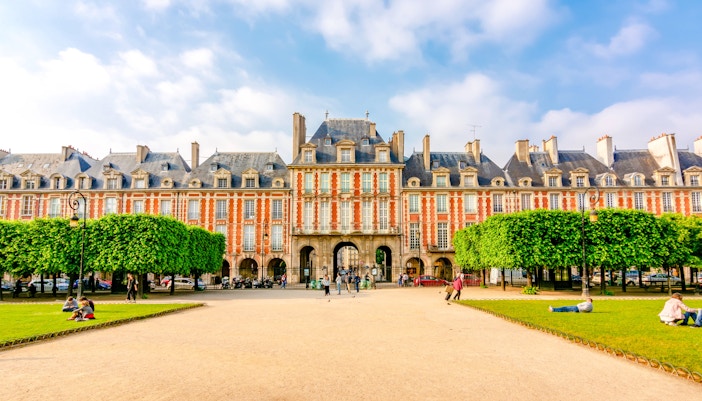
Place des Vosges
Distance: 700m — 9-min walk
Worth knowing: It is the easiest nearby reset if you want benches, arcades, and space after the galleries.
Rue des Rosiers
Distance: 500m — 6-min walk
Worth knowing: It is the neighborhood’s best post-museum food stop, especially if you want a quick lunch without leaving Le Marais.
Yes — if you want a walkable, design-heavy, café-filled base with easy access to central Paris, Le Marais works very well. It is pricier than many other neighborhoods, but the trade-off is that you can reach the museum, Place des Vosges, the Seine, and strong food options on foot. It suits short stays best.
Most visits take 1.5–2.5 hours, though art-focused visitors can stay 3–4 hours if they include the archives, temporary exhibition floor, and café. The museum is manageable in size, but it is spread over five levels, so it rewards a slower route more than people expect. If you are tight on time, prioritize the main chronology and the attic collection.
You do not always need to book in advance, but it is the safer choice for summer weekends, Sundays, and major temporary exhibitions. Quiet weekday slots are often easier to get, while prime late-morning times can tighten quickly. Booking ahead mainly protects your preferred time, not just your entry.
Yes, but only if you understand what it saves: the ticket-office queue, not the security line. On busy weekends, bypassing the purchase line can still save 30–60 minutes, but every visitor passes through the same security check. It is worth it if you want predictability, not if you expect immediate entry.
Arrive 15–20 minutes early for a normal day, and closer to 30 minutes early in summer or on free-entry Sundays. The reason is simple: security is the real bottleneck here. Even visitors with pre-booked tickets can lose time before they reach the scan point, especially from 11am onward.
Yes, you can bring a small bag, but large suitcases, bulky backpacks, and umbrellas are not accepted. There is a free cloakroom on level -1 for coats and smaller items, but it is not a solution for full travel luggage. This matters if you are coming straight from Gare de Lyon or another station.
Yes, photography is usually allowed in the permanent collection if you do not use flash. Temporary exhibitions can apply stricter rules, so always check the signs in each room rather than assuming the whole museum follows one policy. Tripods, selfie sticks, and flash are not permitted.
Yes, you can visit in a group, but the museum feels best in small numbers because the upper galleries and attic rooms are compact. Guided visits add the most value when Picasso’s chronology or Cubism feels difficult to decode. If you are organizing a larger group, avoid peak late-morning arrival times.
Yes, it works well for families, especially if you keep the visit to 60–90 minutes and turn the art into a visual game. Children usually respond well to the staircase, the dramatic portraits, and works like Bull’s Head, where they can guess what they are seeing before reading the label. It is less suited to a long, label-heavy visit.
Yes, the museum is largely wheelchair accessible, with elevators and ramps covering almost the full route. The main limitations are the cobbled approach through Le Marais, one historic room, and a small step at the bookstore entrance. Once inside, it is more accessible than many comparable historic buildings in Paris.
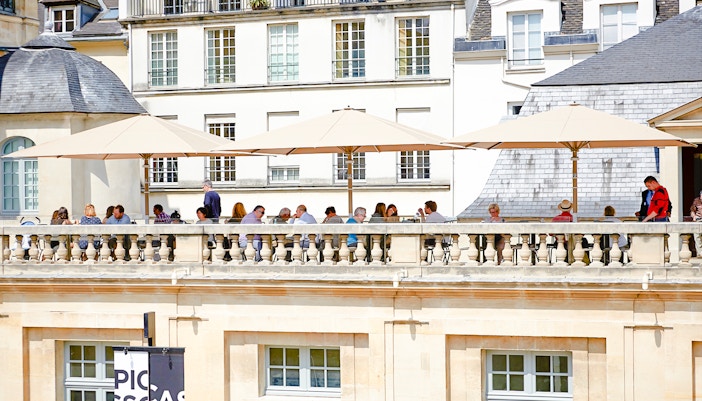
Yes, there is food inside and plenty nearby, but the on-site café is better for a break than a full meal. Café sur le Toit serves drinks, light snacks, and Maison Angelina pastries. For a proper lunch after the museum, Rue des Rosiers is a 5–7-minute walk away and has much stronger options.
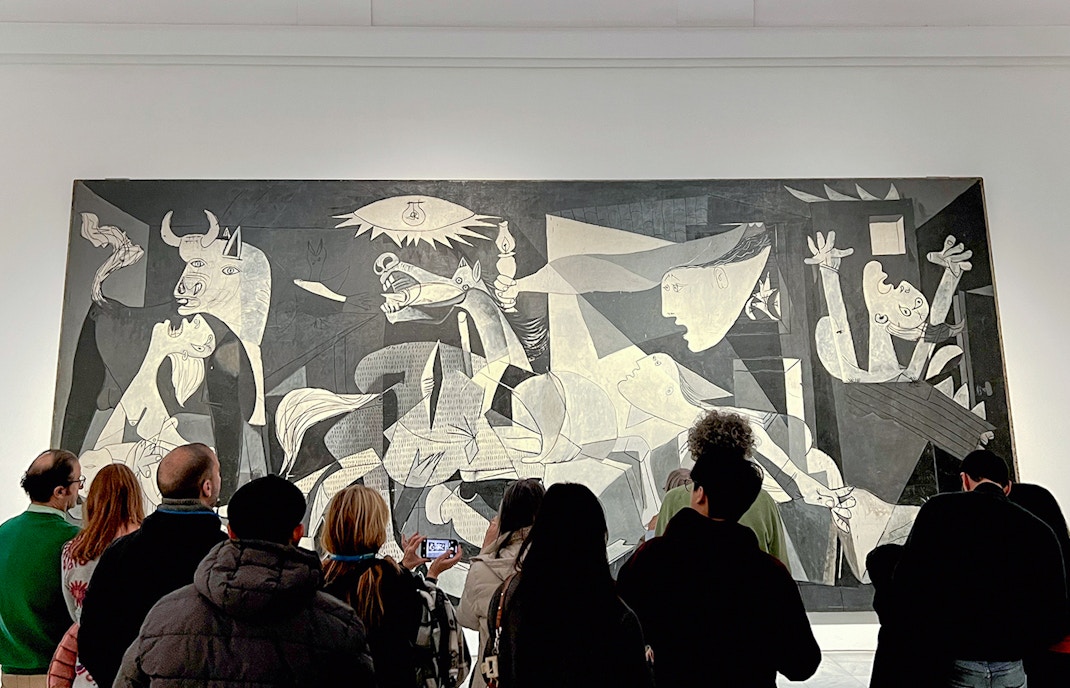
No, Guernica is not in Musée National Picasso-Paris. The painting is permanently housed in Madrid, and this museum is better understood as Picasso’s personal repository — a place for sketches, variations, portraits, sculpture, and the works he or his heirs kept closest. That makes it more intimate than a ‘masterpieces only’ visit.


Explore Picasso’s genius in a 17th-century Parisian mansion with priority access tickets.
Inclusions #
Priority access to the Picasso Museum
Access to permanent & temporary exhibitions
Audio guide in 5 languages (as per option selected)
Seine River cruise (as per option selected)


Priority access to the Picasso Museum with a physical audioguide for a seamless, self-paced art journey.
Inclusions #
Priority entry tickets to the Picasso Museum
Physical audio guide (to be collected at the entrance)
Audio guide in French, English, Spanish, German, Italian, and Chinese


Seine River Cruise
Picasso Museum
Inclusions #
Picasso Museum
Priority access to the Picasso Museum
Access to permanent & temporary exhibitions
Seine River Cruise
1-hour Bateaux Parisiens Seine River )cruise route here)
Choice of departure time (cruises depart every 1 hour)
Audio guide in English, French, Spanish, Portuguese, Italian, German, Chinese, Hindi, Japanese, Russian and Arabic


See two Parisian icons in one day—skip the lines at both the Rodin Museum and Picasso Museum.
Inclusions #
Rodin Museum
Skip-the-line entry into the Rodin Museum
Access to the Sculpture Garden
Picasso Museum
Priority access to the Picasso Museum
Access to temporary and permanent exhibitions
Picasso Museum
Rodin Museum


Picasso Museum
Louvre Museum
Inclusions #
Picasso Museum
Priority access to the Picasso Museum
Access to permanent & temporary exhibitions
Louvre Museum
Reserved entry to the Louvre
1 – 1.5-hour Seine River cruise